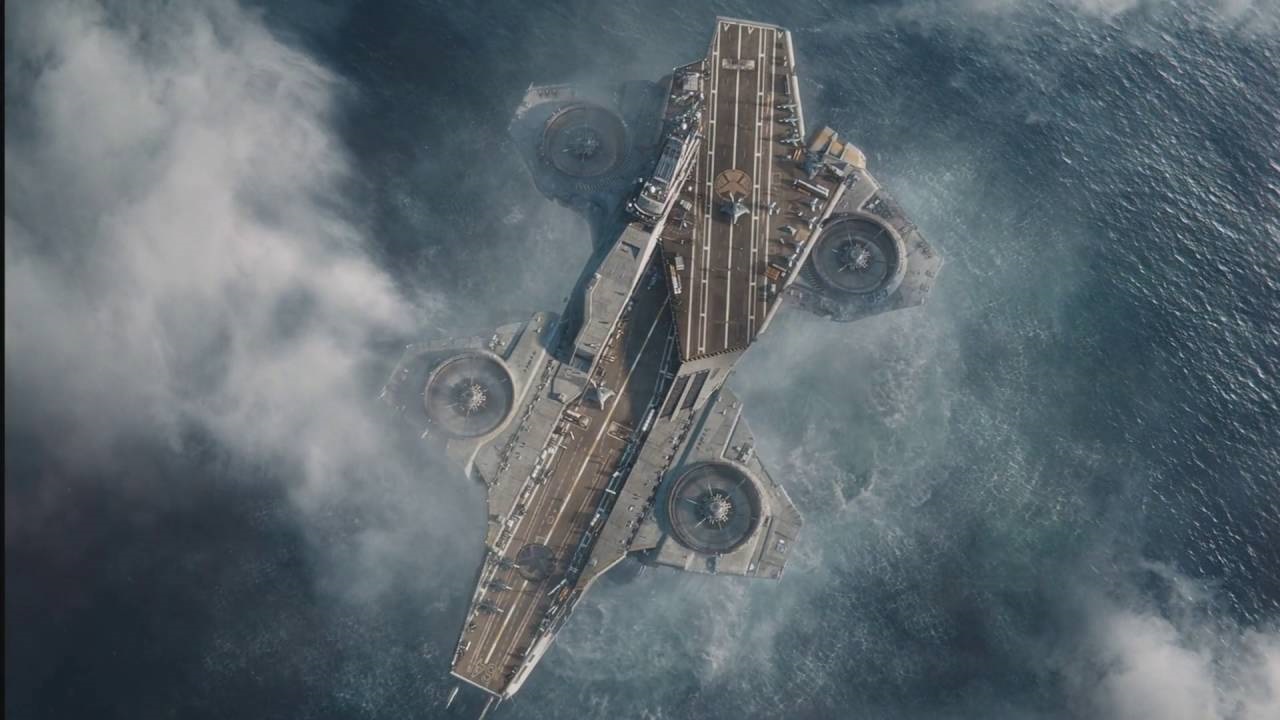
Why China’s Nantianmen Project Could Change Warfare—or Collapse Under Its Own Size
-Summary and Key Points: China’s so-called Nantianmen Project has drawn attention as a possible space-capable drone mothership, but the concept remains far ahead of current reality.
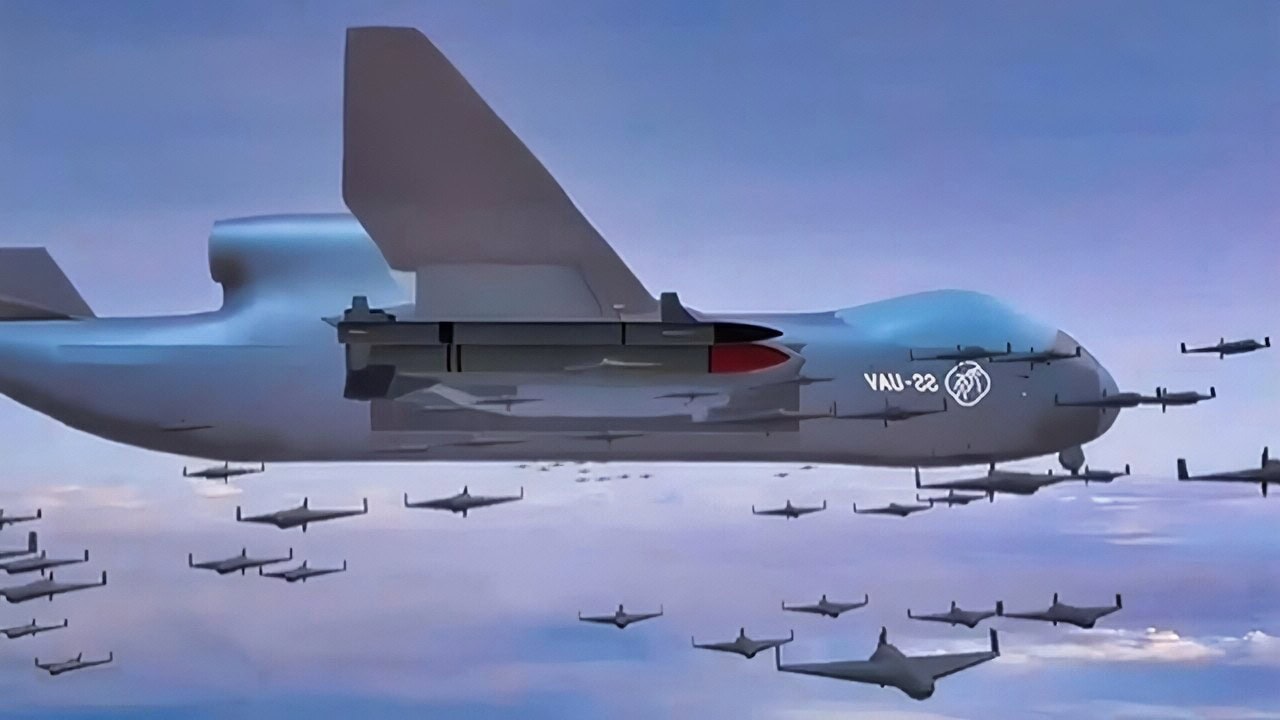
China Drone Aircraft Carrier. Image Credit: X Screenshot.
-China clearly has the building blocks—advanced drones, space infrastructure, reusable aerospace systems, and strong investment in AI and long-range strike capabilities.
-Still, turning those pieces into one operational air-space mothership would require major breakthroughs in propulsion, materials, power, and command-and-control.
-Even if built, such a massive platform could be strategically vulnerable, since modern warfare rewards dispersion and survivability.
-The most realistic near-term path is a high-altitude relay or launch node, not a true orbital drone carrier.
Nantianmen Project Explained: China’s ‘Space Drone Carrier’ Is Bold—but Still Mostly Concept
Reports about the People’s Republic of China’s (PRC) so-called “Nantianmen Project” have generated widespread attention, often describing a large space-capable drone mothership that could deploy swarms of unmanned vehicles from space or at high altitudes near the edge of Earth’s atmosphere.
At the moment, the project seems largely conceptual, yet technological advances in both space and unmanned systems might suggest that such a platform could be realistic at some point. China has, in recent decades, made significant strides in aerospace and defense technology and has a long history of developing space-oriented weapons systems, including Anti-Satellite (ASAT) systems.
The project has been acknowledged and discussed by Chinese experts on China’s state television, CCTV, as a vision for future aerospace and space superiority. One analyst, quoted in Interesting Engineering, described the Nantianmen Project as a platform capable of hypersonic speeds, dual-mode propulsion, and advanced stealth.
Chinese Drones
The PRC is known to operate the China National Space Administration, which has overseen lunar missions, Mars exploration, and the construction of the well-known Tiangong Space Station. In a related military capacity, the People’s Liberation Army has invested heavily in drones, artificial intelligence, and long-range precision systems.
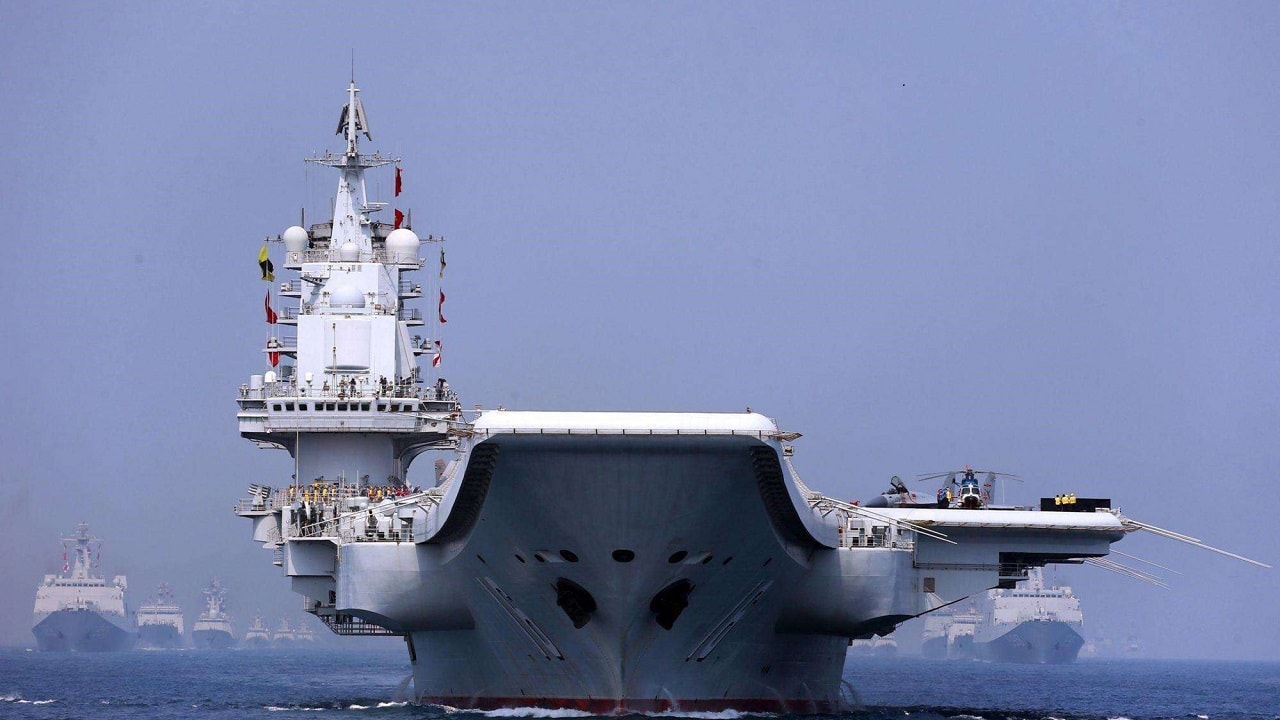
A Chinese Aircraft Carrier on the high-seas. Image Credit: Chinese Internet.
At international trade shows, Chinese firms have for many years showcased high-altitude, long-endurance drones, stealth drone prototypes, and reusable spaceplane concepts. These real programs demonstrate that China possesses advanced aerospace engineering capabilities and a strategic interest in operating across air and near-space domains.
However, the leap from advanced drones and space stations to a fully operational “air-space drone mothership” is considerable. Conceptually, such a system would function as a large platform capable of deploying, coordinating, and recovering multiple smaller drones. The idea is not entirely unprecedented, as the concept of high-altitude manned-unmanned teaming has been evolving for many years; large aircraft are already experimenting with launching recoverable drones as host motherships and deploying drone swarms.
Weaponizing Space
China has invested in solar-powered high-altitude aircraft and reusable launch technologies. Over time, a combination of these technologies could potentially approximate aspects of a “drone mothership,” particularly in the upper atmosphere rather than true space. Such a platform might be better equipped to function as a communications relay and drone deployment node rather than a massive space carrier.
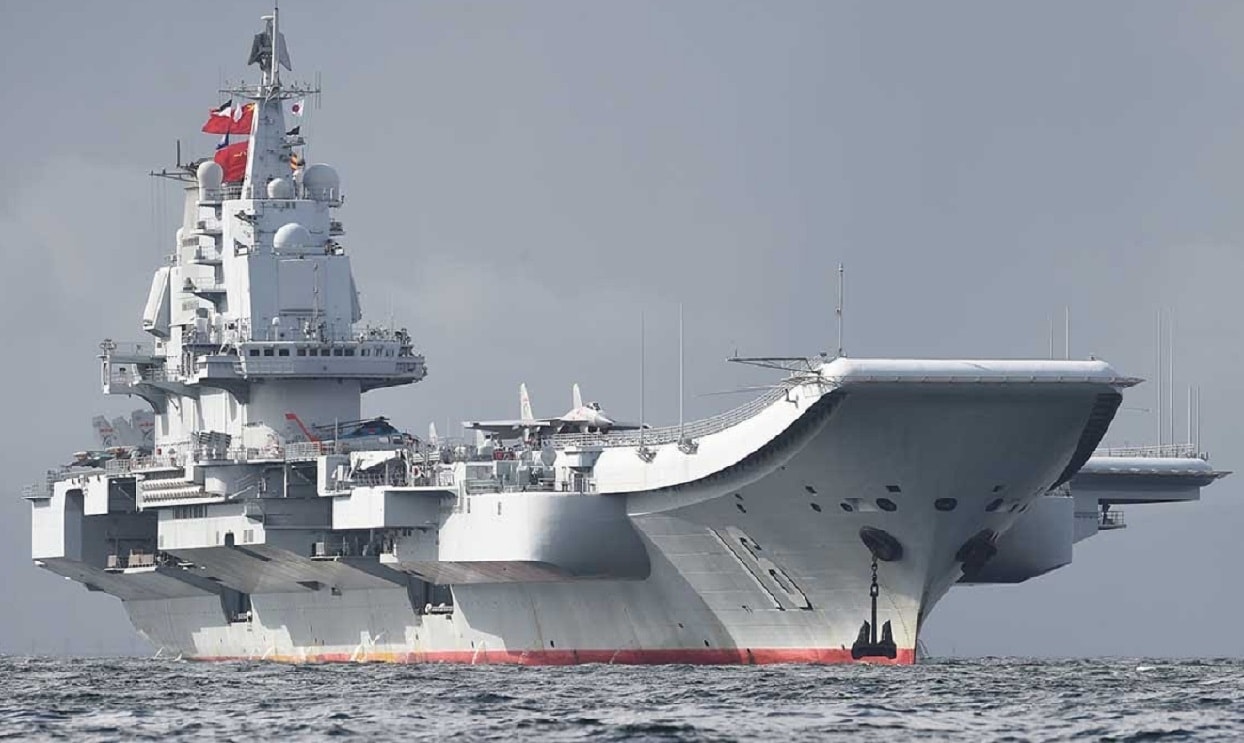
China Aircraft Carrier. Image: Creative Commons.
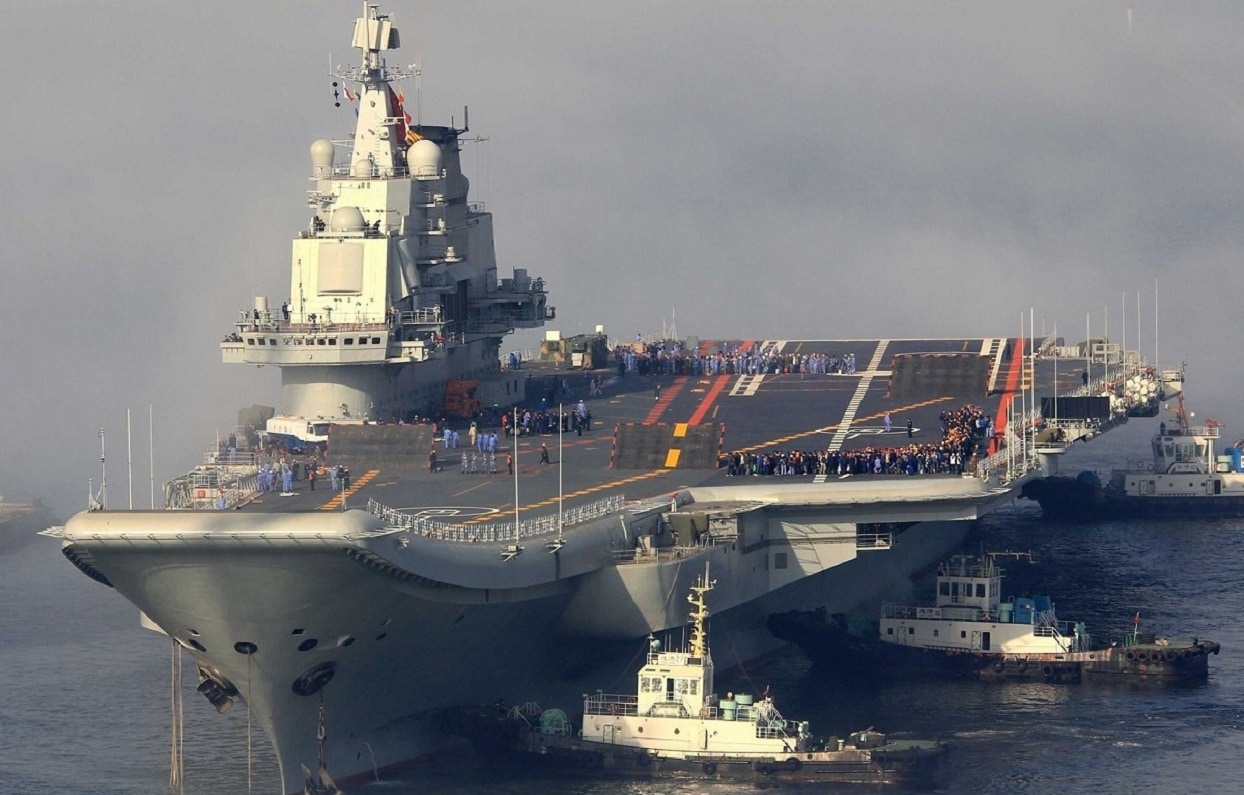
China Type 003 Aircraft Carrier. Image: Chinese Internet.
Therefore, at the moment, a fully realized vision of China’s Nantianmen Project as an operational air-space drone mothership seems more speculative than realistic. However, spaceflight and military-oriented space platforms are advancing rapidly, with U.S. programs such as the X-37B.
When it comes to a much larger platform, the technological building blocks seem to be in place to some extent. Yet, exo-atmospheric operations introduce an entirely new set of challenges.
From an engineering standpoint, the greatest challenges to a Nantianmen-like platform would include propulsion, materials, energy supply, and command-and-control integration. If the mothership were intended to operate in near space, it would face extreme temperature challenges, a thin atmosphere, and radiation exposure.
Traditional jet engines cannot operate effectively at very high altitudes due to insufficient oxygen, so it may be necessary for the Nantianmen Project to advance technological solutions to transition from concept to reality.
Huge Space Target
Logistically and strategically, one must also question the military value of such a platform. A massive airborne or orbital mothership would likely be highly visible and vulnerable to anti-satellite weapons or long-range missiles. In modern warfare, survivability often depends on dispersion rather than concentration.
Swarm tactics usually rely on distributed launch platforms, making it harder for adversaries to neutralize the entire system at once. A single, large drone carrier might present a tempting target, undermining its strategic advantage.
About the Author: Kris Osborn, President of Warrior Maven
Kris Osborn is President of Warrior Maven – Center for Military Modernization. Osborn previously served at the Pentagon as a highly qualified expert in the Office of the Assistant Secretary of the Army—Acquisition, Logistics & Technology. Osborn has also worked as an anchor and on-air military specialist at national TV networks. He has appeared as a guest military expert on Fox News, MSNBC, The Military Channel, and The History Channel. He also has a Masters Degree in Comparative Literature from Columbia University.