
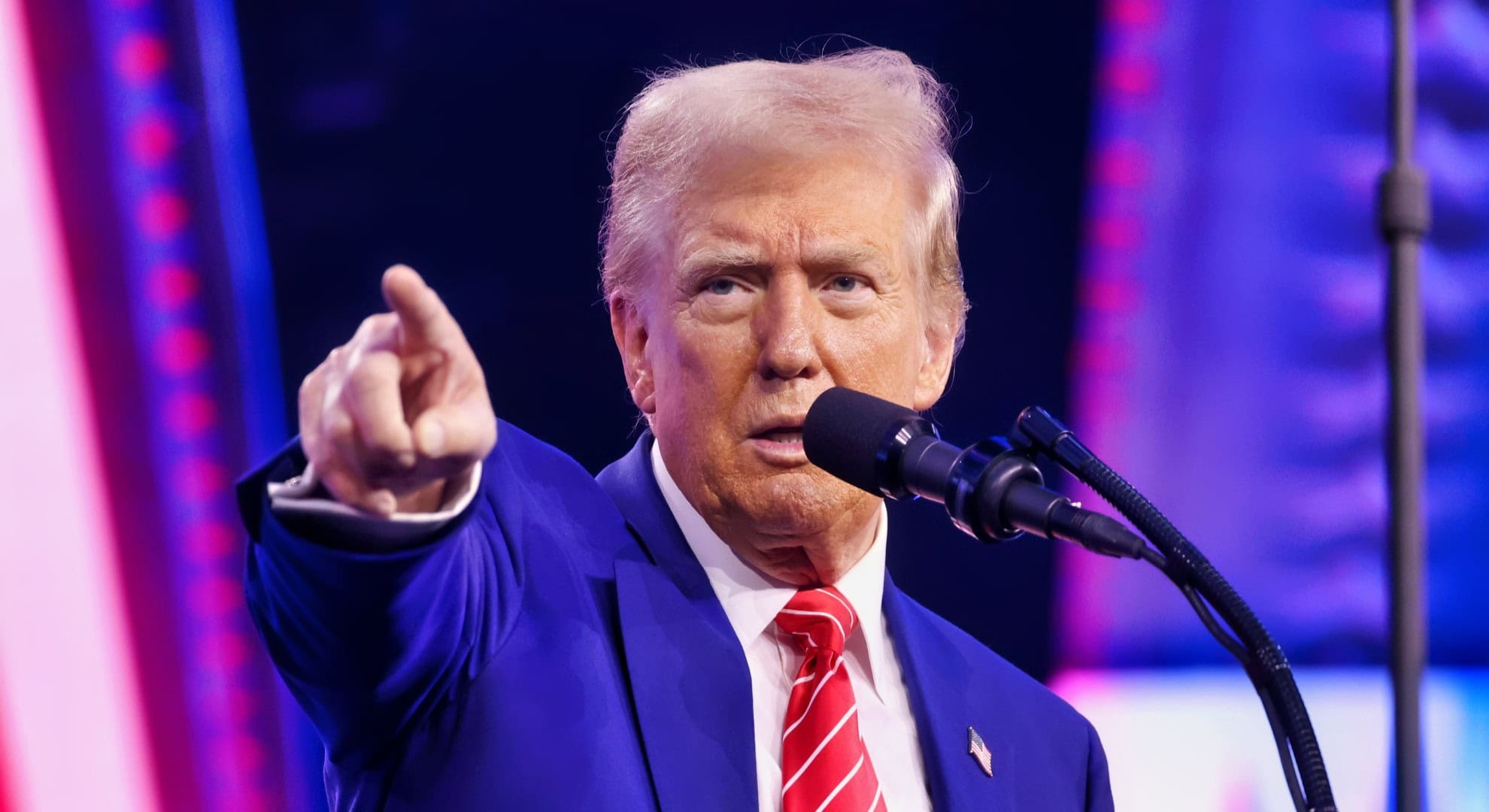
Is the Strait of Hormuz open or closed?: Shortly after the start of the war between the U.S. and Iran in February, Iran blocked the Strait of Hormuz, a crucial waterway for the world’s energy trade, which caused oil prices to rise worldwide.
Many of the negotiations, ceasefires, and memoranda of understanding in the months since have aimed, at least on the U.S. side, at reopening the Strait of Hormuz.
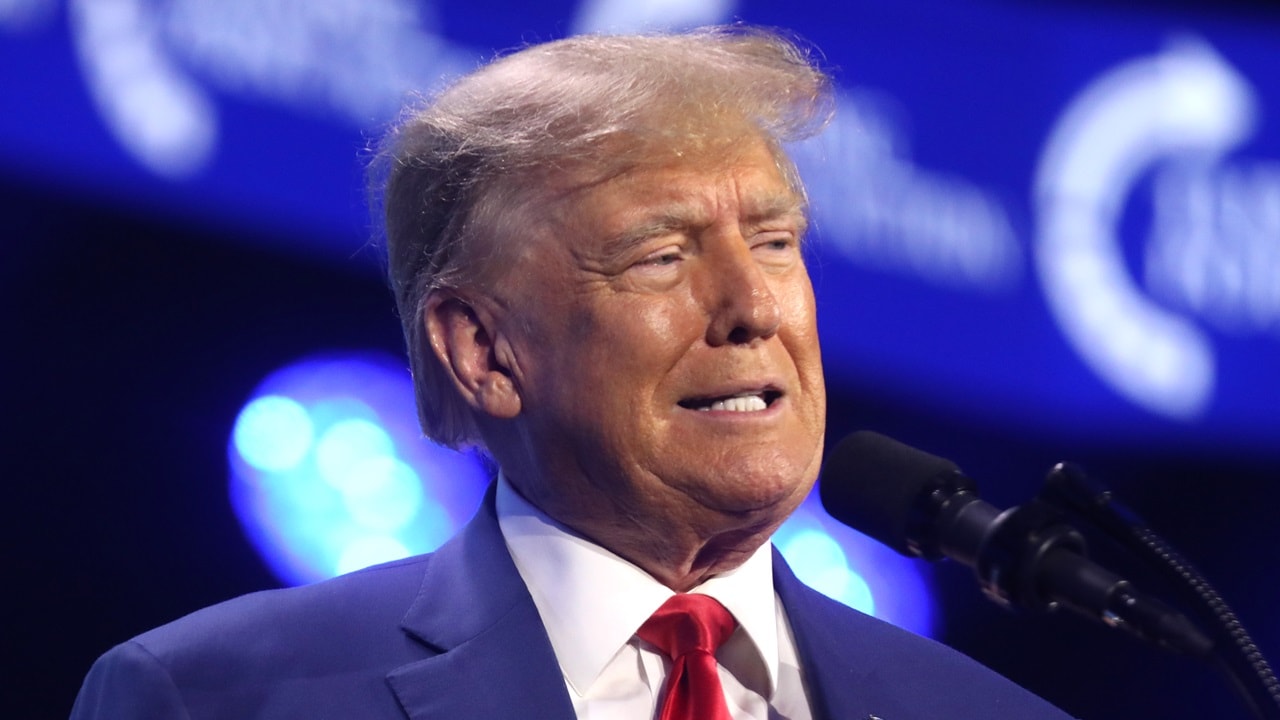
Former President of the United States Donald Trump speaking with attendees at the 2023 Turning Point Action Conference at the Palm Beach County Convention Center in West Palm Beach, Florida.
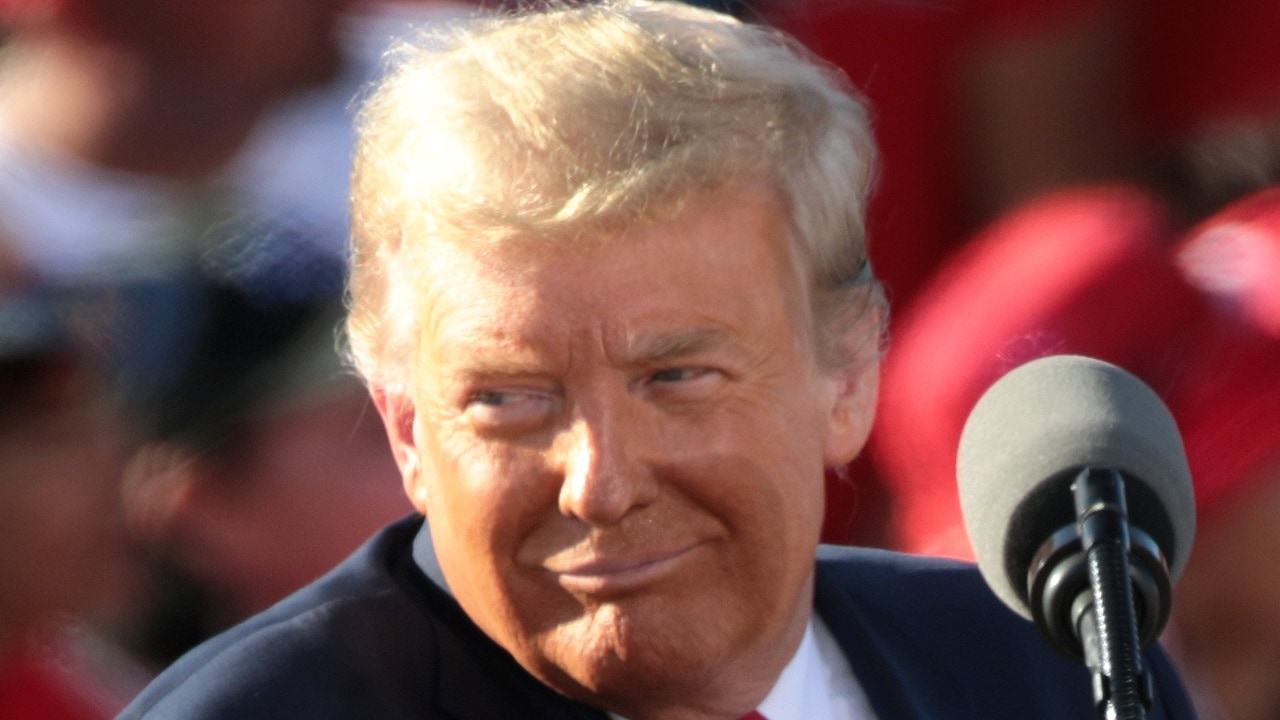
President of the United States Donald Trump speaking with supporters at a “Make America Great Again” campaign rally at Phoenix Goodyear Airport in Goodyear, Arizona.
Following a weekend in which both sides fired shots, putting the already tenuous peace in doubt, there’s now not even agreement between the sides about whether the Strait is open or closed.
The mid-June Memorandum of Understanding created a 60-day period for the sides to come to a more permanent agreement. But following the weekend, per The Washington Post, Iran now says that the deal is in a “crisis phase.”
“Interpretation against the text is not permissible,” Iranian Foreign Ministry spokesman Esmaeil Baqaei said this week, per the Post, referring to the memorandum of understanding from June. “Lying has become part of the U.S. administration’s behavioral pattern, and they have become addicted to it.”
The Post also reported that U.S. officials said at the start of the weekend that they had been told by Iranian negotiators that the recent attacks on ships in the Strait were “carried out by a faction that sought to undermine the deal.” But by the end of the weekend, Supreme Leader Ayatollah Mojtaba Khamenei had put out a statement, vowing “revenge” against the U.S. and Israel.
Meanwhile, the president reiterated on Monday on Truth Social that the U.S. considers the Strait open and added another demand.
“The Guardian of the Hormuz Strait”
“The Hormuz Strait is OPEN, and will remain OPEN, with or without Iran. We are reinstating the THE IRANIAN BLOCKADE, so named because it is only stopping Iran’s ships or customers from entering or leaving. All other countries will have fair and open use of the Strait,” the president said on Truth Social.
He went on to declare that the United States is now “THE GUARDIAN OF THE HORMUZ STRAIT,” and that the U.S. “will be reimbursed, at the rate of 20% on all cargo shipped, for any and all costs necessary to do the job of providing safety and security to this very volatile section of the World… The process and formation will begin immediately.”
How such a new regime will be enforced remains unclear.
At the same time, talks have been taking place in Oman, as recently as Saturday.
Gas Prices Rise Again
The original launch of the war, the closing of the Strait of Hormuz, caused oil prices to jump, causing pain at the pump for Americans, and causing the war itself to quickly become unpopular. This followed a 2024 campaign in which Trump campaigned against inflation and promised lower prices, while also frequently railing against the gas price spikes that followed Russia’s invasion of Ukraine during Joseph Biden’s presidency.
Since the mid-June agreement, gas prices in the United States had begun to fall, dropping back below the $4-per-gallon mark. However, recent uncertainty has caused oil and gas prices to rise again.
GasBuddy, in its weekly gas price report, said on Monday that gas prices surged 10.3 cents per gallon in the last week to $3.82 per gallon, marking the first weekly gain since May after dropping for eight straight weeks. The site also predicted that more increases could soon follow.
“The turnaround comes as oil prices have surged following the collapse of the ceasefire between the U.S. and Iran and the start of new attacks, with oil jumping another 4% in Sunday evening trading, an ominous sign that could bring additional gas and diesel price increases in the week ahead,” Patrick De Haan, head of petroleum analysis at GasBuddy, said in the blog post this week.
“While the pace of increases doesn’t yet appear likely to match what motorists experienced in March and April, fresh Ukrainian attacks on additional Russian refineries will only add to the pressure, keeping supplies of refined products tight even as the situation remains fluid.”
About the Author: Stephen Silver
Stephen Silver is an award-winning journalist, essayist, and film critic, and contributor to the Philadelphia Inquirer, the Jewish Telegraphic Agency, Broad Street Review, and Splice Today. The co-founder of the Philadelphia Film Critics Circle, Stephen lives in suburban Philadelphia with his wife and two sons. For over a decade, Stephen has authored thousands of articles that focus on politics, national security, technology, and the economy. Follow him on X (formerly Twitter) at @StephenSilver, and subscribe to his Substack newsletter.