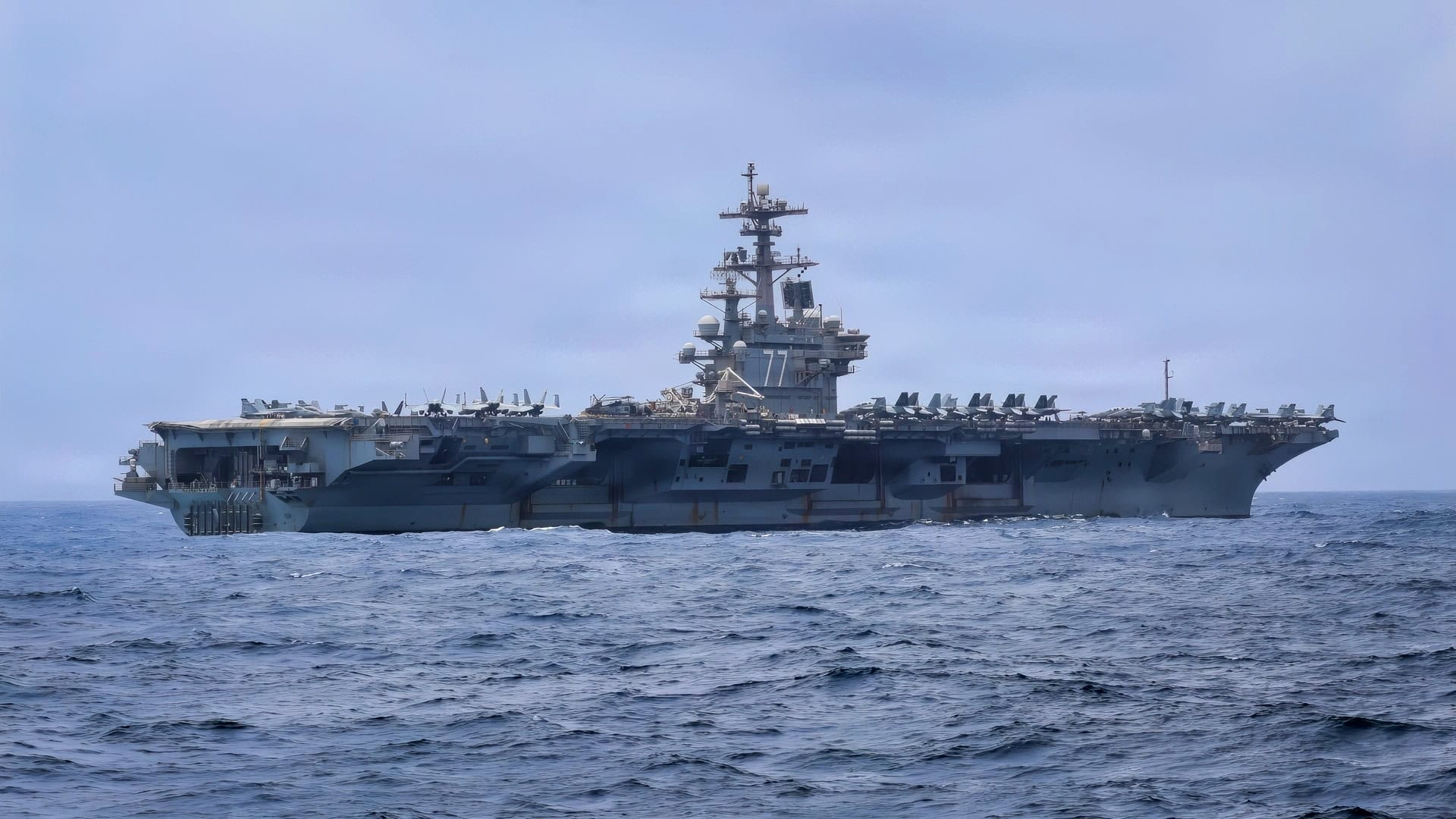
China’s Naval Drone Revolution Changes Warfare Forever: China and the United States, whether we want to admit it or not, are in a great strategic competition for the very future of the world system. The United States is the power defending its mantle as the dominant geopolitical force in that system. China wants to change that dynamic in its favor. The United States possesses the most powerful conventional military on the planet.
The Industrial Advantage Behind China’s Drone Revolution
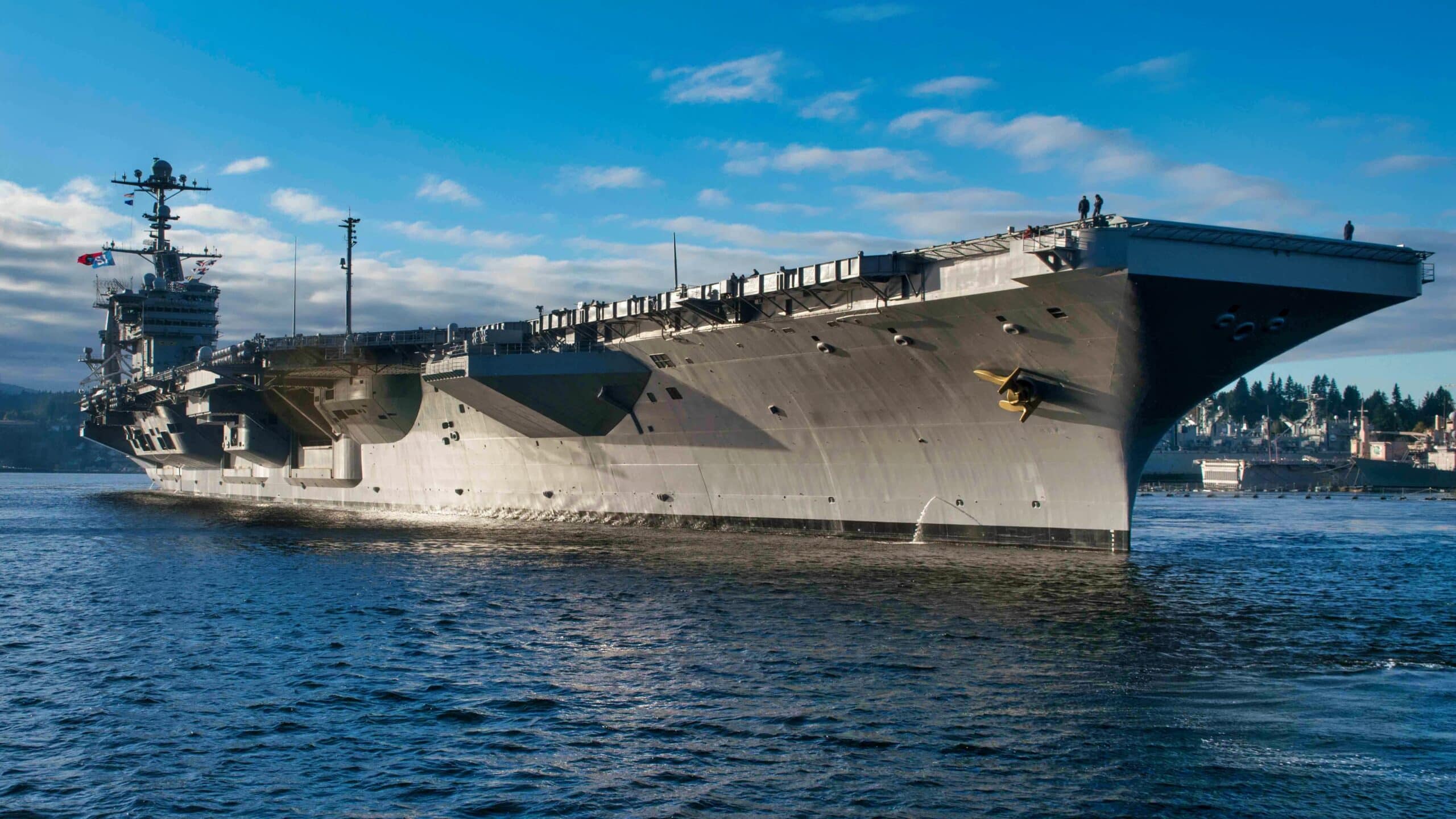
USS John C. Stennis Aircraft Carrier. Image Credit: Creative Commons.
China has the world’s most powerful industrial manufacturing capacity. Both are economic powers, although China’s economic model is more useful in a wartime setting than is America’s. In fact, China’s industrial and economic model today looks surprisingly like the United States’ system did in the Second World War.
One of the things that the Chinese possess that the Americans lack is scale. China builds a system, no matter how expensive, and can quickly mass-produce it. The Americans struggle with that. In an industrial-scale, great-power conflict, it’s a real killer for the power that cannot scale (or at least not scale well).
China’s Naval Drones Are Becoming a Serious Threat
In the age of cheap drones, the inability to mass-produce such systems will lead to defeat. That could mean huge problems for Navy aircraft carriers in a war over Taiwan and many areas around the Indo-Pacific.
Any conflict between the United States and China will likely be waged over the First Island Chain (the territories stretching from Russia’s Kamchatka Peninsula down through Japan and Taiwan, ending in the Philippines and the South China Sea). China has achieved military overmatch in the First Island Chain, thanks to its comprehensive, layered anti-access/area-denial (A2/AD) networks.
A key element of those A2/AD defenses is China’s growing drone capabilities. And since any fight over the First Island Chain would be a naval affair, China is marrying its drone capabilities to the maritime domain. China’s growing naval drone capability poses a serious threat to the United States Navy (and the navies of US allies) because these still-developing naval drones are part of an interconnected reconnaissance, targeting, mining, deception, and strike network of cheap and expendable systems.
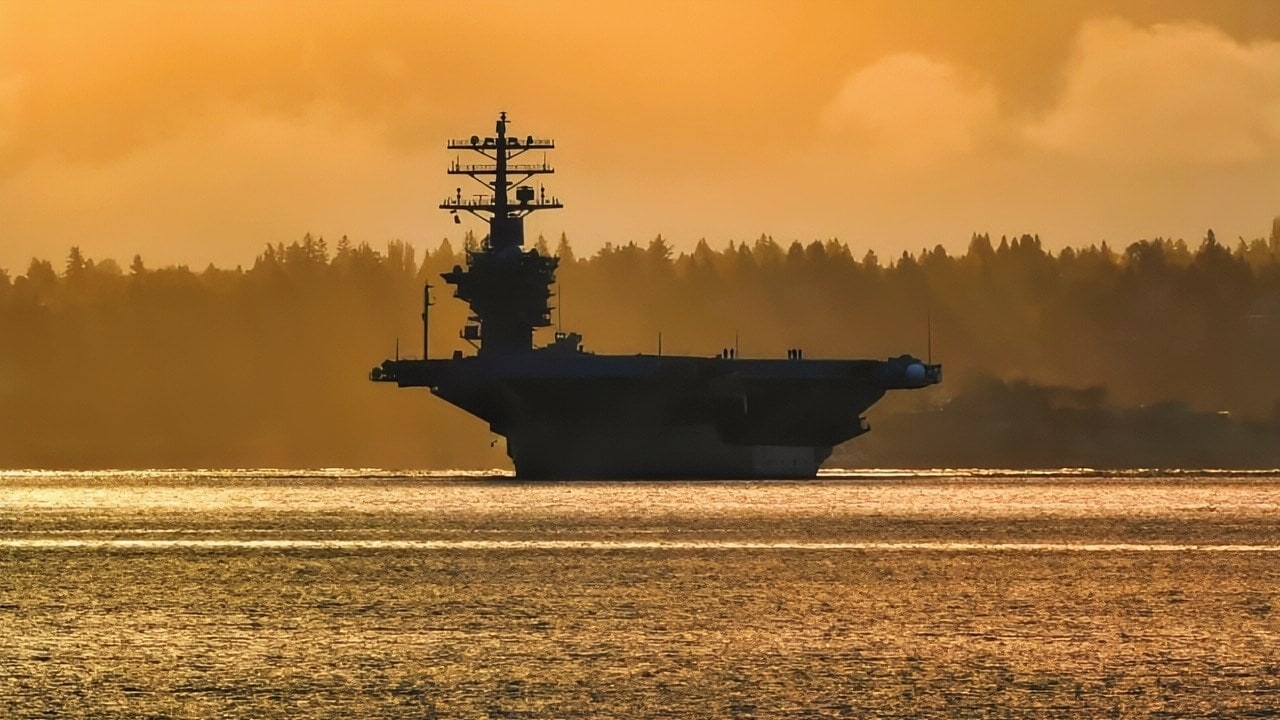
MANCHESTER, Wash. (April 28, 2017) USS Nimitz (CVN 68) transits Puget Sound, past the Seattle skyline enroute to its homeport, Naval Base Kitsap-Bremerton. The return to homeport marks the end of an underway along with its Carrier Strike Group 11, having successfully completed its final pre-deployment assessment, Composite Training Unit Exercise, April 21, and is now fully certified to deploy later this year. (U.S. Navy photo by Mass Communication Specialist 2nd Class Vaughan Dill/Released
In a conflict over Taiwan, these naval drones could be decisive factors in a likely Chinese military victory. Around Guam and the Philippines, the Chinese naval drone threat is moderate. Although it is rising, if warfare erupted between Washington and Beijing and China deployed naval drones to the American West Coast, the threat posed thus far would be low (though it would be highly consequential, given the symbolism of sending such systems there).
The rapid expansion of China’s drone development program, often under civilian cover, underscores a significant shift that could destabilize regional naval power balances.
The Drone Carrier That Isn’t Really Civilian
In modern warfare, both industrial scale and the ability to conduct mass, swarming attacks on an enemy target are key for victory. That’s where China’s Zhu Hai Yun vessel, which is officially designated as an oceanographic research ship, is capable of deploying drone swarms. Technically, these drones are for scientific research. Many Western defense analysts fret over the integration of massive, deep-sea ships and drone swarm deployment capabilities.
The specific concern with the Zhu Hai Yun is that it is used to study underwater conditions, such as currents, seabed composition, water temperatures, and underwater acoustics. While important for research, it can also, in war, be used to potentially locate American submarines and then deploy advanced drones to hunt that submarine and destroy it.
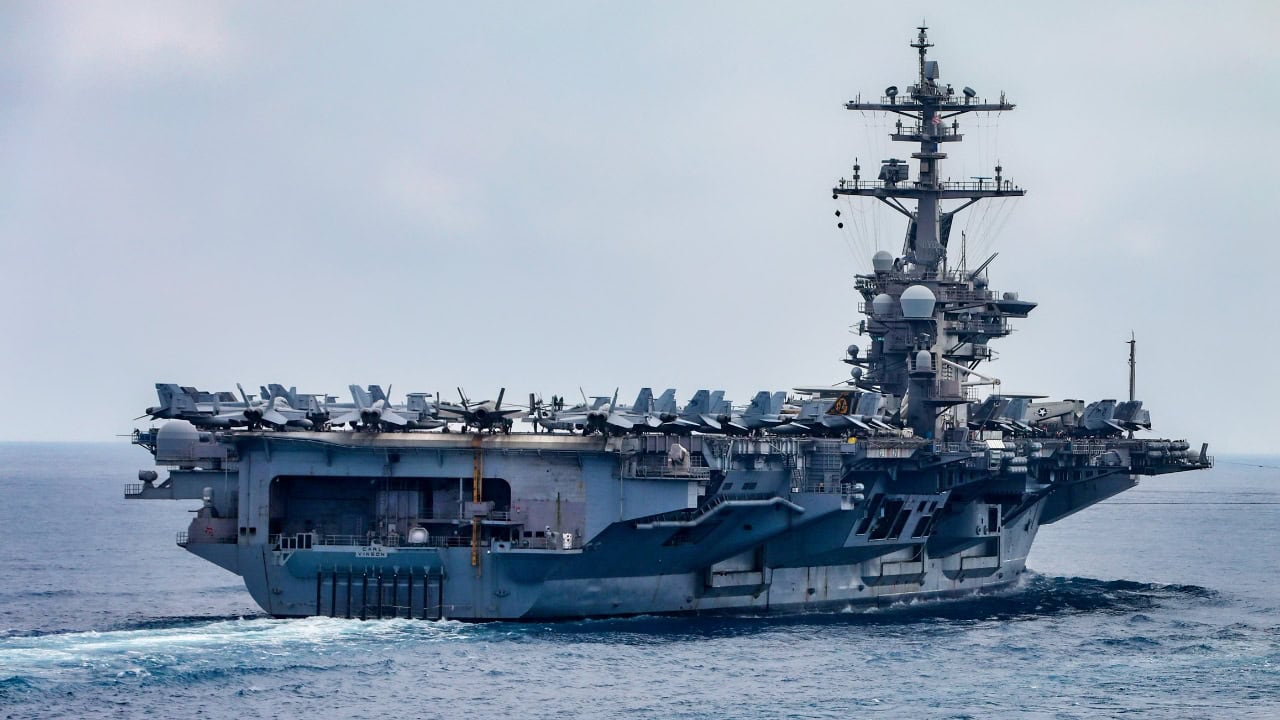
SOUTH CHINA SEA (Feb. 2, 2025) The Nimitz-class aircraft carrier USS Carl Vinson (CVN 70) conducts a replenishment-at-sea with the dry cargo and ammunition ship USNS Carl Brashear (T-AKE 7) Feb. 2, 2025. The Carl Vinson Carrier Strike Group is underway conducting routine operations in the U.S. 7th Fleet area of operations. (U.S. Navy photo by Mass Communication Specialist 1st Class Jacob I. Allison)
Winning the Information War
Surprisingly, the greatest value of China’s growing naval drones isn’t their weapons (though those are dangerous, too). It’s the sensors on those naval drones. Modern naval warfare is less about the exchange of fire in some grand duel, like the naval battles of yore. Instead, it’s about locating your foe from afar, and engaging those targets from beyond visual range (BVR) before the other side can engage you.
Deploying multiple sensors via drones could drastically challenge US carrier detection, threatening naval dominance in the Pacific region.
Instead of relying solely on satellites, maritime patrol aircraft, and submarines, Beijing is adding a cheap, easy-to-mass-produce network that will turn every wave into an eye, seriously threatening US carriers approaching the First Island Chain (or even operating farther out).
And the naval drones that China is developing are not all conventionally powered. For instance, one system that China is developing is a wave-powered autonomous surface craft that can remain at sea for months, while silently monitoring maritime activity. Underwater drones can map submarine routes or patrol strategic chokepoints. Airborne drones will then relay communications or identify targets beyond the horizon.
Of course, these technologies are still being developed.
China’s Naval Drone Force Is Only Getting Stronger
But outlines of this new form of warfare have already been experienced on land. In both the wars in Ukraine and Iran. So, too, have there been experiences with maritime drones in those two conflicts. Those were ancillary to the main battles, though. If a war with China erupted, those naval drones would do for China that which other types of drones have done for Ukraine and Russia in their war, as well as for Iran in its war.
China’s drone force is still very much in the early stages. But it’s growing significantly. And each iteration and expansion of drones also enhances their capabilities–and ensures their mission of denying the US Navy access to the First Island Chain is accomplished.
About the Author: Brandon J. Weichert
Brandon J. Weichert is the Senior National Security Editor at 19FortyFive.com. He also manages The Weichert Brief on Substack. Weichert also hosts “National Security Talk” on Rumble. He is the author of four bestselling national security books, the most recent of which is A Disaster of Our Own Making: How the West Lost Ukraine (Encounter Books). Follow him via Twitter/X @WeTheBrandon.