
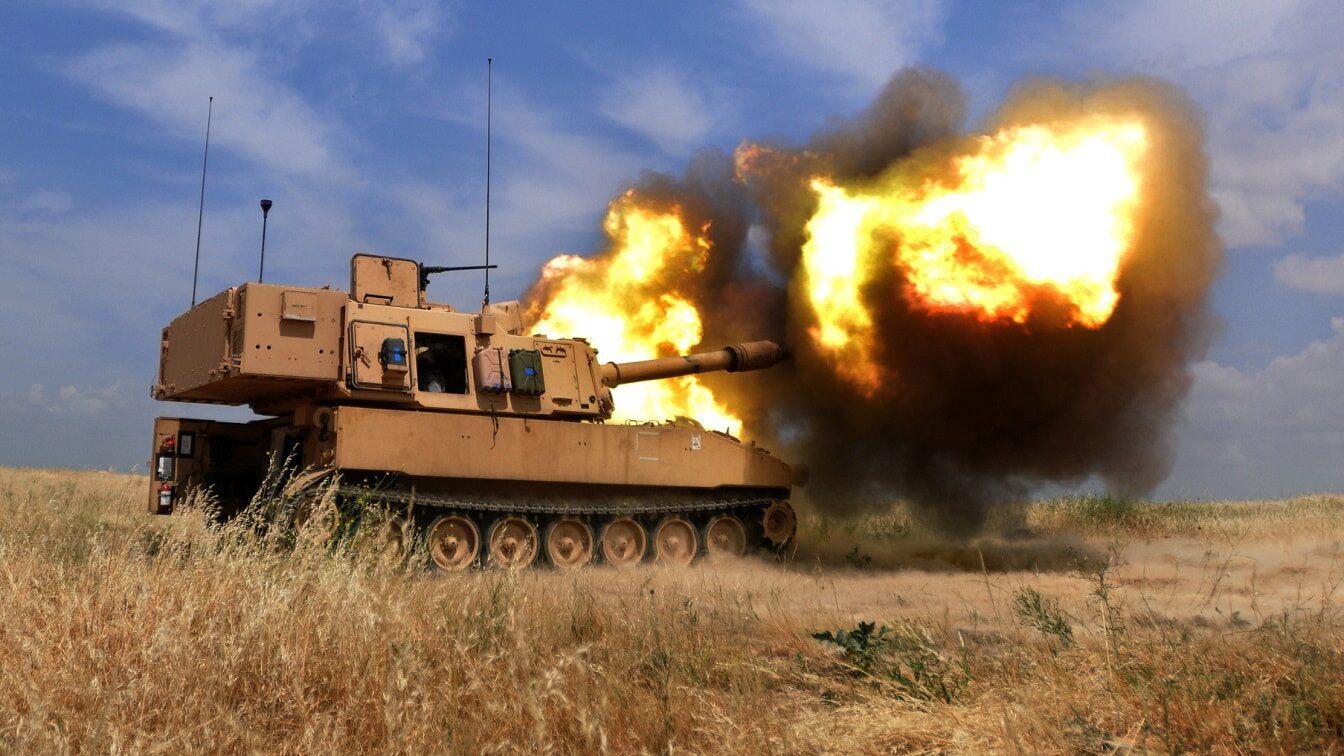
Helping Ukraine in its war with Russia by supplying it with ammunition has always raised concerns about how the stocks in the United States would be replenished. The Americans have provided munitions such as 155mm howitzer shells to enable the Ukrainians to bombard the Russians extensively. But now the Department of Defense is holding its breath because the news is not good.
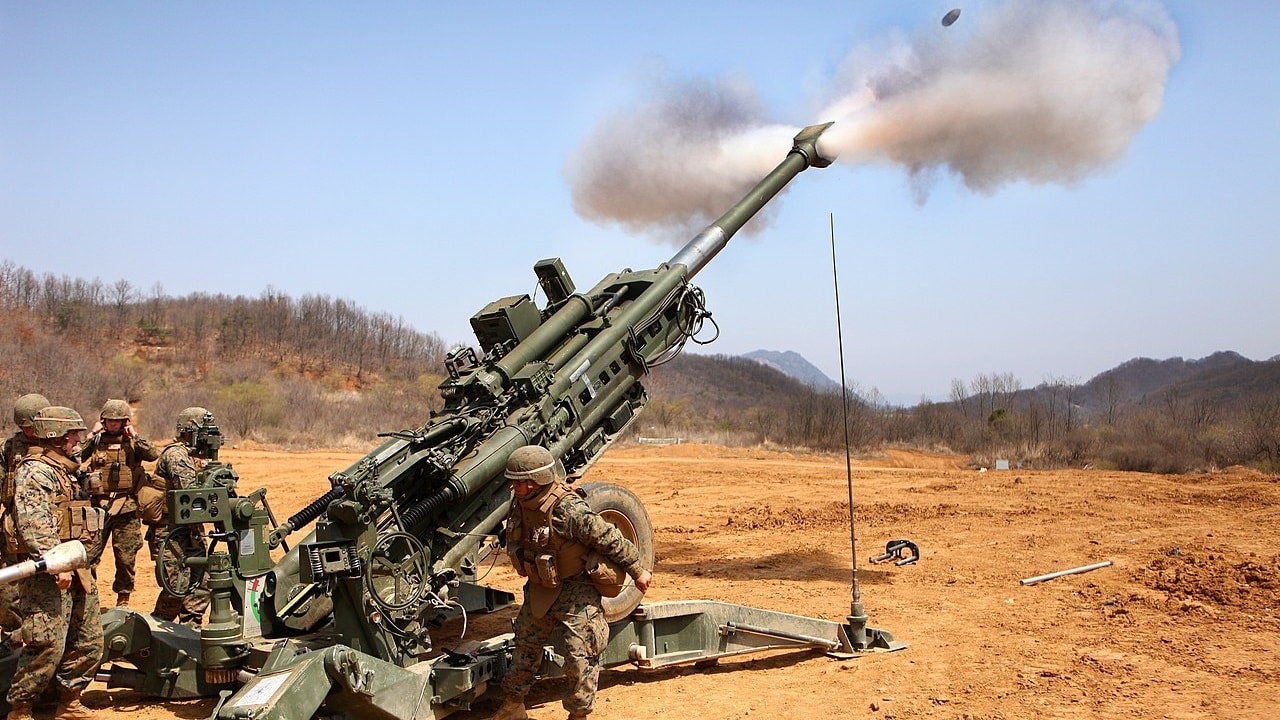
U.S. Marines with Alpha Battery, 1st Battalion, 12th Marine Regiment, 3rd Marine Division, III Marine Expeditionary Force attached to 3rd Marine Regiment, 3rd MarDiv, III MEF, fire the M777A2 155mm howitzer in support of a combined arms live-fire exercise at Rodriguez Live-Fire Complex during Korean Marine Exchange Program 13-5, part of Ssang Yong 13 in the Republic of Korea April 17, 2013. The CALFEX illustrates how the annual exercise Ssang Yong supports ongoing efforts to strengthen combat readiness in both U.S. and ROK forces. (U.S. Marine Corps photo by Lance Cpl. Jose D. Lujano III MEF PAO/Released)
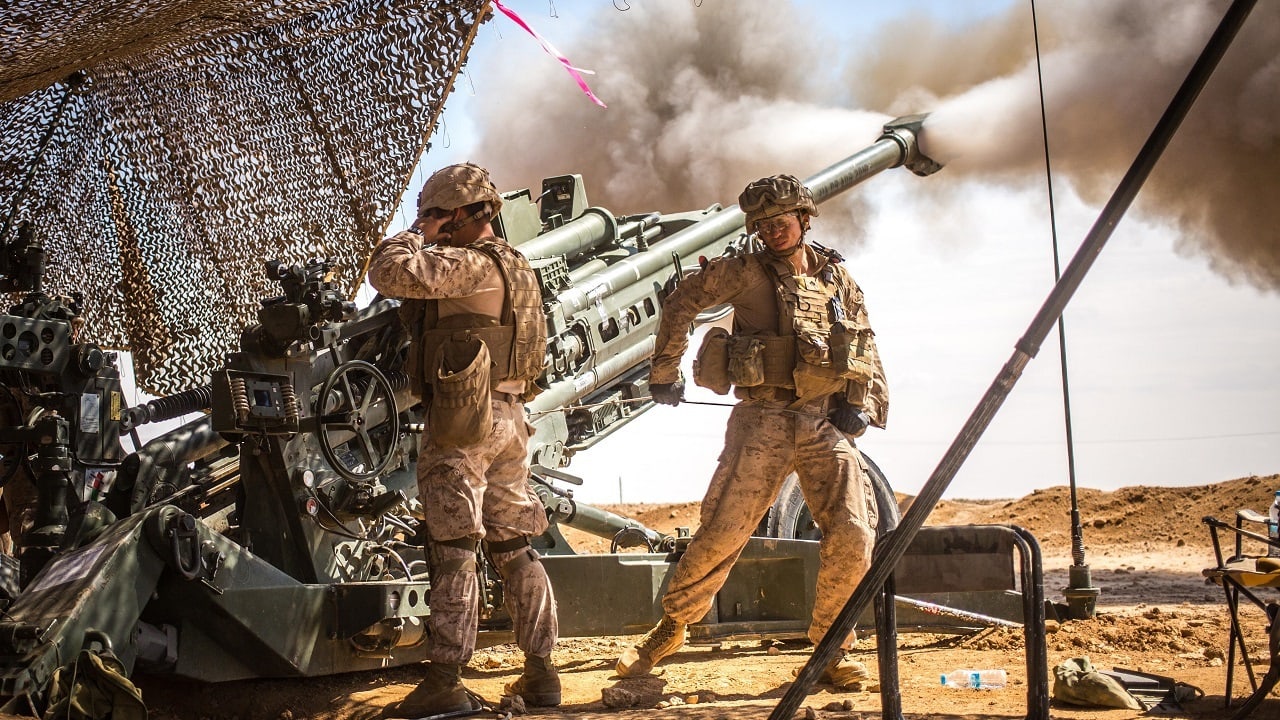
SYRIA – U.S. Marines with the 11th Marine Expeditionary Unit fire an M777 Howitzer during a fire mission in northern Syria as part of Operation Inherent Resolve, Mar. 24, 2017. The unit provided 24/7 support in all weather conditions to allow for troop movements, to include terrain denial and the subduing of enemy forces. More than 60 regional and international nations have joined together to enable partnered forces to defeat ISIS and restore stability and security. CJTF-OIR is the global Coalition to defeat ISIS in Iraq and Syria. (Note: these are similar weapons to the ones being sent to Ukraine).
A shocking development is happening in Mesquite, Texas, where the Pentagon is wondering how the supply of 155mm shells has dwindled.
An ammunition manufacturing facility there is underperforming, to say the least. The plant has not produced a critical component for a howitzer round in two years.
Watchdogs Are Growling
The lack of production at this factory prompted a report by the DOD inspector general after initial complaints that the site was underperforming.
The Army had already spent $469 million in Mesquite to make up shortages in howitzer shell stocks.
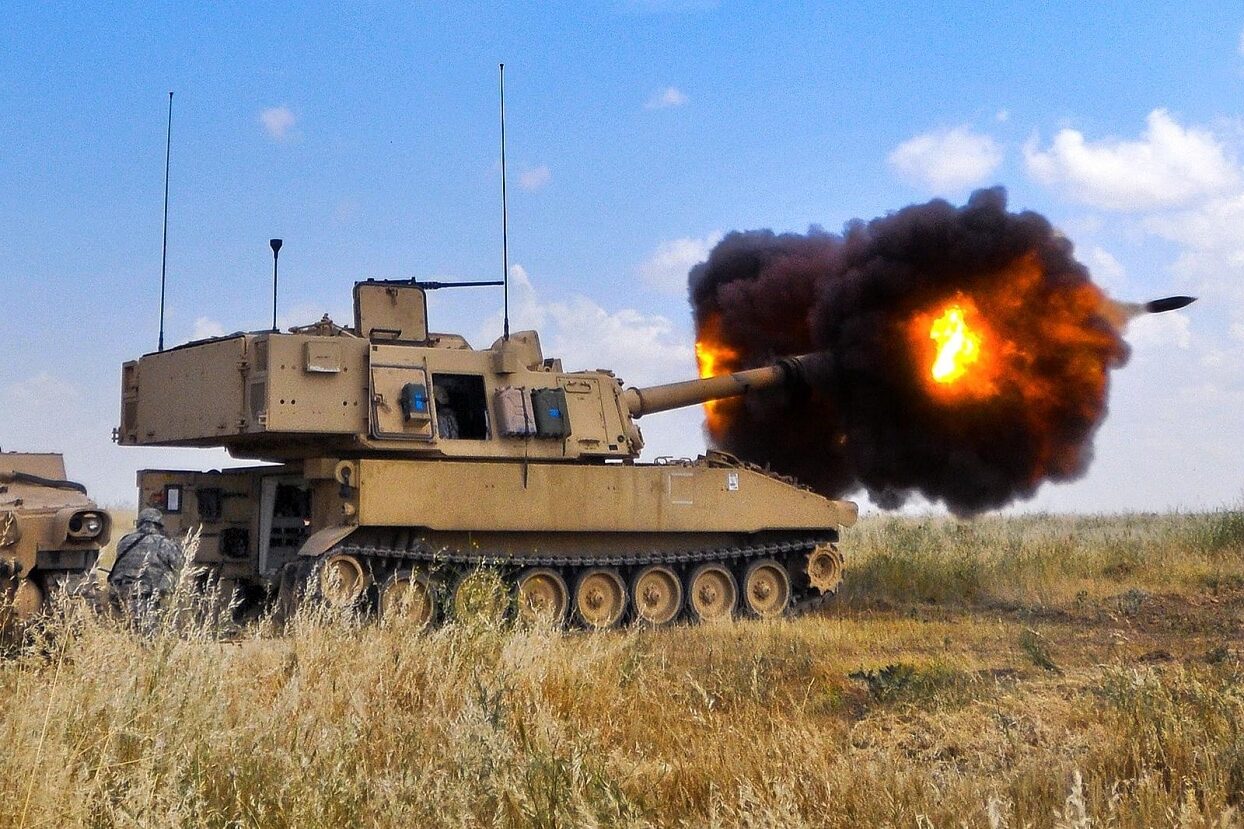
One really big gun: The earth shakes as an M109A6 Paladin fires a gas propelled 155mm Howitzer round through the enormous canon, the biggest of Battle Kings arsenal as 1-9 Field Artillery, 2nd Heavy Brigade Combat Team, 3rd Infantry Division, conducts their gun calibration at Destiny Range in Mosul, Iraq, Apr. 23.
The inspector general said the plant could have been used to produce other types of munitions rather than shells, and it could have been much more productive.
Painful Shortage In Store
This is a perilous time for ammunition stocks.
The Americans have gifted Ukraine more than three million rounds, a shocking number that needs to be replaced, but the U.S defense industry just can’t seem to get it right.
The total shell stockpile was around 3.6 million before the Russo-Ukrainian war.
That may leave as few as 600,000 shells left for artillery in the U.S. Army and Marine Corps. It is not clear how long howitzers could continue fire missions if a land war were to commence at any time.
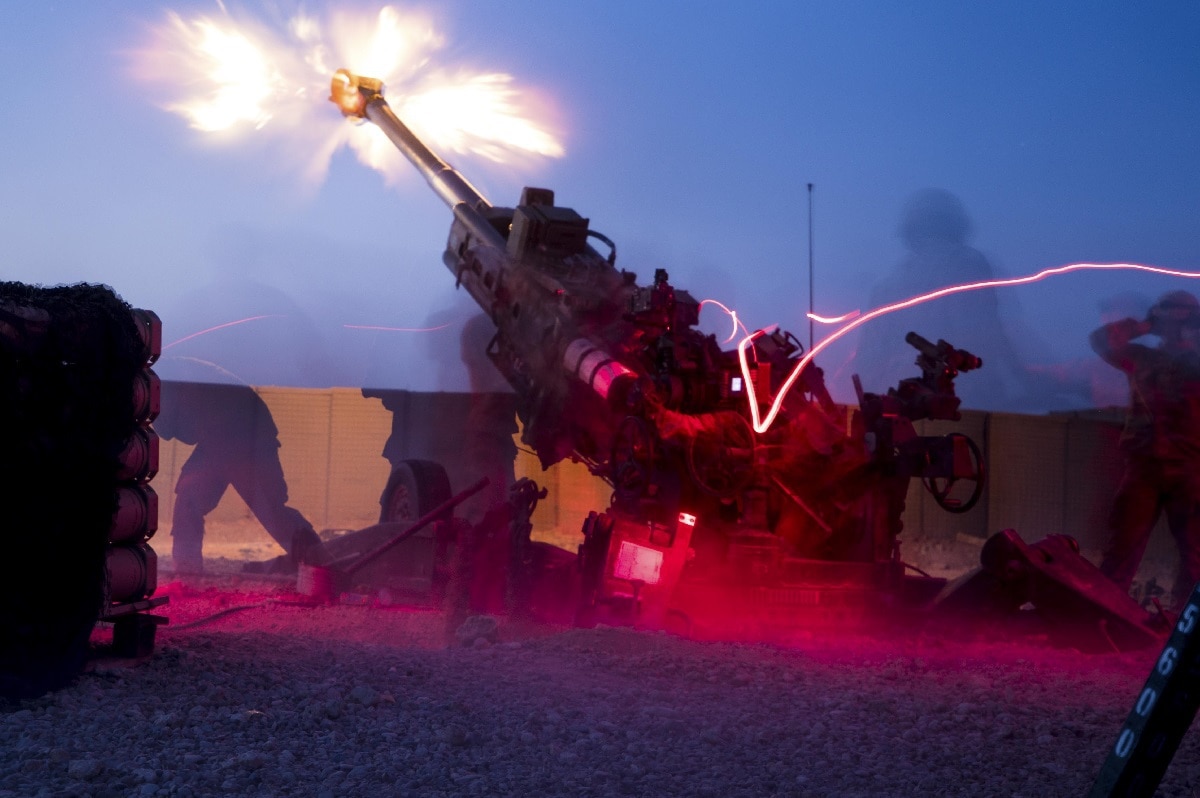
Soldiers assigned to the 2nd Battalion, 32nd Field Artillery, 1st Brigade Combat Team, 101st Airborne Division, fire a M777 towed 155 mm Howitzer on Qayyarah West Airfield, Iraq, Aug. 10, 2019. The Soldiers conducted a fire mission to disrupt known enemy positions. As long as Daesh presents a threat, Combined Joint Task Force – Operation Inherent Resolve remains committed to enabling its defeat. (U.S. Army Reserve photo by Spc. DeAndre Pierce)
Howitzers Are ‘Shell Suckers’: My Own Army Experience
I served in the Field Artillery branch in the Army before becoming an infantry officer. I was assigned to the M109 Paladin self-propelled howitzer.
This piece of military hardware sucked up the shells. Even during a one-day live-fire exercise, hundreds of shells would be expended by a single gun.
The resupply vehicles were constantly in action. Sustained fire during combat fire missions would use up even more rounds.
The total number of shells set aside was around 112,000 rounds earmarked for training and testing, and another 218,000 were sold to other countries, CBS News reported.
One can see how fast the number of rounds has been reduced.
The U.S. Military Had High Hopes for Shell Production
The Army responded to the burn rate with an auspicious goal in 2024.
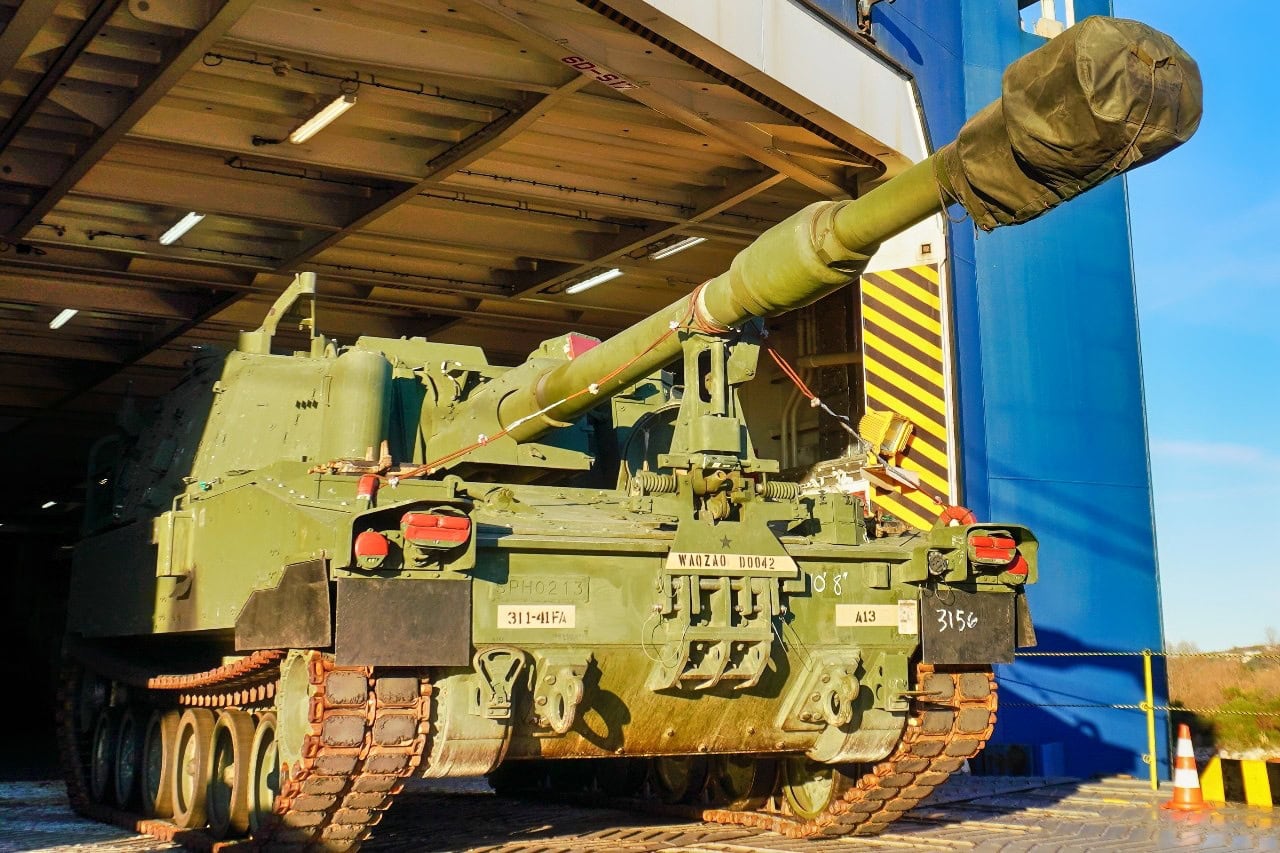
A U.S. M109 Paladin howitzer drives off the vessel Liberty Peace during offloading operations at the port of Koper, Slovenia on December 28, 2024. This Reception, Staging, and Onward Movement (RSOM) operation in the port of Koper is bringing in 1-3ID, the next Regionally Aligned Force (RAF), into the European Theater. These forces will be then transported by the 21st Theater Sustainment Command to their forward operating sites across NATO where they will conduct interoperability training with Allies and partners. The intent of these RAFs is to assure our allies and deter all adversaries.
The service branch wanted 14,000 rounds per month, for a total of over 100,000 rounds by October 2025.
The plant in Texas was set up to deliver this amount. General Dynamics Ordnance and Tactical Systems opened the facility in May 2024. Workers at the center were fired up and ready to go at the time.
Insufficient Parts Are Available
However, the problem was with the metal projectile parts necessary for effective shells.
While the Mesquite site was making all the other components in the rounds, up to 36,000 shells per month, they were not completely produced.
The goal was 100,000. The plant needed to make at least 30,000 metal projectile components per month to hit that quota. This did not happen.
Project Is Admittedly Not Hitting Goals
In a statement reviewed by CBS News, a spokesperson for General Dynamics Ordnance and Tactical Systems said, “GDOTS and our U.S. Army customers have reached an agreement on a path forward for the Mesquite facility, which includes additional GDOTS investment to complete the project.”
What’s the Problem?
Thankfully, three other plants across the country are producing the necessary metal projectile parts, but they must be sent to Mesquite for final assembly.
It is not clear why the Texas project has been a laggard.
The money spent has been extensive, and the labor force is considered adequate.
The plant may be running only one shift a day and may not have allocated enough workers or wages to cover overtime or to set up a second shift at night.
The entire 155mm howitzer shell industry in the United States may only produce 71,000 rounds per month by September of this year.
That would mean the industry is backed up and failing to meet the necessary production rate to replace the shells gifted to Ukraine.
Cascade of Errors
The Mesquite plant made errors in its projections of the material and labor inputs needed to produce more shells, the watchdog report found.
Some equipment was not purchased or tested to meet timeline requirements.
The contracting process was also slow, and the Army procurement office even halted manufacturing at the Mesquite plant in August 2025.
This calls attention to the entire American munitions industry. Can the plants meet their goals and come in on time and under budget for replacing ordnance?
What are the needs to overcome bottlenecks and achieve adequate economies of scale necessary to hit monthly quotas?
It is difficult to assign blame. The problem appears to be systemic.
The defense contractor has clearly dropped the ball, but how did this happen?
The DOD contracting office must conduct proper oversight to detect problems as they develop, not months or years later.
Workers must be properly compensated, and materials must be purchased to make sure the components are produced on time.
Is the United States Military Ready for War?
The inspector general’s report shows that the United States defense industrial base has limitations regarding what the military can expect on a regular basis.
Thankfully, Ukraine is not requiring as many shells as it did during the early days of the war, when field artillery systems were so important.
Nevertheless, the U.S. military is running short on shells, and this must be rectified before more are sold overseas and before a large land war is necessary.
It is time for Congress to get involved and hold hearings. The U.S. Government Accountability Office should also investigate other arms systems’ weaponry production to see if efforts are on track.
This is not a good development for the Pentagon, which is now resuming its air war against Iran.
While howitzer shells are not needed by U.S. forces during the resumption of Air Force and Navy air strikes, the Army could still play a role in different future conflicts, and the soldiers of the Field Artillery branch must have the munitions to execute effectively for long periods in training or in combat.
About the Author: Brent M. Eastwood, PhD
Author of now over 3,500 articles on defense issues, Brent M. Eastwood, PhD, is the author of Don’t Turn Your Back On the World: A Conservative Foreign Policy and Humans, Machines, and Data: Future Trends in Warfare, plus two other books. Brent was the founder and CEO of a tech firm that predicted world events using artificial intelligence. He served as a legislative fellow for US Senator Tim Scott and advised the senator on defense and foreign policy issues. He has taught at American University, George Washington University, and George Mason University. Brent is a former US Army Infantry officer. He can be followed on X @BMEastwood.