
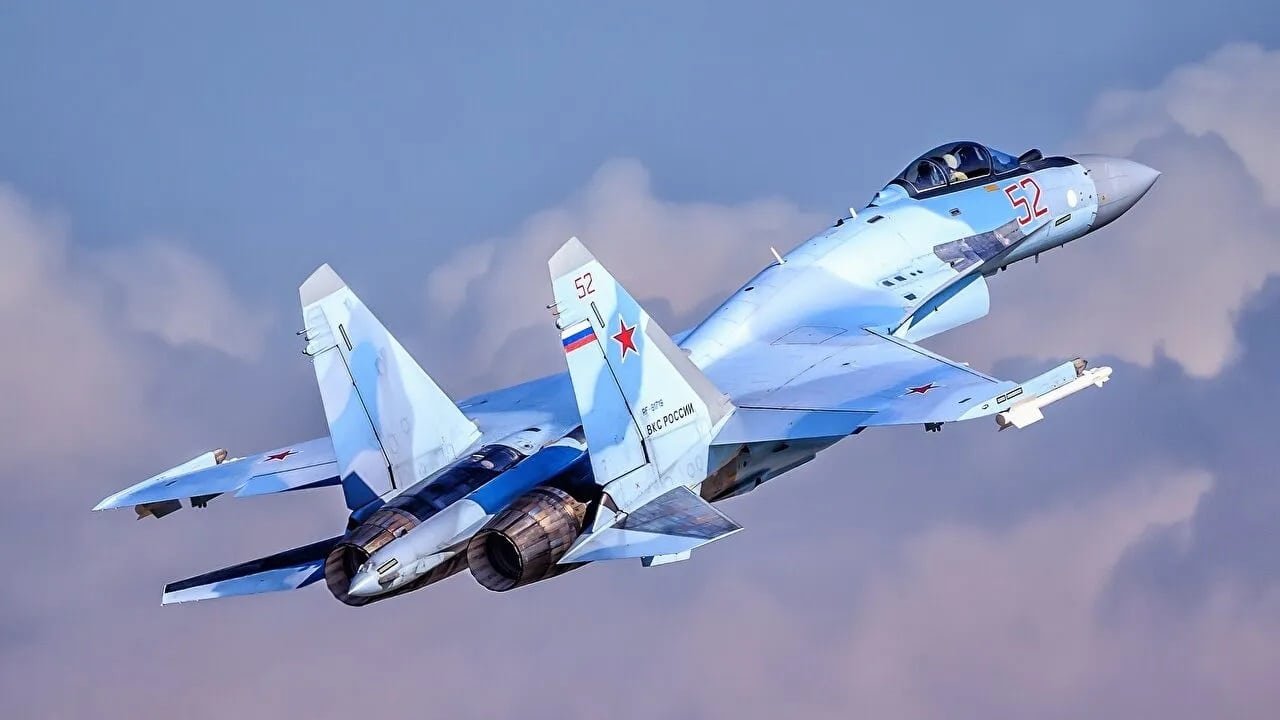
Russia Sold China 24 Su-35 Fighters Despite the Reverse-Engineering Risk: Russia agreed in November 2015 to sell China 24 Su-35 fighters, making Beijing the first foreign customer for what was then Moscow’s most advanced operational combat aircraft. Public accounts valued the package between $2 billion and $2.5 billion, and Russia completed aircraft deliveries in 2019.
The sale looked risky. Russian officials and aviation executives had spent years worrying that China would study the jet, copy its most valuable systems, and use Russian engineering to strengthen a domestic competitor. United Aircraft Corporation acknowledged those intellectual-property concerns while negotiations were still underway.
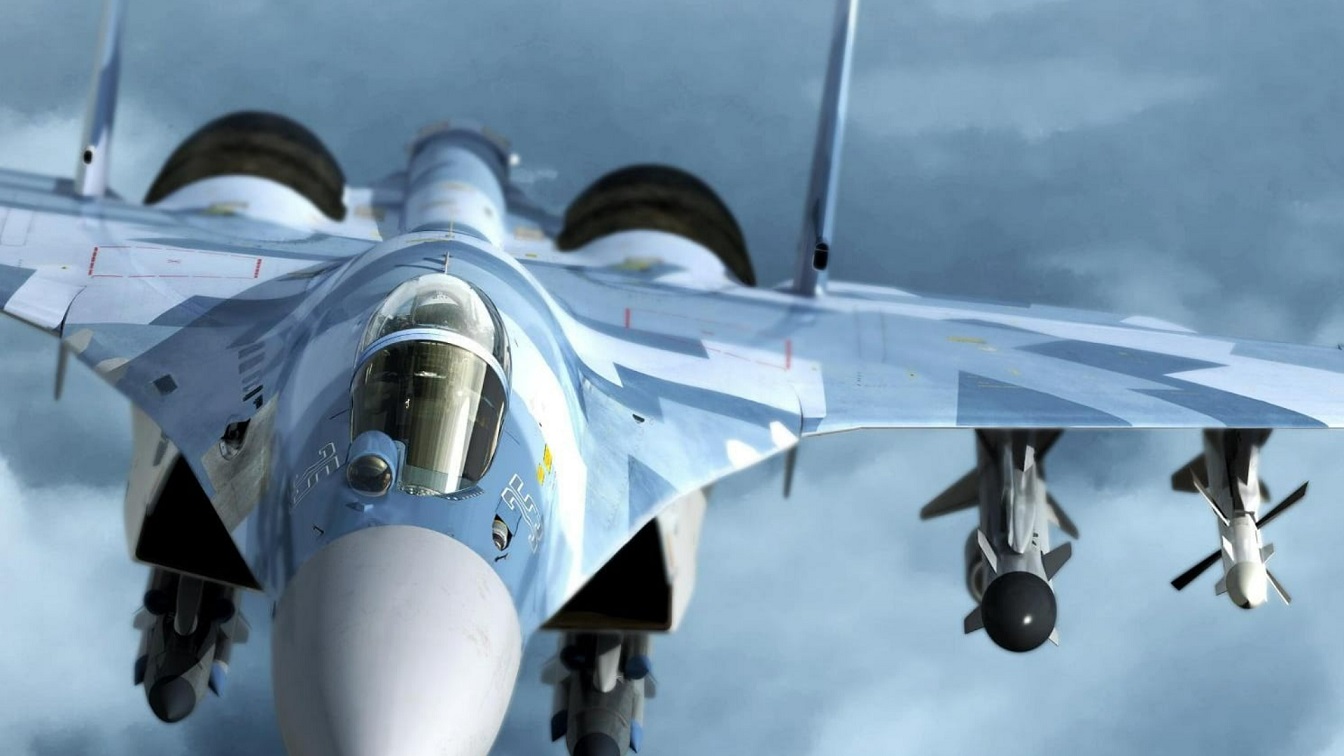
Su-35. Image Credit: Creative Commons.
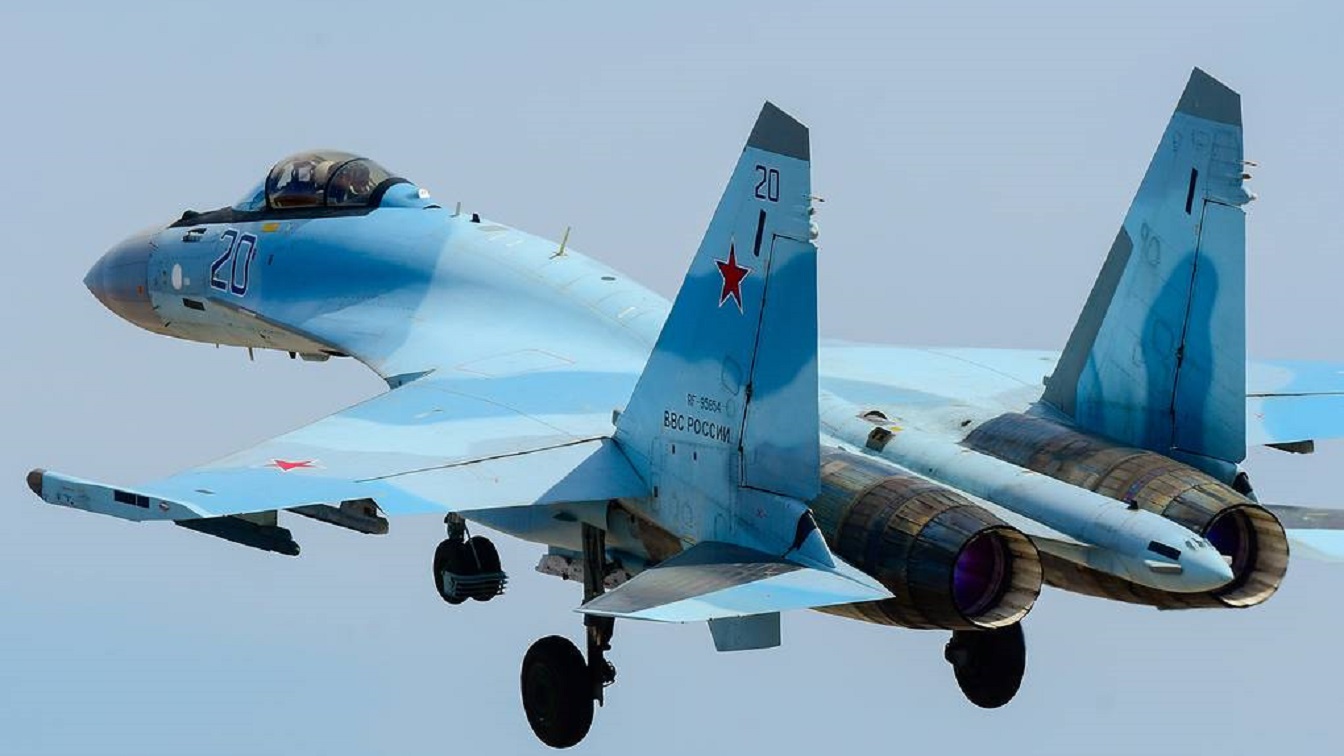
Su-35S fighter. Image Credit: Russian State Media.
Those fears grew from the earlier Su-27 relationship. China assembled the J-11A under a Russian license, then produced the J-11B with Chinese avionics, weapons, and other changes after licensed assembly ended. Moscow regarded the J-11B as an unauthorized extension of the arrangement, leaving the Su-35 negotiation burdened by a history neither side had forgotten.
China’s decision also seemed odd. The J-20 had first flown in 2011 and was deep into testing. The dates explain the purchase. When the Su-35 contract was signed, the J-20 had not entered service or made its public air-show debut. China did not confirm the stealth fighter’s assignment to combat units until February 2018, after Su-35 deliveries had begun.
Russia Limited the Su-35 Technology Transfer
Moscow did not hand China a production line or design package. The contract covered complete aircraft without formal technology transfer, along with support equipment and spare engines. Twenty-four fighters also represented a useful production run rather than a handful of evaluation airframes.
The airframe was not the main secret. China had operated Su-27s, Su-30s, and domestic Flanker derivatives for decades. The prized areas were the AL-41F1S engines, thrust-vectoring system, Irbis-E radar, infrared search-and-track equipment, electronic warfare suite, and the software integrating those components. That technology shaped the debate over Moscow’s Su-35 gamble.
Analysts disagreed over how much Beijing would gain. Some saw the limited purchase as evidence that China wanted embedded technology more than another fighter regiment. Others argued that complex engines and avionics were not reproduced by taking apart a finished aircraft.
Metallurgy, manufacturing tolerances, software, coatings, and years of test data do not arrive with the jet. Russia judged controlled access less damaging than forfeiting the sale while Chinese engineering advanced without it.
Sanctions and Factory Economics Favored the Deal
The timing favored Moscow. Russia faced Western sanctions after its 2014 seizure of Crimea, while the ruble’s decline made arms exports more profitable against costs paid largely in Russian currency. The Chinese order supported United Aircraft Corporation and the Komsomolsk-on-Amur plant, gave the Su-35 a prominent first export customer, and strengthened a political relationship the Kremlin valued more after its break with the West.
Russia also saw its sales window narrowing. China was becoming less dependent on imported fighters each year.
Refusing the Su-35 offered only a temporary delay in Beijing’s access to several systems; it would not stop the J-16, J-20, or domestic engine programs. Selling one regiment let Moscow earn hard currency and retain influence before Beijing’s industry closed much of the gap. That logic explains why the deal looked profitable despite its long-term risk.
China Needed Range Before the J-20 Was Ready
The J-20 existed in 2015, but it was still a development aircraft. Early production reflected China’s continuing struggle with high-performance jet engines. The Su-35 offered a mature combination of range, payload, sensors, maneuverability, and weapons while the stealth fleet was small and its intended domestic powerplant remained unfinished.
China quickly used the Russian fighter for the mission its specifications favored. In February 2018, the PLA Air Force announced that Su-35s had joined a combat patrol over the South China Sea.
Three months later, Su-35s escorted H-6K bombers through the Bashi Channel during a patrol around Taiwan. Long endurance and powerful sensors gave Beijing an over-water escort and interception aircraft without consuming its scarce early J-20 force.
The purchase also gave Chinese engineers and pilots a benchmark. The regiment allowed direct comparison with the J-11D and J-16, revealed Russian maintenance demands, and showed how the radar, flight controls, engines, and weapons behaved in regular operations. That was more useful than building a direct Su-35 copy. It helped China judge where its wider Flanker-derived family was competitive and where Russian solutions still held value.
The Su-35 Became a Niche Fleet Inside a Much Larger Chinese Air Force
By 2026, the balance had changed. FlightGlobal reported that China had five active J-20 production lines and potential output near 100 aircraft per year. Shenyang continued producing J-16s as China moved more of its fighter force onto domestic airframes and engines. The 24 Su-35s became a specialized element inside a force built mostly at home.
They remain operational. On October 19, 2025, Australia identified a Chinese Su-35 that released flares near an RAAF P-8A over the South China Sea. Beijing said its forces were expelling an aircraft that had entered Chinese-claimed airspace. Russia later offered additional Su-35s, but Beijing never announced a second order.
About the Author: Harry J. Kazianis
Harry J. Kazianis (@Grecianformula) was the former Senior Director of National Security Affairs at the Center for the National Interest (CFTNI), a foreign policy think tank founded by Richard Nixon based in Washington, DC. Harry has over a decade of experience in think tanks and national security publishing. His ideas have been published in the NY Times, The Washington Post, The Wall Street Journal, CNN, and many other outlets worldwide. He has held positions at CSIS, the Heritage Foundation, the University of Nottingham, and several other institutions related to national security research and studies. He is the former Executive Editor of the National Interest and the Diplomat. He holds a Master’s degree focusing on international affairs from Harvard University.

