
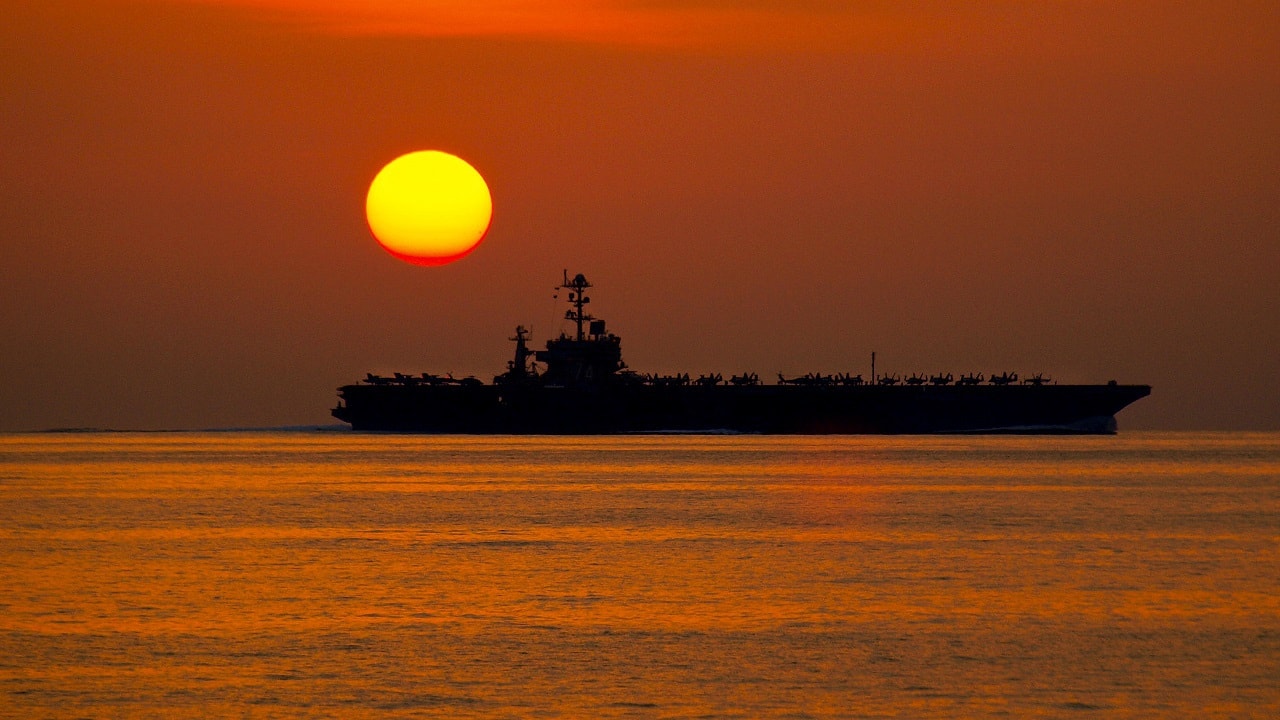
Popular discussion often focuses on whether China can sink a US supercarrier operating in the Indo-Pacific.
But disrupting US power projection may not require an act as significant as sinking a carrier. In a high-end Pacific conflict, Beijing’s objective may be much more humble; it could simply be to take a carrier out of the fight.
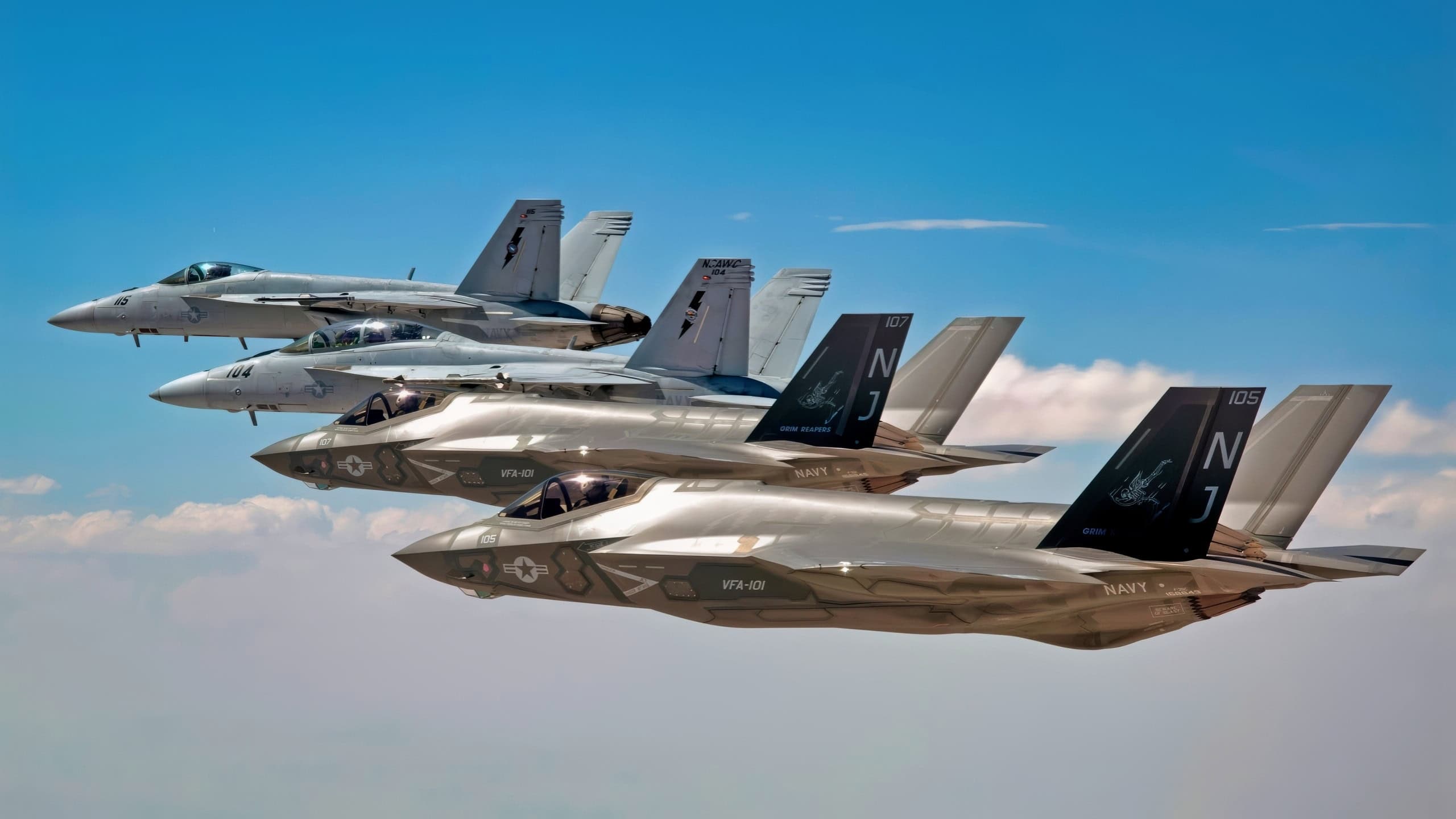
FALLON, Nev. (Sept. 3, 2015) F-35C Lightning IIs, assigned to the Grim Reapers of Strike Fighter Squadron (VFA) 101, and an F/A-18E/F Super Hornets assigned to the Naval Aviation Warfighter Development Center (NAWDC) fly over Naval Air Station Fallon’s (NASF) Range Training Complex. VFA 101, based out of Eglin Air Force Base, is conducting an F-35C cross-country visit to NASF. The purpose is to begin integration of F-35C with the Fallon Range Training Complex and work with NAWDC to refine tactics, techniques and procedures (TTP) of F-35C as it integrates into the carrier air wing. (U.S. Navy photo by Lt. Cmdr. Darin Russell/Released)
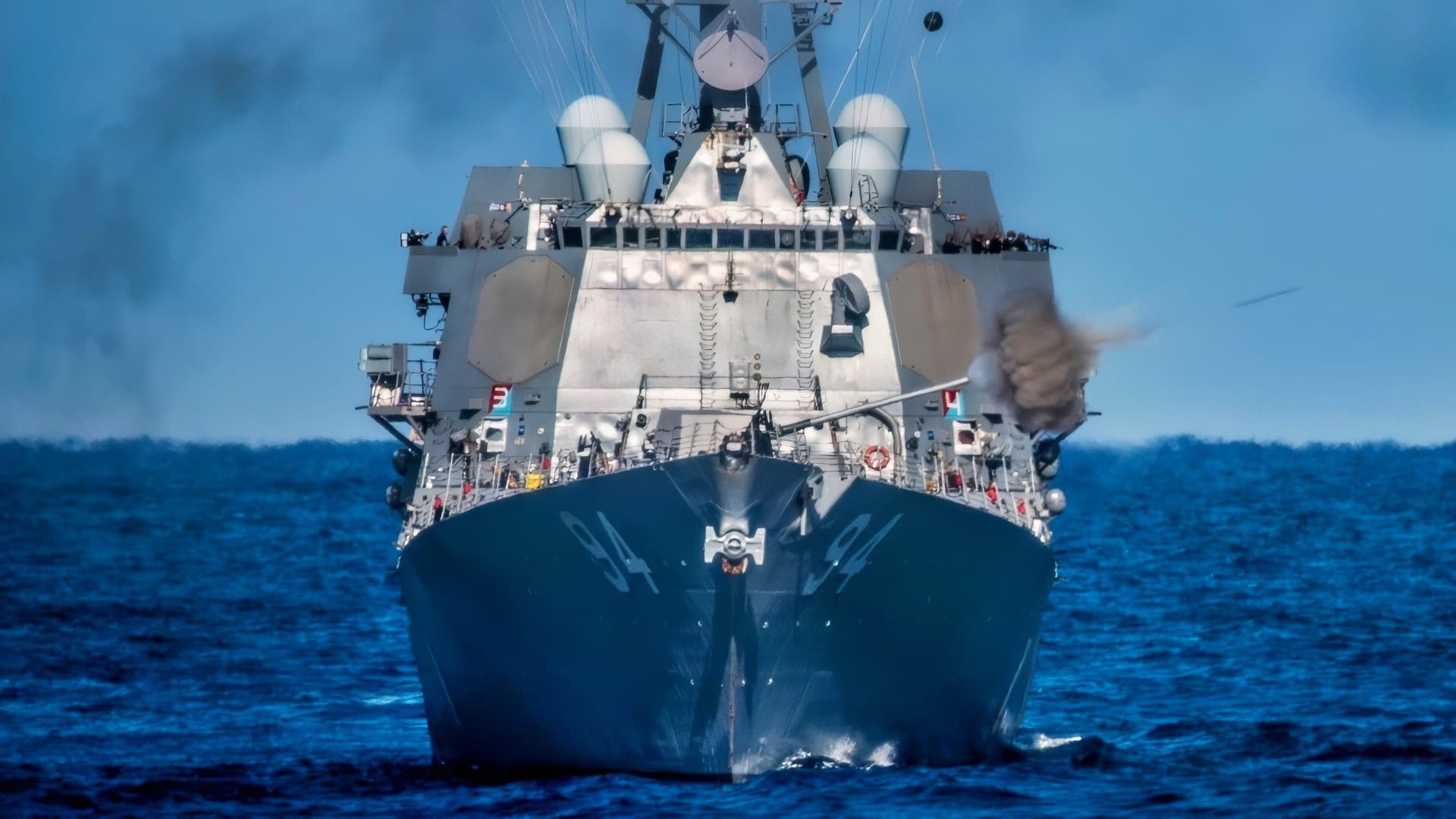
The guided missile destroyer USS Nitze (DDG 94) fires its MK-45 5 inch gun during a Surface Warfare Advanced Tactical Training (SWATT) exercise. Nitze is part of Destroyer Squadron (DESRON) 26 which supports Carrier Strike Group (CSG) 10. SWATT is led by the Naval Surface and Mine Warfighting Development Center (SMWDC) and is designed to increase warfighting proficiency, lethality, and interoperability or participating units. (U.S. Navy photo by Mass Communication Specialist 3rd Class Bryan Valek)
How? By damaging the flight deck, propulsion, electrical systems, or aviation fuel infrastructure. A carrier that still floats—but cannot launch aircraft for weeks or months—has no strategic value. Something like a fire could put a carrier out of action for a very long period of time.
So China can achieve a significant strategic victory simply by damaging an aircraft carrier sufficiently to prevent the launch and recovery of aircraft.
What is Mission Kill?
China would only need to achieve “mission kill,” which occurs when a ship remains afloat but cannot perform its intended mission.
For an aircraft carrier, mission kill could mean the flight deck is rendered unusable, the catapults or arresting gear are damaged, or there is a loss of electrical power or a fire in aviation support spaces.
Even degraded command-and-control could result in mission kill. Any situation in which the carrier survives but its air wing cannot generate combat sorties would qualify as mission kill.
Separating Survivability From Effectiveness
The Nimitz- and Ford-class carriers are among the most survivable warships ever constructed, with massive displacements exceeding 100,000 tons and extensive compartmentalization and redundant power and firefighting systems.
The critical areas are armored, and the multi-thousand-sailor crews are extensively trained in damage control.
These ships are extremely hard to sink—a reality that the USS America SINKEX demonstrated in 2005, when the US Navy spent weeks trying to sink one of its own supercarriers.
But survivability doesn’t equal combat effectiveness.
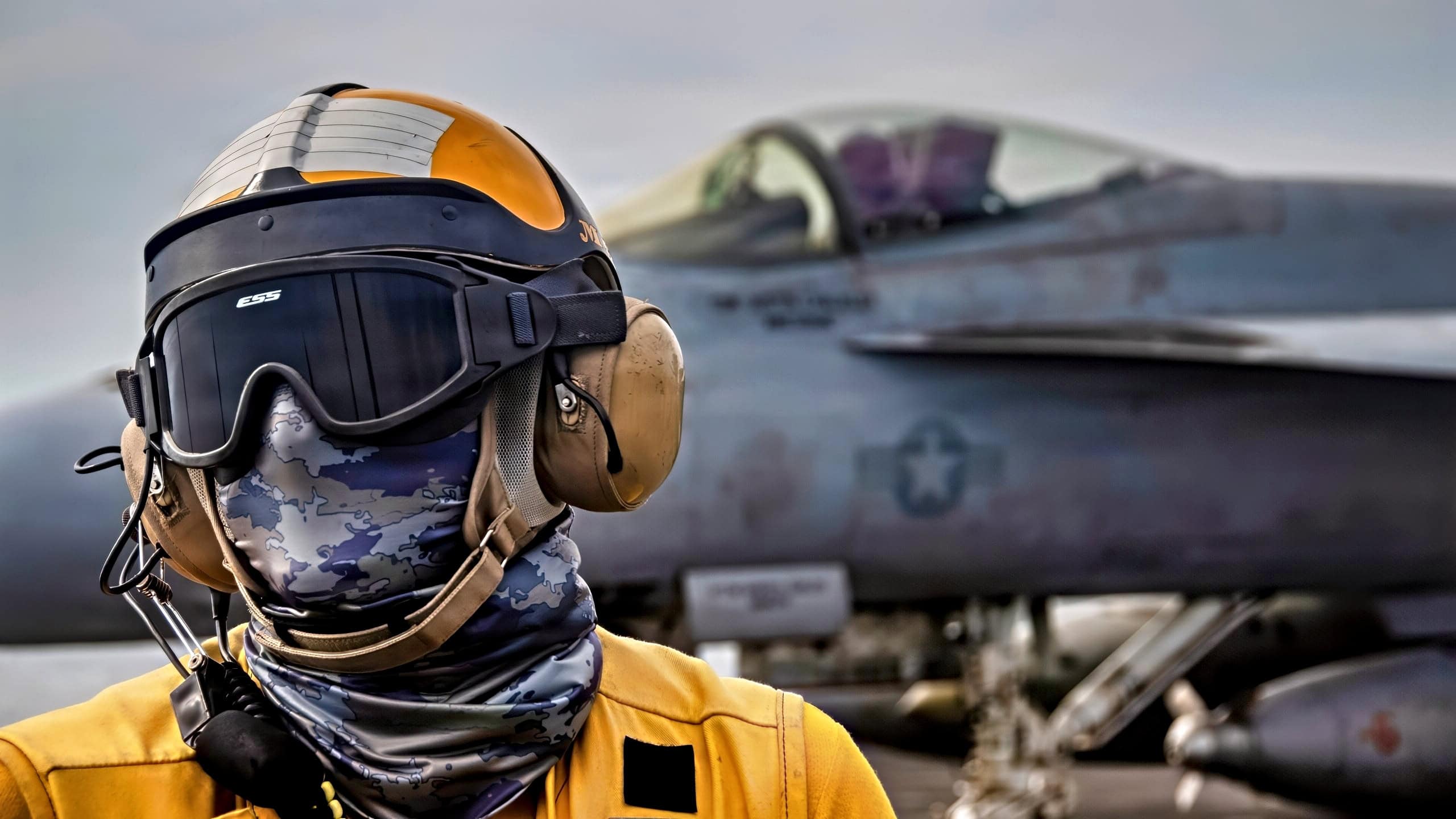
A U.S. Sailor prepares to launch a F/A-18E Super Hornet, attached to the “Kestrels” of Strike Fighter Squadron (VFA) 137, from the flight deck of Nimitz-class aircraft carrier USS Nimitz (CVN 68) in the Pacific Ocean, April 8, 2026. Nimitz is deployed as part of Southern Seas 2026 which seeks to enhance capability, improve interoperability, and strengthen maritime partnerships with countries throughout the region through joint, multinational and interagency exchanges and cooperation. (U.S. Navy photo by Mass Communication Specialist 2nd Class Jaron Wills)
A floating carrier is not necessarily a fighting carrier.
The carrier must maintain flight operations to remain combat-effective, and those operations depend on numerous complex systems working together.
Damage to a single critical area can dramatically reduce operational tempo; fires can force the suspension of launch and recovery operations.
Even smoke contamination can shut down portions of the ship.
Aviation fuel systems and weapons elevators must stay functional, despite being particularly sensitive. The point is: a lot can go wrong, keeping aircraft out of the air.
The Threat of Fire
Naval history suggests that fire can be as disruptive, perhaps more disruptive, than flooding.
Examples include the USS Forrestal in 1967, the USS Enterprise in 1969, the USS Bonhomme Richard in 2020, and the USS Gerald R. Ford in 2026.
Fires spread rapidly through cables, equipment spaces, and aviation facilities.
Even when extinguished, smoke, heat damage, and structural inspections can keep ships offline.
And in terms of maintaining combat effectiveness, repair timelines become relevant.
Modern aircraft carriers are among the most complex machines ever built. Major repairs can take months, even years.
Specialized dry docks must be used at nuclear-certified facilities, staffed by highly skilled labor, with a unique supply chain to replace exact components.
In a fast-moving Indo-Pacific war lasting weeks or months, a heavily damaged carrier may never return to combat. It may be functionally dead as far as the conflict is concerned.
China’s Approach
China’s objective will not necessarily be to destroy every American vessel.
Instead, China’s broader anti-access/area denial (A2/AD) strategy seeks to push US forces farther from the battlefield, reduce sortie generation, complicate logistics, and delay intervention.
Disabling just one or two carriers using the mission-kill methods demonstrated above would temporarily reduce US air power during a decisive phase of the conflict.
China could pursue a mission kill through coordinated attacks.
Potential combinations include the deployment of anti-ship ballistic missiles, like the DF-21D or DF-26, cruise missiles, submarines, long-range bombers, drones, and cyber and electronic warfare.
The goal would be to overwhelm defenses and to cause cumulative damage rather than catastrophic sinking.
Fortunately, the US Navy is planning for this approach.
Carrier Strike Groups rely on multiple defensive layers, including Aegis destroyers, SM-series interceptors, electronic warfare, combat air patrols, and close-in weapons.
Finding and hitting a US carrier is easier said than done, with the US playing a sophisticated defensive style.
But China does not have to sink a carrier, only achieve mission kill, to completely alter the course of an Indo-Pacific confrontation.
MORE – The US Navy’s Aircraft Carrier Toilet Problem
About the Author: Harrison Kass
Harrison Kass is a writer and attorney focused on national security, technology, and political culture. His work has appeared in Tablet, City Journal, The Hill, The Spectator, and The Cipher Brief. He holds a JD from the University of Oregon and a master’s in Global & Joint Program Studies from NYU. More at harrisonkass.com.