
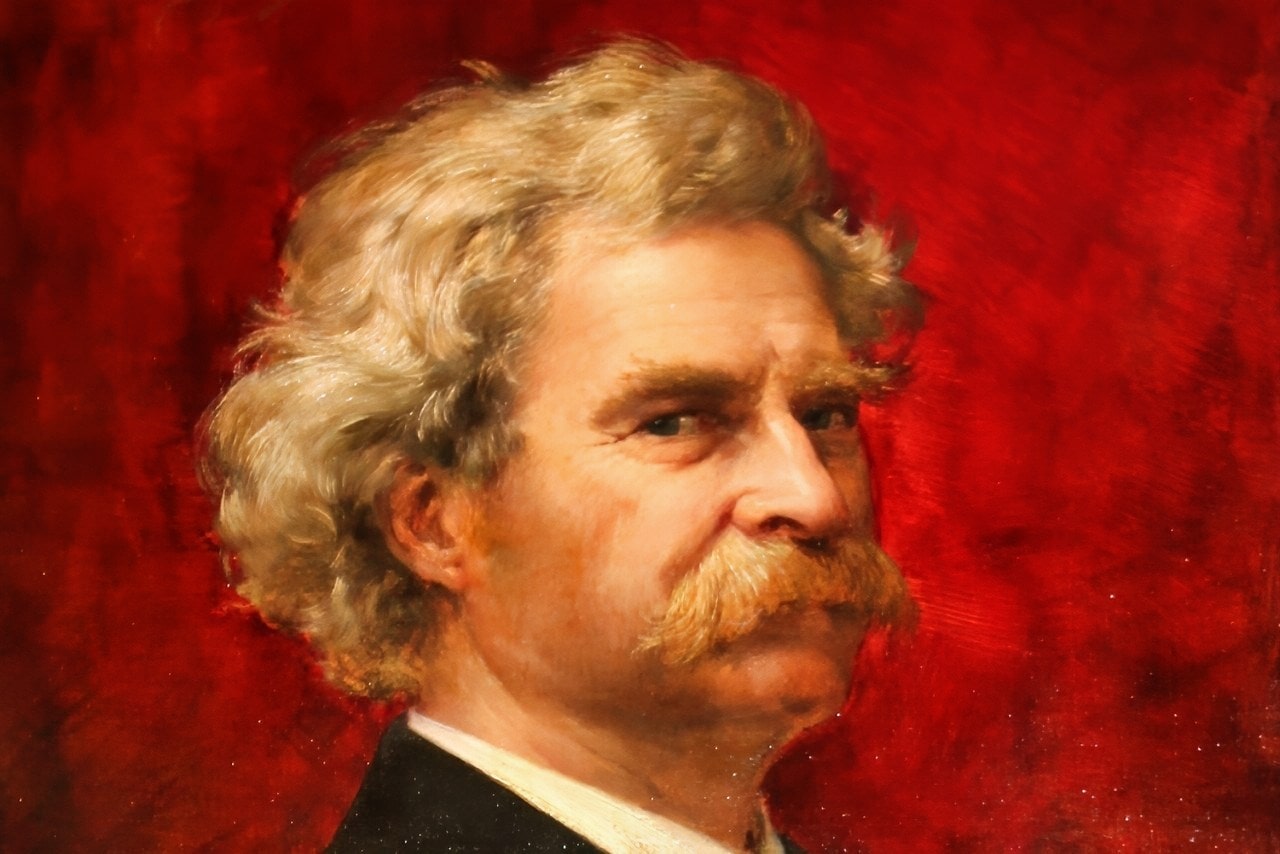
Mark Twain Spent His Life Finding Out Why He Was Born – “The two most important days in your life are the day you are born and the day you find out why.” The line is widely attributed to Mark Twain, but researchers have found no evidence that he said or wrote it. The earliest strong match appeared in a 1970 sermon, 60 years after his death. The attribution is unsupported. The idea still fits his life.
Who Was Mark Twain?
Samuel Langhorne Clemens was born on November 30, 1835, in Florida, Missouri. His family moved to Hannibal when he was four. The Mississippi River and the slaveholding society around it later supplied the landscapes, voices and conflicts of his greatest books.
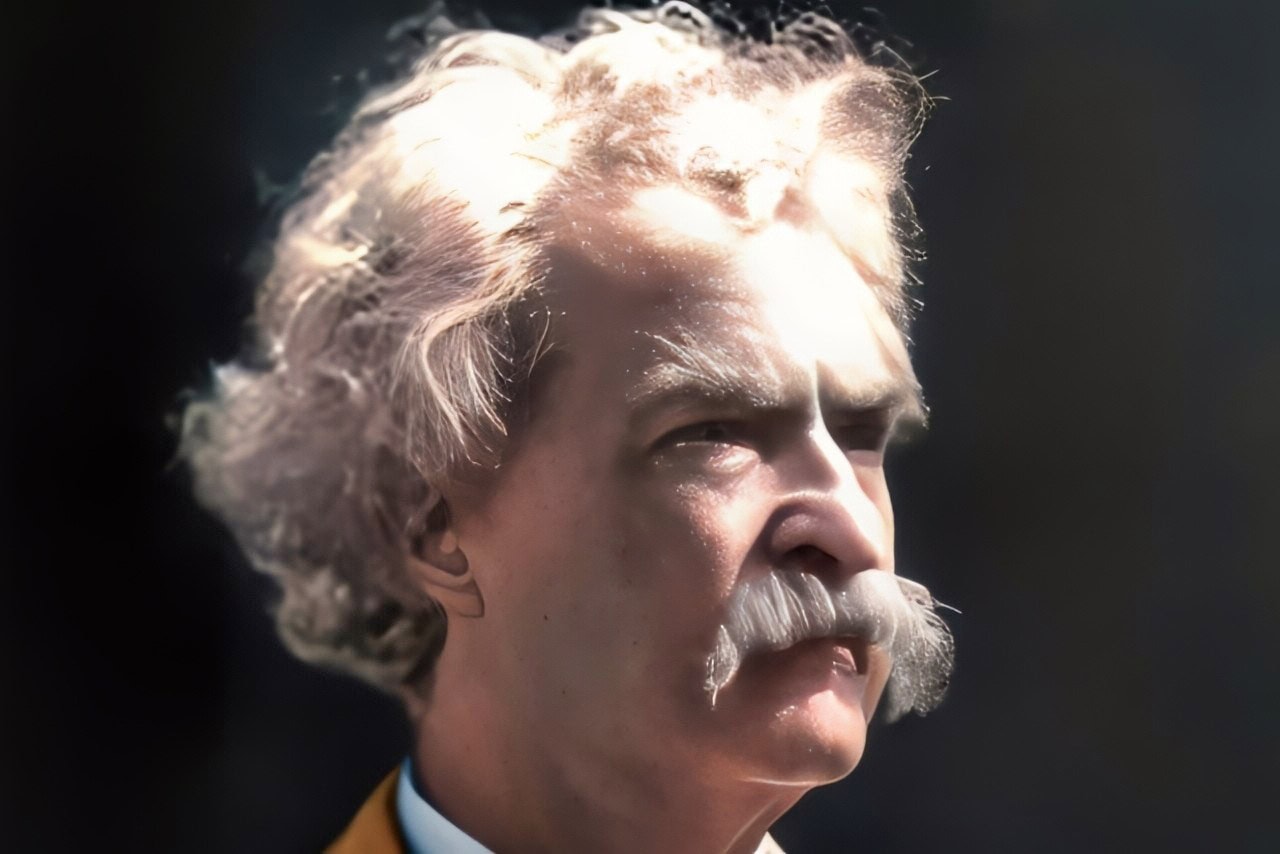
Mark Twain. Creative Commons Image.
His father died in 1847, leaving the family in financial trouble. Clemens left school and entered the printing trade. Newspaper offices gave him a living, access to books and an education in how stories traveled through a community.
Purpose did not arrive as one revelation. Clemens repeatedly lost one future and constructed another: printer, pilot, militia volunteer, miner, reporter, lecturer, novelist, publisher, debtor and political dissenter. Mark Twain emerged from those reinventions.
The Mississippi Gave Clemens His First Calling
In 1857, Clemens persuaded steamboat pilot Horace Bixby to train him. He earned his license on April 9, 1859, after nearly two years of apprenticeship, then worked the Mississippi until the Civil War disrupted commercial traffic in 1861. The work demanded precise knowledge of a river that changed constantly.
The work also brought personal catastrophe. His younger brother Henry worked aboard the steamboat Pennsylvania. A boiler explosion in June 1858 fatally injured Henry, and Samuel remained with him before his death. The loss followed Clemens into his later writing.
After the war began, Clemens joined a Missouri militia with Confederate sympathies and left after roughly two weeks. He traveled west with his brother Orion, a federal appointee in Nevada Territory. His river career was over, and his effort to make money from silver mining failed.
Nevada Turned a Failed Miner Into Mark Twain
Clemens found steadier work at Virginia City’s Territorial Enterprise. On February 3, 1863, he first used “Mark Twain” in print, borrowing a river term for water two fathoms deep. The name connected the failed prospector to the profession he had lost and gave him a memorable public identity.
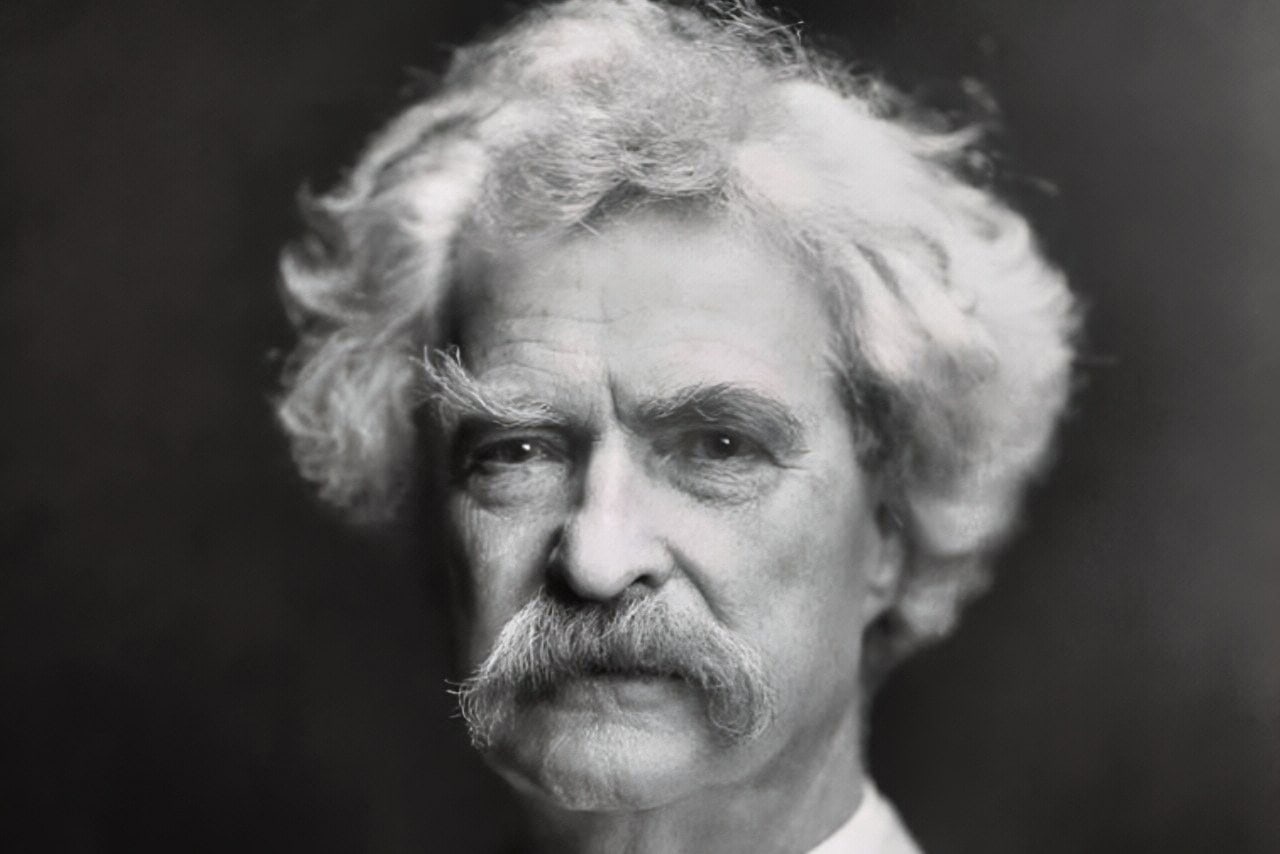
Mark Twain Black and White. Image Credit: Creative Commons.
Western journalism rewarded speed and an ear for absurdity. Clemens turned local feuds, mining speculation and frontier boasting into stories. “The Celebrated Jumping Frog of Calaveras County” brought national attention in 1865, followed by lecture work and travel reporting.
The Innocents Abroad, published in 1869, established him as a bestselling author. Its American narrator punctured European pretension and Old World claims to cultural superiority. Twain had found a commercial style built from observation, skepticism and ordinary speech.
Hartford Gave Twain the Work That Defined Him
Clemens married Olivia Langdon in 1870. The couple settled in Hartford, Connecticut, the following year, and their home became the center of his most productive years. He wrote The Adventures of Tom Sawyer, Life on the Mississippi, A Connecticut Yankee in King Arthur’s Court and much of Adventures of Huckleberry Finn while living there.
Tom Sawyer transformed Hannibal into remembered childhood. Huckleberry Finn went further. Through Huck’s vernacular narration and his decision to help Jim escape slavery, Twain placed personal loyalty against the moral rules of the society that raised him. The book remains admired and contested because its treatment of race offers no comfortable distance from nineteenth-century America.
Twain’s achievement rested on more than humor. He made regional American speech carry a major novel while exposing fraud, cruelty and respectable hypocrisy. The printer and pilot had taught him how people spoke outside polite society.
Bankruptcy Forced Twain to Rebuild Again
Literary success did not make Clemens a sound businessman. His publishing company scored a major success with Ulysses S. Grant’s memoirs, but he poured money into the Paige typesetting machine. The invention promised to transform printing, yet delays and costs consumed much of his fortune.
Charles L. Webster and Company declared bankruptcy in 1894. Clemens was not legally required to repay every creditor, but he set out to do so. In 1895, he began an around-the-world lecture tour, turning fame and stamina into income. By 1898, he had paid the debts in full.
The recovery carried a terrible price. While the family was abroad in 1896, his daughter Susy died of meningitis in Hartford. Clemens learned of her illness too late to reach her before her death.
Grief Turned Twain Toward Politics and Autobiography
His later writing grew darker as private losses accumulated. Olivia died in 1904. His daughter Jean, who lived with epilepsy, died on December 24, 1909. Humor remained part of his voice, but it increasingly served anger at imperialism, racial violence and the language governments used to make domination respectable.
After the Spanish-American War, Twain joined the anti-imperialist movement and attacked American rule in the Philippines. “To the Person Sitting in Darkness,” published in 1901, targeted the moral claims used by imperial powers. The former Confederate volunteer had become a public critic of conquest conducted beneath patriotic and religious language.
Twain also spent years trying to tell his own story. In 1906, he began a long series of dictated recollections that moved across time rather than following a conventional chronology. He wanted much of it withheld until after his death, freeing him to speak openly about family, politics and religion. His fame also made him a magnet for apocryphal sayings, including the claim that history rhymes.
Samuel Clemens died at Stormfield, his Connecticut home, on April 21, 1910. The closing words of his autobiography, written four months earlier, were devoted to Jean.
MORE – General Patton On How to Beat the Odds in 1 Quote
About the Author: Harry J. Kazianis
Harry J. Kazianis (@Grecianformula) was the former Senior Director of National Security Affairs at the Center for the National Interest (CFTNI), a foreign policy think tank founded by Richard Nixon based in Washington, DC. Harry has over a decade of experience in think tanks and national security publishing. His ideas have been published in the NY Times, The Washington Post, The Wall Street Journal, CNN, and many other outlets worldwide. He has held positions at CSIS, the Heritage Foundation, the University of Nottingham, and several other institutions related to national security research and studies. He is the former Executive Editor of the National Interest and the Diplomat. He holds a Master’s degree focusing on international affairs from Harvard University.

