
What a difference a year makes. Last August, Vladimir Putin landed on U.S. soil with high hopes of reaching a favorable agreement.
The memory of the disastrous February meeting at the White House between President Zelenskyy, President Trump, and Vice President Vance was still fresh in everyone’s mind.
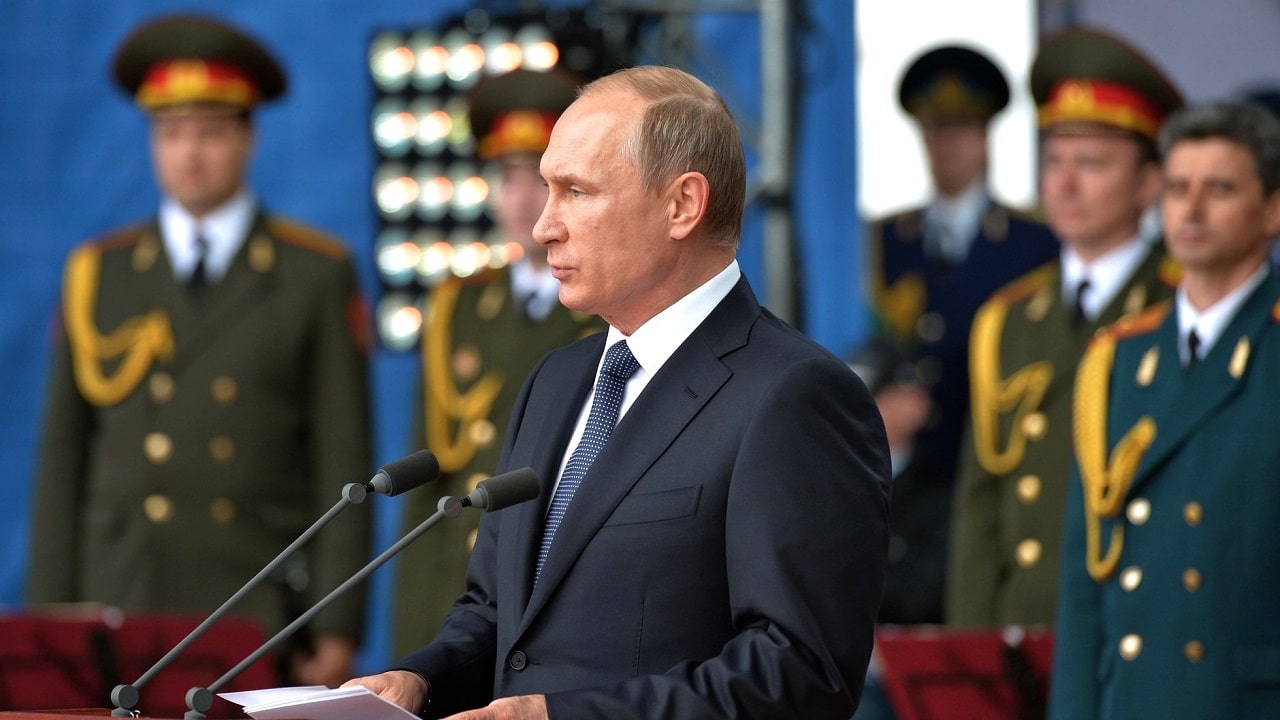
Vladimir Putin at the opening ceremony of international military-technical forum.
Russia was launching more drone attacks against Ukraine than at any stage of the war up to that point. Momentum appeared to be on Putin’s side.
Administration officials often noted that, sooner or later, Ukraine would need to make a deal. Bilateral relations were at a nadir.
Today, the war’s momentum has not only shifted in Ukraine’s favor, but U.S.-Ukrainian relations are also deepening rapidly.
Trump and Zelenskyy have worked through their differences. If a picture is worth a thousand words, last month’s photo of the presidents posing together with wide grins at the NATO Summit in Ankara says it all.
The advancement of Ukraine’s indigenous capabilities—ballistic missiles, cruise missiles, and drones—has had a significant impact on the battlefield.
Ukraine has managed to retake 270 square miles of its territory this year, a chunk of land the size of Singapore.
Russian energy infrastructure, logistical nodes, and military bases, including those far behind the front lines, have been consistently and successfully targeted.
The country faces a nationwide fuel shortage, lost revenues, and gaping holes in the budget.
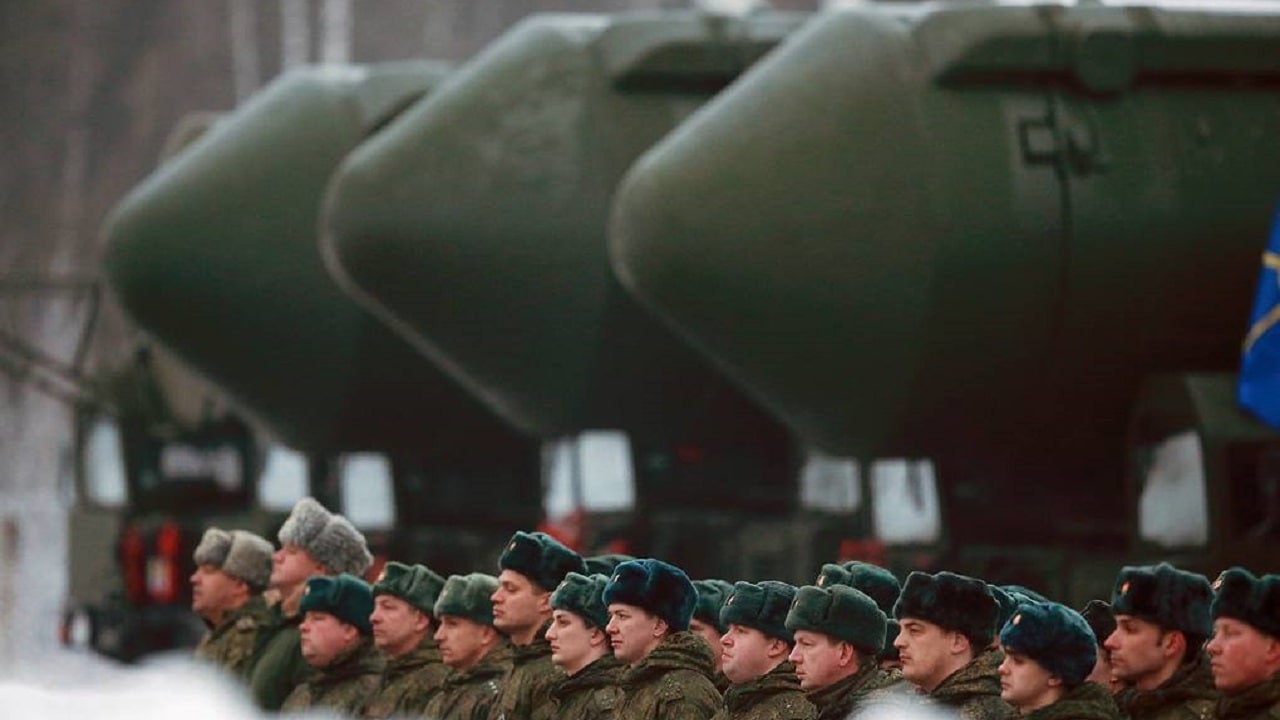
Russian nuclear weapons. Image Credit: Russian State Media.
Russia recently extended its gasoline export ban through the end of the year and has even had to import fuel from Belarus and India to ease the domestic crunch.
Holding onto occupied Crimea is becoming increasingly untenable for Moscow; the peninsula is increasingly isolated, and Russian tourists have increasingly stayed away this summer.
Evacuation plans for the families of occupation soldiers have been drawn up.
The daily images of Russian refineries on fire have shattered the Russian illusion of invincibility and shifted how the Trump Administration views Ukraine and what it can achieve on the ground.
In short, Ukraine looks more like a winner, and Russia increasingly like a loser.
The U.S.-Iran war has also shifted perceptions. Zelenskyy’s cagey visits to Qatar, Saudi Arabia, and the UAE, and the subsequent signing of defense technology agreements with those nations, raised Ukraine’s stock in the White House and served as a catalyst for the recent signing of the U.S.-Ukraine statement of intent, which establishes the framework for joint drone production.
For now, the agreement allows the U.S. to request Ukrainian drones for evaluation but could pave the way for the eventual production of Ukrainian systems in the U.S.
Similarly impactful, at the NATO Summit, President Trump announced a decision to grant Ukraine a license to produce interceptors for the Patriot missile defense system, the details of which the Pentagon is actively working to finalize.
The White House supported the Lindsey O. Graham Sanctioning Russia and Iran Act of 2026, which looks likely to clear the Senate with bipartisan support.
If it becomes law, it will afford the President additional tools to suffocate the Russian economy at a precarious time, focusing on the shadow fleet of oil tankers and Russian energy importers, and will put China in the crosshairs.
Ukrainian officials this week also noted that a visit by American negotiators Steve Witkoff and Jared Kushner to Kyiv is under active discussion.
A trip to Ukraine would be an important symbolic milestone.
While Witkoff has visited Moscow at least eight times in pursuit of a peace agreement, a visit to Ukraine has not yet materialized.
Even prominent critics of Ukraine with close ties to the President, such as activist Laura Loomer, appear to be turning a page.
Loomer has recently traveled around Ukraine, including to Kharkiv, noting, “I was bamboozled by Russian propaganda, and I came to believe a lot of untrue things about Ukraine.”
From Washington to the front lines, the tide has perceptibly turned; however, the war itself churns on.
Despite losing over 5,000 soldiers every week, Russia is widely expected to pursue a new round of mobilization sometime later this year, with Ukraine anticipating the mobilization of 300,000–500,000 additional troops sometime around October.
For Putin, the war against Ukraine is existential; he still believes he can outlast Ukraine’s will to resist and the West’s collective ability and will to assist.
The decision to mobilize, however, will exacerbate Russia’s acute workforce issues. More Russians will attempt to flee, further constraining an already inadequate pool of workers and further straining Russia’s shaky finances.
Will Ukraine’s current technological advantage and a surge of support in the U.S. be enough to create a permanent shift in the trajectory of the war?
We do not yet know. Ukraine faces domestic challenges of its own, as well as the prospect of another tough winter, with Russia targeting the nation’s energy infrastructure to freeze its will to fight.
What we do know is that the Administration may soon possess a new slate of tools to exert maximum pressure against Moscow’s teetering financial pyramid.
What is also increasingly clear is how crucial Ukraine is to the future of transatlantic and U.S. security.
How doggedly the Administration wields any new sanctions authority and how closely it pursues its increasingly close relationship with Kyiv could impact not only the outcome of the Russian war against Ukraine, but also the transformation of the American military in the years to come.
About the Author: Daniel Kochis
Daniel Kochis is a senior fellow in the Center on Europe and Eurasia at the Hudson Institute. He specializes in transatlantic security issues and regularly publishes on United States policy in Europe; NATO, Baltic, and Nordic dimensions of collective defense; and Arctic issues.