
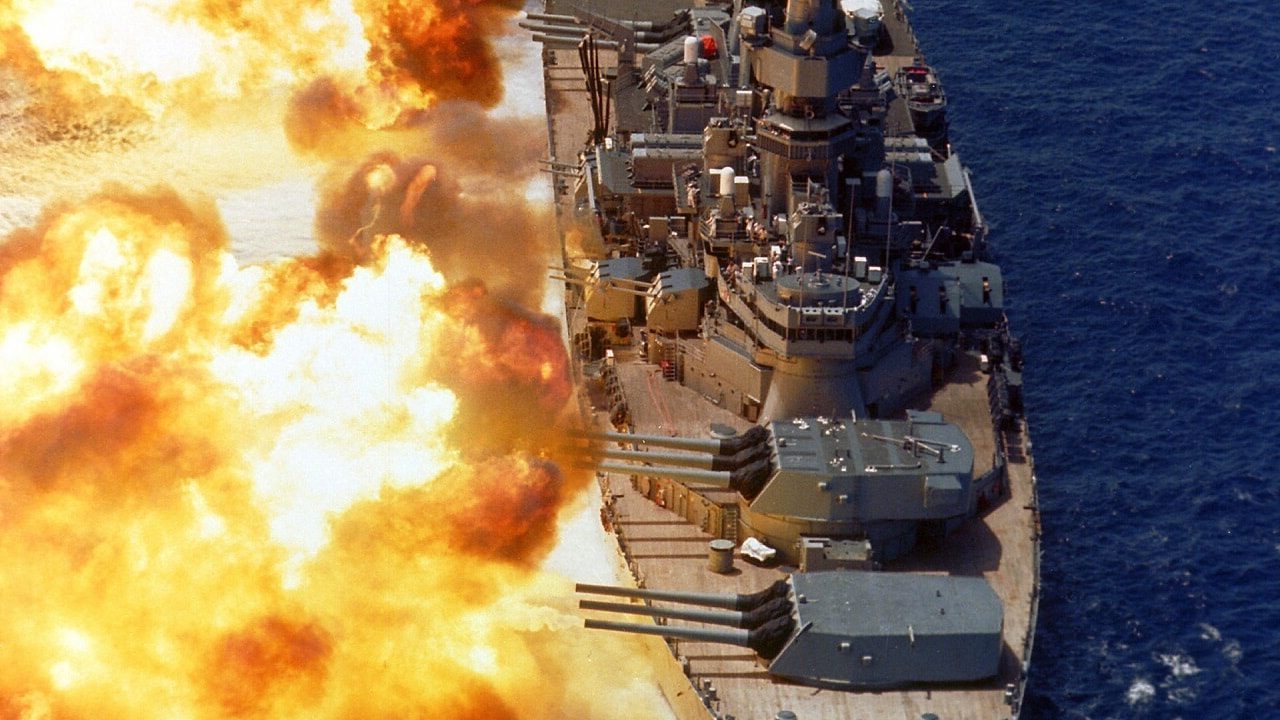
The Montana-Class Outclassed the Iowa on Paper. The Navy Still Canceled All Five: On July 21, 1943, the U.S. Navy canceled five Montana-class battleships before workers laid a single keel. The decision killed what would have been the largest, best-protected, and most heavily armed battleships in American service.
The final design displaced 60,500 tons under standard conditions and nearly 71,000 tons fully loaded. Each ship carried twelve 16-inch/50-caliber guns in four triple turrets, compared with nine aboard an Iowa-class battleship. The Montanas also received stronger underwater protection, heavier armor, and a new battery of twenty 5-inch/54-caliber dual-purpose guns.
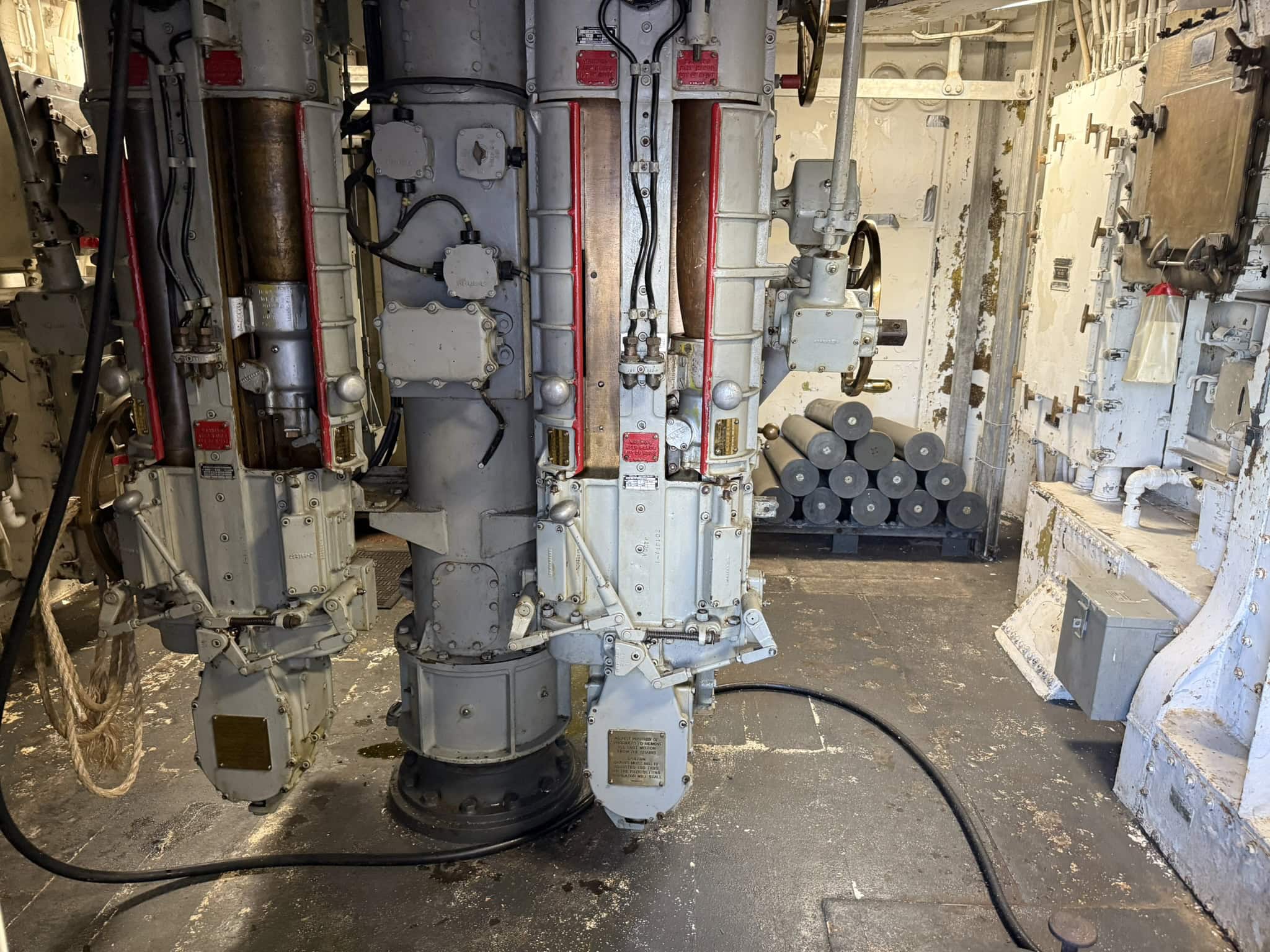
USS Iowa Battleship visit by Harry J. Kazianis for 19FortyFive.com. Taken back in August 15, 2025.
The design did not beat the Iowa in every category. Montana sacrificed speed for firepower and protection, reaching 28 knots rather than the Iowa class’s 33. The Navy rejected an excellent gunfighter because the Pacific War no longer rewarded another expensive battle-line ship as much as it rewarded flight decks, escorts, landing vessels, and anti-submarine warships.
The five authorized ships were Montana, Ohio, Maine, New Hampshire, and Louisiana. Two were assigned to the Philadelphia Navy Yard, two to the New York Navy Yard, and one to Norfolk. The Navy suspended the program on May 20, 1942, and formally erased it fourteen months later.
Montana Corrected the Iowa Class’s Biggest Design Trade
The Iowa-class grew out of a demand for a fast battleship capable of keeping pace with carriers and pursuing Japan’s rebuilt Kongo-class fast battleships. Its long hull, 212,000-horsepower machinery, and 33-knot speed produced an unusually mobile capital ship. The price appeared in the balance among speed, armor, armament, and displacement, a compromise reflected in the Iowa class’s combination of speed and nine 16-inch guns.
Montana started from a different requirement. Treaty limits no longer controlled American design, allowing naval architects to widen the hull, add a fourth main-battery turret and restore protection closer to the traditional standard of resisting guns as powerful as those carried aboard the ship. A detailed examination of the proposed armor describes a 16.1-inch inclined main belt, while official Navy history describes the class’s shell and underwater protection as greatly enhanced.
Twelve Mark 7 rifles firing 2,700-pound armor-piercing projectiles would have placed 32,400 pounds of steel in a full broadside. Iowa’s nine guns produced 24,300 pounds. The additional turret therefore increased the number of main guns and broadside weight by one-third, while the larger hull supplied more room for magazines and protective subdivision.
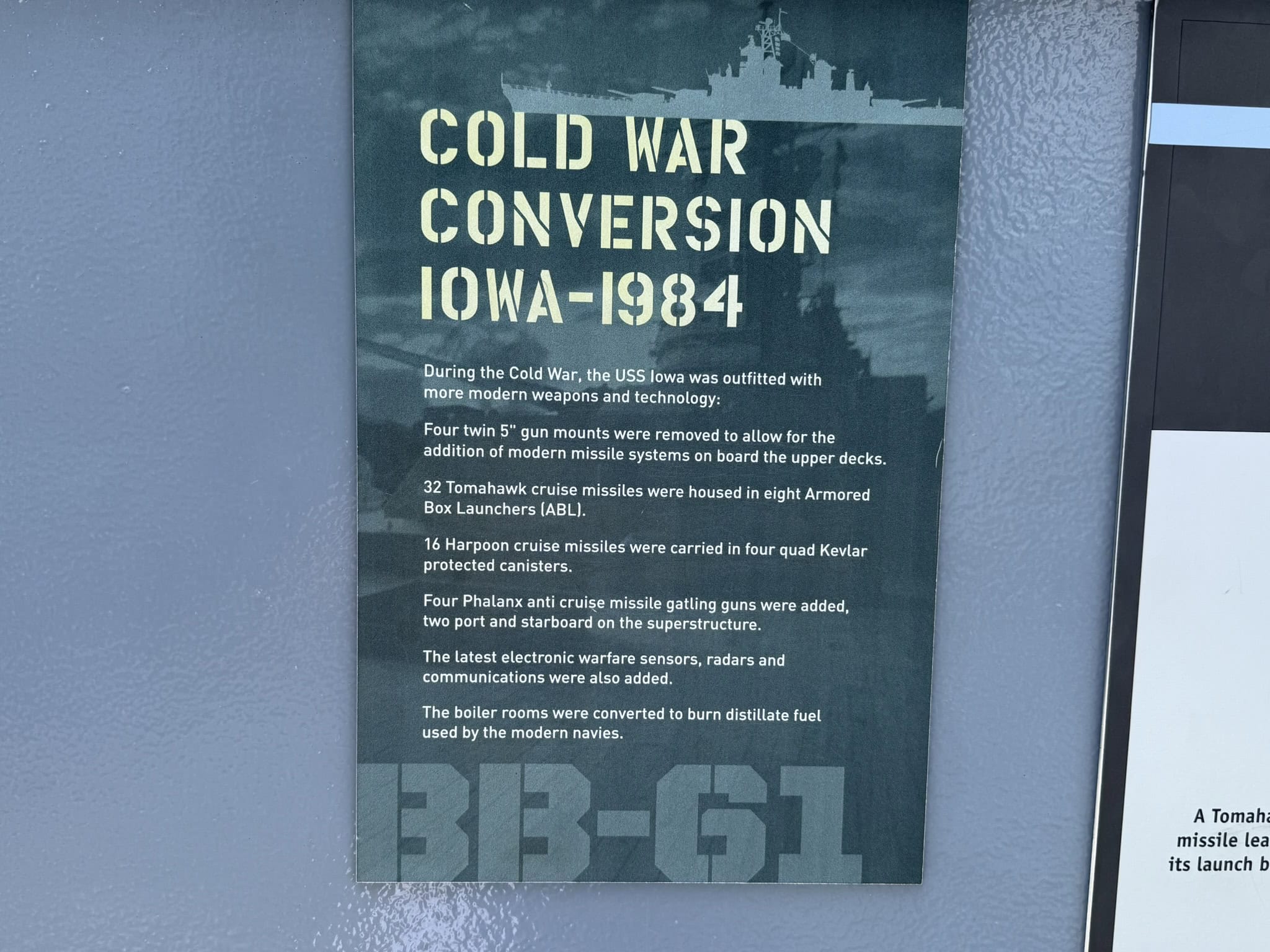
USS Iowa Battleship visit by Harry J. Kazianis for 19FortyFive.com. Taken back in August 15, 2025.
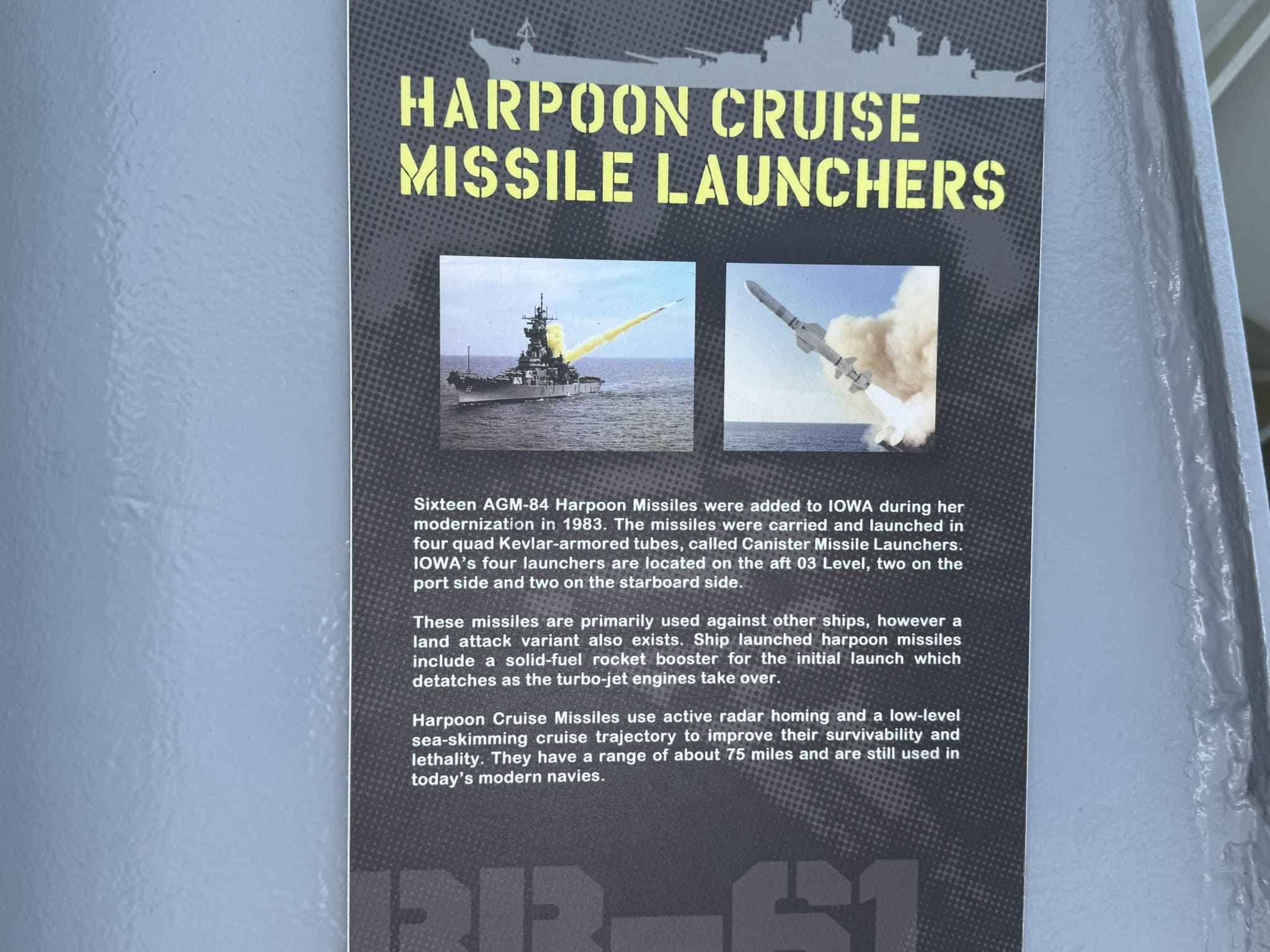
USS Iowa Battleship visit by Harry J. Kazianis for 19FortyFive.com. Taken back in August 15, 2025.
The secondary battery also represented a meaningful advance. Montana’s twenty 5-inch/54 guns fired at greater velocity and range than the 5-inch/38 weapons aboard the Iowa class. They were intended for surface and anti-aircraft work, although the final number of light anti-aircraft weapons would have changed as wartime experience accumulated.
Those qualities explain why the Montana design still dominates battleship comparisons. On paper, it joined the firepower of four Iowa turrets to an armor scheme built for a much harder surface fight. The result was a stronger battleship, although not a faster or more strategically useful one.
The Montana-Class Was Not a Precise Answer to Yamato
The popular description of Montana as America’s planned Yamato killer goes too far. U.S. intelligence did not possess complete wartime specifications for Japan’s Yamato class while American designers shaped Montana. The full scale of the Japanese ship and its 18.1-inch guns became clear only after the war.
American planners still expected Japan to field larger and more powerful capital ships. They also understood the destructive power of their own 2,700-pound Mark 8 shell. The Montana requirement reflected those uncertainties and a desire to recover protection sacrificed in earlier fast-battleship designs.
A completed Montana would have presented Yamato with a formidable opponent. Twelve 16-inch guns, radar-directed fire control, a heavy broadside, and stronger protection offered a credible combination. Any claim about the winner remains hypothetical because neither ship’s real performance under identical battle conditions was tested. More importantly, the Pacific War repeatedly prevented such contests from occurring.
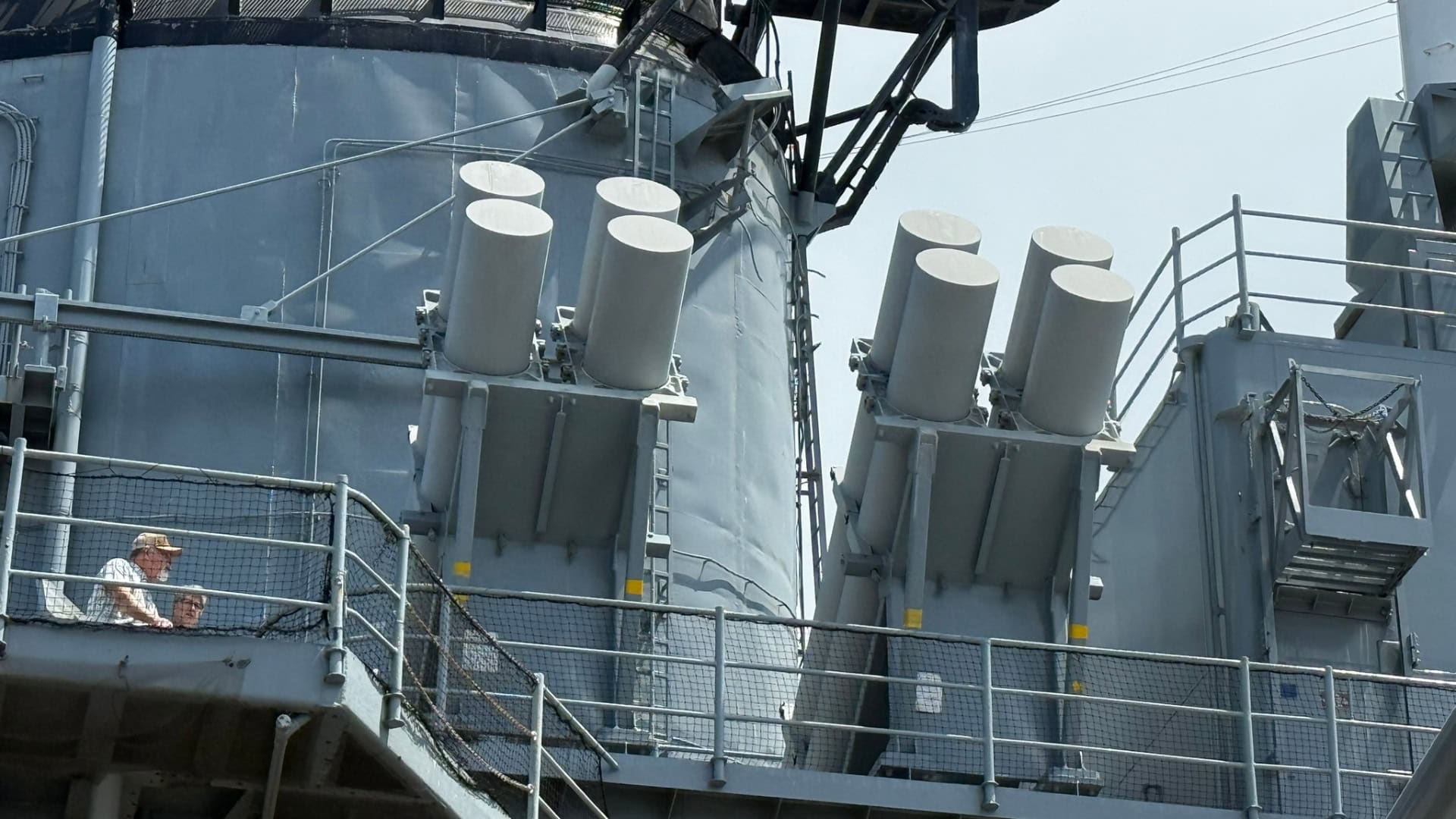
U.S. Navy Iowa-Class Battleship Missile Launchers 19FortyFive.com Image
Coral Sea and Midway Changed the Value of a New Battleship
The timing of the suspension tells the story. The Battle of the Coral Sea ended on May 8, 1942, twelve days before the Navy suspended Montana. It was the first naval engagement in which the opposing fleets never sighted one another or exchanged direct gunfire. Aircraft inflicted the damage from beyond the horizon.
Midway followed in June. American carrier aircraft sank four Japanese fleet carriers and stopped the planned invasion. Naval History and Heritage Command describes Midway as the point at which the carrier supplanted the battleship as the decisive measure of naval power.
This shift did not make battleships useless. Fast battleships screened carriers with heavy anti-aircraft batteries, served as fleet flagships, and bombarded islands before amphibious landings. Older battleships delivered punishing shore fire, while newer ships protected the aviation force driving the campaign west.
Guadalcanal also supplied the surface action battleship advocates expected. During the night of November 14–15, 1942, USS Washington used radar-directed 16-inch fire to cripple the Japanese battleship Kirishima. The engagement demonstrated the continuing value of a modern battleship already in the fleet. It did not create an operational reason to wait years for five much larger ships.
The question facing the Navy in 1942 and 1943 concerned marginal value. The United States already had ten fast battleships in service or nearing completion. Another five giant gunships remained years from combat, while the fleet needed carriers, destroyers, destroyer escorts, landing craft, and anti-submarine vessels immediately.
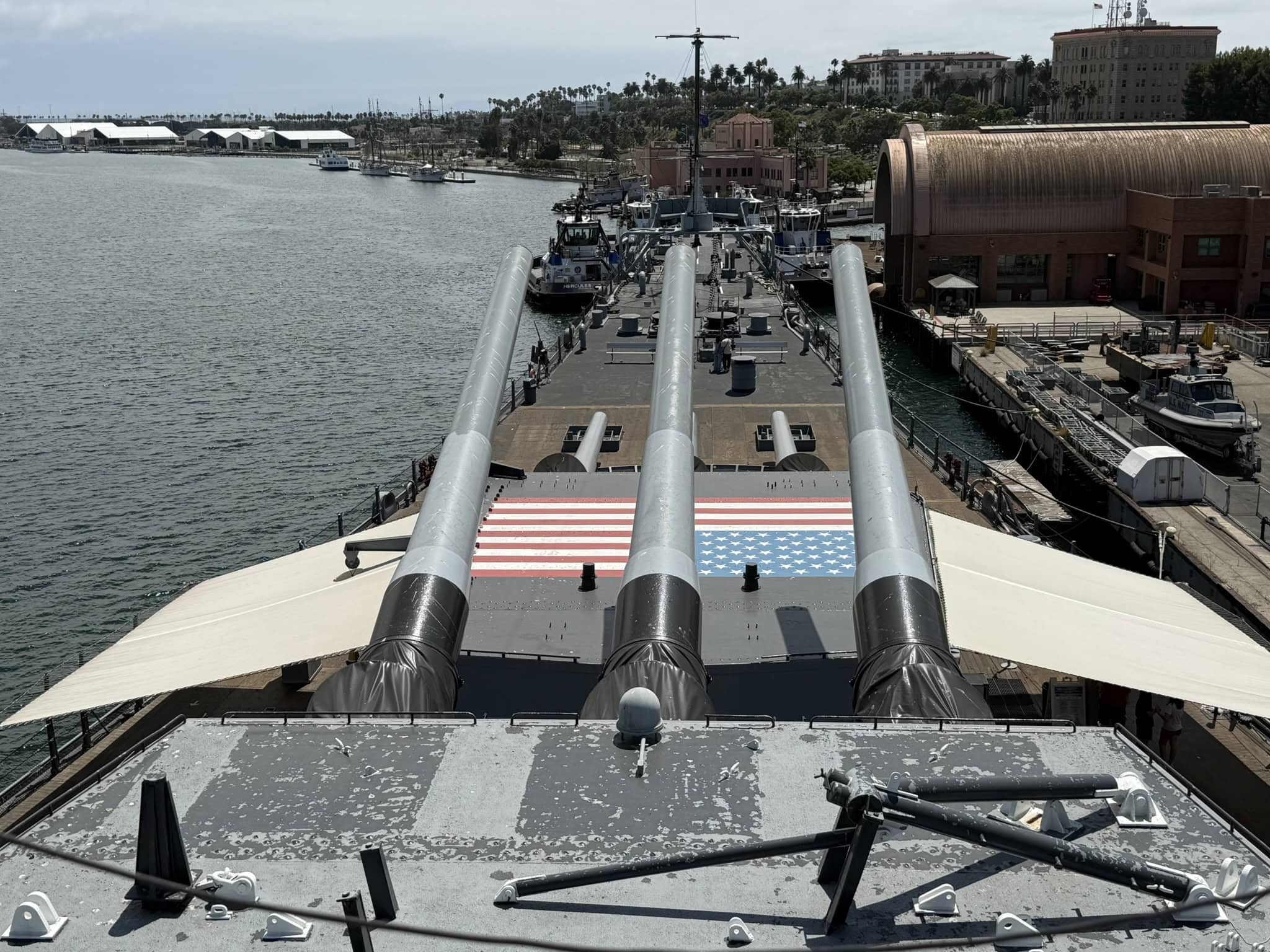
USS Iowa Battleship visit by Harry J. Kazianis for 19FortyFive.com. Taken back in August 15, 2025.
Production followed the weapon, producing results. The Navy commissioned seventeen Essex-class carriers during World War II, along with nine Independence-class light carriers and a much larger escort-carrier force.
Those ships launched fighters, dive bombers, and torpedo aircraft against enemy fleets, protected convoys, covered amphibious assaults, and carried air power across the Pacific. The Essex class became the fleet’s mass-produced offensive core, while smaller Casablanca-class carriers filled missions far beyond a battleship’s reach.
A 28-Knot Battleship Fits the Battle Line Better Than the Fast-Carrier Force
Twenty-eight knots was fast for a 71,000-ton battleship. It was still five knots below the Iowa class and several knots below the Essex-class carriers that Montana would increasingly have been asked to protect.
The difference mattered during high-speed carrier operations. A carrier task force maneuvered to generate wind over the flight deck, reposition between launch points, evade submarines and air attack, and move hundreds of miles between strikes. A slower battleship did not prevent carrier operations, but it reduced the formation’s margin during sustained high-speed movement.
The Navy studied a 33-knot variant of the Montana-class. The design demanded 320,000 horsepower and reached roughly 70,000 tons at standard displacement, with trial displacement around 82,000 tons. Naval architects rejected the enormous penalty and settled on 28 knots, revealing the class’s central purpose. Montana was built in concept to survive and win a surface artillery duel, while Iowa placed greater weight on speed and fleet mobility.
Wartime service rewarded Iowa’s compromise. The four completed ships spent much of the Pacific campaign escorting carriers and using their 16-inch guns against land targets. None fought an enemy battleship. Japan’s largest capital ships were sunk by carrier aircraft or submarines before an Iowa reached gun range.
Five Montanas Would Have Occupied Three Critical Navy Yards
Montana’s cancellation also freed more than abstract tonnage on a planning document. The five ships were assigned across Philadelphia, New York, and Norfolk, three major public yards already supporting an enormous wartime construction and repair program.
A battleship consumed armor plate, heavy guns, turbines, boilers, electrical equipment, miles of cable, and thousands of skilled labor hours. Its building slip remained occupied through a long assembly period. Not every worker or component shifted neatly from a canceled battleship into a carrier or landing craft, but the program competed for scarce steel, machinery, cranes, designers, and yard capacity.
The Navy had to choose which hulls would reach combat soon enough to influence the war. An Essex-class carrier provided a mobile airfield capable of searching, striking, and defending across hundreds of miles. Smaller escort carriers protected convoys and supported troops ashore. Landing ships moved soldiers, tanks, and supplies onto hostile beaches. Destroyer escorts attacked submarines threatening the shipping network sustaining every theater.
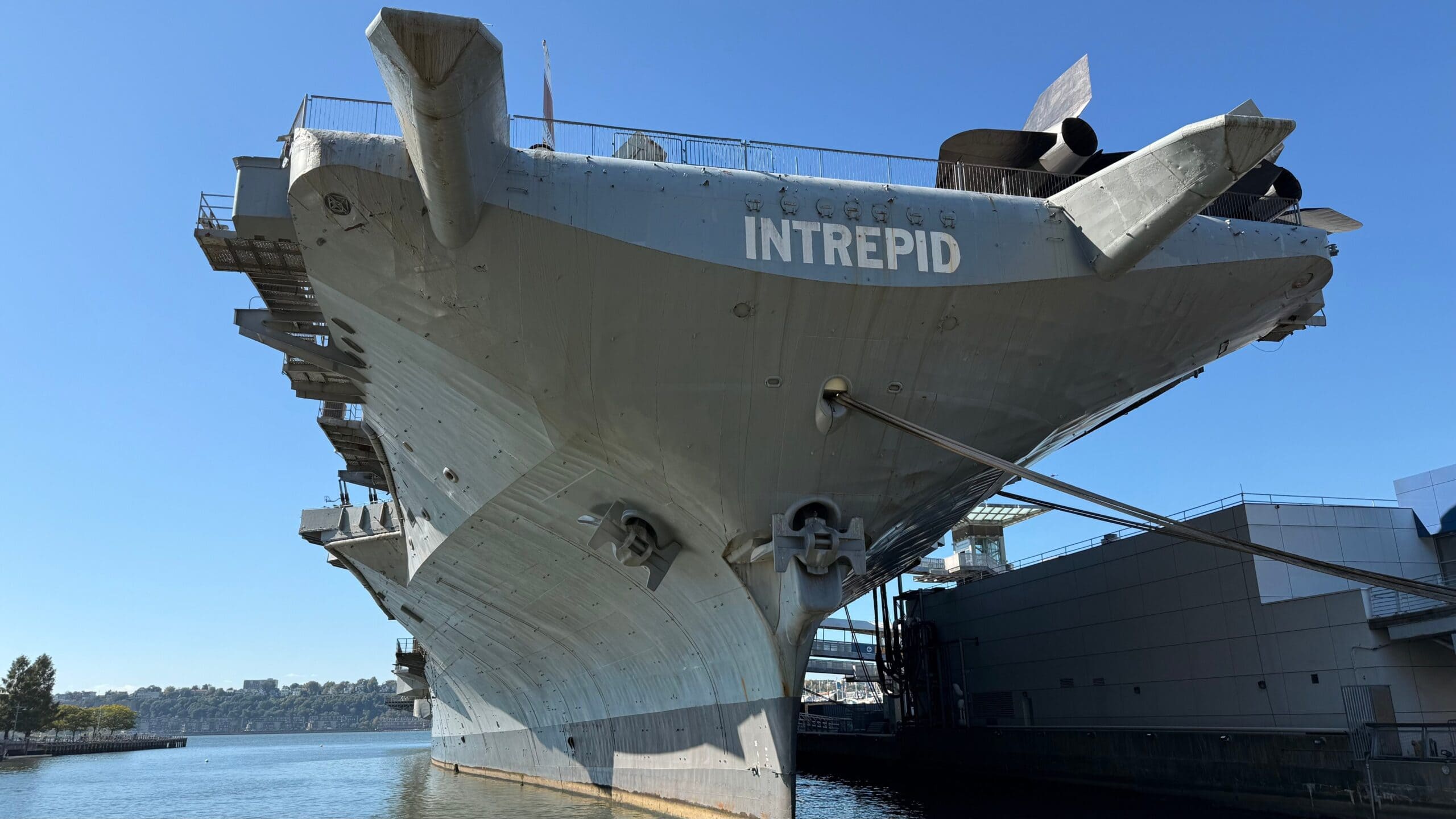
Exterior of Essex-Class USS Intrepid. Image Credit: 19FortyFive.com
Montana offered exceptional strength inside naval-gun range. Most of the fleet’s urgent missions existed outside it. Canceling the class preserved resources for ships whose daily work matched the war already underway rather than the surface engagement planners had anticipated before Pearl Harbor.
The Panama Canal Added a Serious Operational Penalty
The final design’s 121-foot, 2-inch beam exceeded the original Panama Canal lock width of 110 feet. The Montanas therefore lacked the Atlantic-to-Pacific shortcut used by American battleships designed around the canal’s dimensions.
Congress had authorized a third set of locks in 1939. Plans called for chambers 1,200 feet long and 135 feet wide, large enough for the new battleships. Construction began, but the government abandoned the project in May 1942 as wartime priorities shifted toward carriers. The canal expansion and Montana suspension ended in the same month.
The canal issue did not kill the class on its own. The Navy had already accepted the wide beam because it supported improved armor, stability, and underwater protection. A completed third-lock project would have removed the transit problem.
Once those locks disappeared from the wartime program, a Montana-based ship on one coast needed to sail around South America to reach the other ocean. The loss of Panama Canal access reduced flexibility in a two-ocean war, especially for ships requiring large repair facilities and specialized logistical support.
The Navy Finished the Battleships Closest to Combat
The decision was selective rather than a total rejection of battleships. Iowa, New Jersey, Missouri, and Wisconsin were already far enough along to justify completion. Their speed made them useful beside fast carriers, and their heavy guns supplied shore bombardment after enemy surface fleets declined.
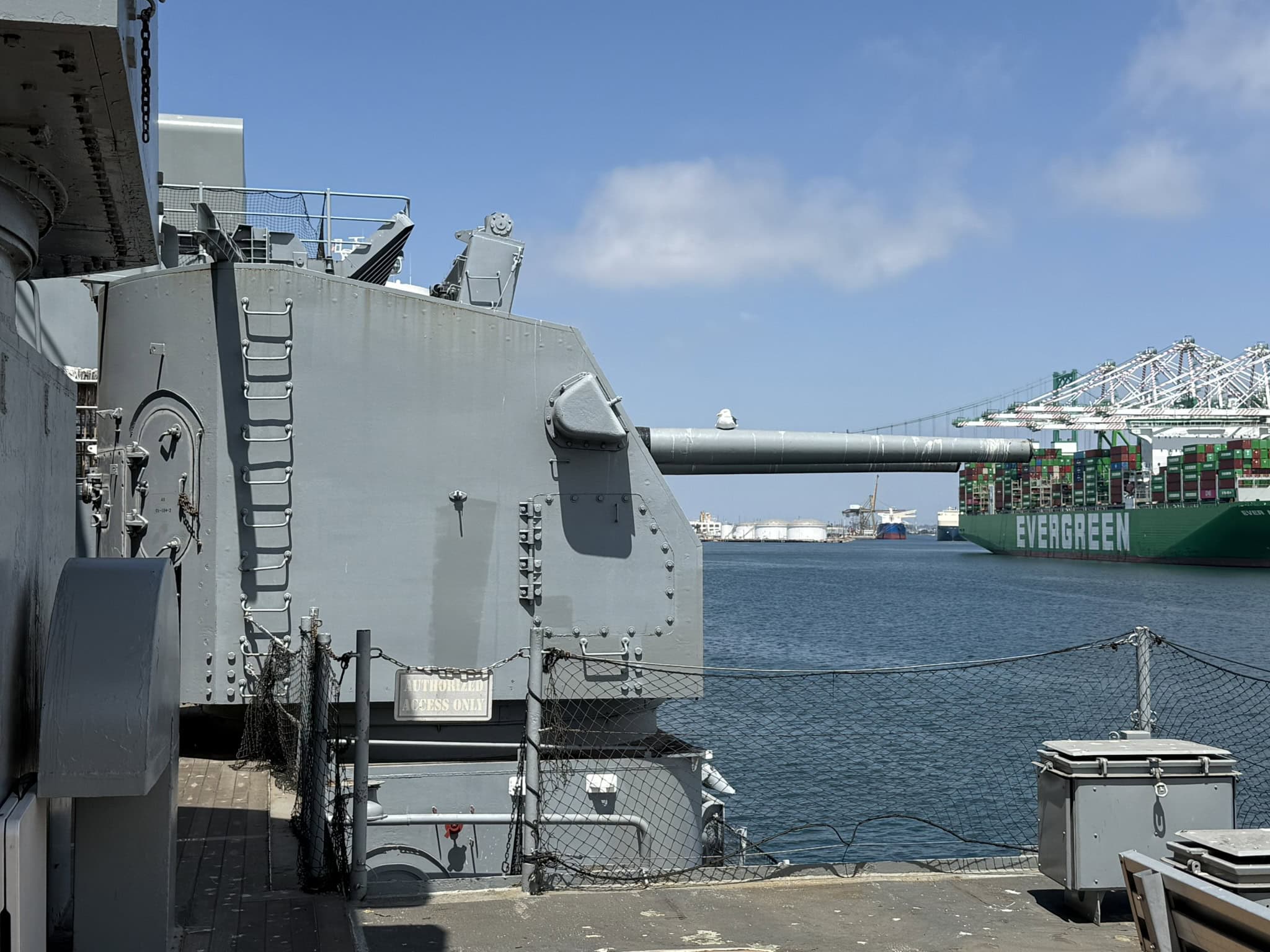
USS Iowa Visit by Harry Kazianis of 19FortyFive.com
The Navy later stopped work on Illinois and Kentucky, the final two Iowa-class hulls. Neither entered service. By then, even the faster design struggled to compete against the demand for carriers and other ships.
Montana never reached the point at which sunk costs protected it. No keel had been laid, no hull occupied a slip, and no crew awaited a ship. Canceling five paper battleships was easier than abandoning four advanced hulls already moving through construction.
Design work continued to leave a visual record after the decision. On October 7, 1944, the Navy photographed a large official Montana-class model at the New York Navy Yard. The cancellation order had been in force for more than a year, and none of the five full-size keels had ever touched a building dock.
MORE – China’s J-20 Stealth Fighter Flew With Russian Engines
About the Author: Harry J. Kazianis
Harry J. Kazianis (@Grecianformula) is the former Senior Director of National Security Affairs at the Center for the National Interest (CFTNI), a foreign policy think tank founded by Richard Nixon based in Washington, DC. Harry has over a decade of experience in think tanks and national security publishing. His ideas have been published in the NY Times, The Washington Post, The Wall Street Journal, CNN, and many other outlets worldwide. He has held positions at CSIS, the Heritage Foundation, the University of Nottingham, and several other institutions related to national security research and studies. He is the former Executive Editor of the National Interest and the Diplomat. He holds a Master’s degree focusing on international affairs from Harvard University.