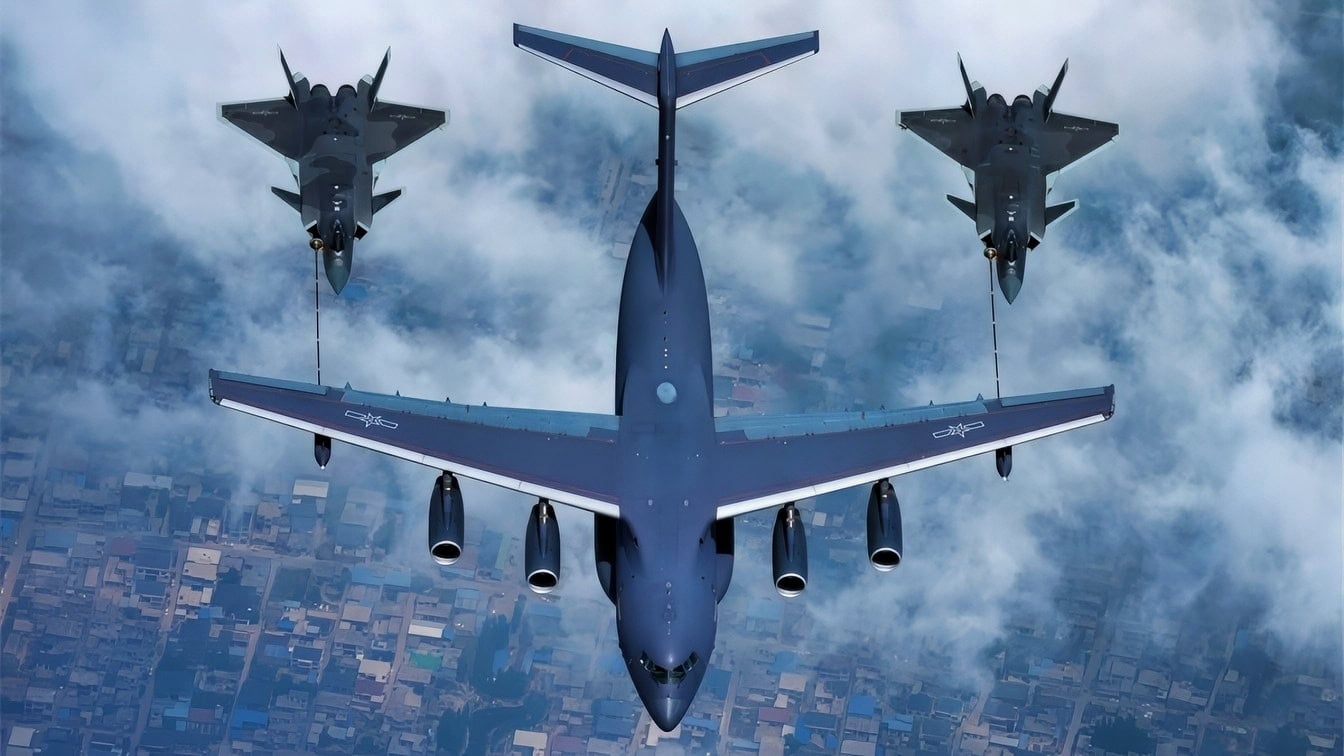
There is a real challenge today in the minds of many aerospace experts as to whether the Americans remain the unquestioned champions of fifth-generation warplane technology. While everyone knows about the iconic F-22 Raptor and the ubiquitous F-35 Lightning II, China’s Chengdu J-20 (as well as their J-35) fifth-generation warplane is a real challenger to the American F-22 as well as the F-35.
Recognizing their different mission sets helps appreciate the strategic diversity and specialization in modern air combat.

A crew chief assigned to the 158th Fighter Wing, taxis an F-35A Lightning II fifth generation aircraft assigned to the wing at the Vermont Air National Guard Base, South Burlington, Vermont, May 2, 2022. The aircraft departed to Spangdahlem Air Base, Germany, to continue NATO’s Enhanced Air Policing mission along the Eastern Flank. (U.S. Air Force photo by Tech. Sgt. Richard Mekkri)

An F-35A assigned to the 461st Flight Test Squadron, F-35 Integrated Test Force, conducts a weapon separation test at the Precision Impact Range Area at Edwards Air Force Base, California. AF-01 was the first F-35A built for the United States Air Force and remains an active test asset. (Courtesy Photo by Kyle Larson, Lockheed Martin Corporation)
First, the F-35 was developed as a multirole strike fighter capable of penetrating heavily defended airspace while collecting and sharing battlefield intelligence.
The J-20, on the other hand, was meant to be a long-range air-superiority fighter (more like the F-22) intended to engage enemy aircraft, particularly high-value support assets.
Those contrasting design philosophies influence nearly every aspect of the two warplanes.
Both planes are defined by their stealth features, but exploring how these features translate into operational advantages or limitations can deepen understanding of their strategic roles.
The Stealth Factor
The F-35 combines radar-absorbing materials and carefully aligned surfaces–such as internal weapons storage and specially designed engine inlets–to reduce its radar signature.
The F-35 is also the apotheosis of decades of American experience developing stealth technology through earlier programs, like the F-117 Nighthawk and the F-22.
Analysts generally believe the F-35’s signature management (notably from the front) to be among the most mature in operational service.
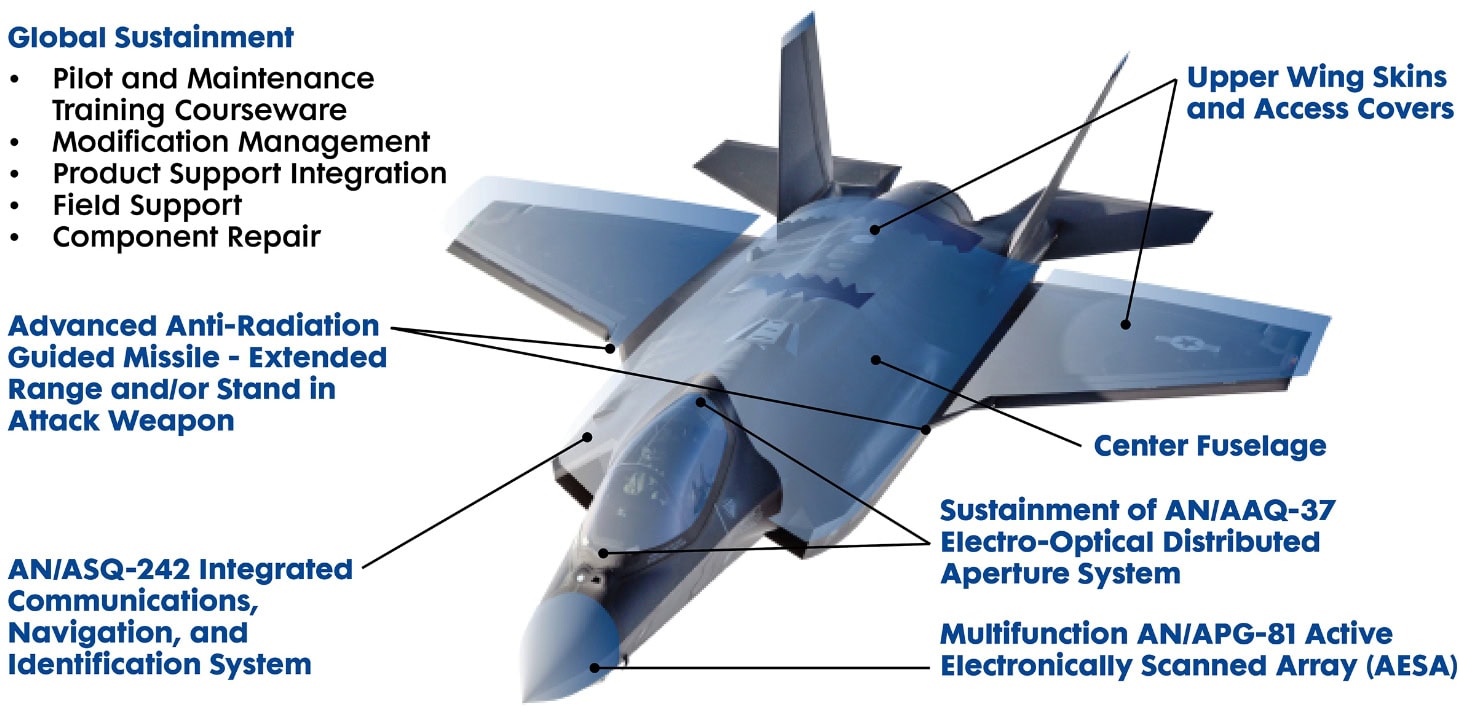
F-35 Fighter. Image Credit: Industry Handout.
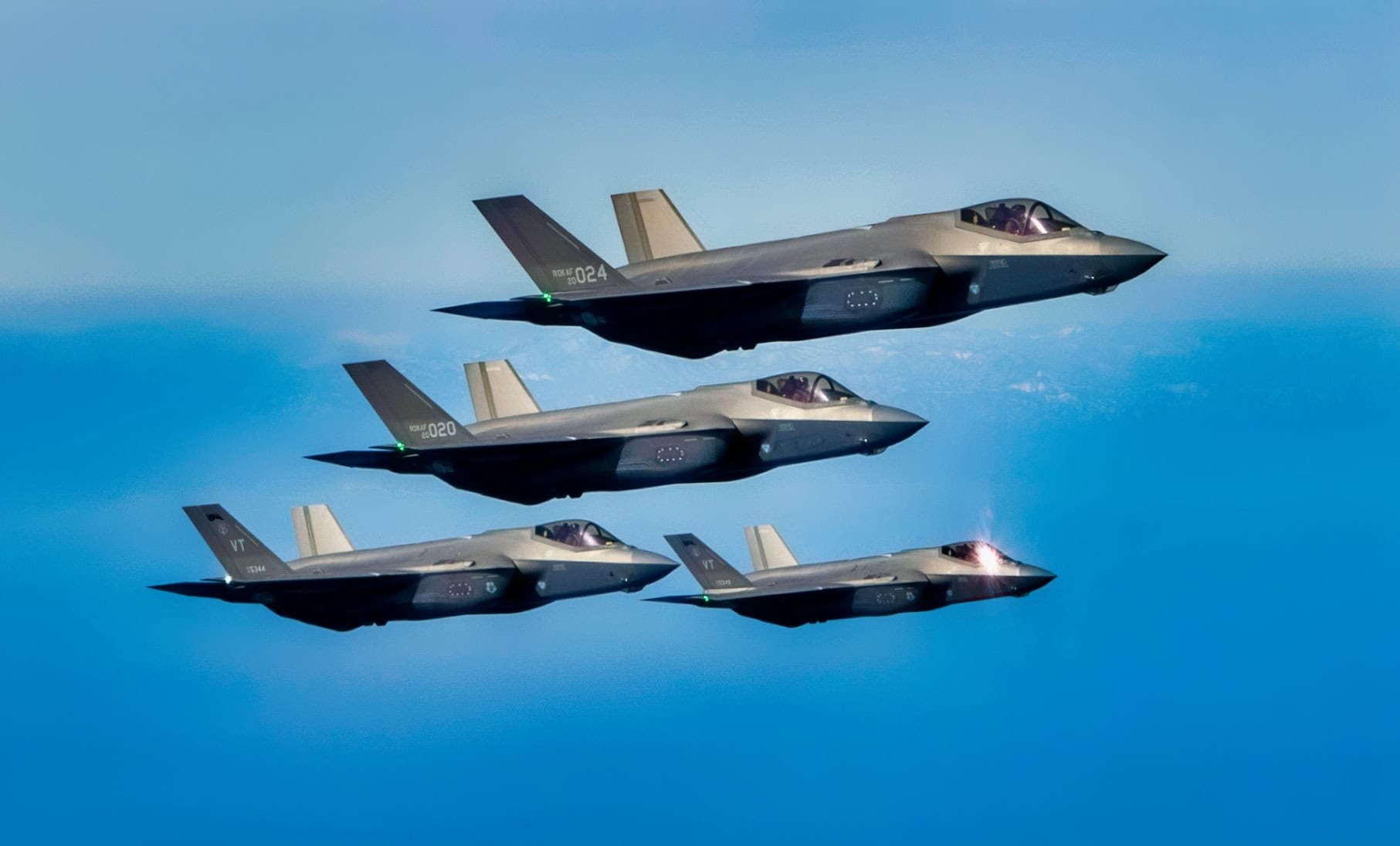
Two U.S. Air Force F-35A Lighting IIs fly in formation with two ROKAF F-35As during Freedom Shield 25, a defense-oriented exercise featuring live, virtual, and field-based training, March 13, 2025. The aircraft participated in dynamic targeting and aerial refueling training, validating the capability of ROK and U.S. Air Forces, to find, fix, and defeat a range of threats. (Photo courtesy of Republic of Korea Air Force)
The J-20 also incorporates key stealth features, including diverterless supersonic inlets, radar-absorbing materials, and internal fuselage weapons bays.
The J-20 also has a carefully shaped forward fuselage. Yet the J-20 has a larger airframe than the F-35, and it features forward canards and other features that analysts believe reduce its stealth.
The Engine Difference
Propulsion has been another point of contention in analysts’ studies of the two planes.
The J-20 has two engines and has gradually transitioned from earlier Russian-made engines to indigenous, advanced WS-15 engines. That WS-15 engine improves thrust, acceleration, and sustained high-speed performance. Still, many experts quibble over the reliability of Chinese engineers’ claims about the WS-15.
On the other hand, the F-35A employs a single Pratt & Whitney F135 engine and has an officially listed maximum speed of Mach 1.6.
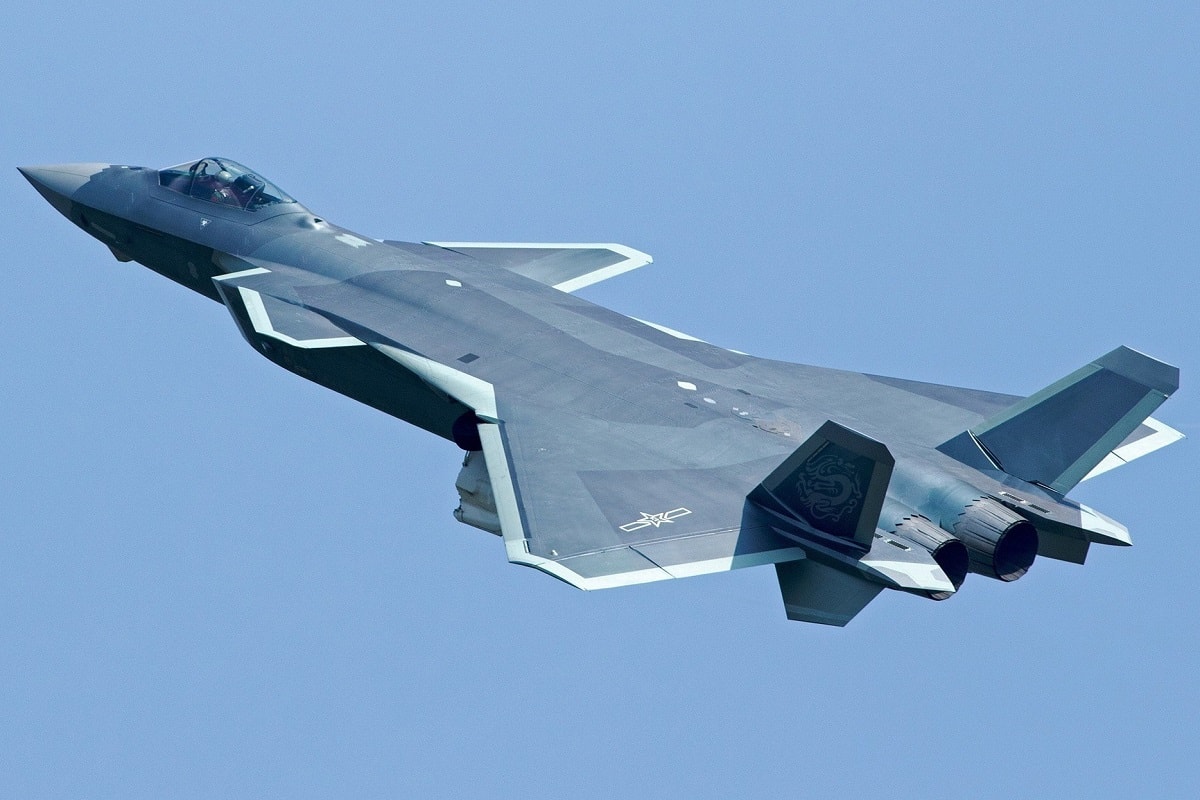
J-20. Image: Chinese Internet.
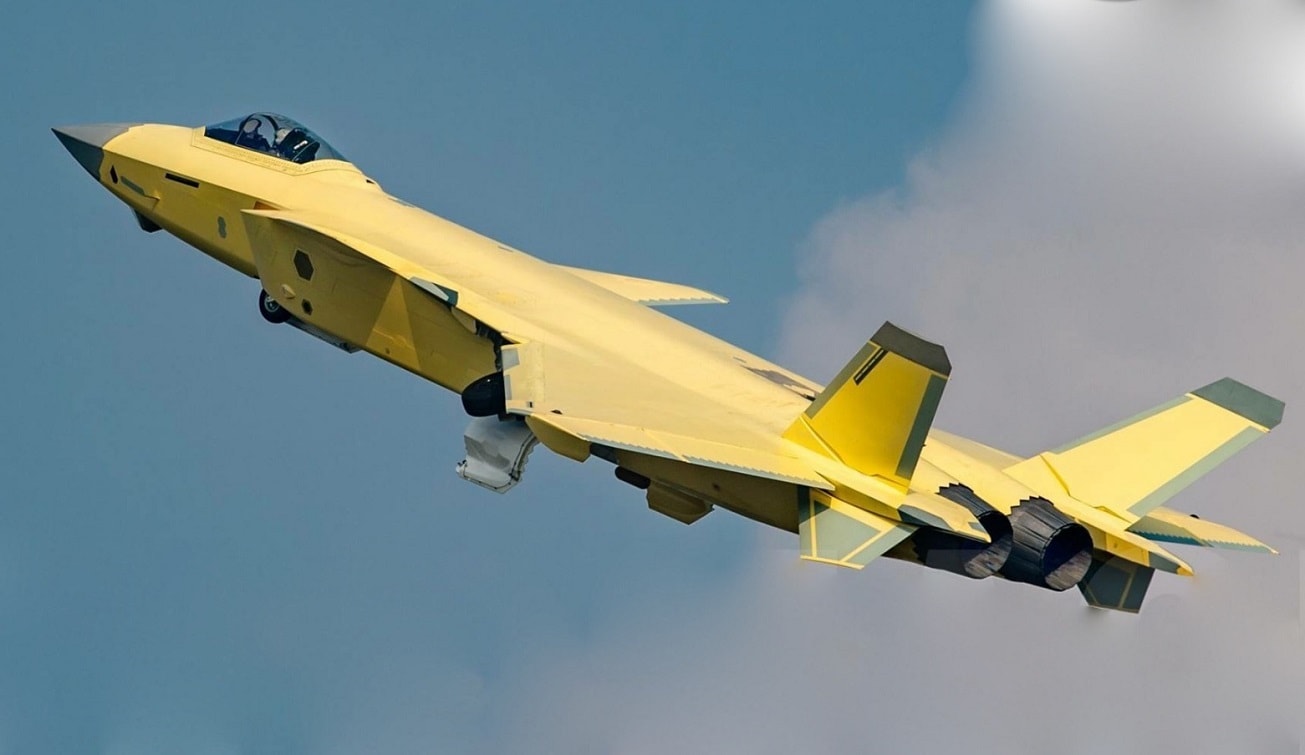
J-20. Image Credit: Chinese Internet.
Unlike dedicated air superiority warplanes, the F-35 was never designed to prioritize top speed.
In fact, the earliest concepts for the F-35 indicated it was meant to operate in mixed units with the F-22s, which would protect while the F-35s conducted penetrating air raids.
Measuring Firepower
The F-35 can carry both air-to-air and air-to-ground weapons within its internal bays, thereby preserving its low observability during combat operations. The Air Force has recently added external weapons capabilities (known as “Beast Mode”) that increase the firepower of the F-35, while decreasing its overall stealth.
As noted above, China’s J-20 has a larger airframe, making it a bit easier to detect on radar.
Yet, that larger airframe also allows for greater internal volume for fuel and weapons.
Its primary weapons bay carries long-range air-to-air missiles, while smaller side bays house short-range missiles.
That arrangement aligns with China’s emphasis on intercepting enemy fighters and engaging high-value support aircraft such as aerial refueling tankers, early warning birds, and other important targets.
Sensor Fusion
One area where American experts believe the F-35 decisively leads its Chinese competitor is in advanced sensor fusion and networking capabilities.
Rather than simply carrying advanced sensors, the aircraft combines information from its supporting electronic systems.
This integrated approach enhances the aircraft’s reliability and makes it a vital component of modern battlefield networks.
But the J-20 also possesses advanced electronics. Beijing keeps investing in its networked capabilities to keep its fifth-generation planes competitive with the Americans.
US defense experts might be overestimating the advantages of the F-35’s electronic warfare (EW) suite and sensor packages over those of its Chinese rivals. Especially as Beijing continues to advance the J-20.
Manufacturing Advantages
Currently, the Americans lead the Chinese in the production of the F-35 compared to the production of the J-20.
Lockheed Martin delivered 191 units of F-35s in 2025.
But the Chinese possess inherent manufacturing advantages.
They are streamlining the production of the J-20 — and, if it is a true contest in the long term, the Chinese will likely possess far more J-20s over time than the West has of the F-35.
Plus, again, we must stress that comparing the F-35 and the J-20 is not an apples-to-apples comparison. The F-22 is more comparable to the J-20.
Even there, though, the F-22’s production line is over, and its numbers are far smaller than what the Air Force originally wanted. The J-20’s production line remains active and is increasing each year.
Americans might be overstating their advantages over China, especially the longer the race goes on.
About the Author: Brandon J. Weichert
Brandon J. Weichert is the Senior National Security Editor at 19FortyFive.com. He also manages The Weichert Brief on Substack. Weichert also hosts “National Security Talk” on Rumble. He is the author of four bestselling national security books, the most recent of which is A Disaster of Our Own Making: How the West Lost Ukraine (Encounter Books). Follow him via Twitter/X @WeTheBrandon.