
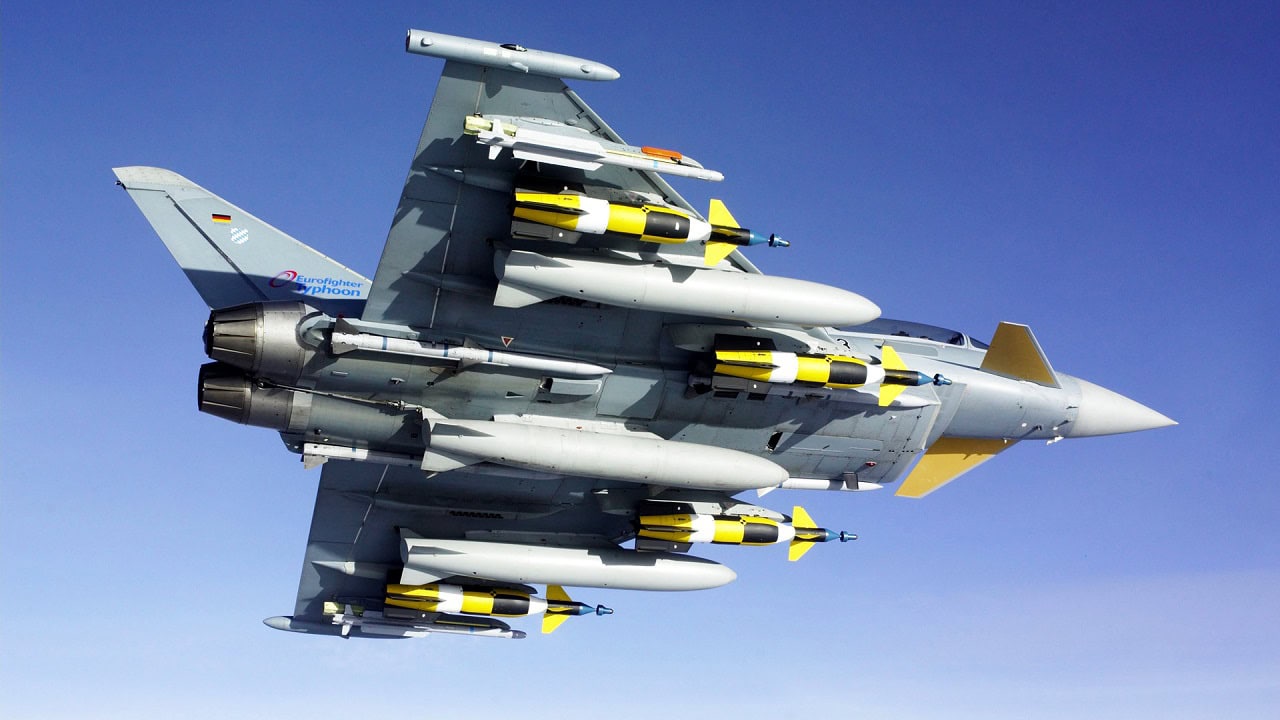
The “Super” Eurofighter Typhoon Is Built to Fight Beside the F-35, Not Replace It: “Super Eurofighter Typhoon” sounds like a new production model. As of July 31, 2026, Eurofighter has not adopted that designation.
However, the media love it, and we have used the term as well. The phrase compresses several overlapping upgrade programs into one label: ECRS Mk2 radar, Phase 4 Enhancement, Long Term Evolution, an Aerodynamic Modification Kit, a new helmet, and further electronic-warfare work.
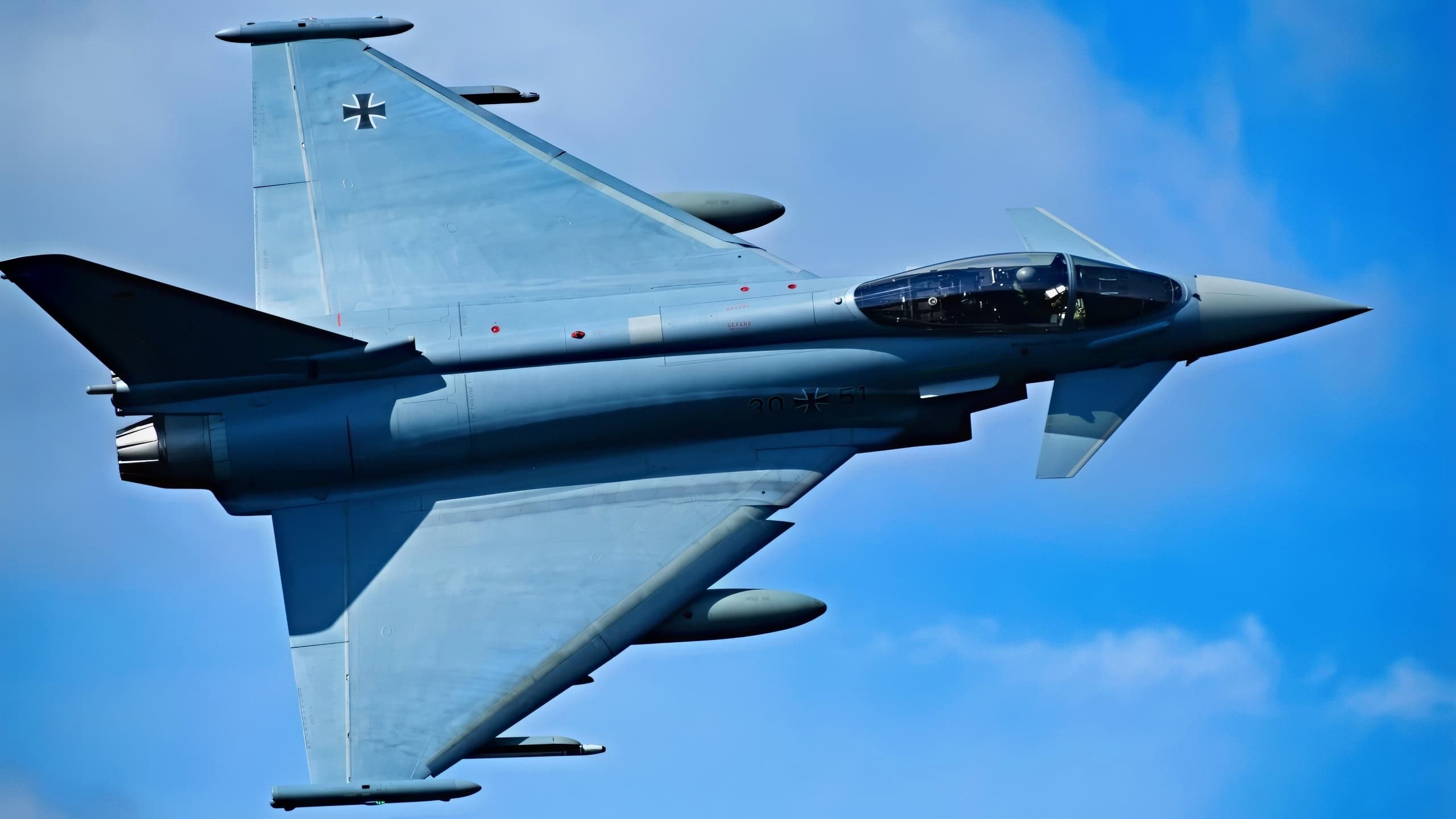
A German Air Force pilot, assigned to the German Air Force Weapons School, conducts strafing runs with an Eurofighter Typhoon in conjunction with U.S. Air Force Joint Terminal Attack Controller assigned to 2d Air Support Operations Squadron identifying targets on the ground at the 7th Army Training Command’s Grafenwoehr Training Area, Germany, June 9, 2021. (U.S. Army photo by Kevin Sterling Payne)
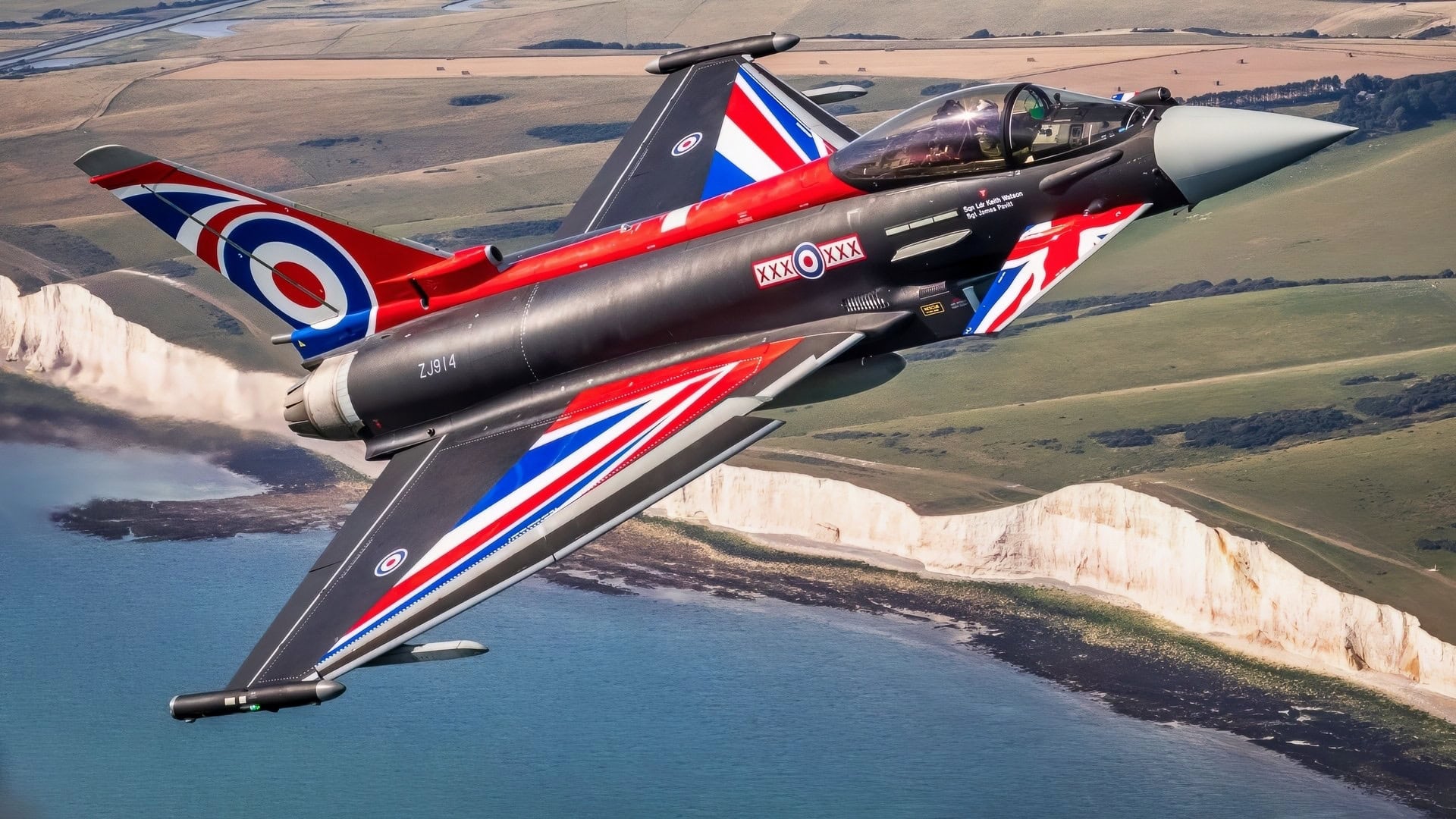
Eurofighter Typhoon Fighter NATO. Image Credit: British Government.
The most important funded hardware is Britain’s ECRS Mk2 radar. A £453 million contract announced on January 22 covers 38 new radars and modifications to two test systems, enough for 40 Royal Air Force Tranche 3 Typhoons. The system is intended to detect, identify, and track air and ground targets while delivering high-powered jamming.
The radar still needs aircraft changes grouped under P4E. Eurofighter says the package will add automated sensor management, an improved cockpit interface, radio-frequency interoperability, and defensive-system upgrades. Its program page targets 2028 availability, while British project data published July 13 rates ECRS Mk2 Amber and calls the P4E delivery schedule a significant challenge.
The likely result is a top-tier non-stealth fighter rather than a European copy of the F-35. It should remain highly competitive in air defense, interception, electronic attack, and standoff strike. Its closest American comparison is the F-15EX, although the two aircraft emphasize different strengths.
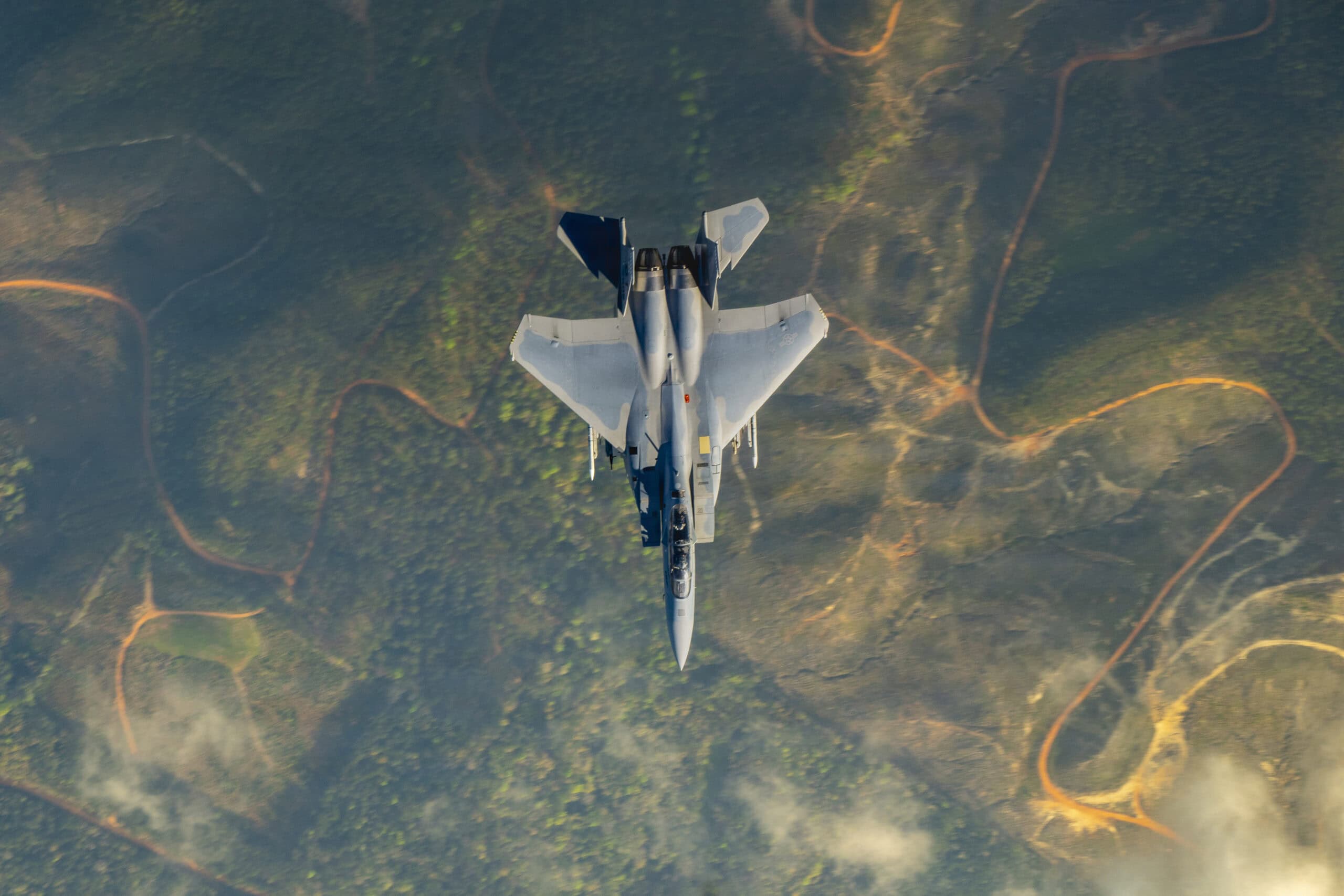
A U.S. Air Force F-15EX Eagle II assigned to Eglin Air Force Base, Florida, flies a training mission over southeast United States, March 23, 2026. The 96th Test Wing and 53rd Wing perform developmental and operational test series on the platform including next-generation survivability, radars, sensors and networking capabilities. (U.S. Air Force photo by Staff Sgt. Blake Wiles)
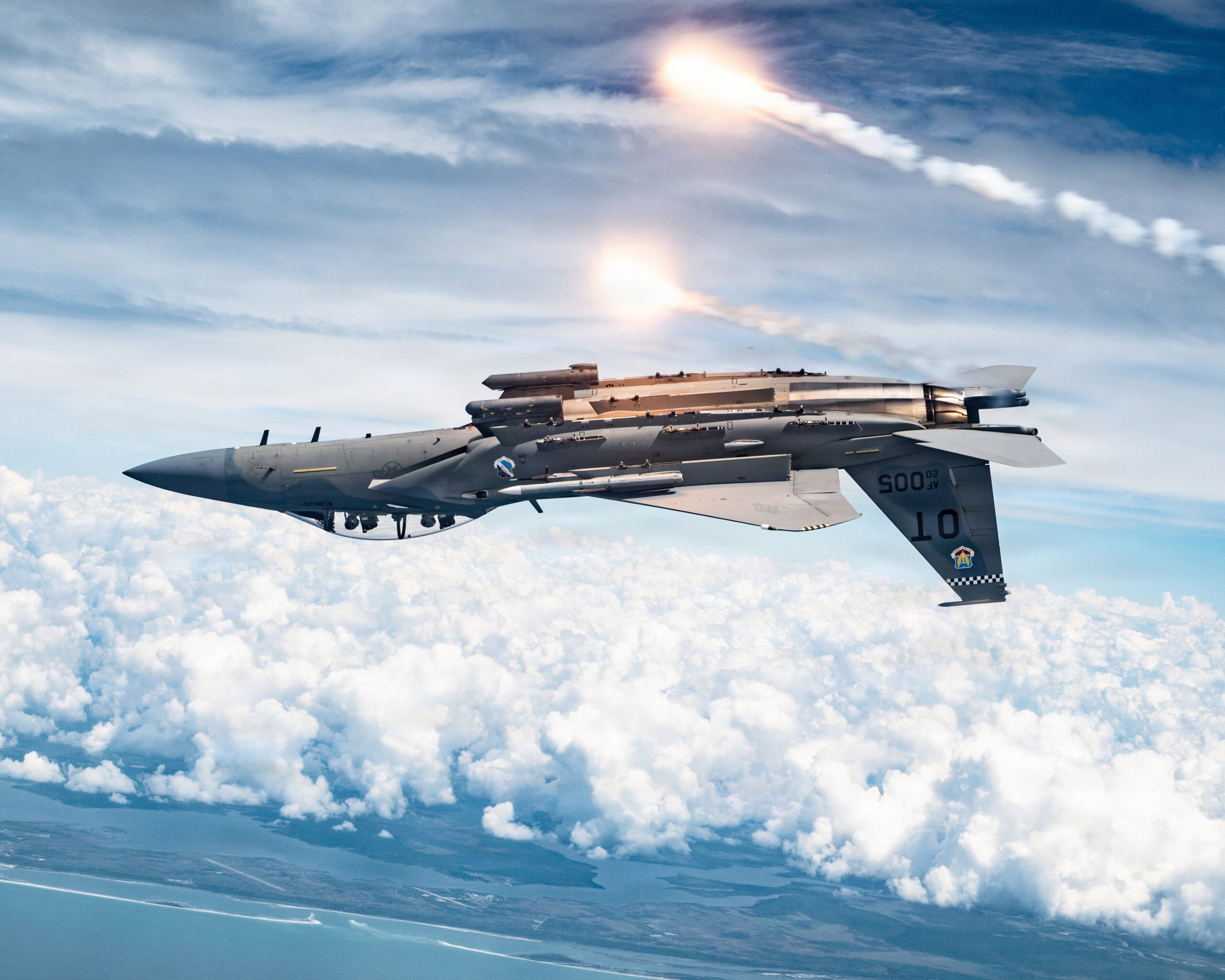
A U.S. Air Force F-15EX Eagle II assigned to Eglin Air Force Base, Florida, releases flares over the Gulf Coast, April 3, 2026. The 96th Test Wing and 53rd Wing perform developmental and operational test series on the platform including next-generation survivability, radars, sensors and networking capabilities. (U.S. Air Force photo by Tech Sgt Thomas Barley)
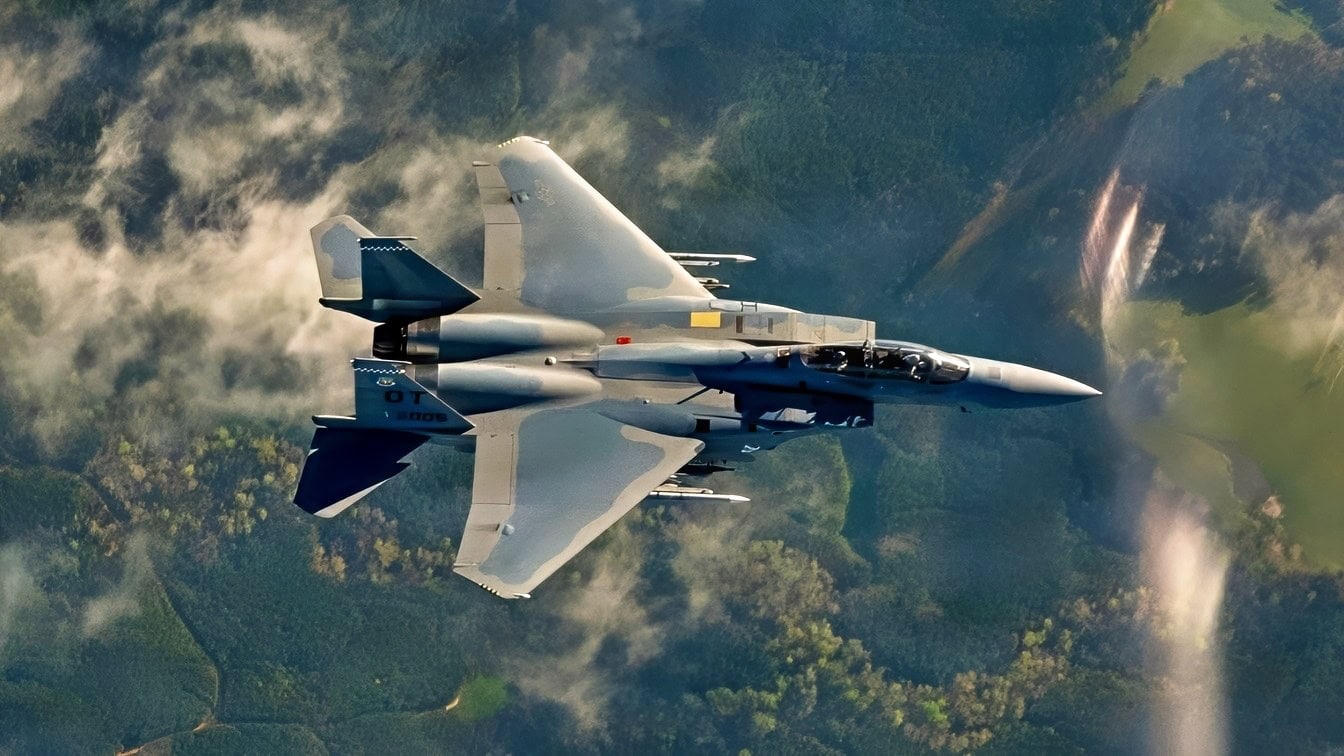
A U.S. Air Force F-15EX Eagle II assigned to Eglin Air Force Base, Florida, flies a training mission over southeast United States, March 23, 2026. The 96th Test Wing and 53rd Wing perform developmental and operational test series on the platform including next-generation survivability, radars, sensors and networking capabilities. (U.S. Air Force photo by Staff Sgt. Blake Wiles)
ECRS Mk2 Gives Typhoon a New Electronic-Attack Mission
ECRS Mk2 is the center of the emerging “Super Typhoon” concept. The wideband AESA combines conventional radar work with electronic surveillance and attack. It is designed to track aircraft and surface emitters, locate hostile radars, and disrupt them while continuing the air-to-air mission.
Eurofighter said on July 28 that the radar would open suppression-of-enemy-air-defenses missions, which the aircraft has not traditionally performed. Combined with updated communications and the defensive suite, it gives commanders an escort jammer and sensor platform capable of supporting F-35s, uncrewed aircraft, and strike formations.
Electronic attack improves survival without changing the Typhoon’s physical signature. The aircraft carries its weapons and supplementary fuel externally, and its shape was not designed around all-aspect low observability. Jamming complicates an enemy radar’s task without providing the passive protection built into the F-35.
P4E, LTE, and AMK Rebuild More Than the Radar
P4E is intended to reduce pilot workload by managing several sensor tasks automatically. The separate Long Term Evolution program is developing a new cockpit, mission and flight-control computers, communications equipment, and armament control. Faster data handling will help combine radar, infrared, electronic warfare, and offboard information.
The Aerodynamic Modification Kit contracted in 2026 adds extended fuselage strakes, revised flaperons, and wing-root changes. Eurofighter says the work will increase maximum wing lift and speed certification of heavier external loads, including anti-radar and standoff weapons. That broadens the future Typhoon’s mission set without requiring a new airframe.
Striker II is intended to add a color helmet display with integrated night vision and 360-degree situational awareness. A next-generation Praetorian defensive suite has been presented as a form-fit retrofit. Engine work is less mature. EUROJET has studied thrust growth, range and component life for the EJ200, but no production contract or service date for an uprated engine had been announced by July 31.
New Orders Give the Upgrade an Industrial Base
Germany ordered 20 aircraft, Spain 25, Italy up to 24 and Türkiye 20 during the latest buying wave. Eurofighter says production is moving toward 20 aircraft per year, with 30 under consideration if more orders arrive.
Those contracts keep assembly lines and suppliers active into the 2030s. They also spread software, weapons-integration and sustainment costs across a larger fleet. The limits imposed by the non-stealth airframe remain, but Europe now has a funded reason to modernize Typhoon while sixth-generation programs mature.
The F-35 Retains the Penetration Advantage
The F-35 retains the stronger position in the opening phase of a war against dense air defenses. Its low-observable airframe, internal weapons and fused sensor architecture were designed for operations inside an advanced threat environment. ECRS Mk2 and Praetorian improve Typhoon’s warning and jamming, but external stores and a conventional airframe create earlier detection opportunities.
A mixed force gives Typhoon a useful role. F-35s gather and pass targeting information while Typhoons provide long-range air defense, carry Meteor missiles, patrol NATO airspace and launch standoff weapons. The F-35’s networking and sensor fusion gain value when another fighter has the radar power and weapons to act on the picture.
For quick-reaction alert, high-altitude interception and sustained defensive patrols, the updated Typhoon should remain one of NATO’s strongest aircraft. It will not inherit the F-35’s first-night penetration role.
The F-15EX Eagle II Is the Closer Rival
The F-15EX Eagle II is the more useful comparison because both fighters rely on speed, radar, electronic warfare, and external weapons. Boeing lists a 29,500-pound payload, Mach 2.5 maximum speed, and capacity for as many as 12 AMRAAMs. EPAWSS, open mission architecture, and a two-seat cockpit support long-range strike, missile-truck, and uncrewed aircraft control missions.
The F-15EX has a larger magazine and heavier weapons capacity. Typhoon answers with agility, Meteor, and planned ECRS Mk2 electronic-attack functions. The F-15EX is better suited to massed missile carriage; Typhoon’s strongest case lies in air defense, swing-role operations, and integration with European weapons.
Public information does not establish that either fighter’s radar or electronic-warfare suite dominates the other. Those figures remain classified, and national Typhoon configurations differ. Claims that the upgrade defeats the F-15EX across every advanced fourth-generation mission go beyond the available evidence.
The Integration Schedule Is the Real Constraint
The “Super Typhoon” will arrive in separate releases rather than a single, clean block upgrade. Britain is buying ECRS Mk2 for 40 aircraft; other partner nations use different E-scan radar paths, and LTE, AMK, Striker II, Praetorian, and engine work follow separate calendars.
The UK still expects production of ECRS Mk2 radars in 2028. Its July 2026 project data indicates that the P4E integration schedule remains a significant challenge, and no partner nation has published an in-service date for an aircraft combining ECRS Mk2, full LTE avionics, AMK, next-generation Praetorian, and an uprated EJ200.
About the Author: Harry J. Kazianis
Harry J. Kazianis (@Grecianformula) was the former Senior Director of National Security Affairs at the Center for the National Interest (CFTNI), a foreign policy think tank founded by Richard Nixon based in Washington, DC. Harry has over a decade of experience in think tanks and national security publishing. His ideas have been published in the NY Times, The Washington Post, The Wall Street Journal, CNN, and many other outlets worldwide. He has held positions at CSIS, the Heritage Foundation, the University of Nottingham, and several other institutions related to national security research and studies. He is the former Executive Editor of the National Interest and the Diplomat. He holds a Master’s degree focusing on international affairs from Harvard University.

