
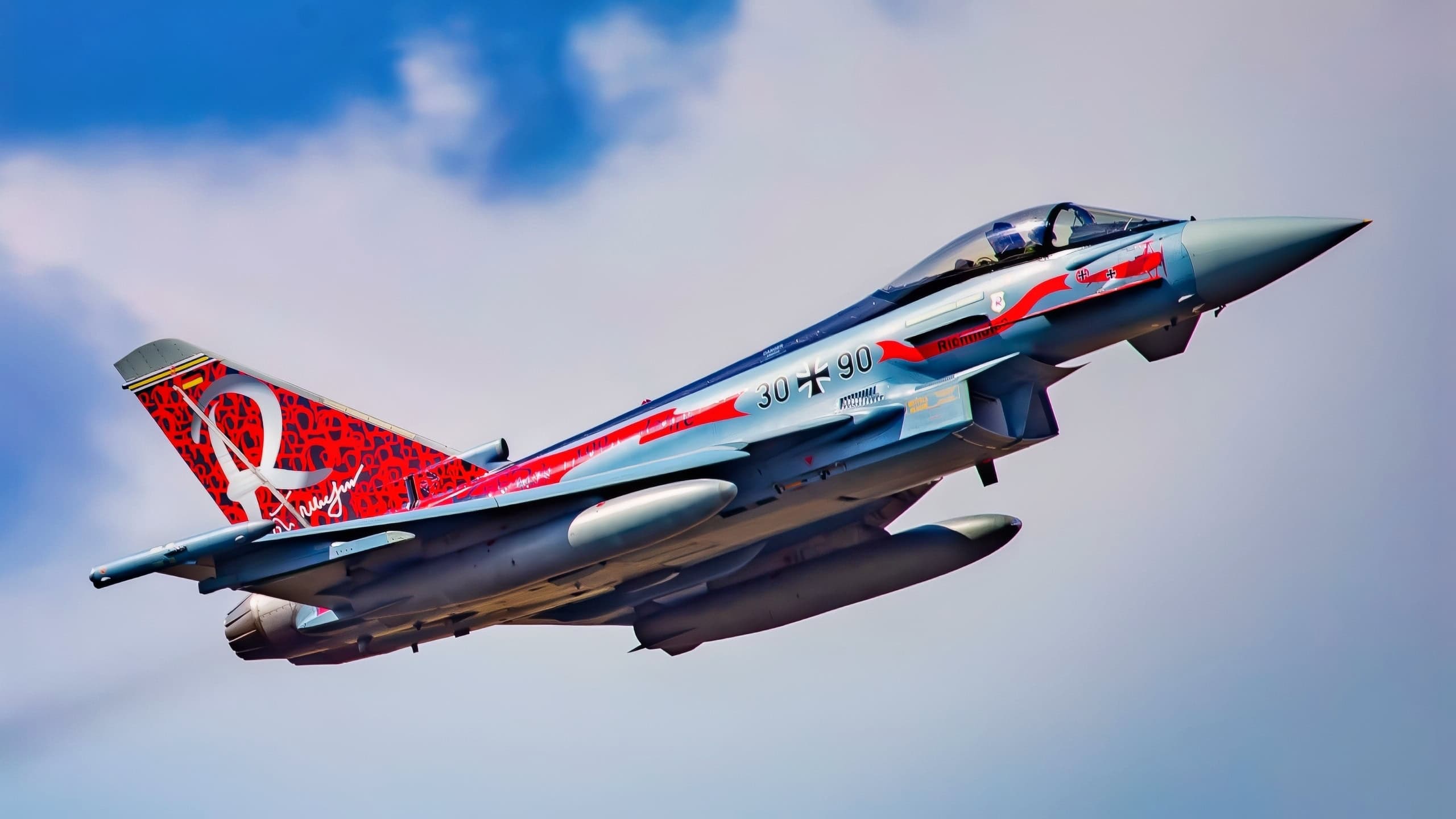
Is The Eurofighter Typhoon The Best Non-Stealth Fighter Today? We Took A Hard Look
The Eurofighter Typhoon is a very successful fourth-generation multirole aircraft designed and produced by a consortium comprising Airbus, BAE Systems, and Leonardo.
The Typhoon’s first flight was back in 1994. Since then, over 700 Typhoons have been produced and are operated by Austria, Germany, Italy, Kuwait, Oman, Saudi Arabia, Spain, the UK, and Qatar. The aircraft’s popularity is due to its speed, range, and maneuverability.
The Typhoon is widely considered one of the top-performing “4.5 generation” non-stealth fighters in the world, ranked alongside the Dassault Rafale, the Saab JAS-39 Gripen, and other aircraft as a superior 4th-generation jet in air-to-air combat, speed, and maneuverability.
It is a premier European air superiority fighter, excelling in dogfights and beyond-visual-range (BVR) combat situations.
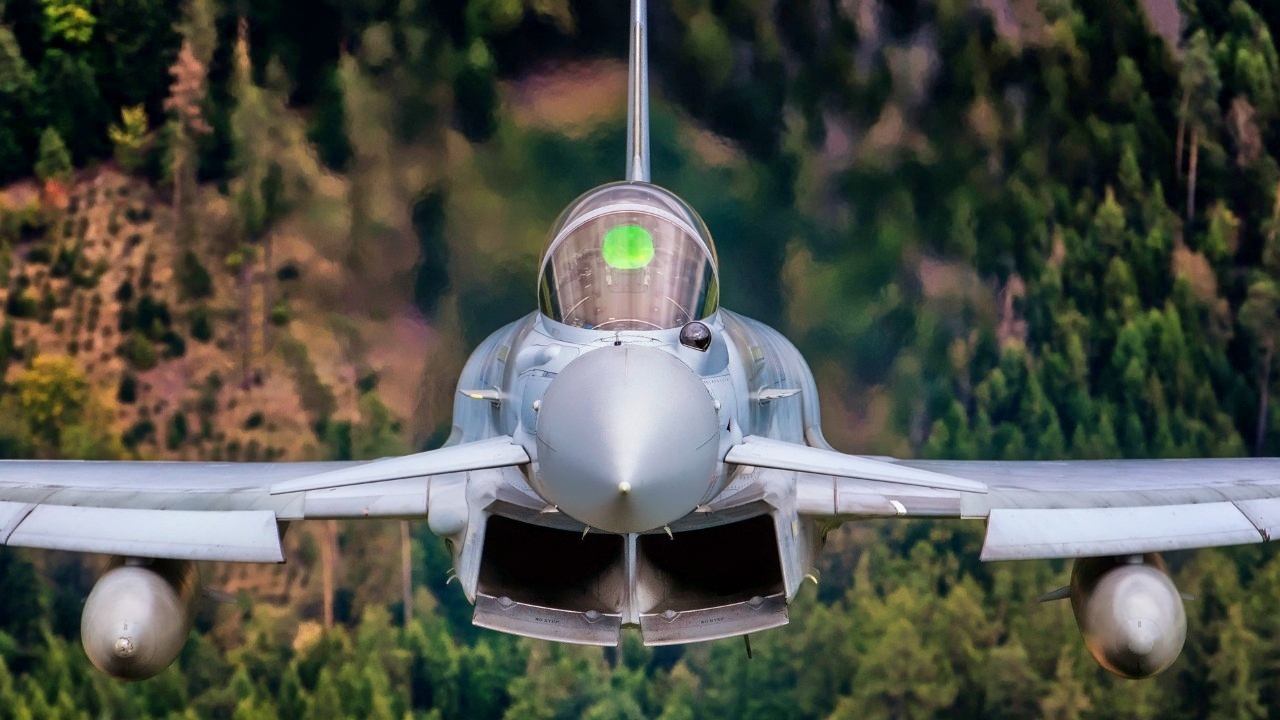
Eurofighter Typhoon. Image Credit: Creative Commons.
Where does the Typhoon rank among the best non-fighters in the world?
Eurofighter Typhoon Specs
The Typhoon is powered by two Eurojet EJ200 afterburning turbofan engines that push the aircraft to Mach 2.35 or 1,550 mph. It has a range of 1,800 miles, with 863 miles in a ground-attack role.
The aircraft is armed with a 27 mm Mauser BK-27 revolver cannon with 150 rounds. This weapon was prone to jamming and was documented by UK pilots during airstrikes against ISIS in Syria.
The Typhoon has 13 hard points for carrying ordnance. Eight under the wings and five under the fuselage allow the aircraft to carry up to 19,800 pounds of ordnance in the “missile truck configuration.
The exact configuration would be determined by the mission profile; however, a typical multi-role configuration would consist of 4 × AMRAAM, 2×ASRAAM/IRIS-T, 4 × EGBU-16/Paveway-IV, 2 × 1000-liter supersonic fuel tanks, and a targeting pod.
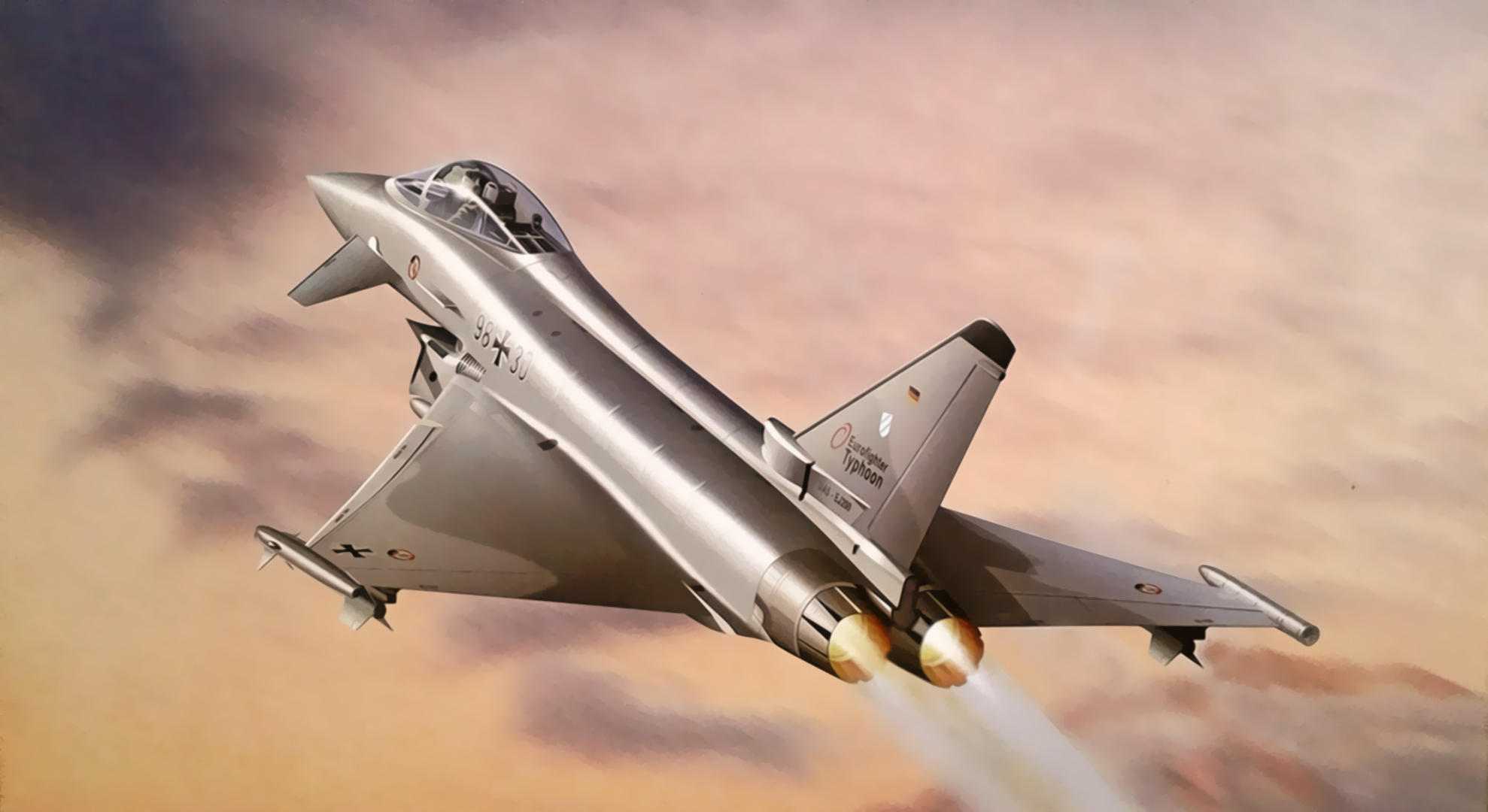
Eurofighter Typhoon. Image Credit: Creative Commons.
Reduced Radar Cross Section
While the Typhoon is not a stealth fighter, certain features were added to reduce the jet’s radar cross-section (RCS).
The engine’s inlets were placed to conceal the front of the engines from radar. The wings, canard, and fin leading edges are swept to avoid reflecting radar energy to the front of the airframe.
Some external weapons are mounted semi-recessed into the airframe, partially shielding them from radar.
Airbus has utilized radar-absorbent materials (RAM) to coat many of the jet’s reflector spots, like the wing leading edges, intake edges, and the rudder, to lower its radar reflectivity.
What Does The Future Hold For The Eurofighter Typhoon?
While its future is limited due to fifth-generation stealth fighters like the F-35, the Typhoon is still a viable aircraft for certain mission profiles…for now.
The Typhoon is expected to remain operational until at least 2040, and possibly even until 2060 with continuous upgrades, regardless of the success or failure of next-generation programs like FCAS and GCAP.
It will serve as a complement to stealth aircraft, much like the US uses the F-16, performing different roles in a networked environment. But can it survive against fifth-generation stealth fighters in a modern era?
Role and Viability in the Stealth Era:
The Eurofighter Typhoon was not designed as a stealth aircraft and cannot be converted into one due to fundamental aerodynamic design choices (such as the canard-delta configuration and external weapon points). However, its survival strategy in the stealth era relies on several key factors.
The primary operational concept involves the Typhoon operating alongside fifth-generation stealth fighters like the F-35. In this “force mix” strategy, the stealth aircraft would penetrate contested airspace, destroy air defenses, and feed targeting data back to the Typhoons operating from a safer distance.
Extensive upgrade programs, such as the Long-Term Evolution (LTE) and integration of new technologies, are underway to enhance the Typhoon’s capabilities. Key upgrades include:
The ECRS Mk2 AESA Radar is an advanced Active Electronically Scanned Array radar system to boost detection, tracking, and electronic-attack capabilities.
The Advanced Electronic Warfare (EW) system includes the Praetorian DASS suite and other enhancements that improve its self-protection and jamming abilities in contested environments.
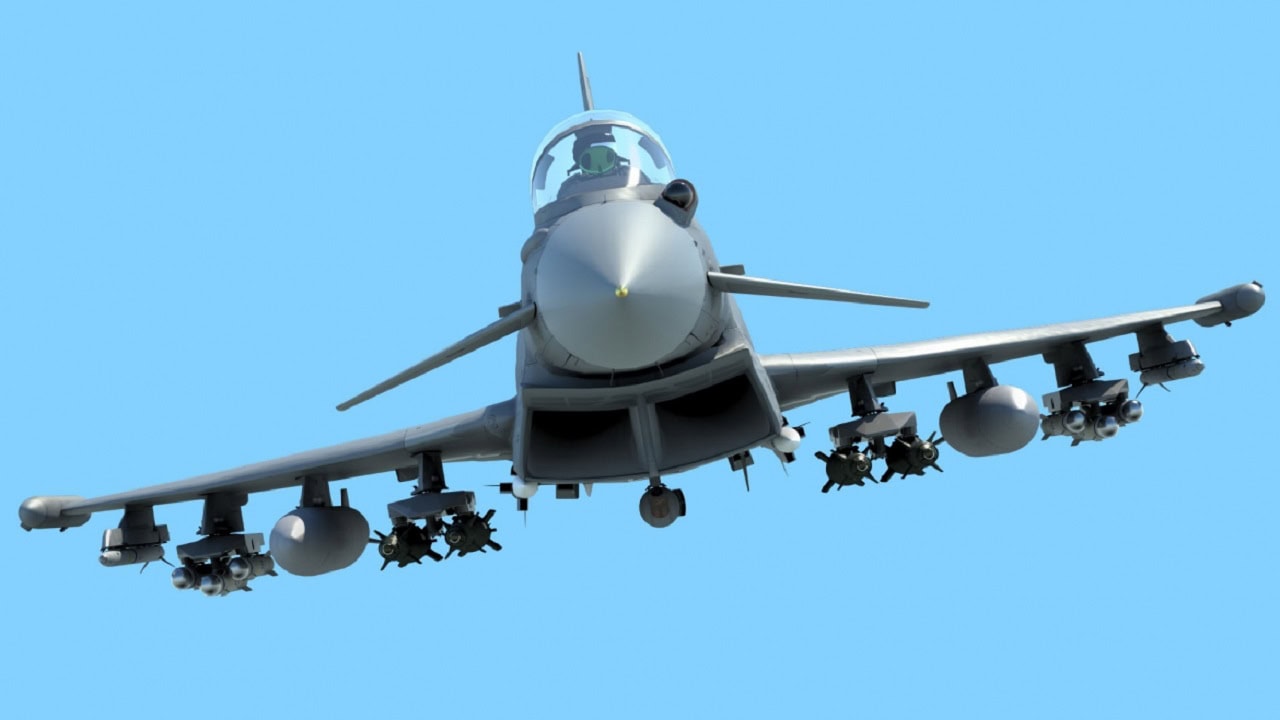
Typhoon fitted with the common launcher (computer generated image: for illustrative purposes only)
New Weapons Increase Their Range:
Integration of advanced standoff missiles like the Meteor (beyond-visual-range air-to-air) and SPEAR-3 (standoff ground attack) allows it to engage targets from greater distances, reducing exposure to threats.
Upgrades for the Typhoon focus on sensor fusion, AI assistance, and high-speed data links to seamlessly integrate the Typhoon into a “combat cloud” that includes drones and other networked assets.
What Operational Roles Will The Typhoon Have:
While less suited for penetrating deep into highly contested, peer-level air defense bubbles due to its lack of stealth, the Typhoon remains highly effective for other essential roles
Air policing and quick reaction alert (QRA) missions.
Homeland defense.
“Missile truck” operations, carrying large weapon payloads, will begin once the F-35 has cleared a path.
Operations in non-stealth-dependent scenarios.
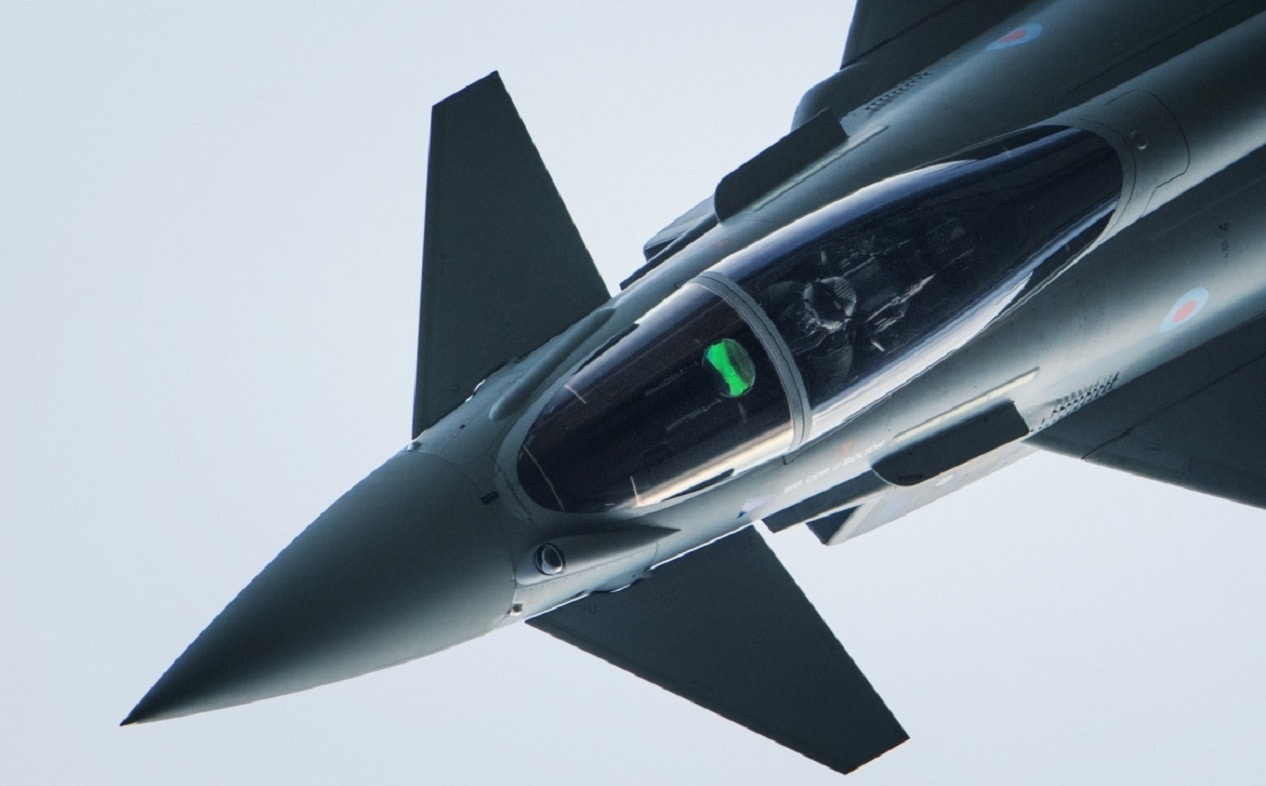
Eurofighter Typhoon.
Is The Eurofighter Typhoon The Best Non-Stealth Fighter?
The Typhoon is a tried-and-true, outstanding platform that has more than proven its worth. It has worked alongside US stealth fighters, such as the F-35, alongside our European allies. There are several non-stealth fighters that are among the best in their class.
Let’s face it, stealth aircraft are the future, but there is still a place for 4.5-generation aircraft in the world. The offer higher payload capacity (missile/bomb trucks), cost-effectiveness, and performance.
Some of the best non-stealth aircraft other than the Typhoon include:
Boeing F-15EX Eagle II (USA):
Many aviation analysts consider the F-15EX the best non-stealth fighter, a high-speed “missile truck” with advanced radars, modern avionics, and a 104-0 undefeated air-to-air record.
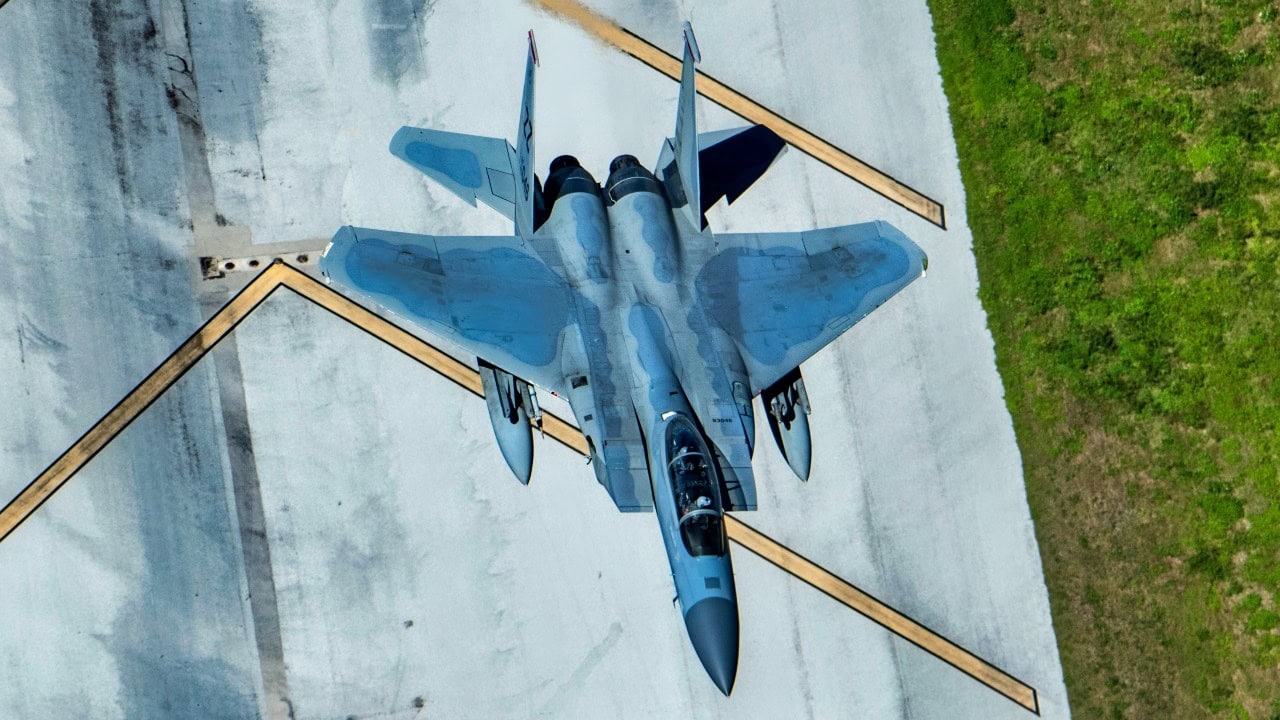
A U.S. Air Force F-15 Eagle II flies during a large show-of-force formation over Andersen Air Force Base, Guam, Mar. 6, 2019. CN19 is a long-standing exercise designed to enhance multilateral air operations amongst partner nations and includes humanitarian assistance and disaster relief airlift operations as well as large-force employment. Approximately 2,000 U.S. Airmen, Marines, and Sailors participated alongside approximately 800 RAAF and JASDF members during the exercise. (U.S. Air Force Photo by Senior Airman Xavier Navarro)
Dassault Rafale (France):
Billed by France as an “omnirole” fighter, meaning it can perform air superiority, reconnaissance, and strike missions in a single sortie.
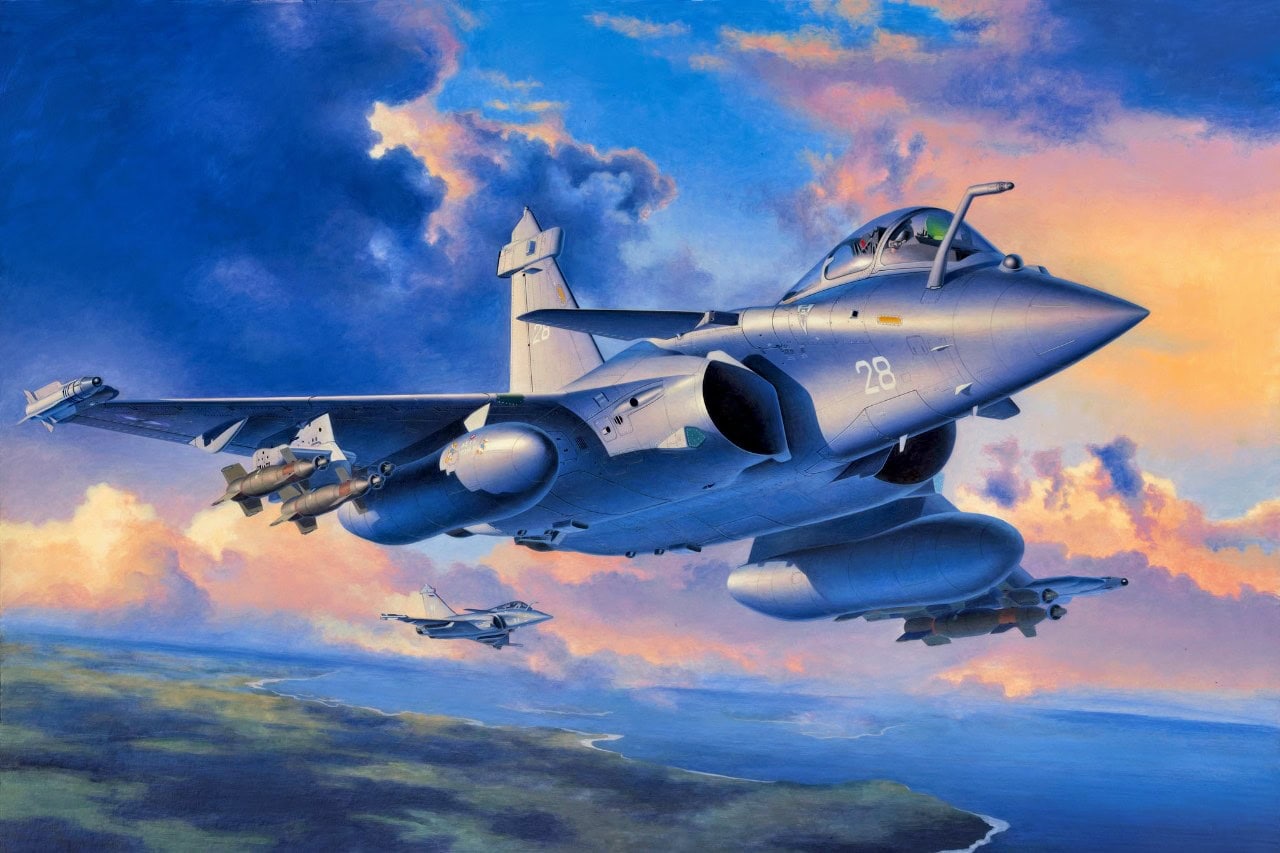
Dassault Rafale. Image Credit: Creative Commons.
Sukhoi Su-35 (Russia):
A 4++ generation fighter with extreme maneuverability due to thrust-vectoring engines.
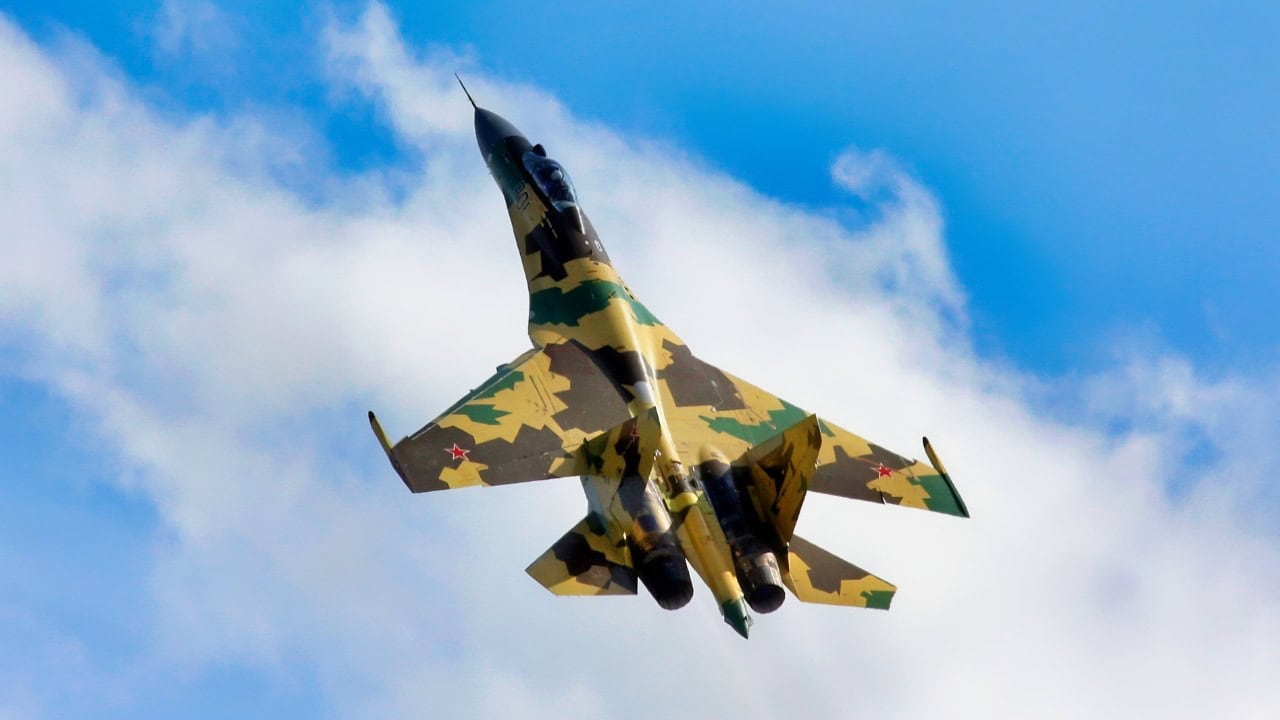
Su-35 Fighter from Russia.
Saab JAS 39 Gripen E (Sweden):
A cost-effective, high-tech fighter designed for rapid deployment and advanced electronic warfare. The Gripen is currently the platform that Canada is considering instead of the F-35.
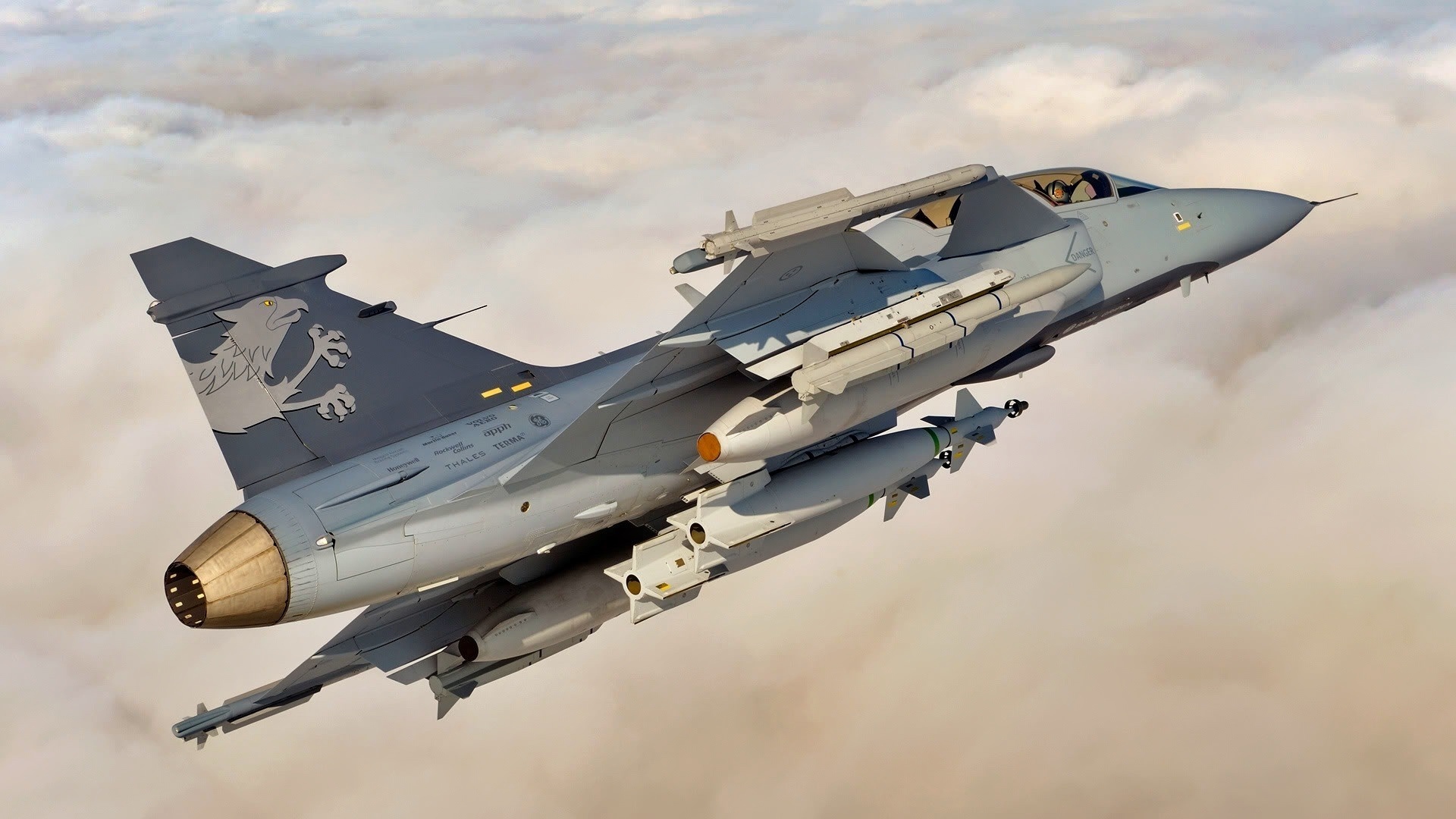
JAS 39. Image Credit: Creative Commons.
The Bottomline
The extreme cost of the Typhoon (more than an F-35) and the F-15EX’s higher payload and better performance would nudge it ahead of the Typhoon as the best non-stealth fighter.
About the Author: Steve Balestrieri
Steve Balestrieri is a National Security Columnist. He served as a US Army Special Forces NCO and Warrant Officer. In addition to writing on defense, he covers the NFL for PatsFans.com and is a member of the Pro Football Writers of America (PFWA). His work was regularly featured in many military publications.