
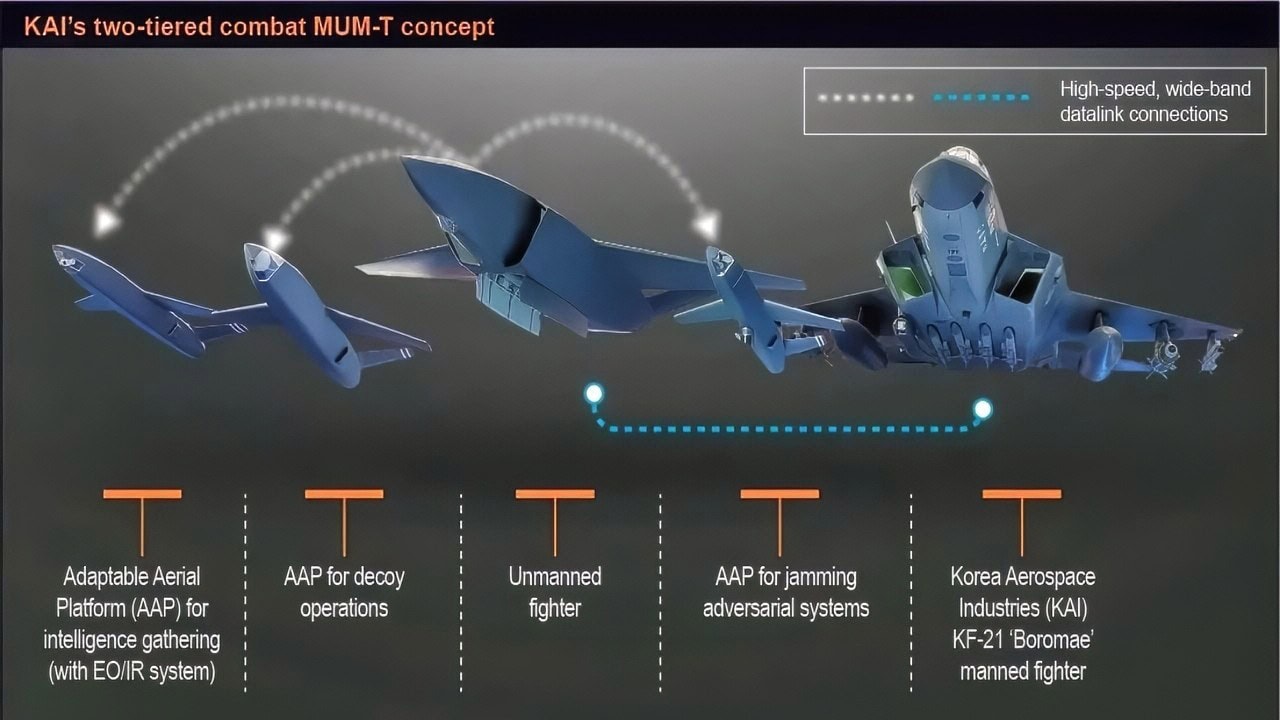
Summary and Key Points: Christian D. Orr, a senior defense editor and former Air Force Security Forces officer, evaluates the KAI KF-21 Boramae’s transition into operational service in 2026.
-Manufactured by Korea Aerospace Industries (KAI), the “Fighting Hawk” utilizes GE Aerospace F414-GE-400K engines and features a low-observable design to bridge the gap between 4.5 and 5th-generation capabilities.
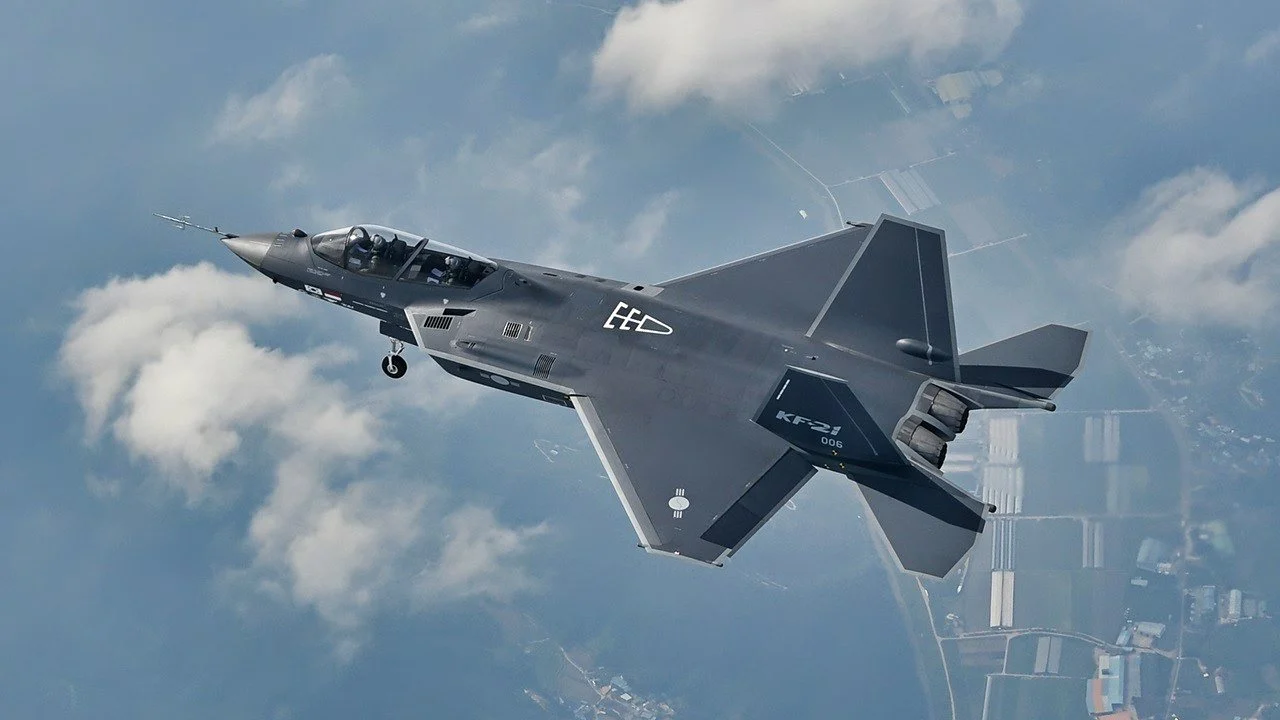
KF-21 Boramae. Image Credit: Creative Commons.
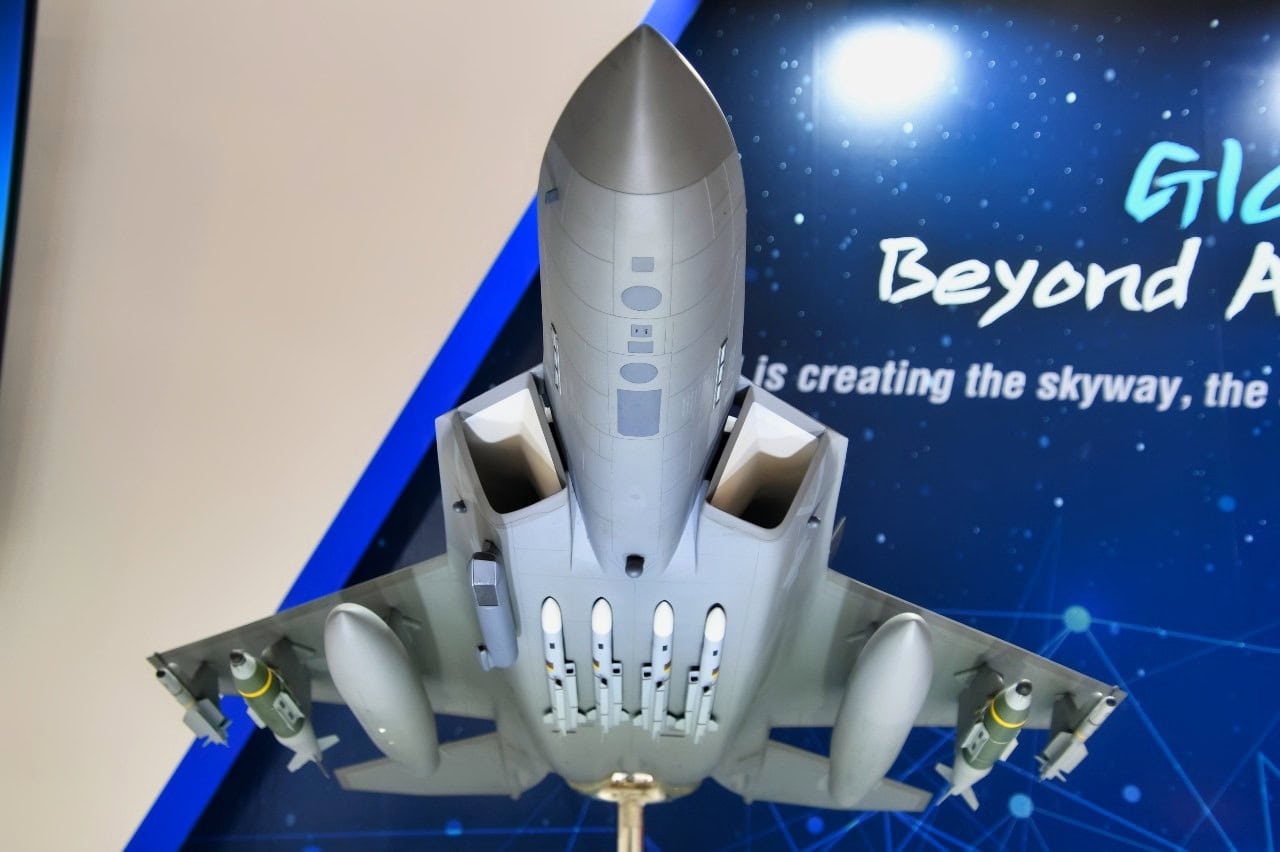
South Korea’s KF-21 Boramae is entering mass production, positioning KAI as a global defense leader. With Poland and other buyers interested, can it challenge the F-35 in export markets?
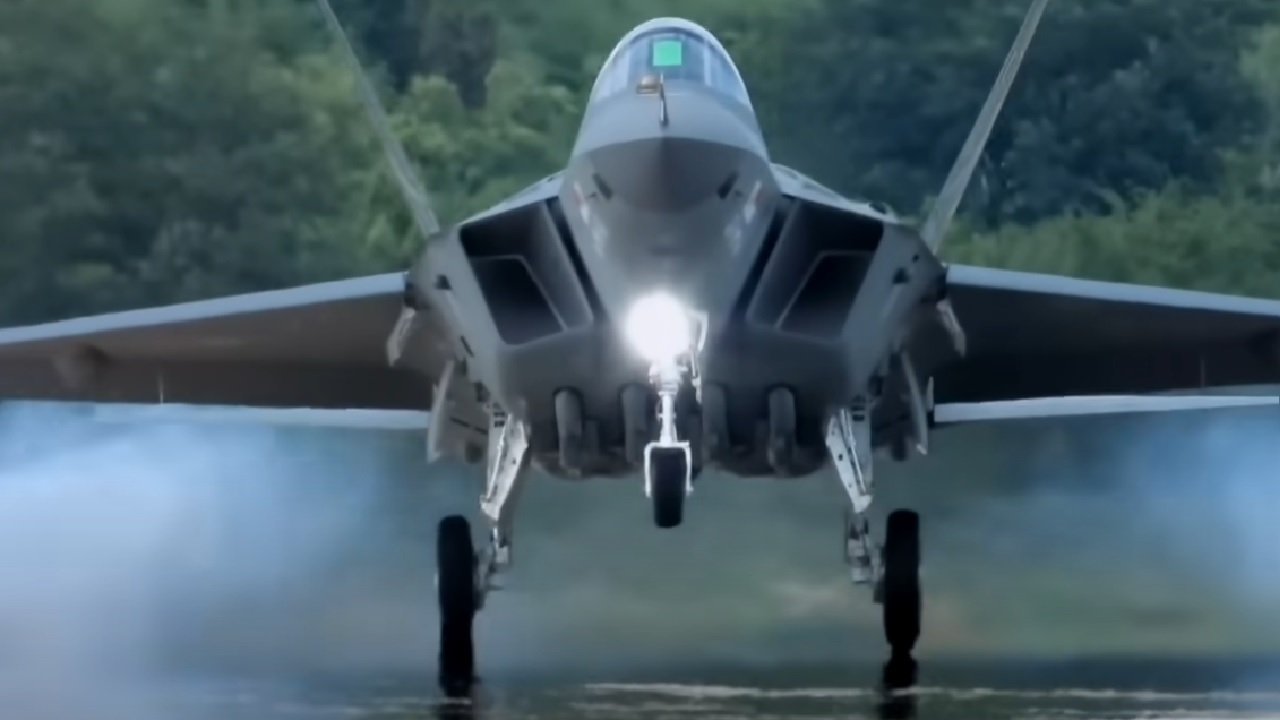
KF-21 screenshot from first flight. Image Credit: YouTube Screenshot.
-This 19FortyFive report analyzes the Block I air-to-air induction, the future KF-21EX internal weapons bay upgrades, and the strategic importance of the ROKAF’s shift toward indigenous platforms amid rising regional tensions in the Indo-Pacific.
The Boramae’s Debut: Why 2026 is the Critical Turning Point for South Korea’s KF-21 Fighter
For most of its existence, the South Korean Air Force—founded on 1 October 1949 and known formally as the Republic of Korea Air Force (ROKAF)—has relied on its biggest ally, the United States, to supply it with warplanes—especially fighter planes.
Indeed, according to the World Directory of Modern Military Aircraft (WDMMA), 354 out of the 414 fighter jets in the ROKAF fleet are of American origin. These warbirds span multiple generations of fighter planes, including the third-generation F-5 Tiger II and F-4 Phantom II; the fourth-generation F-16 Fighting Falcon and F-15K Eagle; and the fifth-generation F-35A Lightning II stealth jet.
However, slowly but surely the ROKAF has started venturing into the realm of homegrown fighters. The effort began in earnest with the fourth-generation KAI T-50/FA-50 Golden Eagle, which made its official operational debut in February 2005. Now South Korea’s defense aerospace industry is going one step further by building a fifth-generation stealth fighter—or at the very least a warbird that straddles the borderline between 4.5- and true fifth-generation fighters: the KAI KF-21 Boromae (“Fighting Hawk”).
KAI KF-21 Boromae Initial History and Premise
The KF-21 is manufactured by Korea Aerospace Industries, Ltd. (KAI), which is headquartered in the city of Sacheon-si in South Korea’s Gyeongsangnam-do province. The Boromae first began development as part of the Korean Fighter eXperimental medium-class fighter project, which was first announced by then-South Korean President Kim Dae-jung in March 2001 during a Republic of Korea Air Force Academy graduation ceremony.
Production was delayed for many years (a tail-dragging similar to the ordeal of India’s HAL Tejas Light Combat Aircraft). Eventually, the warbird finally made its maiden flight on July 19, 2022, fifteen months after the first prototype was officially unveiled.
“Made In Korea,” Yes…But Not Entirely
Though KAI and the Korean Agency for Defense Development are the lead entities on the project, the KF-21 isn’t a wholly domestic venture. International partners include Indonesia’s PTDI (now Indonesia Aerospace), Eurofighter Typhoon Limited, and Lockheed Martin. The aircraft also incorporates parts from a hodgepodge of Western suppliers such as General Electric Aerospace, Texstars, Martin-Baker, Cobham, Héroux-Devtek, and Leonardo.
KF-21 Technical Specifications and Vital Stats
Crew: 1 or 2 (shades of the F/A-18 Super Hornet insofar as having both single-seat and two-seater variants)
Fuselage Length: 16.9 meters
Height: 4.7 m
Wingspan: 11.2 m
Empty Weight: 11,800 kg
Max Takeoff Weight: 25,600 kg
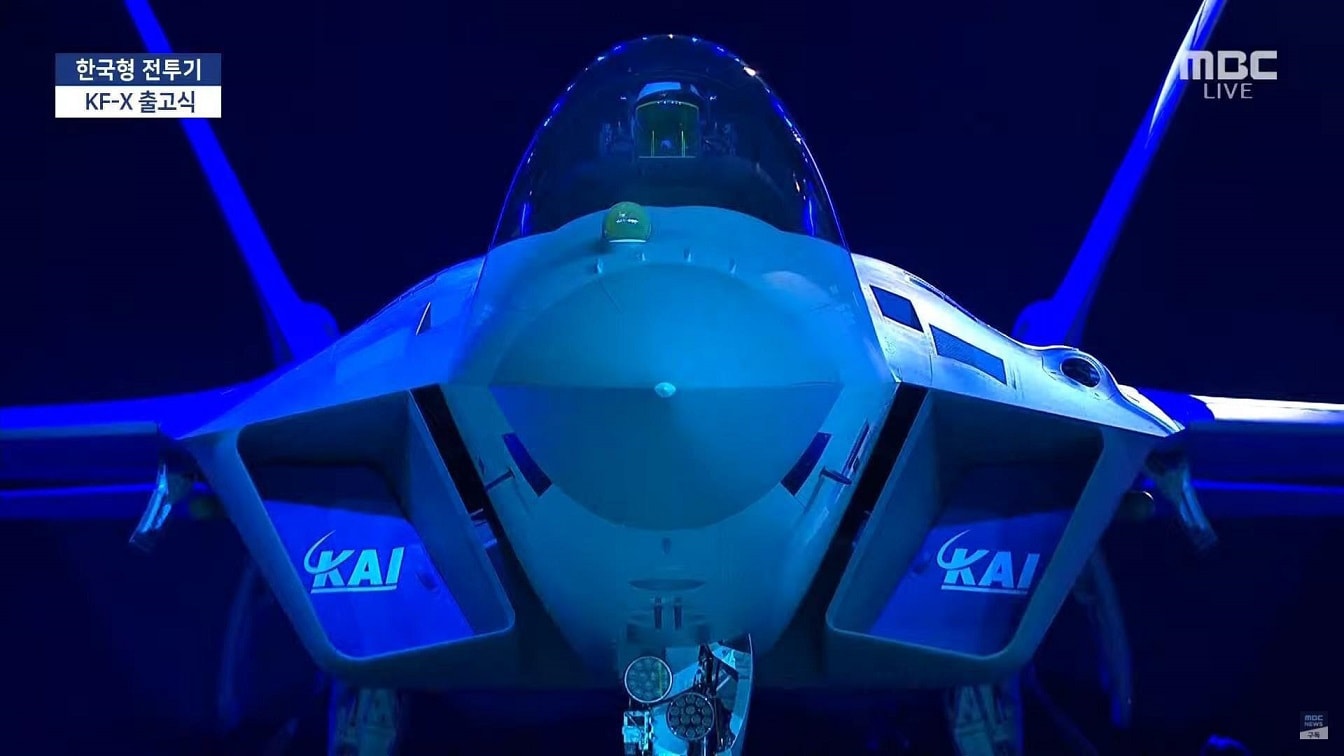
KF-21 Fighter. Image Credit: Screenshot.
Powerplant: 2 × GE Aerospace F414-GE-400K turbofans, generating up to 97.1 kilonewtons of thrust
Max Airspeed: Mach 1.81
Ferry Range: 2,900 kilometers
Combat Range: 1,000 km
Armament:
Guns: 1× 20 mm M61A2 Vulcan Gatling gun
Missiles: Air-to-air missiles such as the AIM-120 Advanced Medium Range Air-to-Air Missile; air-to-surface missiles such as the AGM-65 Maverick; anti-ship missiles such as the Taurus KEPD 350
Bombs: Cluster bombs such as the CBU-97 Sensor Fuzed Weapon; guided bombs such as the JDAM
Though not a full-fledged stealth fighter, the KF-21—in addition to bearing at least a superficial cosmetic resemblance to the F-35—incorporates some semi-stealthy features, such as a low-observable/low radar cross-section (RCS) shape, flush antennas, an S-Duct intake, and a flat fuselage. The next edition of the warbird, designated the KF-21EX, will become even stealthier, thanks to internal weapon bays that will further shrink the RCS.
The Way Forward for the KF-21
There is no real operational history to report here, as the Fighting Hawk hasn’t made its official operational service debut. However, the future for this warbird that makes its nest in the “Land of the Morning Calm” looks very exciting, as can be seen from a January 4, 2026 article in AeroTime penned by Clement Charpentreau.
To wit: “South Korea is preparing to deliver the first production KF-21 Boramae fighter jets to the Republic of Korea Air Force (ROKAF) this year, marking the transition of the country’s flagship combat aircraft program from development to operational service…According to South Korean media, the first serial-production aircraft are expected to be handed over in 2026 following the completion of acceptance testing. The deliveries will mark the first induction of an indigenous fighter mainly developed by the South Korean industry, led by Korea Aerospace Industries (KAI)…The initial deliveries will consist of Block I aircraft, optimized primarily for air-to-air missions. These jets are expected to achieve an initial operational capability before being followed by more capable Block II variants later in the decade.”
Meanwhile, the WDMMA shows the ROKAF with 20 KF-21 specimens on order.
About the Author: Christian D. Orr, Defense Expert
Christian D. Orr is a Senior Defense Editor. He is a former Air Force Security Forces officer, Federal law enforcement officer, and private military contractor (with assignments worked in Iraq, the United Arab Emirates, Kosovo, Japan, Germany, and the Pentagon). Chris holds a B.A. in International Relations from the University of Southern California (USC) and an M.A. in Intelligence Studies (concentration in Terrorism Studies) from American Military University (AMU). He is also the author of the newly published book “Five Decades of a Fabulous Firearm: Celebrating the 50th Anniversary of the Beretta 92 Pistol Series.”