
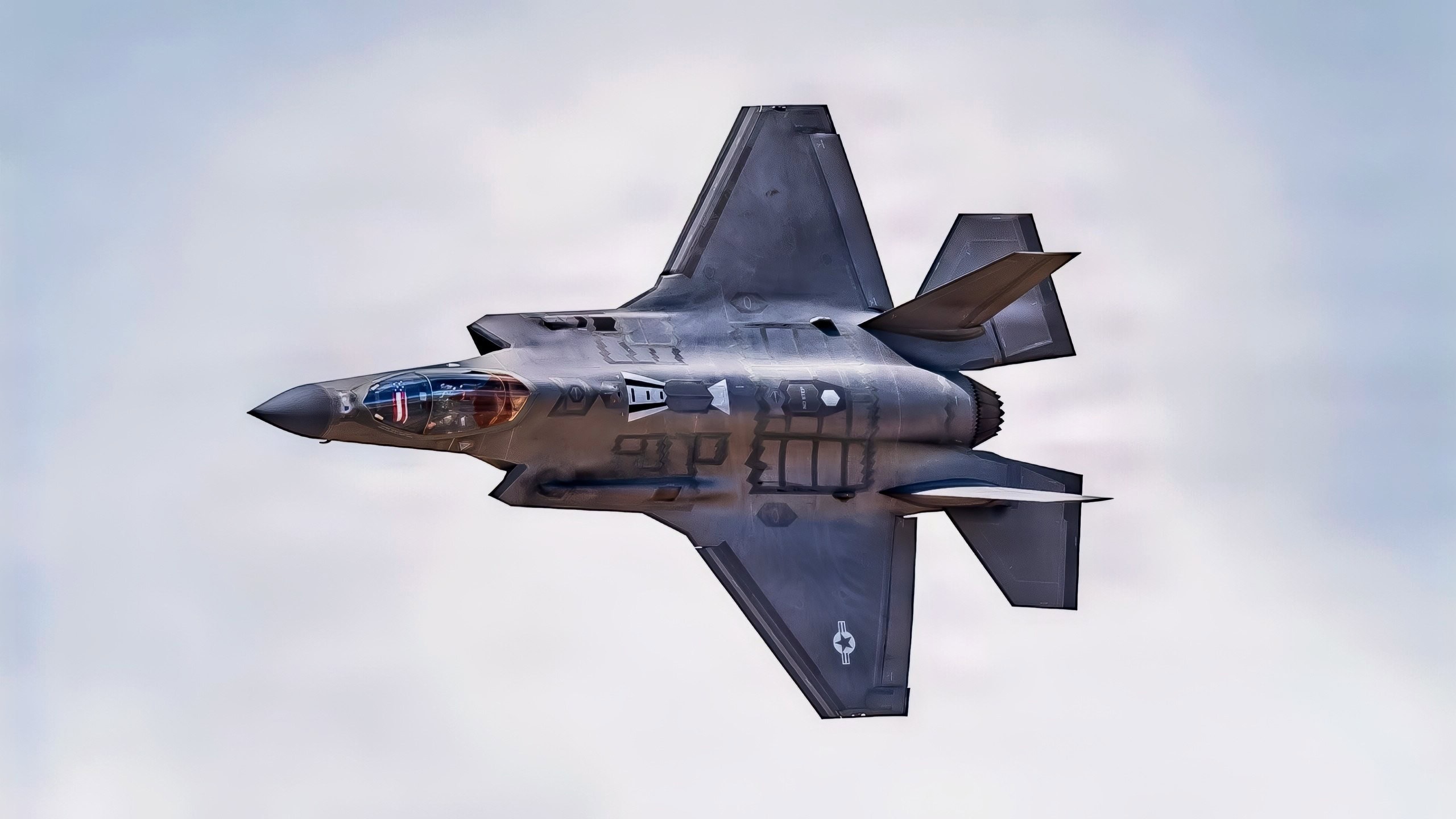
Summary and Key Points: Flyaway costs for lots 15 through 17 were $82.5 million for the F-35A, $109 million for the F-35B and $102 million for the F-35C, figures that do not represent a combat-ready aircraft. Flying the F-35 costs roughly $42,000 per hour against about $25,000 for an F-16, and sustainment requires climate-controlled hangars, specialized training and expensive spares. The Congressional Budget Office found the average availability of a seven-year-old F-35A similar to that of a 36-year-old F-16C/D.
The F-35 Debate Will Never End?
The F-35 Lightning II is a divisive aircraft. While it is often lauded as one of the most advanced fifth-generation aircraft in the world, the program has also garnered many vocal detractors. The main point of contention is its high cost.
While many skeptics still concede that the F-35’s capabilities are top of the line, there is also no denying that the aircraft is a costly piece of hardware.
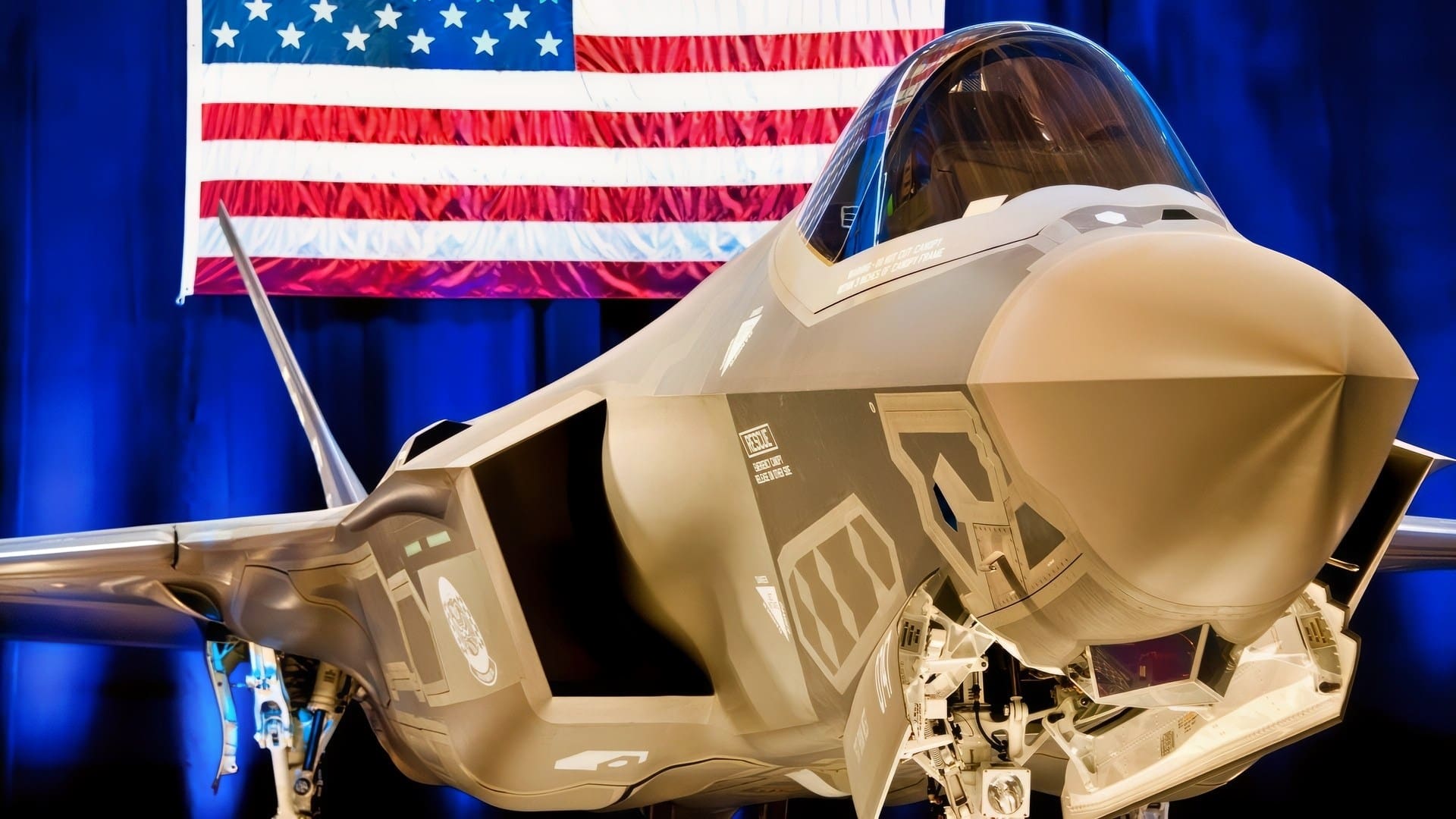
F-35 Fighter With U.S. Flag. Image Credit: Creative Commons.
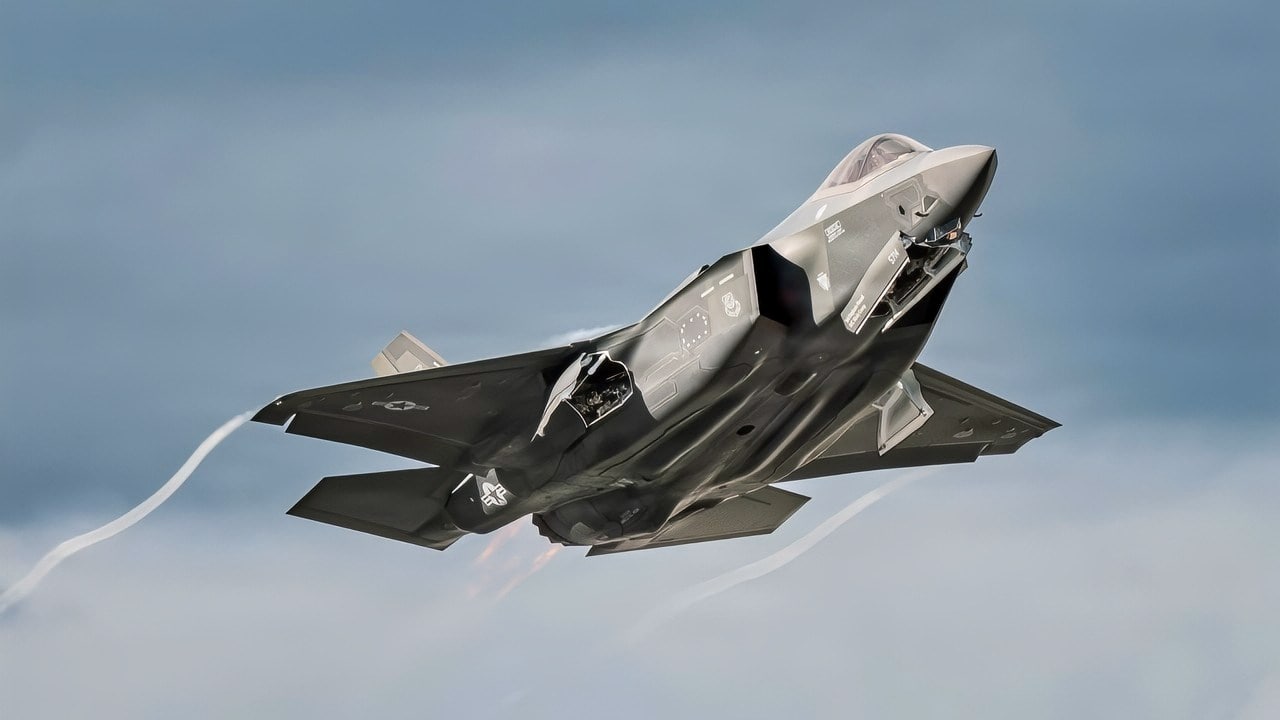
A U.S. Air Force F-35 Lightning II assigned to the 6th Weapons Squadron takes off in support of a U.S. Air Force Weapons School Integration (WSINT) mission at Nellis Air Force Base, Nevada, Nov. 18, 2025. WSINT incorporates multiple aircraft, domains and mission sets to challenge participants with dynamic problem-solving. (U.S. Air Force photo by Senior Airman Lauren Clevenger)
Including the aircraft’s development, testing, production, and maintenance, the F-35 program is expected to cost $2.1 trillion when all is said and done.
The big question among experts and enthusiasts alike is whether the aircraft’s advanced capabilities justify its hefty price tag.
How Much Does the F-35 Cost?
The flyaway cost of an F-35 varies by lot and variant. The costs for lots 15 through 17 were $82.5 million for the conventional F-35A, $109 million for the STOVL F-35B, and $102 million for the carrier-based F-35C.
This already sounds like a hefty sum, but there’s more. Figures posted by contractors often fail to represent the full picture of an aircraft’s cost for marketing purposes (Saab is the main offender in this category).
As some outlets have rightfully noted, a flyaway aircraft does not equate to a combat-worthy aircraft. A fully combat-worthy F-35A, according to some reports, equates to around $101.5 million.
The flight cost of the aircraft, factoring in maintenance, fuel, and other considerations, equates to around $42,000 per flight hour, a hefty sum indeed, especially when compared to the F-16’s $25,000 per flight hour.
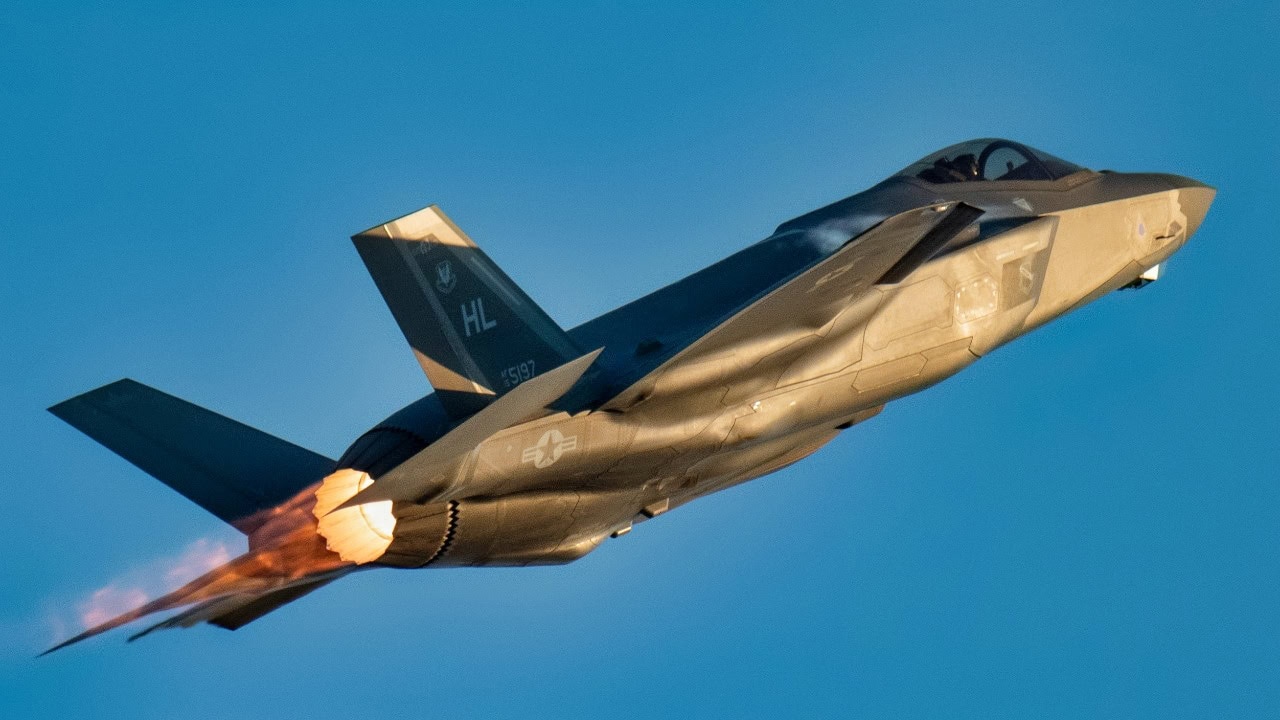
U.S. Air Force Major Kristin “BEO” Wolfe, F-35A Lightning ll Demonstration Team pilot and commander, flies during sunset over Mathers Airport, Calif., Sept. 24th, 2021, at the California Capital Airshow. The team consists of approximately 15 total Airmen to include the pilot and commander, pilot safety officers, superintendent, team chief, maintenance Airmen, aircrew flight equipment specialists, and public affairs personnel. (U.S. Air Force photo by Staff Sgt. Thomas Barley)
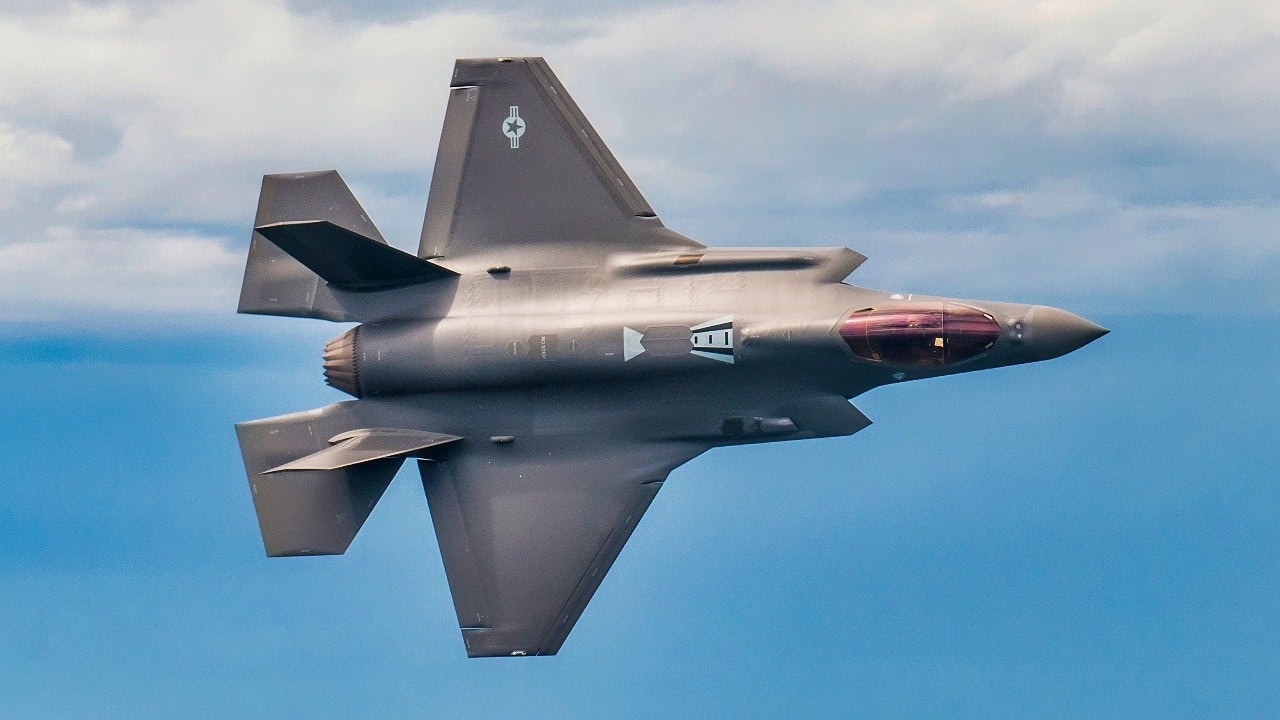
F-35 Fighter. Image Credit: Lockheed Martin.
The aircraft’s high price tag stems from its highly advanced and specialized systems. Consequently, the indirect costs of maintaining the F-35 are much higher than those of fourth-generation aircraft.
The F-35 requires specialized hangars with environmental controls for RAM coating maintenance.
Spare parts, the majority of which are manufactured by Lockheed Martin-approved contractors, are also more expensive—a main landing gear, for example, costs around $180,000 each.
Furthermore, ground crews and aircrews alike require highly specialized training to operate and maintain the incredibly sophisticated aircraft, which further adds to the hidden cost of the F-35.
There are, of course, the avionics and sensors aboard the aircraft that require frequent updates and diagnostic checks.
What Makes the Joint Strike Fighter So Expensive?
These figures make the F-35 look unreasonably expensive, especially when compared to fourth-generation aircraft.
However, there are several other factors to consider when looking at the F-35 program’s price tag.
The first thing to consider is that the production cost of aircraft has diminished over time, due to economies of scale. More than 1,000 aircraft have been produced, with a final goal of around 2,456 airframes.
As a result, aircraft parts have become cheaper over time as supply has increased.
For comparison’s sake, the F-22 Raptor, whose production lines ceased in 2012, has become more expensive to maintain as spare parts grow scarcer.
While the F-22 program is cheaper overall, the flight costs and maintenance of an F-35 pale in comparison with the Raptor.
Additionally, from the outset, the F-35 was designed to be exported to the U.S.’ allies.
This meant that the cost of research and development was partially covered by allied partnerships. According to some sources, the UK, a tier 1 partner on the Joint Strike Fighter (JSF) program, contributed around $2.5 billion to fund the F-35’s R&D efforts. Another $1.25 billion was covered by tier 2 partners like the Netherlands and Italy, while tier 3 partners contributed around$ 250- 5000 million.
Altogether, these contributions amounted to more than 10% of the F-35’s development costs, which, granted, is not very much, but it is a luxury that was not afforded to aircraft such as the F-22.
Allied contributions have also allowed the aircraft to be produced in much higher numbers. Today, the F-35 is the most widely produced fifth-generation aircraft in the world, rivaled only by the Chengdu J-20.
Worth the Price?
Is the F-35 worth the price? I think we can emphatically answer yes.
No matter which way you slice it, the F-35 is one of the most important fighters in the USAF’s arsenal. Its stealth systems, even a decade after entering service, are still world-class.
According to some estimates, even without RAM coatings, the aircraft’s shaped geometry still gives it a lower radar cross-section than most fourth-generation fighters.
Much has been written about the F-35’s sensor fusion capabilities, but really, it is hard to overstate the sophistication of its avionics.
The F-35 is akin to a flying supercomputer, able to process and disperse information from its multiple sensors and display a clear, constantly updating picture of the battlefield to the pilot.
To throw a bone to any F-35 detractors who may be reading this, obviously, the F-35 program has not been perfect—far from it.
It has rightly been criticized for numerous cost overruns and deficiencies that the Pentagon has kept out of the public eye.
According to the Congressional Budget Office (CBO), the F-35 also has disproportionately lower readiness rates than other aircraft.
Older airframes, CBO found, typically decrease in readiness at a faster rate than other fourth-gen aircraft. The average availability of the seven-year-old F-35A, for example, is similar to that of a 36-year-old F-16C/D.
There are many more valid criticisms of the F-35 (as I was writing this, reports emerged that an F-35 crashed near San Diego).
However, it is the humble opinion of the present author that the aircraft’s strengths massively outweigh its weaknesses.
About the Author: Isaac Seitz
Isaac Seitz, a Defense Columnist, graduated from Patrick Henry College’s Strategic Intelligence and National Security program. He has also studied Russian at Middlebury Language Schools and has worked as an intelligence Analyst in the private sector.