
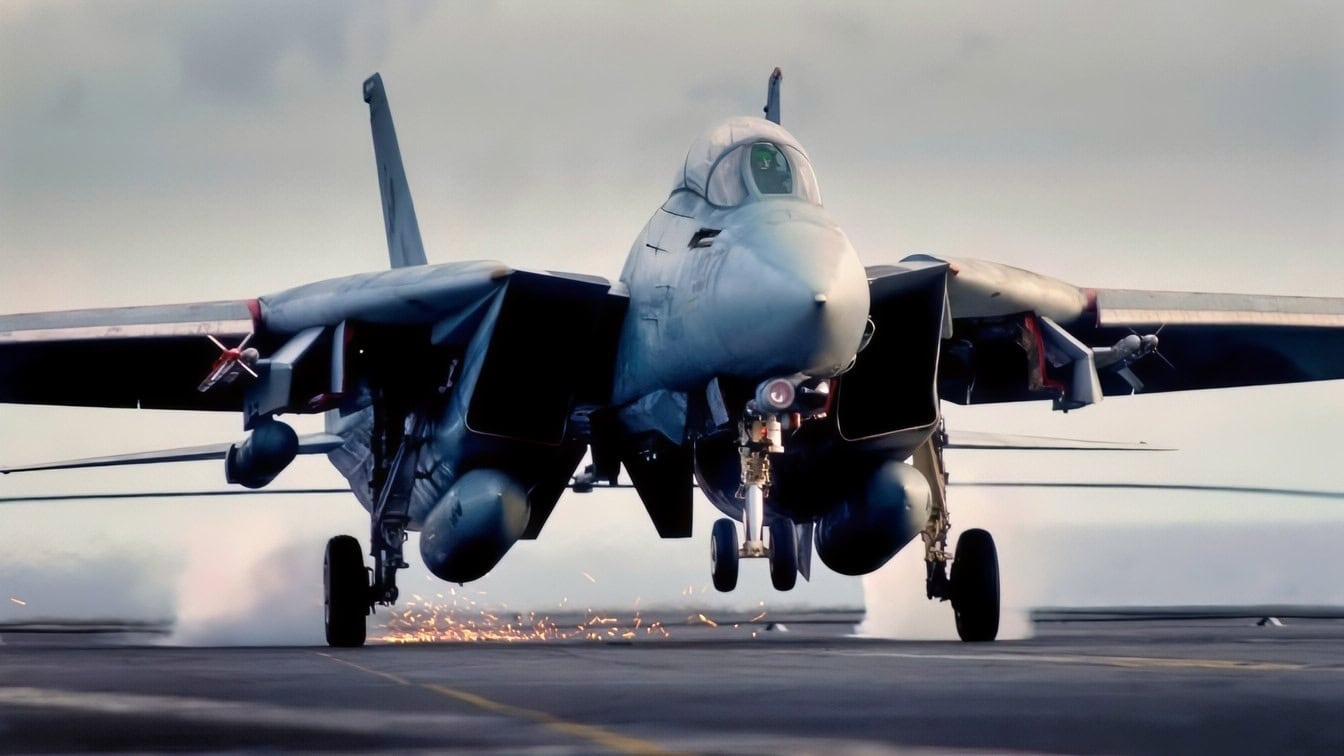
The F-14D Was the Best Tomcat. Retiring It Still Made Sense: The F-14D Tomcat left the U.S. Navy while it was still fighting. On Feb. 8, 2006, a D-model completed the type’s final combat sortie over Iraq from USS Theodore Roosevelt. Seven months later, the Navy held its retirement ceremony at Naval Air Station Oceana. The timing still fuels the argument that Washington discarded its finest carrier fighter too soon.
The aircraft had a strong case for survival. It paired General Electric F110 engines with the APG-71 radar, digital avionics, infrared sensors, LANTIRN targeting pods, and precision weapons. NAVAIR said the Tomcat was leaving “at the top of her game.”
None of those strengths made retirement irrational. The end of F-14D production in the early 1990s remains open to debate. The decision facing the Navy in 2006 was different. Production had been dead for years, the D-model fleet was small, and every extra deployment required a unique support system for fewer aircraft.
The F/A-18E/F Super Hornet was already in combat service. It combined fleet defense, strike, escort, forward air control, and aerial refueling in one aircraft family. The Navy surrendered some speed and reach, but gained a carrier air wing sustainable in larger numbers.
The F-14D Fixed the Tomcat’s Worst Problems
The D-model was the Tomcat Grumman had spent two decades trying to build. Its F110 engines delivered stronger thrust and safer throttle response than the TF30s installed in the F-14A. The APG-71 brought faster digital processing and better overland performance. The result was the ultimate F-14D Super Tomcat, not an exhausted Cold War relic.
The aircraft also escaped its original identity. The Tomcat was designed for long-range fleet defense against Soviet bombers and cruise missiles. By its final decade, it was dropping guided weapons over the Balkans, Afghanistan, and Iraq. NAVAIR recorded its first combat JDAM release in 2003 and added ROVER video links in 2005. Re-engineering had already rescued the Tomcat from its worst propulsion problem.
The F-14D Fleet Was Too Small to Stay Affordable
By 1994, a Navy upgrade plan covered 53 F-14Ds. The Government Accountability Office estimated $1.8 billion to add an F-15E-equivalent strike package to those aircraft. Comparable work across the older A- and B-model fleet pushed the estimate billions higher.
The production line was gone. Suppliers had moved, tooling had been moved to storage, and the Navy still had to fund Tomcat-specific depot work, simulators, aircrew training, radar support, engines, and carrier spares. Variable-sweep wings, large hydraulic systems, and aging structure added maintenance. This was the central problem behind keeping a specialized aircraft ecosystem alive for a shrinking force.
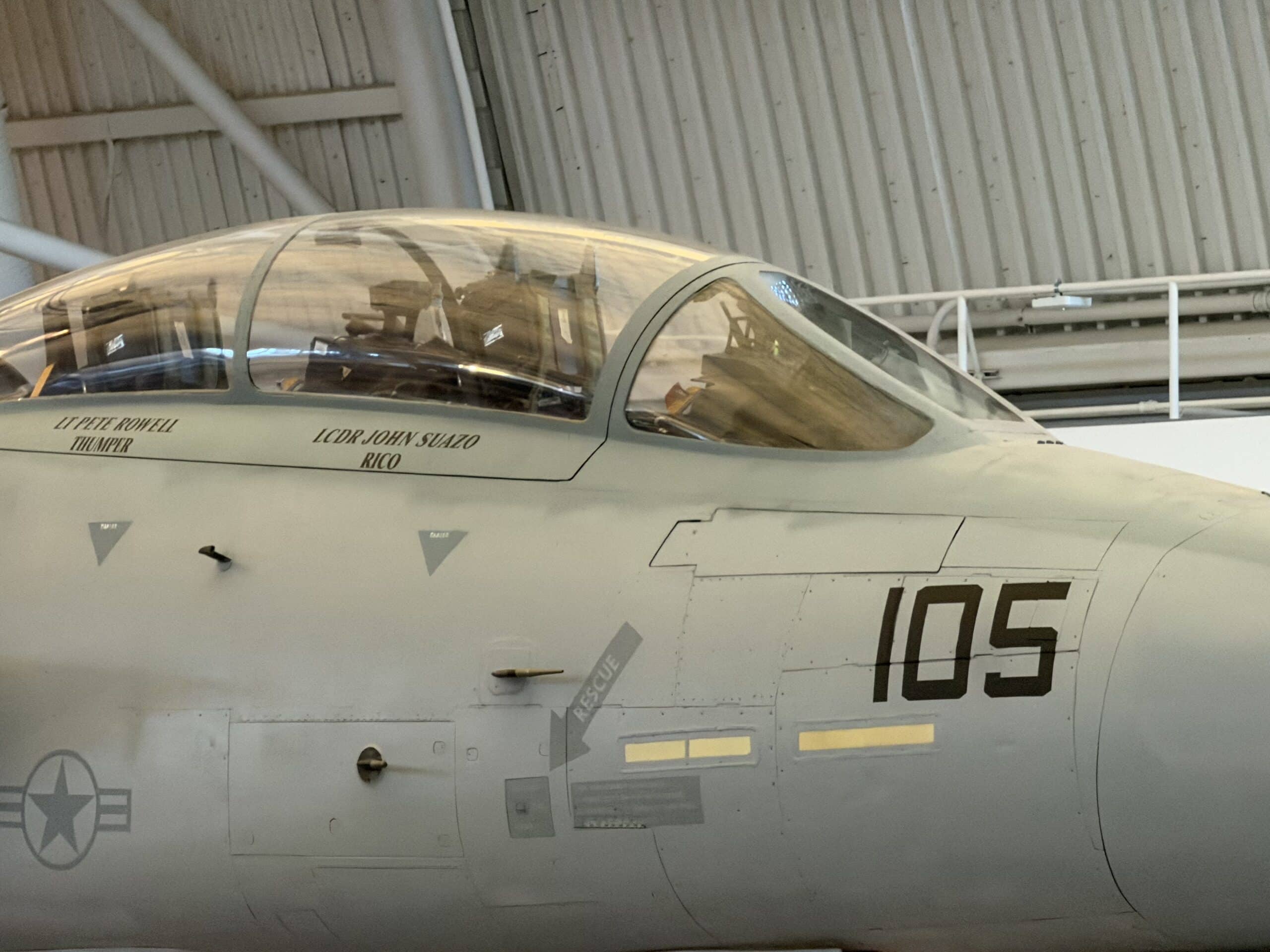
F-14D image taken by Christian D. Orr at the Smithsonian. 19FortyFive.com Image.
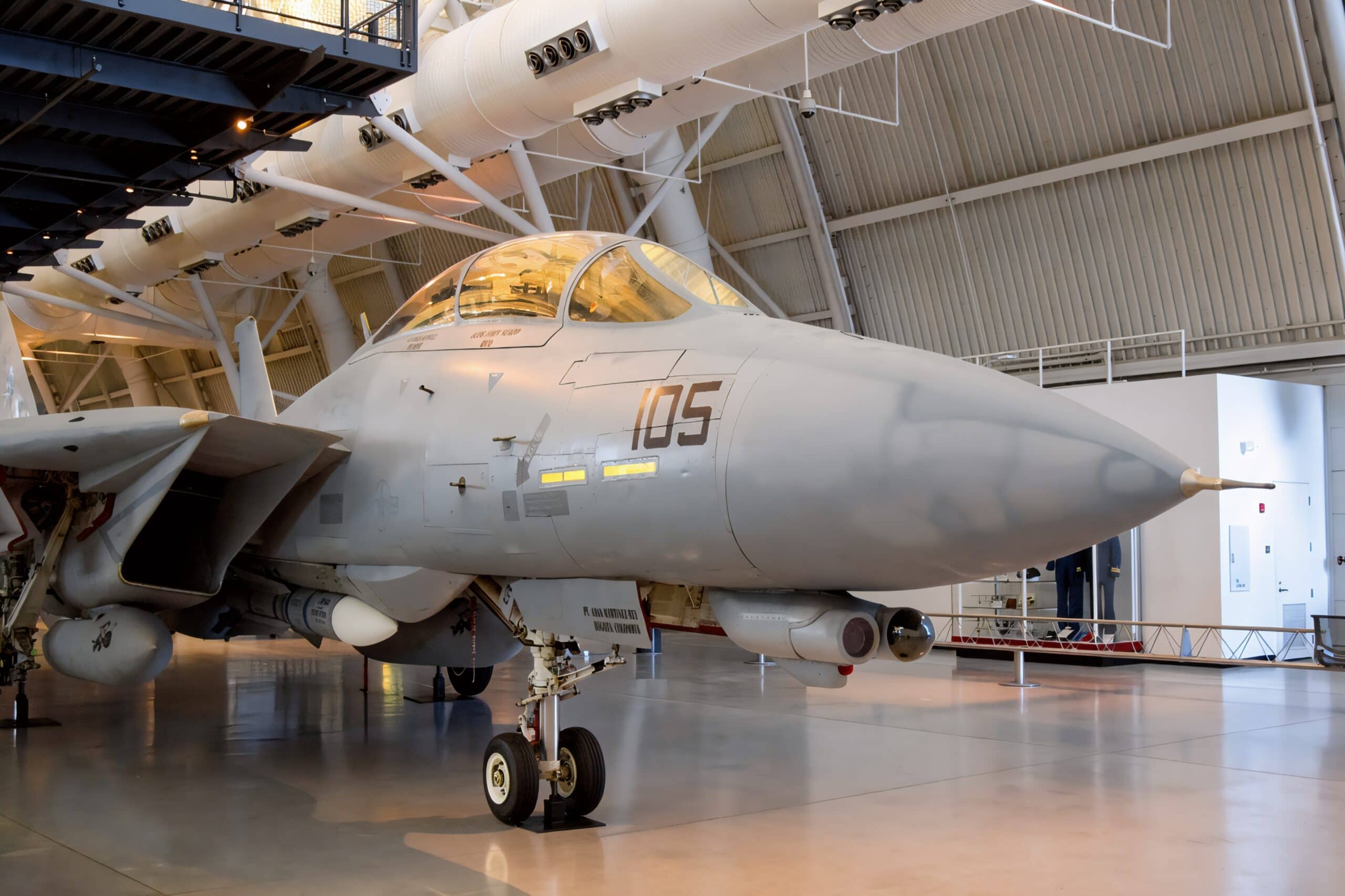
New F-14D Tomcat 19FortyFive Photoshoot Back in 2025
The Super Hornet Solved the Fleet Problem
The Super Hornet lacked the Tomcat’s Mach 2 speed, Phoenix missile, and huge radar aperture. It offered repeatable availability.
The Navy’s official aircraft history says the larger E/F model arrived with fewer parts and lower maintenance demands than the legacy Hornet.
One platform performed air defense, precision strike, suppression of enemy air defenses, close air support, and buddy tanking. The APG-79 active electronically scanned array radar, AIM-120 AMRAAM, and modern data links offered a cleaner path into networked warfare. Commonality reduced the engines, parts, training pipelines, and support teams aboard a carrier.
The Super Hornet became the carrier air wing’s workhorse because squadrons generated missions across several roles without preserving a separate interceptor force.
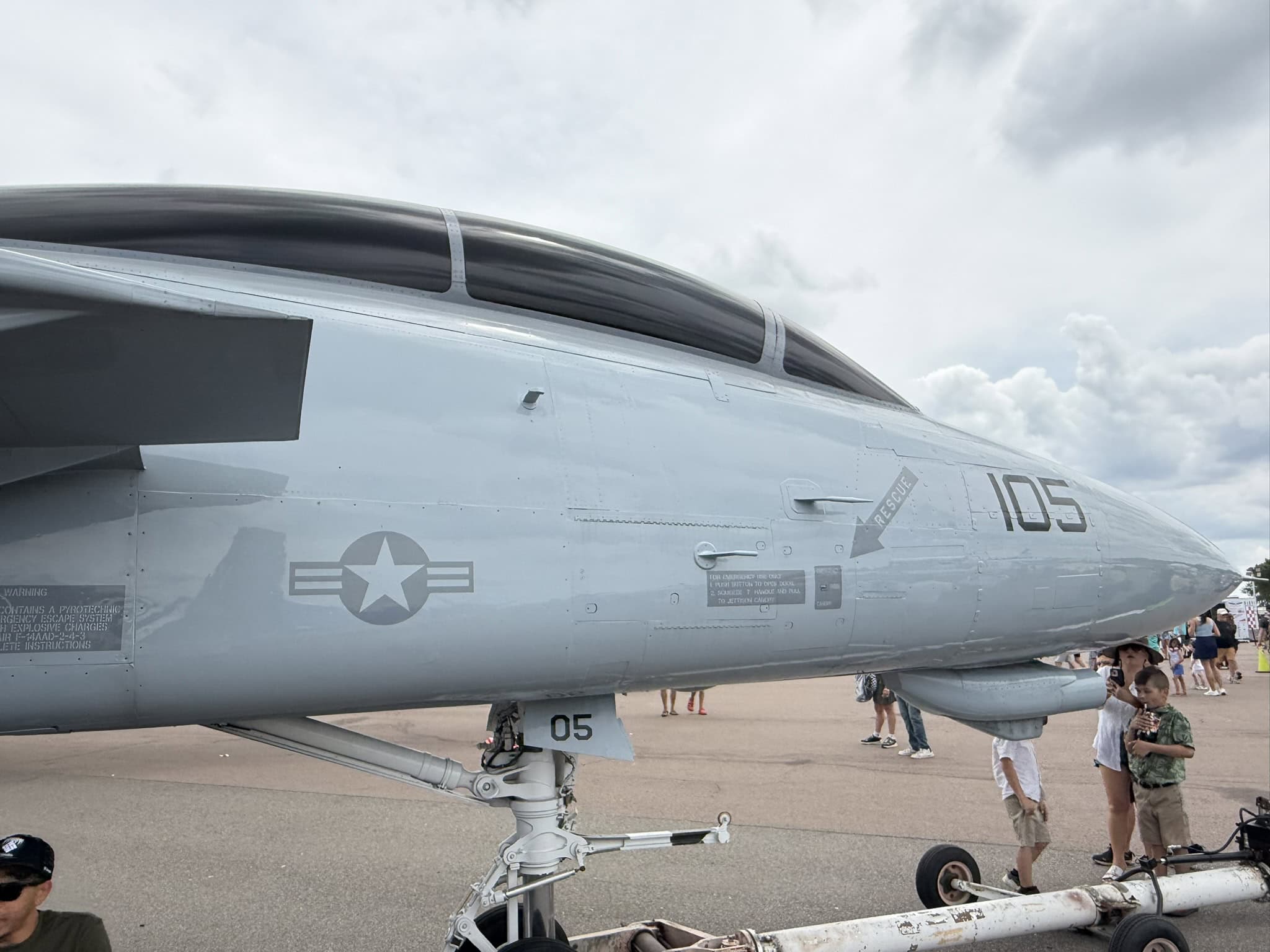
F-14D Tomcat from Lakeland, Florida Airshow. Image Credit: 19FortyFive.com. Taken on 4/19/2026.
The Navy Gave Up Real Capability
Retirement carried a price. The F-14D had greater dash speed, long endurance, a two-person cockpit and a radar-missile combination built to defend a carrier at distance. The Super Hornet never duplicated the same package.
Today’s concern over China’s anti-ship missile network makes the Tomcat’s range advantage look more important than it did during wars in Iraq and Afghanistan.
The loss continues to fuel arguments over what the carrier air wing surrendered. A larger F-14D buy or a timely Super Tomcat 21 program might have preserved those qualities.
The proposed successor still faced high cost, complex maintenance, and no stealth, which is why the Super Tomcat counterfactual was never a free answer.
Retiring the F-14D Was Different From Killing Its Production Line
Stopping D-model production so early left the Navy with too few of its best Tomcats. By 2006, reversing the choice meant rebuilding an industrial base while the Super Hornet fleet expanded and the F-35C was expected to follow.
Keeping a few squadrons for another cruise would have delayed the same choice without changing its economics.
The final Tomcat air wing deployed in 2005, consisting of VF-31 and VF-213. Carrier Air Wing Eight records the last F-14D combat landing in February 2006. On Oct. 4, BuNo 164603 flew from Oceana to Farmingdale, New York, on the final Navy Tomcat flight.
The jet arrived with its speed, radar, and beauty intact. The production line, supplier base, and next carrier deployment had already moved on.
About the Author: Harry J. Kazianis
Harry J. Kazianis (@Grecianformula) was the former Senior Director of National Security Affairs at the Center for the National Interest, a foreign policy think tank founded by Richard Nixon in Washington, D.C. Harry has more than a decade of experience in think tanks and national security publishing. His ideas have been published in The New York Times, The Washington Post, The Wall Street Journal, CNN and many other outlets worldwide. He has held positions at CSIS, the Heritage Foundation, the University of Nottingham and several other institutions related to national security research and studies. He is the former Executive Editor of The National Interest and The Diplomat. He holds a master’s degree focusing on international affairs from Harvard University.