
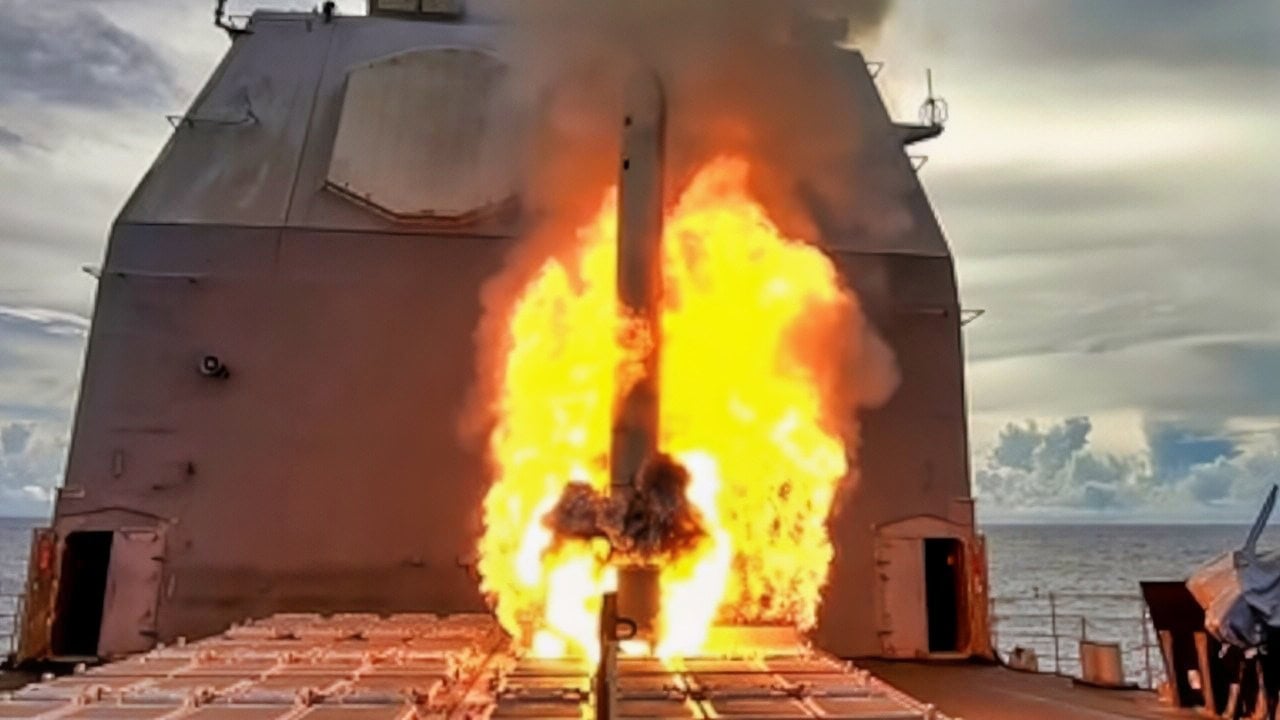
On July 29, 2026, Japan’s Maritime Self-Defense Force successfully conducted its first live-fire Tomahawk launch from the destroyer JS Chokai.
The launch marks more than just a weapons test—it represents one of the biggest changes in Japanese military doctrine since the end of World War II.
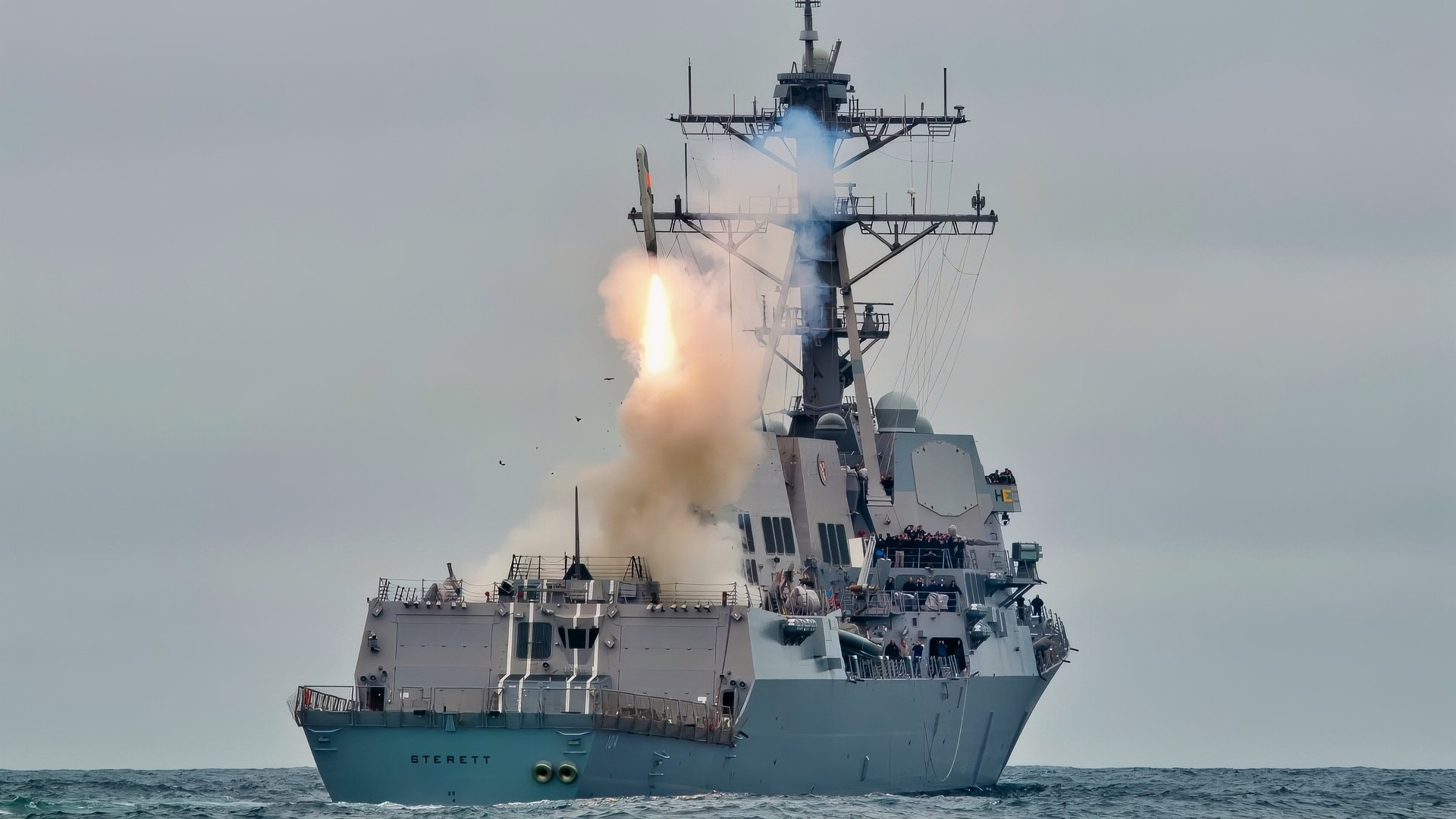
Tomahawk Missile USN Photo
Since surrendering to the Americans, Japan has focused almost entirely on defending the homeland, but the Tomahawk gives Japan the ability to strike hostile targets hundreds of miles away, helping to convert Japan into an offensive military power.
The Tomahawk test speaks to Tokyo’s growing concern over China’s military modernization and North Korea’s expanding missile arsenal, both of which have pressed Japan into a new defensive posture.
Historically Significant
Japan has traditionally emphasized strictly defensive capabilities under its postwar constitution. Accordingly, long-range strike weapons were often viewed as offensive systems that did not fit within the constitutionally allowed defensive structure.
But recent security reforms have reinterpreted Japan’s self-defense today. Tokyo argues that striking enemy missile launch sites before they attack Japan can constitute legitimate self-defense.
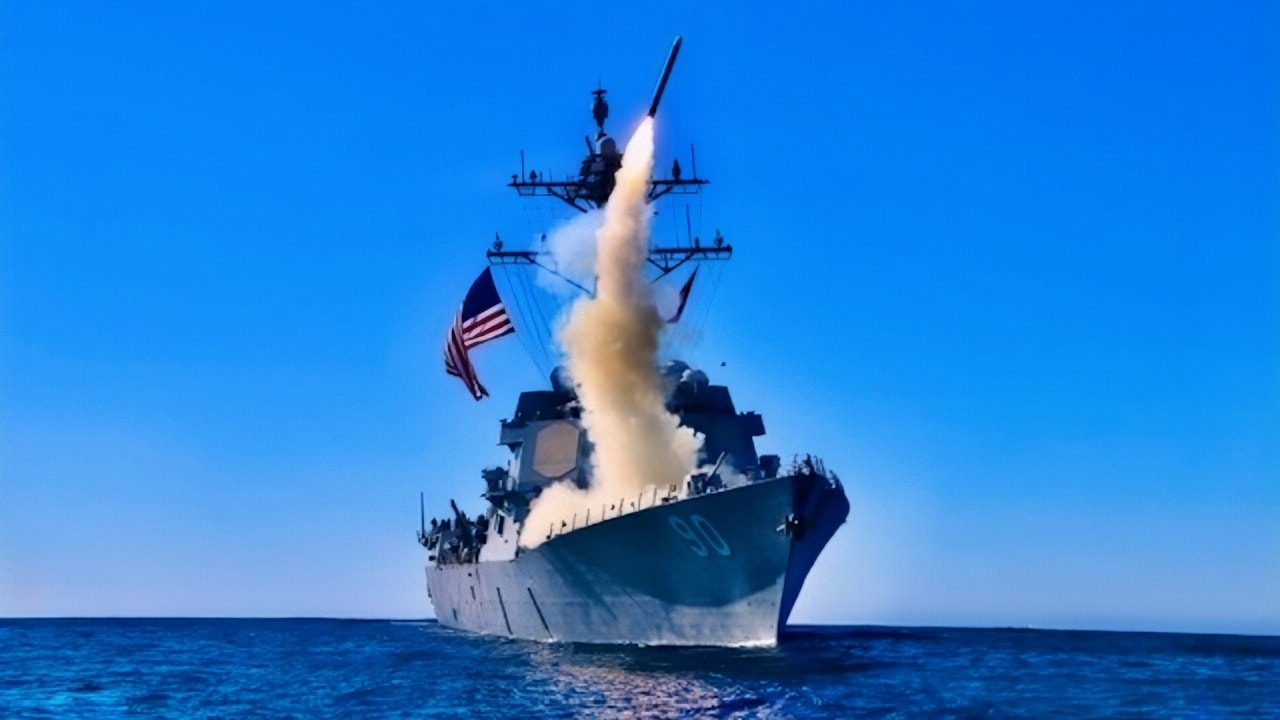
(Dec. 01, 2020) – The guided-missile destroyer USS Chafee (DDG 90) launches a Block V Tomahawk, the weapon’s newest variant, during a missile exercise. This event marked the first time a Block V Tomahawk missile was operationally tested, marking the Navy’s transition to a more advanced capability for the fleet. Block V includes an upgrade that will enhance navigation performance and provide robust and reliable communications. Chafee is currently assigned to Carrier Strike Group ONE and is homeported in Pearl Harbor. (U.S. Navy photo by Ens. Sean Ianno/Released)
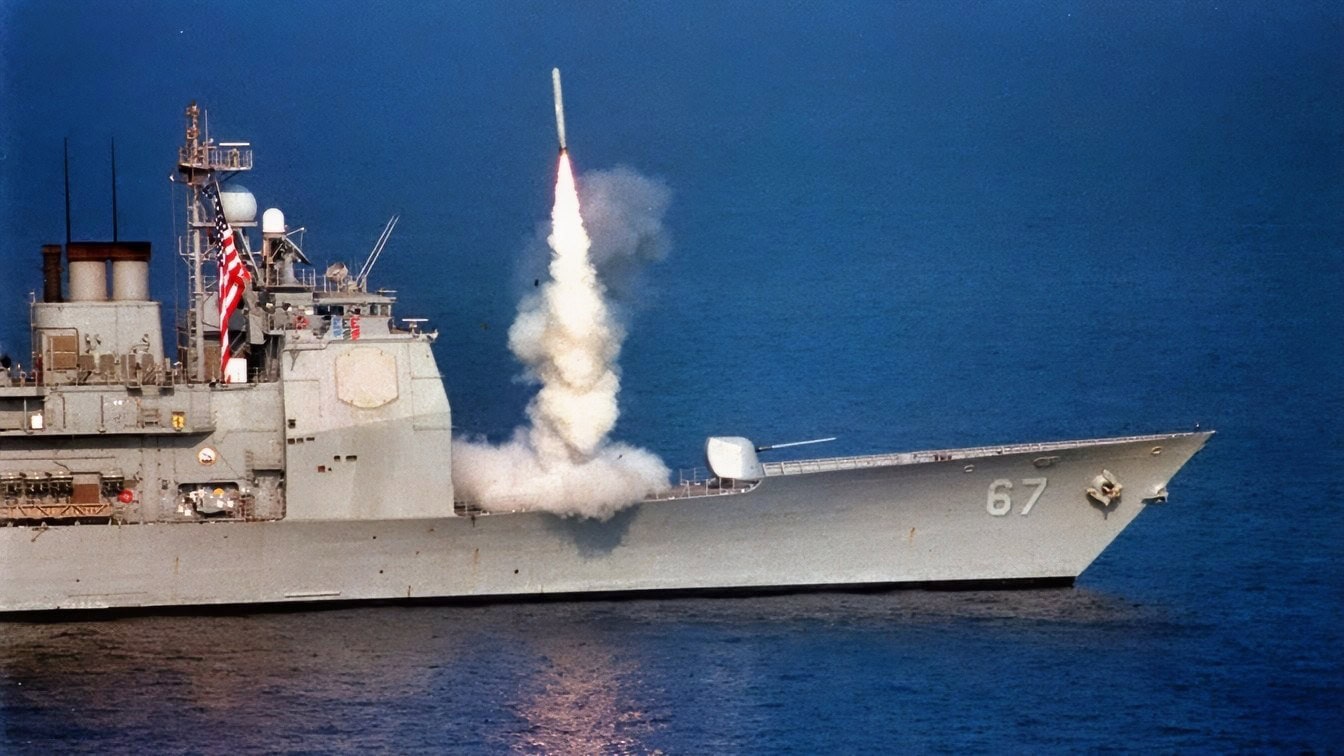
A Tomahawk cruise missile launches from the forward vertical launch system of the USS Shiloh (CG 67) to attack selected air defense targets south of the 33rd parallel in Iraq on Sept. 3, 1996, as part of Operation Desert Strike. The attacks are designed to reduce risks to the pilots who will enforce the expanded no-fly zone. President Clinton announced an expanded no-fly zone in response to an Iraqi attack against a Kurdish faction. The larger no-fly zone in Southern Iraq will make it easier for U.S. and coalition partners to contain Saddam Hussein’s aggression. The U.S. Navy Ticonderoga Class cruiser launched the missiles as it operated in the Persian Gulf.
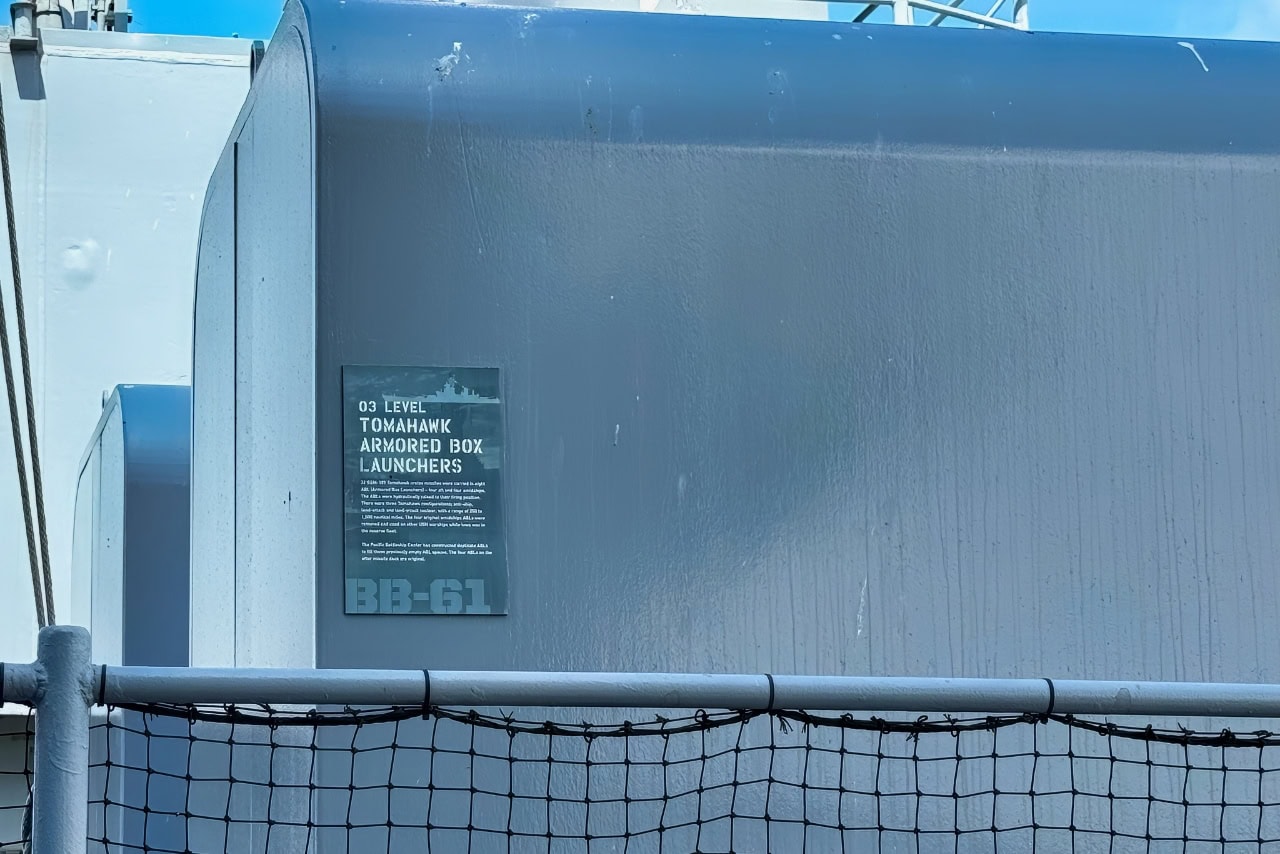
USS Iowa 19FortyFive image of Tomahawk Missiles on USS Iowa.
While the logic of that stance is debatable, what’s clear is the capability the Tomahawk affords Japan, which has procured 400 of the US-built cruise missiles since 2024.
Meet the JS Chokai
The JS Chokai, from which the test was conducted, is a Kongo-class guided missile destroyer. First commissioned in 1998, the Chokai is one of Japan’s Aegis-equipped air defense ships, closely modeled after the US Navy’s early Arleigh Burke-class destroyers.
The Chokai is equipped with AN/SPY-1 phased-array radar, the Aegis Combat System, and the 90-cell Mk 41 Vertical Launch System.
To accommodate the Tomahawk missile, the Chokai underwent modifications in the United States during 2025, leading to the successful missile launch last week.
The Importance of the Tomahawk
The Tomahawk is one of the most successful cruise missiles ever developed, entering US service in the early 1980s. The platform has proven itself across multiple conflicts in the last 40+ years.
The current Block IV and Block V variants feature impressive technical capabilities, including range in excess of 1,000 miles, GPS guidance, terrain contour matching (TERCOM), low-altitude terrain-following flight, and a roughly 1,000-pound conventional warhead.
The Tomahawk flies at subsonic speeds, which is quite slow for a modern missile, but compensates through precision and survivability.
Once arriving on target, Tomahawks strike fixed command centers, radar stations, missile batteries, logistics hubs, and airbases deep inside enemy territory—as demonstrated recently during Operation Epic Fury.
The Importance of the Mk 41 VLS
The Chokai already possessed the infrastructure needed to launch Tomahawks. The Mk 41 VLS is one of the world’s most versatile naval launchers.
Previously, Japan used it for its SM-2 air-defense missiles, SM-3 ballistic missile interceptors, and anti-submarine rockets.
The Tomahawk dramatically expands mission options, meaning the same launcher can now perform fleet air defense, ballistic missile defense, anti-submarine warfare, and long-range land attack.
The inclusion of the VLS on the Kongo-class is part of why destroyers were chosen for the Tomahawk modification over Japanese submarines—which lack the VLS. Although some navies fire Tomahawks through torpedo tubes, that variant appears increasingly uncommon.
Surface destroyers provide large missile inventories, integration with Aegis sensors, and easier logistical support. The Chokai is likely only the beginning; Japan operates multiple Aegis destroyer classes, including the Kongo, Atago, and Maya.
All employ Mk 41 launch systems that could eventually be adapted for Tomahawk.
And as more ships receive this capability, Japan’s surface fleet will evolve from primarily defensive escorts into something more capable of protecting the homeland and conducting precision stand-off strikes.
Strategic Implications in the Indo-Pacific
The Tomahawk cruise missile gives Japan an entirely new layer of deterrence. Potential adversaries must now account for precision strikes against missile launchers, command headquarters, logistics, infrastructure, and other targets.
The tool should prove particularly relevant given China’s expanding anti-access/area denial (A2/AD) network and North Korea’s missile force.
This allows Japan to be a stronger contributor to allied strike operations alongside the United States. This also allows the United States to more readily depend on Japan as an offshore balancer against threats in the region.
MORE – France’s Mirage 2000 Is Ukraine’s Secret Weapon
About the Author: Harrison Kass
Harrison Kass is a writer and attorney focused on national security, technology, and political culture. His work has appeared in Tablet, City Journal, The Hill, The Spectator, and The Cipher Brief. He holds a JD from the University of Oregon and a master’s in Global & Joint Program Studies from NYU. More at harrisonkass.com.