
USS California by the Numbers: The $12,750,000 Battleship Sunk at Pearl Harbor and Rebuilt for War
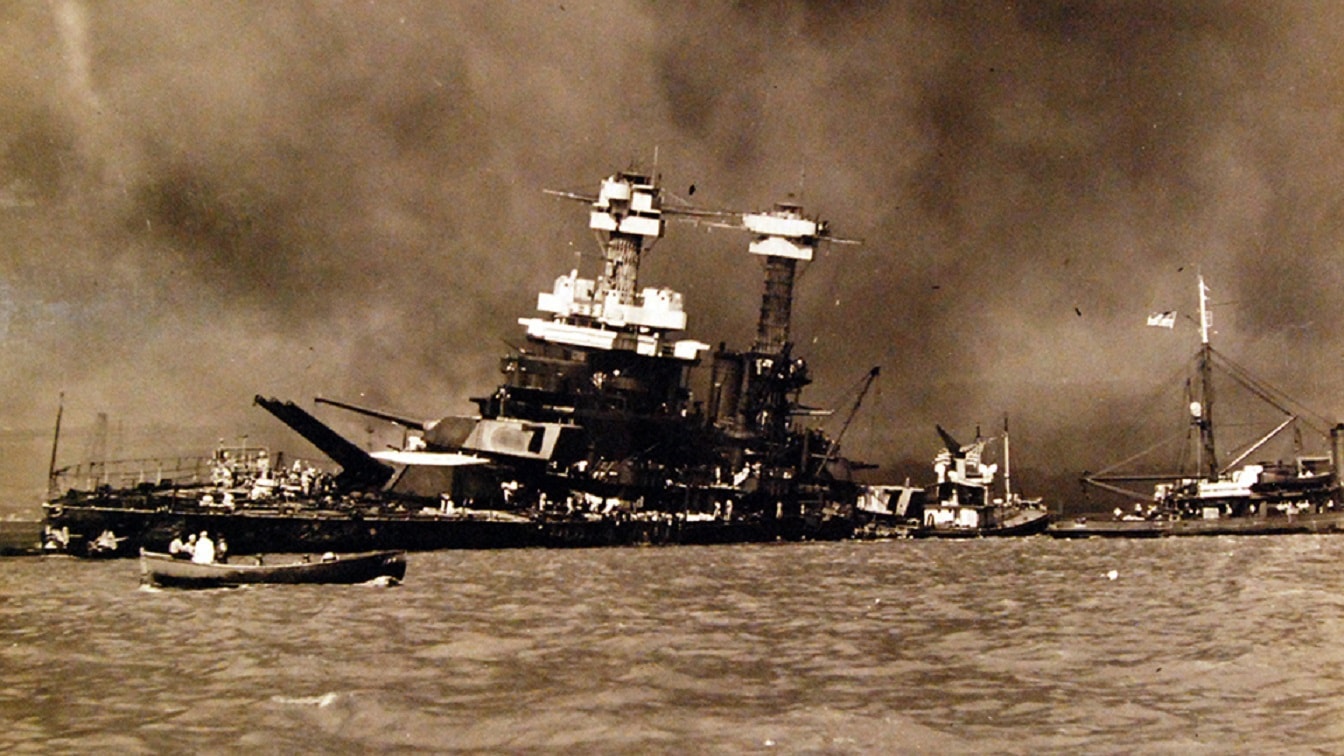
The Navy’s 1931 ship data listed a $12,750,000 “limit of cost” for USS California’s hull and machinery. That bought a 624-foot battleship designed to displace 32,300 long tons, carry twelve 14-inch guns, and make 21 knots. On December 7, 1941, two torpedoes and a bomb left her resting in the mud at Pearl Harbor.
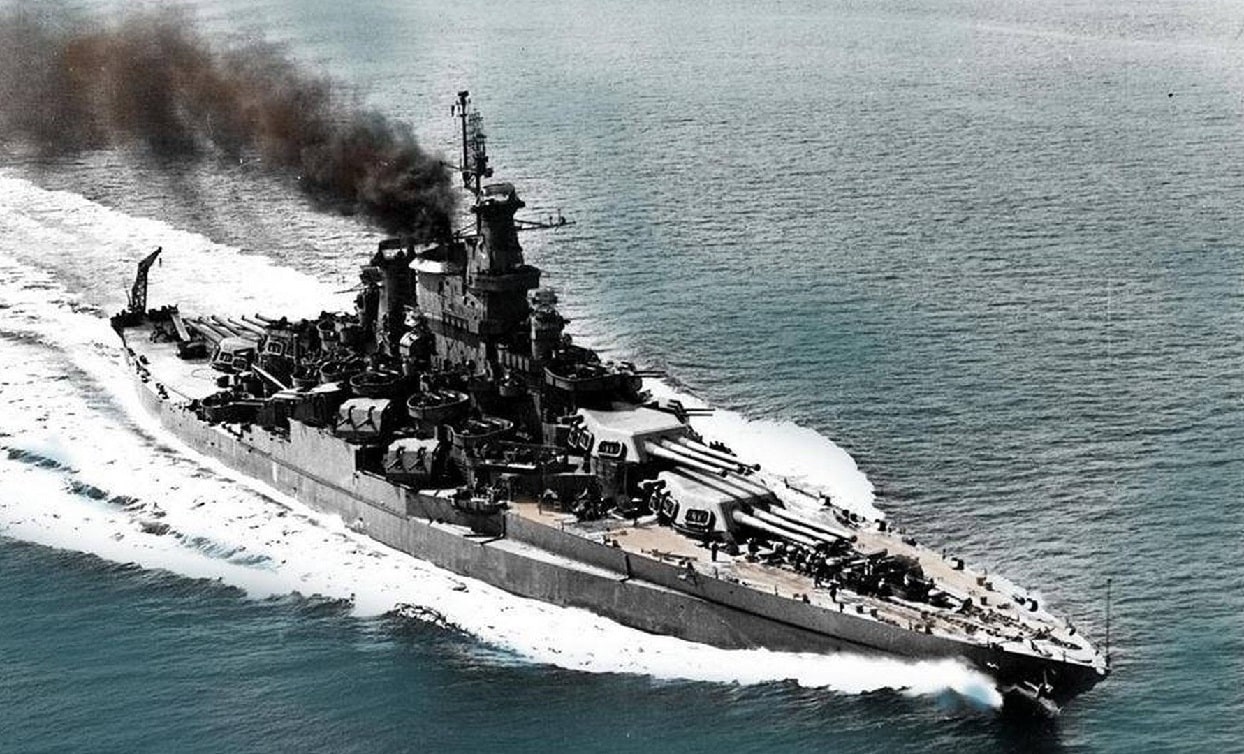
Image: Creative Commons.

Image: Creative Commons.
California returned. Salvage crews refloated her on March 25, 1942, and the Navy spent almost two years repairing and rebuilding the ship. She emerged wider, heavier, covered with new anti-aircraft guns and equipped with modern radar.
The rebuilt battleship could fire an 18,000-pound armor-piercing broadside. At the Battle of Surigao Strait, California discharged 63 of her 1,500-pound shells into the surviving Japanese formation, giving the Pearl Harbor veteran a rare battleship-versus-battleship action.
California earned seven battle stars before returning to the United States. Her career lasted from August 10, 1921, to February 14, 1947, but the 25 months between Pearl Harbor and the completion of her reconstruction defined the ship.
Mare Island Built California Under a $12.75 Million Cost Limit
California was laid down on October 25, 1916, at Mare Island Navy Yard in Vallejo, California. Wartime demand for smaller vessels slowed construction. The hull was launched on November 20, 1919, and the Navy commissioned the battleship almost five years after work began.
The second and final Tennessee-class ship measured 624 feet overall, had a 97-foot beam and drew about 30 feet of water at full load. Oil-fired boilers supplied a turbo-electric drive rated near 28,000 shaft horsepower. Four electric motors turned four propeller shafts.
California’s armored belt reached 13.5 inches, while turret faces carried as much as 18 inches of armor. The design continued the standard-type battleship system developed in ships such as USS Nevada, concentrating protection around machinery and magazines.
The original complement was about 1,083 officers and enlisted sailors. California served much of the interwar period as Battle Fleet flagship, participated in the Navy’s Fleet Problems, and joined the 1925 cruise to Australia and New Zealand while the battle line remained the fleet’s formal center.
Twelve 14-Inch Guns Fired an 18,000-Pound Broadside
California’s main battery sat in four triple turrets. During the 1930s, she received rebuilt Mark 11 guns. Each weapon weighed 179,614 pounds with its breech and measured 59.5 feet overall. Each three-gun turret weighed between 897 and 958 tons and required a crew of about 98.
The armor-piercing Mark 16 shell weighed 1,500 pounds. A 420-pound powder charge sent it from the muzzle at 2,700 feet per second. At 30 degrees of elevation, the range reached about 36,800 yards. All twelve guns together placed nine short tons of projectiles in one salvo.
The guns were rated at about 1.75 rounds per minute, with a capacity of 100 projectiles per barrel. As completed, California also carried fourteen 5-inch/51 guns, four 3-inch anti-aircraft guns, and two submerged 21-inch torpedo tubes. The smaller weapons changed repeatedly as aircraft became the greater danger.
Two Torpedoes and a Bomb Sank California at Pearl Harbor
California was moored alone at berth F-3 on Battleship Row when Japanese aircraft attacked. Preparations for a material inspection had left some watertight doors and ports open, and the crew was still closing the ship when two aerial torpedoes struck the port side at about 8:05 a.m.
The forward explosion opened a hole roughly 10 feet high and 24 feet long. The second tore a damaged area about 40 feet long farther aft. A bomb later penetrated the upper decks and exploded inside, starting a serious fire and cutting electrical power needed for pumps.
Flooding spread before every internal boundary was secured. California settled gradually into the harbor bottom over the next three days, near the wreck of USS Arizona. The final Navy accounting listed 104 men killed and 61 wounded.
Jackson C. Pharris, Herbert C. Jones, Thomas Reeves and Robert R. Scott received the Medal of Honor for their actions. Jones, Reeves, and Scott were honored posthumously. Much of California’s superstructure remained visible, but the battleship was a sunken casualty.
Pearl Harbor Salvage Became a Two-Year Reconstruction
Salvage crews patched the torpedo openings, pumped out water and mud, and lightened the ship. California floated again on March 25, 1942. An accidental fuel-vapor explosion killed additional workers on April 5, and the battleship entered Dry Dock No. 2 four days later.
Temporary repairs allowed California to leave Pearl Harbor on October 10, 1942. She reached Puget Sound Navy Yard in Washington ten days later. The Navy chose a full reconstruction rather than a return to the ship’s prewar arrangement.
Workers removed the old superstructure, widened the hull with new bulges, and installed radar, modern fire control, greater deck protection, and new boilers. The rebuilt ship displaced more than 40,000 long tons at full load and carried 114 officers and 2,129 enlisted personnel.
California received sixteen 5-inch/38 dual-purpose guns, forty 40 mm Bofors barrels, and forty-three 20 mm Oerlikons. The redesign addressed the air threat that had sunk her and paralleled work on other Pearl Harbor battleships. She left Puget Sound on January 31, 1944.
California Returned to Combat at Saipan, Guam, and Tinian
California joined the invasion of the Mariana Islands in June 1944. She bombarded Saipan and exchanged fire with Japanese shore batteries. A 4.7-inch shell struck the ship on June 14, killing one sailor and wounding ten, but California remained on station.
The battleship next supported landings at Guam and Tinian, using her heavy guns against bunkers, artillery, and defended areas ashore. The work gave an older 21-knot battleship a valuable mission even though she could not keep pace with fast carriers.
California collided with USS Tennessee on August 23 while maneuvering near Espiritu Santo. Seven men died, and bow repairs kept her out of the Peleliu operation. She returned in time for the invasion of the Philippines and one of the final surface actions fought by battleships.
California Fired 63 Heavy Shells at Surigao Strait
On the night of October 24–25, 1944, California joined five other American battleships across the northern end of Surigao Strait. Five had been damaged or sunk at Pearl Harbor. Destroyers and motor torpedo boats attacked the approaching Japanese Southern Force before the battle line opened fire.
By then, the enemy formation had been reduced to the battleship Yamashiro, heavy cruiser Mogami, and destroyer Shigure. Fuso had already been wrecked by torpedoes farther south. California’s Mark 8 fire-control radar produced a firing solution while the Japanese ships remained unable to see the American line clearly.
California and Tennessee opened at 3:55 a.m. California fired 63 armor-piercing rounds in six-gun salvos, conserving a limited supply loaded for a campaign dominated by shore bombardment. Yamashiro came under concentrated battleship and cruiser fire before capsizing at 4:19 a.m.
No reliable accounting assigns California a specific number of hits because several ships were firing into the same targets. She still took part directly in the last engagement between opposing battleship forces.
A Kamikaze Hit California at Lingayen Gulf
California moved to Lingayen Gulf in January 1945 to support the invasion of Luzon. On January 6, a Japanese suicide aircraft crashed near the mainmast and anti-aircraft positions. The impact and fires killed 44 people and wounded 155.
The ship remained long enough to support the landings before sailing to Puget Sound for permanent repairs. She returned to the Western Pacific in June, joined the final stages of the Okinawa campaign, and later covered occupation landings at Wakayama.
California reached Philadelphia on December 7, 1945, exactly four years after Pearl Harbor. She entered reserve on August 7, 1946, and was decommissioned on February 14, 1947. The Navy struck her from the register on March 1, 1959, and sold her for $859,999 to Bethlehem Steel on July 10.
Bethlehem dismantled California at Sparrows Point, Maryland. The ship’s 350-pound bronze bell had already returned to the state whose name she carried. Governor Earl Warren accepted it at Capitol Park in Sacramento in October 1949, where it remains on display.
About the Author: Harry J. Kazianis
Harry J. Kazianis (@Grecianformula) was the former Senior Director of National Security Affairs at the Center for the National Interest (CFTNI), a foreign policy think tank founded by Richard Nixon based in Washington, DC. Harry has over a decade of experience in think tanks and national security publishing. His ideas have been published in the NY Times, The Washington Post, The Wall Street Journal, CNN, and many other outlets worldwide. He has held positions at CSIS, the Heritage Foundation, the University of Nottingham, and several other institutions related to national security research and studies. He is the former Executive Editor of the National Interest and the Diplomat. He holds a Master’s degree focusing on international affairs from Harvard University.

