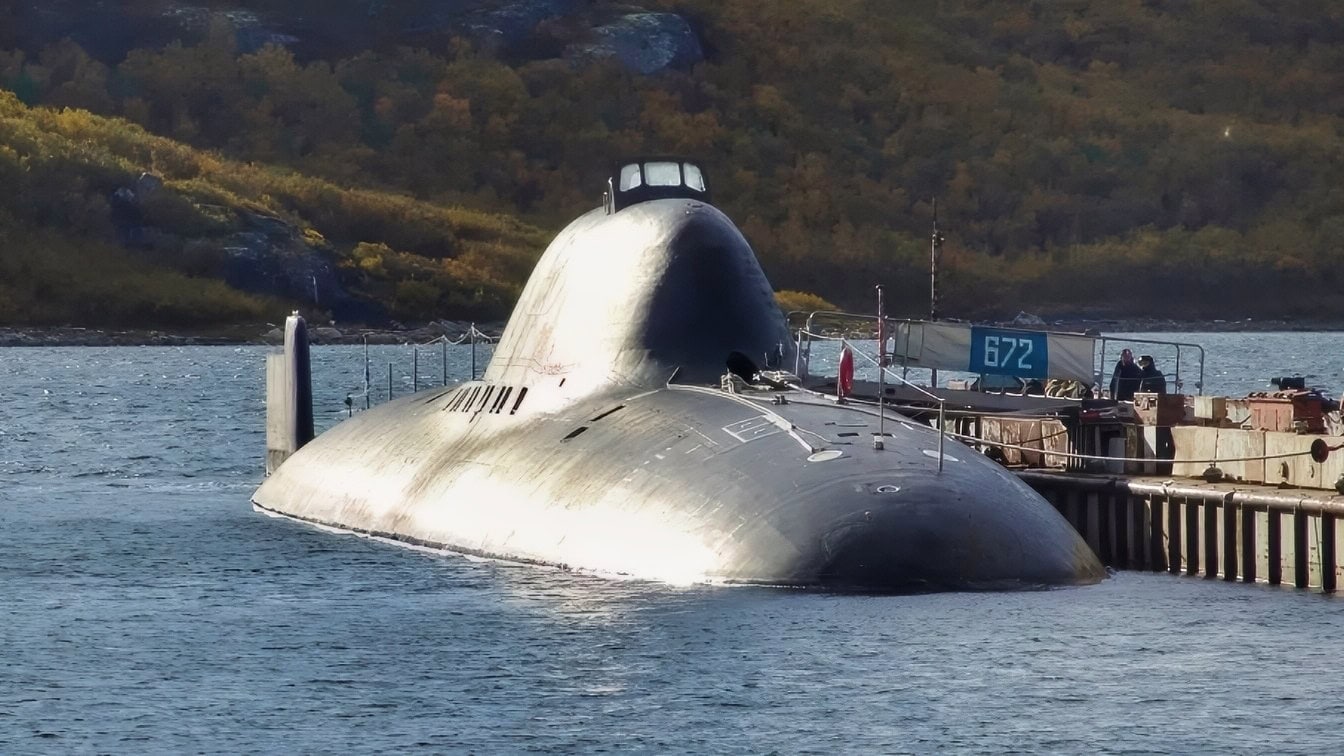
The Cold War saw a flowering of truly innovative designs for a variety of systems, from warplanes to submarines.
Both the United States and the Soviet Union tried incredible new engineering techniques and employed unique technologies to ensure their side won the Cold War.
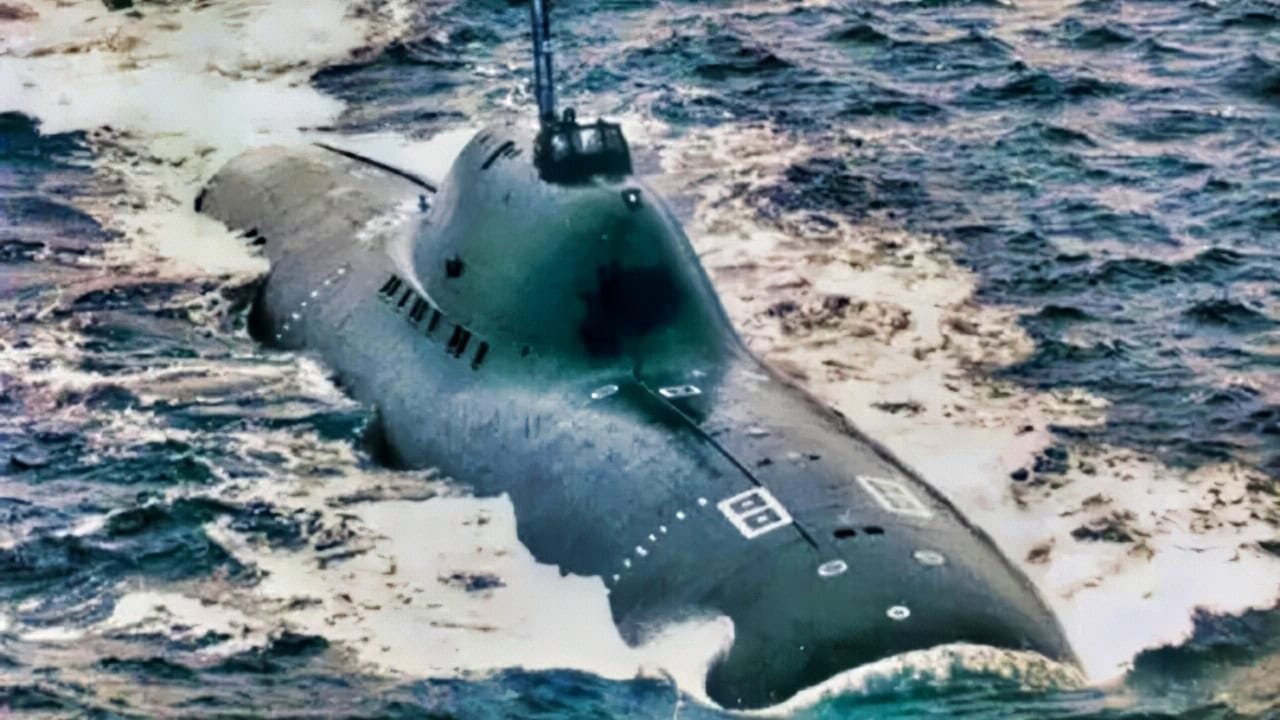
Titanium Submarine from Russia. Creative Commons Image.
One place where the Cold War was lukewarm was beneath the waves.
The Americans had a dominant submarine force, but that dominance was by no means uncontested. The Soviet submarine force was always neck-and-neck with the Americans.
Soviet Titanium Submarines
Two examples of groundbreaking Soviet naval design were Project 945 Barrakuda and Project 945A Kondor. They were attack submarines with the NATO designation of Sierra I and Sierra II, respectively.
Unlike almost all other nuclear-powered attack submarines in the world, the Sierras were built with titanium pressure hulls rather than high-strength steel.
The decision produced some of the deepest-diving and most survivable submarines ever built, but it also made them extraordinarily expensive and difficult to manufacture.
The United States studied the concept but ultimately chose a different path.
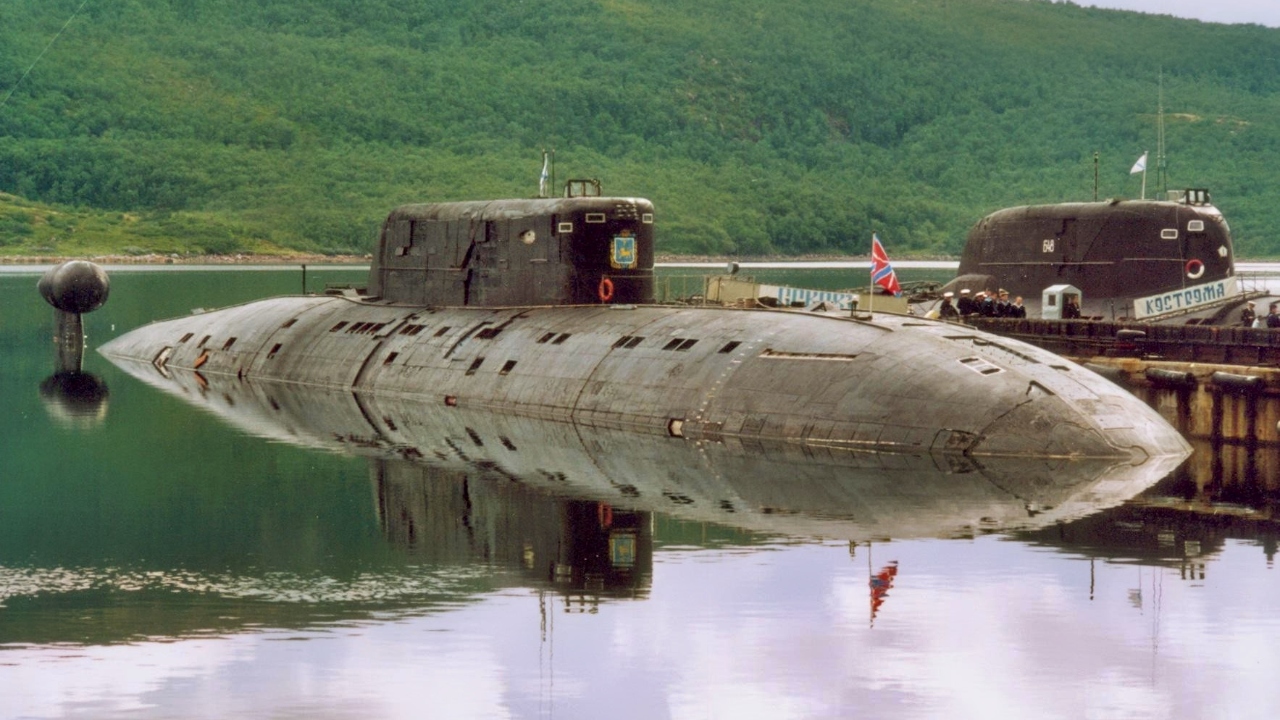
Sierra-Class Submarine. Image Credit: Creative Commons.
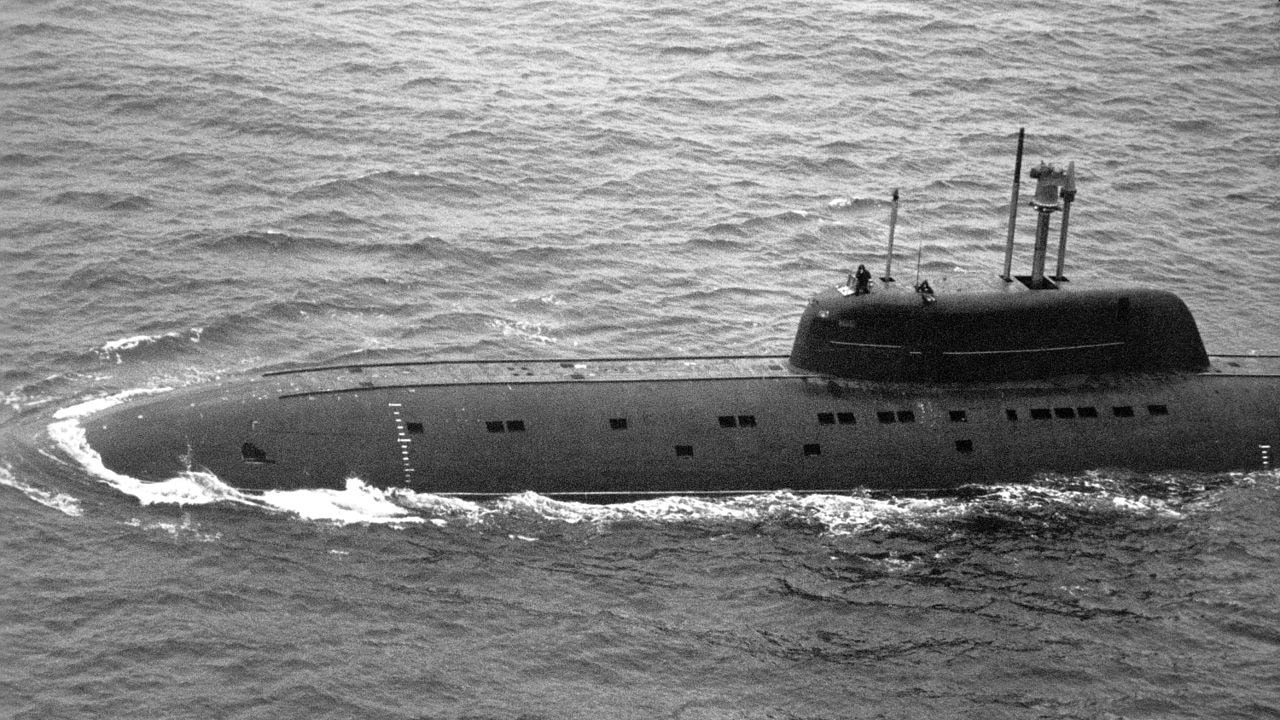
Sierra-Class Submarine. Image Credit: Creative Commons.
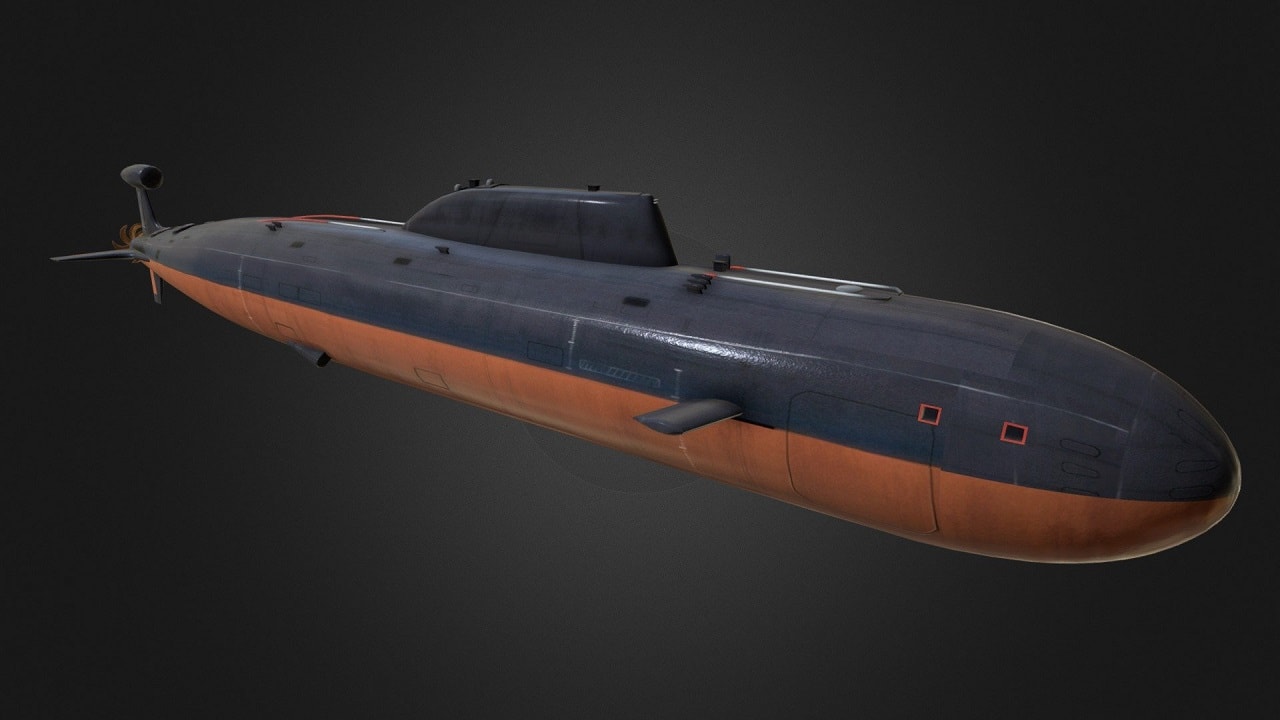
Russian Sierra-class nuclear-powered attack submarine. Artist rendering.
The Sierra program began in the late 1970s as the Soviet Navy sought an advanced attack boat capable of operating deeper than its Western counterparts (while remaining quieter and more resistant to damage).
Soviet naval designers built four submarines between 1984 and 1993 after construction began in 1979. The boats were built by Krasnoye Sormovo Shipyard in Gorky, now Nizhny Novgorod, before final fitting out and testing at Sevmash in Severodvinsk.
Sierra I subs displaced 7,200 tons surfaced and about 8,300 tons submerged, while the improved Sierra II boats displaced around 7,600 tons surfaced and 9,100 tons submerged.
Powered by a single OK-650 nuclear reactor, the submarines could exceed 30 knots underwater and dive significantly deeper than most Western attack submarines of their era.
Their titanium pressure hulls also offered resistance to corrosion and better survivability against underwater explosions than conventional steel hulls.
Titanium was key to understanding the Sierra class boats.
Why Titanium?
Compared with steel, titanium ensured optimal strength-to-weight ratio while resisting corrosion from seawater.
Those characteristics allowed Soviet engineers to design pressure hulls capable of withstanding much greater water pressure, enabling the submarines to operate at depth where many torpedoes became less effective and where detection by enemy sonars was difficult.
Greater diving depth also gave Soviet sub skippers more tactical options when evading NATO submarines or escaping incoming weapons.
Because titanium is non-magnetic, the submarines presented a smaller magnetic signature than steel vessels, reducing vulnerability to some magnetic detection systems.
Combined with increasingly sophisticated quieting technologies introduced on the Sierra II submarines, the design represented one of the Soviet Navy’s most capable hunter-killer boats during the final decade of the Cold War.
Too bad for the Reds that the titanium hull was considerably more expensive and complex to maintain than traditional steel hulls.
Titanium-built submarines required specialized manufacturing facilities, trained welders, and contamination-free fabrication environments.
Plus, welding titanium incorrectly–which is a lot easier to do than it sounds–can weaken the metal. If that occurred (it did), Soviet shipbuilders had to invest in unique production methods.
Still, the USSR invested heavily in its domestic titanium industry, meaning Moscow was more willing to experiment with titanium-made systems.
But even the Soviets struggled to produce enough titanium hulls affordably.
By the mid-1970s, Soviet officials recognized that existing Soviet industrial capacity could not manufacture enough titanium-hulled submarines to meet force requirements.
Instead, they shifted toward the steel-hulled Project 971 Akula-class.
That newer submarine delivered comparable combat capability at substantially lower cost and could be built in much greater numbers.
Four Sierra submarines entered service, while dozens of Akulas eventually followed.
Meanwhile, the Americans considered titanium construction, but Washington ultimately rejected it for many of the same reasons that led the Soviets to abandon their titanium-hulled submarines.
The US Never Embraced Titanium Hulls
The Sierra remains an engineering achievement rather than a production model. Two Sierra II submarines remain associated with the Russian Northern Fleet, while the earlier Sierra I boats have largely been placed in reserve.
Their titanium hulls continue attracting attention because no other operational attack submarines combine such deep-diving capability with nuclear propulsion.
America chose steel hulls and mass-produced submarines based on that model. The Soviets, too, ultimately chose steel over titanium.
So, the Americans fretted over the titanium-hull submarines at first. But the US got the last laugh as its choice not to invest in titanium hulls worked out better for the US Navy.
About the Author: Brandon J. Weichert
Brandon J. Weichert is the Senior National Security Editor at 19FortyFive.com. He also manages The Weichert Brief on Substack. Weichert also hosts “National Security Talk” on Rumble. He is the author of four bestselling national security books, the most recent of which is A Disaster of Our Own Making: How the West Lost Ukraine (Encounter Books). Follow him via Twitter/X @WeTheBrandon.