

The USS Seawolf (SSN-21) is a nuclear-powered fast attack submarine and the lead ship of its class. She is the fourth submarine of the United States Navy named for the Seawolf.
Her keel was laid down on October 25, 1989; she was launched on June 24, 1995; and commissioned on July 19, 1997. The Seawolf class was intended as the successor to the Los Angeles class.
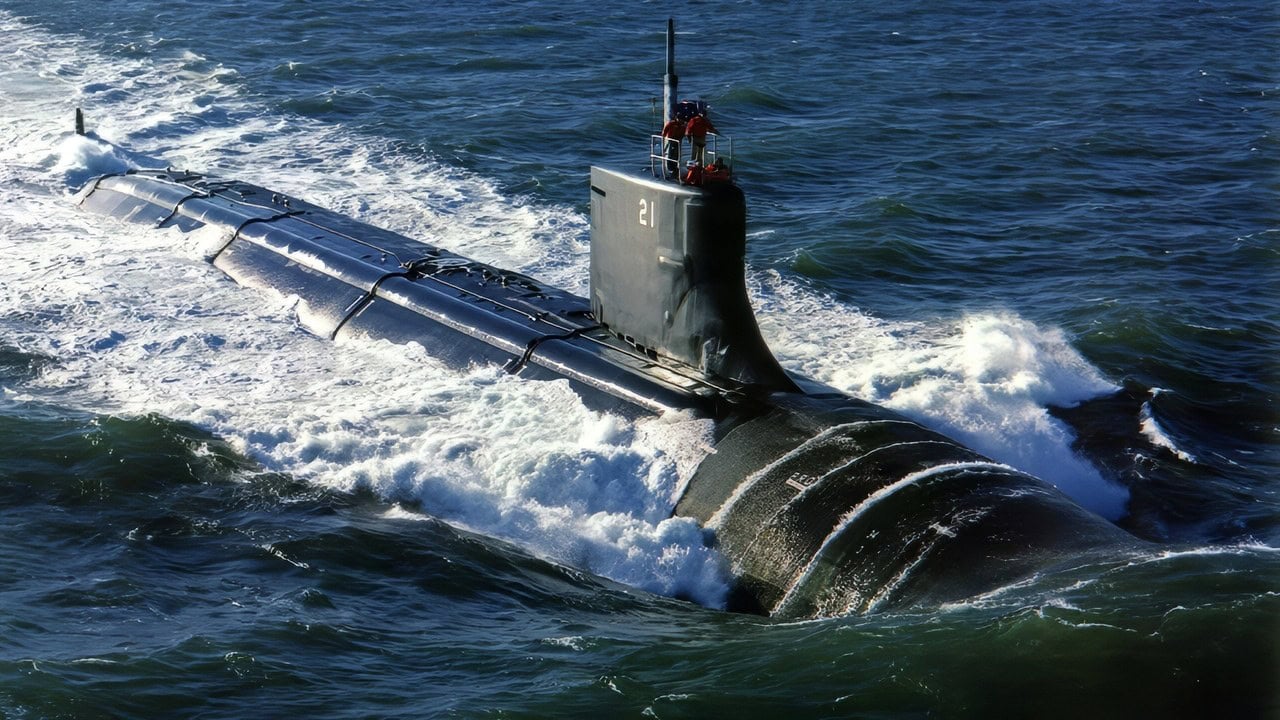
The nation’s newest and most advanced attack submarine Seawolf (SSN 21) puts to sea in the Narragansett Bay operating area for her first at-sea trial operations on July 3, 1996. Sea trials include various tests of the Seawolf propulsion systems and the first underway submergence of the submarine. The Seawolf represents the Navy’s most advanced quieting technology, weaponry, tactical capability and communications. Seawolf is scheduled to be delivered to the Navy and commissioned this fall. U.S. Navy photo courtesy of General Dynamics.
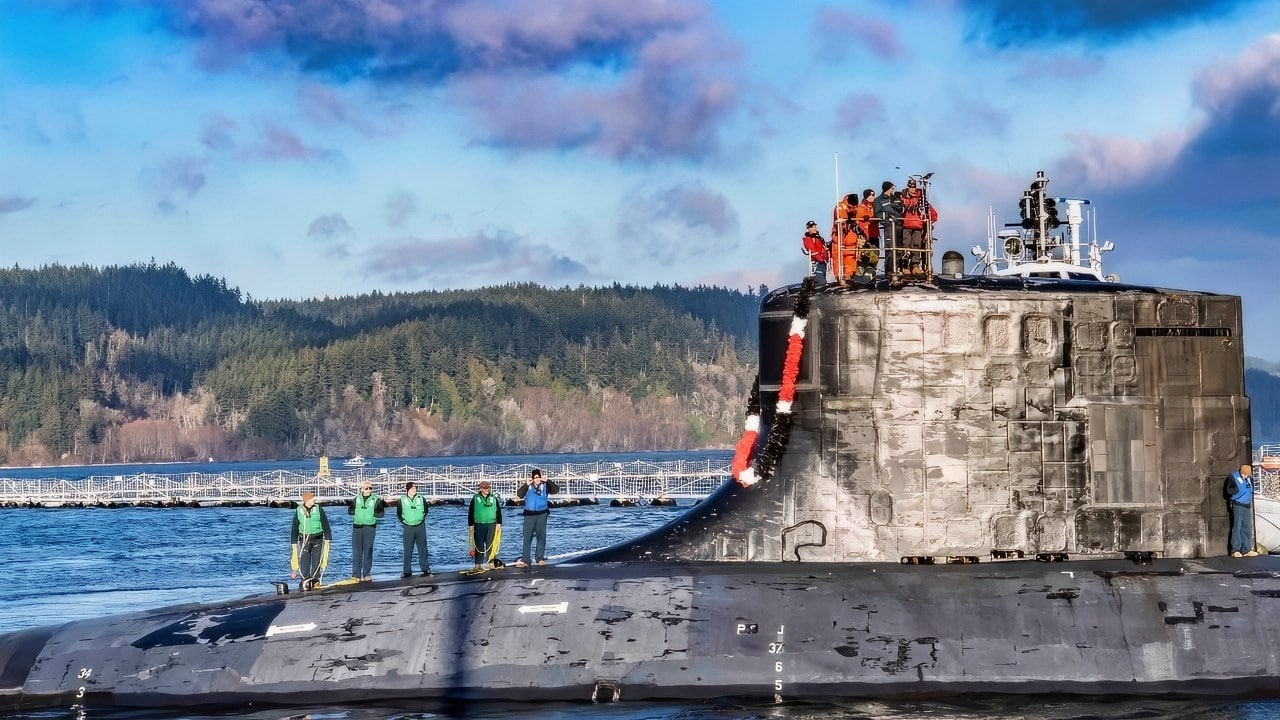
The Seawolf-class fast-attack submarine USS Seawolf (SSN 21) returns home to Naval Base Kitsap-Bangor, Washington, Dec. 14, 2022, following a seven-month deployment. Seawolf is the first of the Navy’s three Seawolf-class submarines, designed to be faster and quieter than its Los Angeles-class counterpart. (U.S. Navy photo by Mass Communication Specialist 2nd Class Gwendelyn L. Ohrazda)
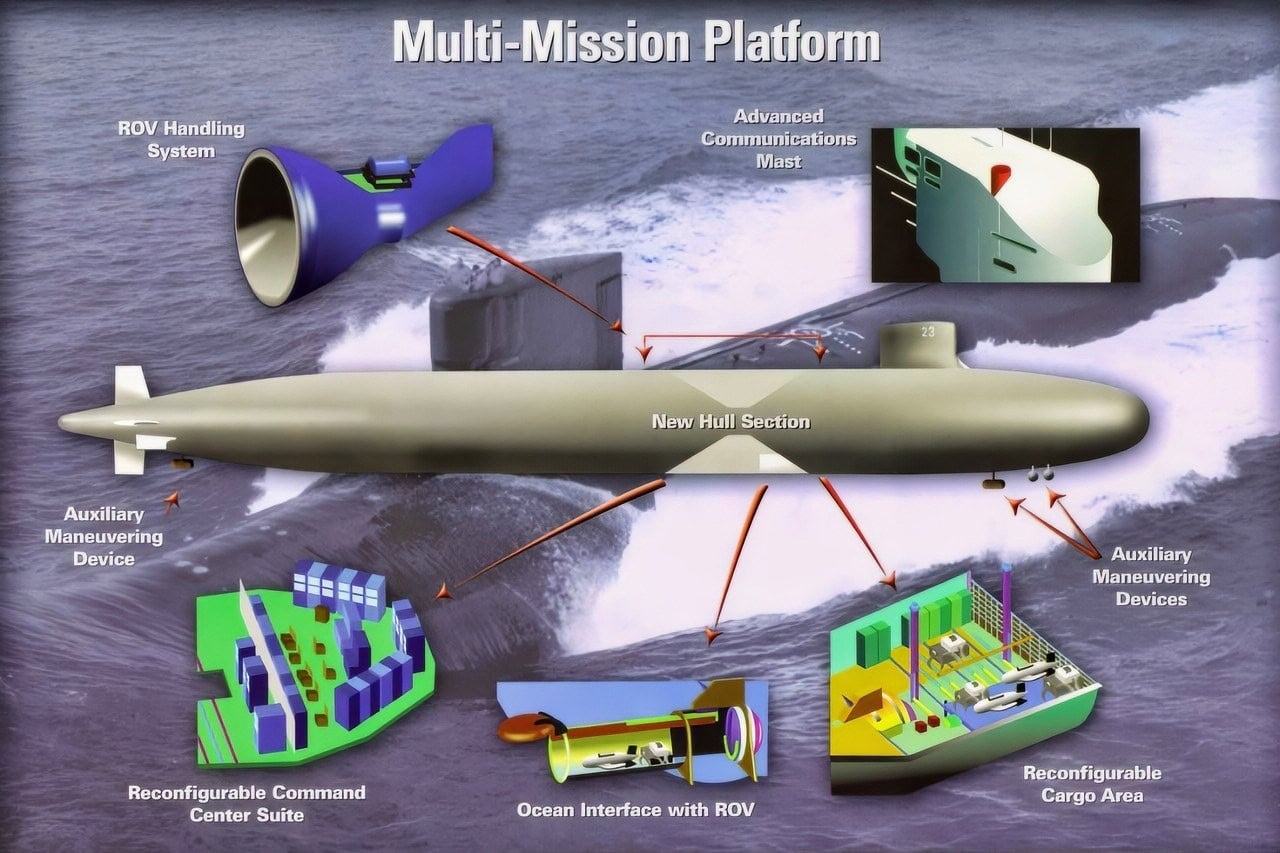
USS Jimmy Carter Seawolf-Class. Image Credit: Creative Commons.
The Seawolf-class submarine is widely considered one of the fastest, deepest-diving, and quietest nuclear attack submarines ever built.
A fleet of 29 submarines was to be built over a ten-year period, but extreme short-sightedness by the US reduced that number to 12 submarines.
The end of the Cold War and further budget constraints led to the cancellation of any further additions to the fleet in 1995, leaving the Seawolf class limited to just three boats.
The Seawolf class cost about $3 billion per unit ($3.5 billion for the one-of-a-kind USS Jimmy Carter), making it the most expensive fast attack submarine ever built by the United States Navy.
Why The Navy Wanted The Seawolf
The Navy wanted the Seawolf-class submarines to counter increasingly advanced Soviet submarines, such as the Typhoon and Akula classes, during the late Cold War.
The Seawolf design was a next-generation response to this threat, providing unparalleled stealth, speed, and deep-ocean capabilities with advanced sonar and a stronger hull to withstand greater depths.
The ships were also designed to carry a significant arsenal of weapons, including more Tomahawk cruise missiles, and were equipped for both blue-water and shallow-water operations. The Seawolf could race at 35 knots (40 mph) beneath the surface or go 20 knots in silent mode.
The Seawolf-Class Sub Is More Advanced Than The Virginia Boats:
The Seawolf nuclear attack submarine was and is amazing. The Navy wanted the very best, and they sure got every penny’s worth.
The Navy and the designers stuffed every crevice with the very best technology that money could buy. And the price tag showed it.
However, the submarine was in a class all by itself. The hull was designed to withstand deeper dives; it weighed 9,000 tons, it could carry 50 torpedoes and cruise missiles, and the stealth of the boat was unsurpassed.
The boat was about 353 feet long, packed with weapons and technology, and quieter than a church mouse. And then the Soviet Union collapsed in on itself. The 29 subs the Navy wanted were reduced to 12, and then to three.
In another short-sighted move, the Pentagon sliced the program to the bone. The Clinton administration’s “peace dividend” was a mistake that the War Department is still paying for today.
The Navy wishes it had another 26 Seawolf submarines today.
Meet The USS Seawolf (SSN-21)
The USS Seawolf submarine was the first new top-to-bottom attack submarine design since the early 1960s, and is the fastest, quietest, most heavily armed undersea vessel in the world.
The submarine’s displacement was 8,600 tons on the surface and 9,138 tons submerged (12,139 tons fully loaded, for the special mission submarine the USS Jimmy Carter).
She is 353 feet long; the Carter has an additional section, the Multi-mission Platform, which makes her 452.8 feet long. Hull Diameter:40 feet, Draft: 35 feet, Diving Depth: 1,600+ feet, Armament: Eight 26” torpedo tubes with 37 Mark 48 anti-submarine torpedoes, 13 Tomahawk cruise missiles.
The Seawolf is powered by a S6W PWR 220 MW nuclear reactor (300,000 hp), HEU 93.5 percent, 1 secondary propulsion submerged motor, 2 steam turbines 57,000 shp (43 MW), 1 shaft, and 1 pump-jet propeller.
The ship had a complement of 130 officers and enlisted crew members, and General Dynamics claims that its stealth is so good that it is less detectable at high speed (25 knots) than a Los Angeles-class submarine sitting at pier side.
Meet The USS Seawolf (SSN-21)
The Seawolf made her maiden deployment in June 2001. After the 9/11 attacks on the US, she was deployed into the Mediterranean.
After several deployments in the Atlantic, in 2006, she made her first Pacific deployment, making a port call to Guam.
Her homeport is Naval Base Kitsap-Bremerton, Washington.
The Seawolf class is equipped with the BQQ 5D sonar system, which features a twenty-four-foot-diameter bow-mounted spherical active and passive array as well as wide-aperture passive flank arrays.
The submarine is also equipped with TB-29A thin-line towed-array sonar systems. Rounding out sonar systems is the BQS-24, for detection of close-range objects such as mines.
Seawolf submarines provide the U.S. Navy with undersea weapons platforms that can operate in any scenario against any threat, with mission and growth capabilities that far exceed those of Los Angeles-class submarines.
They are fast, stealthy, full of weapons, and able to dive deeper because of a thicker, stronger two-foot-thick hull made from HY-100 steel. HY-100 steel is roughly 20 percent stronger than the HY-80 used in the Los Angeles class.
The robust design of the Seawolf class enables these submarines to perform a wide spectrum of crucial military assignments – from underneath the Arctic icepack to littoral regions anywhere in the world.
Their missions include surveillance, intelligence collection, special warfare, cruise missile strike, mine warfare, and anti-submarine and anti-surface ship warfare.
The USS Jimmy Carter (SSN23)
The Jimmy Carter (SSN23), the third and final Seawolf-class submarine, was modified by Electric Boat to accommodate advanced technology for naval special warfare, tactical surveillance, and mine warfare operations. It is 100 feet longer than a typical Seawolf submarine and packed full of new technology.
Named for former President Carter, who himself was a nuclear submariner. Carter is the only president who ever served on submarines. He was a Naval officer from 1946 to 1953. It is based out of Naval Base Kitsap-Bangor, Washington.
War Department studies have described the Navy’s need to develop submarines with “improved payload capabilities and a flexible interface with the undersea environment, without sacrificing Seawolf-class warfighting capability.” According to the Navy, the Jimmy Carter modification perfectly fits those goals.
The $887 million modification required alterations to the basic Seawolf design in ballast control, mission-management spaces, and various services.
A unique feature of the modification was the creation of a flexible ocean interface, referred to as the “wasp waist,” which enables the Navy to deploy and recover various payloads without using torpedo tubes.
The USS Jimmy Carter was delivered to the U.S. Navy in December 2004 and commissioned in 2005.
While there are only two “regular” Seawolf submarines, USS Seawolf and USS Connecticut, as well as the Carter, they remain outstanding assets to the fleet. The USS Seawolf is scheduled for extended maintenance in 2026 following its return from a prolonged deployment.
About the Author: Steve Balestrieri
Steve Balestrieri is a National Security Columnist. He served as a US Army Special Forces NCO and Warrant Officer. In addition to writing on defense, he covers the NFL for PatsFans.com and is a member of the Pro Football Writers of America (PFWA). His work was regularly featured in many military publications