
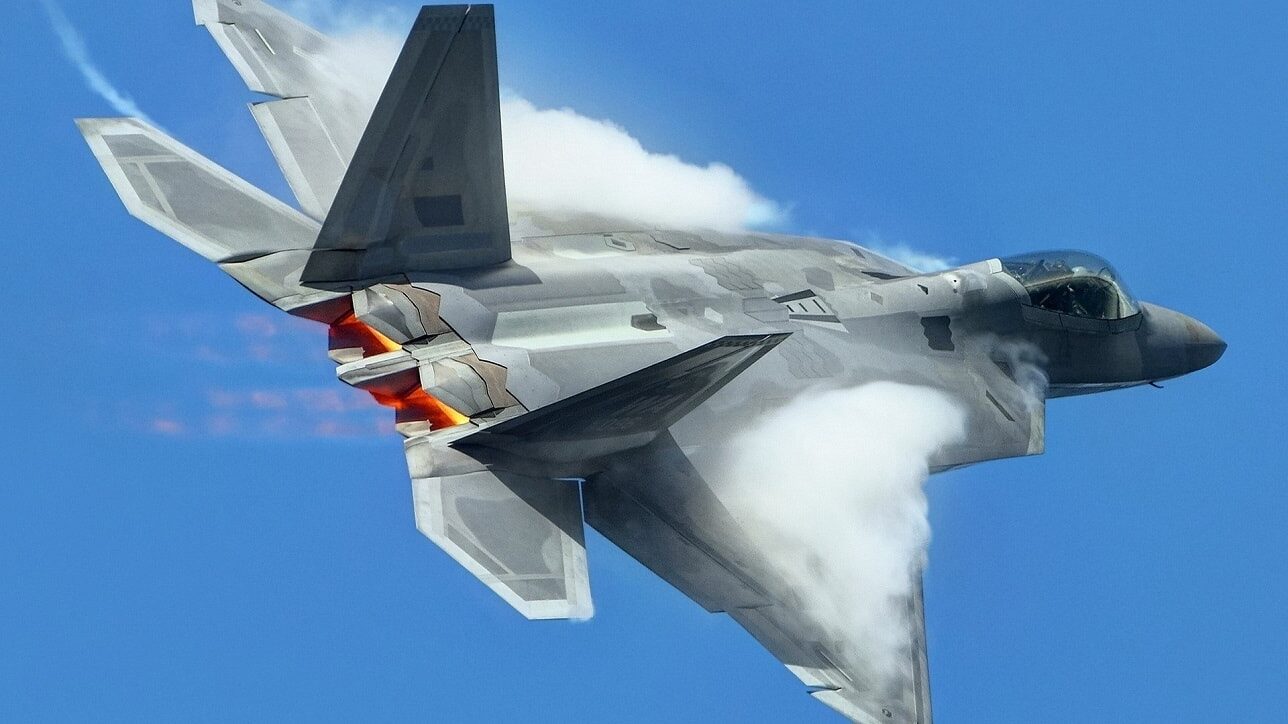
The Age of the Exquisite-Only Military Is Over – The age of the exquisite platform is not over. The age of the exquisite-only military is.
The United States will still need stealth aircraft and carriers, along with other weapons whose price reflects the difficulty of the missions they perform. Some places will remain too dangerous for an unprotected aircraft. What is ending is the assumption that a small number of exquisite platforms can dominate a major war on their own.
The Pentagon increasingly understands this. On July 10, an Air Force YFQ-44A Collaborative Combat Aircraft fired an AIM-120 over the Mojave Desert. In late July and early August, the Pentagon signed four framework agreements intended to expand production of PAC-3 and THAAD components. One development concerns the force Washington intends to send into battle. The other concern is whether it can keep that force fighting once the opening magazines begin to empty.
The problem is no longer conceptual. The Pentagon has begun describing a force in which expensive platforms operate with cheaper systems, but its inventories and production base have not caught up with the force it says it wants.
The Platform Is Becoming a Formation
The old debate asks whether drones will replace fighters or whether missiles will make carriers obsolete. That is becoming less useful. A carrier may remain strategically valuable without being able to fight close to an enemy coast on its own terms. A stealth fighter may be indispensable over defended territory and still be too scarce to provide the mass a long campaign demands.
A platform can remain necessary without being sufficient.
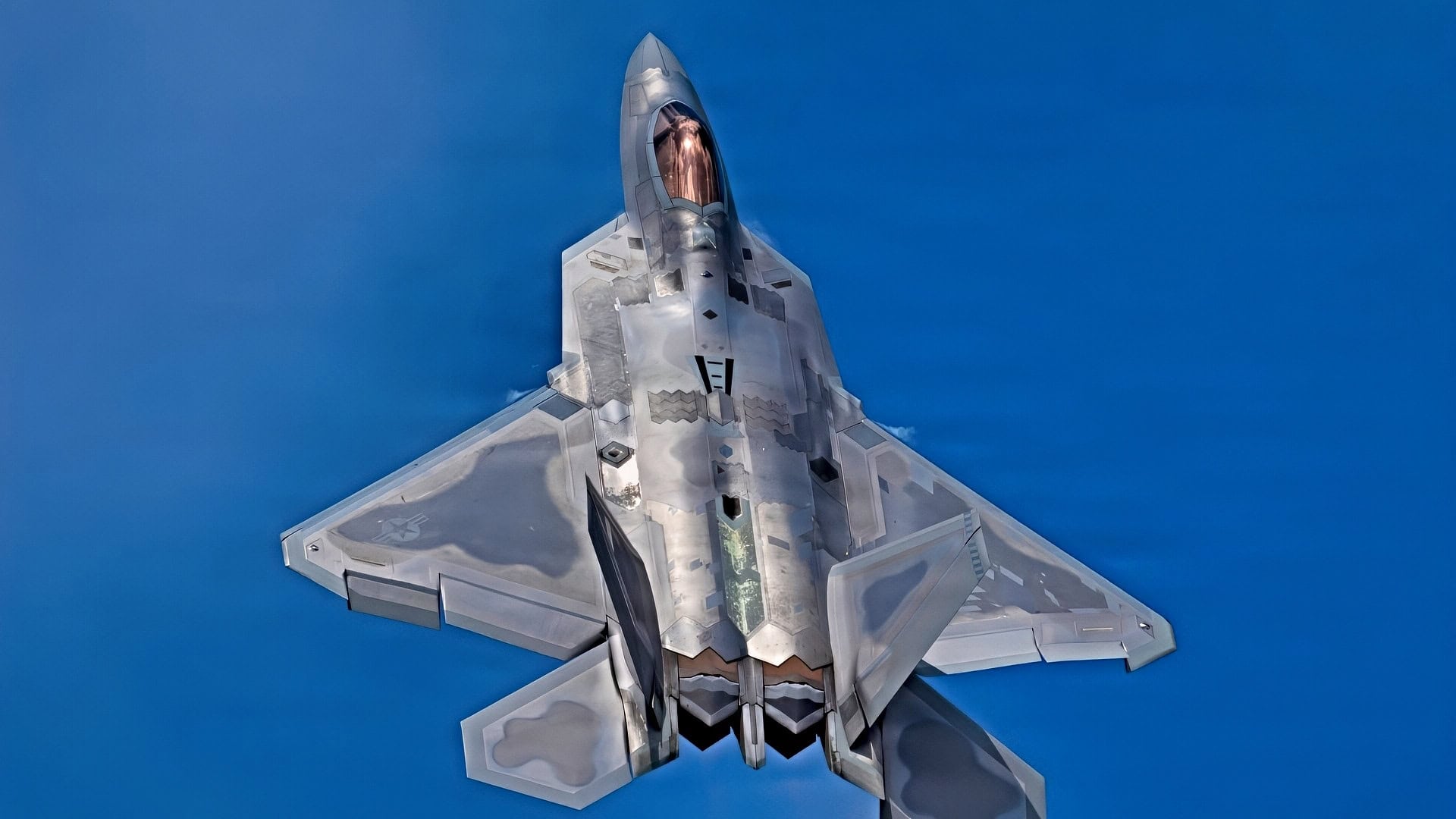
Members of the F-22 Raptor Aerial Demonstration Team perform at the Dyess Big Country Air Fest 2023, Dyess AFB, TX, March 25th, 2023. The F-22 Raptor Aerial Demonstration showcases the unmatched maneuverability of the airframe by executing a series of combat maneuvers to inspire Americans and their allies, and deter foreign adversaries. (U.S. Air Force photo by Staff Sgt. Michael Bowman)
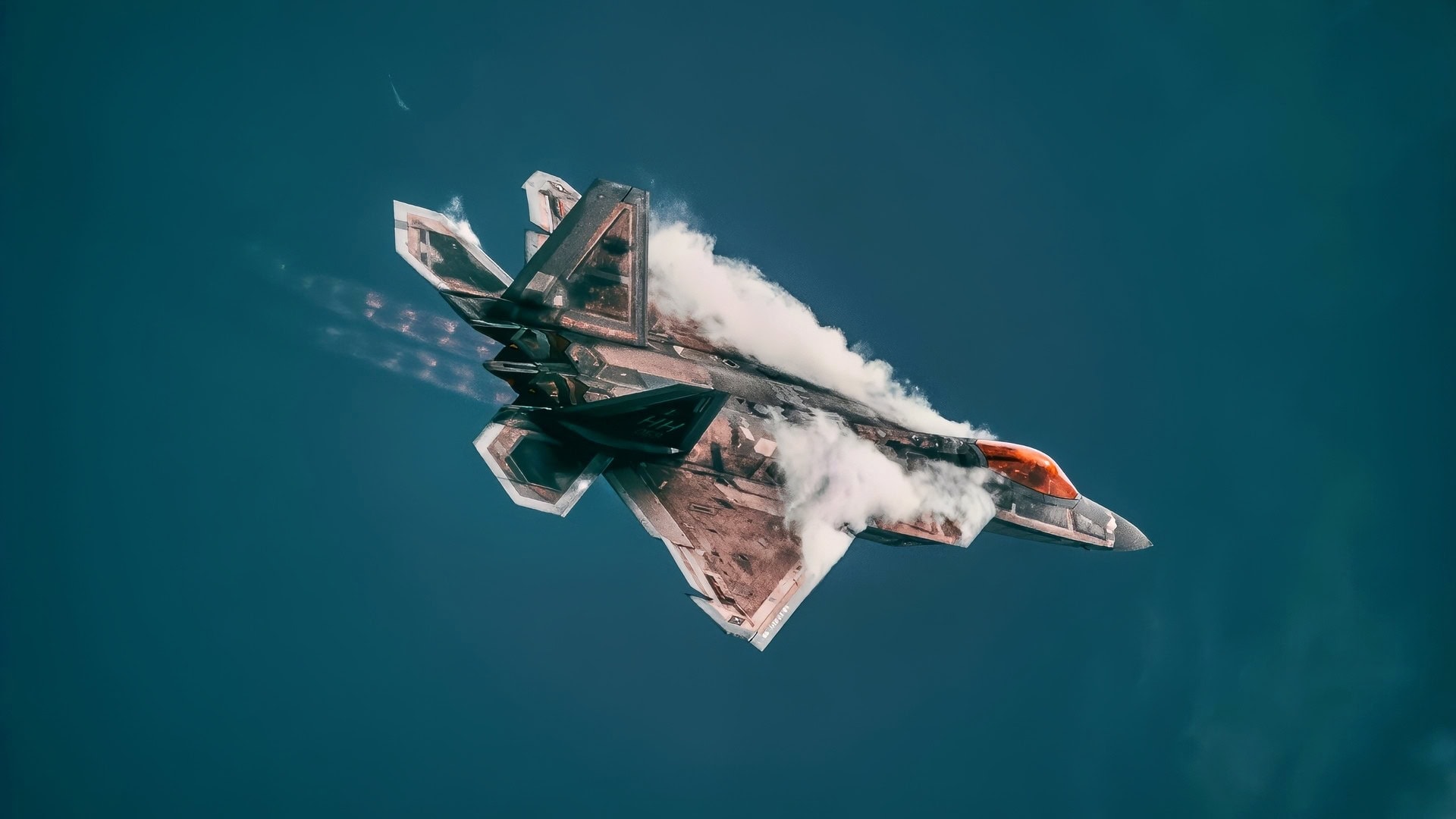
F-22. Image Credit: Creative Commons.
The Air Force’s Collaborative Combat Aircraft program is built around that distinction. In June, the service awarded development and production contracts for the FQ-42 and FQ-44 and said it plans to buy more than 150 combat-capable aircraft by the end of the decade. It is also separating the aircraft from the autonomy software, reducing the risk that one contractor and one design cycle lock up the whole system.
The fighter becomes the center of a formation rather than the complete weapon. The crewed aircraft brings the sensors and survivability that justify its price, with a human still making the release decision. Less expensive aircraft can carry more missiles or enter airspace where losing a pilot would alter the political calculation.
The Navy is moving in the same direction, though more slowly. The first production MQ-25A Stingray flew in April and is meant to extend the range of the carrier air wing. GAO reported in July that initial operational capability has slipped by two and a half years, while the end of initial operational testing is 26 months late. The carrier may be adapting faster than the acquisition system is designed to keep up.
There is a danger buried in the transition. The Pentagon can begin with an aircraft meant to be affordable, then add requirements until it becomes another system too costly to risk and too slow to replace. A high-low force in which the low end becomes exquisite is the old force with more program offices.

A U.S. Air Force F-35A Lightning II flies over the 56th Fighter Wing during Luke Days 2026, March 22, 2026, at Luke Air Force Base, Arizona. Luke Days 2026 highlights the precision and professionalism required to generate combat airpower and sustain the nation’s defense. Currently in operational service, the F-35A integrates stealth technology and advanced sensors to detect and defeat threats while maintaining air dominance. Opportunities for the public to see military aviation up close helps build appreciation for the readiness of the joint force. (U.S. Air Force photo by Senior Airman Belinda Guachun-Chichay)
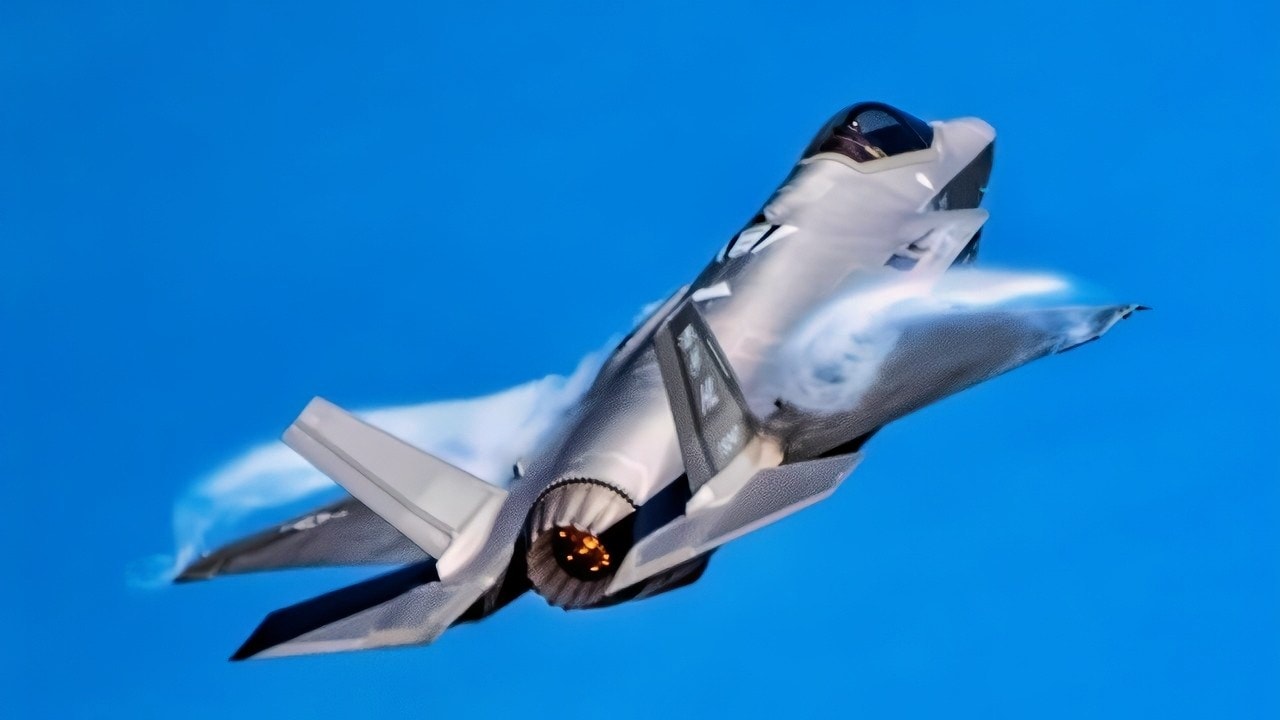
U.S. Air Force Maj. Kristin Wolfe performs a demonstration in the F-35A Lightning II during at the Reno Air Races in Reno, Nevada, September 19, 2021. The F-35 Lightning II Demonstration Team is based out of Hill Air Force Base, Utah. (U.S. Air Force photo by Tech. Sgt. Nicolas Myers)
After the Platform, the Magazine Problem
The necessity-and-sufficiency problem does not stop with the platform. The formation remains brittle if it consumes its weapons faster than the Pentagon can replace them.
A fighter without missiles becomes an expensive sensor. Once an air-defense battery exhausts its interceptors, its radar is mostly identifying what will hit next.
A major-power adversary does not have to sink every carrier or shoot down every stealth aircraft. It may be enough to force the United States into bad exchanges and wait for American and allied stocks to fall. Washington may know it can deliver a devastating first salvo. Beijing or Moscow will be asking what remains available for the fifth.
That is where procurement becomes deterrence. Great powers plan around endurance. They look for the point at which operational superiority begins to produce strategic exhaustion.
The Factory as Part of the Force
The Pentagon’s recent agreements show that it has started treating this as a system-wide problem. By early August, the sequence had grown to roughly a dozen framework agreements covering finished missiles and the components that determine how many can actually be built. It has covered seekers for PAC-3 and THAAD as well as the rocket motors that determine how quickly the interceptors can be assembled.
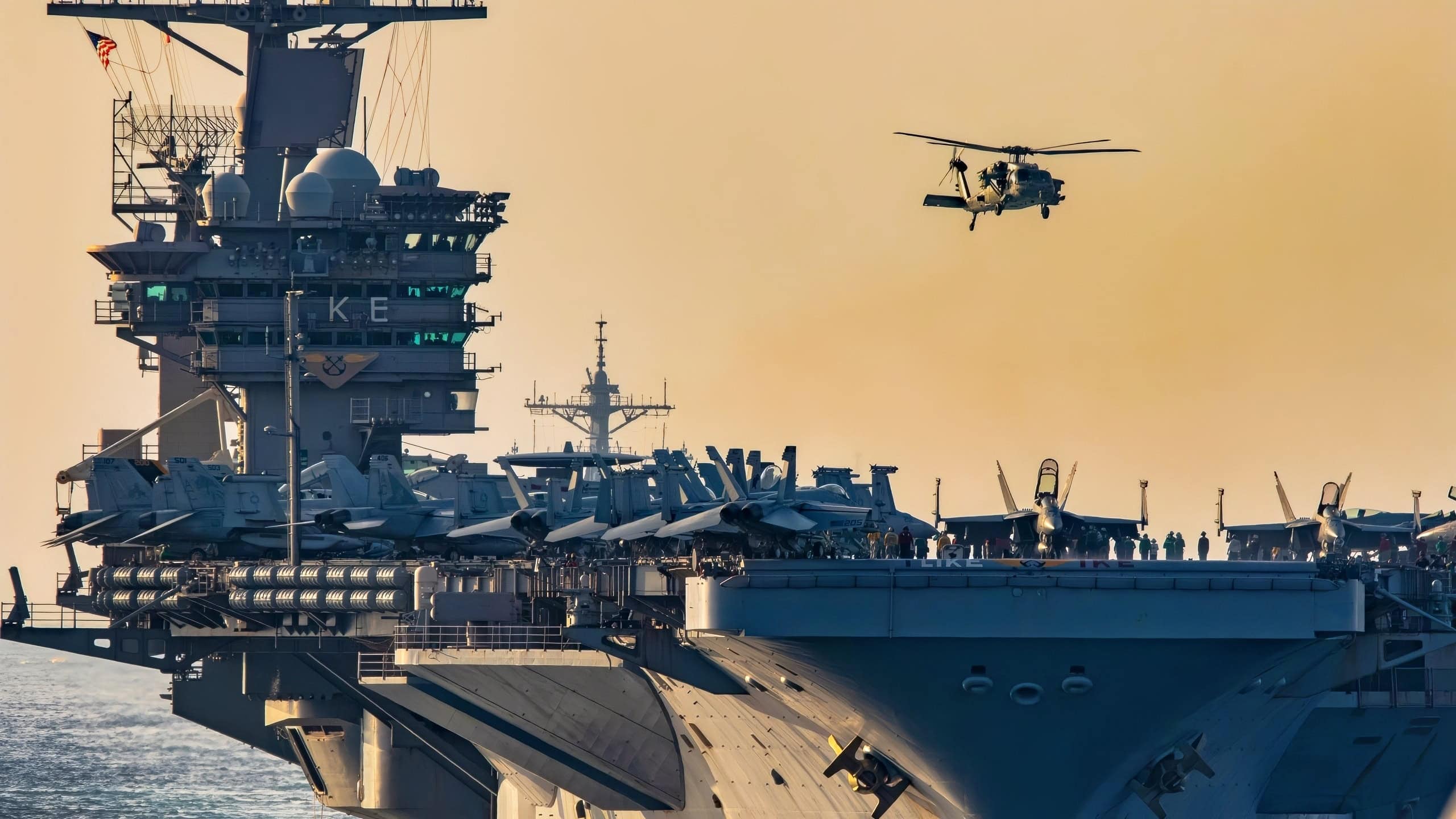
Components of the Dwight D. Eisenhower Carrier Strike Group (IKECSG), guided-missile destroyer USS Stethem (DDG 63) and French Navy frigate FS Languedoc (D 653) transited the Strait of Hormuz. IKECSG is deployed to the U.S. 5th Fleet area of operations to help ensure maritime security and stability in the Middle East Region. (U.S. Navy photo by Electronics Technician 2nd Class Daniel Goodin)
On July 27, the Pentagon announced two seven-year agreements with L3Harris to expand propulsion production for PAC-3 MSE and THAAD. On August 3, it followed with two Northrop Grumman agreements establishing a second source for the PAC-3 solid rocket motor and expanding production of THAAD structural components. Buying more missiles does little if a single seeker plant or motor line still determines how fast the whole program can move.
The factory belongs inside the order of battle. Its workforce and suppliers determine how much punishment the force can absorb. They also determine whether Washington can keep supplying allies without draining inventories required for its own plans.
Capacity cannot be summoned after the war begins. A contract announcement is not a production line, and a production line is not yet a delivered missile.
The Pentagon Is Using the Wrong Test
Weapons are still judged mainly as individual objects: what the platform can do and whether the performance justifies the cost. A better test begins with what must exist around it. Which missions require the exquisite platform, and what affordable systems must accompany it? How quickly will its weapons disappear compared with the time needed to replace them?
GAO reported last month that the Defense Department plans to invest more than $2.4 trillion in its costliest weapon programs, while the average time needed to deliver a capability has risen beyond twelve years. That is a serious mismatch for a force now being designed around adaptation and replaceability.
The answer is not to cancel every expensive program and transfer the money to drones. That would replace one monoculture with another. The task is to build a force in which high-end platforms organize mass, and where losing part of the formation does not end the campaign.
What Comes After the First Salvo
The danger is that the Pentagon will mistake evidence that the transition has begun for evidence that it is complete. CCA contracts and a succession of industrial agreements show that the problem has been recognized. They do not show that the required force exists.
The real test will come after aircraft have been lost and missile expenditures have exceeded the assumptions, while allies are drawing replacements from the same production lines. By then, another reform memorandum will not matter. The factories will either be producing at wartime scale or they will not.
Deterrence rests on what an adversary expects at that moment. It has to believe the United States can absorb the opening blows and keep denying the political outcome the war was meant to secure. A force that looks overwhelming on the first day but increasingly hollow by the thirtieth invites a different calculation.
The future of American military power depends less on whether its best weapons survive the first salvo than on whether the force around them can survive what comes after.
About the Author: Dr. Andrew Latham
Andrew Latham is a professor of international relations and political theory at Macalester College in Saint Paul, MN. You can follow him on X: @aakatham.