
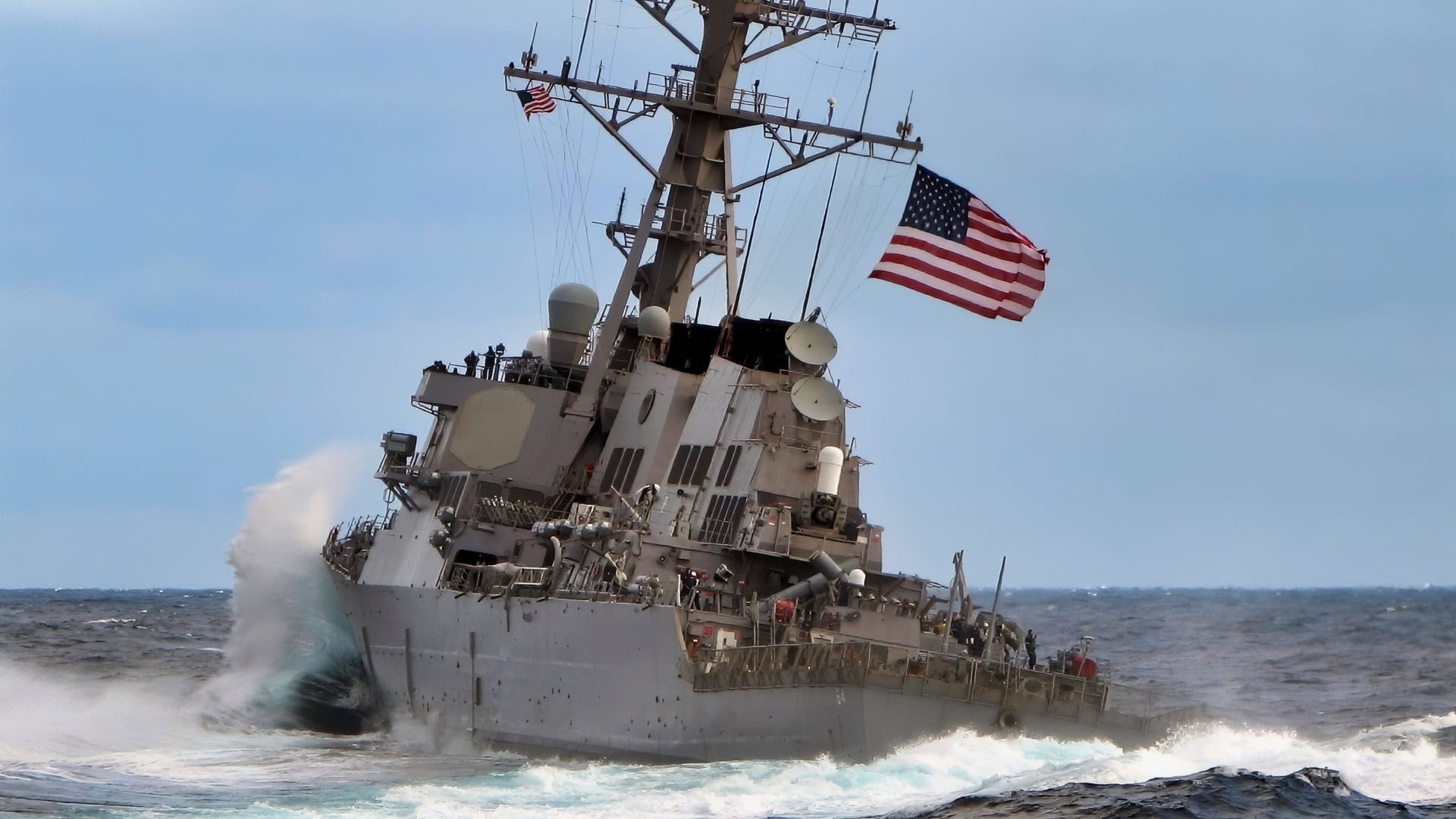
Iran-backed Houthi rebels have killed six people in an attack on a commercial vessel near Yemen.
The August 11 attack on the Tanzania-flagged Tihamah in the Bab el-Mandeb Strait killed four crew members, according to Yemen’s internationally recognized government.
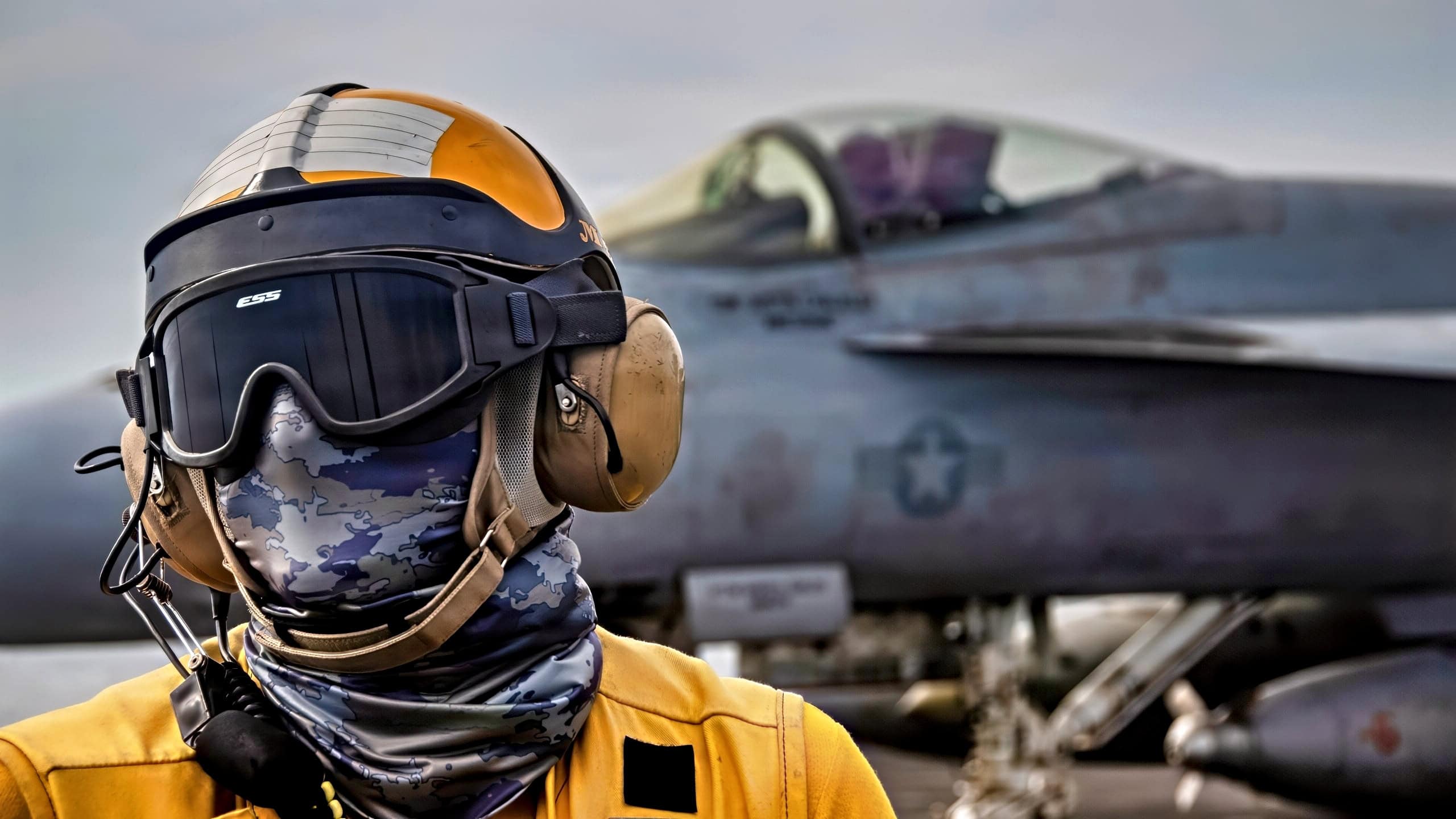
A U.S. Sailor prepares to launch a F/A-18E Super Hornet, attached to the “Kestrels” of Strike Fighter Squadron (VFA) 137, from the flight deck of Nimitz-class aircraft carrier USS Nimitz (CVN 68) in the Pacific Ocean, April 8, 2026. Nimitz is deployed as part of Southern Seas 2026 which seeks to enhance capability, improve interoperability, and strengthen maritime partnerships with countries throughout the region through joint, multinational and interagency exchanges and cooperation. (U.S. Navy photo by Mass Communication Specialist 2nd Class Jaron Wills)
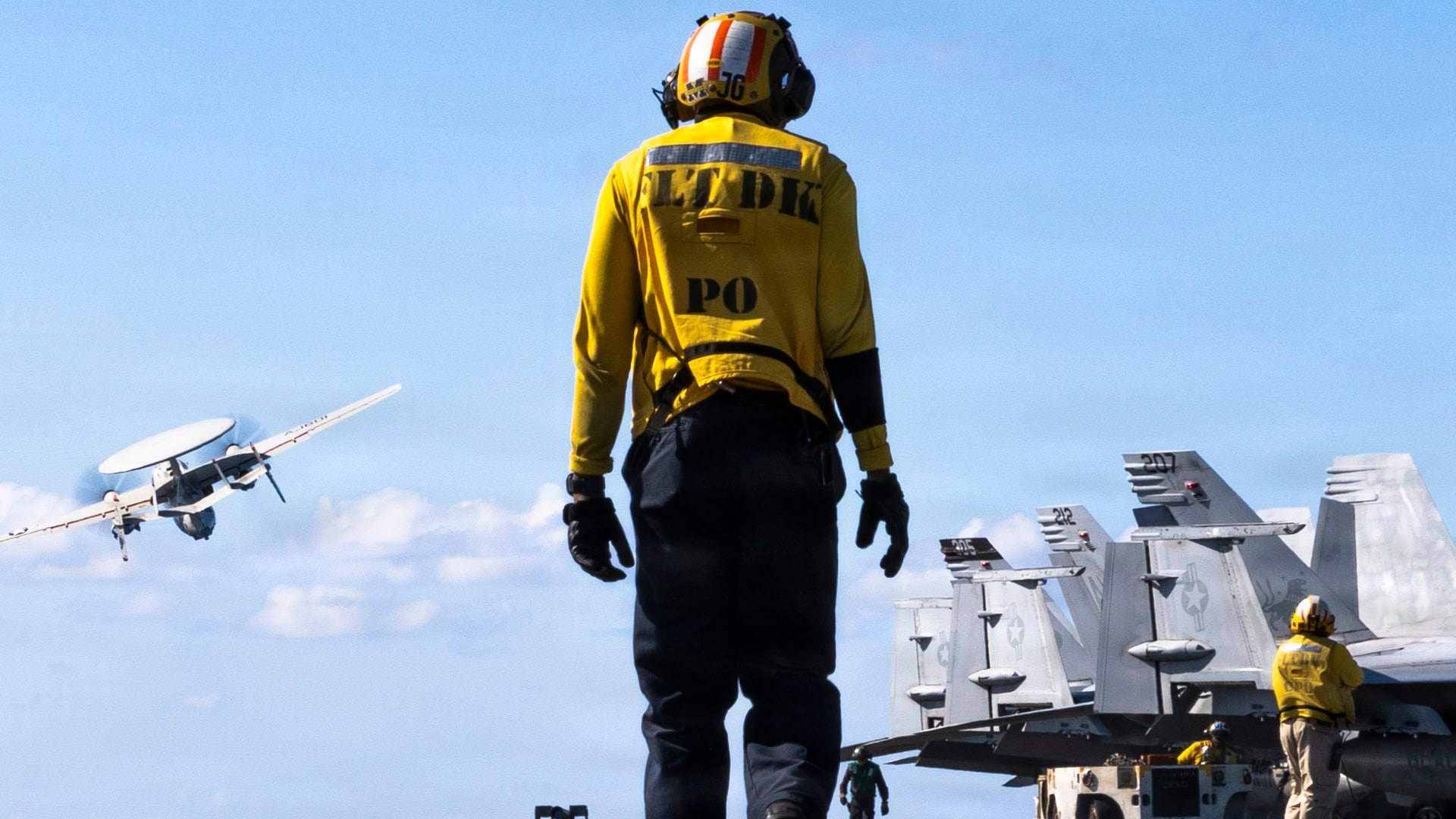
Aviation Boatswain’s Mate (Aircraft Handling) 2nd Class Jawan George transits the flight deck of the world’s largest aircraft carrier, USS Gerald R. Ford (CVN 78), while underway in the Mediterranean Sea, April 6, 2026. Gerald R. Ford is on a scheduled deployment in the U.S. 6th Fleet area of operations to support the warfighting effectiveness, lethality and readiness of U.S. Naval Forces Europe-Africa, and defend U.S., Allied and partner interests in the region. (U.S. Navy photo by Mass Communication Specialist Seaman Paige Brown)
Two Yemeni rescue workers were then killed in a subsequent strike while they were attempting to assist the vessel.
Three of the dead crew members were Pakistani nationals, and one was Indonesian.
The deaths are the first reported fatalities caused by Houthi attacks on commercial shipping in the region in more than a year, and they came just hours before U.S. forces fired missiles at another commercial vessel attempting to evade the blockade on Iran.
Houthi Attacks Kill Six Near Yemen
Reports describe how the Egyptian-owned Tihamah was struck while transiting the Bab el-Mandeb Strait, a narrow waterway south of the Strait of Hormuz that connects the Gulf of Aden to the Red Sea. The waterway is currently under a blockade by the Houthis, who intend to prevent the passage of vessels connected to the Saudi Arabian oil industry.
Yemen’s Transport Ministry blamed the Houthis for the attack, saying four crew members were killed. Two members of the National Resistance Forces, which is aligned with Yemen’s internationally recognized government, were subsequently killed during rescue operations.
The Houthi-run SABA news agency reported that Houthi forces had attacked a ship transporting Saudi military equipment through the strait.
The Bab el-Mandeb Becomes A War Zone
The attack comes at a far-from-convenient time, with the global economy and oil supplies already at risk from prolonged disruption in the Strait of Hormuz.
The Bab el-Mandeb Strait is one of the few alternative outlets for Gulf oil, and the Houthi blockade announcement has placed extreme pressure on Saudi Arabia as it attempts to move oil out of the Gulf via two straits that are effectively closed by Iran or Iran-backed forces.
At its narrowest point, the strait between Yemen and the Horn of Africa is roughly 18 miles wide.
About 4.1 billion barrels of crude oil and petroleum products passed through the waterway in 2024, representing approximately 5% of global petroleum trade.
The Houthis have already proven that, just like Tehran can close the Strait of Hormuz, it is possible to dramatically disrupt traffic through the Bab el-Mandeb largely through the threat of force.
Beginning in late 2023, repeated Houthi missile and drone attacks prompted major shipping companies to divert vessels around Africa rather than risk the Red Sea.
Those diversions added thousands of miles to voyages between Asia and Europe and significantly increased fuel and freight costs.
The new campaign is having the same effect, but it is different in one important aspect: this time, the Houthis are targeting Saudi-linked vessels, not Israeli-linked ships.
The Houthi Blockade Is Real
The Tihamah attack shows that the Houthi campaign is real. When the group announced its blockade of Saudi Arabia on July 20, it was unclear whether the declaration would translate into sustained attacks on commercial vessels, and if those attacks did arrive, how serious they would be.
The Houthis, after all, do not possess a conventional navy capable of physically sealing the Bab el-Mandeb, meaning the effectiveness of the blockade depends largely on convincing shipowners and insurers that passage is simply too dangerous.
The deaths aboard the Tihamah now demonstrate that the threat is real.
Houthi military spokesman Yahya Saree announced the blockade on July 20, declaring a “maritime embargo against the criminal Saudi enemy” that would take effect immediately.
The Iran-backed group said that it was also basing its attacks on an “eye for an eye” policy and accused Saudi Arabia of maintaining a siege against Yemen.
The Houthis had already threatened to close the Bab el-Mandeb Strait earlier in the Iran conflict, too.
In March, as the Strait of Hormuz became difficult to navigate amid ongoing U.S. strikes and exchanges of fire with the IRGC, the Houthis warned that it could further disrupt Gulf oil trade and Red Sea shipping if the war expanded.
By July, the threat was made real.
And now, it looks as though the Houthis are prepared to enforce the blockade.
Saudi Arabia Is Running Out of Options
The timing of the blockade was far from ideal. Saudi Arabia can bypass the Strait of Hormuz using its East-West Pipeline, which transports crude from eastern oil fields to the Red Sea port of Yanbu.
But much of that oil must then travel through the Bab el-Mandeb to reach markets beyond the Red Sea.
That means the Houthis are now threatening one of Riyadh’s most important alternatives to Hormuz just as Iran announces that it will keep the Strait of Hormuz closed for the remainder of U.S. President Donald Trump’s term in the White House.
Saudi Arabia, therefore, faces a major problem: both of its maritime routes connecting its oil industry to global markets are under threat. And there’s no sign the threats will ease anytime soon.
About the Author: Jack Buckby
Jack Buckby is a British researcher and analyst specializing in defense and national security, based in New York. His work focuses on military capability, procurement, and strategic competition, producing and editing analysis for policy and defense audiences. He brings extensive editorial experience, with a career output spanning over 1,000 articles at 19FortyFive and National Security Journal, and has previously authored books and papers on extremism and deradicalization.