
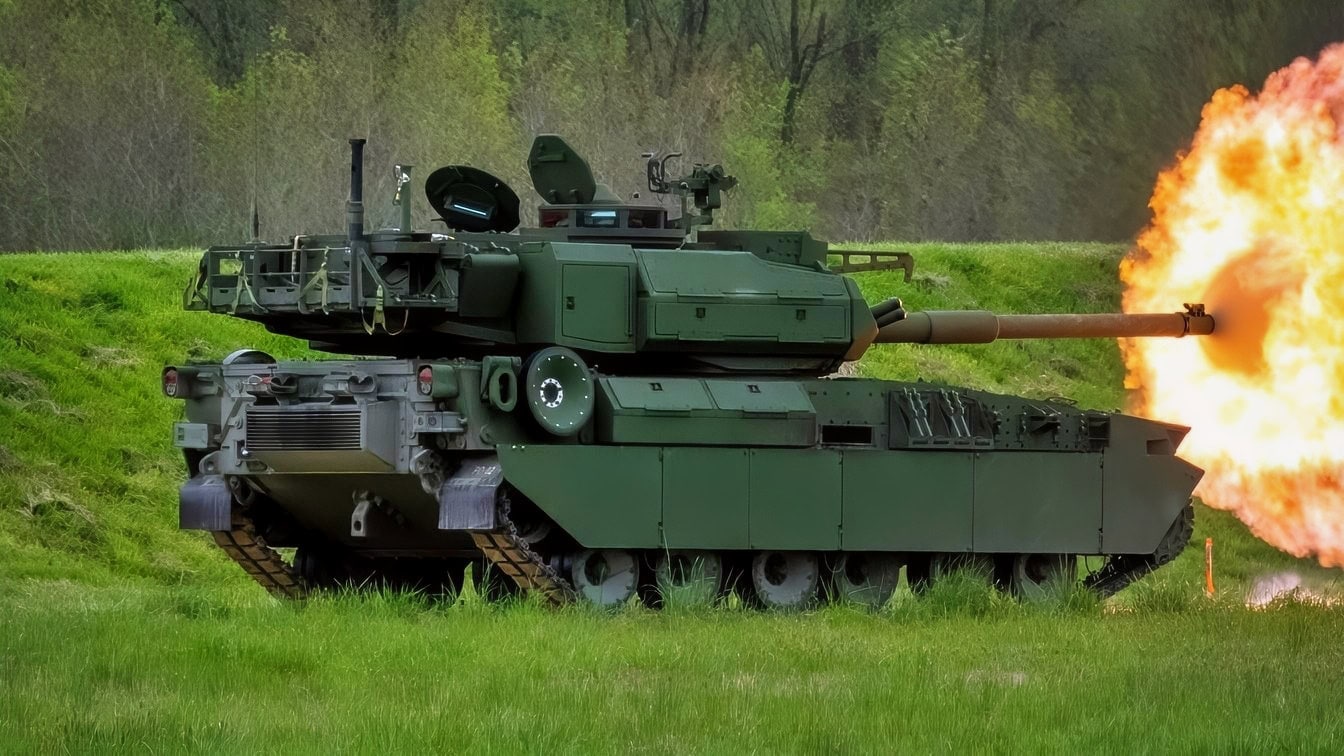
The US Army put at least $2,616,495,000 in identifiable acquisition funding into the M10 Booker before it canceled fielding in June 2025. Public reporting in 2026 placed the completed fleet at roughly 80 vehicles, but no operational battalion received an enduring capability, and full-rate production never began. The program’s output is now being directed to storage while the Army works through contract termination and decides what to do with the vehicles. In fact, one M10 Booker is in what amounts to a museum at Fort Benning.
The accounting begins with $1.128885 billion in research, development, testing, and evaluation through fiscal 2025. Army procurement records add $1.468910 billion through the fiscal 2026 enacted budget. The program’s 2023 acquisition report identifies another $18.7 million in operations and maintenance funding used during rapid prototyping. Together, those traceable categories reach $2.616495 billion.
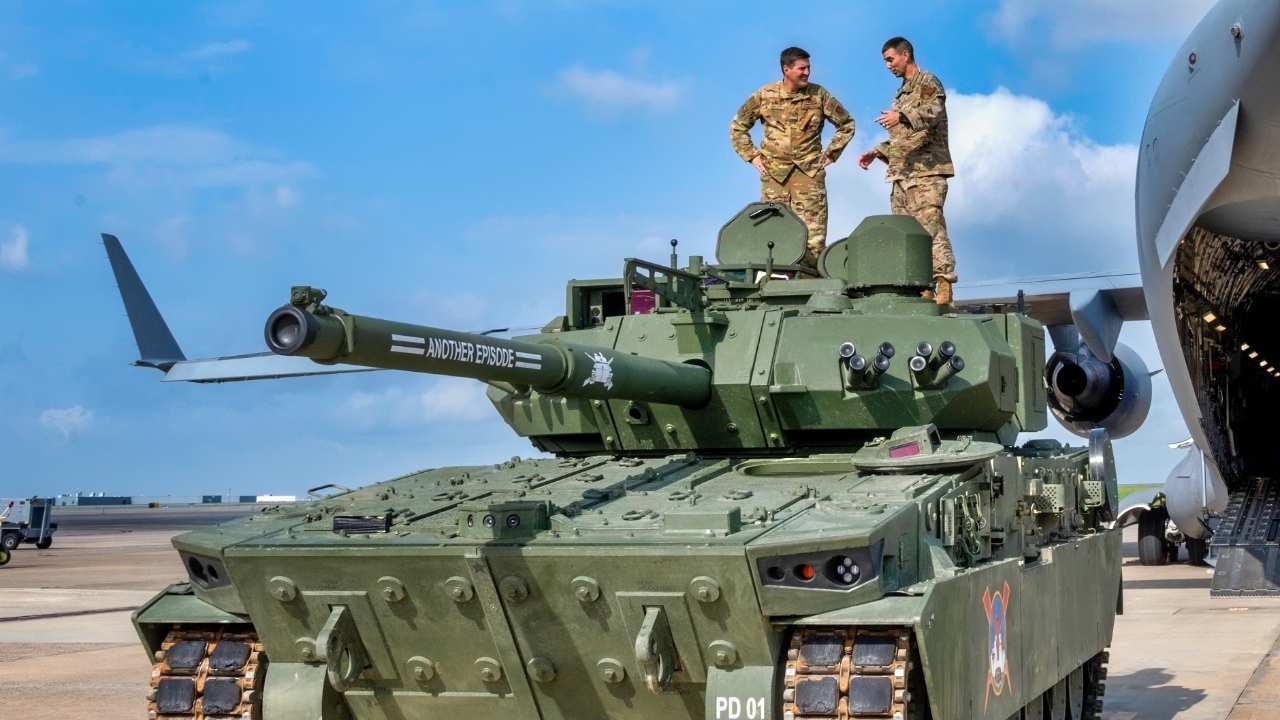
Members of the North Carolina Air National Guard assess an Army M10 Booker Combat Vehicle before it is loaded onto a C-17 Globemaster III aircraft, at the North Carolina Air National Guard base, Charlotte-International Airport, August 3, 2024. Portions of this photo were masked for security reasons. (U.S. Air National Guard photo by Staff Sgt. Reanna Hartgrove)
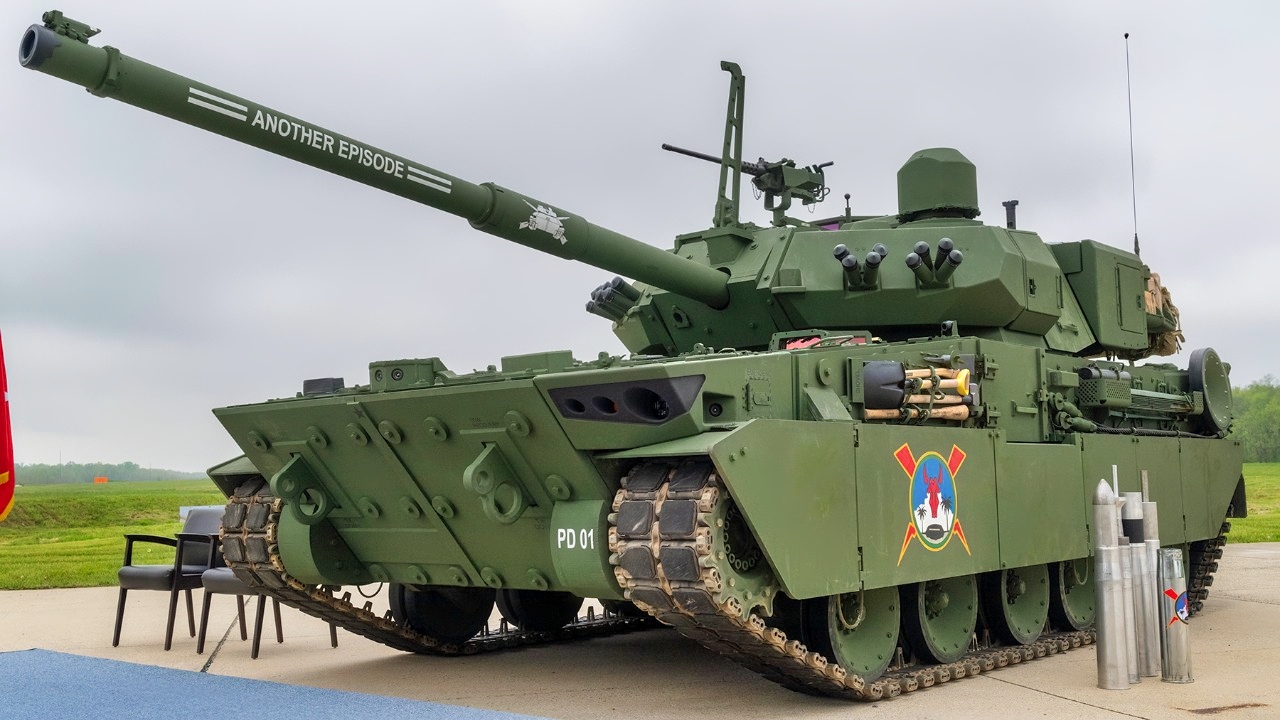
The M10 Booker displayed at it’s dedication ceremony at Aberdeen Proving Ground in Aberdeen, Md., April 18, 2024. As part of the dedication of the M10 Booker Combat Vehicle in their name, Pvt. Booker, a Medal of Honor recipient, and infantryman, assigned to the 133rd Infantry Regiment, 34th Infantry Division, during World War II, and Staff Sgt. Stevon A. Booker, a Distinguished Service Cross recipient, and tank crewman, assigned to Alpha Company, 1st Battalion, 64th Armor Regiment, 3rd Infantry Division, in support of Operation Iraqi Freedom, will be recognized and honored for their ultimate sacrifice, heroism and commitment to service and the country, represented by family members during the ceremony. (U.S. Army photo by Christopher Kaufmann).
That is a conservative floor, not a final bill. It excludes military construction, broader support spending, and whatever the government ultimately pays to settle the low-rate production contract. It also mixes money spent with enacted or committed funding. Army procurement books placed gross system unit costs near $11.7 million in fiscal 2024 and $13.7 million in fiscal 2025. Dividing the full $2.6165 billion by roughly 80 completed vehicles produces $32.7 million per vehicle, but that is not a flyaway price. It includes development, prototypes, testing, engineering, and a production line built for a fleet that never materialized.
The Army once expected the acquisition program to cost $7.7131 billion in then-year dollars. The plan covered 27 development vehicles, including 24 contractor prototypes and three production vehicles for full-up live-fire testing, plus 350 procurement vehicles. The wider acquisition objective reached 504 Bookers. Cancellation avoided billions in future production costs. It did not recover the development bill or turn the completed vehicles into an operational force.
The M10 Booker Outlived Its Original Airborne Requirement
The requirement grew from a gap left by the M551 Sheridan and the canceled M8 Armored Gun System. In 2013, the 82nd Airborne Division sought a light, deployable vehicle capable of delivering direct fire support to infantry. Early requirements included C-130 transport and airdrop. In 2015, the Army removed both conditions and continued the program after losing two features that had made the original airborne concept distinctive.
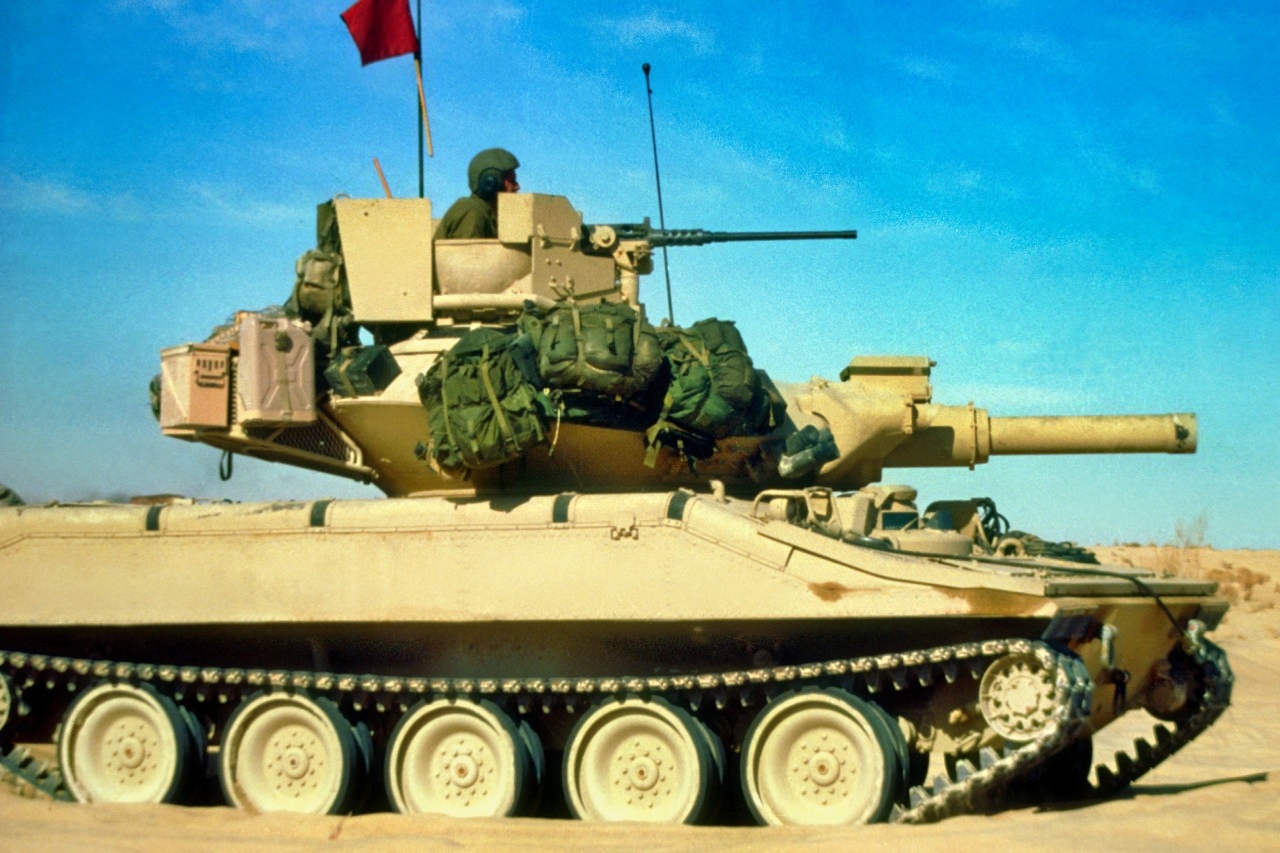
M551 Sheridan Light Tank. Image Credit: Creative Commons.
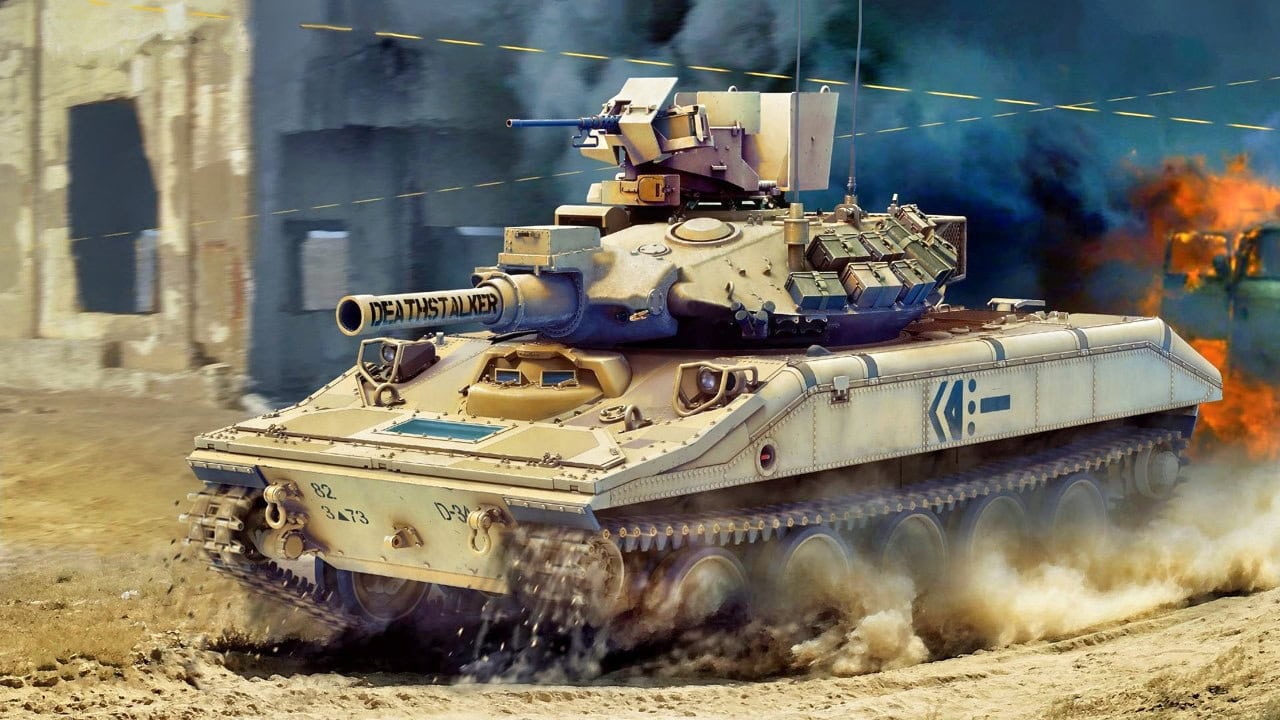
M551 Sheridan. Image Credit: Creative Commons.
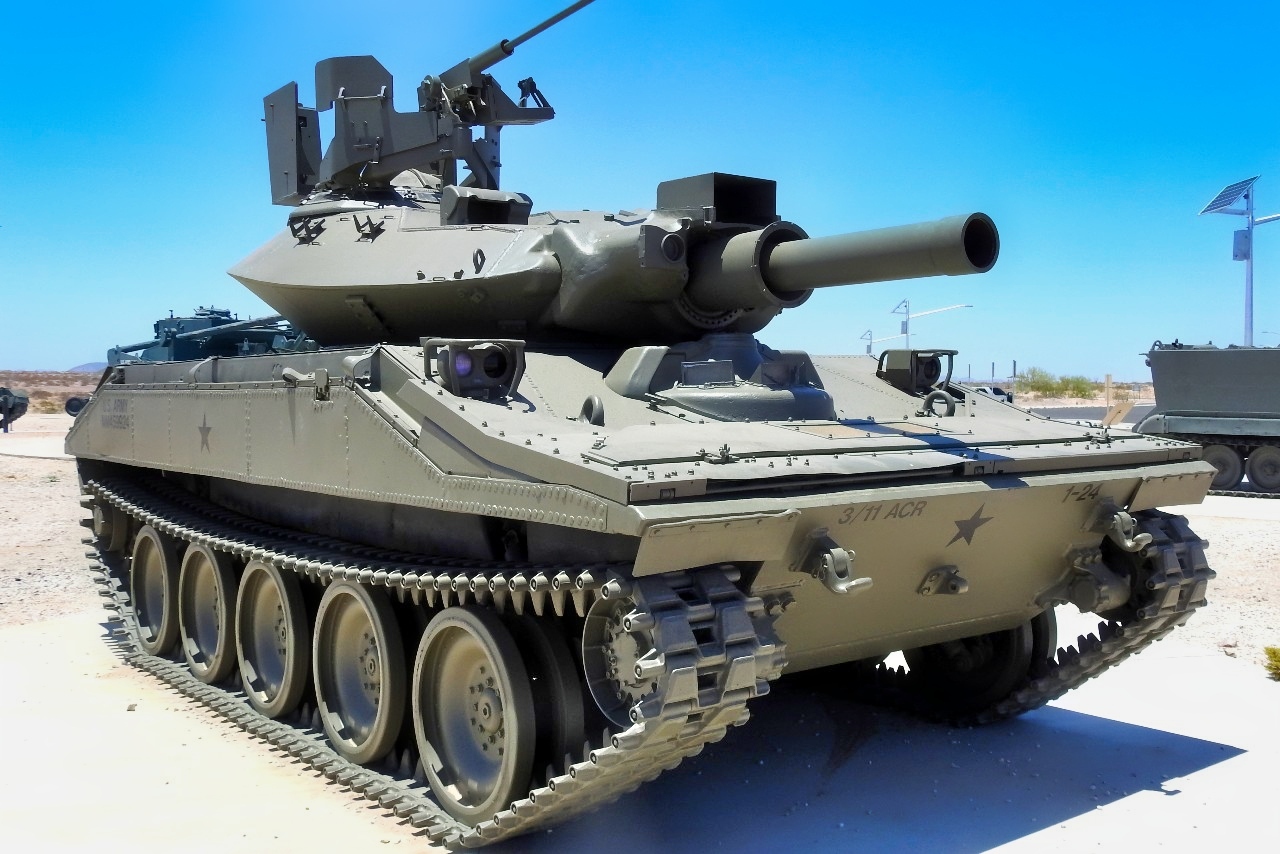
M551 Sheridan Light Tank. Image Credit: Creative Commons.
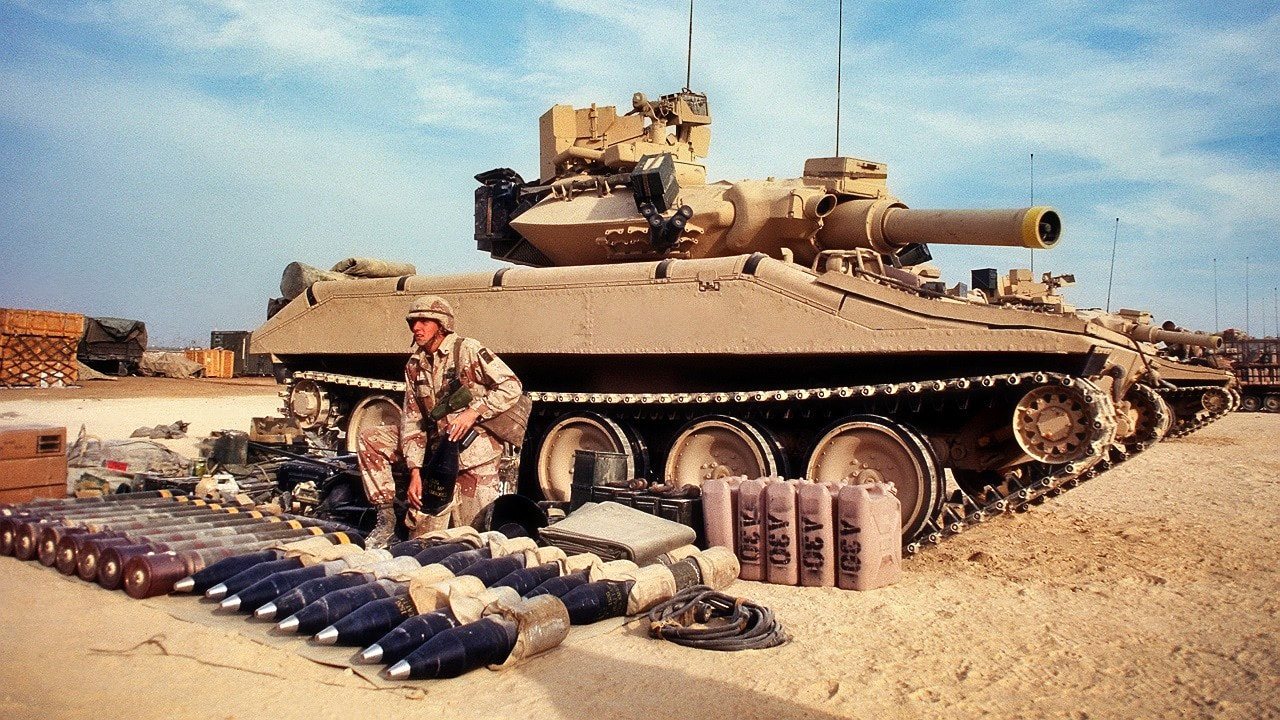
M551 Sheridan Light Tank. Image Credit: Creative Commons.
The Mobile Protected Firepower competition moved into rapid prototyping in 2018. BAE Systems offered a modernized M8, while General Dynamics Land Systems proposed the Griffin II, built on an ASCOD-derived chassis and featuring a turret with a 105mm gun. Each company was to provide 12 prototypes. BAE struggled with delivery and compliance problems and left the competition in 2022. In June, the Army selected General Dynamics and awarded a contract with a ceiling of $1.14 billion for up to 96 low-rate production vehicles.
The Army named the vehicle for Pvt. Robert D. Booker, a World War II Medal of Honor recipient, and Staff Sgt. Stevon A. Booker, who received the Distinguished Service Cross for action in Iraq. The first production M10 was delivered in early 2024. The design had a four-person crew, tracks, and a fully rotating turret armed with a 105mm cannon. To nearly everyone outside the acquisition system, it looked like a light tank.
The 42-Ton M10 Booker Was the Light Tank the Army Would Not Call a Light Tank
Army acquisition officials resisted that label because the M10 Booker was not intended to scout, screen, or fight enemy tanks as a lighter Abrams. Its mission was to accompany infantry and destroy bunkers, fighting positions, light armor, and other obstacles with direct fire.
Officials called it a combat vehicle or an assault gun. The distinction was not unanimous: then-Army Chief of Staff Gen. James McConville publicly called it a light tank.
The debate over whether the Booker was ever truly light became harder to sustain as its deployment burden emerged. The repeated 38-ton and 42-ton figures are largely the same weight expressed in metric tonnes and U.S. short tons, not proof that four tons suddenly appeared late in development. The real issue was operational. At about 42 short tons, the Booker was far lighter than a roughly 70-ton Abrams but more than twice the weight of the 16-ton Sheridan.
At Fort Campbell, eight of 11 bridges reportedly risked damage under the vehicle’s weight. Airlift planning also moved from two M10s per C-17 to one. Light infantry formations needed heavier transporters, recovery vehicles, maintenance equipment, and bridging support to sustain them.
The Army had already deleted the C-130 and airdrop requirements, so the Booker did not formally fail those tests. It met the rewritten specifications but no longer fit the way the Army wanted infantry formations to deploy and fight.
The Army Canceled the M10 Booker After It Finished Testing
The Booker was not canceled because its gun failed or because testing never occurred. The Defense Department’s operational-test office reported that live-fire testing concluded in March 2025, with initial operational testing following in April. In June, the Army terminated low-rate production for convenience, canceled fielding, and ruled out full-rate production.
The program was removed from operational-test oversight the following month.
Army leaders tied the decision to force redesign, mobility, and what Chief Technology Officer Alex Miller described as requirements-process inertia. By then, the service had paid for a functioning armored vehicle that answered a requirement repeatedly changed after its creation.
That is why the M10 became an acquisition failure even though the hardware existed: the Army produced vehicles, completed major tests, and still did not field the capability.
The cancellation left roughly 80 completed vehicles without a permanent mission. Proposals followed to transfer them to another service or ally, including arguments to send the Bookers to Ukraine.
None became an approved disposition plan. By July 2026, the vehicles were slated for storage at Anniston Army Depot while the termination process continued.
The Army still had not published a final settlement price or assigned the M10 fleet a permanent mission.
About the Author: Harry J. Kazianis
Harry J. Kazianis (@Grecianformula) was the former Senior Director of National Security Affairs at the Center for the National Interest (CFTNI), a foreign policy think tank founded by Richard Nixon based in Washington, DC. Harry has over a decade of experience in think tanks and national security publishing. His ideas have been published in the NY Times, The Washington Post, The Wall Street Journal, CNN, and many other outlets worldwide. He has held positions at CSIS, the Heritage Foundation, the University of Nottingham, and several other institutions related to national security research and studies. He is the former Executive Editor of the National Interest and the Diplomat. He holds a Master’s degree focusing on international affairs from Harvard University.

