
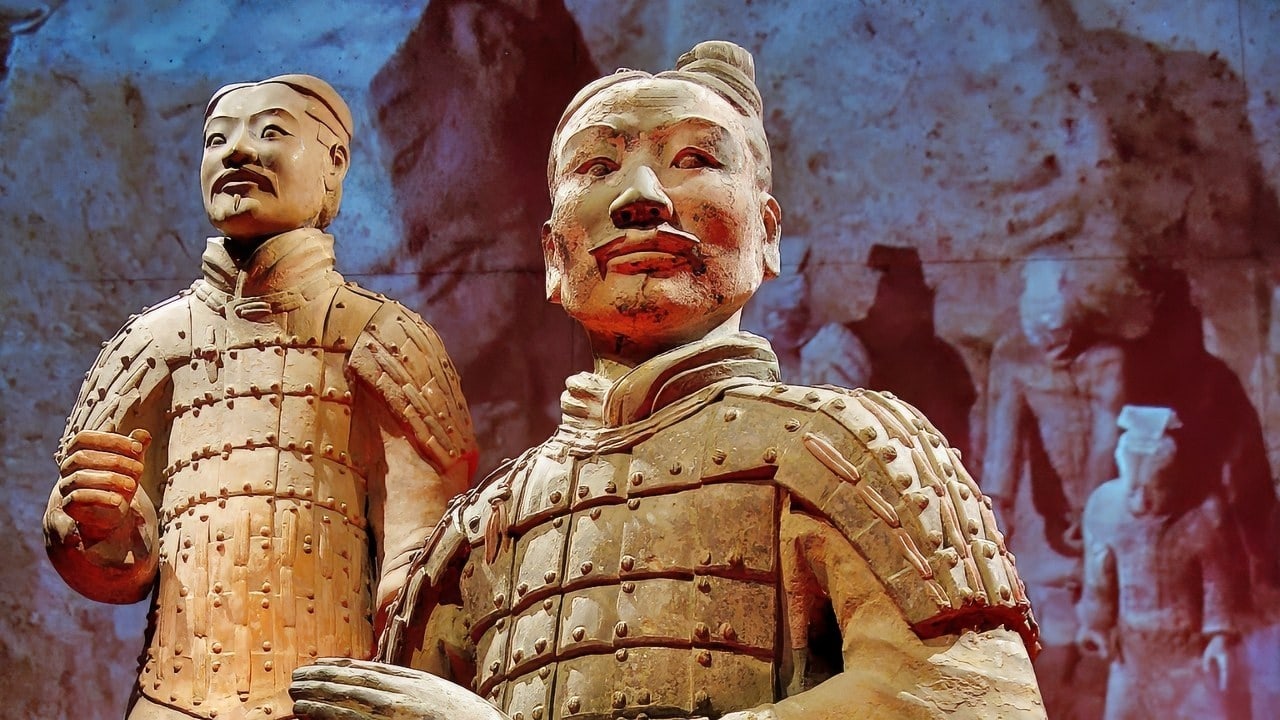
The Art of War Has 13 Chapters. Modern Armies Still Fight by Their Rules 2,500 Years Later: “One mark of a great soldier is that he fight on his own terms or fights not at all.” – Sun Tzu
The sentence is widely attributed to Sun Tzu, yet its exact English wording did not come from ancient China. Lionel Giles added it as commentary to Chapter Six in his 1910 translation of The Art of War. Sun Tzu’s underlying point was more direct: the skilled commander imposes his will on the enemy instead of allowing the enemy to set the terms.
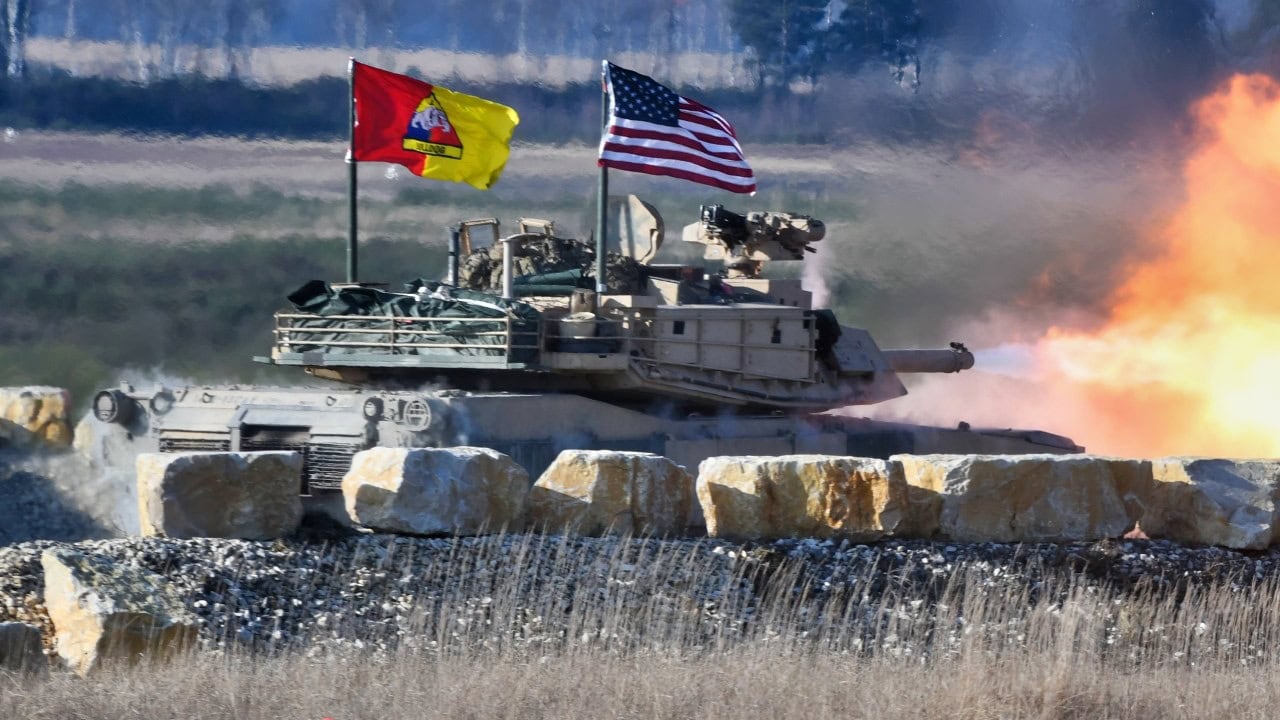
A U.S. M1 Abrams engages a target during the final event on Feb. 17, 2025 as part of the U.S. Army Europe and Africa International Tank Challenge at 7th Army Training Command’s Grafenwoehr Training Area, Germany. The USAREUR- AF International Tank Challenge builds tactical skills and enhances esprit de corps across the 11 teams from five participating allied and partner for peace nations. (U.S. Army photo by Sgt. Collin Mackall)

Poland M1 Abrams Tank. Image Credit: General Dynamics.
The distinction does not weaken the quotation. It explains why the line sounds so modern. Giles compressed one of the book’s central ideas into a sentence suited to the industrial age: choose the time, place, tempo, and political cost of conflict—or refuse the engagement.
The text itself is roughly 2,500 years old and contains 13 short chapters.
It did not invent deception, maneuver, logistics, or espionage. Its achievement was to organize them into a theory of victory built around information, calculation, economy, and control rather than courage alone.
The Art of War Made Victory a Calculation
Traditional accounts identify Sun Wu, better known as Sun Tzu or “Master Sun,” as a general who served the state of Wu. Modern scholarship is less certain. A Cambridge University Press study treats the text as a work shaped over an extended period, possibly by a strategic school rather than a single author.
The historical setting mattered. Chinese warfare was moving toward larger territorial states, mass infantry, and demanding systems of taxation and supply. A ruler needed officers able to move, feed, discipline, and coordinate large armies over distance.
Sun Tzu treated war as a state problem before treating it as a battlefield event. Leaders had to compare political cohesion, command quality, discipline, terrain, weather, and material readiness before marching. Many traditions placed great importance on glory in battle.
Sun Tzu placed the decisive work earlier: calculate first, arrange the conditions, and enter battle only when success is likely.
Winning Before Battle Changed the Meaning of Strength
Sun Tzu did not want an equal contest. He wanted an unequal one created through preparation.
A skillful army moved first, occupied useful ground, forced the opponent to react, and concentrated against separated units. It attacked weakness while denying the enemy a clear picture of its own intentions. If the opposing force rested, it faced harassment. If it depended on supplies, those supplies became a target. If it held a strong position, the commander searched for a more valuable point elsewhere.
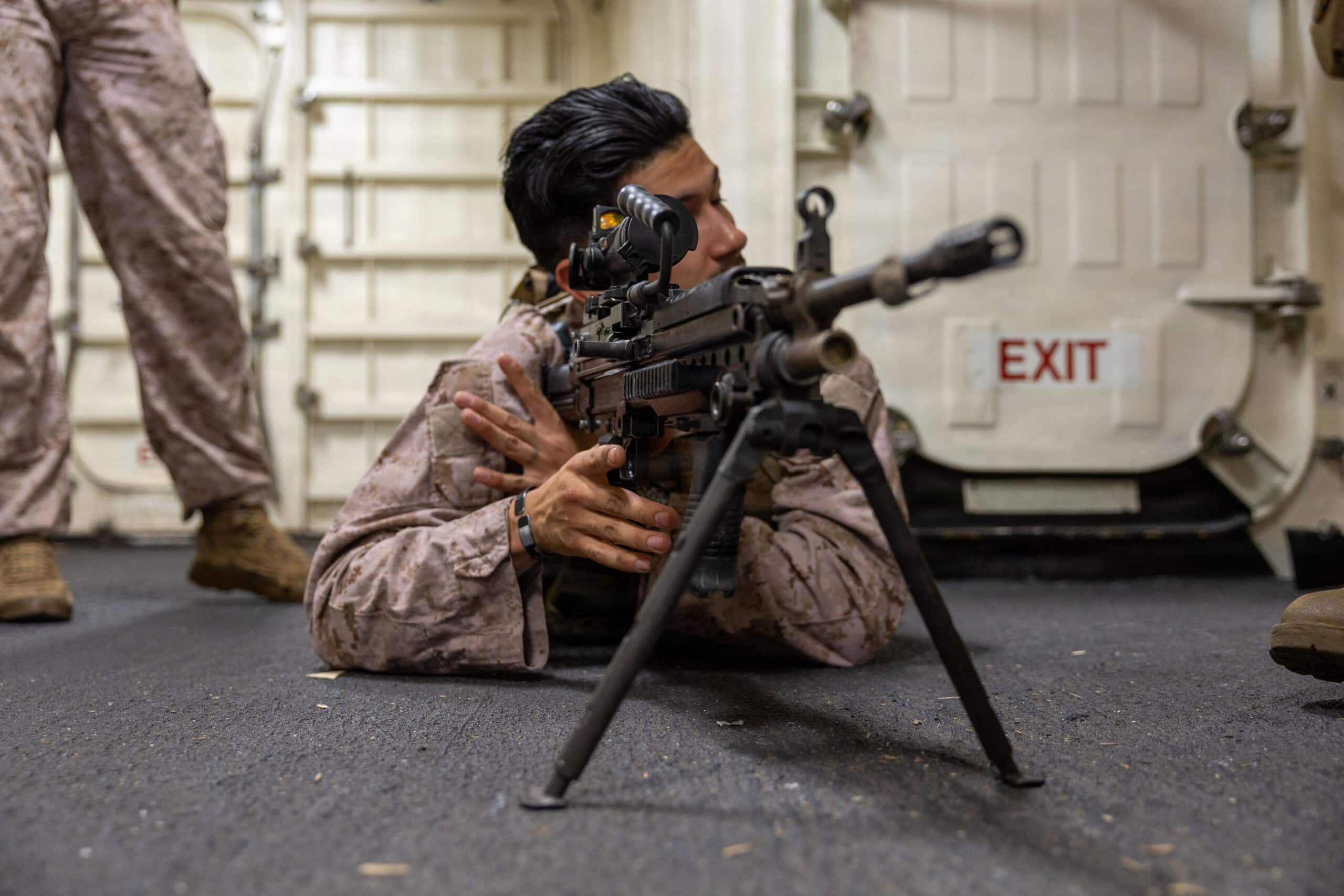
PACIFIC OCEAN (March 23, 2026) U.S. Marine Corps Sgt. Osvaldo Ochoagomez, an infantry squad leader with Lima Company, Battalion Landing Team 3/5, 11th Marine Expeditionary Unit, demonstrates how to use an M27 infantry automatic rifle aboard San Antonio-class amphibious transport dock ship USS Portland (LPD 27), March 23, 2026. Portland, part of the Boxer Amphibious Ready Group, is underway with the 11th Marine Expeditionary Unit in the U.S. 3rd Fleet area of operations demonstrating the U.S. Navy’s long-term commitment to a free and open Indo-Pacific. (U.S. Navy photo by Mass Communication Specialist 2nd Class Sheryssa Dodard)
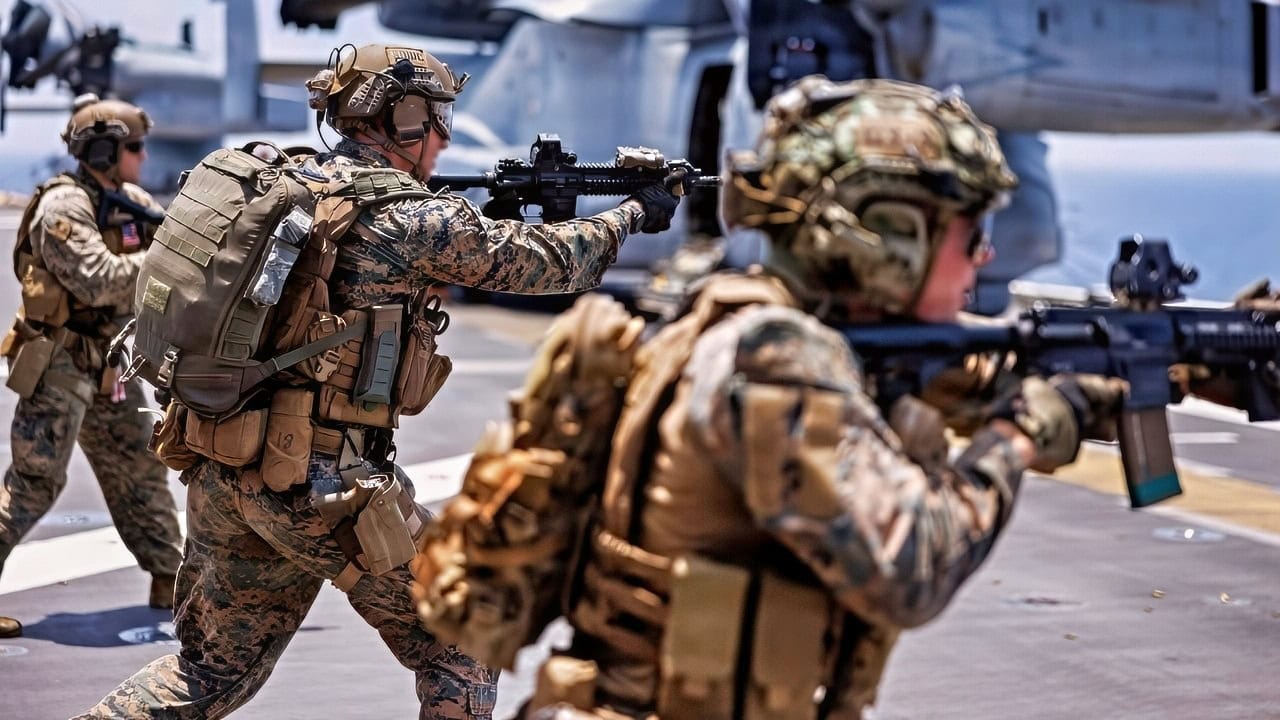
The Marines could land in Iran tomorrow. Navy SEALs would prepare the beach. The 82nd Airborne could infiltrate. The invasion would succeed initially. Then Iran would launch drones and missiles at every U.S. base, satellite terminal, and air defense radar in the Middle East. Getting in is easy. Surviving is the problem.
Strength therefore became more than troop numbers or weapon quality. It included initiative, cohesion, intelligence, logistics, and the ability to create several bad choices for the enemy at once.
Sun Tzu’s preference for winning without battle followed the same logic. Capturing a state, army, or city intact preserved resources for the victor. A long siege consumed soldiers, money, and time while destroying the prize. The best outcome broke an opponent’s plan, alliances, or willingness to resist before both sides paid the full price of combat.
“Fighting on his own terms” did not mean endless caution. The complete Chinese text and Lionel Giles’ translation contain aggressive instructions for rapid movement, surprise attacks, and decisive action. Restraint mattered when conditions were poor. Violence followed when the balance favored success.
Information Became a Combat Arm
Deception is often reduced to camouflage or a false radio message. Sun Tzu treated it as control over an opponent’s decisions.
A commander concealed his true condition, displayed false weakness, offered bait, and created activity in one area before striking another. The purpose was to make the enemy move, divide, wait, hurry, or commit reserves at the wrong moment.
Intelligence made the system work. Terrain, morale, command relationships, supply levels, and political divisions all mattered. Sun Tzu devoted the final chapter to agents and argued that reliable information cost far less than a prolonged campaign. The commander who understood both forces held an advantage before either side released an arrow.
China Turned Sun Tzu Into an Institution
The Art of War survived because later generations did more than preserve it. Commanders and scholars wrote layers of commentary around the text, applying its arguments to new weapons, states, and campaigns. Cao Cao produced the earliest surviving major commentary. During the Song period, the work was added to the collection later known as the Seven Military Classics.
Its influence spread across East Asia. Different societies adapted the text to local traditions, but familiar themes endured: avoid strength, use surprise, protect information, understand terrain, and preserve the force until conditions favor action. This was not one fixed “Asian way of war.” Sun Tzu supplied a shared vocabulary for discussing advantage.
Its most significant modern battlefield influence came through Mao Zedong. Mao faced opponents with stronger conventional forces and superior equipment. His guerrilla and mobile-warfare concepts emphasized survival, intelligence, political organization, and attacks on isolated weaknesses. Communist forces traded space for time, dispersed under pressure, and concentrated when an exposed target appeared. An Army University Press history traces Sun Tzu’s influence on Mao’s theory of People’s War.
Mao added an essential element: the population became both the political objective and the army’s support system. Revolutionary warfare joined Sun Tzu’s attention to morale and intelligence with ideology, party organization, and protracted struggle. Western officers confronting communist movements in Asia began reading Sun Tzu as a living strategic source rather than an ancient curiosity.
The West Found Sun Tzu Late
Europe first encountered The Art of War through a French translation prepared by Jesuit missionary Joseph-Marie Amiot in the late eighteenth century. Giles published his landmark English edition in 1910. U.S. Marine officer Samuel B. Griffith produced another influential translation in 1963.
This chronology matters. Sun Tzu did not shape Western military development from antiquity in the same direct manner as Greek, Roman, and European writers. His place in Western professional education grew mainly during the twentieth century, especially after the revolutionary wars and the Vietnam War.
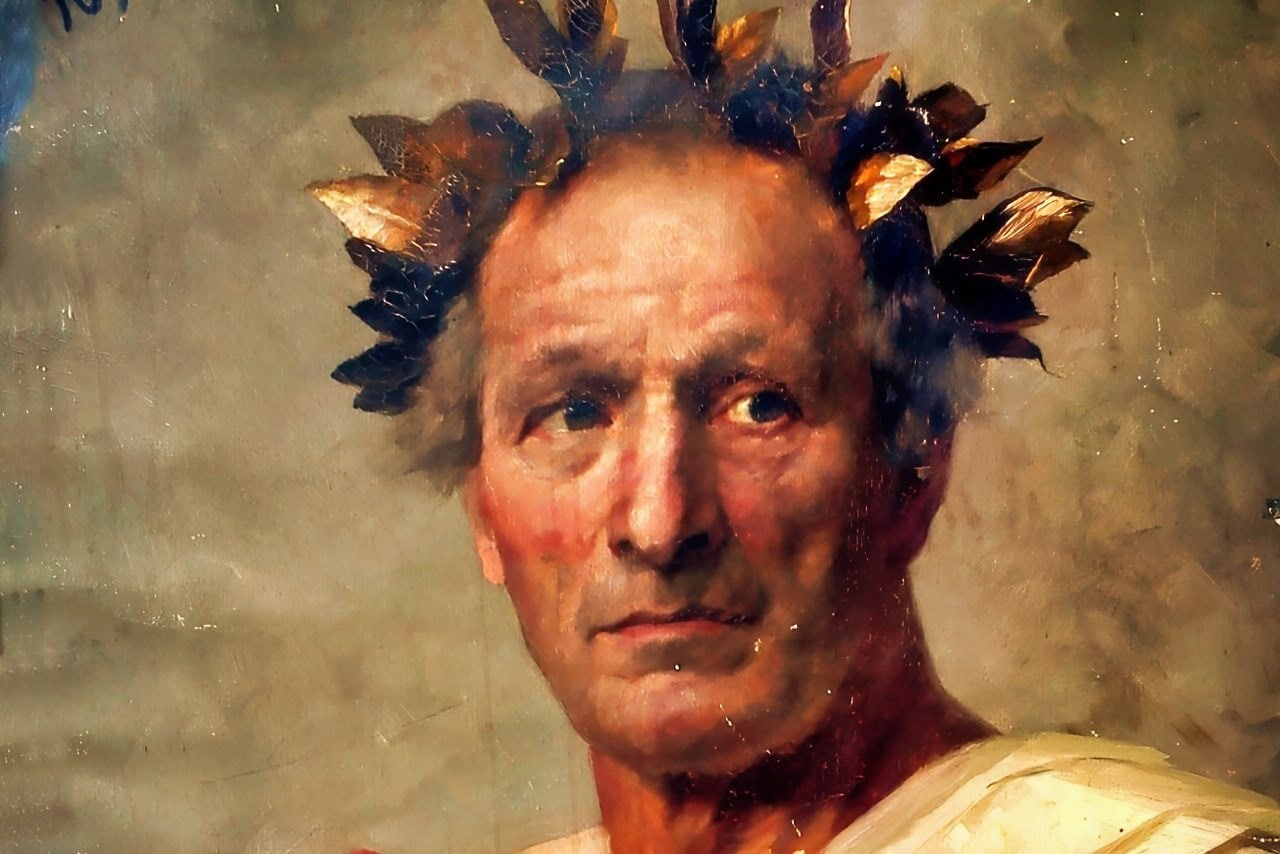
Julius Caesar Painting. Image Credit: Creative Commons.
The U.S. Army later placed the book on a chief of staff’s professional reading list. Military schools study it alongside Clausewitz, Jomini, Thucydides, and modern campaign history.
A previous 19FortyFive examination of the “fight on his own terms” quotation captured its appeal for modern officers. It reduces strategy to a hard command responsibility: do not accept a battle merely because the opponent offers one.
Desert Storm Put the Principle Into Steel
Operation Desert Storm offers a modern illustration without requiring a claim of direct influence.
The U.S.-led coalition spent weeks attacking Iraqi command networks, air defenses, logistics, and fielded forces from the air. Naval activity and preparations for an amphibious assault encouraged Iraq to hold troops near the Kuwaiti coast. The main ground attack swept west through the desert in the “left hook,” striking from a direction Iraqi defenses were not arranged to meet.
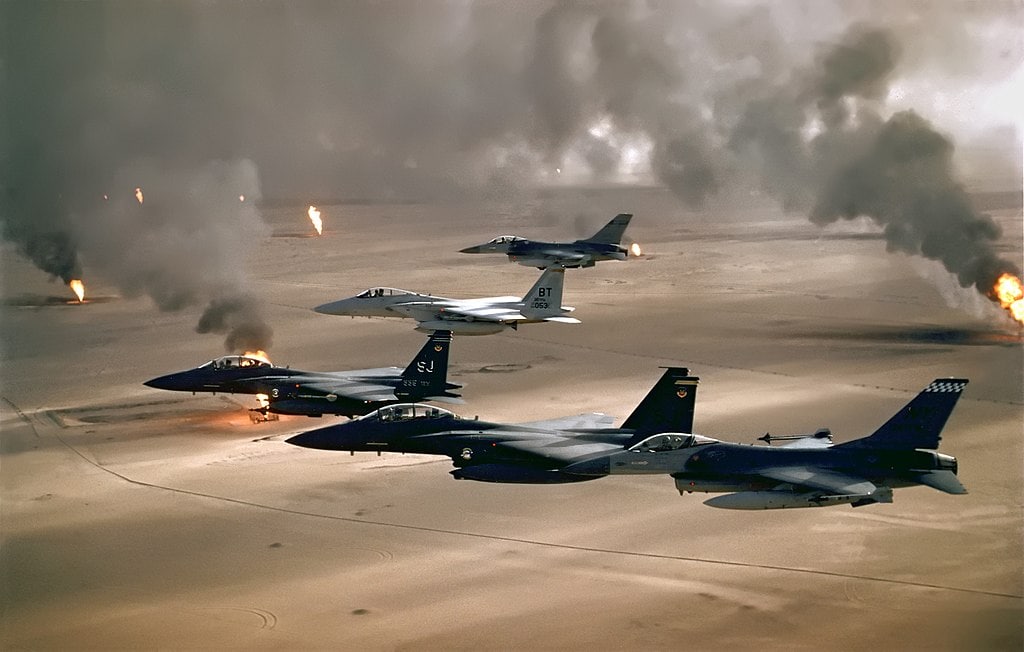
USAF aircraft fly over retreating Iraqi forces in Kuwait during Operation Desert Storm
Technology supplied stealth aircraft, precision weapons, satellite navigation, and surveillance. Strategy arranged those tools on the chosen terms. Iraqi forces reacted to the coalition’s picture of the war while the coalition protected its main design. A National Defense University study identifies the amphibious feint and western attack as central parts of the deception.
The ground campaign lasted about 100 hours. Later political problems in the Gulf did not change the military result: coalition leaders shaped the battlefield before the main armies met.
Satellites and Drones Changed the Tools
Commercial satellites, drones, smartphones, electronic emissions, and social media expose movements once hidden by distance or darkness. Modern forces answer with decoys, false emitters, dispersal, cyber operations, camouflage, and controlled leaks.
The objective is no longer complete invisibility. It is to deny reliable interpretation. An opponent might see a tank, ship, or missile battery without knowing whether it is real, important, or part of the main attack.
Sun Tzu’s logic of information also appears in contemporary Chinese strategy. A 19FortyFive analysis of the “know your enemy” maxim examined Beijing’s study of American strengths, weaknesses, and decision-making. Another Sun Tzu warning—do not swallow bait offered by the enemy—fits a world of provocations designed to force expensive or politically damaging reactions.
Distributed drone warfare adds another layer. A force spread across many cheap systems presents fewer obvious centers and forces the defender to spend time and expensive weapons identifying real threats. A 19FortyFive essay described this model as a “war of 1,000 bees”.
Sun Tzu Is Not a Substitute for War
The popularity of The Art of War creates distortion. Business books, political speeches, and internet quotations often turn Sun Tzu into a promise of effortless victory. Real war does not obey slogans.
An enemy also thinks, deceives, and adapts. Intelligence arrives incomplete. Plans fail under fear, exhaustion, and friction. Some political objectives require holding ground, protecting populations, or destroying forces willing to continue fighting.
Sun Tzu did not promise bloodless success. His chapters discuss fire attacks, encirclement, desperate ground and force. A U.S. Naval Institute critique warns against exaggerating his place in Western military history. The strongest reading pairs his work with campaign history and other theorists. Clausewitz explains violence, political purpose, and friction in ways that The Art of War does not.
Sun Tzu focuses attention on advantage, knowledge, economy, and control before violence begins.
About the Author: Harry J. Kazianis
Harry J. Kazianis (@Grecianformula) was the former Senior Director of National Security Affairs at the Center for the National Interest (CFTNI), a foreign policy think tank founded by Richard Nixon based in Washington, DC. Harry has over a decade of experience in think tanks and national security publishing. His ideas have been published in the NY Times, The Washington Post, The Wall Street Journal, CNN, and many other outlets worldwide. He has held positions at CSIS, the Heritage Foundation, the University of Nottingham, and several other institutions related to national security research and studies. He is the former Executive Editor of the National Interest and the Diplomat. He holds a Master’s degree focusing on international affairs from Harvard University.

