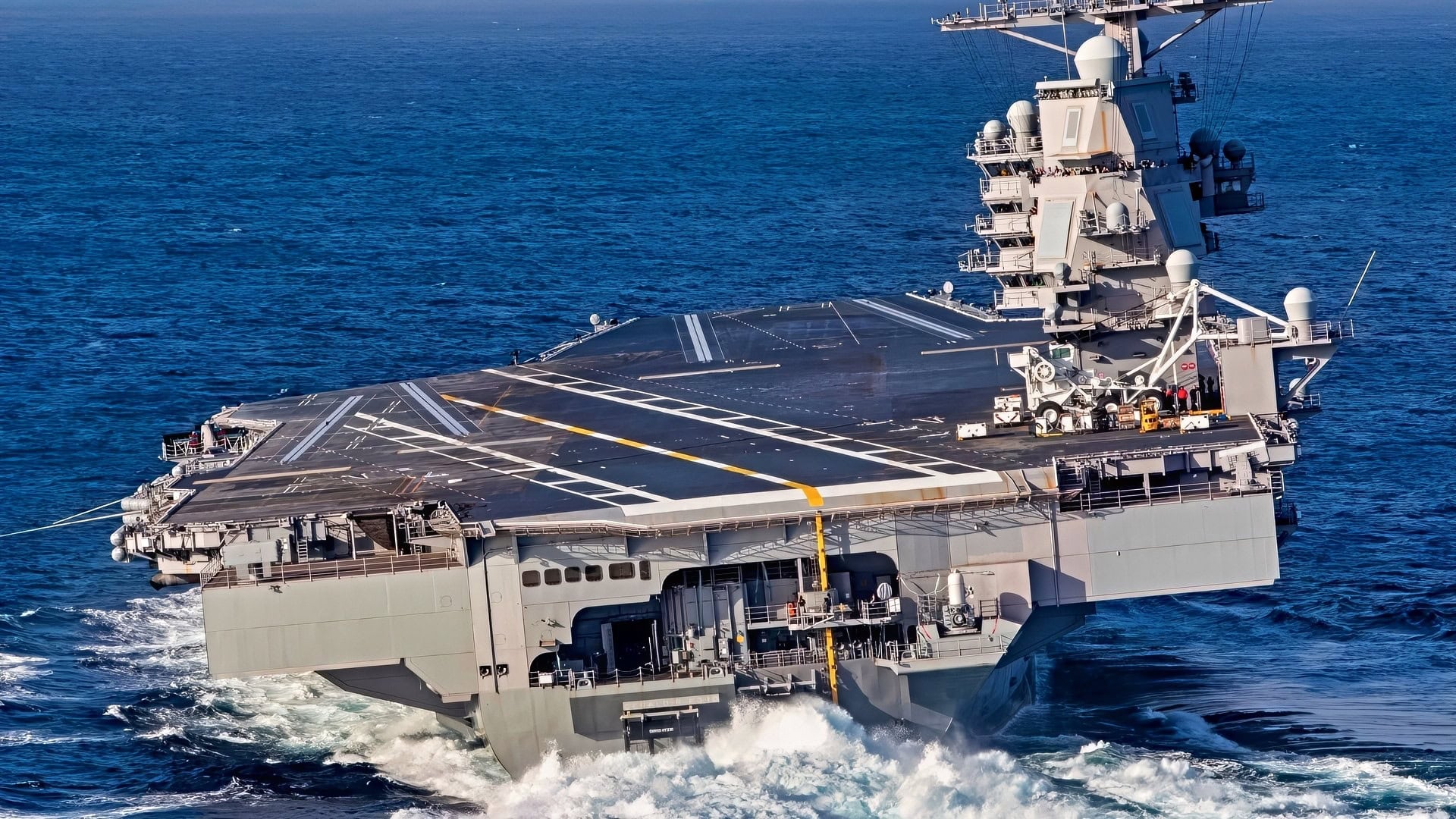
US President Donald J. Trump is calling for two major design changes to the Gerald R. Ford (CVN-78)-class of aircraft carriers.
Presumably, the revisions to these configurations would only be seen after the carriers already under construction are completed and new hulls are laid down.
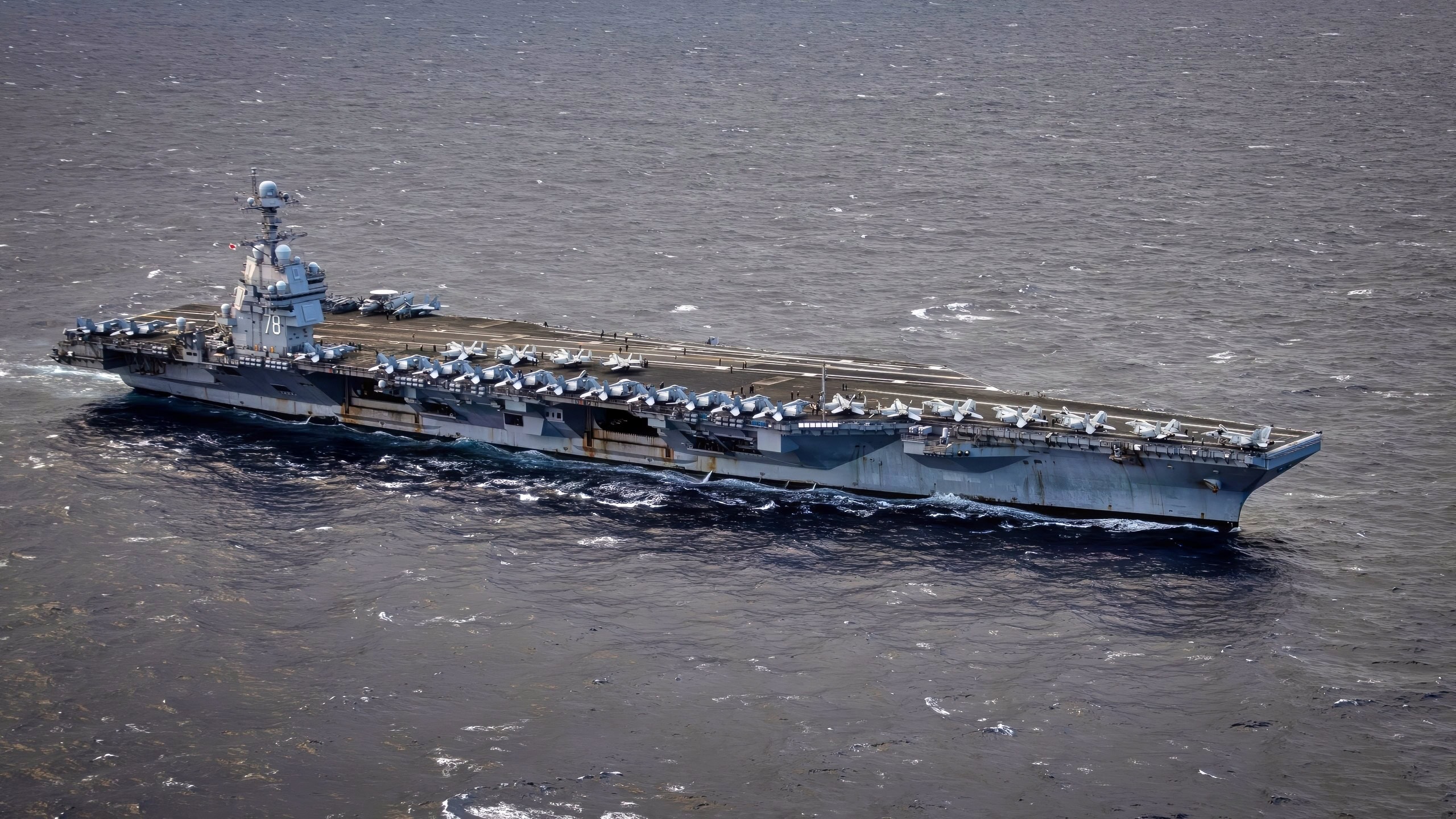
The world’s largest aircraft carrier, USS Gerald R. Ford (CVN 78), transits the Eastern Mediterranean Sea, March 22, 2026. Gerald R. Ford is on a scheduled deployment in the U.S. 6th Fleet area of operations to support the warfighting effectiveness, lethality and readiness of U.S. Naval Forces Europe Africa, and defend U.S., Allied and partner interests in the region. (U.S. Navy photo by Mass Communication Specialist 2nd Class Tajh Payne)
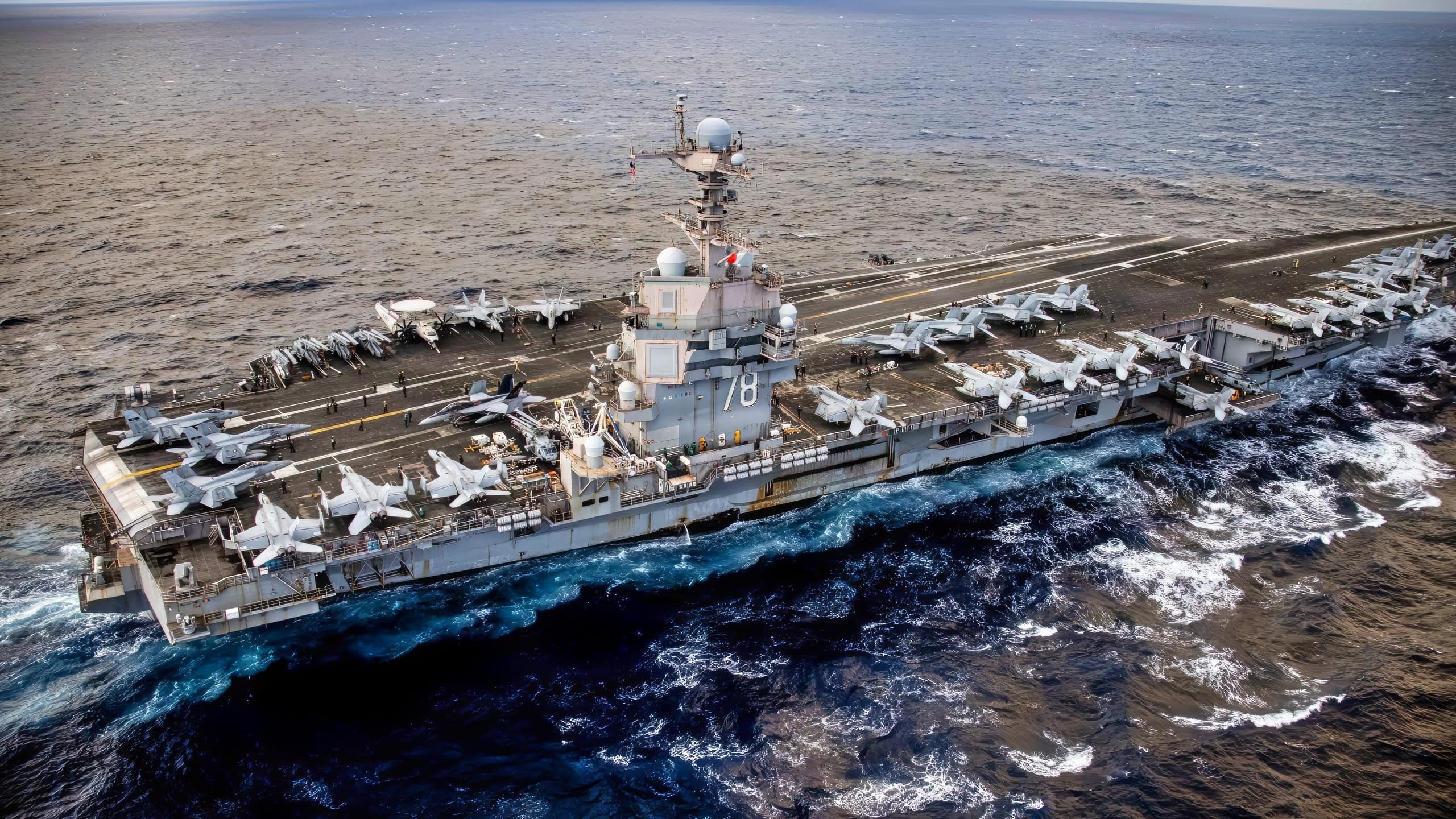
The world’s largest aircraft carrier, USS Gerald R. Ford (CVN 78), transits the Eastern Mediterranean Sea, March 22, 2026. Gerald R. Ford is on a scheduled deployment in the U.S. 6th Fleet area of operations to support the warfighting effectiveness, lethality and readiness of U.S. Naval Forces Europe Africa, and defend U.S., Allied and partner interests in the region. (U.S. Navy photo by Mass Communication Specialist 2nd Class Tajh Payne)
However, the implications for the future of the carrier fleet are significant, and they would add considerably to the $13 billion price tag for each carrier.
The current plan is to build up to ten aircraft carriers in this class. Four are under contract.
The first major change was announced a week ago, when Trump issued a national security memorandum instructing the US Navy (USN) to begin planning to abandon the signature revolutionary technology the ship was designed around. Specifically, the document calls for this new 21st-century class of carriers to return to the previous-century steam-powered aircraft catapult system.
This would mean scrapping the Electromagnetic Aircraft Launching System (EMALS), designed to replace the steam-powered system that has been installed on carriers since naval aviation entered the jet age.
But because EMALS has faced technical difficulties, the presidential directive calls for scrapping this next-generation innovation.
Three Ford-class carriers are currently in different stages of development. The USS John F. Kennedy is undergoing sea trials and will be the next ship to join the fleet.
The next two carriers, which are the USS Enterprise and USS Doris Miller, are still being built at the Newport News shipyards in Virginia.
If the plan moves forward, only the first three carriers will likely have EMALS on board.
Move The Island
However, more recently, Trump has been calling for a far more extensive change to the carrier design. The US President does not like the positioning of the Ford-class carrier’s island.
This is the above-the-deck structure that houses the carrier’s air control tower, radar arrays, the ship’s bridge, and other command sections.
This proposed change would move the multi-level tower from its current position to a location amidships, making the carrier look more like previous-generation models.
According to some media reports, the American President does not favor the appearance that the island’s current position creates.
The timeline for the USN assessment of the impact of such a change – both in cost and its impact on the carrier build schedule – has not been announced.
An unnamed USN spokesman has only said that the service’s engineers have “begun moving out on options to meet the President’s intent.”
The Navy’s evaluation is unclear, with current and former officials cautioning that the service was concerned that such a change would require significant time and money.
A leading publication on maritime affairs points out that there was an operational rationale for placing the island this far aft in Ford’s design.
The Nimitz-class design has four aircraft elevators, two on each side. “The starboard quarter elevator is located aft of the island, next to the landing zone and arresting gear, and is not normally used because it can’t be reached without interrupting flight operations,” the author explains.
In the Ford design, the Navy removed that elevator and parking spot and relocated the entire island aft. This has the benefit of “saving the weight and space of the fourth elevator and creating a larger unobstructed area forward of the island.” Aesthetics aside, in the process the “Ford-class gained about half an acre of deck space.”
Dilemma of Launching Options: F/A-XX Problems
Most of the carrier-design specialists who spoke to 19FortyFive were also quick to point out the negative implications of going back to a steam-powered system.
Beyond the cost of this design change this late in the program, giving up on EMALS also means discarding the sortie-rate increases it provides.
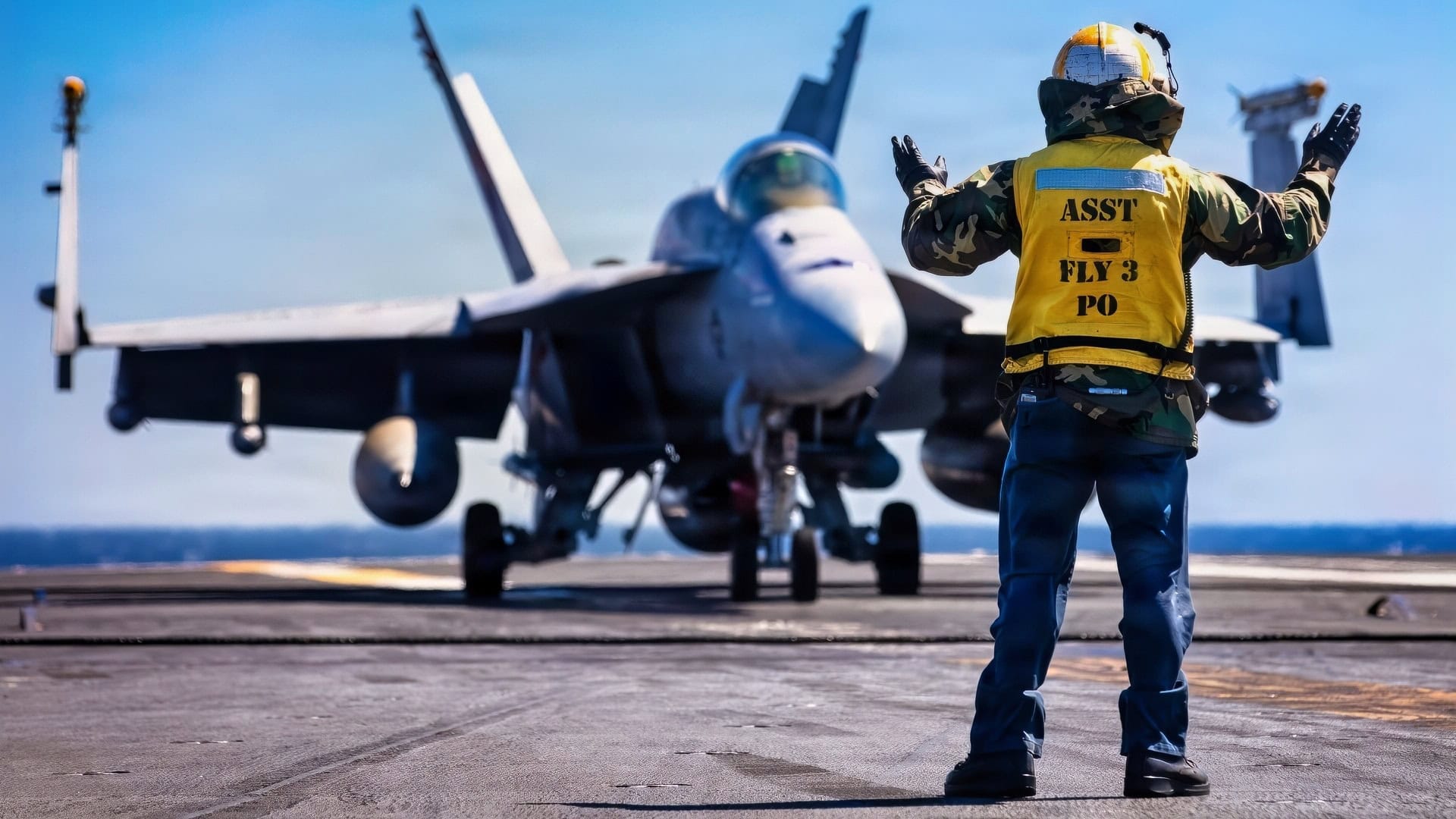
A U.S. Sailor signals to an F/A-18E Super Hornet aircraft, attached to Strike Fighter Squadron 31, on the flight deck of the world’s largest aircraft carrier, USS Gerald R. Ford (CVN 78), while underway during Operation Epic Fury, March 9, 2026. (U.S. Navy photo)
One of the chief benefits of EMALS is that it greatly expands the carrier’s operational capability.
Above all, the carrier is now able to launch a much wider variety of platforms – from strike fighters that are heavier than the current F/A-18E/F Super Hornet to lightweight unmanned systems.
It thus becomes unclear, said one carrier design engineer, “how a steam catapult will perform with the [6th-generation] F/A-XX aircraft that is coming. It is supposed to be far heavier than any of our current carrier-capable aircraft.”
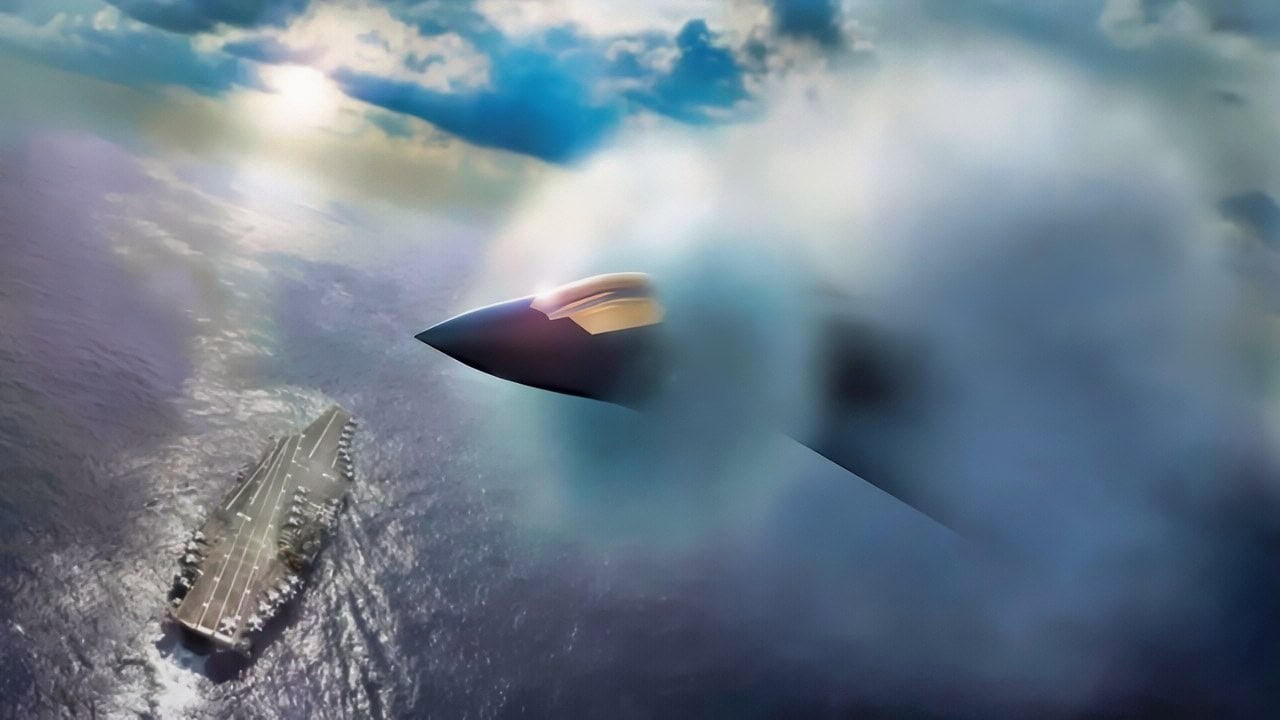
F/A-XX Boeing Image.
“Then, lest we forget, the Chinese are already reportedly operating carriers that use some version of an EMALS for their aircraft,” he added. “I am not sure why we would want to go into operations against their naval force, the PLAN, equipped with a catapult that is a generation behind theirs.”
About the Author: Reuben F. Johnson
Reuben F. Johnson has thirty-six years of experience analyzing and reporting on foreign weapons systems, defense technologies, and international arms export policy. Johnson is the Director of Research at the Casimir Pulaski Foundation. He is also a survivor of the Russian invasion of Ukraine in February 2022. He worked for years in the American defense industry as a foreign technology analyst and later as a consultant for the U.S. Department of Defense, the Departments of the Navy and Air Force, and the governments of the United Kingdom and Australia. In 2022-2023, he won two awards in a row for his defense reporting. He holds a bachelor’s degree from DePauw University and a master’s degree from Miami University in Ohio, specializing in Soviet and Russian studies. He lives in Warsaw.