
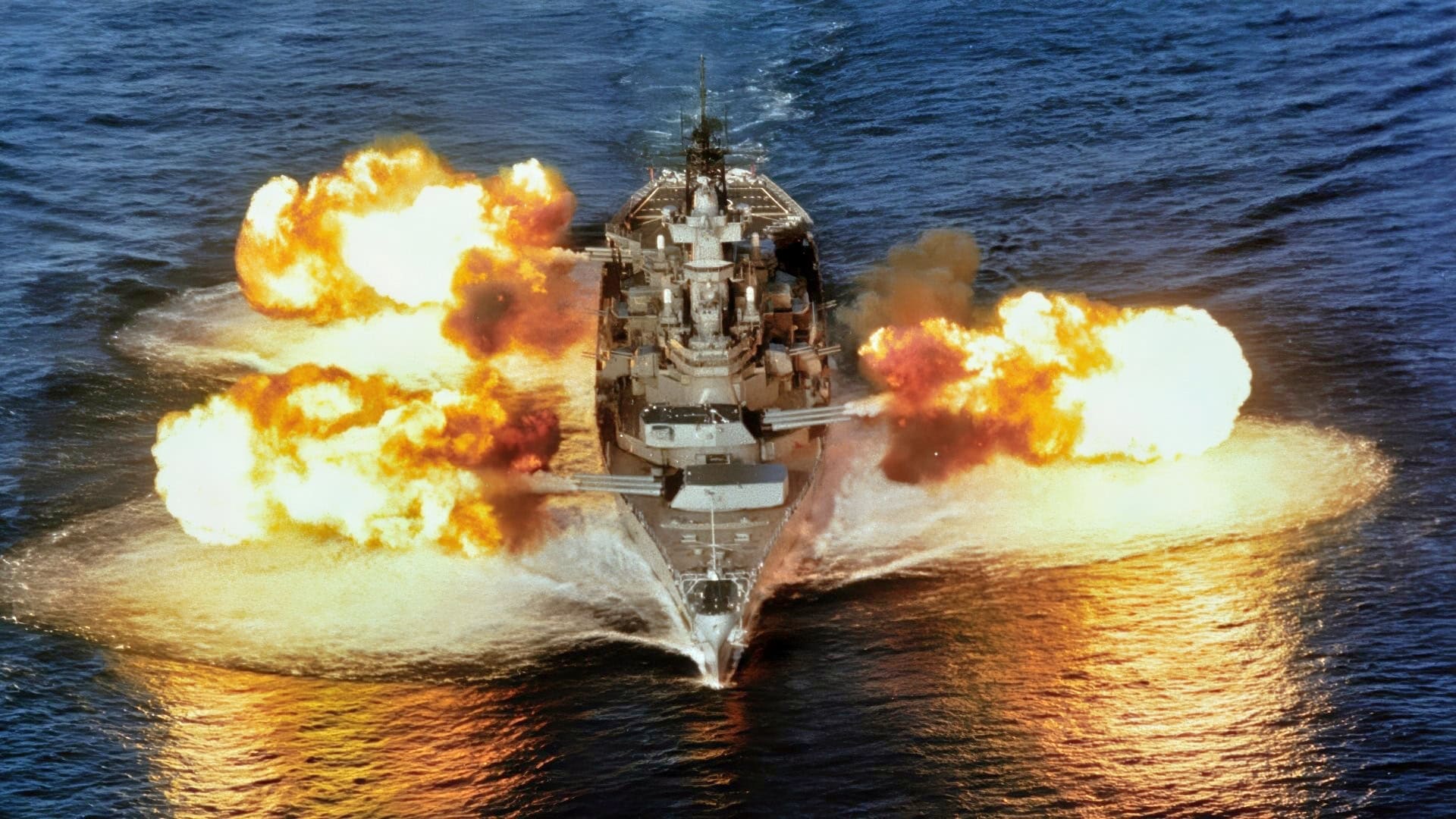
Montana-Class by the Numbers: 70,965 Tons, Twelve 16-Inch Guns, Five Ships, and Zero Keels Ever Laid: Every battleship America actually built comes with two sets of numbers, the ones on the drawing board and the ones measured at sea. The Montana-class has only the first set. Five ships were authorized in 1940, assigned names, yards, and hull numbers, and canceled in 1943 before a single keel touched a slipway, which froze the largest battleships the United States ever approved as a page of specifications. The specifications are worth reading closely, because the numbers explain both why the Navy wanted these ships badly and why it killed them anyway.
The Size Numbers for Montana-Class
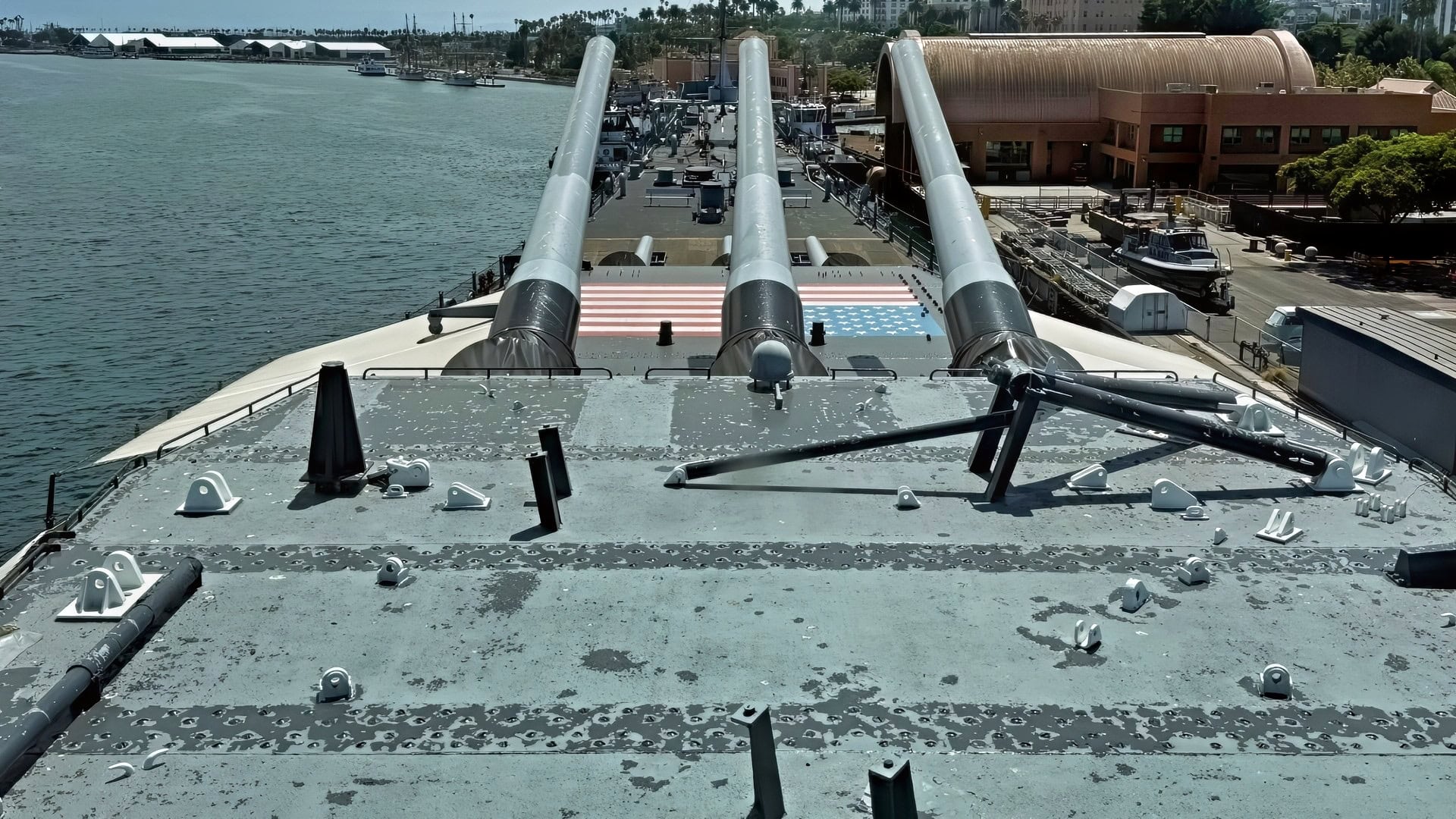
16-Inch Iowa-Class Guns USS Iowa. 19FortyFive.com Image.
The final design, designated BB67-4, described a ship of 63,221 tons standard displacement and 70,965 tons at full load, nearly a third larger than the four Iowa-class ships that were, in the end, the last American battleships completed.
The hull ran 921 feet 3 inches overall with a maximum beam of 121 feet 2 inches, and that second figure is the quiet radical in the table: it was the first American battleship beam deliberately drawn too wide for the Panama Canal’s existing locks, on the assumption that the wider third set of locks then under construction would be finished.
Eight boilers and four geared turbines delivered 172,000 shaft horsepower for 28 knots, five knots slower than an Iowa, with a 15,000-nautical-mile cruising range and a standard crew of 2,355, rising to 2,789 as a flagship.
The Navy’s historians add the fleet-level number behind the five hulls: completion would have given the United States seventeen new battleships by the late 1940s, a force no rival could have approached.
The Weapons Numbers
The main battery was twelve 16-inch/50 caliber Mark 7 guns in four triple turrets, against nine in three turrets aboard an Iowa, a 33 percent heavier broadside from the same gun, throwing the same 2,700-pound armor-piercing shell more than 20 miles. The secondary battery was new outright: twenty 5-inch/54 caliber Mark 16 guns in ten twin mounts, a heavier, longer-reaching weapon than the 5-inch/38 carried by every other American battleship, and good enough that the Navy fielded it anyway after the cancellation, aboard the Midway-class carriers in 1945.
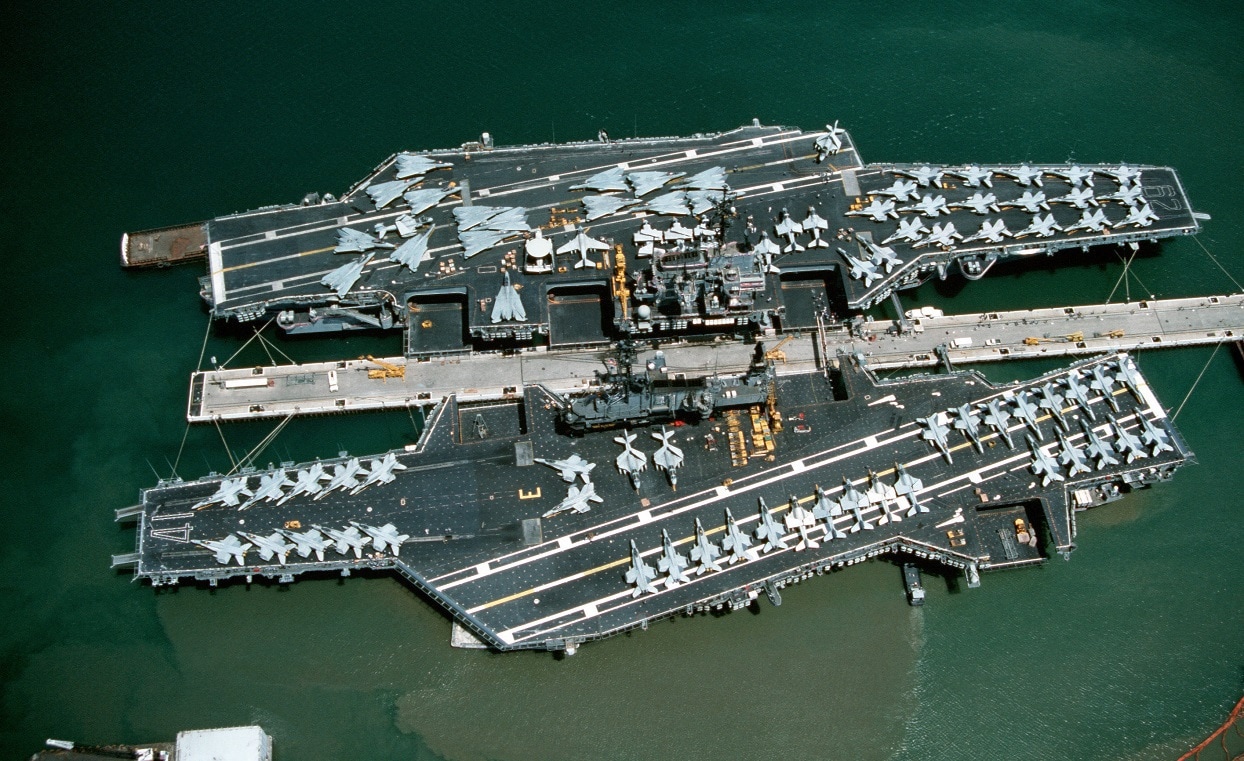
An aerial view of various aircraft lining the flight decks of the aircraft carrier USS INDEPENDENCE (CV-62), right, and USS MIDWAY (CV-41) moored beside each other in the background. The MIDWAY is en route from Naval Station, Yokosuka, Japan, to Naval Air Station, North Island, California, where it will be decommissioned in the spring of 1992. The INDEPENDENCE will travel to Yokosuka to take over as the Navy’s forward-based aircraft carrier.
The anti-aircraft fit tells its own story about a design that never finished: sources record anywhere from ten to forty 40mm Bofors barrels and dozens of 20mm Oerlikons, because the light battery was still evolving when the program stopped, and no final configuration was ever frozen.
The protection numbers are where the class stands alone. Behind a 16.1-inch inclined belt, 22.5-inch turret faces, and a second, deeper belt designed against diving shells, the Montanas would have been the only World War II American battleships adequately armored against their own guns, by the Navy’s own description.
Specialist analysis quantifies the difference: against the 2,700-pound superheavy shell, an Iowa’s immune zone ran only from 23,600 to 27,400 yards, while the Montana design stretched from 18,000 out to 31,000 yards, with only Yamato’s 18.1-inch guns posing a serious threat. Japan took the design seriously enough that its planned follow-on Yamatos were redesigned with deeper protection mainly in response to the Montana order.
The Money Numbers
Here the ledger turns honest in an unusual way: there is no official Montana-class price, per ship or per program, because no contract ever matured to the point of setting one. The five ships were funded under the Fiscal Year 1941 program alongside the Iowas, and the Iowa baseline is the only hard money in the record — about $100 million per ship by the commonly cited actuals, with an official design history placing the planned figure near $125 million in wartime dollars.
From that baseline, simple multiplication sketches what the program implied.
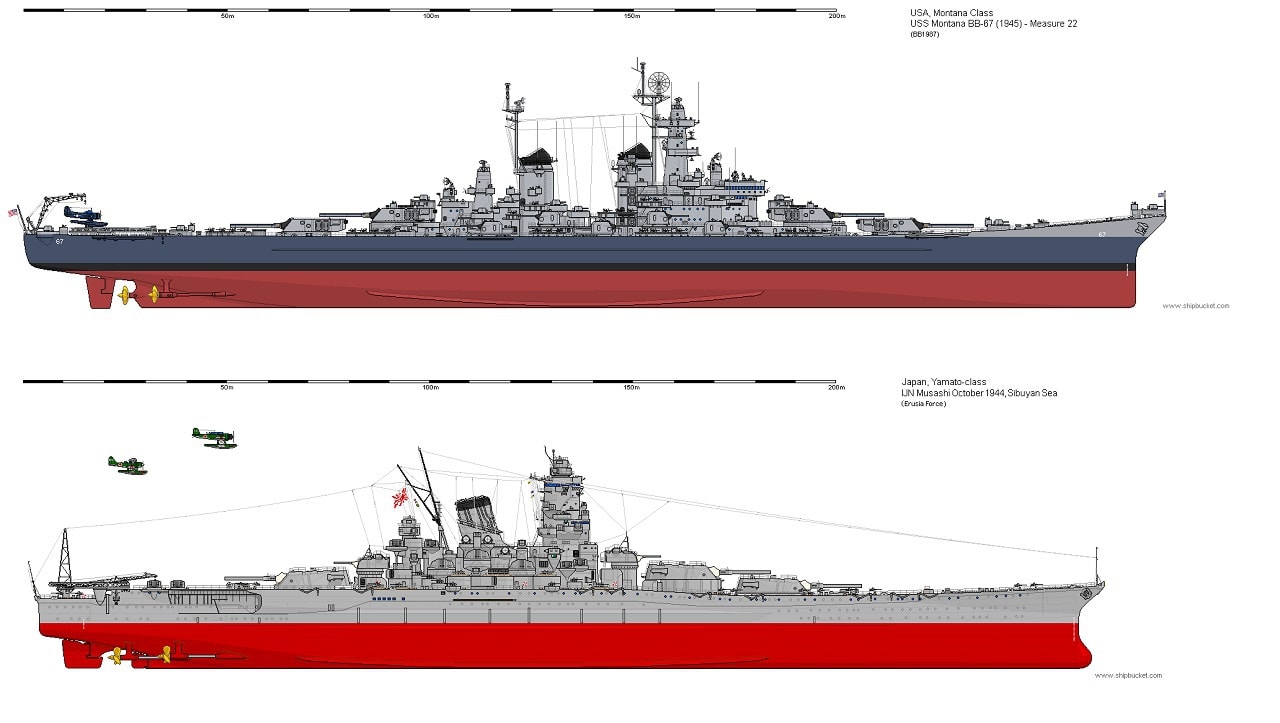
Montana-class compared to a Yamato-class battleship.
A hull a third larger, with a fourth main turret, half again the secondary battery, and thousands of additional tons of armor, prices plausibly at $130 million to $165 million per ship in the dollars of the day, and five of them at $650 million to $825 million for the class — before counting the program’s strangest line item, the new Panama Canal locks the beam required, a parallel national infrastructure project the ships’ design simply assumed. Converted at roughly the intervening inflation rate, the class implied something like $12 billion to $15 billion in today’s money, and every precedent in warship acquisition suggests the real bill would have landed higher.
Those figures are arithmetic, not archives; the archival truth is sharper: the United States committed to five of the largest warships in its history without ever completing the paperwork stating what they cost.
Montana-Class: The Dates That Killed It
The cancellation reads cleanest as a calendar. Congress authorized the five ships on July 19, 1940, in the Two-Ocean Navy Act. The name Montana went to BB-67 on December 28, 1940, with Ohio, Maine, New Hampshire, and Louisiana assigned to yards at Philadelphia, Brooklyn, and Norfolk.
Construction was suspended on May 20, 1942, twelve days after the Battle of the Coral Sea ended and fifteen days before Midway began, the two engagements in which opposing fleets never sighted one another and aircraft sank four Japanese carriers.
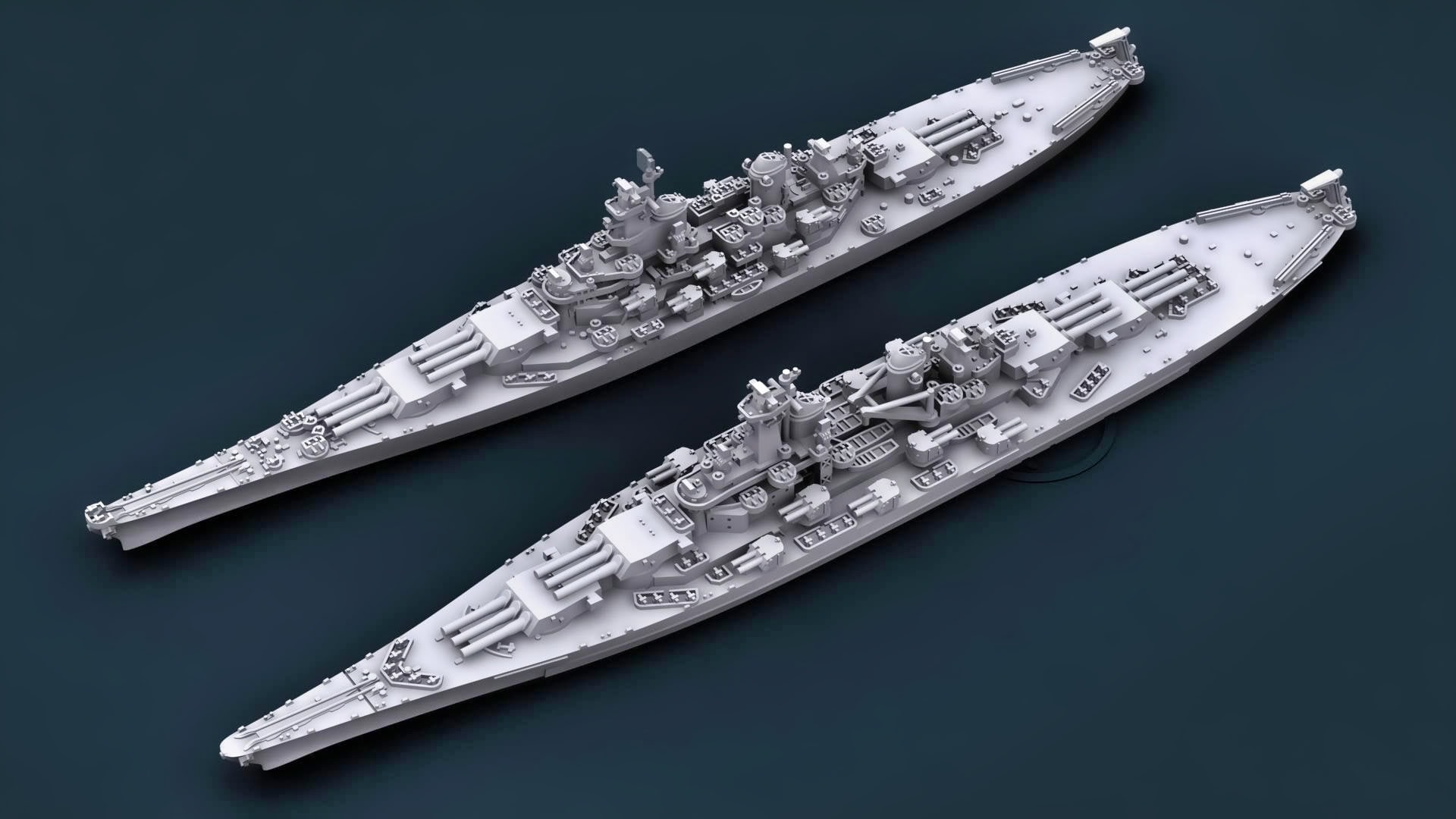
Montana-Class Battleship vs. Iowa-Class. Image Credit: Creative Commons.
Formal cancellation came on July 21, 1943, before any keel was laid. The stated logic matched the arithmetic of the moment: the same steel, slipways, and 2,355-man crews bought Essex-class carriers, landing ships, and escorts instead, and a 28-knot battleship could not screen the 33-knot carrier task forces that now decided the Pacific war, a job the Iowas could do.
What the Numbers Left Behind
Fragments of the specification went to sea without the ships. The 5-inch/54 armed the Midway carriers from 1945 and served the fleet for decades.
The armor studies fed later design work. The what-if became a permanent fixture of naval argument, with this site having examined both sides of it — the verdict that the class never had a chance against the carrier revolution, and the case that its fire-control and protection would have given it one decisive advantage over anything afloat, Yamato included.
And one Montana number kept running long after the ships died. The third set of Panama Canal locks, the infrastructure that made a 121-foot beam thinkable, was suspended in 1942 alongside the battleships it was partly meant to serve, and the canal did not open a wider lane until the expansion of June 2016, seventy-three years after the class was canceled. The ships that finally used it carry shipping containers.
About the Author: Harry J. Kazianis
Harry J. Kazianis (@Grecianformula) was the former Senior Director of National Security Affairs at the Center for the National Interest (CFTNI), a foreign policy think tank founded by Richard Nixon based in Washington, DC. Harry has over a decade of experience in think tanks and national security publishing. His ideas have been published in the NY Times, The Washington Post, The Wall Street Journal, CNN, and many other outlets worldwide. He has held positions at CSIS, the Heritage Foundation, the University of Nottingham, and several other institutions related to national security research and studies. He is the former Executive Editor of the National Interest and the Diplomat. He holds a Master’s degree focusing on international affairs from Harvard University.

