
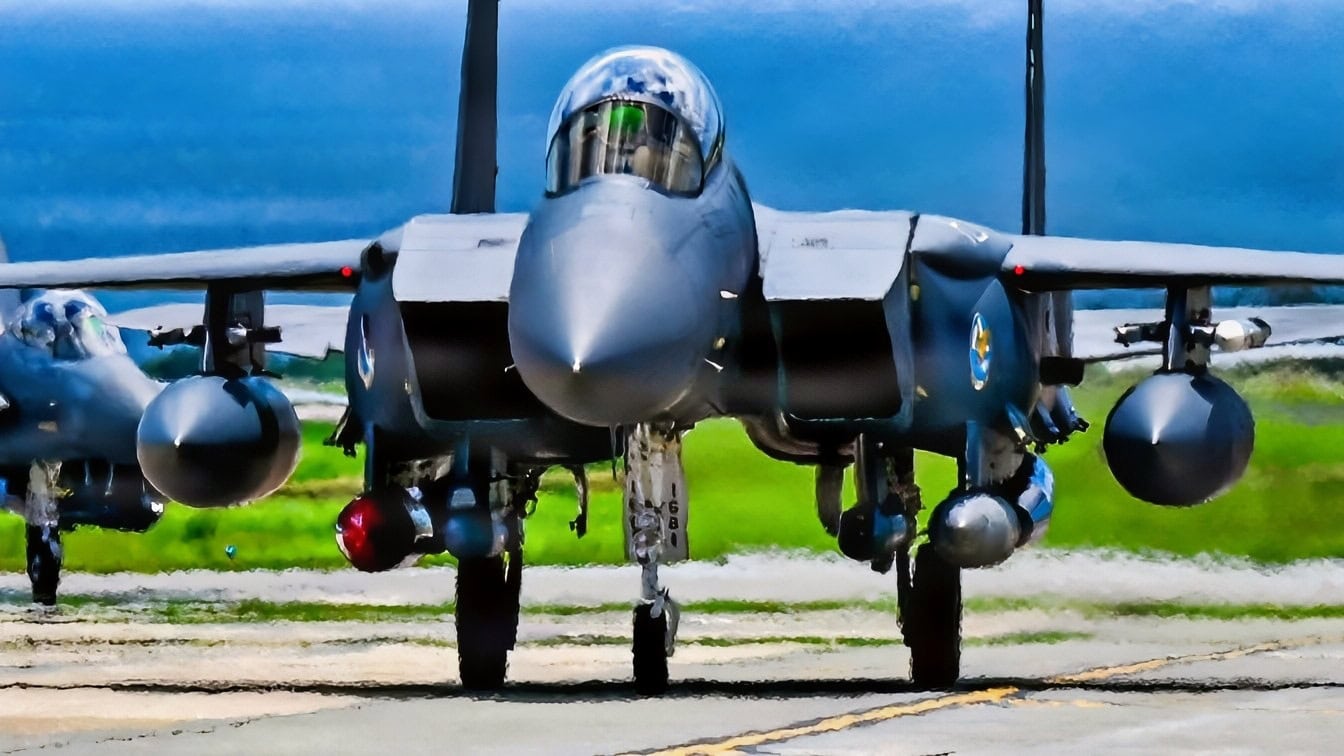
US F-15 Pilot Was Shot Down…Twice Over Iran: In the US’s long history of air combat, being shot down is (thankfully) a rare and harrowing experience. Being shot down twice in the same war, weeks apart, is almost unheard of, so rare that officials struggled to find a modern precedent.
That is the story of one U.S. Air Force F-15E Strike Eagle pilot who survived not one but two separate shootdowns during the ongoing conflict between the United States and Iran, a saga first brought to light by national security journalist Sean Naylor.
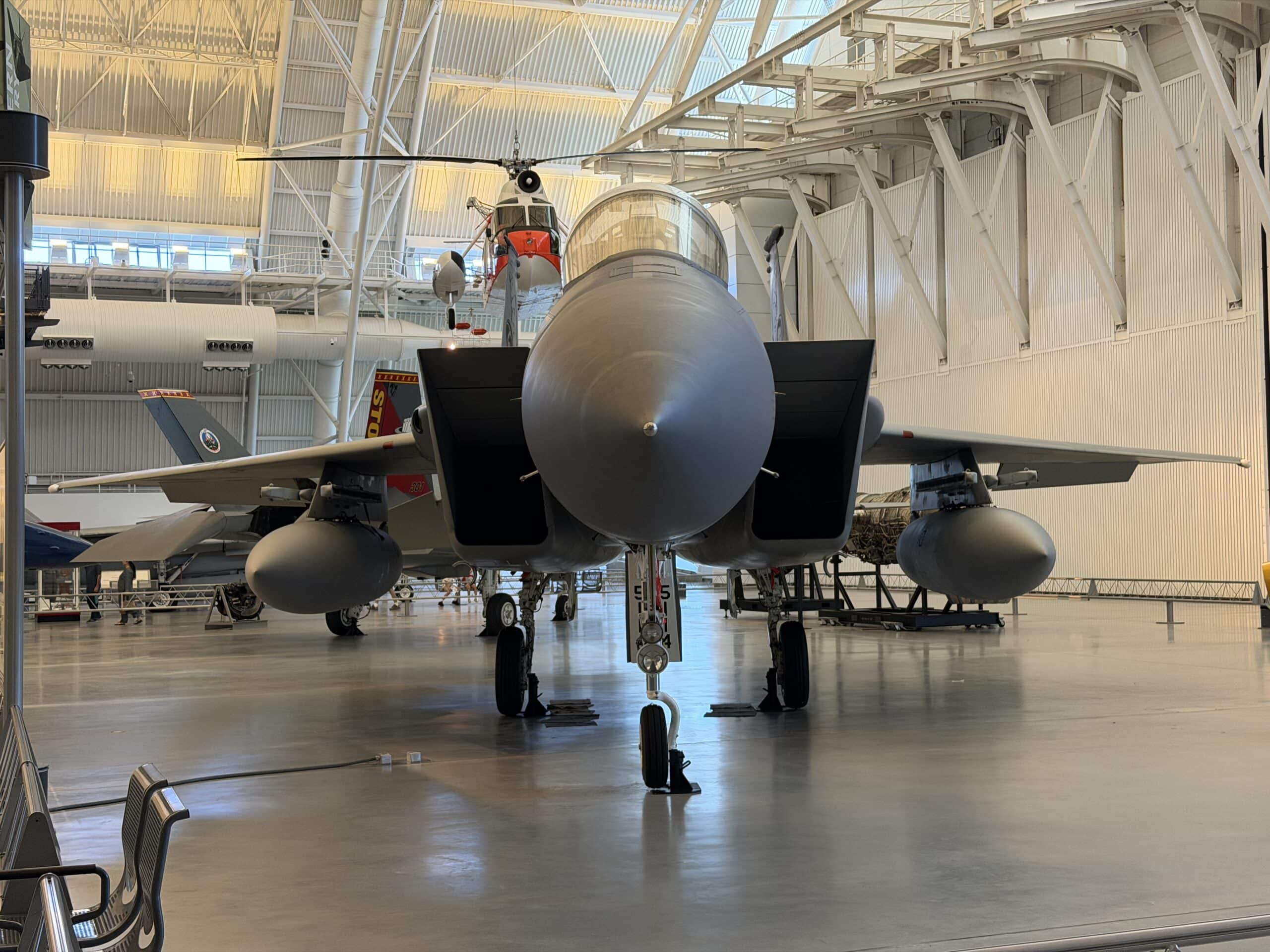
F-15C. Taken at the Smithsonian by 19FortyFive.com staff.
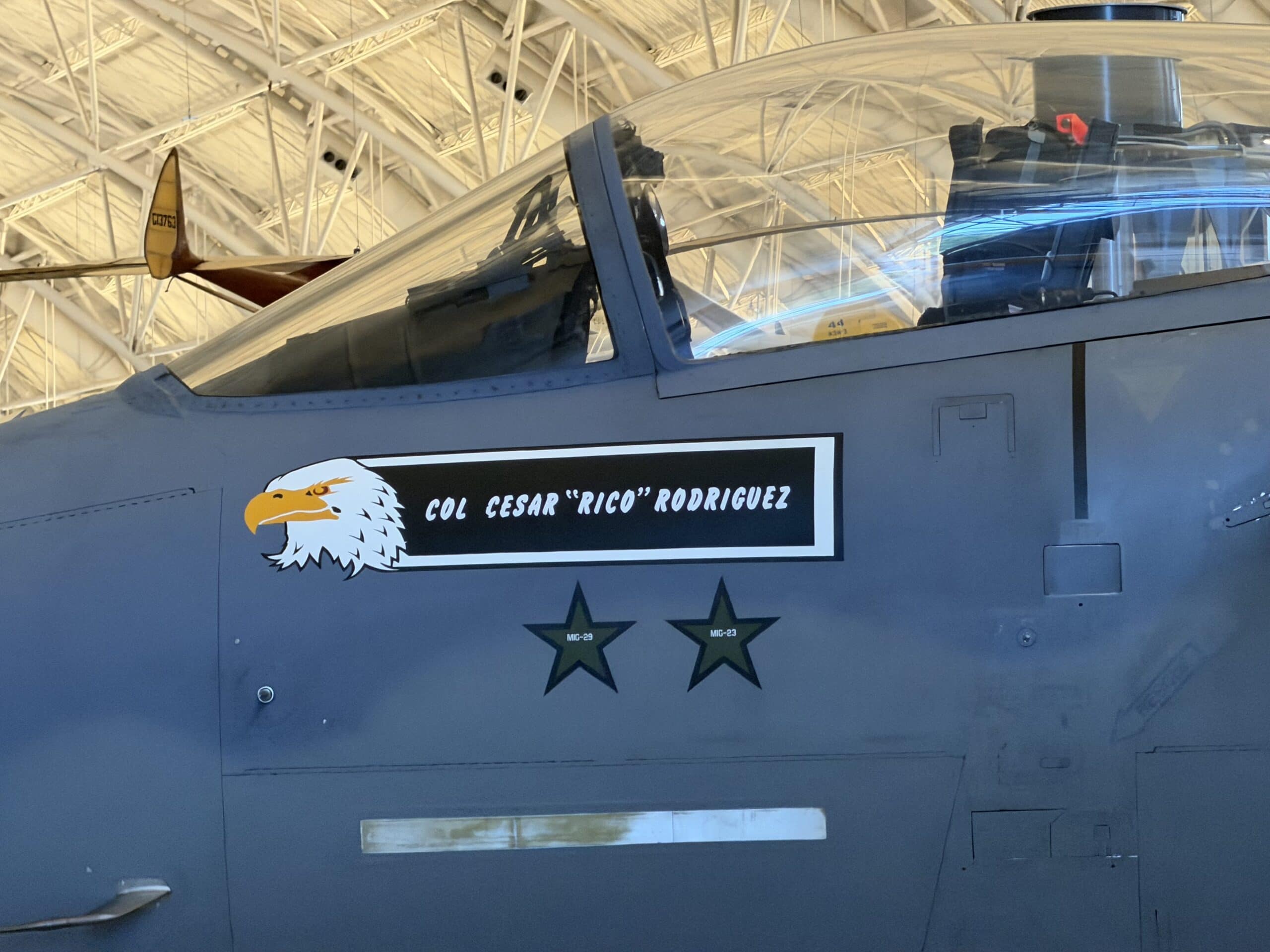
F-15C. Taken at the Smithsonian by 19FortyFive.com staff.
When “Friendly-Fire” Isn’t: A Nightmare Situation Over Kuwait
The pilot’s ordeal began in the opening days of the war, during Operation Epic Fury.
As Kuwait came under a barrage of Iranian missiles, drones, and aircraft, three U.S. Air Force F-15E Strike Eagles flying in support of the Kuwaiti defense were mistakenly shot down by a Kuwaiti F/A-18 Super Hornet in what U.S. Central Command later called a “friendly fire incident.”
Alex Hollings of Airpower wrote that Kuwaiti air defenses had reportedly intercepted 394 inbound Shahed-style attack drones, which equates to shooting down many more targets per day, every day, for a week straight
All six aircrew members aboard the three jets ejected safely, according to officials briefed on the episode. The pilot at the center of Naylor’s story was flying one of those three aircraft.
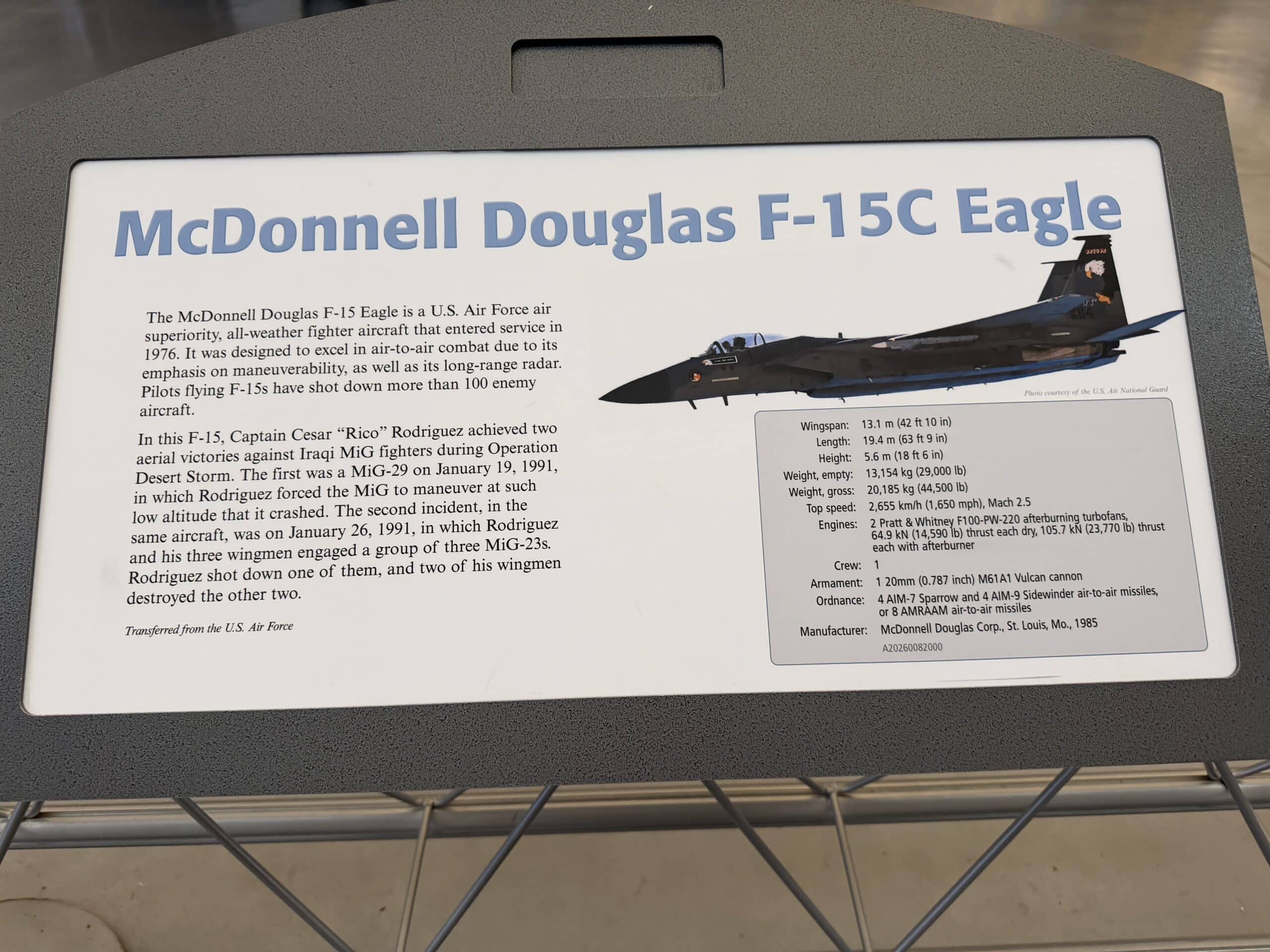
F-15C Smithsonian 19FortyFive Photo
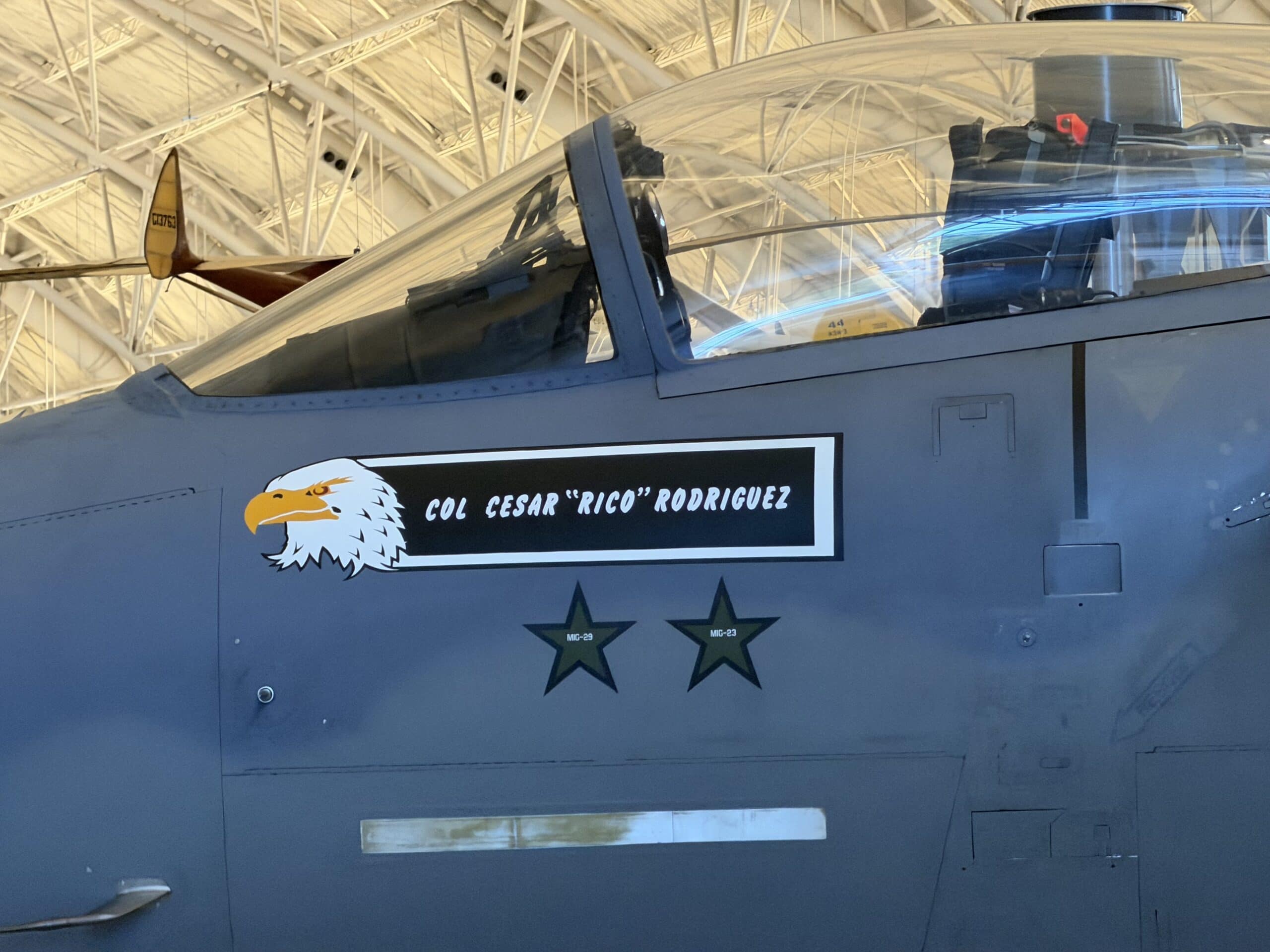
F-15C Smithsonian 19FortyFive Photo
Cleared to Fly Only To Be Shot Down Over Iran
What makes this pilot’s story extraordinary is what came next. After passing the medical and psychological evaluations required of any downed aviator, he was cleared to return to combat flying. Air Force policy does not allow pilots to switch aircraft types after an incident, so he went back up in another F-15E Strike Eagle.
Just over 30 days after his first ejection, on April 3, the pilot, whose call sign was “Dude 44,” was flying a combat mission over Iran when his aircraft was struck by an Iranian surface-to-air missile.
NBC News reported that the MANPAD, or man-portable air defense system, employed in this shootdown may have been supplied to Iran by China.
He and his weapons systems officer were forced to eject a second time, this time deep in hostile territory, triggering what became one of the greatest personnel-recovery efforts of the war. The weapons system officer suffered injuries after his parachute failed to deploy properly.
The rescue itself was a study in contrasts. The pilot was recovered within hours. His weapons systems officer was not so fortunate, evading capture on the ground for nearly two days before a large-scale search-and-rescue operation involving dozens of aircraft and hundreds of personnel finally brought him home. Reports also indicate that the pilot sustained serious injuries in the incident.
“Like Getting Hit by Lightning Twice”
The story of the pilot’s dual shootdowns was first reported by Sean Naylor on his Substack newsletter, The High Side, a publication well-known for its sources within the U.S. national security establishment.
Naylor’s article made the case that the pilot was certainly the first Air Force fixed-wing aviator to be shot down twice in the same conflict since the Vietnam War.
The report was quickly corroborated by CBS News, which cited two people familiar with the incidents, and picked up by outlets ranging from the Washington Examiner to international wire services. Neither the Pentagon nor U.S. Central Command has formally acknowledged the details of the case, and the pilot’s identity has not been publicly released.
Retired Air Force Lieutenant General David Deptula, a widely respected voice on air power, put the rarity of the pilot’s experience in blunt terms, calling it “like getting hit by lightning twice.”
Deptula reportedly said he could not recall another instance of a pilot being shot down twice in separate incidents during the same campaign, reaching back to the Vietnam era for any kind of comparison.
Hollings reported that the Air Force Brig. Gen. James Robinson Risner was also shot down twice over Vietnam, while being credited with an impressive eight air-to-air kills throughout his career.
Air Force Captain Guy Gruters was reportedly shot down off the coast of North Vietnam in November 1967. He and his co-pilot were rescued under heavy fire, and he returned to service, only to be shot down again the following month, when he was captured and held as a prisoner of war for five years.
This Conflict Has Been One Of The Firsts
The still-unnamed pilot’s story is emblematic of the strange turn of the broader U.S.-Iran conflict, a war marked by both the friendly-fire loss of three F-15Es early on and a subsequent Iranian air-defense shootdown of the strike aircraft.
The friendly-fire incident over Kuwait was a significant, if surprising story: three fourth-generation strike fighters were lost not to the enemy but to an allied nation’s own air defenses, responding under the pressure of live Iranian missile, drone, and aircraft attacks.
That the same aviator would go on to survive an actual combat shootdown by Iranian forces just weeks later gives the episode an almost cinematic quality, one several outlets have explicitly compared to a Hollywood war film.
For the U.S. Air Force, the case underscores both the resilience of its ejection systems and training and the extraordinary strain placed on aircrews flying repeated combat sorties in a high-intensity conflict against a capable, if ultimately overmatched, air-defense network.
For search-and-rescue crews, it is a reminder of the stakes: a single aviator, down twice, alive both times because of split-second decisions in the cockpit and the willingness of recovery teams to go get him.
And the lengths they went to bring him home reflect great credit on the special operators who conducted the rescue. The tried-and-true mantra of “leave no man behind” was hammered home on the operation.
The full account of both incidents is still emerging from unofficial sources rather than from Pentagon statements. But the broad contours of the story, as first reported by Naylor and since corroborated by multiple outlets, describe a case that will likely be studied for years: one American aviator, two shootdowns, two ejections, and, remarkably, two safe returns home.
Note: We have included our own original photos and video of the F-15 fighter, specifically the F-15C model, from a recent visit to the Smithsonian.
About the Author: Steve Balestrieri
Steve Balestrieri is a National Security Columnist. He served as a US Army Special Forces NCO and Warrant Officer. In addition to writing on defense, he covers the NFL for PatsFans.com and is a member of the Pro Football Writers of America (PFWA). His work was regularly featured in many military publications.