
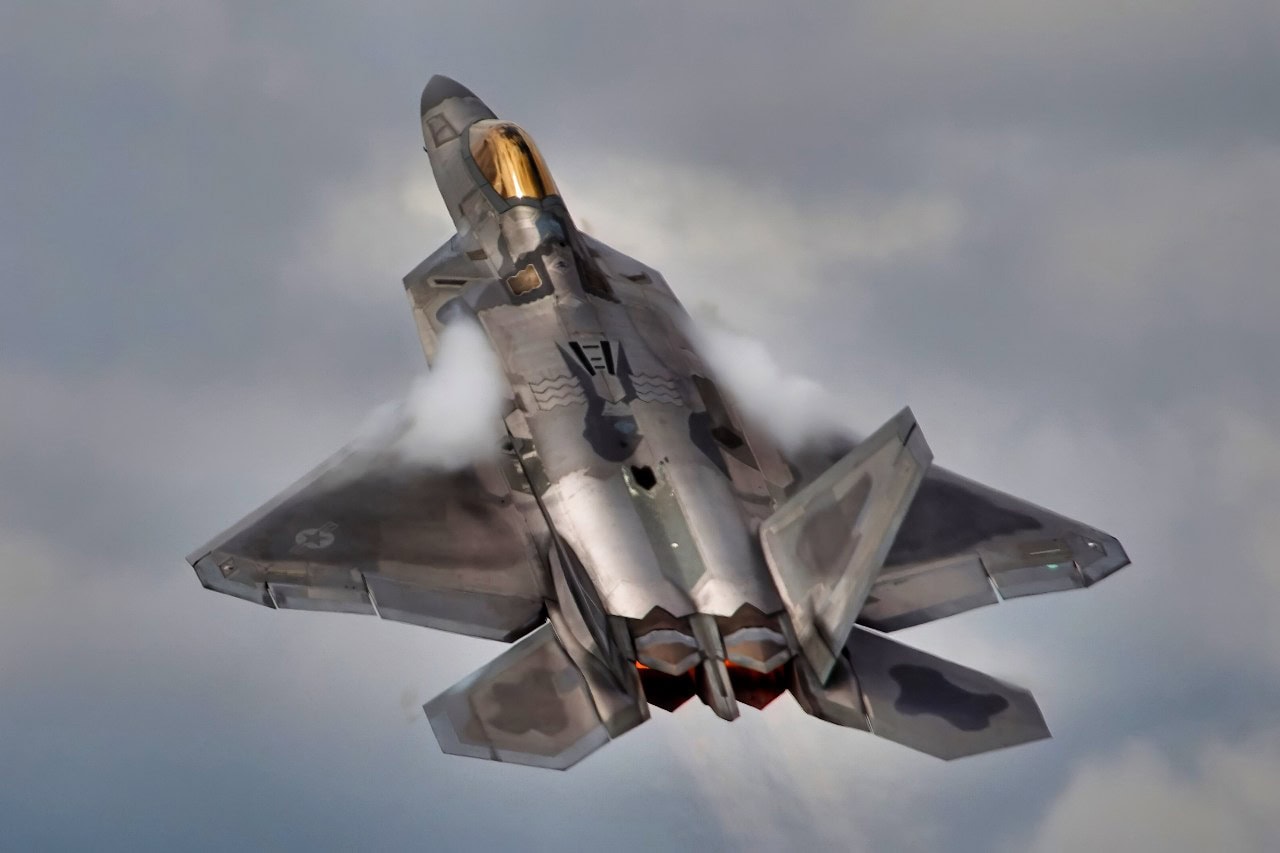
The much-vaunted Russian S-400 missile defense system, which was loudly proclaimed by Moscow to be an “F-22 and F-35 killer,” has had mixed results in combat.
The S-400 Triumf, known to NATO as the SA-21 Growler, is a long-range, road-mobile surface-to-air missile system and the successor to the older S-300 system; it has proven highly capable in certain scenarios but has also shown significant vulnerabilities in high-intensity conflicts.
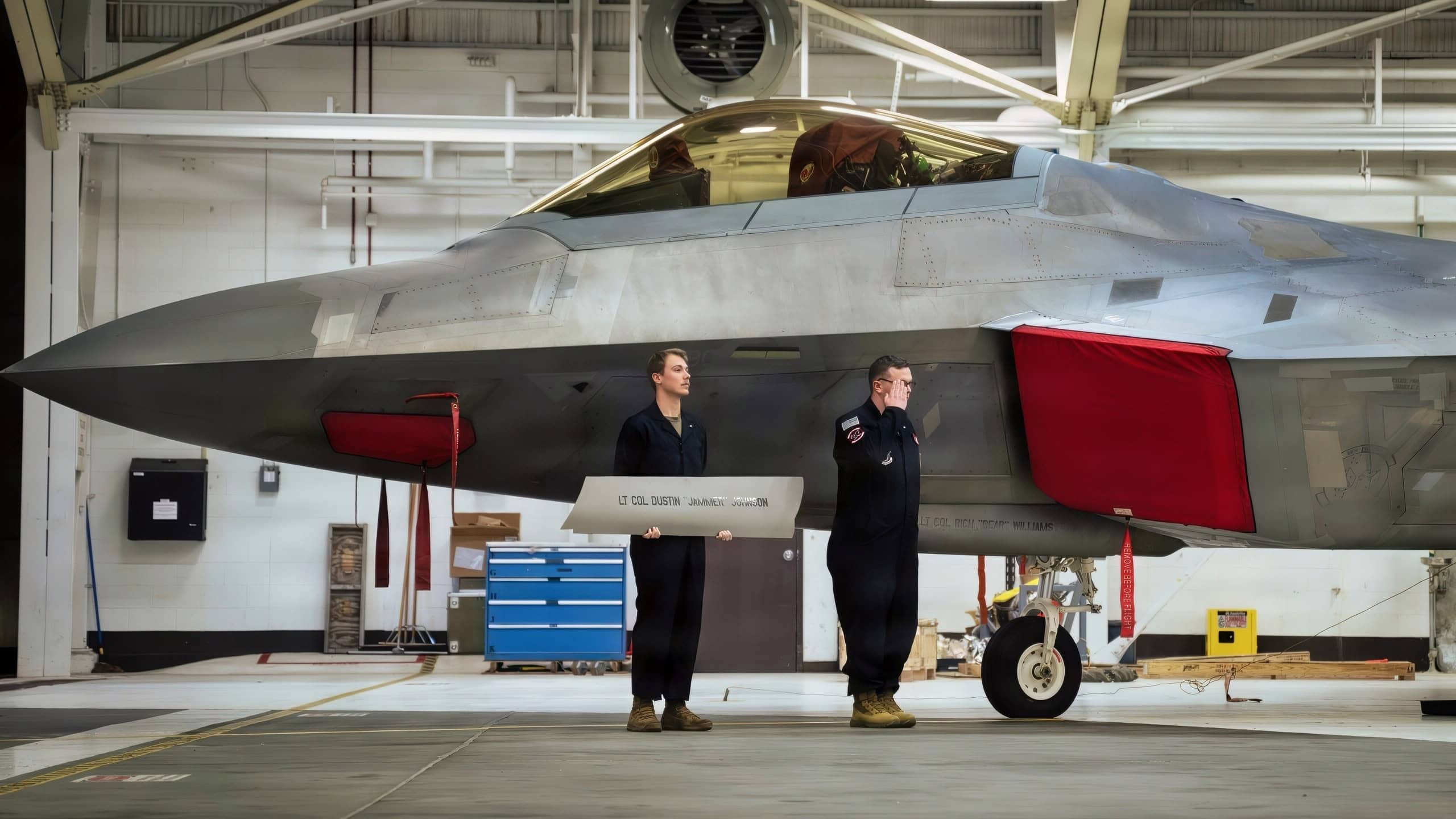
U.S. Air Force Airmen reveal the name of Lt. Col. Richard Williams, commander of the 90th Fighter Squadron, on an F-22 Raptor following the 90th FS change-of-command ceremony on Joint Base Elmendorf-Richardson, Alaska, March 16, 2026. (U.S. Air Force photo by Airman Keola Vischi)
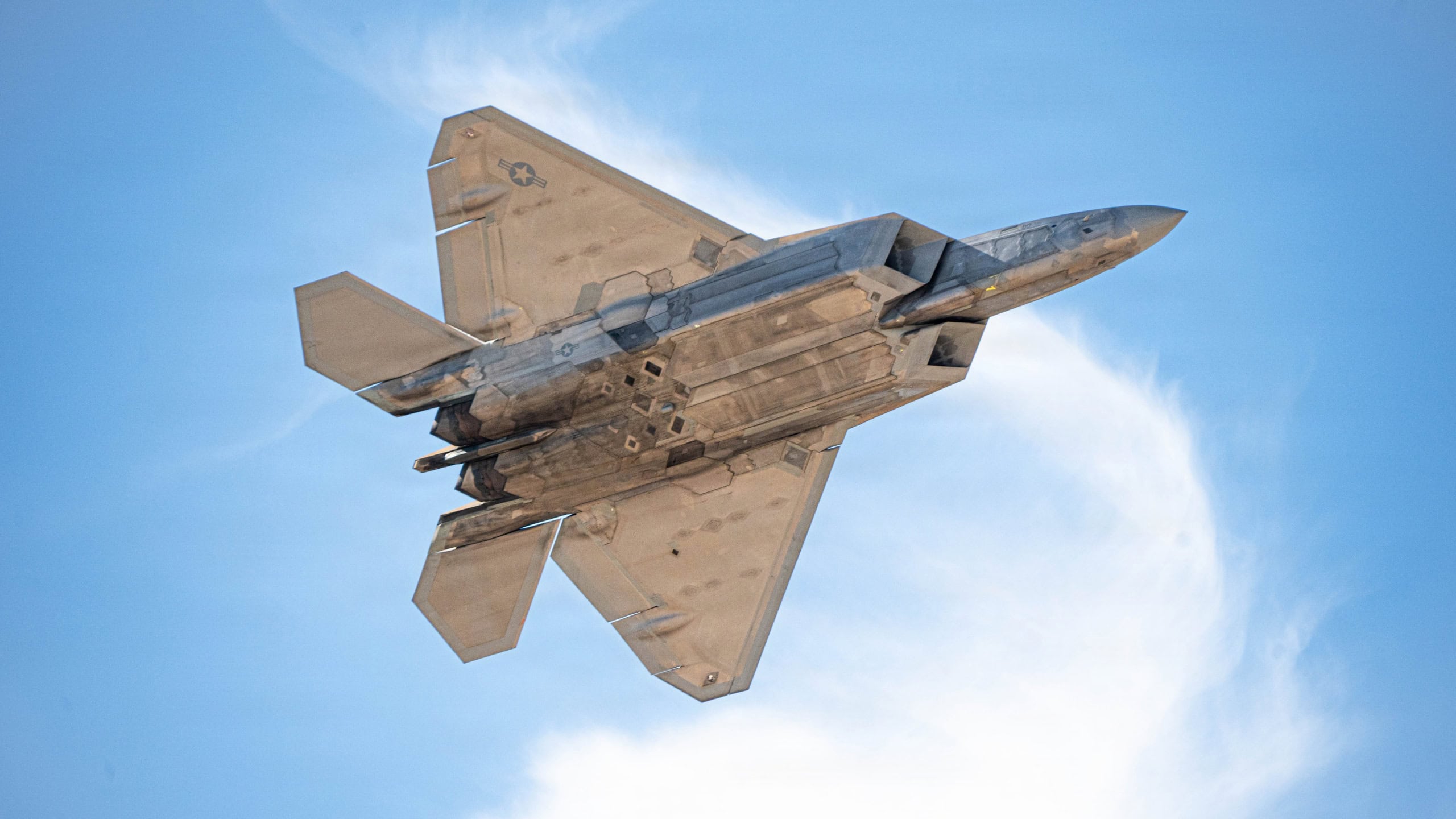
U.S. Air Force Capt. Nick “Laz” Le Tourneau, pilot and commander of the F-22 Raptor Aerial Demonstration Team, performs a practice demonstration for the 2026 Heritage Flight Training and Certification Course at Davis-Monthan Air Force Base, Arizona, Feb. 27, 2026. The Heritage Flight Training and Certification Course is an annual event where military and civilian pilots train together to fly in formations, showcasing both modern and vintage military aircraft. These flights are performed at airshows across the country to honor the service and contributions of every U.S. Airmen, past and present, while educating the general public on the importance of the U.S. Air Force and its mission. (U.S. Air Force photo by Staff Sgt Mary Bowers)
Deployed in Syria and Ukraine, it has intercepted drones, missiles, and aircraft, but has also suffered multiple, costly, and embarrassing losses to Ukrainian drone and missile strikes.
In Iran, the Israeli and US bombing campaigns destroyed Iran’s air defenses, even overflying Tehran in broad daylight. The Iranian air defenses included the older S-300 and the S-400 systems.
The S-400’s Performance In Ukraine Has Not Been Good
Russia’s S-400 is considered one of the world’s most advanced air-defense systems, but during Russia’s invasion of Ukraine, multiple units have been destroyed, including by older Western weapons that were considered lesser threats to the system.
The S-400 is considered Moscow’s equivalent to the US Patriot missile system.
In 2024, Rosoboronexport, the Russian state-owned military company that oversees most of Russia’s military exports, called it the “best long-range air defense system in the world.”
While Ukrainian forces consider the S-400’s threat to be substantial, they have shot down several missiles and have destroyed some of the systems as well.
After Early Success, Ukraine Has Destroyed S-400 systems in Crimea
Russia deployed S-400 batteries extensively to protect Crimea, frontline zones, and strategic assets, where they initially restricted Ukrainian air operations by forcing pilots to fly low or avoid defended corridors entirely.
The system also allegedly downed a Ukrainian Su-27 near Kyiv on the second day of the invasion, and Russian officials claimed the first shootdowns of Ukraine-launched ATACMS in November 2025.
The Ukrainians have done their homework and found weaknesses they can exploit. Researchers from the RAND Corporation wrote about the S-400 system and its weaknesses.
“Without over-the-horizon sensors, the S-400 and other powerful HIMADS systems are vulnerable to a low-altitude attack by cruise missiles, which, in large numbers, can overwhelm an air defense system.”
The conflict has raised serious questions about the system’s survivability when operating without adequate short-range escort systems such as the Pantsir, a limitation that affects every country currently operating the S-400.
More broadly, real-world performance varies with operator training, and the system is vulnerable to SEAD operations, electronic warfare, and saturation attacks, with stealth aircraft further complicating matters.
One missile-defense analyst noted the S-400s “seem to have struggled against Storm Shadows,” though without better insight into intercepts, it’s hard to assess with certainty.
Ukraine successfully attacked S-400 sites throughout 2023 and 2024 using drones, cruise missiles, and ballistic missiles.
Ukrainian sources claim as many as 31 S-400 batteries have been destroyed or damaged, though that figure is unverified. Strikes have continued into 2026. Ukrainian special forces hit S-400 components in Crimea in February 2026, destroying a launcher, a radar station, and supporting components, and another launcher was struck near Gvardiyske in occupied Crimea in March 2026.
The Failure Of The S-400 In Iran
During the June 2025 “Twelve-Day War,” Iran did not yet have the S-400. It was still relying on the older S-300 (largely destroyed by Israeli strikes) and its domestic Bavar-373.
Some Iranian analysts commented on the “failure” of Israel to inflict widespread destruction on Iran. Others went so far as to say that the Israeli Air Force’s F-35I ‘Adir’ stealth fighters were ‘locked on’ by Iran’s air defense radar while they were still in Iraqi airspace, en route to Iran’s border,” stated one intelligence source.
“At that moment, the Israeli stealth aircraft were several hundred kilometers from the Iraq-Iran border.”
While the Israelis did launch their missiles from over 100 miles away, the one detail that these analysts leave out is that the Israelis obliterated Iran’s air defenses. The much-hyped Russian-built S-300 anti-aircraft systems that supposedly “painted” Israeli F-35I fighters didn’t shoot down one. That is a very telling statistic
Reports say Russia delivered S-400 batteries to Iran sometime around late 2025 and early 2026, deployed near Isfahan, reportedly in exchange for Iranian drone technology.
A major new conflict broke out after joint US-Israeli strikes on February 28, 2026, which reportedly killed Iran’s supreme leader and other top officials, a much larger escalation than in 2025.
However, the results were the same: US and Israeli aircraft hammered Iran’s defenses and even flew over Tehran during daylight hours, while not losing any aircraft to the S-400.
An April 2026 report stated that Iran was still requesting more S-400s from Russia after the February 2026 air strikes exposed defense gaps, suggesting the systems it had were destroyed or insufficient, not used to notable effect.
Separately, an IRGC official publicly denied Iran ever requested the S-400 at all, claiming domestic systems were superior — so even Iranian officials have given conflicting accounts.
The S-400 has performed well in certain aspects during the war in Ukraine, while Kyiv exposed its weaknesses when the system was left exposed and not used alongside other systems.
The S-400 Triumf has been in service with the Russian military since 2007 and has been exported to or sold to countries such as Iran, India, Turkey, and China.
NATO air planners have certainly given the S-400 respect for its capabilities. It enhances Russia’s depth of defense while recognizing that it is far from invulnerable. However, it is far more exposed than its reputation suggested going into 2022.
About the Author: Steve Balestrieri
Steve Balestrieri is a National Security Columnist. He served as a US Army Special Forces NCO and Warrant Officer. In addition to writing on defense, he covers the NFL for PatsFans.com and is a member of the Pro Football Writers of America (PFWA). His work was regularly featured in many military publications.