
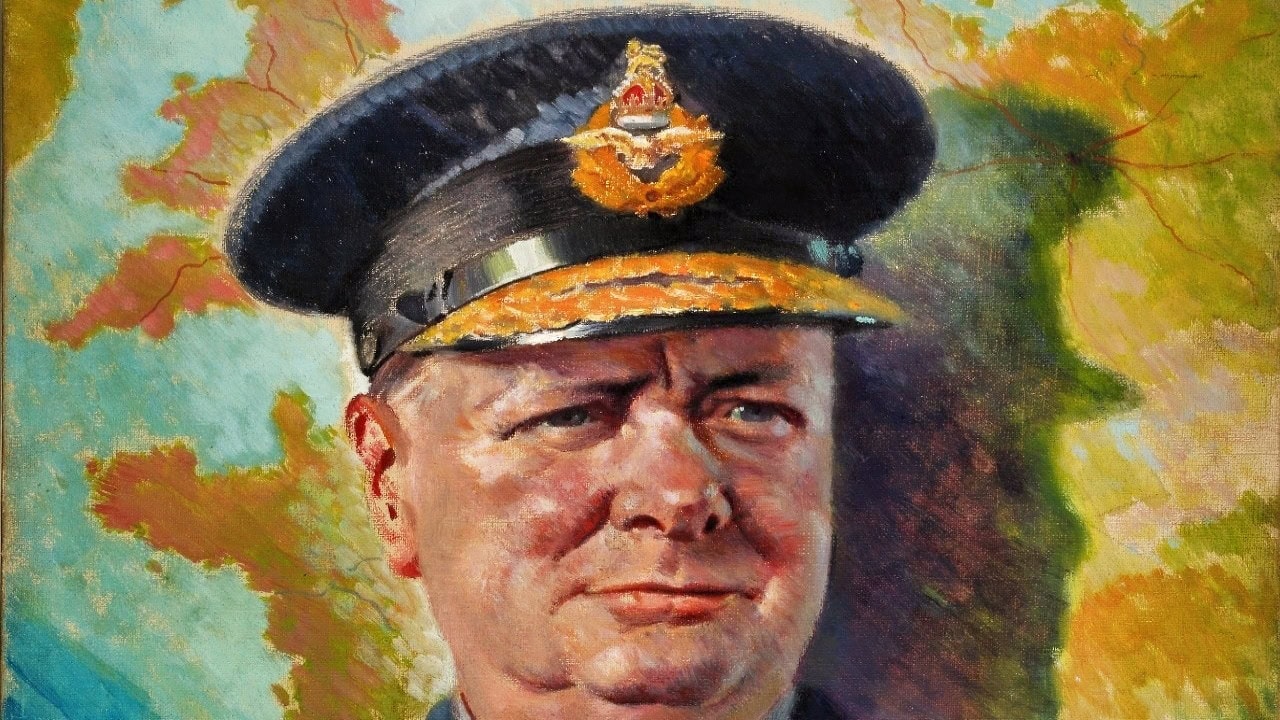
On the afternoon of August 20, 1940, with the air battle for his country’s survival raging overhead, Winston Churchill stood in the House of Commons and paid the fighting men of the Royal Air Force a tribute of fourteen words: “Never in the field of human conflict was so much owed by so many to so few.”
The anniversary of that sentence passed this week, 86 years on, and it has never been surpassed by anyone, about anyone.

Spitfire. Image Creative Commons.
The fighter pilots it described were named by it forever: the Few. What follows is the story of where the sentence came from and of what the Few were doing that same afternoon and for ten more brutal weeks to earn it.
Born in a Bunker
Know this: The sentence was not written at a desk.
Four days before the speech, on August 16, Churchill visited the underground operations room of No. 11 Group at RAF Uxbridge, the nerve center controlling the fighter squadrons defending London and the southeast, on a day when the raid plots crawled across the map table until every squadron in the group was committed and the reserve board stood empty.
Leaving the bunker, by the famous account of his chief military aide, General Hastings Ismay, Churchill told him not to speak to him, that he had never been so moved, and after several minutes of silence, produced the sentence, in nearly its final form.
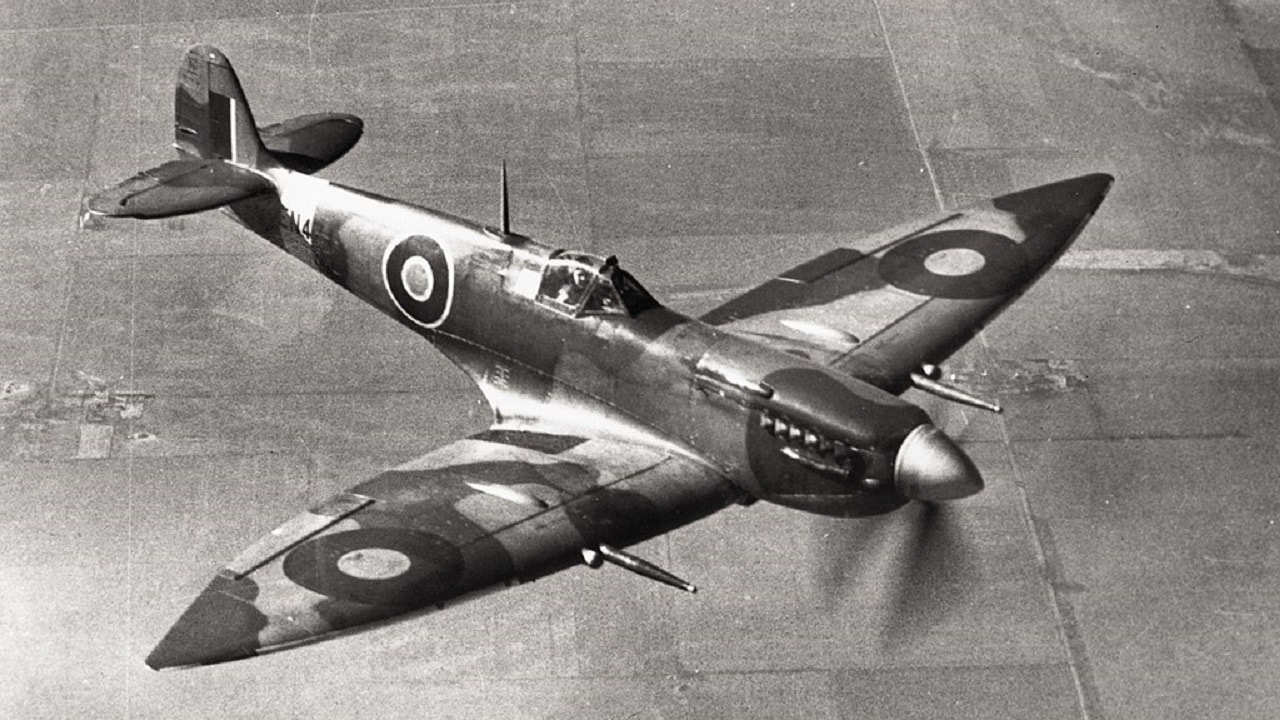
Spitfire HF Mk VII: The shape of the ellipse was altered by the extended “pointed” wing tips used by the high-altitude Mk VIs, VIIs, and early Mk VIIIs.
The polish came later, and by the story Ismay told a publisher years afterward, it came as a joke: rehearsing the speech in the car, Churchill tried a version beginning never in the history of mankind, Ismay asked what about Jesus and his disciples, and Churchill instantly narrowed it to the field of human conflict.
Even then, the line’s immortality was not obvious; the prime minister’s own private secretary, John Colville, admitted later that the line had not especially struck him at the time.
The Few themselves would decide otherwise, and so would history.
Britain Alone
The UK was in trouble for sure: France had surrendered in June; the German army stood on the Channel coast assembling invasion barges, and Hitler’s directive for Operation Sealion made the precondition explicit: the Luftwaffe, with some two and a half thousand aircraft and an unbroken record of conquest, must first destroy RAF Fighter Command.
Britain’s survival as an unconquered base, and with it any future liberation of Europe, rested on the officially recognized 2,937 pilots and aircrew of the RAF and Fleet Air Arm who flew in the battle, most of them in their early twenties, some with only weeks of operational training, flying four, five, six sorties a day from grass fields and sleeping in the dispersal huts between scrambles.
And the Few were never only British: men of more than a dozen nations flew in the battle, Canadians, Australians, New Zealanders, South Africans, Americans who crossed the border to enlist, Czechs, and above all the Poles, whose No. 303 Squadron entered the fight on the last day of August and became Fighter Command’s top-claiming squadron with 126 credited kills, while the battle’s highest-scoring pilot, Josef Frantisek, was a Czech flying in Polish company.
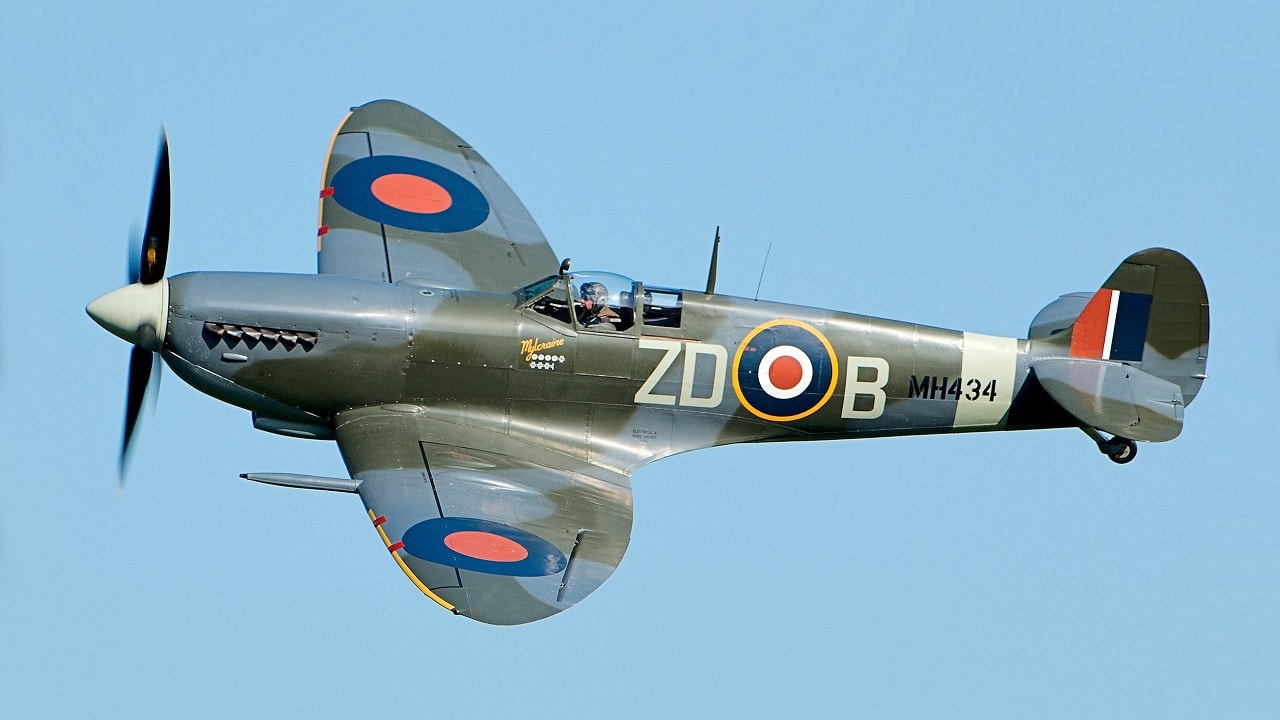
Spitfire MH434 at the Shuttleworth Collection Season Premiere Airshow 2018. Image Credit: Creative Commons.
The commander of Fighter Command, Hugh Dowding, later reflected that without the Polish squadrons, he could not say the outcome would have been the same.
The System and the Fight
The Few had a secret partner: the ground. Dowding had spent years building the world’s first integrated air-defense network, the Chain Home radar towers watching the sea approaches, some 30,000 Observer Corps volunteers tracking raids inland, and the filtered plots flowing through sector operations rooms, many of them worked by the young women of the WAAF moving counters across the map tables, that scrambled squadrons with minutes to spare.
The system meant British fighters did not patrol and hope; they rose when and where it mattered, multiplying every pilot, the Hurricanes taking the bombers while the Spitfires held off the escorts.
The Luftwaffe opened its main offensive, Eagle Attack, on August 13, and from mid-August it hammered the fighter airfields themselves in the battle’s crisis phase, convinced Fighter Command was on its knees.
It was closer to the truth than Britain liked: the airfields burned, and the exhausted squadrons thinned. But the Germans consistently misread the system’s resilience, which kept replacing pilots, repairing fields, and reading their raids on radar, which they never managed to blind.
Then chance intervened: on the night of August 24, lost German bombers dropped their loads on London by mistake, the RAF struck Berlin in retaliation the next night, and an enraged Hitler shifted the Luftwaffe’s weight from the airfields to London on September 7.
The switch began the Blitz’s long agony for the city’s civilians, and it reprieved Fighter Command at the moment of greatest strain.
On September 15, remembered ever since as Battle of Britain Day, the Luftwaffe launched its maximum effort against London and was met, wave after wave, by massed squadrons that were supposed to be destroyed; two days later, Hitler postponed Sealion indefinitely. The invasion of Britain never came.
The Cost, and the Debt
The arithmetic of the tribute is exact. Of the 2,937 who flew, 544 were killed during the battle itself, roughly one in six, at an average age barely past twenty, and hundreds more of the survivors would die before the war ended.
They and their system destroyed German aircraft by the hundreds upon hundreds, inflicted on Nazi Germany its first defeat of the war, and preserved the one island from which the liberation of Europe could ever be staged; every convoy that gathered in British ports, every bomber stream that rose from British fields, and the armada that sailed for Normandy four years later launched from the base the Few kept in the war.
Churchill’s speech said the rest of it plainly, telling the Commons that the gratitude of every home in the island and across the world went out to the airmen turning the tide of the war, and the nation agreed: the sentence went onto the commemorative posters while the war still ran, and it has been carved, quoted, and borrowed ever since.
The men it named wore it with the deflecting humor of their trade, and the ranks beneath the aces, the riggers and fitters and armorers and the plotters in the sector rooms, made the flying possible without ever sharing the name.
The Few themselves have now flown on: the last of them, Group Captain John “Paddy” Hemingway, died in March 2025 at the age of 105, which makes this the first anniversary the sentence has stood entirely on its own.
Eighty-six years later, it still does what it did on August 20, 1940. It counts the debt without pretending it can be paid, fourteen words long, with the smallest word at the end carrying all of it.
About the Author: Harry J. Kazianis
Harry J. Kazianis (@Grecianformula) was the former Senior Director of National Security Affairs at the Center for the National Interest (CFTNI), a foreign policy think tank founded by Richard Nixon based in Washington, DC. Harry has over a decade of experience in think tanks and national security publishing. His ideas have been published in the NY Times, The Washington Post, The Wall Street Journal, CNN, and many other outlets. He has held positions at CSIS, the Heritage Foundation, the University of Nottingham, and several other institutions related to national security research and studies. He is the former Executive Editor of the National Interest and the Diplomat. He holds a Master’s degree focusing on international affairs from Harvard University.

