
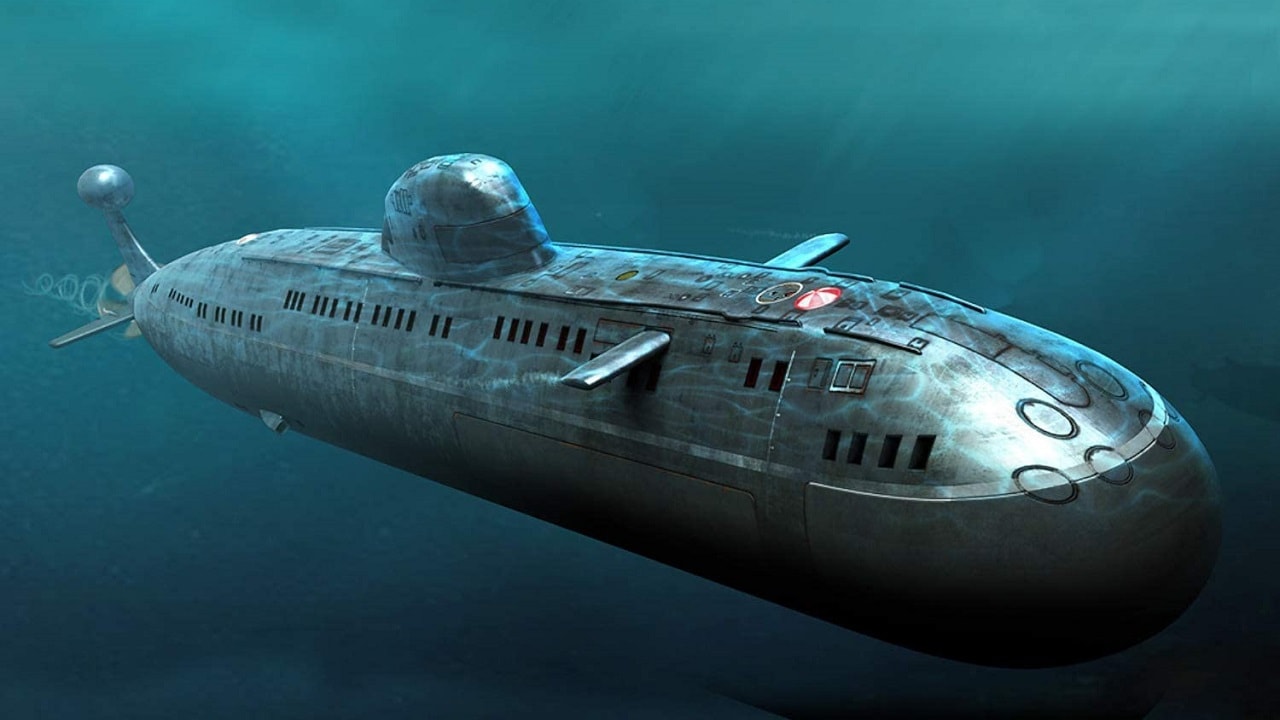
On the night of March 21, 1984, one of the tensest moments of the late Cold War played out not in a diplomatic standoff or a missile crisis, but in the cold waters of the Sea of Japan, when a Soviet nuclear-powered attack submarine surfaced directly beneath an American aircraft carrier.
The U.S. aircraft carrier USS Kitty Hawk (CVA-63) collided with the Soviet nuclear-powered attack submarine K-314 in the Sea of Japan during joint military exercises.
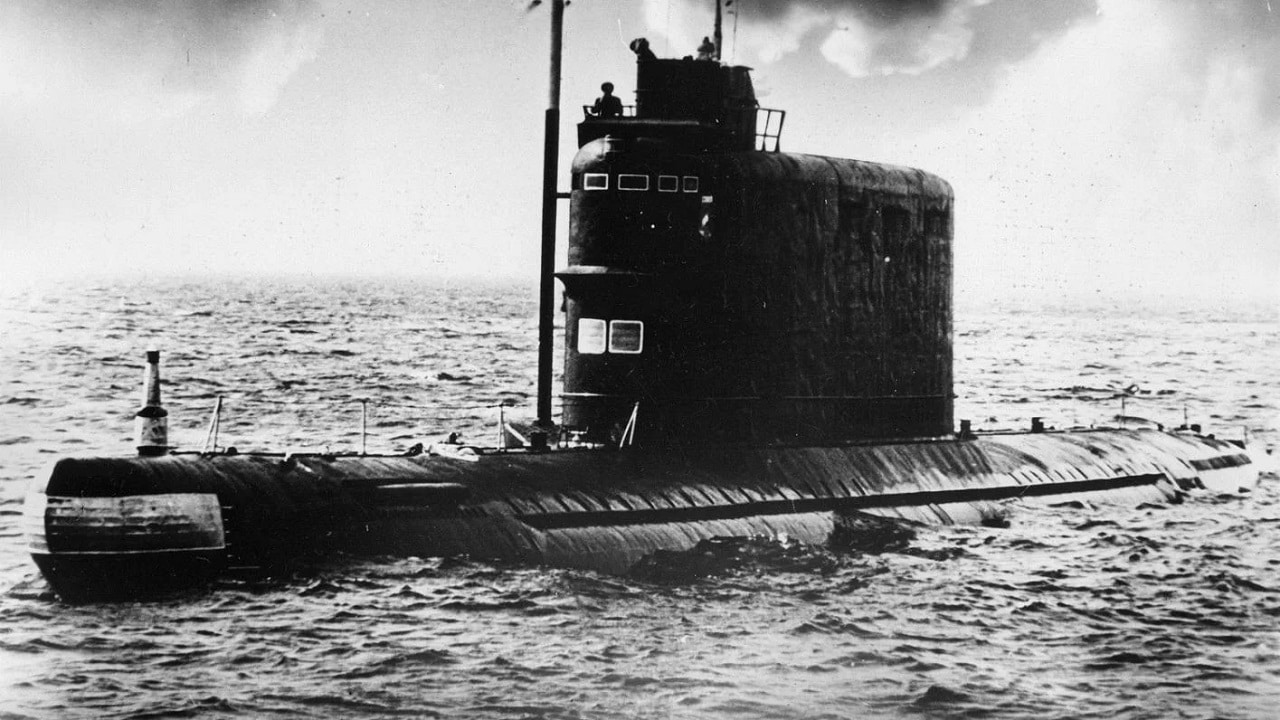
Russian Golf-II Class Submarine. Image Credit: Creative Commons.
Both vessels survived the accidental Cold War impact with minor to moderate damage. Each side blamed the other for poor seamanship and violating navigation safety rules.
A Game of Cat and Mouse
The USS Kitty Hawk, an 80,000-ton supercarrier carrying 85 aircraft, was steaming through the Sea of Japan with an escort of eight ships, taking part in Team Spirit ’84, a joint U.S.–South Korean military exercise. The carrier had entered the Sea of Japan that March to participate in the joint drills.
Shadowing the American battle group was the K-314, a Soviet Victor I-class nuclear attack submarine. The vessel belonged to Project 671, code-named “Yorsh” by the Soviets and known to NATO as the Victor I class.
Trailing American carrier groups to gather intelligence and rehearse wartime tactics was standard practice during the Cold War, and by this point K-314 had already been tracked repeatedly by the carrier group’s anti-submarine forces.
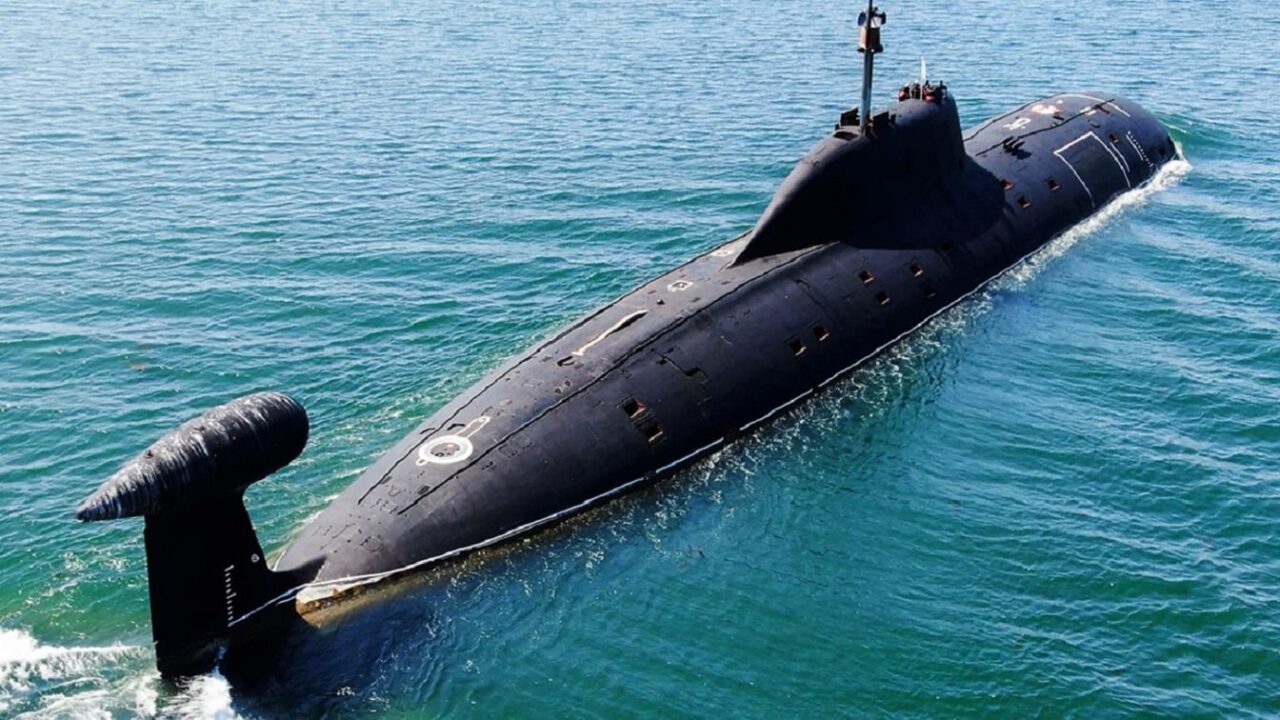
Russian nuclear attack submarine back in 2016. Image credit: Creative Commons.
“They play cat and mouse with us all the time,” said one officer. Others noted that Soviet submarines appear to test American anti-submarine devices,” the 1984 article said, quoting a United States Navy officer.
A Navy program director later noted that helicopters from the battle group had detected the submarine over the previous three days and “killed” it in simulation more than fifteen times.
But sometime before the collision, they lost that contact. Pentagon officials said the carrier’s anti-submarine helicopters, aircraft, and escorts had broken sonar contact with the sub roughly two hours earlier, after Kitty Hawk was ordered to head toward the Yellow Sea, and officials noted that maintaining a round-the-clock watch on a shadowing Soviet submarine wasn’t considered necessary in peacetime.
The Collision
At around 10:05 p.m., K-314 attempted to surface and came up almost directly in the carrier’s path.
Investigators later concluded that the carrier had run over the stern of the submarine as it was surfacing, because a submarine’s sonar has a blind spot directly behind it caused by its own engine noise, leaving the Soviet crew apparently unaware that the carrier was there.
A former U.S. submariner has since suggested the K-314 crew likely relied on passive sonar while shadowing the carrier group rather than risking an active sonar sweep that would have given away their position, a choice that may have left them blind to how close they actually were.
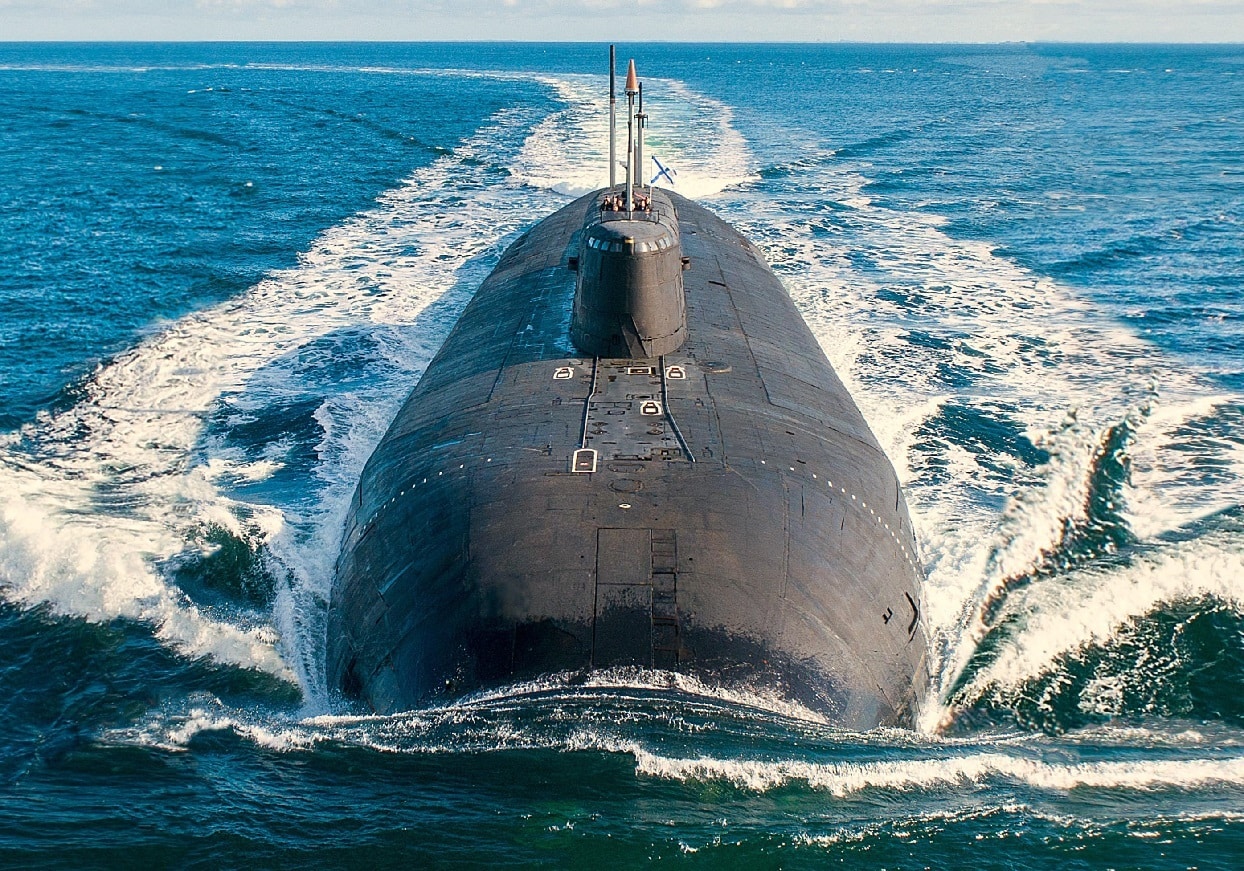
Image of an Russian Oscar-class Submarine. Image Credit: Creative Commons.
Kitty Hawk’s commanding officer, Captain David N. Rogers, described the moment starkly: the crew felt “a sudden shudder, a fairly violent shudder.” A starboard lookout saw the silhouette of a submarine’s sail slipping away in the darkness without running lights.
He immediately ordered helicopters into the air to check on the submarine, though from the air it initially appeared to have suffered no extensive damage.
American officials placed the blame squarely on the Soviet vessel, largely because it had apparently not been displaying navigation lights, as required by international maritime rules.
Officials said the submarine had failed to turn on its lights and that a surfacing vessel is generally required to give way to a ship already underway.
Both Ships Suffered Damage
The two vessels came away from the encounter in very different shape. K-314 got the worst of it: its propeller was heavily damaged in the collision, leaving the submarine unable to move under its own power.
A U.S. frigate, the USS Harold E. Holt, stood by the crippled submarine for several days until the Soviets could dispatch a seagoing tug to tow it home.
Kitty Hawk suffered a gash in its bow. The impact tore a hole in the carrier’s hull, spilling several thousand tons of jet fuel into the sea, and remarkably, the fuel did not ignite, nor did any of the nuclear weapons aboard either vessel detonate.
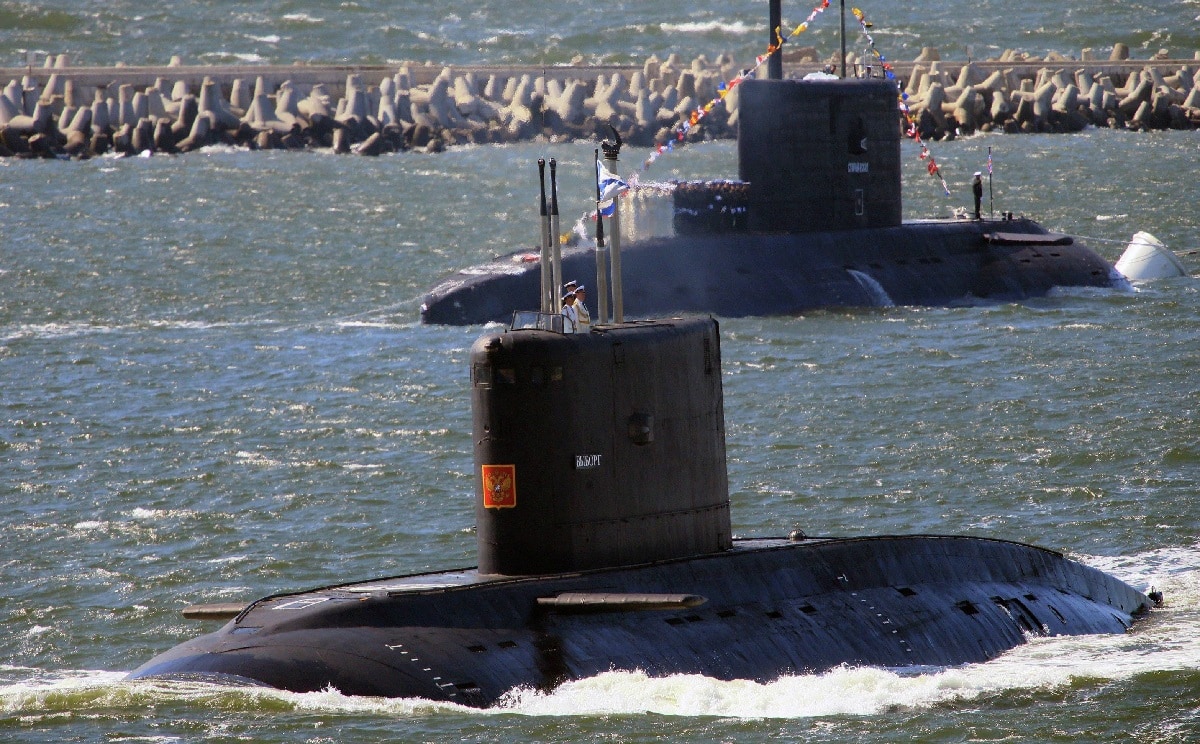
Russian Submarines. Image: Creative Commons.
A Pentagon spokesman said at the time that the carrier was taking on water because of damage to a jet-fuel tank near the waterline on its starboard bow, though the damage wasn’t severe enough to halt normal operations.
The USS Kitty Hawk completed repairs at Subic Bay in the Philippines before returning to San Diego that August.
An Unexpected Intelligence Windfall
The collision left the U.S. Navy with an unplanned prize. When Kitty Hawk was inspected after the incident, a piece of K-314’s propeller blade and a section of its anechoic hull coating, the rubberized tiles submarines use to absorb sonar pings and reduce their acoustic signature, were found stuck to the carrier’s hull.
For American naval intelligence, recovering even a fragment of Soviet submarine-quieting technology was a significant, if accidental, gain.
Aftermath for the Crews
The human cost of the collision fell almost entirely on one man: K-314’s captain, Vladimir Evseenko.
He was removed from submarine command and reassigned to duty on land, a verdict he disputed, arguing that no lives had been lost and that “everybody was lucky.
We even managed to kick out the ‘enemy’ for a long time,” he added.
Soviet naval command, however, rightfully treated the near-disaster as a failure of command judgment rather than misfortune.
K-314 itself was repaired and returned to service, even completing a long deployment to the Indian Ocean in 1985 before being retired from the fleet later in the decade. Kitty Hawk remained in commission for another 25 years, serving until 2009.
The incident stands as one of several close calls between American and Soviet naval forces during the Cold War, a reminder of how routinely, and how dangerously, the two superpowers’ navies operated in close proximity to one another, and how narrowly a peacetime accident avoided becoming something far worse.
About the Author: Steve Balestrieri
Steve Balestrieri is a National Security Columnist. He served as a US Army Special Forces NCO and Warrant Officer. In addition to writing on defense, he covers the NFL for PatsFans.com and is a member of the Pro Football Writers of America (PFWA). His work was regularly featured in many military publications