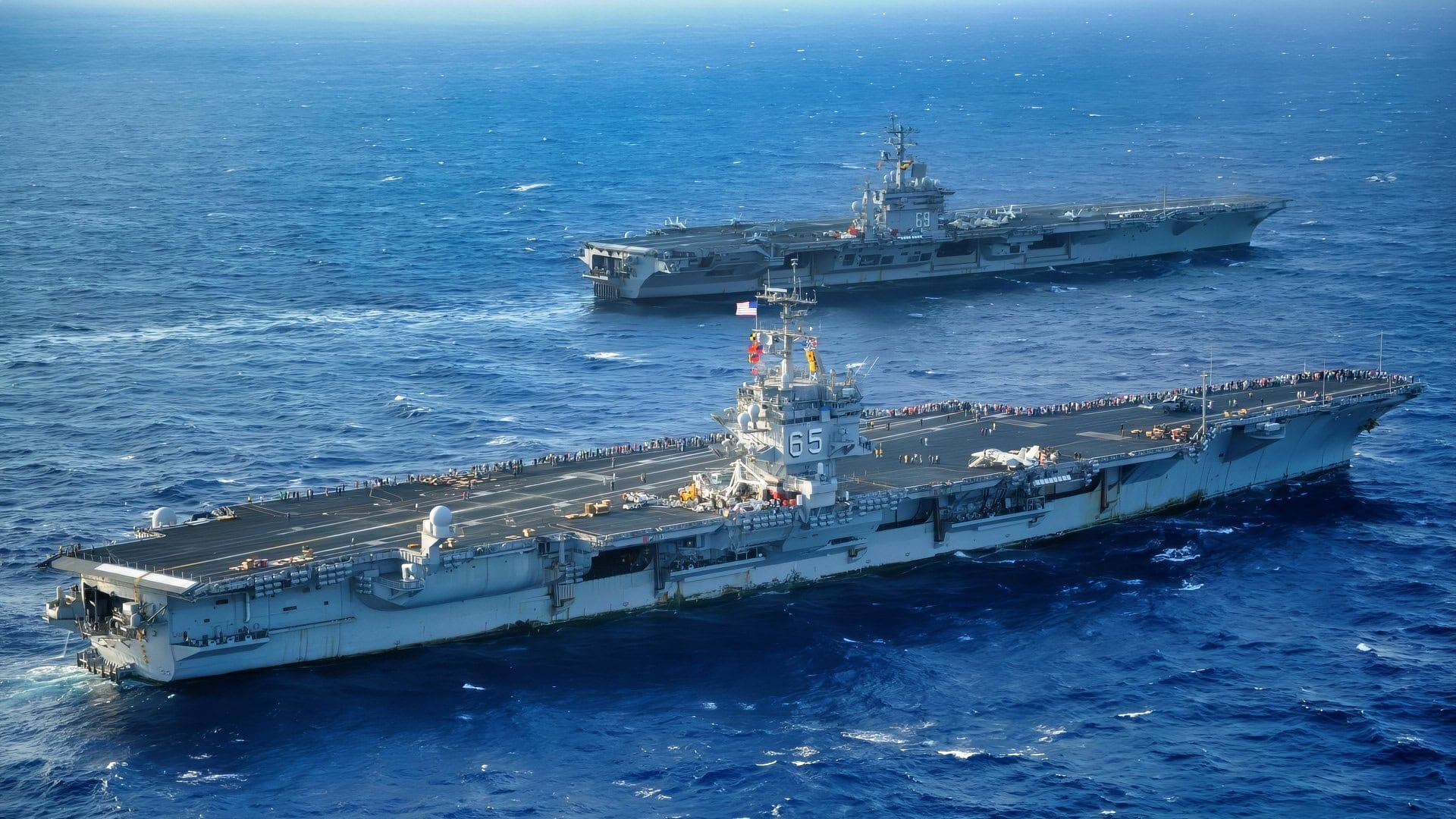
The USS Enterprise (CVN-65) was the world’s first nuclear-powered aircraft carrier. An iconic and historic warship for the United States Navy, it now sits at the waterfront facilities of Modern American Recycling and Radiological Services in Mobile, Ala., where the commercial dismantling of the nuclear-powered ship will occur.
It is the first time that a nuclear-powered US warship will be commercially scrapped rather than handled strictly by US Navy shipyards.
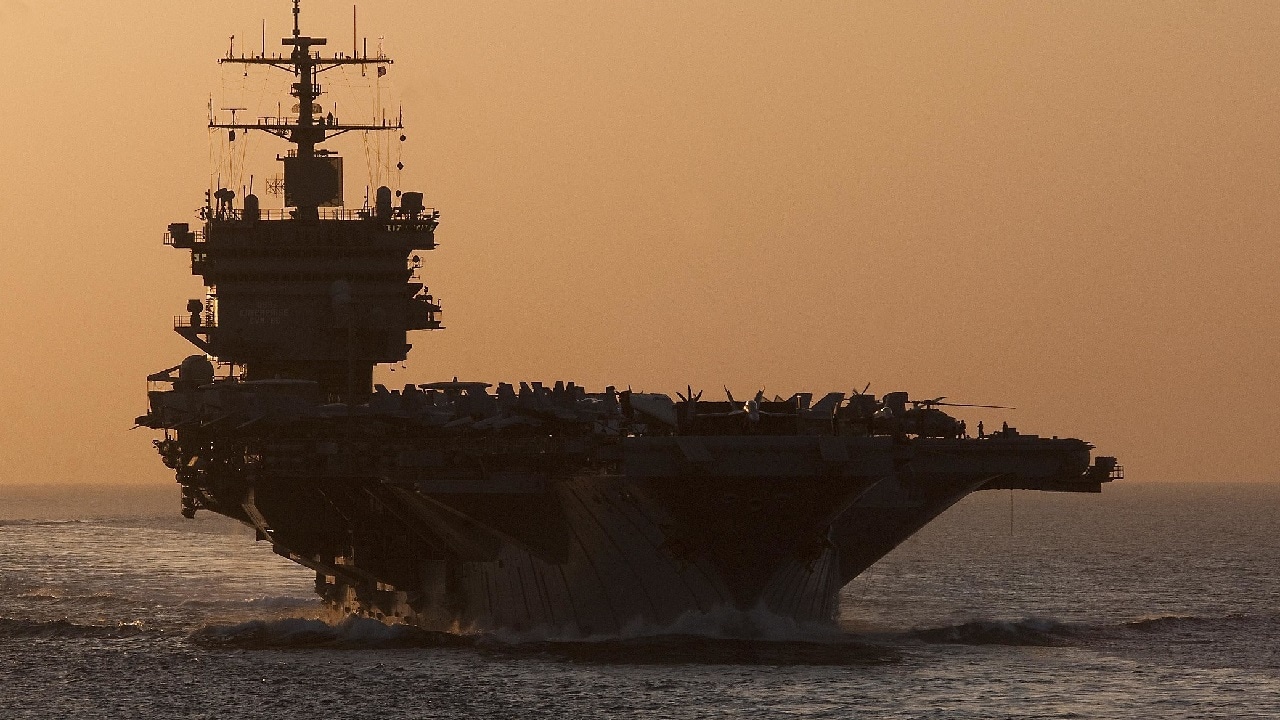
The aircraft carrier USS Enterprise, right, the guided-missile destroyer USS Porter (DDG 78) and the guided-missile cruiser USS Vicksburg (CG 69) transit back to their homeport of Norfolk, Va. Enterprise, Porter and Vicksburg are returning from a deployment to the U.S. 5th Fleet area of responsibility, where the ship conducting maritime security operations, theater security cooperation efforts and support missions for Operation Enduring Freedom.
The USS Enterprise featured eight separate Westinghouse A2W nuclear reactors. Nimitz-class carriers (and the Gerald R. Ford-class) use only two.
Enterprise’s spent nuclear fuel was removed years ago.
Yet, the massive reactors, their structural parts, and even some low-level radioactive waste remain.
Workers at the dismantling facility in Alabama must therefore carefully and systematically segment, package, and remove the hazardous waste to licensed radioactive disposal facilities in Texas.
A Civilian Task?
Meanwhile, the Mobile facility is cutting down the structural steel and metals for recycling.
In fact, some of the Enterprise’s steel plating is being repurposed for the next-generation Ford-class carrier that shares the name USS Enterprise (CVN-80).
The Navy awarded a firm-fixed-price contract for $418.5 million to NorthStar Maritime Dismantlement Services to completely break the vessel down.
The overall bill includes $902 million for initial inactivation and defueling phases, with another $111 million for long-term pier-side storage while the ship has sat awaiting dismantlement since 2012.
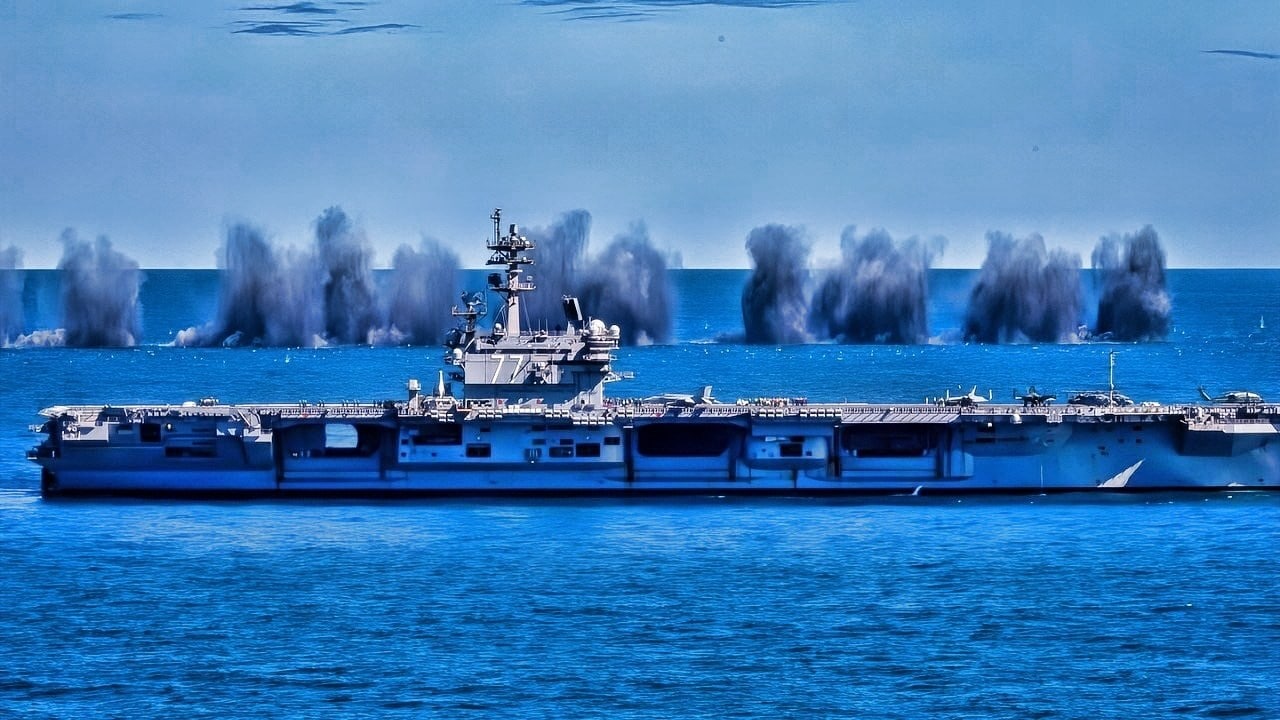
Nimitz-Class Aircraft Carrier at Sea. Image Credit: Creative Commons.
Sticker shock has dominated the dismantlement process of the nuclear-powered Enterprise–especially when considering that the disposal cost is more than three times the original cost to build the ship in 1961 ($451 million).
This is a snapshot of how much harder it will be to decommission the Nimitz-class carriers as the Gerald R. Ford-class carriers come online.
What’s more, the naval shipyard crisis is forcing the Navy to become more creative in terms of dismantling its aging nuclear-powered Nimitz-class carriers.
Luckily, these carriers have fewer (and newer) nuclear reactors than the old USS Enterprise.
Still, the USS Enterprise’s more complex dismantlement, along with the political and environmental concerns surrounding it, is proving more difficult than originally thought.
The use of a civilian shipbreaker rather than a traditional US Navy one also highlights the deterioration of America’s public shipyards that so many have fretted over.
It is likely smart for the US to build its capacity to use both public and private shipyards.
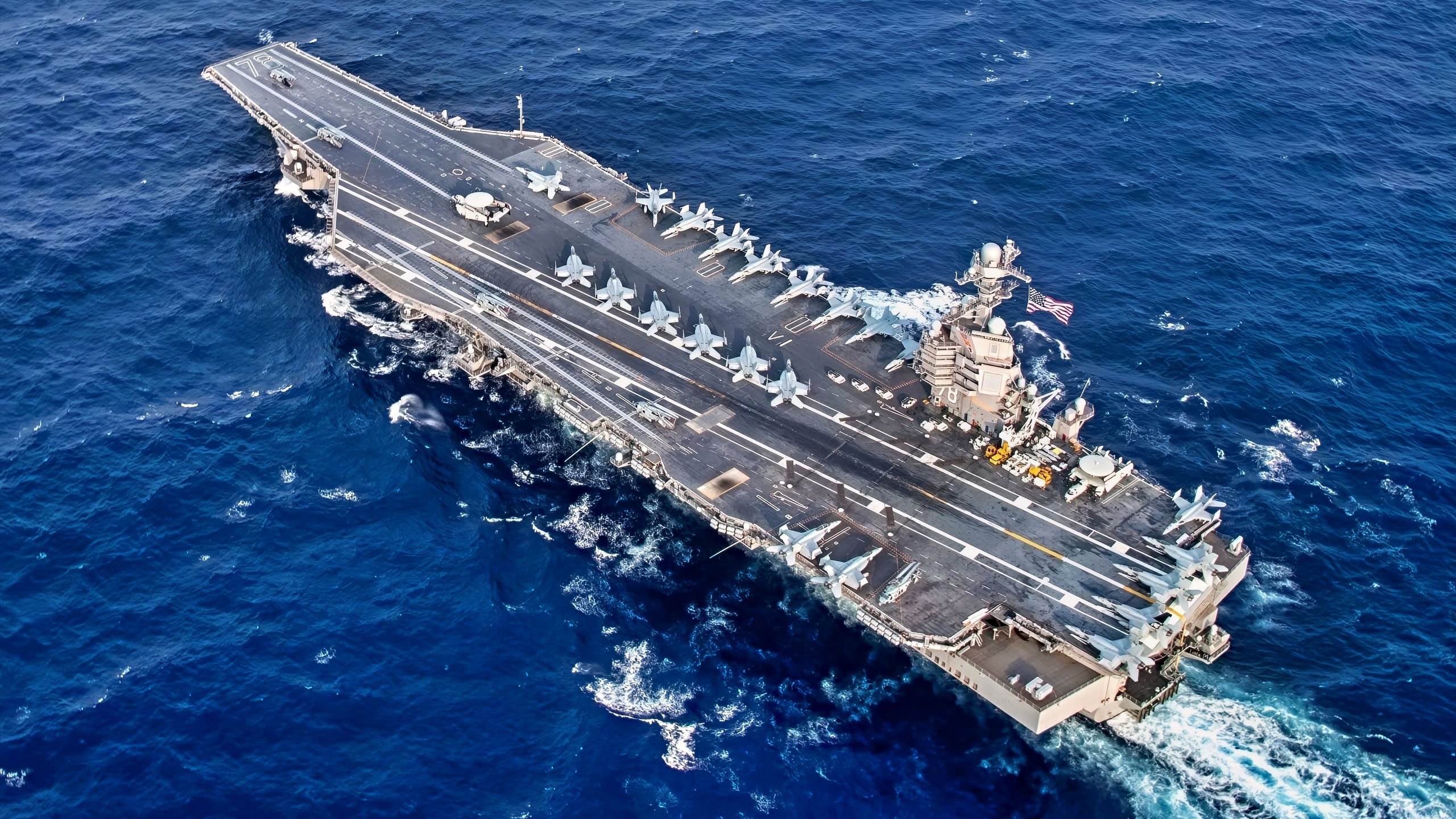
The Ford-class aircraft carrier USS Gerald R. Ford (CVN 78) and the Nimitz-class aircraft carrier USS Harry S. Truman (CVN 75) transit the Atlantic Ocean June 4, 2020, marking the first time a Ford-class and a Nimitz-class aircraft carrier operated together underway. Ford is underway conducting integrated air wing operations, and the Harry S. Truman Carrier Strike Group remains at sea in the Atlantic as a certified carrier strike group force ready for tasking in order to protect the crew from the risks posed by COVID-19, following their successful deployment to the U.S. 5th and 6th Fleet areas of operation. (U.S. Navy photo by Mass Communication Specialist Seaman Riley McDowell)
But the cost and the time it has taken for the facility in Mobile to break down America’s oldest nuclear-powered carrier, the USS Enterprise, is an example of how uncharted the waters are for breaking down nuclear-powered carriers.
How It Impacts the Nimitz-Class Dismantlement
Naval planners intend for their deal with NorthStar to serve as a pilot program for when the Nimitz-class carriers need to be totally scrapped.
Right now, there are some hurdles to overcome. But that’s why the Navy is doing this with the antique USS Enterprise.
The idea is smart and will likely lead to a smoother process as the Navy begins dismantling the decommissioned Nimitz-class carriers.
Rather than taking 15 years to break apart, the Navy envisions its partnership with private shipyards taking just 5 years.
So, if it all works out, the Navy will have made the better choice.
Of course, the Enterprise breakdown will be the most difficult and costly simply because the Navy has never used the civilian shipyards for such a complex undertaking.
At the same time, the naval shipyard crisis is unlikely to be overcome anytime soon.
Therefore, the Navy is forced to rely upon these unproven methods–especially as it breaks down more carriers.
What Next?
Interestingly, the Navy assesses that the all-in price tag for the Nimitz-class dismantlement will be significantly lower than that for the USS Enterprise, not only because the Navy will work out the kinks in dismantling nuclear-powered carriers with the Enterprise dismantlement, but also because the Nimitz-class has fewer nuclear reactors.
Dismantling each Nimitz-class carrier will likely cost between $1.3 billion and $1.43 billion. The USS Dwight D. Eisenhower and USS Carl Vinson are slated to be taken apart next.
About the Author: Brandon J. Weichert
Brandon J. Weichert is the Senior National Security Editor at 19FortyFive.com. He also manages The Weichert Brief on Substack. Weichert also hosts “National Security Talk” on Rumble. He is the author of four bestselling national security books, the most recent of which is A Disaster of Our Own Making: How the West Lost Ukraine (Encounter Books). Follow him via Twitter/X @WeTheBrandon.