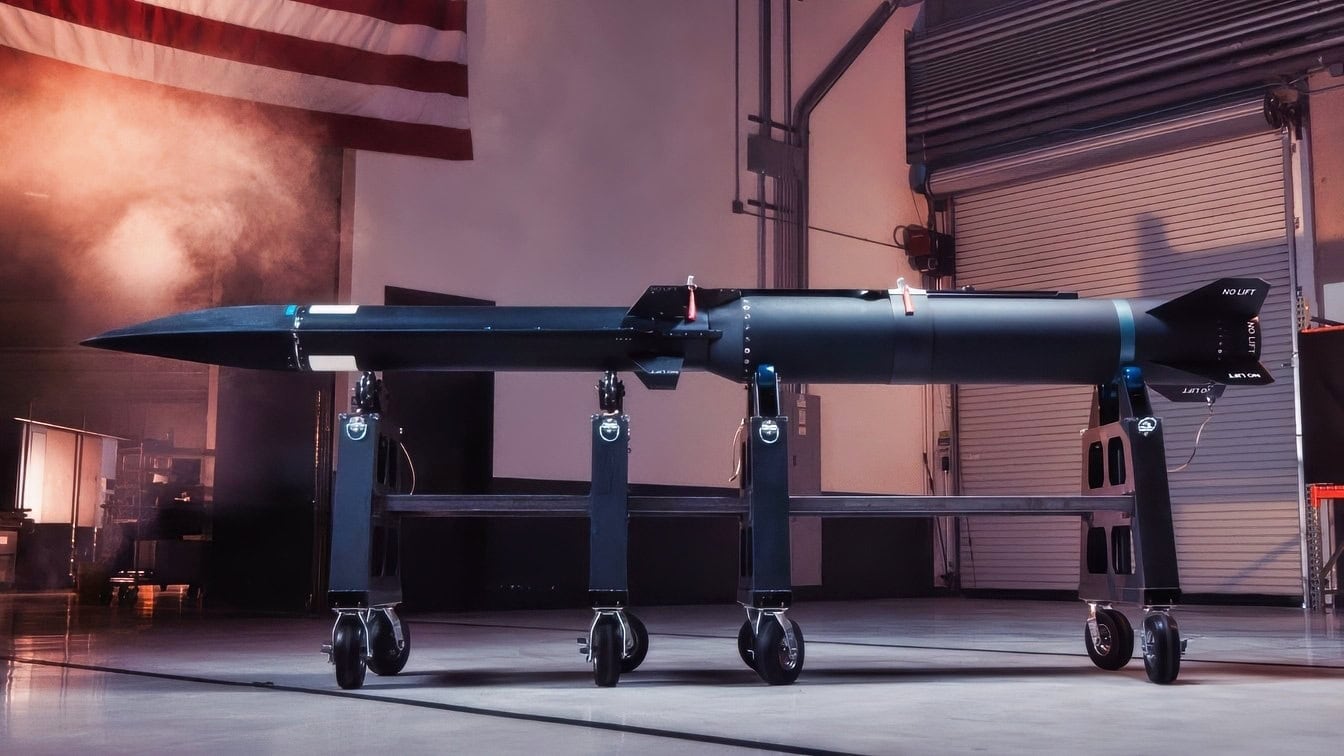
The United States Navy awarded Castelion, a Torrance, California-based startup, nearly $90 million to further develop its Blackbeard hypersonic missile and advance it toward Early Operational Capability, which includes the production of 50 prototype missiles. The firm publicly revealed its missile on social media last week, posting an image of the Blackbeard missile to X, formerly Twitter.
The Blackbeard Missile: A Mach 5 Missile Game Changer?
The company’s Blackbeard is touted as a low-cost, long-range hypersonic missile that can be manufactured quickly and cheaply in the thousands, with mass production the central pillar of the company’s pitch — and likely a prime reason it was awarded a development contract by the U.S. Navy.
Though initially tested on land-based platforms, the U.S. Navy is reportedly very interested in integrating the munition into carrier-based aviation, particularly the F/A-18E/F Super Hornet fleet.
So too is the U.S. Army keen to equip its HIMARS rocket artillery with the Blackbeard missile, which could lead to eventual buy-in by the U.S. Marine Corps as well, since they also operate HIMARS batteries. Given the Blackbeard’s speed — Mach 5, or five times the speed of sound — it has the potential to give the U.S. Navy’s older, fourth-generation aircraft a potent offensive capability despite their pre-stealth vintage, and a rapid first-strike potential from the ground.
A large part of the Blackbeard’s appeal is its relatively inexpensive per-unit cost, a price tag that Castelion aims to keep below $500,000 per round — a remarkable feat if it can be achieved.
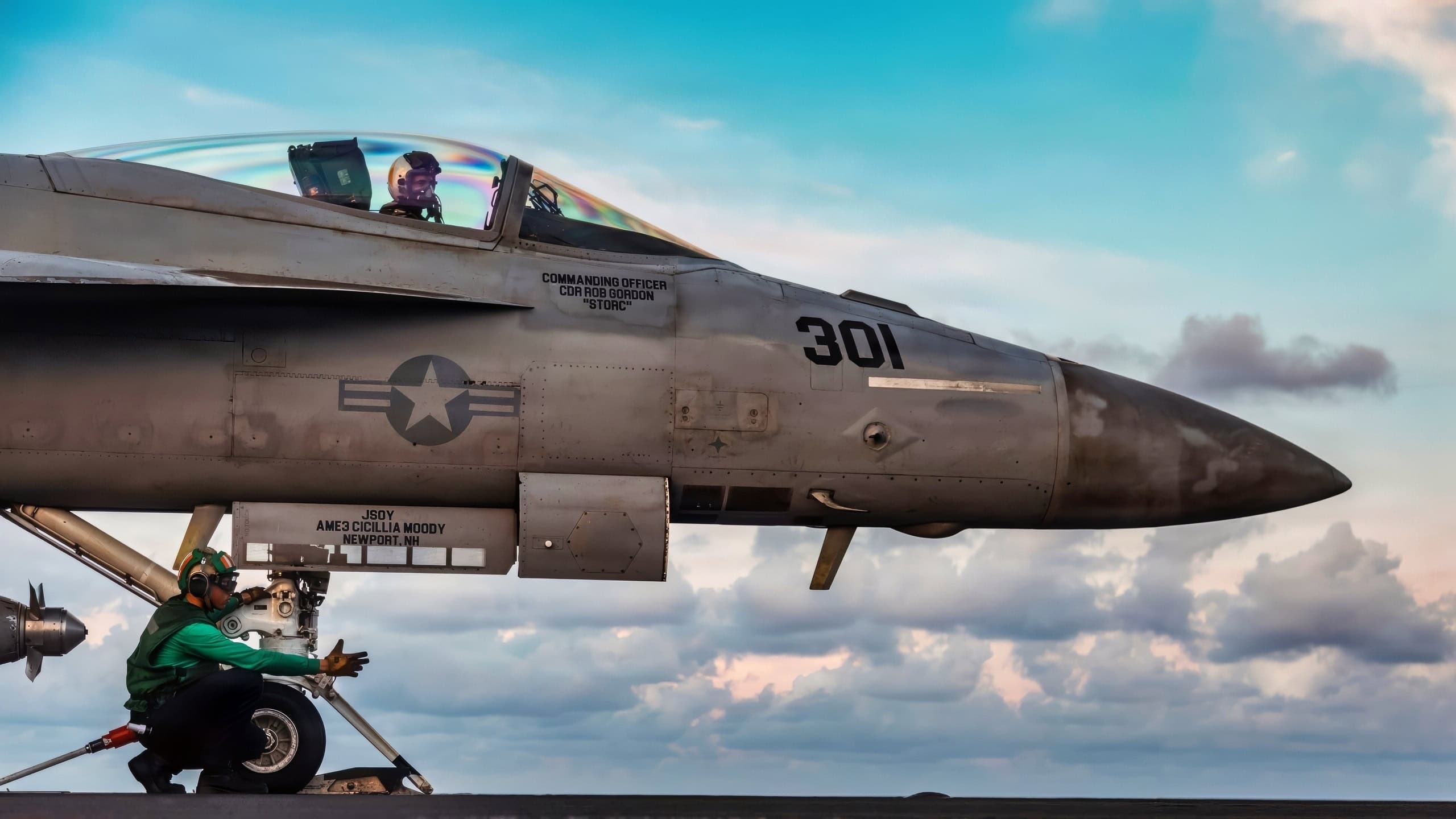
A U.S. Sailor performs a safety scan of the catapult track as an F/A-18E Super Hornet aircraft positions for launch from the flight deck while underway in the Caribbean Sea, Nov. 25, 2025. U.S. military forces are deployed to the Caribbean in support of Operation Southern Spear, the U.S. Southern Command mission, Department of War-directed operations, and the president’s priorities to disrupt illicit drug trafficking and protect the homeland. (U.S. Navy photo)
High Price Tags
Thanks to the ongoing wars in Ukraine and Iran, gaps in the United States defense industrial base have become strikingly clear.
Though most apparent in the Patriot air-defense interceptors used by Ukraine and allies of the United States in the Middle East to protect cities and other sites from ballistic missiles and other munitions, their production chains reflect how complex and costly cutting-edge weapons — both defensive and offensive — are to produce.
Take, for example, the PAC-3 MSE Patriot interceptor, manufactured by Lockheed Martin, an American defense prime.
That interceptor is made up of a hit-to-kill vehicle assembled around a solid-fuel rocket motor. But it is much more than just that — inertial navigation, an active radar seeker, control actuators, and an onboard computer. But the Patriot is an incredibly complex system to build, and more than 400 firms are part of the Patriot supply chain.
The Patriot supply chain is certainly complex, but so too is its validation. Before delivery, Patriots are checked and rechecked for telemetry and software performance. It is an expensive and time-intensive testing regimen, and a significant part of why each missile costs more than $4 million each, and takes over two years from initial build to delivery after testing and validation.
In 2025, Lockheed Martin delivered 620 PAC-3 Patriot interceptors, but thanks to a planned future build-out of production capacity, that number should increase to 2,000 annually.
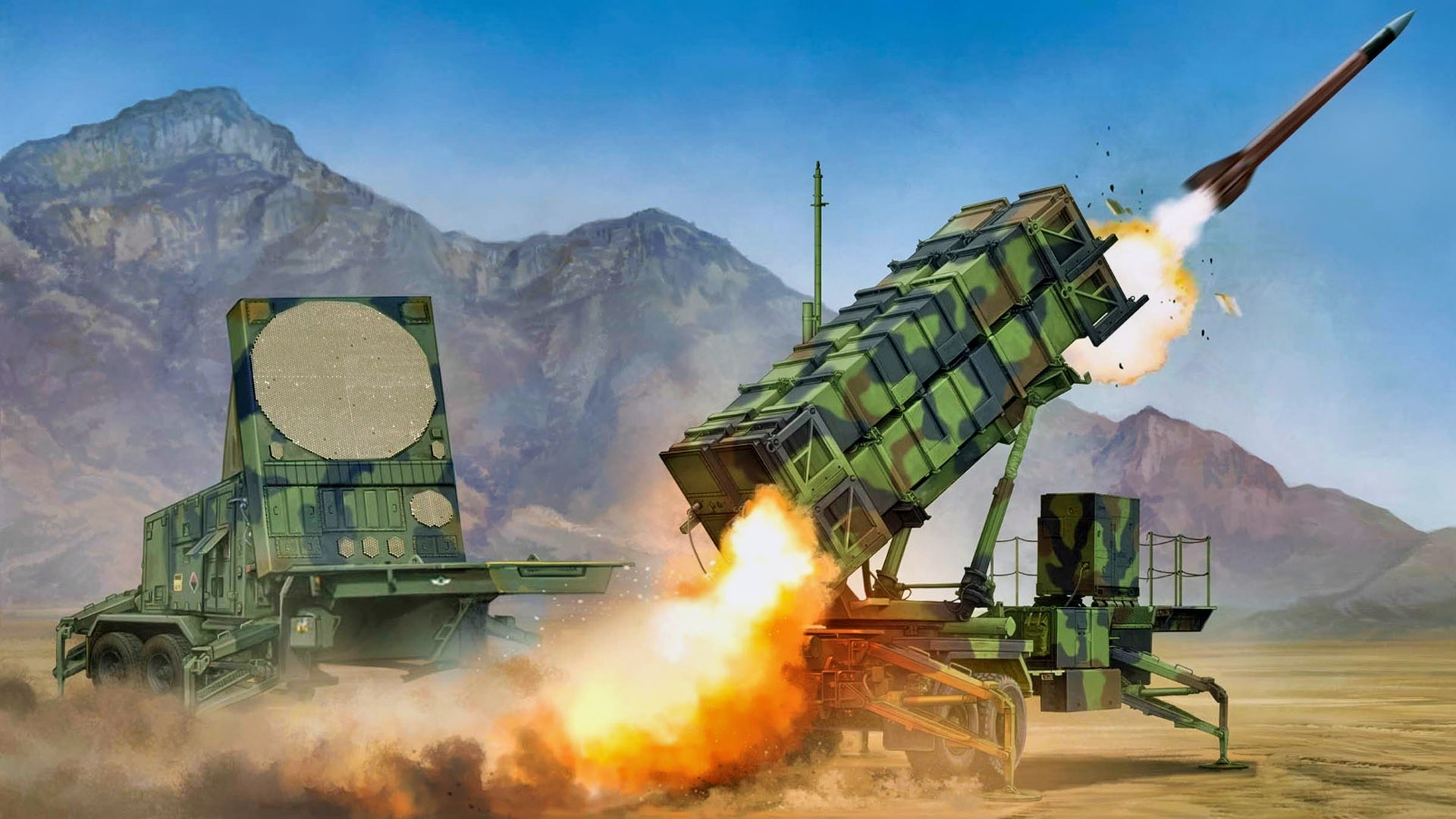
Patriot Missile. Image Credit: Creative Commons.
One of the primary build bottlenecks is, perhaps surprisingly, not interceptor final assembly, but rather the subsystems and components that go into interceptor production: the seekers, motors, chips, and testing infrastructure that ultimately combine to produce a munition.
Trade-offs in Production, Effects
Castelion’s goal of keeping their Blackbeard missile below half a million dollars per shot is achievable, but it will require significant trade-offs.
One of the biggest compromises that Blackbeard will make is its smaller size, which naturally translates to a smaller warhead as well. But a smaller physical size and a smaller warhead are not necessarily an immediate disadvantage.
The missile’s relatively diminutive size offers greater flexibility for platform integration, which would not be limited to U.S. Navy Super Hornets or U.S. Army HIMARS batteries, but could also include other surface warships, where magazine depth is tightly constrained by precious — and scarce — onboard space.
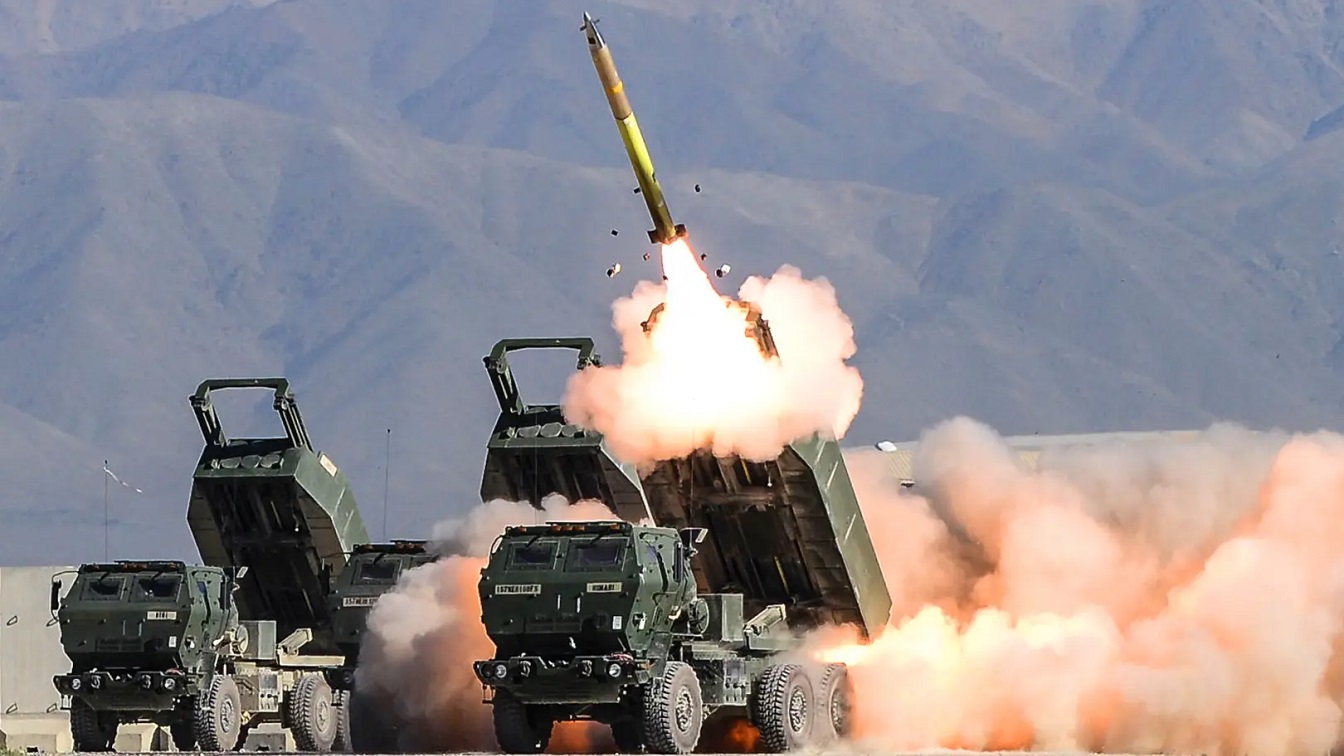
HIMARS Training: Credit – Wisconsin National Guard / Sgt. Sean Huolihan. Wisconsin National Guard / Sgt. Sean Huolihan
Castelion’s award does not necessarily mean that the missile will then translate to eventual full-scale production.
Still, securing funding for 50 Early Operational Capability missiles is certainly a boon and a valuable development opportunity, with the potential for additional funding in the future.
Whether Castelion can achieve its goal — large-scale mass production of capable, affordable hypersonic weapons — remains to be seen. But so far at least, the Pentagon has taken notice of the promise that Blackbeard appears to hold.
About the Author: Caleb Larson
Caleb Larson is an American multiformat journalist based in Berlin, Germany. His work covers the intersection of conflict and society, focusing on American foreign policy and European security. He has reported from Germany, Russia, and the United States. Most recently, he covered the war in Ukraine, reporting extensively on the war’s shifting battle lines from Donbas and writing on the war’s civilian and humanitarian toll. Previously, he worked as a Defense Reporter for POLITICO Europe. You can follow his latest work on X.