
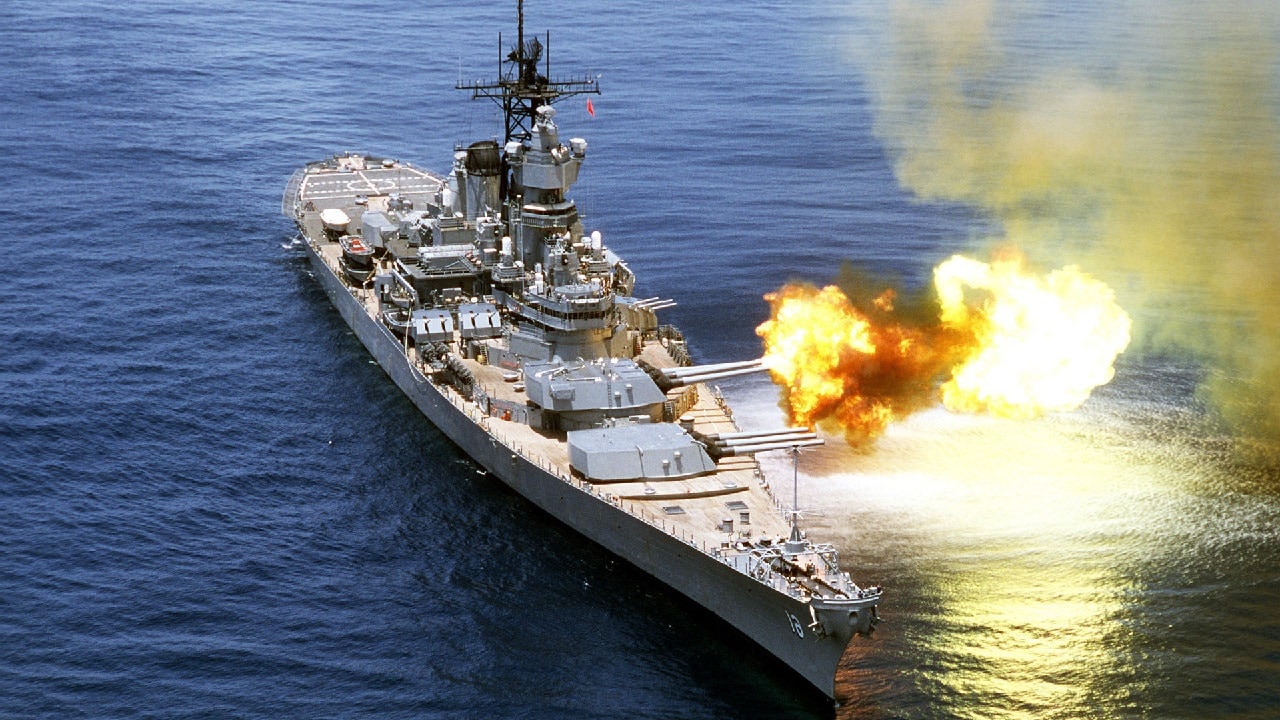
The Last Battleship War: 1,083 Shells, 52 Cruise Missiles, and a Surrender to a Drone – At about one thirty in the morning on January 17, 1991, a ship whose keel had been laid in January 1941 opened the most technologically advanced air campaign in the history of warfare. USS Missouri, the battleship on whose deck Japan had surrendered forty-six years earlier, launched the first of her Tomahawk cruise missiles at targets inside Iraq. Over the five weeks that followed, Missouri and her sister USS Wisconsin fired 52 cruise missiles and 1,083 sixteen-inch shells, spotted their guns with drones, drew the only anti-ship missiles fired at the coalition fleet, and anchored a deception that pinned much of the Iraqi army against the wrong coastline.
Within twenty months both would be decommissioned, and within a decade both would be museums.
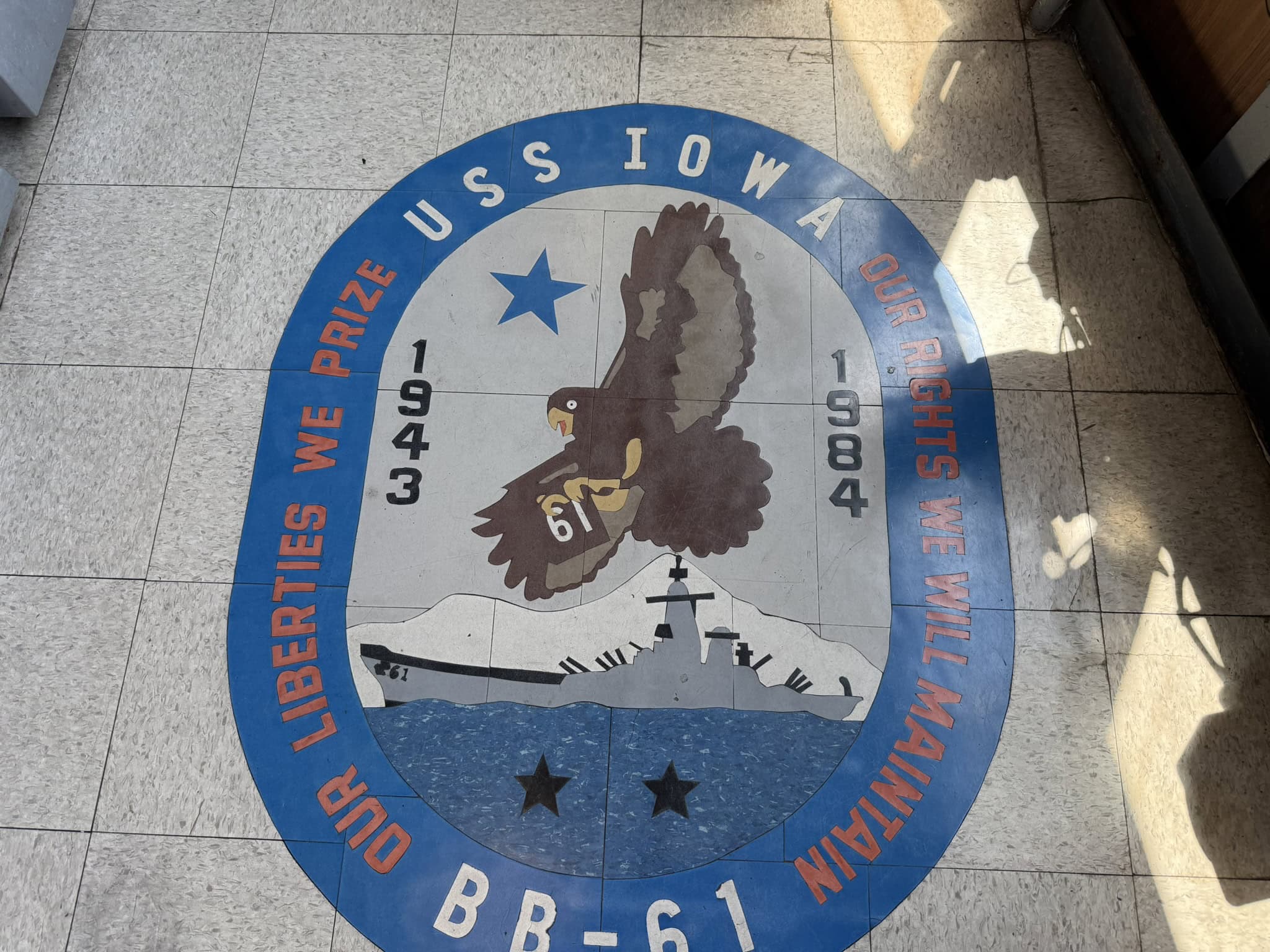
USS Iowa Battleship Seal on the Bridge. 19FortyFive Photo by Harry J. Kazianis
This is the full account of the last campaign fought by American battleships, and of why the Navy retired them almost immediately after they proved useful.
Why They Were in the Gulf at All
The ships were there because of a decision made a decade earlier that almost nobody expected to pay off.
The Reagan administration’s push toward a 600-ship Navy pulled all four Iowa-class battleships out of mothballs in the 1980s, at a cost the Government Accountability Office later put at roughly $1.7 billion for the class.
The money bought something stranger than a restoration. Each ship kept her nine 16-inch/50-caliber guns and her armor, and gained 32 Tomahawk cruise missiles in armored box launchers, 16 Harpoon anti-ship missiles, four Phalanx close-in weapon systems, modern radars and command spaces, and a detachment of remotely piloted aircraft. I have seen the upgrades up close on the USS Iowa, and they are impressive, and I have included photos below.
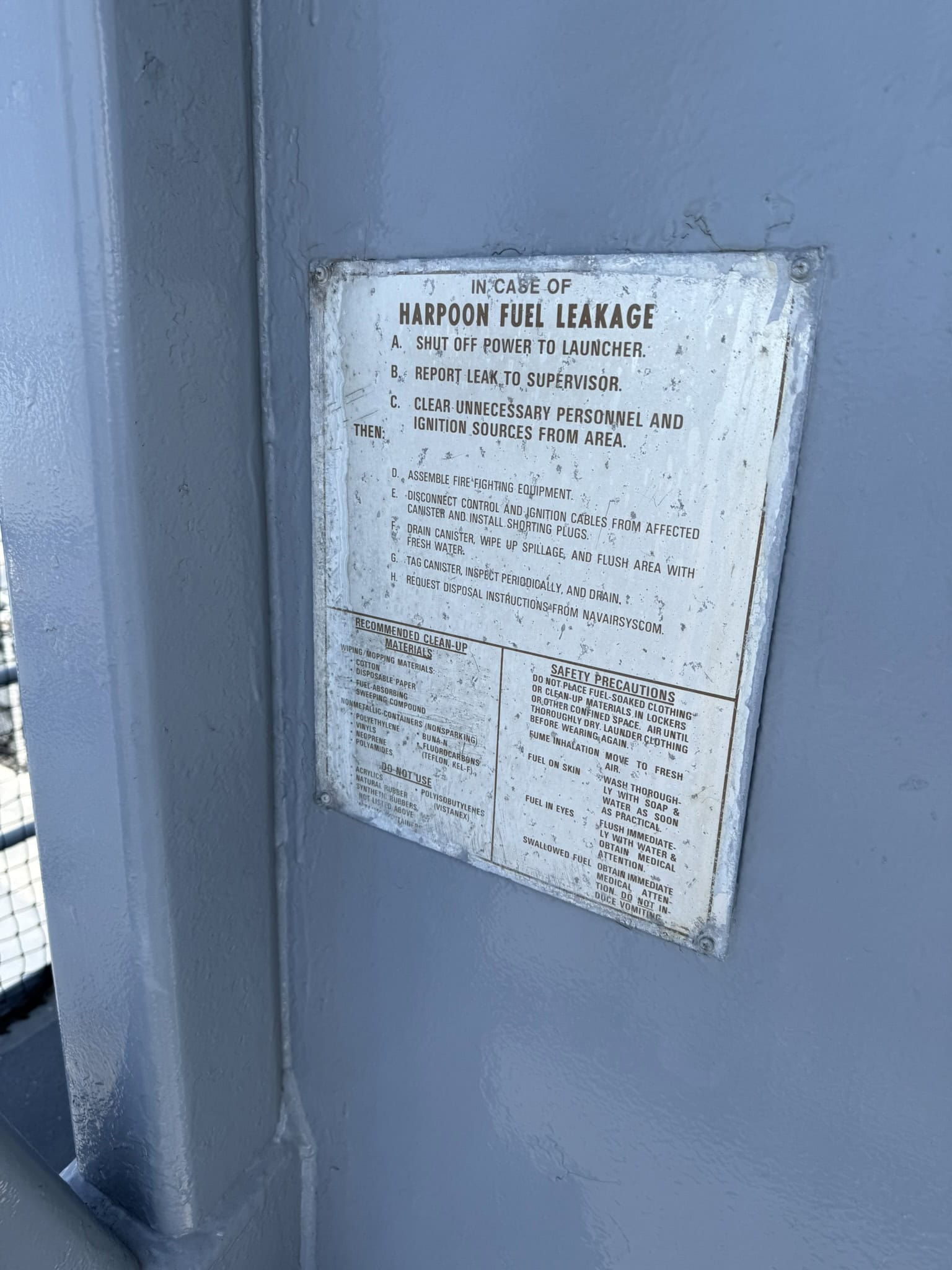
Harpoon Missile Equipment Aboard USS Iowa. Image Credit: 19FortyFive
The result was a World War II hull carrying a 1980s strike arsenal, which made it either the shrewdest bargain in the fleet or an expensive anachronism, depending on which admiral was talking.
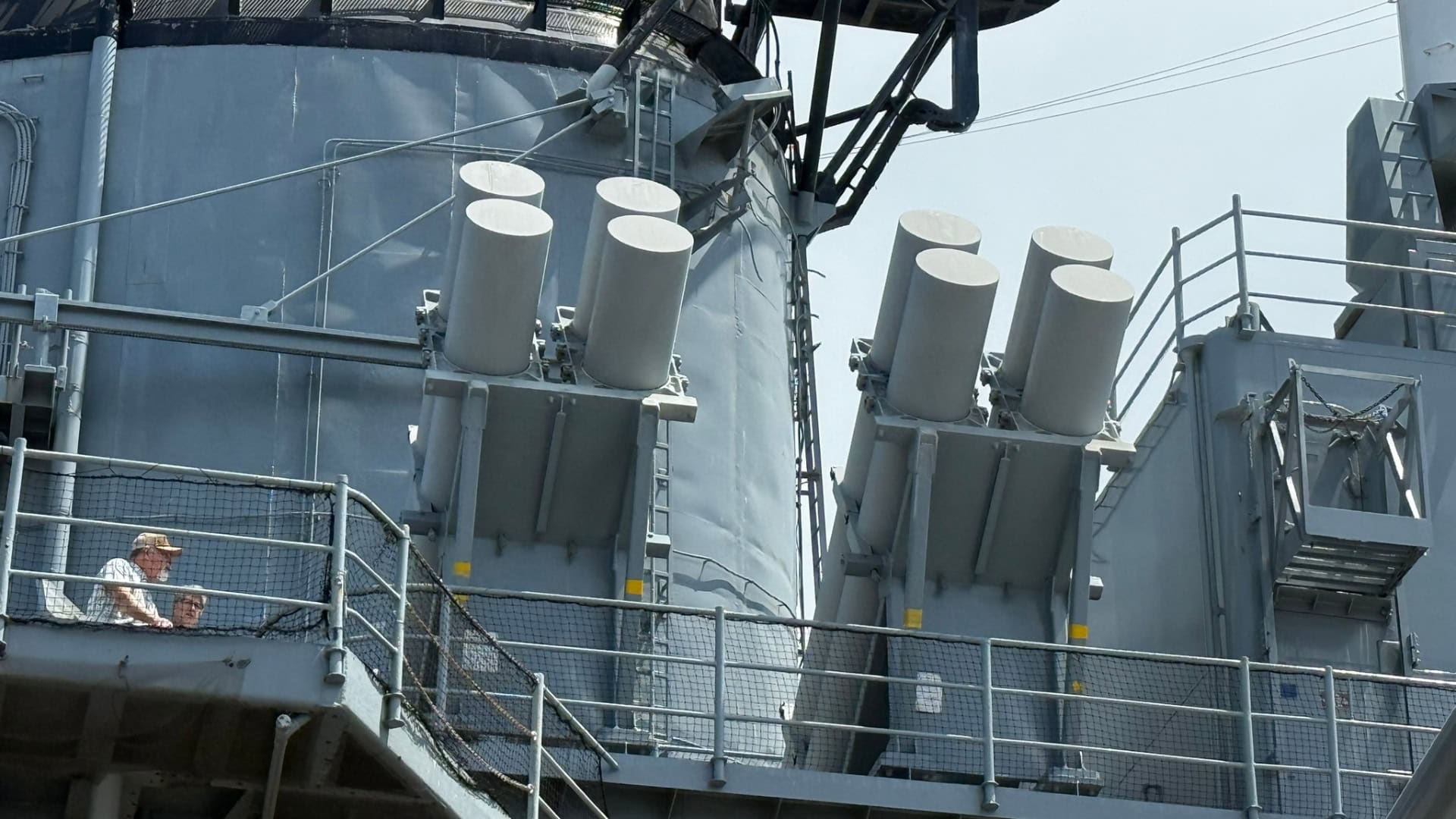
U.S. Navy Iowa-Class Battleship Missile Launchers 19FortyFive.com Image
The first test had come in 1983 and 1984, when USS New Jersey shelled targets in Lebanon and produced a fierce argument about accuracy and political effect that was never fully settled. Wisconsin sailed for the Gulf in August 1990, days into Operation Desert Shield, and spent the autumn as a visible piece of American resolve off a coast Saddam Hussein had seized weeks earlier.
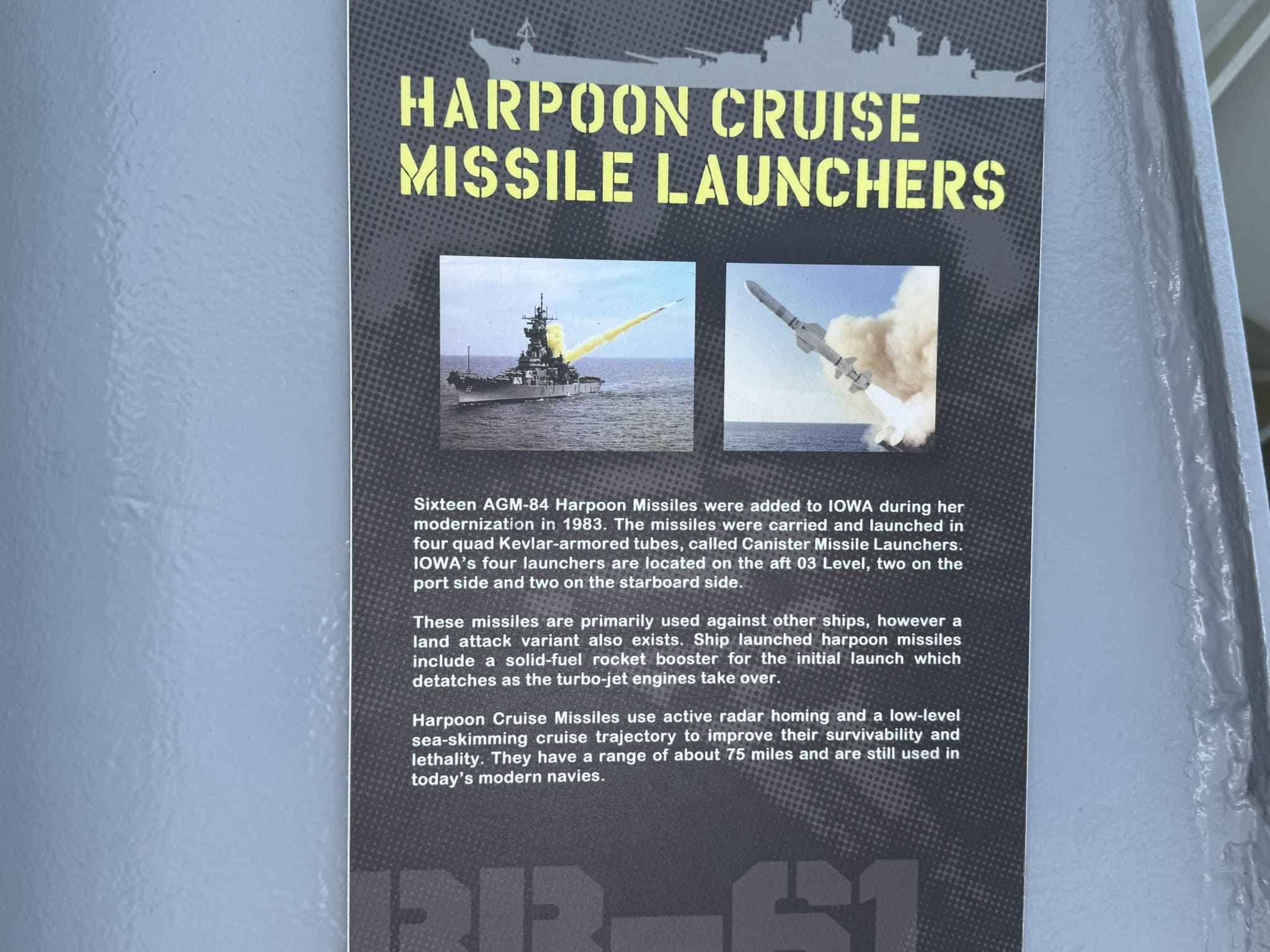
USS Iowa Battleship visit by Harry J. Kazianis for 19FortyFive.com. Taken back in August 15, 2025.
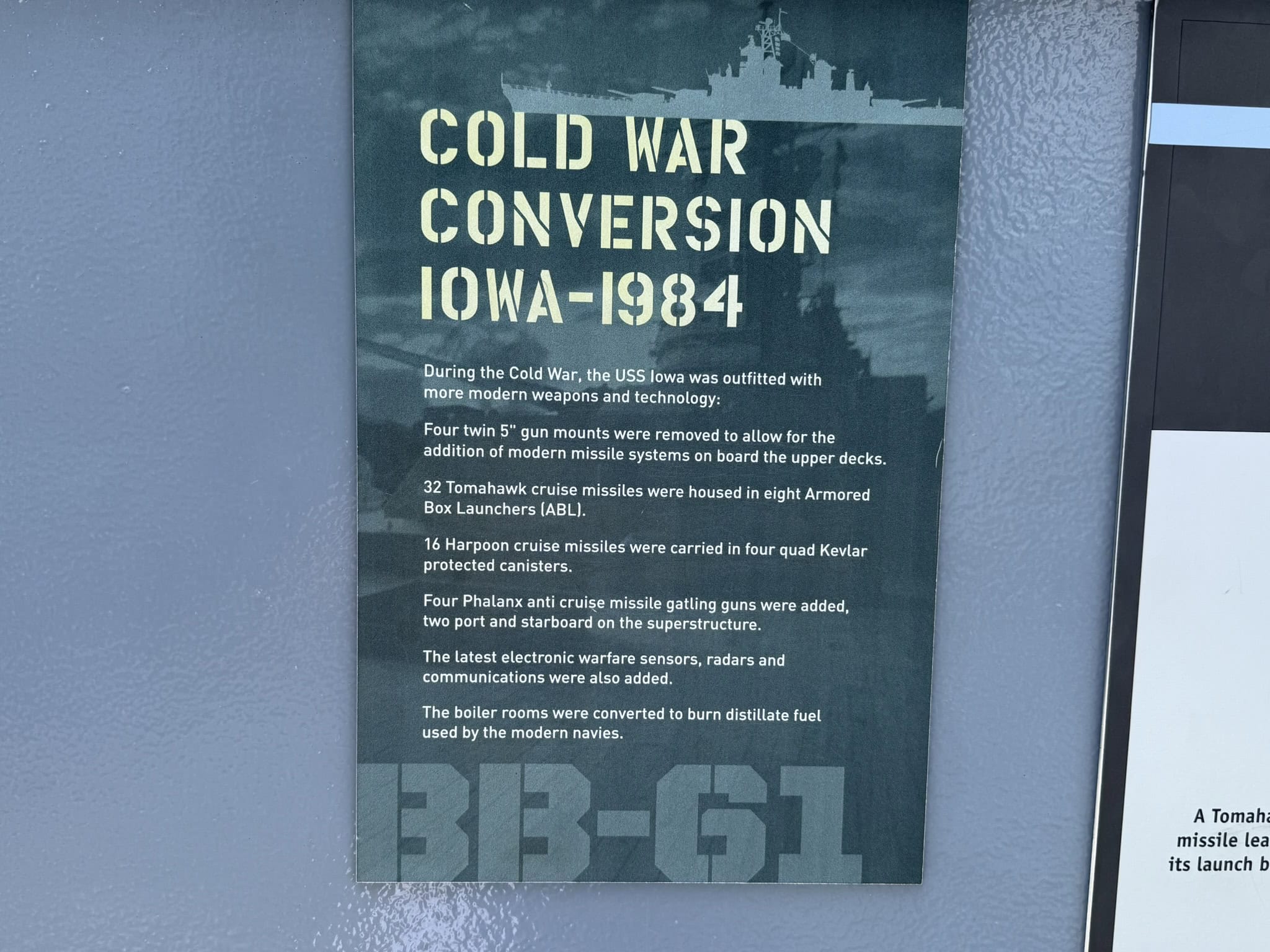
USS Iowa Battleship visit by Harry J. Kazianis for 19FortyFive.com. Taken back in August 15, 2025.
Missouri arrived in theater in the opening days of January 1991. Between them, they gave the coalition three things nothing else in the fleet offered: an enormous magazine of land-attack missiles, artillery that did not care about weather or darkness, and a silhouette that could be seen from shore.
The Opening Salvo
The cruise-missile campaign came first, and the battleships were in the first wave of it.
Missouri’s launch in the early hours of January 17 put a Tomahawk into the air from a battleship for the first time in a war, and she fired 28 of them over the campaign. Wisconsin fired 24, for a combined 52, but her more consequential job was invisible from the deck: she served as the theater’s Tomahawk strike commander, coordinating the launch of 213 missiles fired by ships and submarines across the Gulf.
A vessel commissioned in 1944 was running the targeting and deconfliction for the most modern weapon in the American inventory. That is the detail that best captures what the 1980s modernization purchased. The Navy had not preserved a museum piece, and it was sent to war.
It had been built as a command ship with heavy artillery bolted to the front half.
February 3: The Guns Come Back
Twenty-two years had passed since an American battleship fired its main battery in anger, the last occasion being USS New Jersey off Vietnam in 1969, and the drought ended on February 3, 1991, when Missouri put 16-inch shells into Iraqi command bunkers on the Kuwaiti coast. The arithmetic of what she was delivering is difficult to hold in the mind. Each projectile weighed 2,700 pounds, roughly the weight of a compact car, and traveled more than 20 miles. One nine-gun salvo from an Iowa-class ship carries destructive power that has been equated to 183 155mm howitzers firing at once. Again, I have some photos below from USS Iowa that show its size and power.
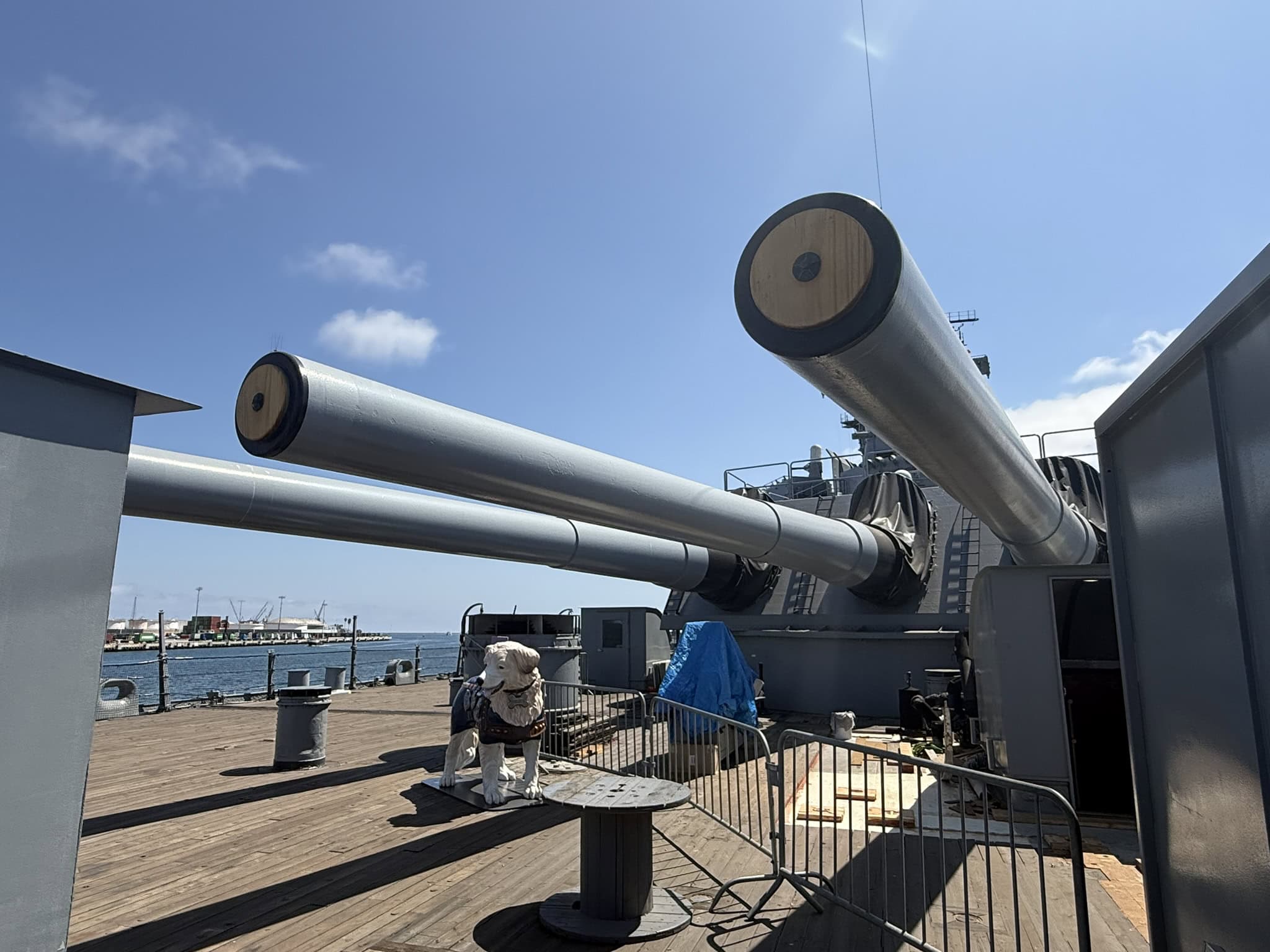
USS Iowa 16-Inch Guns. Image Credit: Harry J. Kazianis.
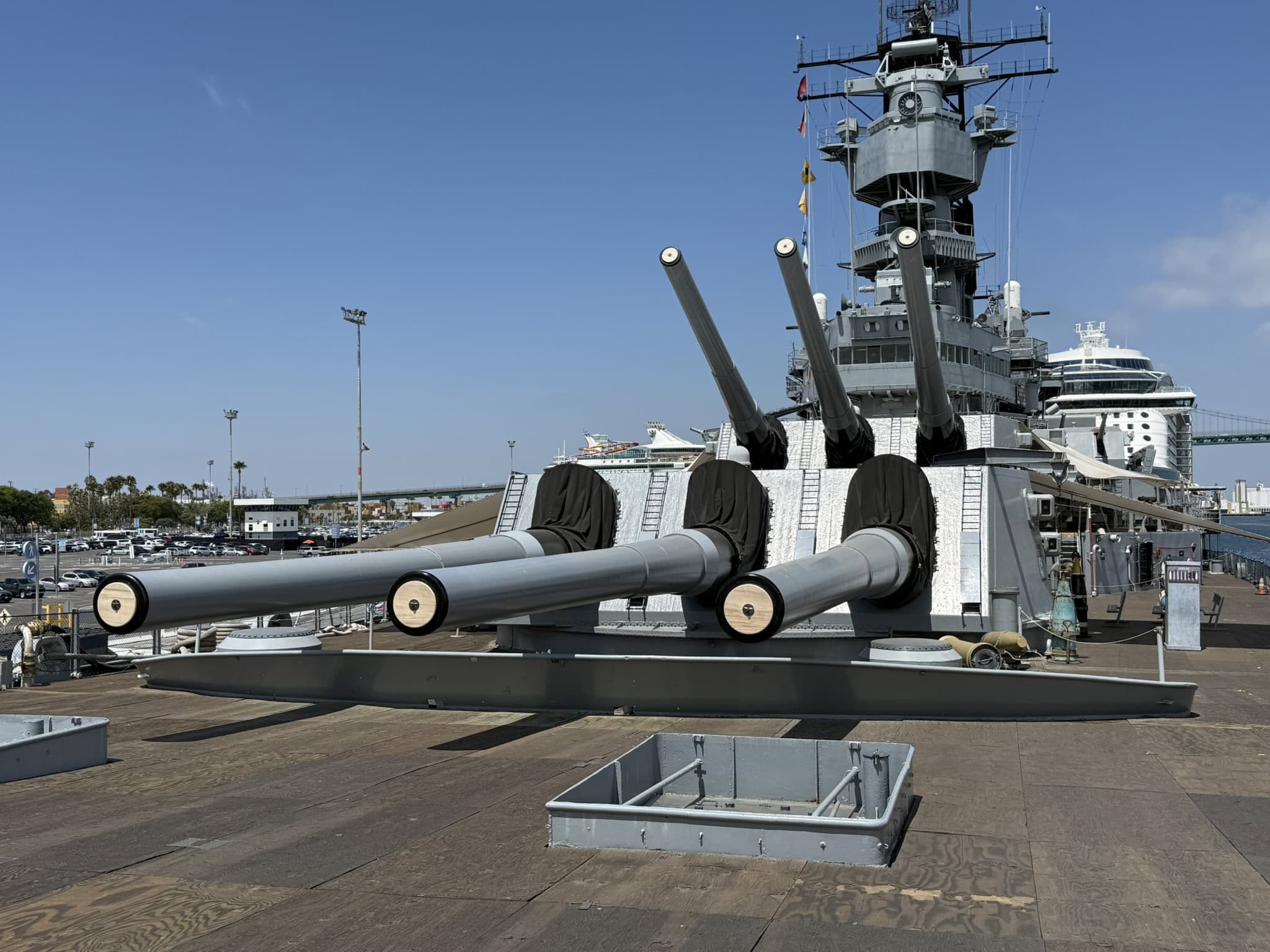
USS Iowa 16-Inch Guns. Image Credit: Harry J. Kazianis.
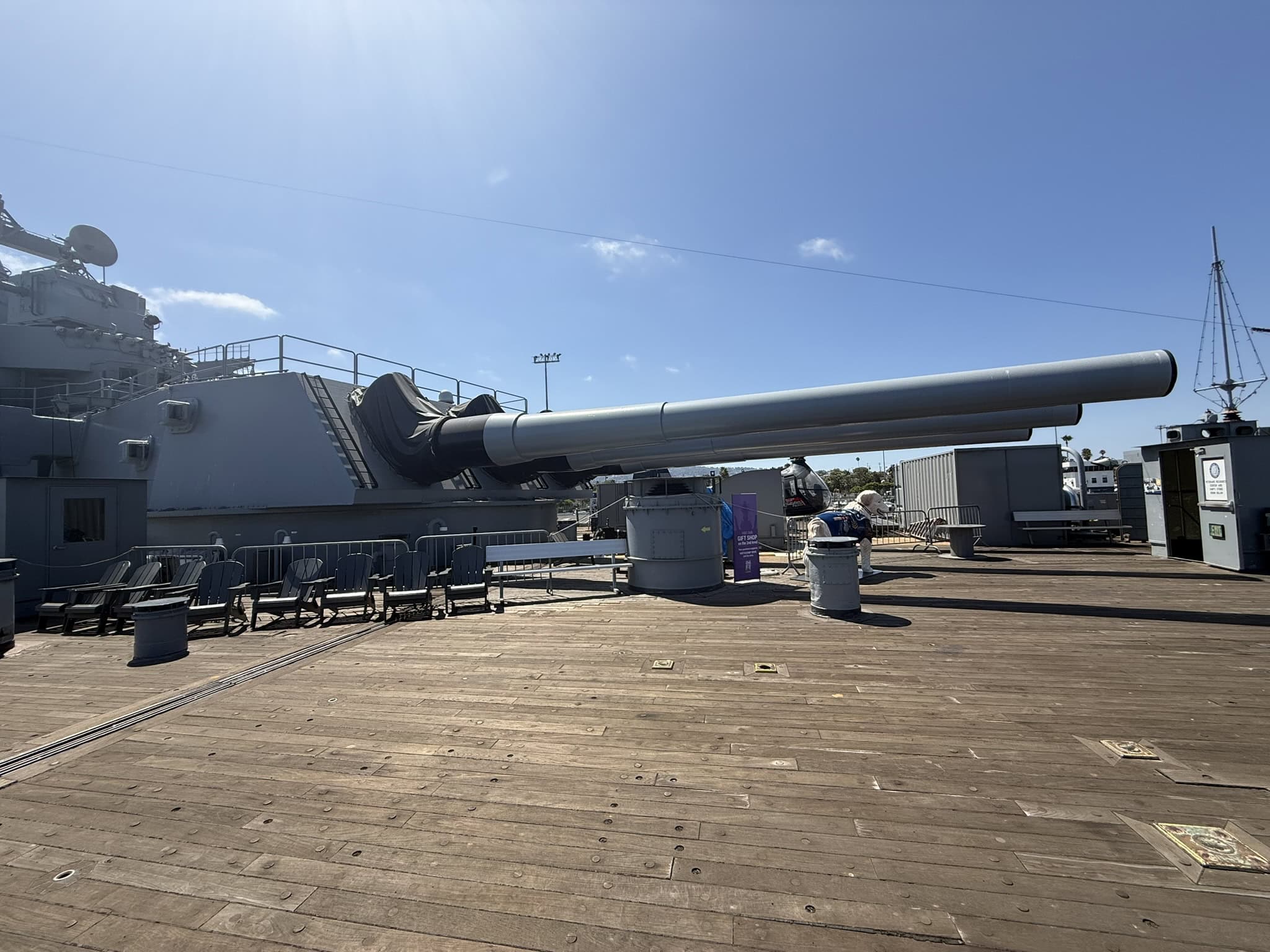
USS Iowa 16-Inch Guns. Image Credit: Harry J. Kazianis.
Wisconsin opened fire on February 6, using 11 rounds at a range of about 19 miles to destroy an Iraqi artillery battery, followed the next day by 24 shells against artillery, missile, and electronic-warfare sites, and later put 50 rounds into Iraqi naval facilities, sinking or damaging 15 boats and wrecking the piers.
The Navy’s own campaign appendix records 324 rounds from Wisconsin across 33 fire missions.
Missouri fired 759. The combined total of 1,083 shells is a modest number by the standards of Korea, where Missouri alone fired more than six times as many across two deployments, and it landed with a precision the Korean gunners never had.
The Drones That Spotted for Them
Accuracy came from an aircraft with a lawnmower engine. The RQ-2 Pioneer, flown by Navy squadron VC-6, was launched by rocket assist off the battleship’s fantail, flew within line of sight, and sent back real-time video and infrared imagery that let gunnery officers correct fall of shot as it happened. In 1991, this was revolutionary, and it is the direct ancestor of every armed and unarmed drone flying today.
The Pioneers found targets, watched the shells arrive, and adjusted the next salvo, giving a weapon designed in the 1930s a targeting loop from the future. They also produced the single strangest moment of the war. On February 28, with Wisconsin’s guns having worked over Faylaka Island for days, Iraqi troops on the island waved white flags at a Pioneer loitering overhead.
It is recorded as the first surrender of soldiers to an unmanned aircraft, and it happened because the men below understood exactly what the drone’s presence meant: the next thing to arrive would be 2,700 pounds of steel, and it would be on target.
The Minefield and the Silkworm
The northern Gulf was the most dangerous waters the Navy had operated in since 1945, and the battleships were operating in it. Missouri’s explosive ordnance team disarmed ten mines.
Wisconsin could not reach her firing positions until a six-mile lane had been cleared ahead of her. The danger was not theoretical: on February 18 the amphibious assault ship USS Tripoli and the cruiser USS Princeton were both damaged by Iraqi mines in the same waters, the cruiser by a weapon that cost a tiny fraction of what it took out of the fight.
Then came February 25, the only day an enemy shot directly at a battleship. Iraqi forces fired two Chinese-built Silkworm anti-ship missiles at the naval force, each carrying a warhead of more than 1,100 pounds. The British destroyer HMS Gloucester, escorting Missouri, engaged one with Sea Dart missiles and destroyed it, the first time in history that a surface-launched missile intercepted an enemy missile in combat at sea. The second was decoyed by Missouri’s chaff and fell into the water a few hundred feet away.
The engagement had a friendly-fire footnote, as the frigate USS Jarrett’s Phalanx system locked onto that same chaff cloud and put rounds into Missouri’s superstructure. Missouri answered the attack in the oldest possible way: she turned her main battery on the Silkworm site ashore and destroyed it.
The Deception That Made It Matter
The most valuable thing the battleships did was convince the Iraqi high command of something untrue.
The 4th and 5th Marine Expeditionary Brigades, roughly 17,000 troops, sat offshore aboard amphibious shipping, and the entire coalition plan depended on Baghdad believing they were about to come ashore. Missouri began shelling Faylaka Island on February 24, putting 133 rounds into it, and on February 25 the force executed a feint at an amphibious assault on the Kuwaiti coast.
Iraqi commanders, watching heavy naval gunfire land on the beaches and an amphibious force maneuvering offshore, kept multiple divisions dug in along the coastline facing the sea. Estimates of how many run from six to ten. Those divisions were still looking at the water when the coalition’s armored formations swung west and hit the Iraqi army from behind.
The shelling was real, and the landing was fiction, and the difference between them was worth more than every shell fired. The psychological effect was not incidental to the mission.
It was the mission, and no other platform in the fleet could produce it, because a battleship announces itself in a way that an aircraft carrier a hundred miles over the horizon cannot.
Twenty Months to Museum Land
Wisconsin fired the last combat rounds of her career on February 28, 1991, and no American battleship has fired in anger since.
She was decommissioned seven months later, on September 30, 1991. Missouri followed on March 31, 1992. The reasons had been accumulating for years, and the war did not slow them down. Each ship required a crew of nearly 1,500 sailors at a time when the Navy was shrinking, and the same missiles could be fired from an Aegis destroyer with a company of 300, a trade-off some have described as the decisive one between manpower costs and distributed vertical launch cells.
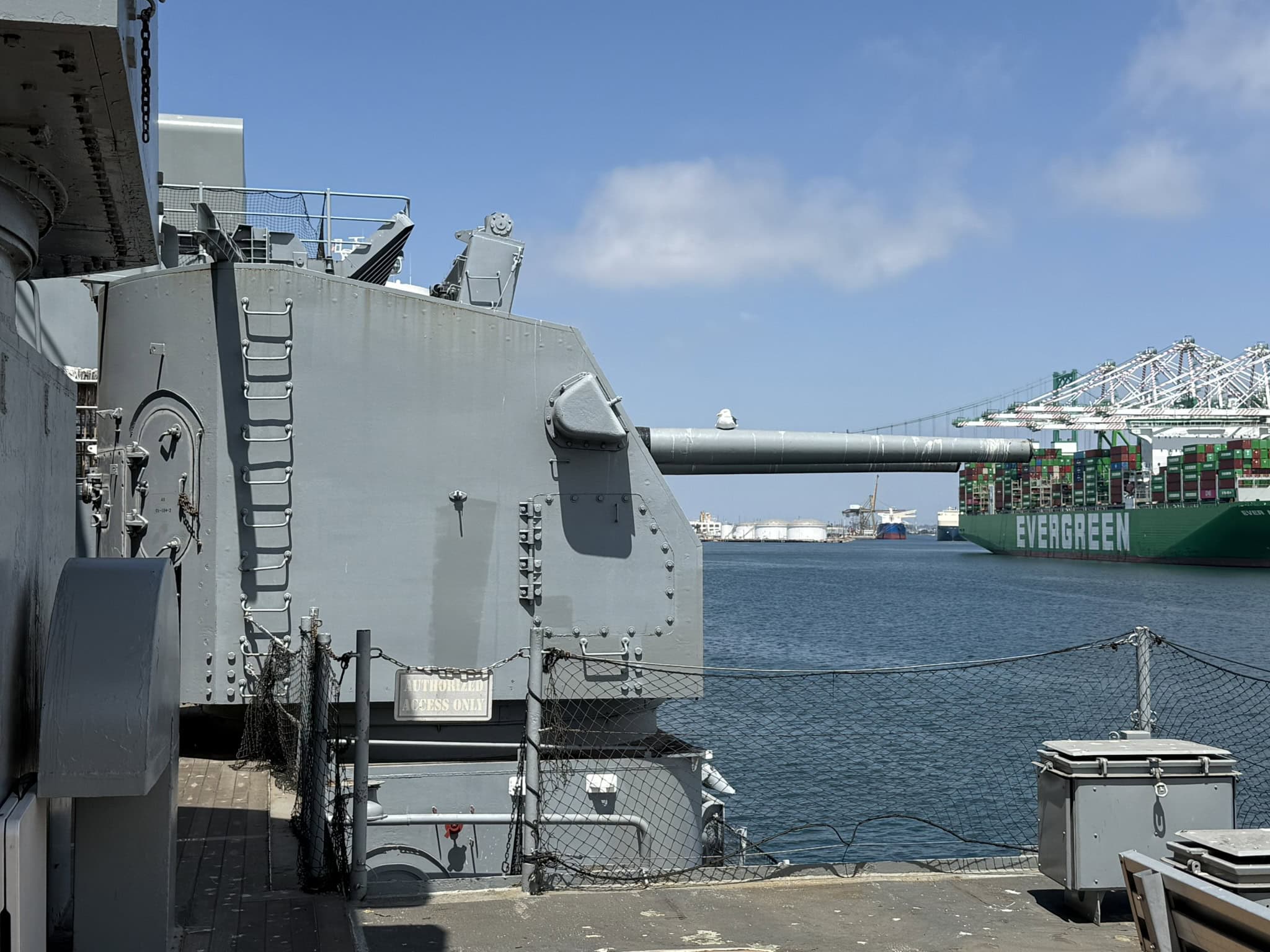
USS Iowa Visit by Harry Kazianis of 19FortyFive.com
The 1989 explosion in USS Iowa’s Number Two turret, which killed 47 sailors, had already made the class politically radioactive and raised uncomfortable questions about operating World War II gun systems under modern safety expectations. The Soviet Union dissolved in December 1991, taking with it the fleet the 600-ship Navy had been built to counter.
Congress fought a long rear-guard action, requiring the Navy to keep battleships on the Naval Vessel Register until a replacement for their fire support existed, and the ships were not finally struck until 2006.
By then, Missouri had been moored at Pearl Harbor since 1998, opening as a museum in January 1999 within sight of the Arizona Memorial, and Wisconsin had arrived at Nauticus in Norfolk on December 7, 2000. All four Iowas survive as museum ships, a better fate than any other battleship class in history has received.
About the Author: Harry J. Kazianis
Harry J. Kazianis (@Grecianformula) was the former Senior Director of National Security Affairs at the Center for the National Interest (CFTNI), a foreign policy think tank founded by Richard Nixon based in Washington, DC. Harry has over a decade of experience in think tanks and national security publishing. His ideas have been published in the NY Times, The Washington Post, The Wall Street Journal, CNN, and many other outlets. He has held positions at CSIS, the Heritage Foundation, the University of Nottingham, and several other institutions related to national security research and studies. He is the former Executive Editor of the National Interest and the Diplomat. He holds a Master’s degree focusing on international affairs from Harvard University.

