
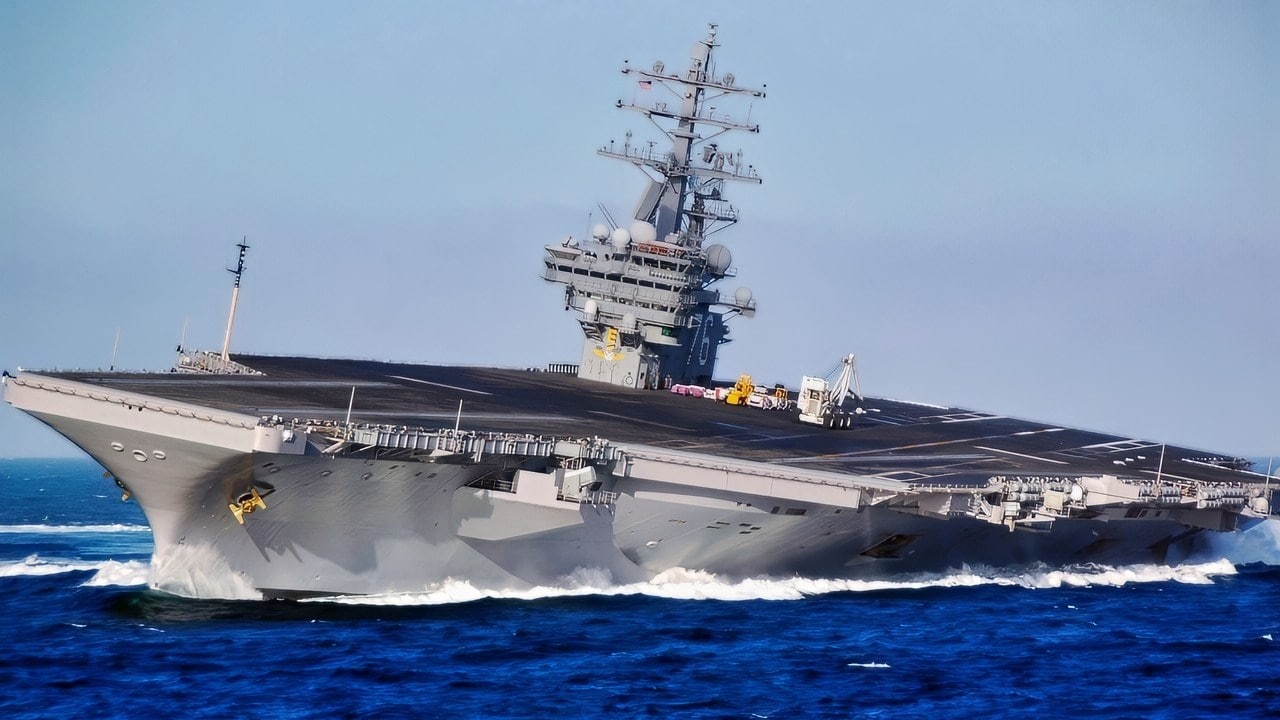
Summary and Key Points: A Ford-class aircraft carrier costs about $13 billion and takes the better part of a decade to build. The weapons now being designed to threaten it are cheap — drones, cyber intrusion, space-based targeting, and missiles that cost a fraction of one aircraft the ship carries. That asymmetry is why serious people are asking whether the carrier is becoming the battleship of the 2020s, a capital ship that dominated its era and then found itself outpaced by something smaller and cheaper. The comparison is worth taking seriously. It is also not quite the right question.
Aircraft Carriers: The Next Old Battleship?
Every generation, new weapons emerge that challenge aircraft carriers, leading some to declare floating airfields obsolete. In fact, many experts worry the aircraft carrier could become the new ‘battleship’ of the 2020s: an old warship that seems hopelessly obsolete in the face of new threats.
Could the aircraft carriers of today really end up being museum ships like the old, Iowa-class battleships?
Submarines, missiles, satellites, and hypersonics have all raised questions about the aircraft carrier’s survivability. Yet the carrier remains central to US naval strategy, actively deployed worldwide.
The question really isn’t whether aircraft carriers are outdated, but whether the strategic environment has changed.
The question is especially pressing as the US pivots from weak or mid-tier adversaries, like Libya and Iraq, towards peer competitors who can threaten carriers directly.
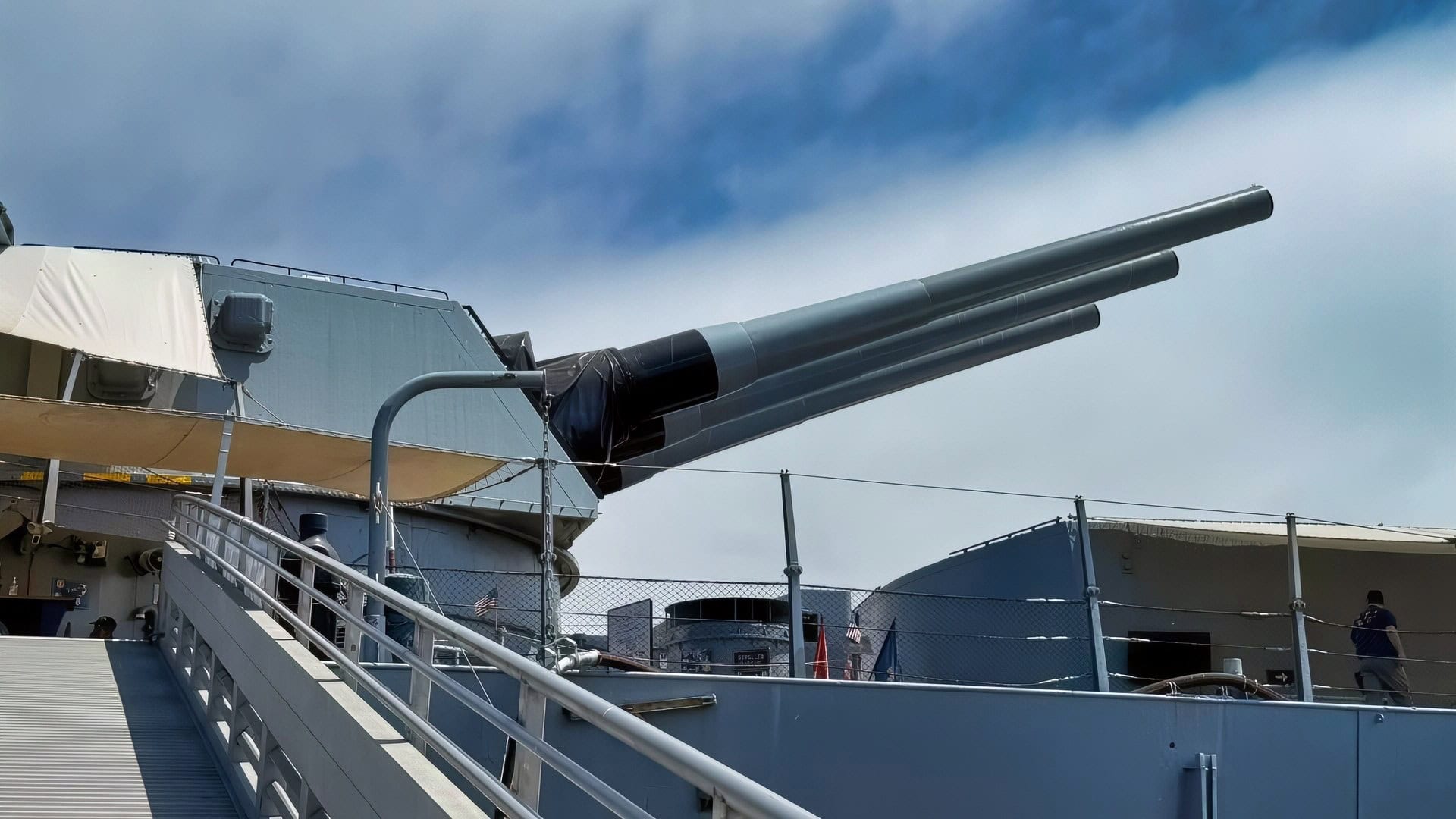
Iowa-Class 16-Inch Gun August 2025 19FortyFive Image. Taken by Harry J. Kazianis.
Is deploying the aircraft carrier worth the risk and the cost in the modern threat environment?
Historical context of the aircraft carrier
Carriers replaced battleships as capital ships after World War II.
The carrier’s key advantages included mobility, reach, and flexibility, allowing states to project air power without bases.
For decades, most US carrier operations were against adversaries with little ability to strike back at sea (Vietnam, Iraq, Afghanistan, Libya).
These conflicts posed minimal naval threat to the US, and this perception led to the view that carriers were one-sided instruments of power.
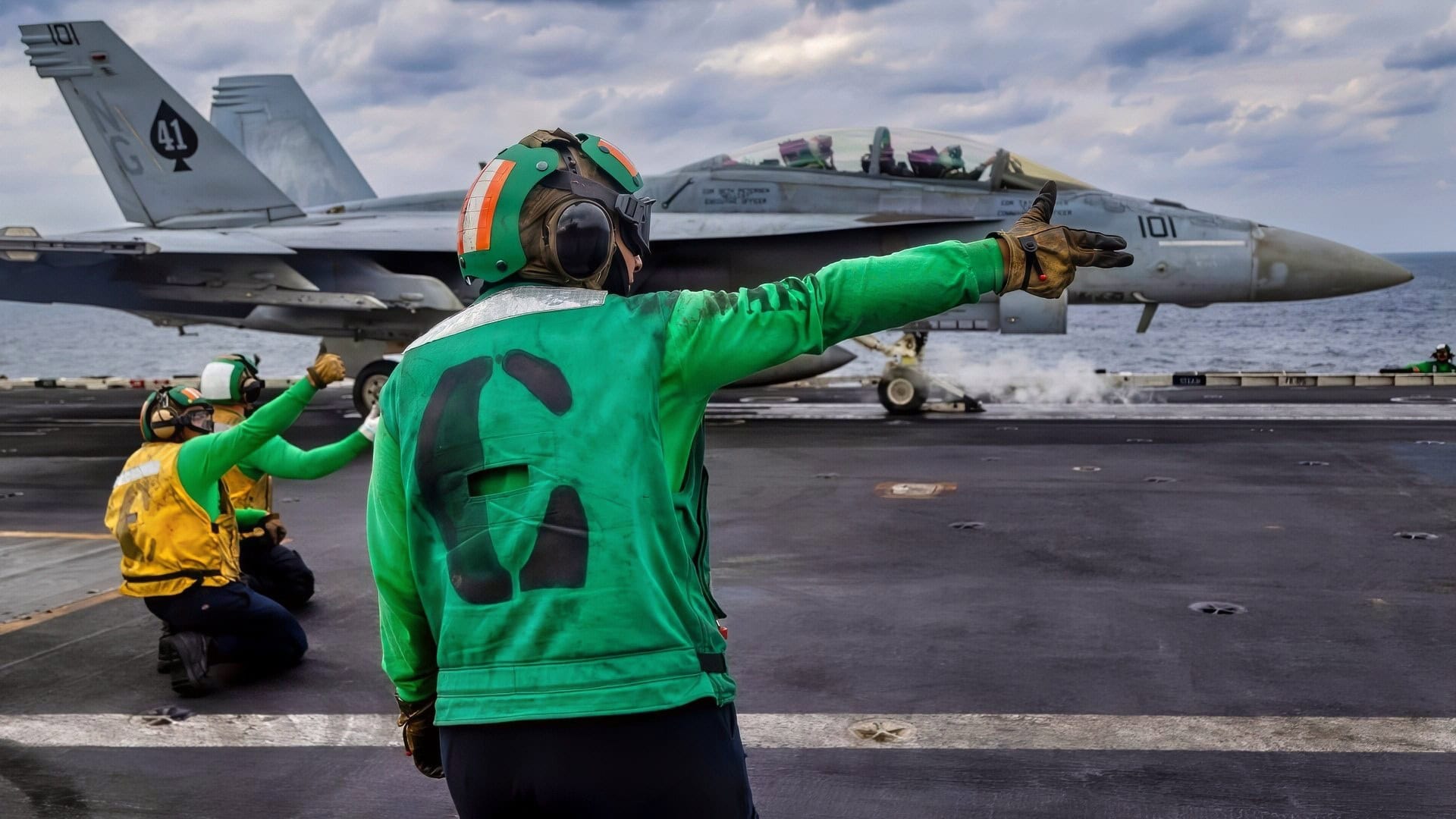
ARABIAN SEA (Jan. 28, 2026) An F/A-18F Super Hornet, attached to Strike Fighter Squadron (VFA) 41, prepares to launch from the flight deck of Nimitz-class aircraft carrier USS Abraham Lincoln (CVN 72) in the Arabian Sea, Jan. 28. Abraham Lincoln is deployed to the U.S. 5th Fleet area of operations to support maritime security and stability in the CENTCOM area of responsibility. (U.S. Navy photo by Mass Communication Specialist Seaman Zoe Simpson)
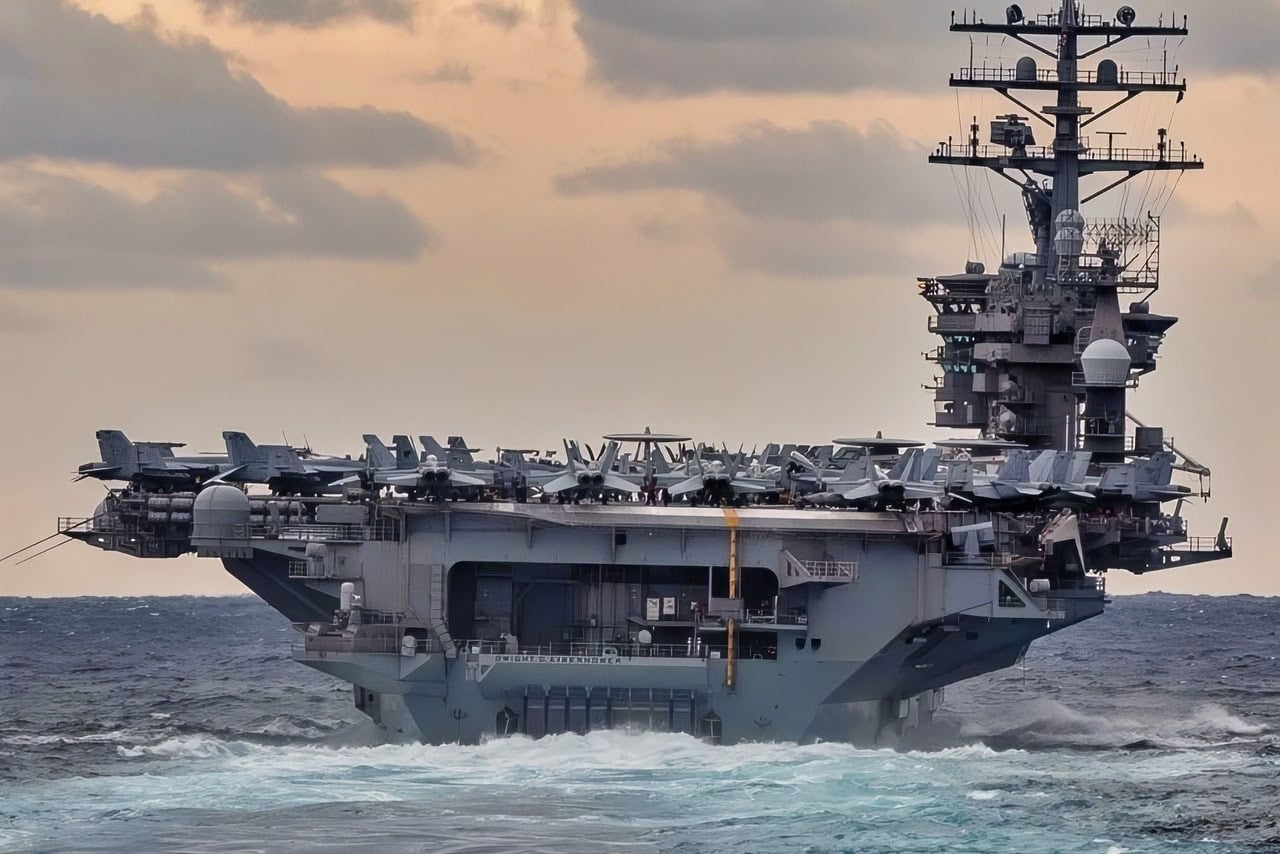
(Jan. 31, 2019) The Nimitz-class aircraft carrier USS Dwight D. Eisenhower (CVN 69) transits the Atlantic Ocean. Eisenhower is conducting operations in the Atlantic Ocean as part of Carrier Strike Group 10. (U.S. Navy photo by Mass Communication Specialist 3rd Class Kody A. Phillips/Released)
Critiquing the carrier
Critics have argued that carriers only work against weak states or that they are too expensive and too vulnerable.
Critics point to the emergence of anti-ship ballistic missiles, long-range cruise missiles, and swarming drones.
And yes, against China or Russia, carriers would face real danger, so the critiques are rooted in accuracy.
But the critiques assume that carriers can’t adapt and must operate the same way they always have. Warfare tends to be more dynamic than that.
Carriers still relevant
Carriers still provide persistent air power, flexible response, and escalation control. No other platform combines mobility, sortie generation, and political signaling quite like the carrier. And there is no alternative elsewhere.
Land bases are fixed and politically constrained. Bombers lack persistence. Missiles are single-use. Carriers, meanwhile, are not just strike platforms; they are command hubs, air defense nodes, and ISR platforms.

A U.S. Air Force B-1B Lancer assigned to the 7th Bomb Wing takes off from
Dyess Air Force Base, Texas, Dec. 25, 2025. U.S. military forces are deployed to
the Caribbean in support of the U.S. Southern Command mission, Department of
War-directed operations, and the president’s priorities to disrupt illicit drug
trafficking and protect the homeland. (U.S. Air Force photo)
Those capabilities are hard to replicate in a single platform—which is why carriers are still being built.
Shifting to contested space
The US is no longer fighting opponents who can’t contest the sea. ISIS or the Taliban never posed much threat to US carriers—but Russia and China can. China’s A2/AD strategy, for example, is designed to push carriers back and raise the cost of forward presence.
This doesn’t necessarily eliminate carriers, but it changes how close they can operate and what missions they can perform. It forces adaptation, such as a greater emphasis on stand-off capabilities, longer-range aircraft, and distributed operations.
The carrier is essentially shifting from the tip of the spear to a mobile base and network hub. The threat environment has matured, become more sophisticated—but that has not rendered carriers useless.
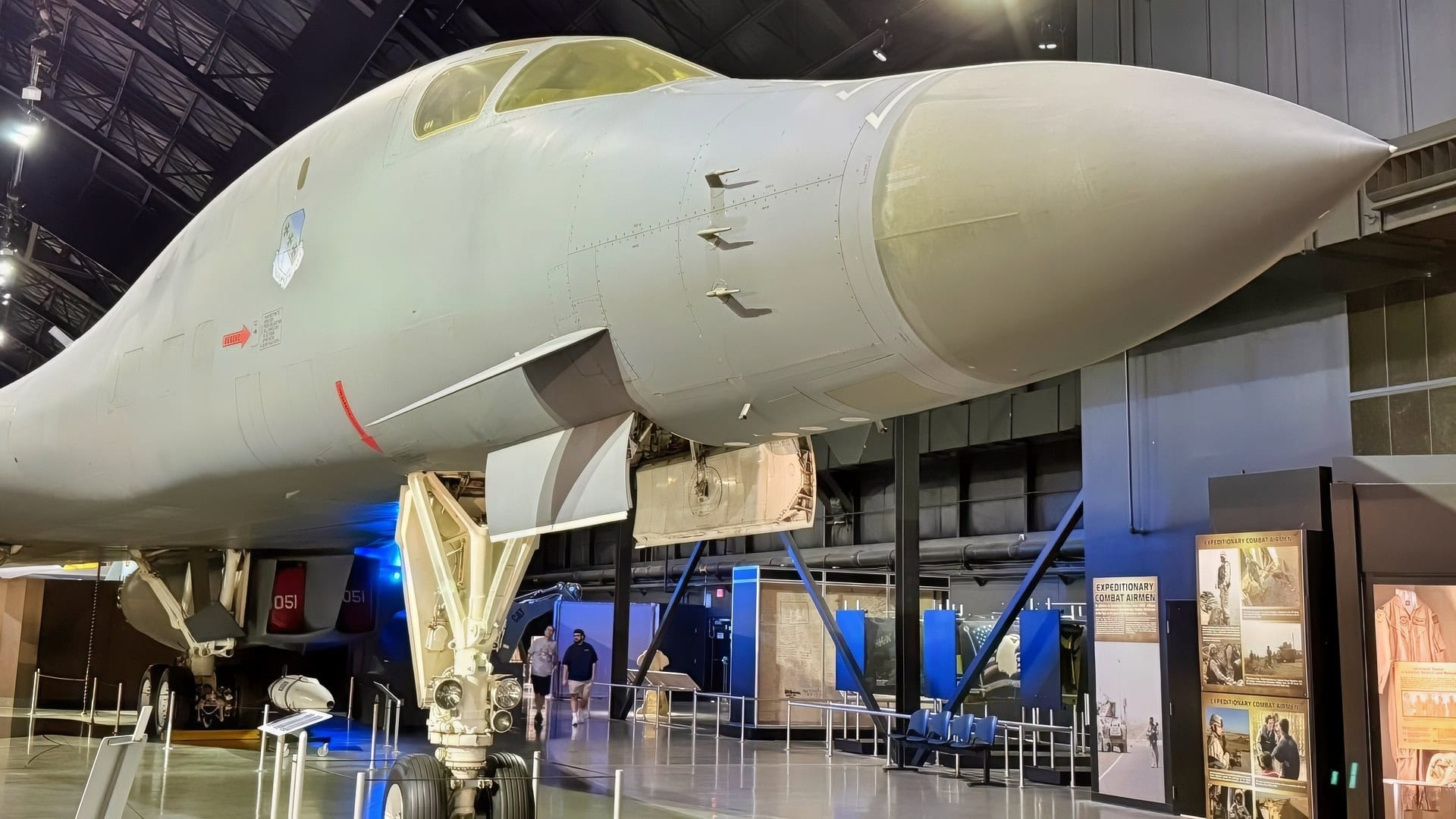
B-1B Lancer at National Museum of the U.S. Air Force. 19FortyFive.com Original Photo.
Asymmetric risks
Modern threats are asymmetric, further complicating the carrier’s position in the battlespace.
Drones, cyberattacks, and space targeting—these are relatively cheap ways to disrupt carrier operations.
Ironic, given how expensive a carrier is (the Ford-class costs $13 billion per unit).
But this exorbitant price tag is exactly what makes the carrier such a magnet; targeting a carrier draws attention, with the prospect of damaging a multibillion-dollar vessel that took several years to construct.
Losing a carrier would be catastrophic in military, fiscal, and political terms. This raises the stakes every time a carrier sets sail. But high stakes don’t equal obsolescence. The answer isn’t abandoning the concept entirely; it’s in protection, redundancy, and more innovative use.
US adaptations
Changes are already underway. Longer-range air wings are being developed, with greater emphasis on aerial refueling and integration with submarines and space assets.
Future carrier air wings may include more drones and loyal wingmen, with fewer short-range strike missions.
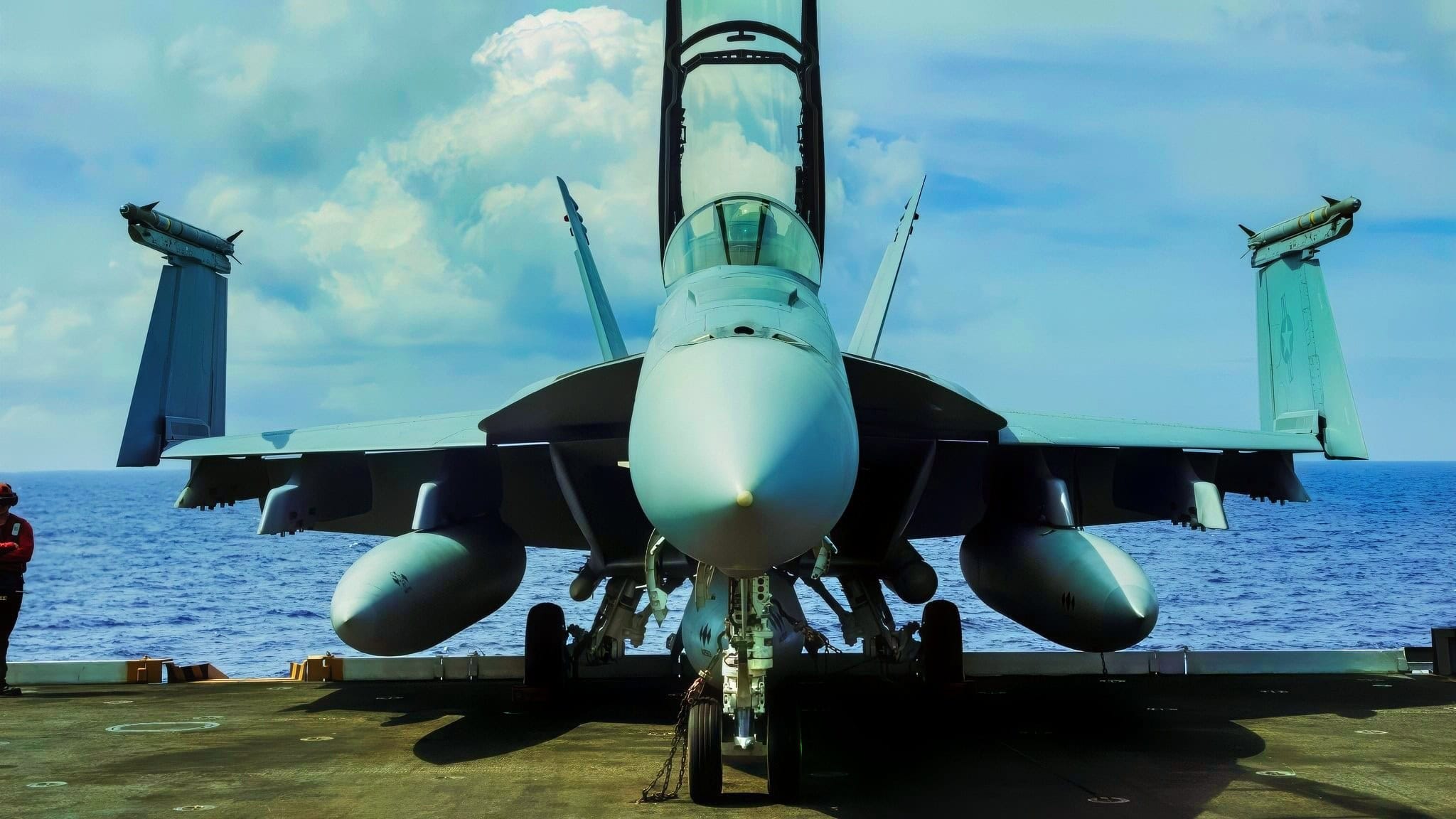
Capt. Tim Waits, commanding officer of Nimitz-class aircraft carrier USS George Washington (CVN 73), climbs into an F/A-18F Super Hornet, attached to Strike Fighter Squadron (VFA) 102, while underway in the South China Sea, Nov. 24, 2025. George Washington is the U.S. Navy’s premier forward-deployed aircraft carrier, a long-standing symbol of the United States’ commitment to maintaining a free and open Indo-Pacific region, while operating alongside allies and partners across the U.S. Navy’s largest numbered fleet. (U.S. Navy photo by Mass Communication Specialist 2nd Class Geoffrey L. Ottinger)
Carriers operate as part of a system, not some isolated vessel, and that entire system will flex to protect the carrier against new risks.
So, the aircraft carrier is not yet obsolete.
They’re just vulnerable, which is unsettling, but a fairly standard part of deploying weapons systems.
The era of uncontested carrier dominance is likely over.
The era of contested, adaptive carrier operations is beginning.
The US is adapting accordingly, refining how it uses carriers to remain effective and survivable in the 21st century.
About the Author: Harrison Kass
Harrison Kass is an attorney and journalist covering national security, technology, and politics. Previously, he was a political staffer and candidate, and a US Air Force pilot selectee. He holds a JD from the University of Oregon and a master’s in global journalism and international relations from NYU.