
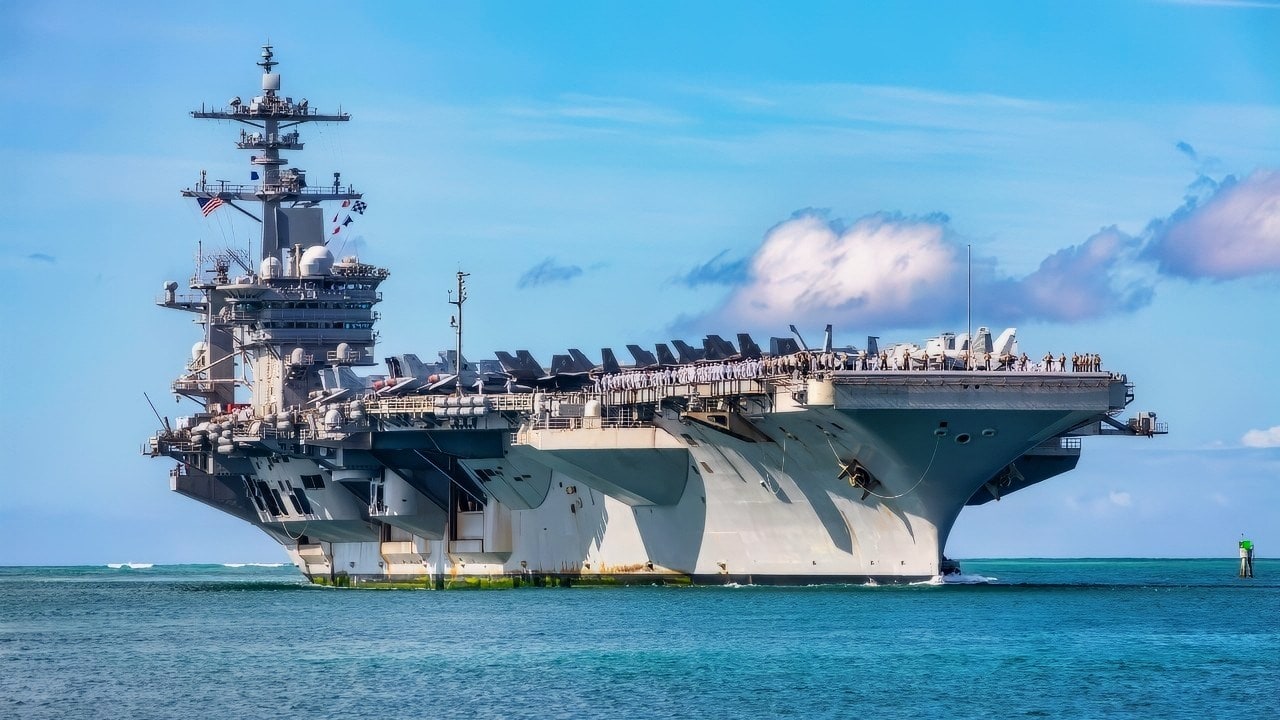
Summary and Key Points – A report says the USS Abraham Lincoln carrier strike group is shifting from the South China Sea to the U.S. Central Command area as unrest in Iran grows and Washington signals it may intervene.
-The move highlights a broader strain on U.S. force posture after recent operations in the Caribbean and pressure on Venezuela. Analysts warn competing demands across the Middle East and Asia-Pacific could leave less air and missile defense capacity near U.S. troops if Iran retaliates.
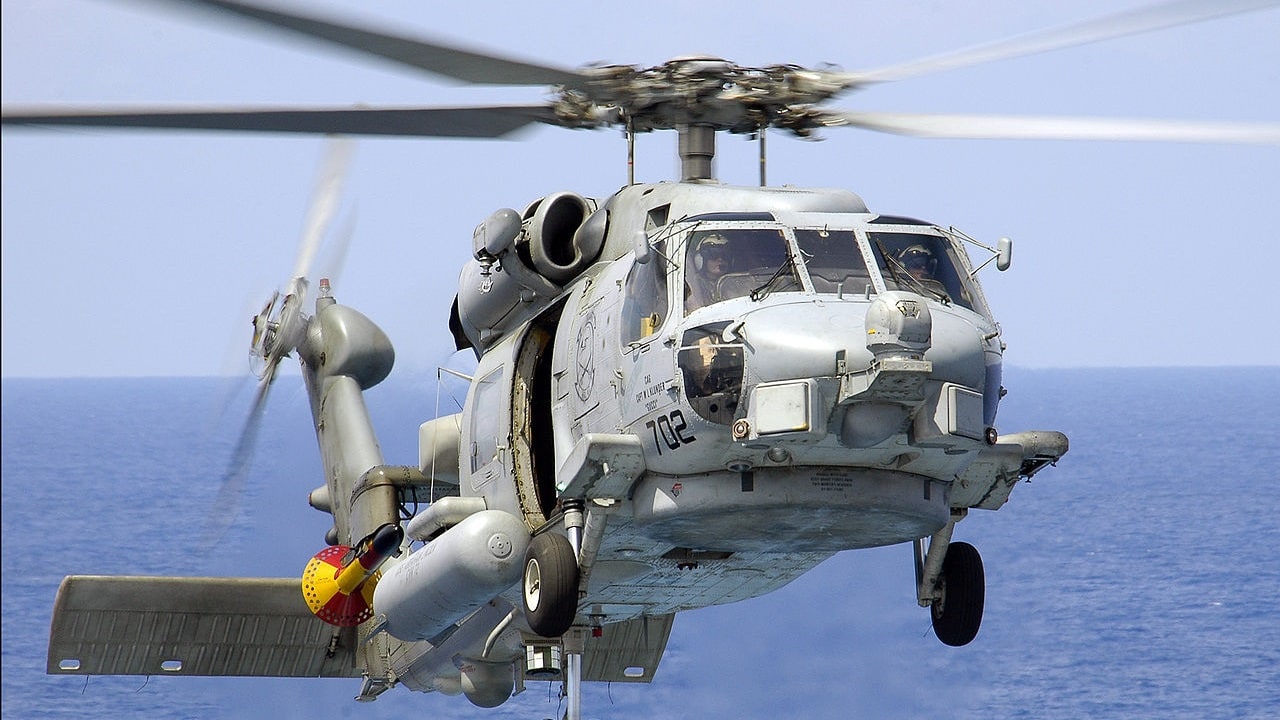
An SH-60B Seahawk assigned to the Saberhawks of Helicopter Anti-submarine Squadron Light Four Seven (HSL-47) prepares to land aboard the Nimitz-class aircraft carrier USS Abraham Lincoln (CVN 72).
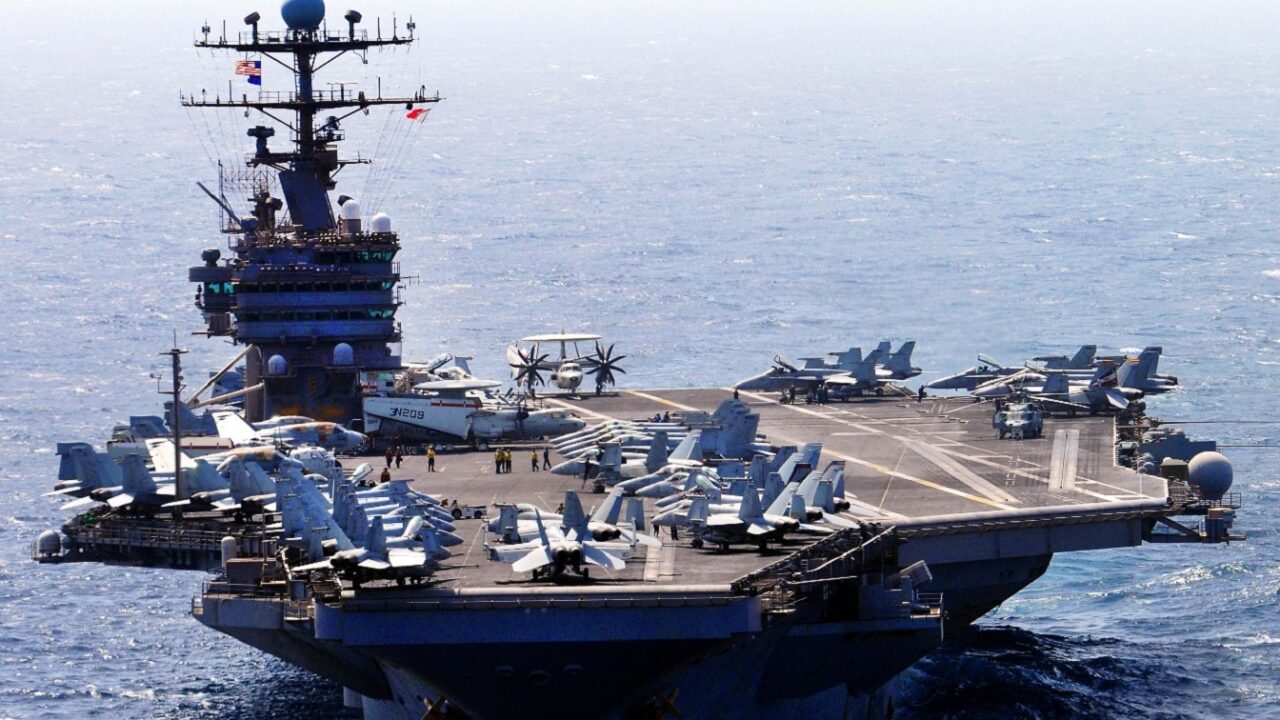
ARABIAN SEA (May 24, 2012) The Nimitz-class aircraft carrier USS Abraham Lincoln (CVN 72) transits the Arabian Sea. Abraham Lincoln is deployed to the U.S. 5th Fleet area of responsibility conducting maritime security operations, theater security cooperation efforts and support missions as part of Operation Enduring Freedom. (U.S. Navy photo by Mass Communication Specialist 3rd Class Amanda L. Kilpatrick/Released)
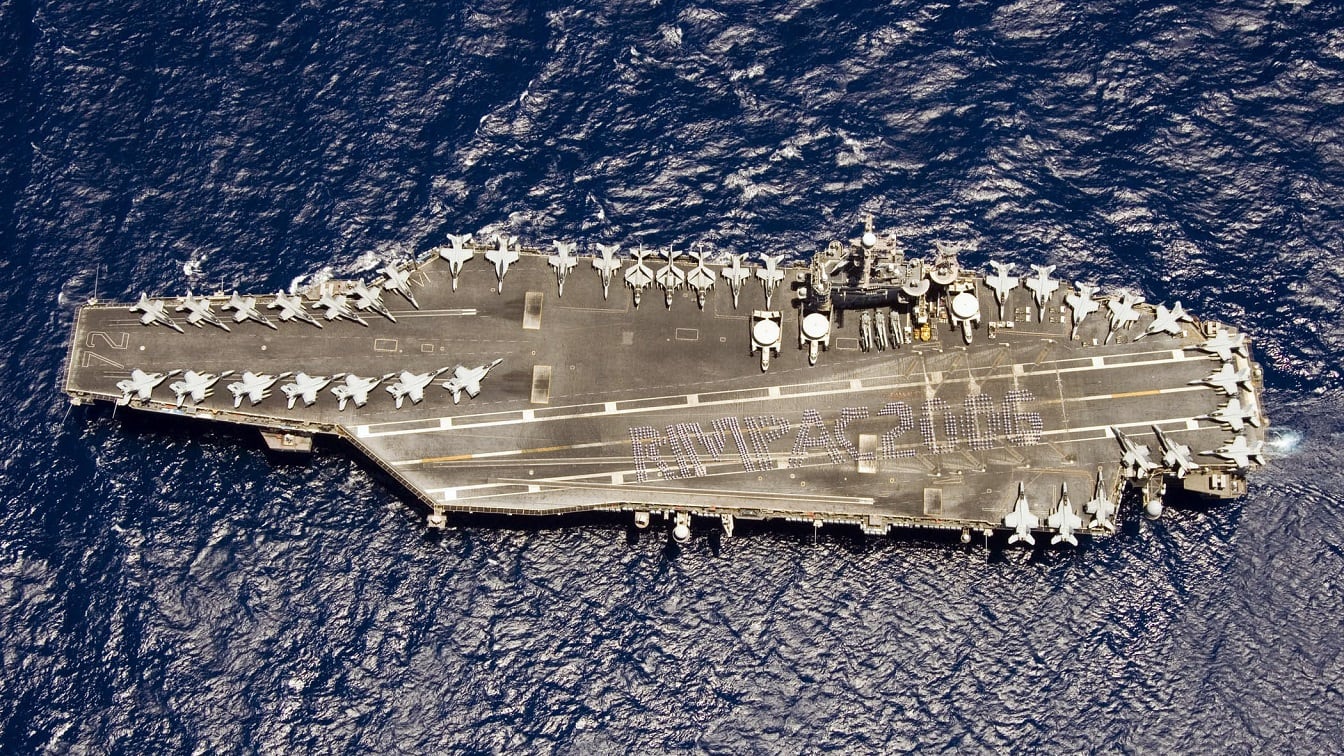
Aerial overhead view of US Navy (USN) Sailors aboard the USN Nimitz Class Aircraft Carrier USS ABRAHAM LINCOLN (CVN 72) spelling out RIMPAC 2006 on the flight deck of the ship during a photo exercise during Exercise Rim of the Pacific (RIMPAC) 2006 in the Pacific Ocean (POC). The exercise is designed to increase the tactical proficiency of participating units in a wide array of combined sea operations. RIMPAC 2006 brings together military forces from Australia (AUS), Canada (CAN), Chile (CHL), Peru (PER), Japan (JPN), the Republic of Korea (KOR), United Kingdom (UK) and the United States (US).
U.S. Navy photo by Mass Communication Specialist Seaman James R. Evans (RELEASED)
-Discussion has also focused on the USS Gerald R. Ford’s positioning and the tradeoffs of extending deployments versus rapidly rebalancing naval power.
USS Abraham Lincoln Headed Toward Iran: Carrier Strike Group Shift Signals White House Options
It was reported last week that a U.S. Navy supercarrier was in the South China Sea, with USS Abraham Lincoln (CVN-72) having conducted exercises last month. Now, a new report says that the same “supercarrier” is headed toward Iran.
According to a report by NewsNation, the Navy is “moving a carrier strike group from the South China Sea to the U.S. Central Command area of responsibility,” which includes the Middle East. The move comes amid growing unrest in Iran, and hints from the White House that the U.S. is looking to potentially intervene.
The USS Abraham Lincoln is the carrier in question, per the NewsNation report.
“Moving the carrier strike group — a naval formation centering around an aircraft carrier, with a variety of other vessels, including at least one attack submarine — is expected to take about a week,” the report said.
“This significant transfer of American military hardware comes amid developments related to unrest in Iran and questions about whether the White House will offer support to protesters who recently have challenged Iran’s autocratic regime.”
Trouble in Iran
Protests have raged in Iran due to economic trouble in that country, with Human Rights Activists News Agency stating that more than 2,500 people had been killed.
Per Reuters, the U.S. has evacuated some personnel from bases in the Middle East, after Iran threatened to attack American bases should Washington strike Iran.
“All the signals are that a U.S. attack is imminent, but that is also how this administration behaves to keep everyone on their toes. Unpredictability is part of the strategy,” a Western military official told the news agency.
Trump also implied to the press this week that the Iranian regime has backed down from executing protesters. Trump cited “very important sources on the other side” for that information.
The U.S., last summer, attacked Iran’s nuclear sites, a step that previous U.S. presidents had resisted. Trump claimed afterward that the sites had been “obliterated,” although it remains ambiguous whether that was true.
Also ambiguous is whether a U.S. intervention would result in a good result for Iran’s dissidents, or if a strike at the regime would help them put the rebellion down.
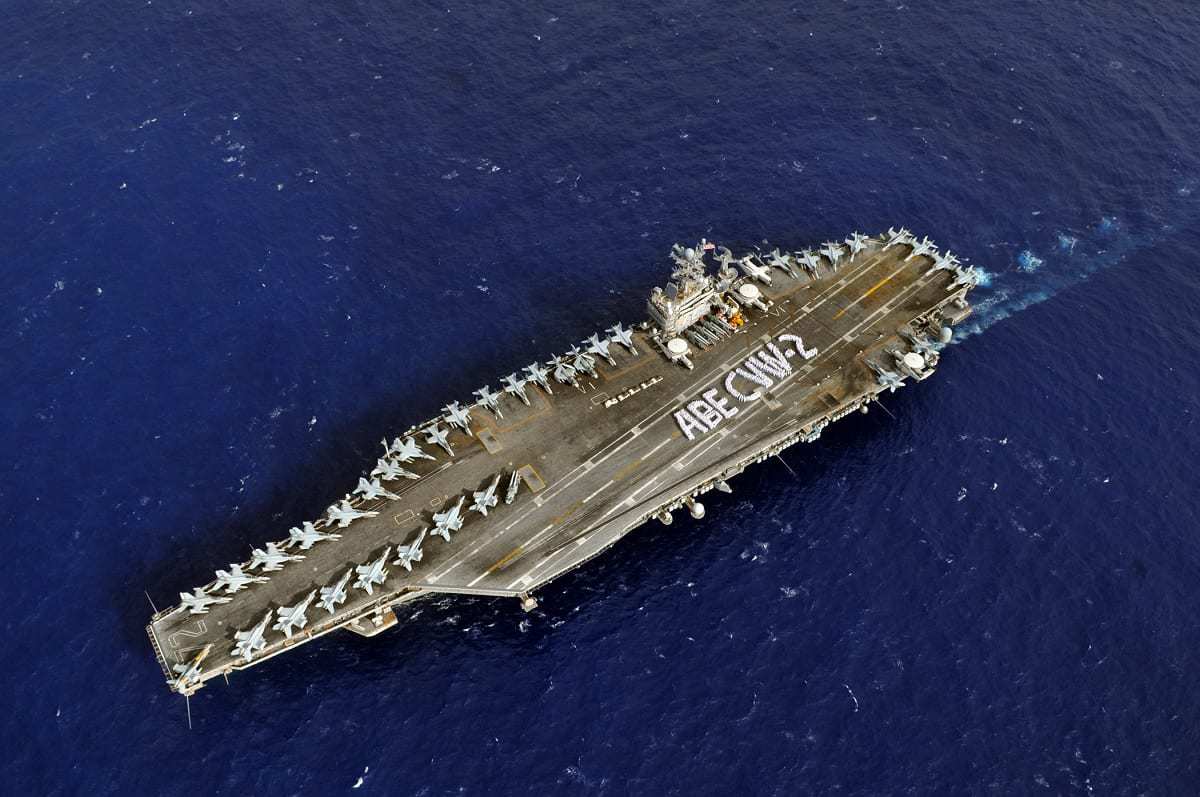
(Sept. 27, 2008) Sailors assigned to the aircraft carrier USS Abraham Lincoln (CVN 72) and Carrier Air Wing (CVW) 2 participate in a “flight deck spell out” aboard Lincoln while transiting the Pacific Ocean. The Abraham Lincoln Strike Group is on a scheduled deployment in the U.S. 7th Fleet area of responsibility operating in the western Pacific and Indian oceans. (U.S. Navy photo by Mass Communication Specialist 2nd Class James R. Evans/Released)
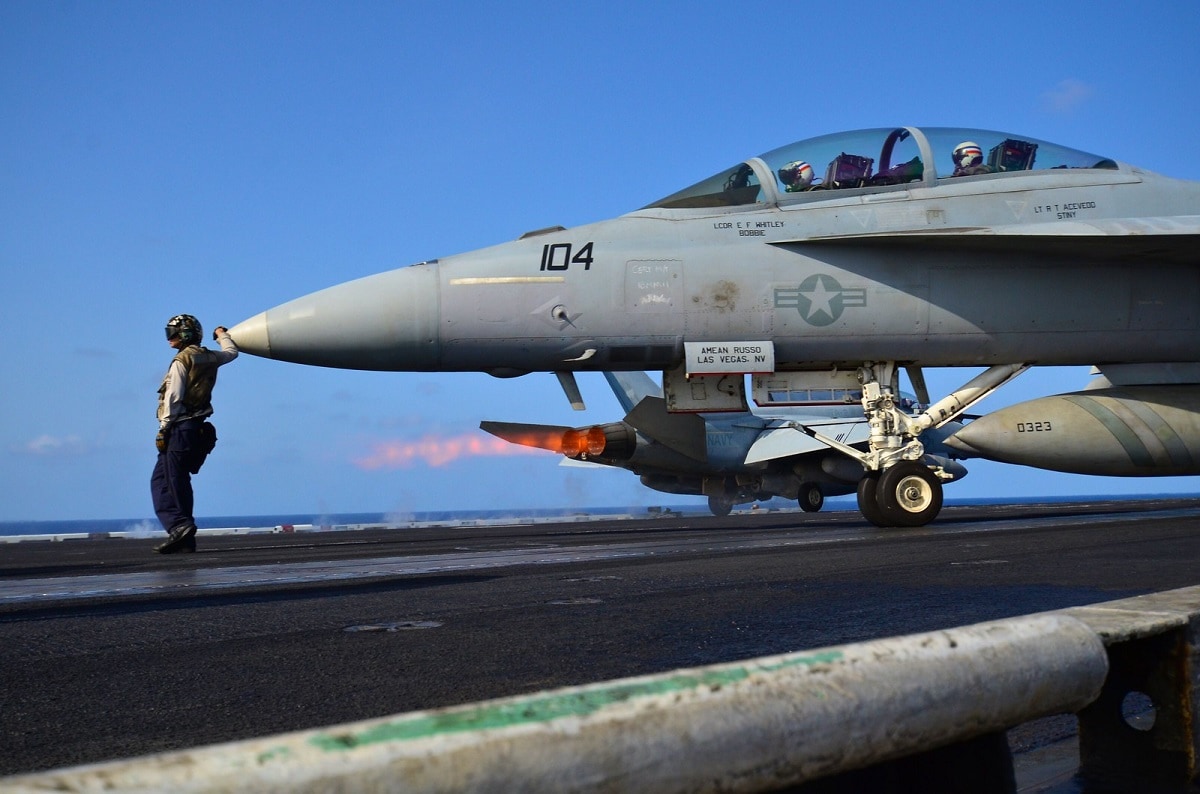
PACIFIC OCEAN (March 18, 2011) An F/A-18F Super Hornet assigned to the Bounty Hunters of Strike Fighter Squadron (VFA) 2 prepares to move as another jet launches from the aircraft carrier USS Abraham Lincoln (CVN 72) during a fly off of Carrier Air Wing (CVW) 2. Abraham Lincoln is returning home from a routine deployment to the Arabian Sea and is in the U.S. 3rd Fleet area of responsibility in support of maritime security operations and theater security cooperation efforts in the region. (U.S. Navy photo by Capt. Jaime Quejada/Released).

A U.S. Marine Corps F/A-18C Hornet launches with after burners aglow from the flight deck of the aircraft carrier USS Abraham Lincoln (CVN 72) operating in the Pacific Ocean on Sept. 15, 2004. The Hornet is with Marine Fighter Attack Squadron 232.
Is the U.S. Overextended?
The carrier group jumping from China to the Middle East seems likely to fuel whispers that the U.S. military is starting to become overextended. And that’s to say nothing of the recent operation in Venezuela, which followed weeks of boat strikes in the Caribbean.
According to a new story in The Atlantic, by Nancy A. Youssef, “The U.S. Military Can’t Do Everything at Once.”
“Even with a nearly $1 trillion budget, the U.S. military can only do so much. Pentagon officials are privately warning that the United States may not be able to threaten Venezuela’s regime, support protesters seeking to topple Iran’s government, and protect its interests in the Asia-Pacific without being overstretched,” Youssef writes.
“The competing demands could heighten the risk to ground forces in the Middle East, who would be in the line of fire of any retaliation from Iran should President Trump decide to strike.”
This has led to what the Atlantic calls an “unusual problem”: “How to get the ships, munitions, and planes that were protecting U.S. forces in the Middle East—but are now in the Caribbean—back to the Middle East. The answer is probably that they can’t have everything they want everywhere they would like it.”
Per the story, the U.S. sent about 11 ships and submarines near Venezuela, described as “the biggest U.S. military footprint in the region since the Cuban missile crisis,” and many of those vessels were previously based in the Middle East.
“Until last fall, commanders in the Middle East could count on having an aircraft carrier strike group nearby that was either in the Persian Gulf or could reach it quickly,” the Atlantic writes. “Fighter jets can take off from a carrier and conduct strikes in defense of U.S. ground forces. Destroyers accompanying the carrier can shoot down enemy missiles bound for U.S. bases. Not this time.”
Would this make a strike on Iran harder to carry out?
“Enough U.S military power remains in the Middle East to launch a strike on Iran’s security forces or even its nuclear program,” the Atlantic story said. “But there may not be enough to defend U.S. troops from a regime that has repeatedly vowed to strike back at nearby U.S. assets and regional allies if it’s attacked. Iran’s theocratic regime may be all the more inclined if it feels it is on its last legs.”
“It’s not carrying out the strike that we have to worry about. It’s the Iranian response,” a former “military commander who operated in the Middle East” told The Atlantic.
Supercarrier Questions: Where’s the USS Ford?
The Atlantic story said that the USS Gerald Ford “left the shores of Europe last fall for the U.S. pressure campaign on Venezuela,” and would take two weeks to get back to the Middle East.
According to a report by The War Zone, Adm. Daryl Caudle, the Chief of Naval Operations (CNO), discussed the ship’s position with a group of reporters at Surface Navy Association’s annual symposium.
“I think the Ford, from its capability perspective, would be an invaluable option for any military thing the president wants to do,” Caudle told the reporters. “But if it requires an extension, it’s going to get some push back from the CNO. And I will see if there is something else I can do.”
The Ford strike group, per TWZ, left Norfolk for a “regularly scheduled deployment” to the Mediterranean last summer, shortly before the war between Israel and Iran, and the eventual U.S. strike on Iran.
“Arleigh Burke class destroyers USS Winston S. Churchill, USS Bainbridge and USS Mahan remain on station with the Ford to continue operations under Operation Southern Spear, the effort to counter drug trafficking in the region and maintain pressure on Venezuela,” TWZ reported.
About the Author: Stephen Silver
Stephen Silver is an award-winning journalist, essayist, and film critic, and contributor to the Philadelphia Inquirer, the Jewish Telegraphic Agency, Broad Street Review, and Splice Today. The co-founder of the Philadelphia Film Critics Circle, Stephen lives in suburban Philadelphia with his wife and two sons. For over a decade, Stephen has authored thousands of articles that focus on politics, national security, technology, and the economy. Follow him on X (formerly Twitter) at @StephenSilver, and subscribe to his Substack newsletter.