
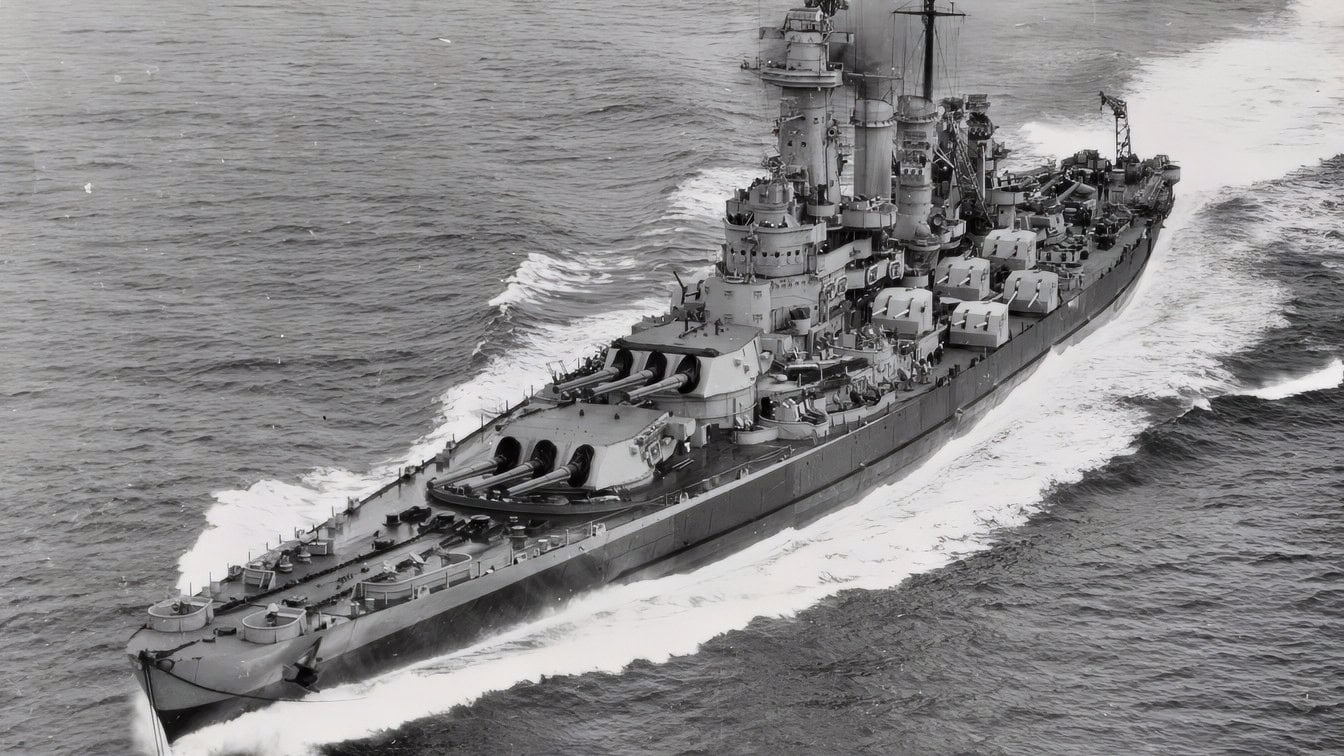
Summary and Key Points: The US Navy built only 2 North Carolina-class battleships, and one of them holds a record no other battleship on earth has ever matched. USS Washington is the only battleship in history to sink an enemy battleship in a one-on-one surface engagement. She also holds the record for enemy tonnage sunk, and she finished the war having taken 0 casualties and 0 hits from enemy fire. Her sister ship, the 35,000-ton USS North Carolina, took a submarine torpedo in the Solomons and survived it — because designers had fought to put extra armor plating at the waterline while the treaty limits were squeezing every ton out of the design.
The North Carolina-Class Battleships Made History
The United States Navy’s North Carolina-class battleships were known for being constructed during the “treaty era” that limited weight displacement and gun size for battleships.
This was the first battleship class during those interwar years. The later South Dakota-class battleships were more maneuverable and survivable, while the Iowa-class battleships were well known for their size and power. But the North Carolina-class served well in combat, and these dreadnoughts deserve a glowing profile.
North Carolina-class: Only Two Battleships Built
The North Carolinas comprised only two ships—the USS North Carolina and the USS Washington. The Washington may have enjoyed a better war record, but North Carolina was no slouch in combat, and they were busy warships during that period of global conflict.
When It Was Difficult to Design a Battleship
In 1935, the Second London Naval Treaty was about to be consummated. Still, US Navy war planners were looking for designs that would improve on the treaty restrictions—capital ships that could better bring about the enemy’s doom in a possible war with Germany or Japan.
The North Carolinas were envisioned to be fast with heavy firepower and armor. Engineers drew up plans for the North Carolina and the Washington to perhaps go as fast as 30 knots.
Meanwhile, Japan was producing the Kongo-class battlecruisers, which were speedy, and the Americans wanted to keep up with those fast, powerful vessels.
Could Enemy Submarines Sink the North Carolina-class?
One concern about the North Carolina-class was its survivability against enemy submarines. More armor was needed due to the possibility of being hit by torpedoes. A faster ship could avoid enemy submarines and survive their weapons.
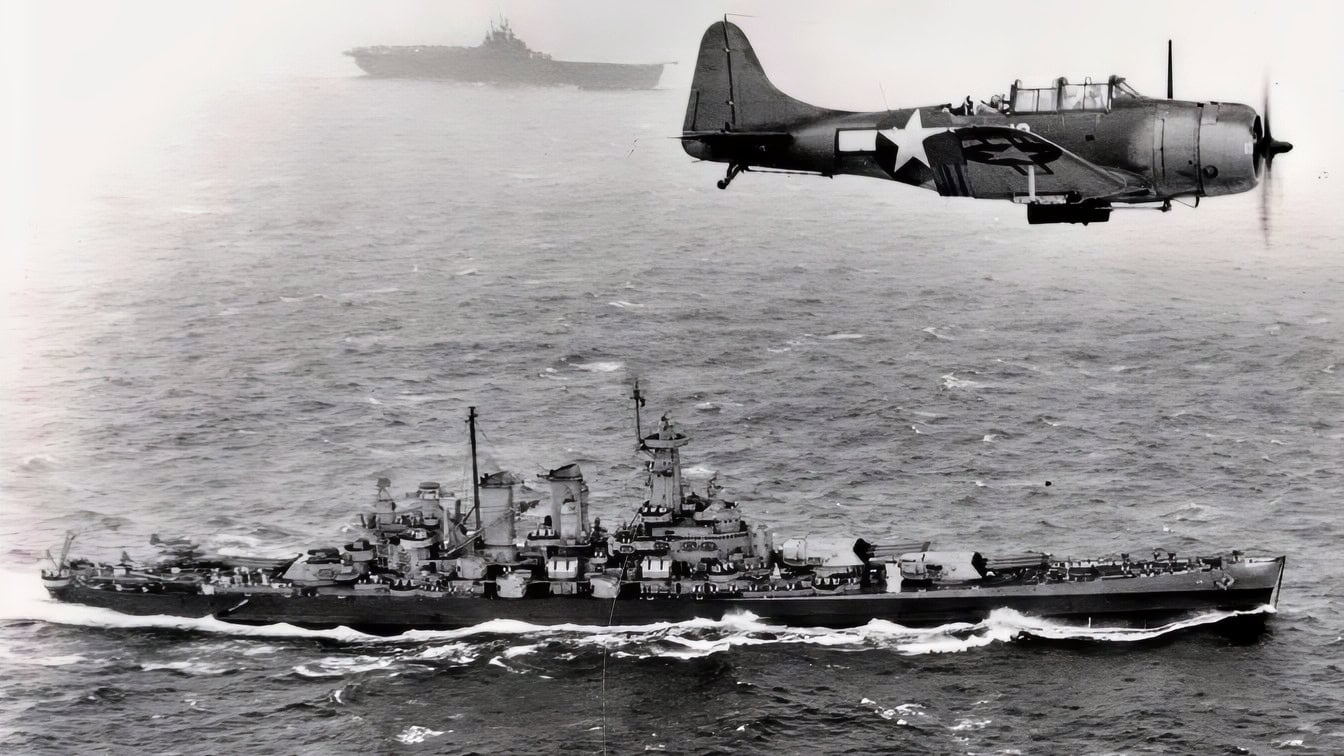
USS Washington Creative Commons Photo
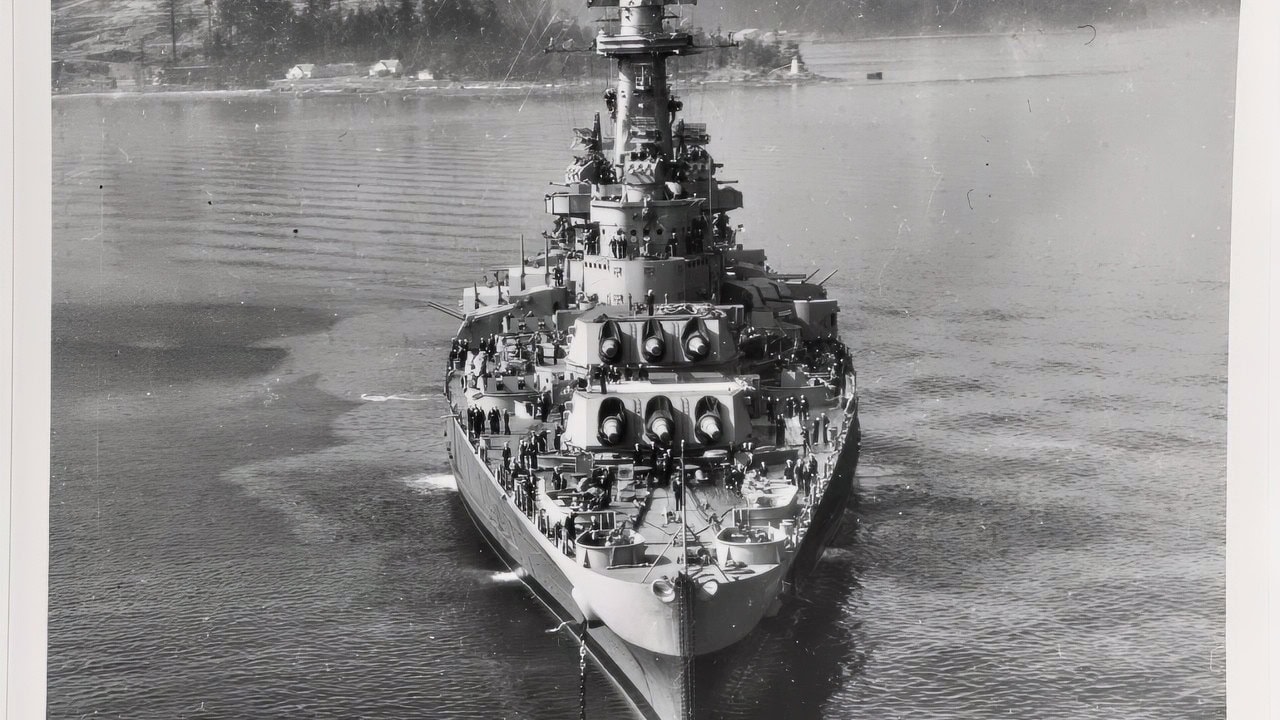
USS Washington Battleship. Image Credit: Creative Commons.
One bulkhead was taken out to reduce weight and improve speed.
The Specs for the North Carolina-class
Due to the treaty restrictions, the North Carolina-class displaced only 35,000 tons. Designers made dozens of sketches to arrive at the most survivable ship possible. The North Carolina-class was 714 feet long with a speed of 27 knots.
Twelve 14-inch/50 guns in quadruple turrets made the North Carolinas fearsome. Later, the ship was designed with more powerful engines to produce more speed. Additional armor plating was placed at the waterline for better protection against torpedoes.
The anti-aircraft system was comprised of 18 .50 caliber machine guns and four quad 1.1-inch machine cannons. In 1937, the quad 14-inch turrets were replaced with triple 16-inch turrets.
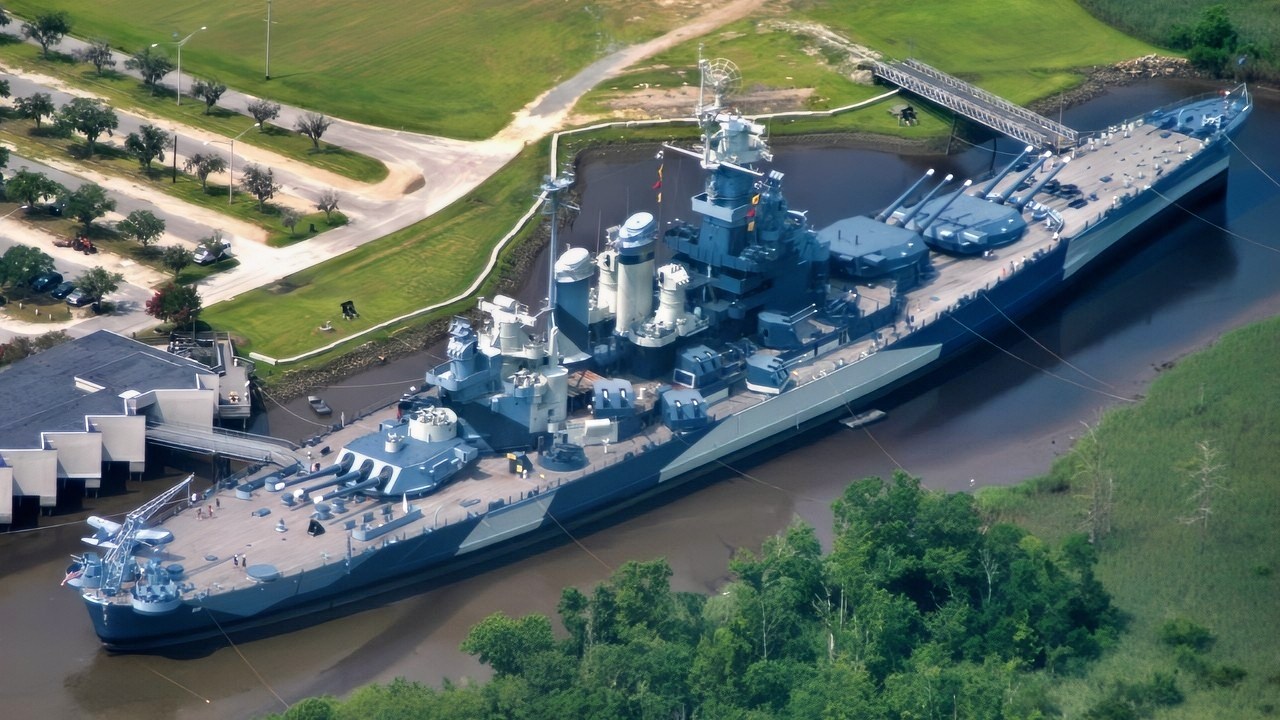
USS North Carolina Battleship. Image Credit: Creative Commons.
The North Carolina was the first new battleship to join the fleet in 20 years. Service in the Pacific ensued during the war. An enemy submarine torpedo unfortunately hit it during the Eastern Solomons operation. The North Carolina returned to battle during the engagement near the Gilbert Islands.
It was known as a carrier escort and for using its heavy guns to support other amphibious landings.
USS Washington Shines in Battle
However, the USS Washington was famous for its combat exploits during the war with Japan in the Pacific.
After serving as an escort ship during convoys for the Lend-Lease program, Washington was transferred to the South Pacific in 1942.
As Brad Reynolds aptly described on WarHistoryNetwork.com, the Washington was “responsible for turning the tide of naval warfare in the Pacific Theater while miraculously incurring no casualties or damage from enemy fire through the entire war. She holds the record for enemy tonnage sunk.
To this day, she remains the only battleship to sink an enemy battleship in a one-to-one surface engagement, marking her as one of America’s most famous navy ships of all time.”
The North Carolina-class were adroit battleships. The Washington had a better war, but the North Carolina returned from submarine damage and likely survived thanks to the armor improvements designers insisted on during construction.
More ships for this class could have made an even better impact on the war, but two were still effective. They paved the way for the South Dakota-class and the famous Iowa-class. This was the golden age of the US battleship with heavy firepower, speed, and the ability to influence the entire war.
Battleships were needed in World War Two to bombard islands and to escort carriers, resulting in more effective carrier battle groups.
The North Carolina-class battleships did their jobs admirably and are looked upon by naval historians as stalwart leaders of the US Navy’s efforts to win the war in the Pacific.
About the Author: Dr. Brent M. Eastwood
Brent M. Eastwood, PhD, is the author of Don’t Turn Your Back On the World: a Conservative Foreign Policy and Humans, Machines, and Data: Future Trends in Warfare, plus two other books. Brent was the founder and CEO of a tech firm that predicted world events using artificial intelligence. He served as a legislative fellow for US Senator Tim Scott and advised the senator on defense and foreign policy issues. He has taught at American University, George Washington University, and George Mason University. Brent is a former US Army Infantry officer. He can be followed on X @BMEastwood.