
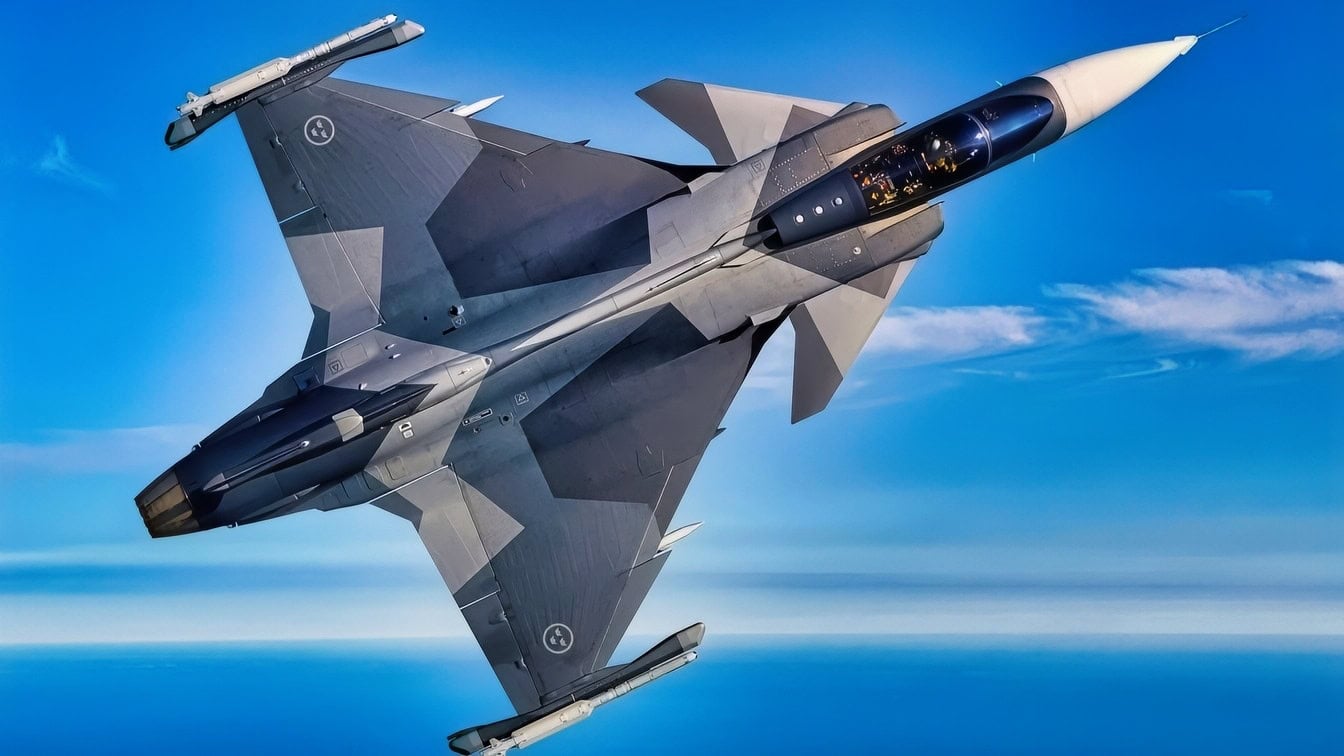
Summary and Key Points: Sweden built the JAS-39 Gripen around one idea: a small, not-especially-rich country sitting next to a much larger neighbor cannot outspend its way to air power, so it has to out-think it. Three decades later that premise produces some remarkable arithmetic. A Gripen E costs somewhere in the region of $4,700 to $9,900 per flight hour. An F-35A runs $38,000 to $42,000. An F-22 Raptor runs $44,000 to $68,000
The Saab JAS 39 Gripen Has an Answer for the F-22 and F-35 Stealth Fighters
Sweden’s Saab JAS 39 Gripen has spent three decades as the fighter that refuses to be counted out.
It was designed from day one around a brutally simple idea: a small, poor country facing a much larger neighbor can’t outspend its way to air power, so it has to outthink it.
That philosophy is now being tested against a new kind of threat, a world where China fields two fifth-generation fighters, Russia keeps pushing the Su-57, and stealth is no longer a luxury reserved for the United States.
So what, specifically, is Saab doing to keep a fourth-generation-plus airframe relevant against low-observable rivals, and how does the price tag stack up against the F-22 and F-35?
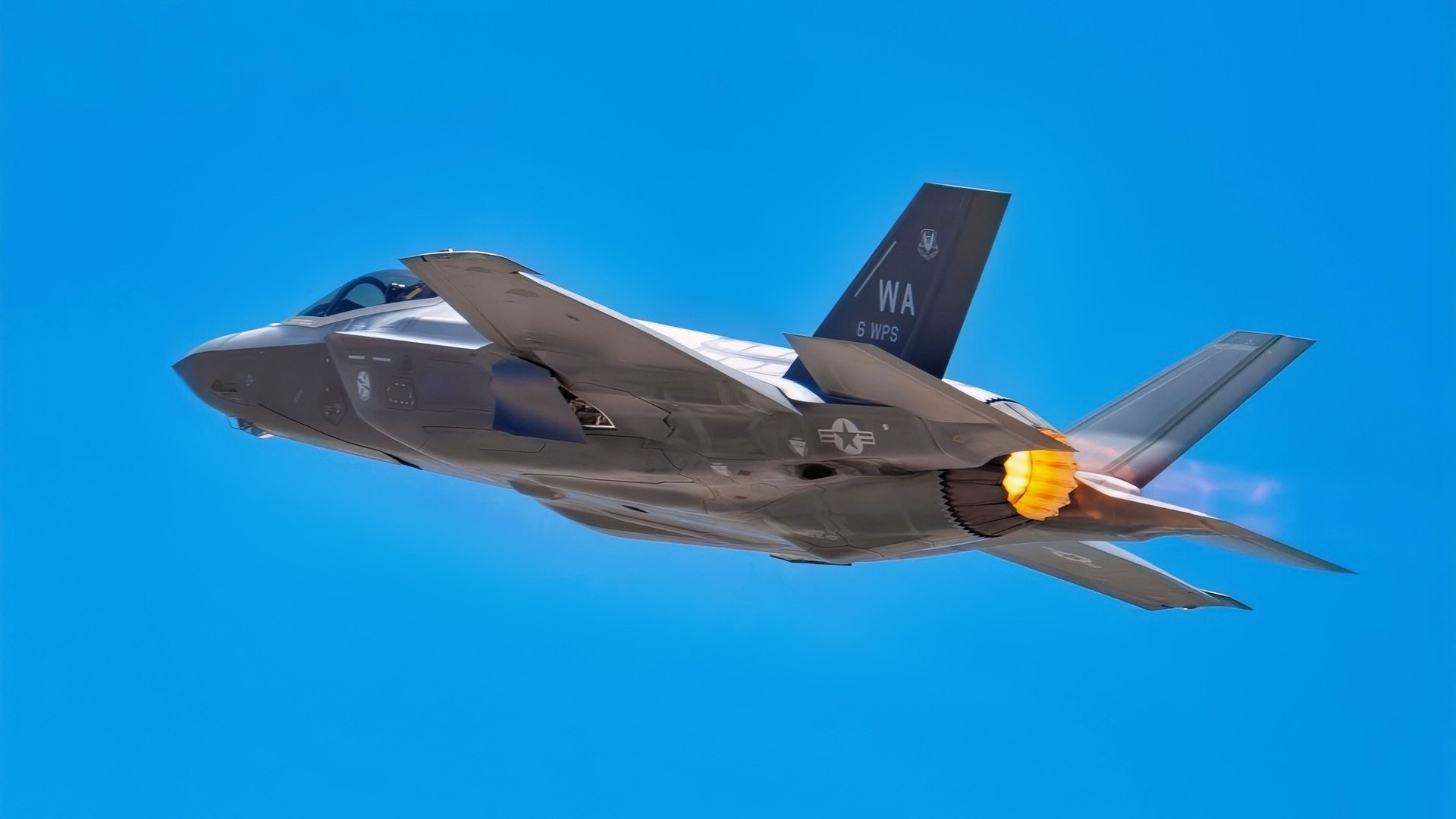
An F-35A Lightning II fighter jet, 6th Weapons Squadron (WPS), takes off from Nellis Air Force Base, Nev., July 18, 2019. The 6th WPS is the only squadron under the U.S. Air Force Weapons School exclusively training on the F-35A. (U.S. Air Force photo by Airman 1st Class Bryan Guthrie)
The Gripen Is An Outstanding Aircraft Mired In A Stealth World
The JAS 39 Gripen is an excellent aircraft prized for its advanced tech (AESA radar, powerful GE F414 engine, digital systems), operational flexibility (it can operate from dispersed roads, low maintenance for conscripts), and cost-effectiveness, making it a highly capable multi-role fighter, especially for smaller nations needing independent, versatile air power against larger threats like Russia.
The JAS 39E/F, often just called the Gripen, is a highly maneuverable, multi-role fighter aircraft developed by Sweden.
We’ve written extensively on the aircraft, and it’s outstanding.
The Gripen has been in service since 1996 and is a mainstay of the Swedish Air Force, with several other nations also adopting it.
The Gripen E/F: A Clean-Sheet Redesign
The latest variants, the JAS 39 Gripen E (single-seat) and Gripen F (two-seat), look like the older C/D models from a distance, but they’re effectively new aircraft underneath.
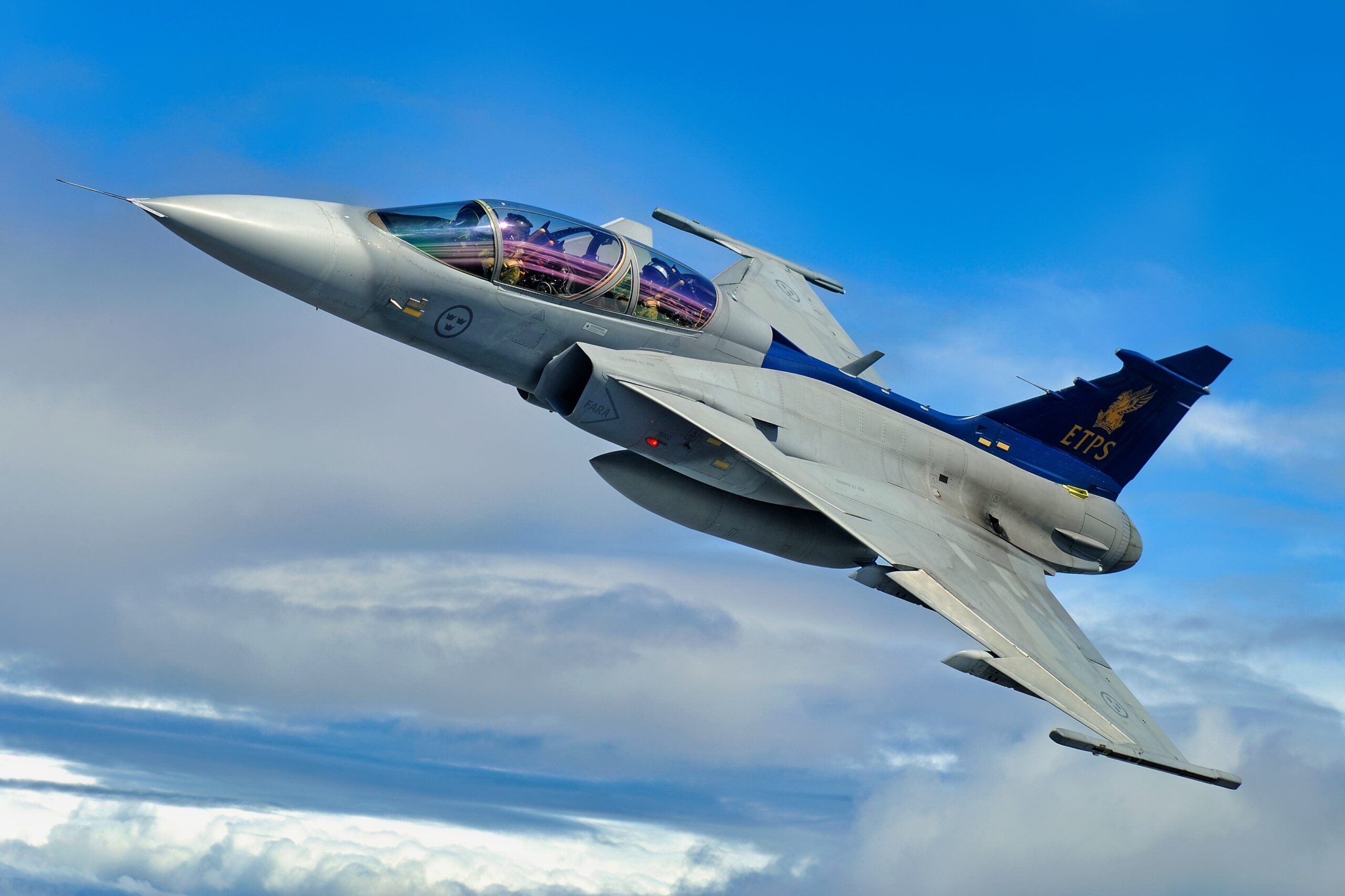
JAS 39 Gripen Fighter from Sweden. Image Credit: Creative Commons.
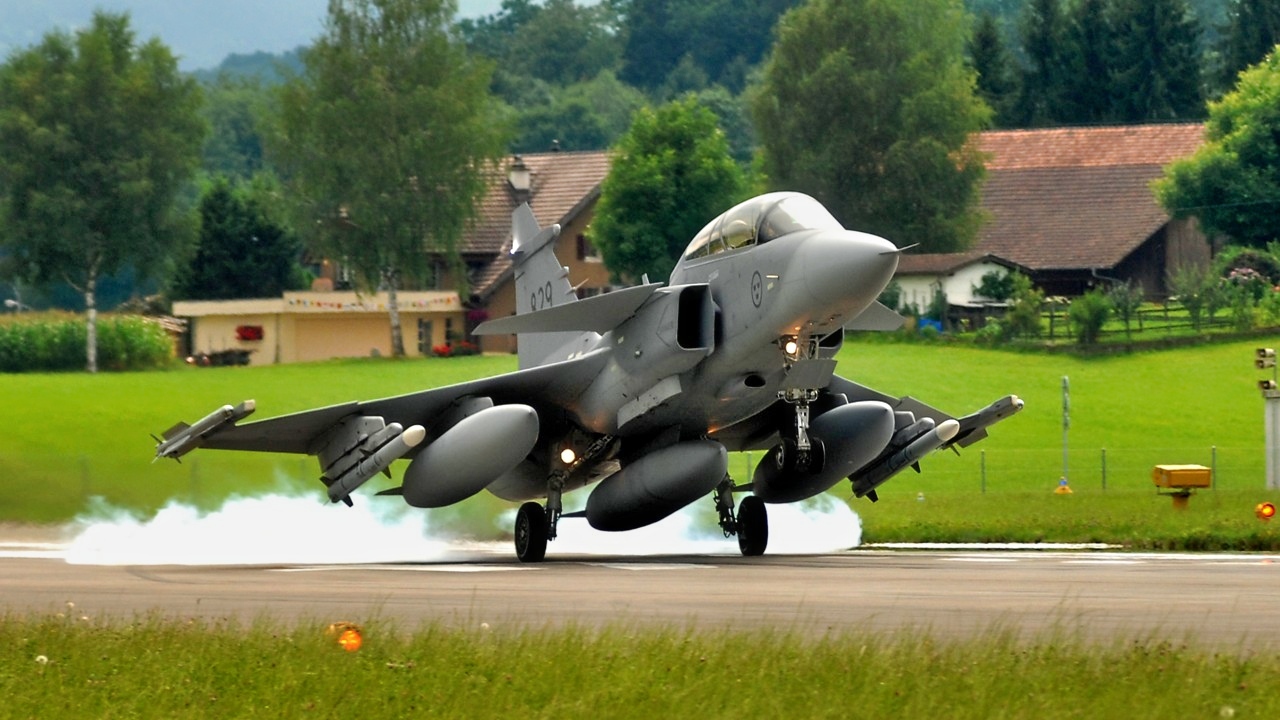
JAS 39 Gripen Fighter. Image Credit: Creative Commons.
It entered Swedish service in October 2025, and the core survivability upgrades center on sensors, electronic warfare, and software rather than a stealth shape:
-AESA radar and IRST: The jet carries Saab’s PS-05/A Mk4 active electronically scanned array radar alongside an infrared search-and-track sensor, giving it a passive means of detecting and tracking other aircraft without emitting a radar signal that an enemy can home in on.
-A more powerful engine and more fuel: The switch to the General Electric F414 engine, paired with roughly 30 percent more internal fuel capacity, extends range and gives pilots more energy to maneuver defensively.
-Spherical electronic warfare coverage: Rather than relying on a small radar cross-section, the E/F leans on an all-around EW suite designed to detect, jam, and spoof incoming threats before they get a shot off.
The aircraft utilizes the advanced Saab Arexis electronic warfare (EW) suite, built around gallium nitride (GaN) sensor technology to deliver high-power, broadband self-protection and networked electronic attack capabilities.
-Open, software-first architecture: Saab has built the jet around a growth path so new capabilities, weapons integration, sensor fusion, and AI-assisted threat recognition through its helmet-mounted cueing system can be added through software updates rather than years-long hardware redesigns.
Older C/D jets are getting the same philosophy applied retroactively through the incoming Block 3/MS20 update, which adds the Meteor missile, the Small Diameter Bomb, and better datalink integration.
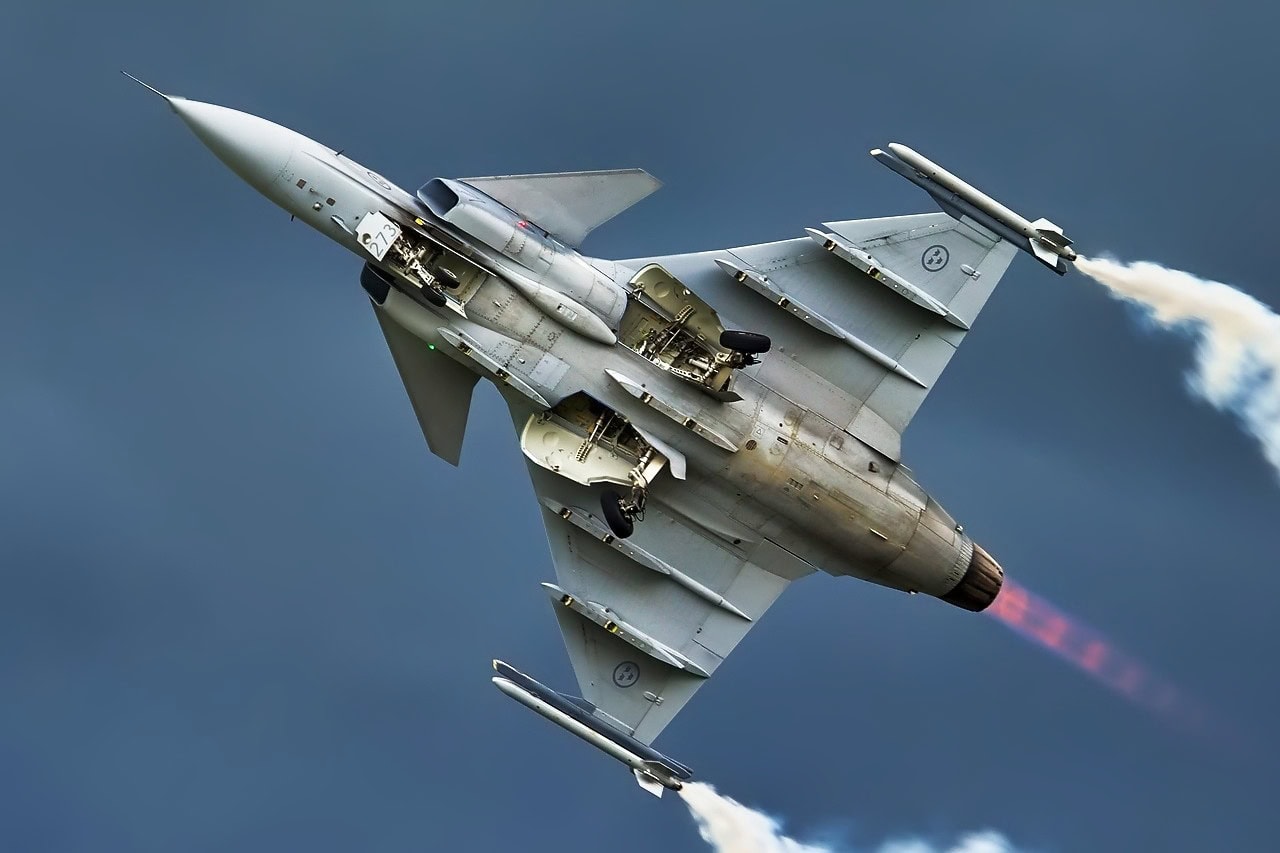
JAS 39 Gripen Fighter from Sweden.
-Dispersed basing as a survivability feature in its own right: The Gripen’s Bas 90 basing concept lets a small ground crew, historically conscripts plus one technician, turn the jet around on a stretch of highway in about 10 to 20 minutes.
Refueling and rearming the Gripen E for an air-to-air mission takes less than 20 minutes, and only a limited number of ground crew and equipment are needed, ensuring rapid re-engagement.
Aviation analysts are split on whether that’s enough. Some argue that stealth airframes offer a short-term technological edge that software-driven jets can eventually outpace, while others note that the Gripen’s conventional radar cross-section becomes a bigger liability as more countries field genuine fifth-generation fighters.
The Cost Equation: Where The JAS 39 Gripen Clearly Has The Advantage
This is where the Gripen’s original design goal is most evident.
Reported unit prices for the Gripen E sit around $85 million, though older program-wide estimates have run higher, and its flight-hour operating cost is widely cited in the roughly $4,700–$9,900 per hour range depending on the source and variant, dramatically below most 4th- and 5th-generation competitors.
Compare that to:
-F-35A: Unit prices are commonly cited at around $80–85 million per aircraft, with an hourly operating cost of $38,000–$42,000, though the Pentagon has publicly pushed to bring that closer to $30,000.
-F-22 Raptor: No longer in production, so its economics are baked in, a unit cost frequently cited around $150 million in flyaway terms, or as high as $361 million per aircraft when the entire program’s R&D and limited 187-jet production run are amortized in.
Its operating cost is the highest of the three, commonly put at $44,000–$68,000 per flight hour.
The takeaway most procurement officials draw isn’t that the Gripen is “as capable” as a stealth jet dollar for dollar.
Sensor fusion, all-aspect low observability, and stealth-first mission planning are real advantages the F-22 and F-35 hold.
It’s that the Gripen is optimized for a different equation entirely: buy and fly more aircraft, keep them dispersed and hard to catch on the ground, and let software upgrades, not a new airframe, ensure that it is a viable aircraft through the next decade.
Saab’s engineering aims to keep the JAS 39 Gripen relevant as stealth aircraft become more common.
It’s why much of Europe now operates the F-35.
And NATO’s enemies are all developing stealth fighters. China already operates two different fifth-generation fighters, while Russia continues to forge ahead with its Su-57 Felon, although the aircraft’s stealth qualities are somewhat dubious.
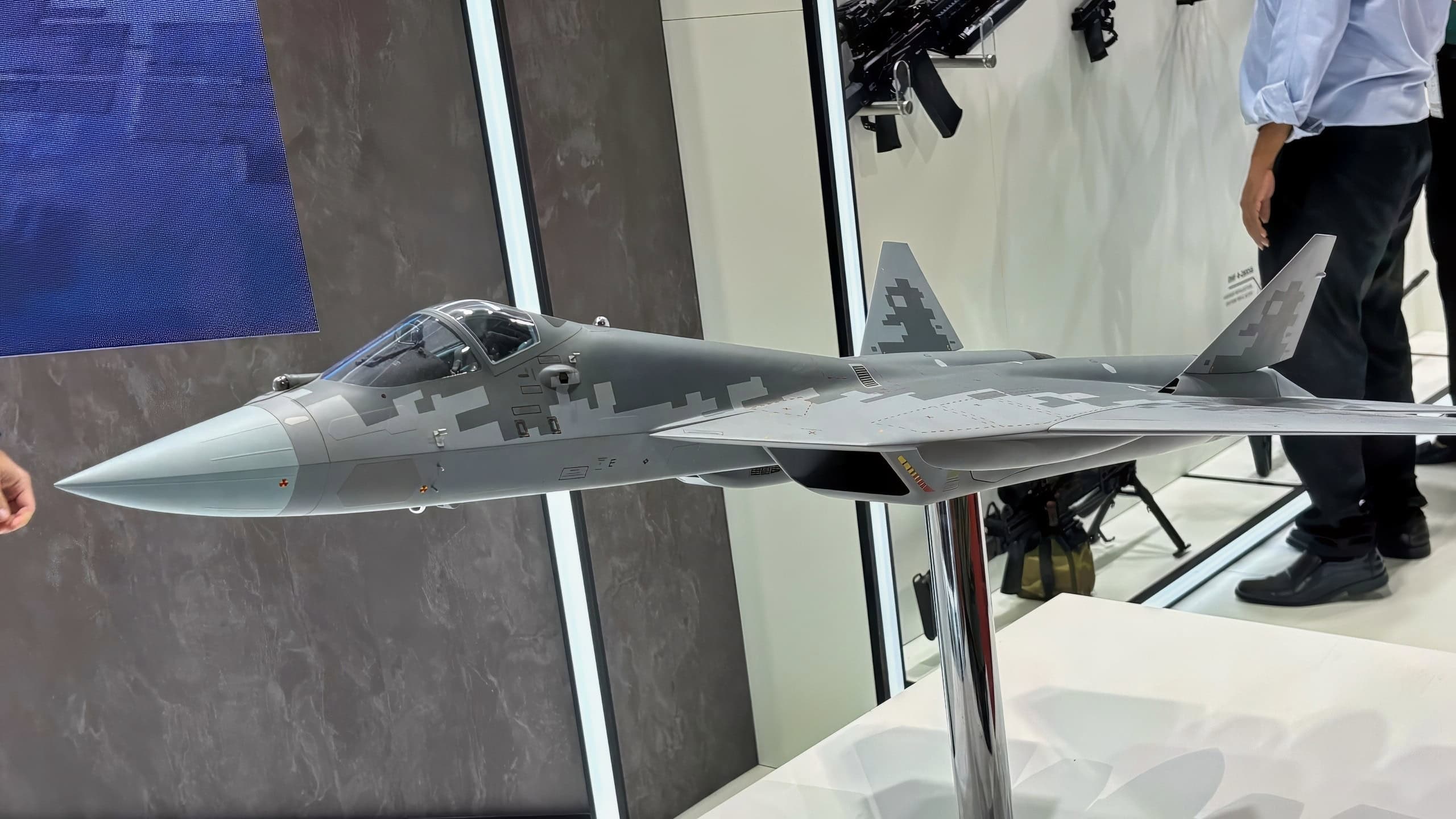
Su-57 Model 19FortyFive Original Photo
The Gripen remains an outstanding aircraft, for how much longer remains the question.
About the Author: Steve Balestrieri
Steve Balestrieri is a National Security Columnist. He served as a US Army Special Forces NCO and Warrant Officer. In addition to writing on defense, he covers the NFL for PatsFans.com and is a member of the Pro Football Writers of America (PFWA). His work was regularly featured in many military publications.