
On Sunday, Trump posted a cartoon of Mark Carney getting knocked down at a hockey game, captioned “Get Up, Governor.” The next morning, he posted a map of North America with the American flag stretched across the entire continent, Canada included.
Most people read it as a joke.
Legally, it was meaningless.
Strategically, it landed in a relationship that has long depended on neither government exploiting it.
By Tuesday, Canada’s counter-tariffs on American goods were in effect, and Washington responded the same day with new bans on Canadian alcohol, dairy, and motorcycles, plus an order to remove Canadian products from federal contracts.
The tariff numbers alone are bad enough. Washington’s 50 percent duties, levied under Section 338 of the same 1930 law that gave rise to the Smoot-Hawley tariffs, hit roughly C$27.6 billion in Canadian goods. Ottawa’s response matches it dollar for dollar, rate for rate.
Ontario’s premier has floated the idea of restricting electricity and critical-mineral exports, and Ipsos found roughly seven in ten Canadians prepared to support limits on those flows. All of that is real.
None of it is the dangerous part.
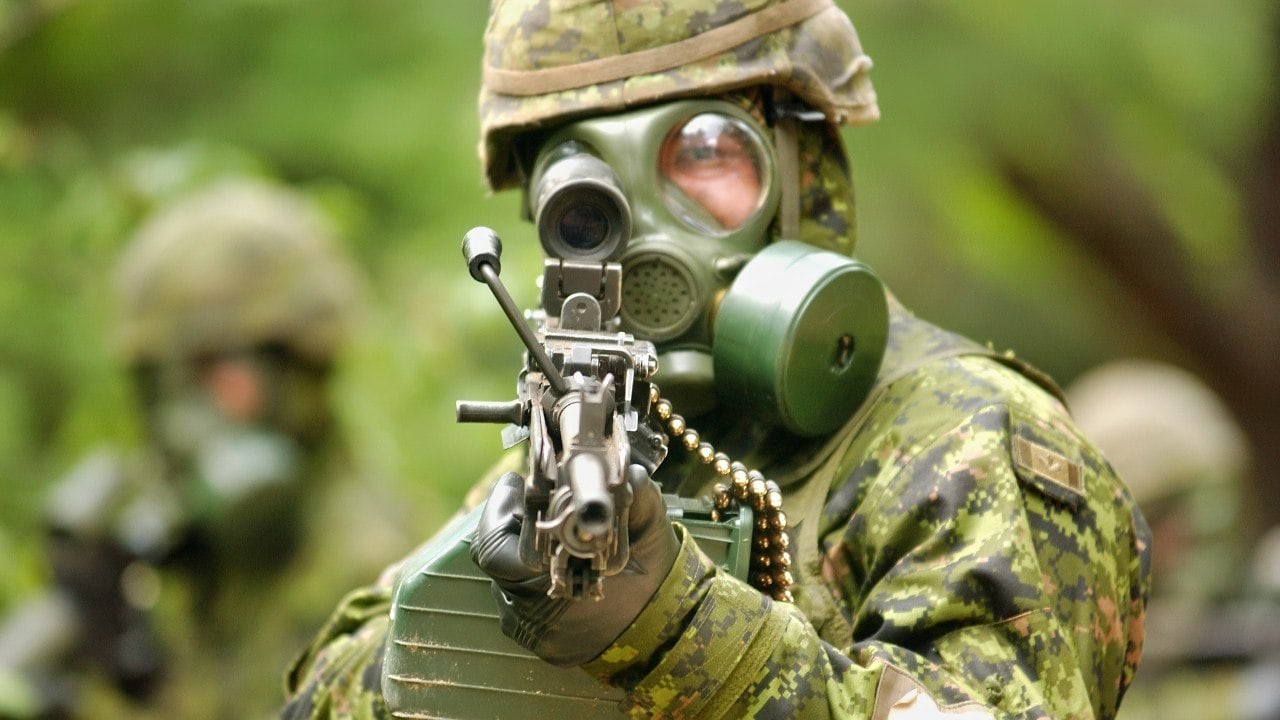
Pte Allen Jewell 1 RCR providing forward cover with his C9 weapon and wearing a new NBCD suit after coming under a simulation chemical agent attack at CFB Petawawa training area.

Members of 1st Battalion Princess Patricia’s Canadian Light infantry, playing as coalition forces take cover behind a Light Armored Vehicle (LAV) 6.0 during Ex MAPLE RESOLVE in Wainwright, Alberta on May 10th, 2021.
From May 1 to 11, 2021, about 2500 Canadian Armed Forces members are participating in Exercise MAPLE RESOLVE 21 in Wainwright, Alberta. As the premier annual Canadian Army field training event, Ex MAPLE RESOLVE tests soldier skills and abilities within a realistic, complex, and challenging combat environment.
The dangerous part is less obvious and has little to do with tariffs — or with Truth Social.
For most of the last century, Washington and Ottawa have carried at least three border and Arctic disputes that have never been resolved in any legal sense, because resolving them was never really the point.
Trust did most of the work a settlement might otherwise have done. What’s happening now is a test of whether that trust still holds, and the trade war is where the test is showing up first.
The Disputes Nobody Had to Settle
Here’s a fact that surprises most people who follow this relationship closely: there are no outstanding legal disputes between the United States and Canada over territory on land.
The last one closed with the Alaska Boundary Arbitration in 1903.
What’s left is a handful of maritime and Arctic questions, sitting untouched for reasons unrelated to either side’s loss of interest.
The Beaufort Sea boundary, north of Alaska and Canada’s Yukon and Northwest Territories, traces back to competing readings of an 1825 treaty predating both countries.
Talks were held in November 2024. By last October, no follow-up meeting had been scheduled, and nobody seemed particularly bothered.
The Northwest Passage isn’t so much a boundary dispute as a disagreement over what kind of water it is: Canadian internal waters, Ottawa’s position, or an international strait open to any nation’s shipping, Washington’s.
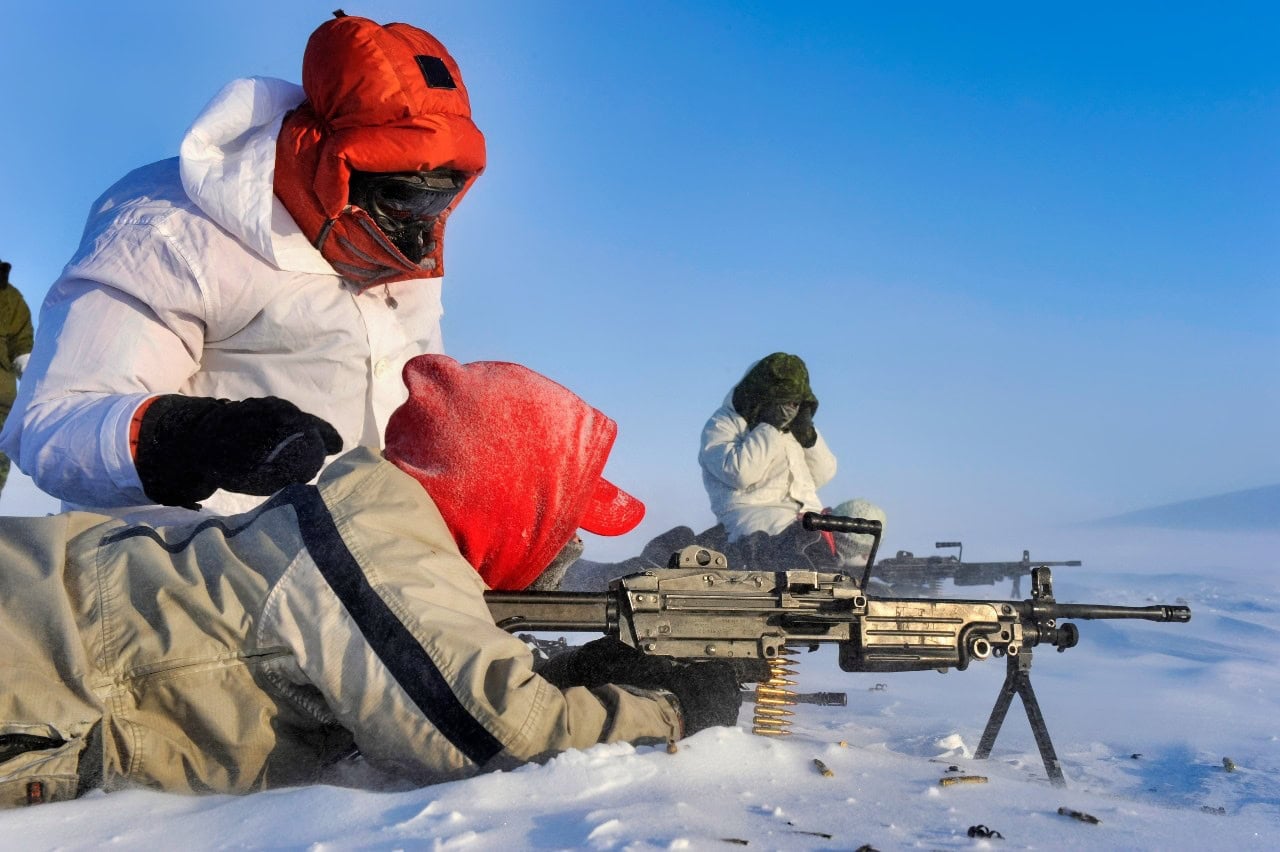
Canada Special Forces
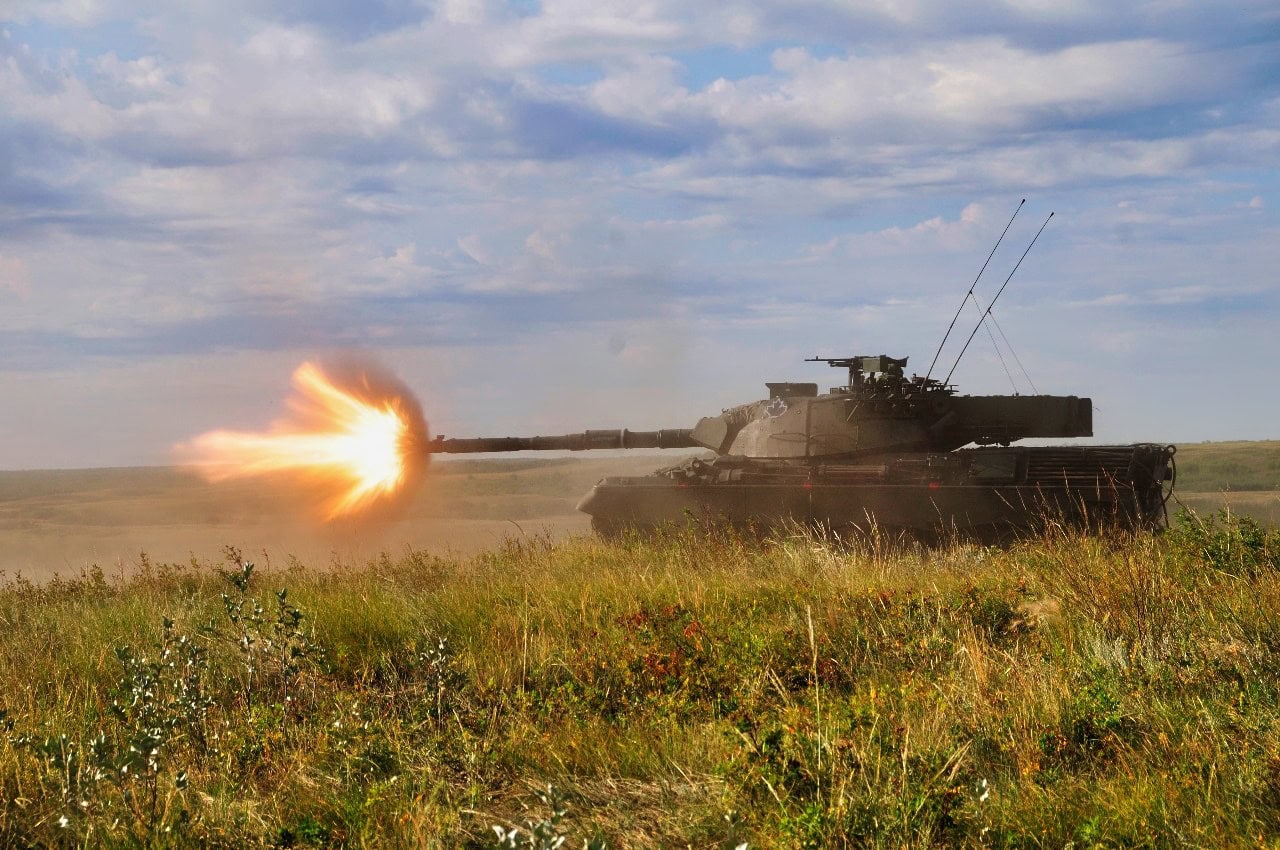
Canada Military Tank. Creative Commons Image.
In the Bay of Fundy sits Machias Seal Island, a rocky outcrop with a staffed Canadian lighthouse since 1832 and a U.S. claim that has never formally lapsed.
None has become a sustained strategic crisis in decades. Each has simply sat there, unresolved and largely unbothered, an odd condition unless you understand what was holding it together.
Trust Was the Treaty
That heading isn’t quite literal.
The two countries built actual instruments based on some of this.
The 1988 Arctic Cooperation Agreement is the clearest case: Washington agreed to seek Canadian consent before sending icebreakers through waters Canada claims as its own, while both sides preserved their underlying legal positions.
Nobody signed away a claim.
They signed an understanding that neither government would use the disagreement as leverage against the other.
That understanding is the part being tested now. Rob Huebert, who directs the Centre for Military Security and Strategic Studies at the University of Calgary, has put it more bluntly than most people in his position tend to, warning that the current administration is bringing what he calls “very dangerous and disruptive policies” to a relationship built on assumptions of unity that survived two world wars and the Cold War.
Neither government prepared for a genuine American territorial challenge, he’s noted, because until recently nobody thought one was plausible enough to prepare for.

Sergeant Stéphane Gauvreau and Bombardier Kevin Guy engage an air target with the Air Defence Anti-Tank System (ADATS), Call Sign (C/S) 22A, at range X-21, CFB Suffield, during Ex Potent Knight. Both are members of 128 Battery, 4 Air Defence Regiment (4 AD Regt) at CFB Gagetown, New Brunswick. Elements of 4 Air Defence Regiment from Gagetown, Moncton and Cold Lake took part in Exercise Potent Knight at Canadian Forces Base Suffield, Alberta. Ex Potent Knight was an opportunity to fire 40 live missiles from the Air Defense Anti-Tank System (ADATS) at air and ground targets.
Photo by MCpl Dan Noiseux.
What actually threatens an arrangement like the 1988 agreement isn’t a legal filing. Nobody in Washington has proposed reopening it.
What threatens it is a map claiming the whole continent and a cartoon demoting a G7 prime minister to “Governor,” both landing the same week Ottawa’s counter-tariffs take effect. Neither is a legal act.
Both signal intent, and intent was always what these arrangements were built on.
From Managed Disagreement to Operational Contest
The current arrangement had two major predecessors, both of which were triggered when disputed American transits made the unresolved legal question operational.
In 1969, the tanker Manhattan transited the passage without seeking Canadian permission, and Canada responded with legislation asserting jurisdiction over Arctic pollution that Washington considered close to illegal at the time.
It happened again in 1985, when the icebreaker Polar Sea made the same transit, and that fallout took three years to settle into the 1988 agreement that has held things together since.
There’s an irony here almost nobody mentions.
If the United States ever won the legal argument, if the passage were recognized as an international strait, the principle Washington has spent decades asserting would not become an American privilege. It would become everyone’s, including Chinese and Russian vessels, because that’s how the international-straits regime works.
That matters if trust breaks down rather than holds.
Adam Lajeunesse at St. Francis Xavier University has described what a real breakdown in Arctic coordination would look like: American transits through what would effectively become hostile territory.
NORAD is one of the most heavily institutionalized defense partnerships anywhere, with integrated command structures and standing procedures, and none of that machinery runs on autopilot.
It works because both air forces still operate on the assumption that the political intentions behind it are aligned, and that assumption is harder to rebuild than a tariff schedule.
What a Trade Deal Won’t Fix
Fen Osler Hampson and Tim Sargent argued recently in the Globe and Mail that this trade war will end, and end fairly soon, because American voters will eventually feel the cost of the tariffs and force a course correction, as they did with Smoot-Hawley in 1934.
Hampson and Sargent may be right about the tariffs. Trade conflicts generate their own pressure for reversal: prices rise, businesses complain, and elections punish whoever gets blamed.
The trust underneath the Beaufort Sea, the Northwest Passage, and Machias Seal Island has no such mechanism.
Nobody votes on whether Washington still regards Ottawa as a partner rather than a target, and nobody feels that erosion at the cash register the way they feel a 50% tariff on lumber.
It accumulates quietly, until some future administration decides the old arrangements are optional rather than load-bearing.
By then the question won’t be whether Carney and Trump struck a tariff deal.
It will be whether the next disagreement over an Arctic strait or a fishing island gets handled the way it has for eighty years, through habit and restraint, or the way great powers handle disagreements once they stop trusting what the other one intends.
About the Author: Dr. Andrew Latham
Andrew Latham is a professor of international relations and political theory at Macalester College in Saint Paul, MN. You can follow him on X: @aakatham.