
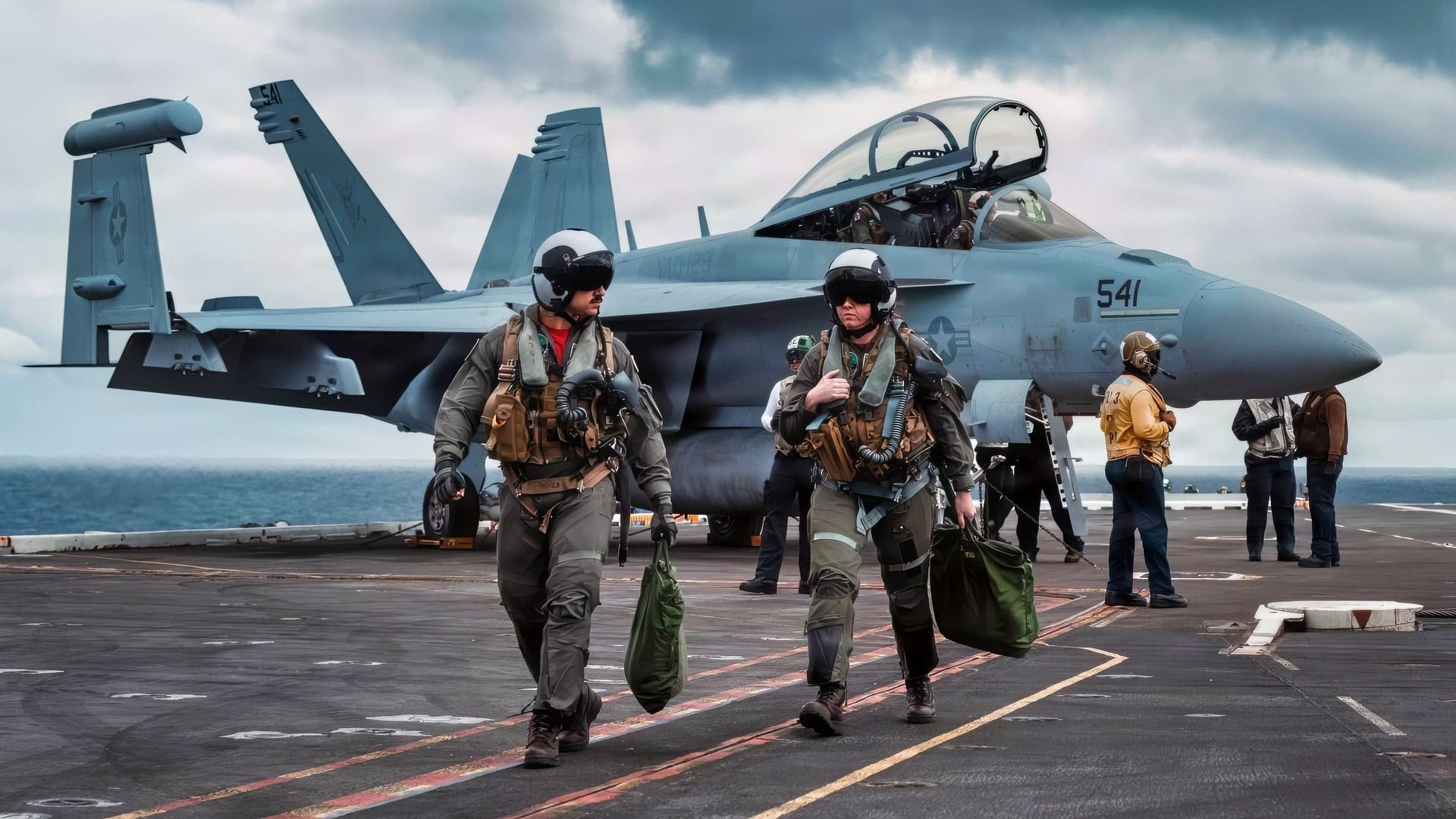
Summary and Key Points: An EA-18G Growler airframe costs about $67,000,000, and it buys an aircraft that cannot do the job it was designed for. What makes a Growler a Growler is hung underneath it: a 2024 Raytheon contract for 13 ship sets of AN/ALQ-249 Next Generation Jammer pods came to $590,800,000, which works out to roughly $45,000,000 per set. Add them together, and a single combat-ready Growler passes $112,000,000 before a weapon, a spare part, or an hour of training is counted. The pods carry 8 AESA antenna arrays across 2 units, each drawing 82 kilowatts from its own ram-air turbine so the jammers never touch the aircraft’s electrical system.
The EA-18G Growler Is a Must for US Navy Aircraft Carriers
When American strike aircraft push into contested airspace, they rarely go in blind or unguarded.
Flying just off their wing, or often unseen ahead of them, is the EA-18G Growler, the U.S. Navy’s dedicated electronic attack jet. It doesn’t drop many bombs, and it isn’t built to dogfight.
Its job is to blind enemy radar, jam communications, and clear a path through the electromagnetic spectrum so other aircraft can survive.
Nearly two decades after its first flight, the Growler remains the only aircraft of its kind in Western service, and demand for it continues to grow.
In the Middle East, the Growler is a critical, high-importance asset for potential U.S. military operations against Iran, serving as the premier electronic attack platform to suppress, jam, and destroy Iranian radar systems and surface-to-air missile batteries.
Operating from US aircraft carriers in the region, Growlers are vital for blinding Iranian air defenses, allowing safe access for other strike aircraft.
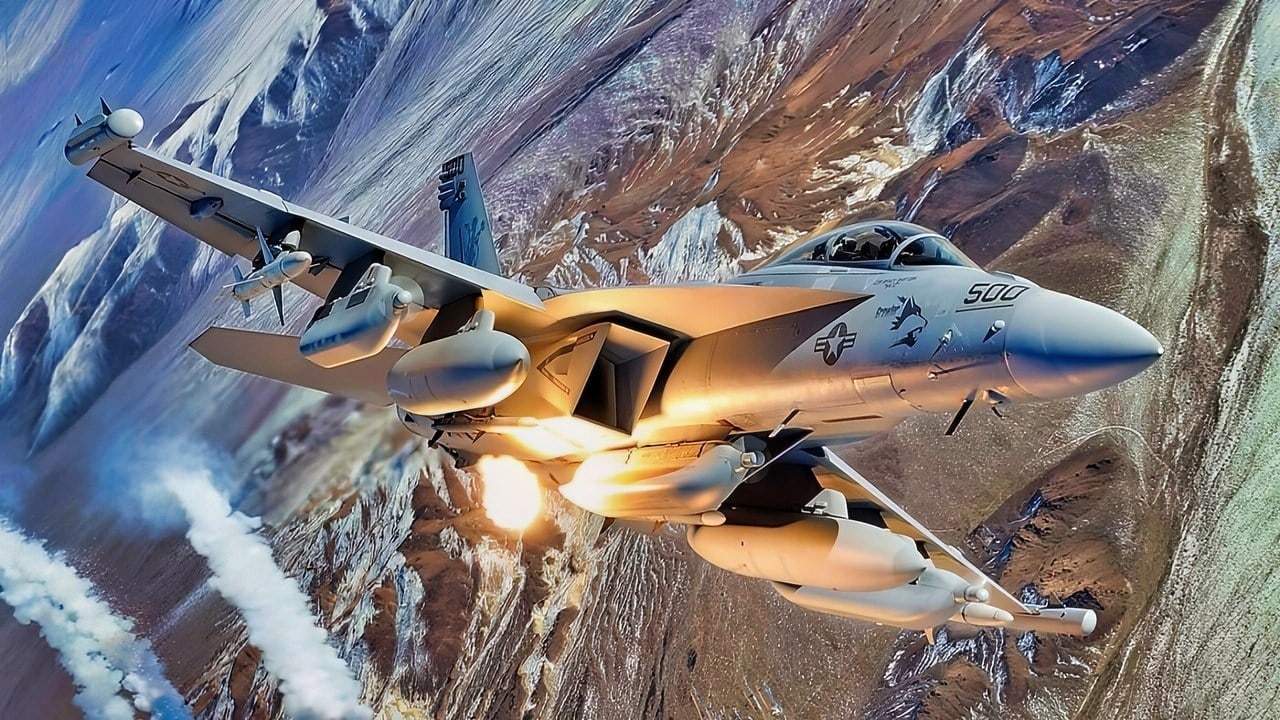
EA-18G Growler Firing Weapons. Image Credit: Creative Commons.
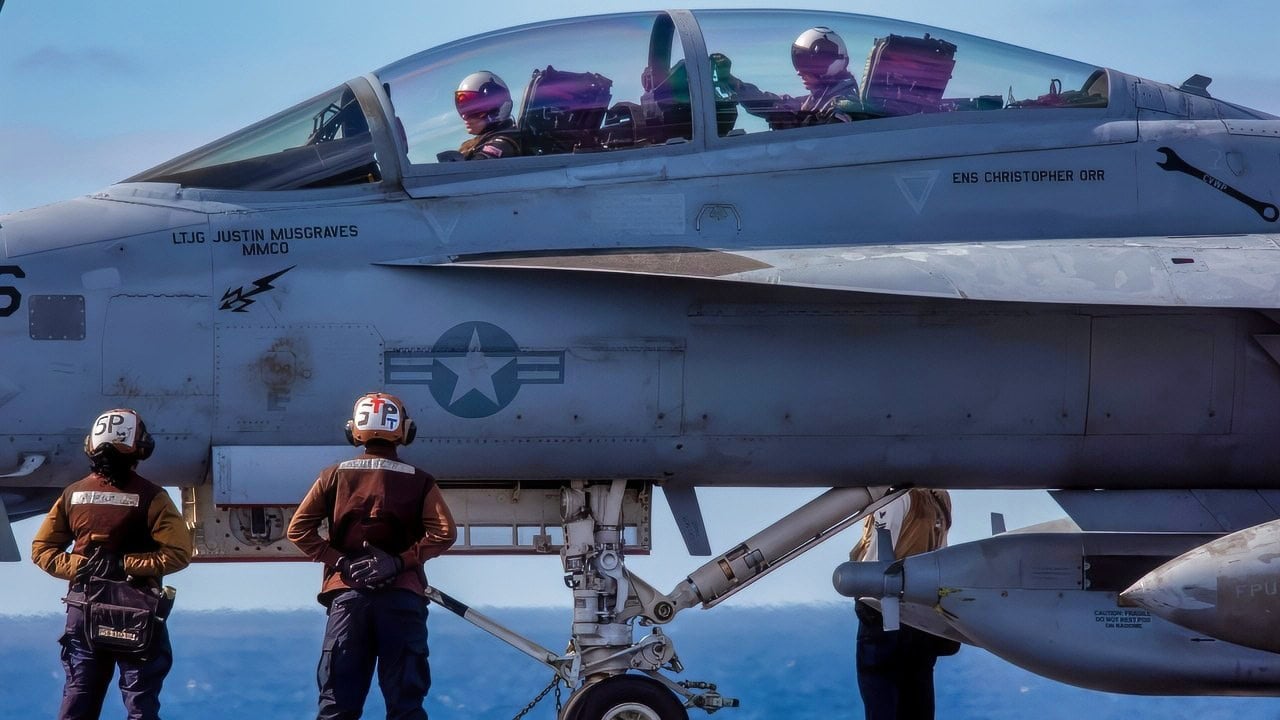
U.S. Navy Sailors prepare to taxi an EA-18G Growler, attached to Electronic Attack Squadron (VAQ) 133, on the flight deck of Nimitz-class aircraft carrier USS Abraham Lincoln (CVN 72) on Nov. 24, 2025. USS Abraham Lincoln (CVN 72), flagship of the Abraham Lincoln Carrier Strike Group, is underway conducting routine operations in the U.S. 3rd Fleet area of operations, demonstrating the U.S. Navy’s long-term commitment to a free and open Indo-Pacific. (U.S. Navy photo by Mass Communication Specialist Seaman Daniel Kimmelman)
How Much Does A Growler Actually Cost?
The Growler isn’t a new design; it’s a heavily modified F/A-18F Super Hornet airframe, which is a major reason it’s more affordable than other specialized military aircraft.
The publicly cited unit cost for the airframe itself runs around $67 to $68 million, a figure that has stayed fairly consistent across recent contracts and cost breakdowns.
That number, though, is just the price of the jet with nothing attached to it. What makes a Growler a Growler — its jamming pods, mission computers, and electronic warfare suite — comes at extra cost layered on top.
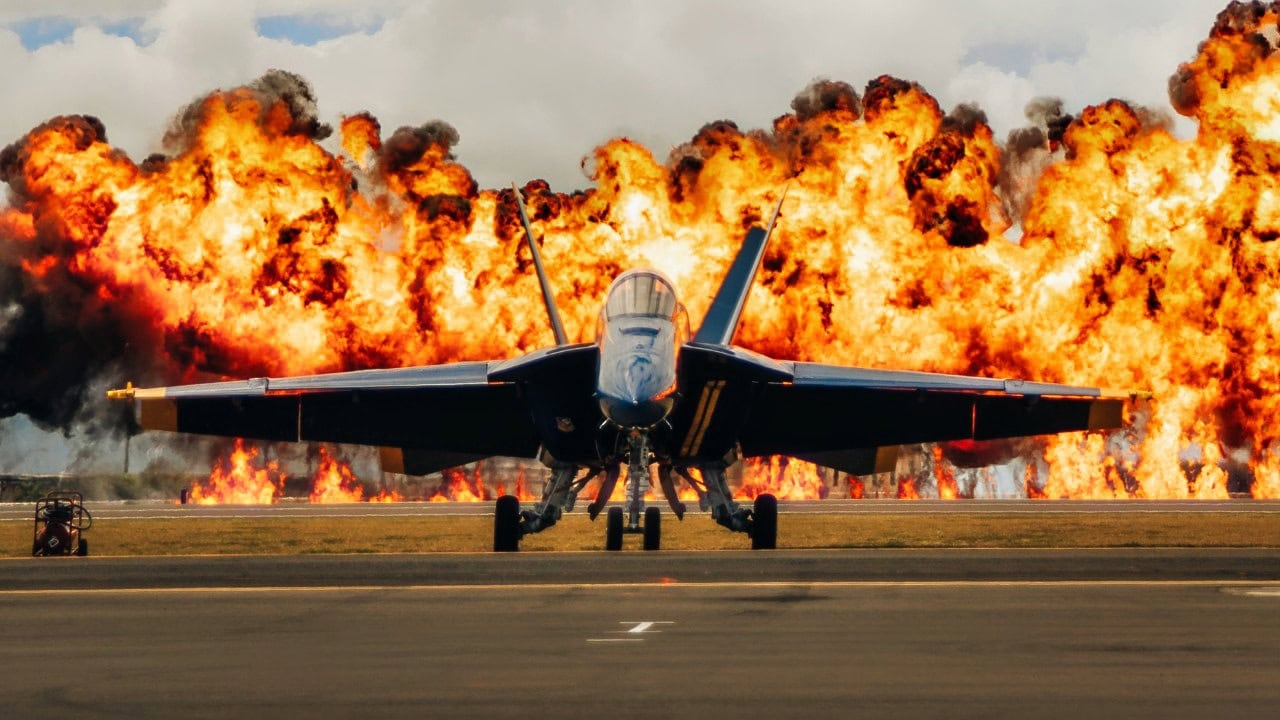
The ‘Wall of Fire” detonates behind two U.S. Navy Blue Angels F/A-18 Super Hornets during the 2022 Kaneohe Bay Air Show, Marine Corps Air Station Kaneohe Bay, Marine Corps Base Hawaii, Aug. 13, 2022. The air show provided an opportunity to demonstrate the capabilities of a Joint Force in the Indo-Pacific Region. The Kaneohe Bay Air Show, which contained aerial performances, static displays, demonstrations and vendors, was designed to express MCBH’s appreciation to the residents of Hawaii and their continued support of the installation. (U.S. Marine Corps photo by Cpl. Patrick King)
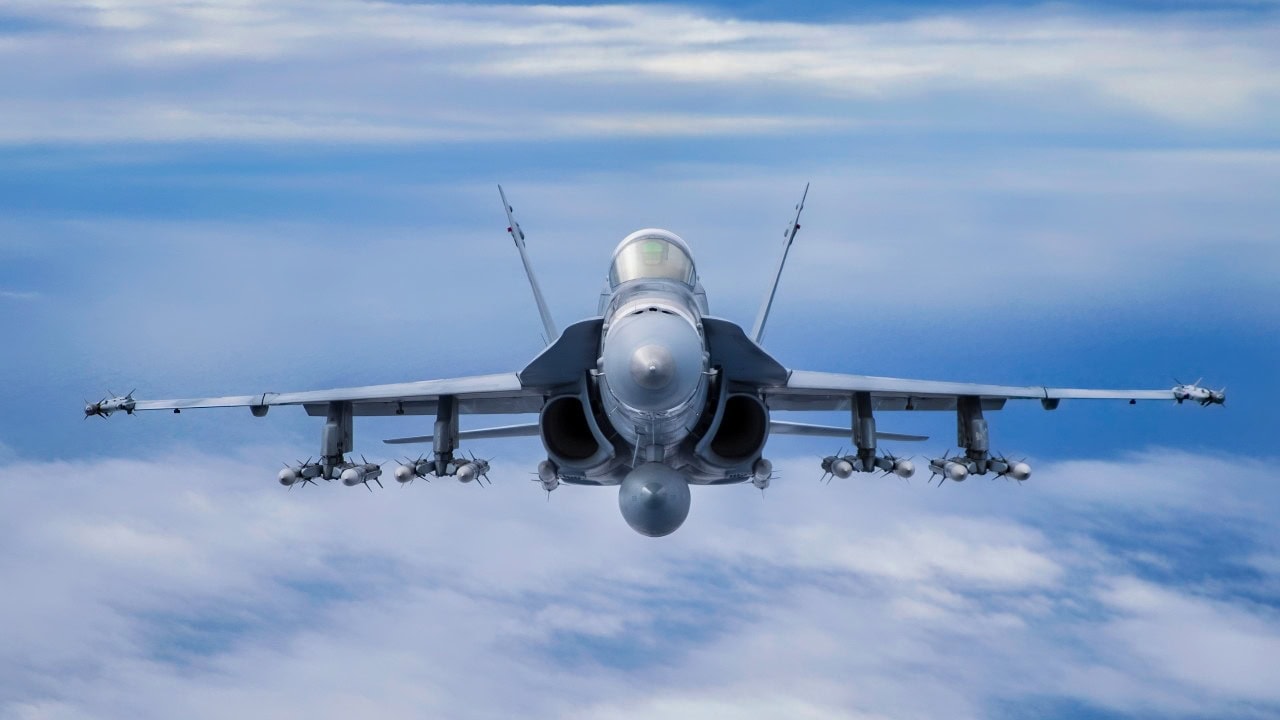
An F/A-18 Hornet with Marine Fighter Attack Squadron (VMFA) 323, MAG-11, 3rd Marine Aircraft Wing (MAW), carrying ten AIM-120 and two AIM-9X Air-to-Air missiles, prepares to refuel over the W-291 training area in southern California, March 6. MAG-11 supports and integrates aviation combat power and capabilities while enhancing 3rd MAW’s ability generate lethality for the supported Marine Air-Ground Task Force (MAGTF). (U.S Marine Corps photo by Sgt. Dominic Romero)
The Jamming Pods Are What Makes It Special
The Growler uses ALQ-99 jamming pods to disrupt and blind Iranian air defense networks, effectively rendering them incapable of detecting or locking onto U.S. aircraft.
A set of the new AN/ALQ-249(V)1 Next Generation Jammer-Mid Band (NGJ-MB) pods, based on a 2024 Raytheon contract covering 13 ship sets worth $590.8 million, costs roughly $45 million per set. Those are replacing the ALQ-99s.
Add that to the base aircraft and a single combat-ready Growler package, and it edges past $112 million before spares, weapons, training, and sustainment are even factored in.
Fleet-wide maintenance and repair contracts that cover everything from flight-control surfaces to wing panels have added hundreds of millions more to sustaining the existing fleet in 2024 and 2025 alone.
That total cost of ownership explains why Australia’s 2025 sustainment and equipment package for its own Growler and Super Hornet fleet was valued at roughly $2 billion.
Australia is the only export customer, operating 12 Growlers alongside 24 Super Hornets, and it contributed $250 million toward NGJ development specifically to stay inside the U.S. Navy’s electronic warfare ecosystem.
Why It Works
The Growler’s success comes down to this: instead of designing a new electronic warfare aircraft from scratch to replace the aging EA-6B Prowler, Boeing and the Navy adapted a proven, still-in-production fighter, the F/A-18 Super Hornet.
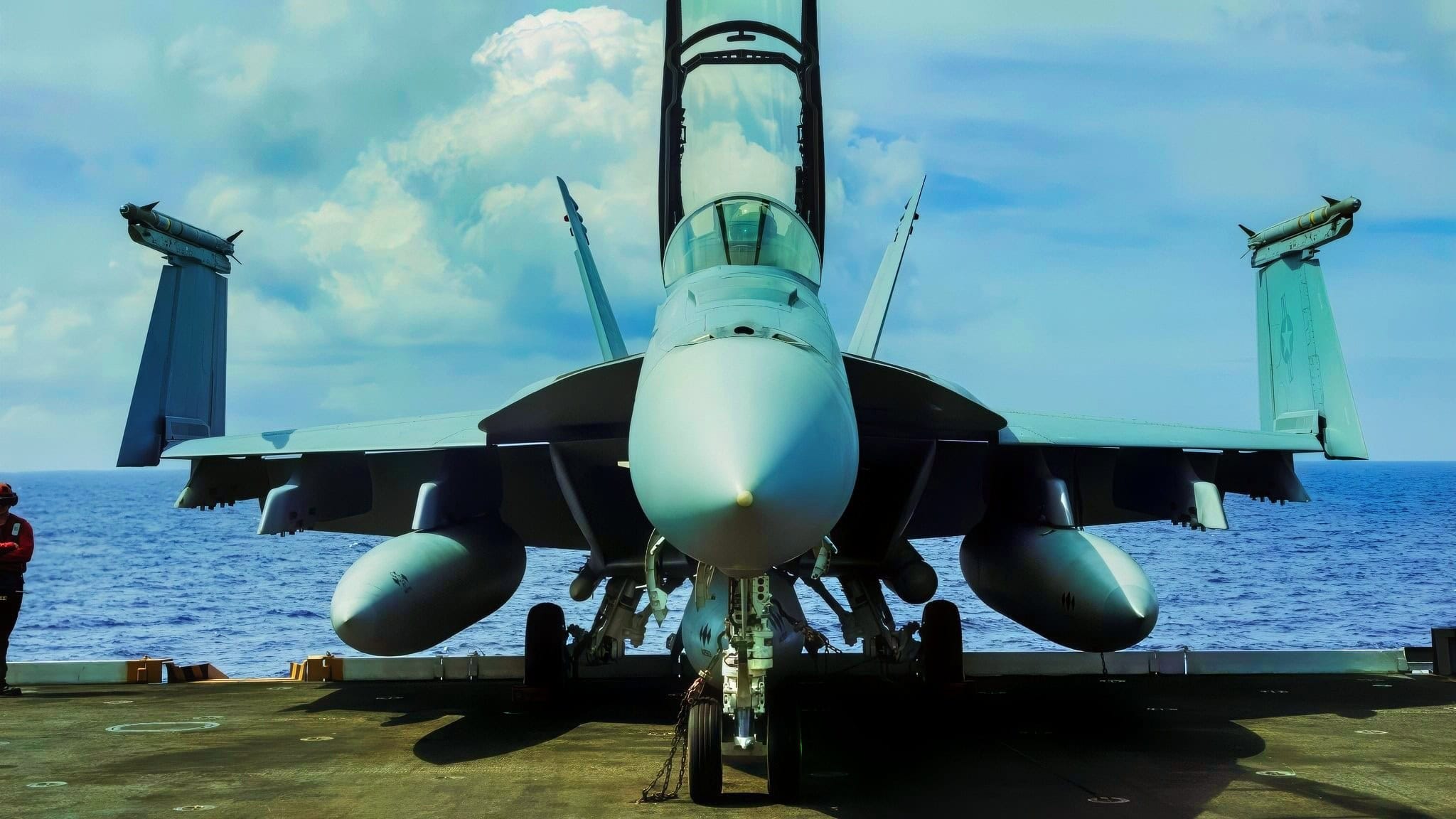
Capt. Tim Waits, commanding officer of Nimitz-class aircraft carrier USS George Washington (CVN 73), climbs into an F/A-18F Super Hornet, attached to Strike Fighter Squadron (VFA) 102, while underway in the South China Sea, Nov. 24, 2025. George Washington is the U.S. Navy’s premier forward-deployed aircraft carrier, a long-standing symbol of the United States’ commitment to maintaining a free and open Indo-Pacific region, while operating alongside allies and partners across the U.S. Navy’s largest numbered fleet. (U.S. Navy photo by Mass Communication Specialist 2nd Class Geoffrey L. Ottinger)
That decision “reduced development risk and accelerated fielding compared with a clean-sheet design,” and it meant the Growler inherited the Super Hornet’s carrier compatibility, spare-parts pipeline, and maintenance infrastructure from day one.
The first flight came in 2006, and initial operational capability followed by September 2009, a fast timeline for a genuinely new mission system.
Adapting A Very Successful Aircraft Saved Millions
As Harry Kazianis wrote, “The solution came from a stroke of pragmatic genius. The Navy and its industry partners proposed not inventing a new aircraft, but to adapt the most successful and reliable airframe already on the carrier deck: the F/A-18F Super Hornet. This was a brilliant move. By using the two-seat Super Hornet as the foundation, the Navy could leverage an existing, high-performance, supersonic airframe with a mature supply chain and a deep pool of trained pilots and maintainers. It dramatically reduced development costs, simplified logistics, and ensured the new electronic attack jet could not only keep up with the strike packages it was protecting but could also defend itself—a luxury the Prowler never had. The result was the EA-18G Growler, a machine that married the combat-proven brawn of a Super Hornet with the sophisticated electronic brain of a dedicated jamming platform.”
Once fielded, the aircraft’s electronic attack suite earned it a reputation. For years it relied on the AN/ALQ-99 Tactical Jamming System, a capable but aging design.
That’s now being replaced by the aforementioned NGJ-MB, which reached initial operational capability in January 2025 after deploying aboard USS Abraham Lincoln.
The new pods use eight AESA antenna arrays split across two pods, each powered by its own ram-air turbine generating 82 kilowatts, so the jammers don’t have to draw power from the aircraft’s electrical system.
Because the system is software-defined, operators can generate new jamming waveforms the way an engineer might code a function in MATLAB, rather than waiting on a hardware redesign every time an adversary updates its radar.
The Growler’s real value is what it does for everyone else in the formation.
A Growler escorting strike fighters shrinks the range at which enemy radar can detect the whole package, letting bombers and fighters get closer before releasing weapons and improving how much ordnance they can carry into the target area instead of expending it on standoff-range shots.
It can also suppress enemy air defenses outright using AGM-88 HARM missiles, giving it an offensive strike role alongside its jamming mission.
Updates For The Growler Will Keep It Relevant
The Growler Capability Modification (GCM) / Block II program is a major program to upgrade the fleet’s mission systems, including improved data transfer, faster ISR data processing, and enhanced sensors. Integration of advanced datalinks to improve information sharing with other aircraft and platforms.
Engine upgrades are planned.
The Navy has initiated efforts to upgrade the F414-GE-400 engines, offering potential increased power output and better reliability; the aircraft that was supposed to be a stopgap replacement for the Prowler has instead become the backbone of how the U.S. and its closest allies plan to fight through modern, radar-saturated battlespaces for years to come.
About the Author: Steve Balestrieri
Steve Balestrieri is a National Security Columnist. He served as a US Army Special Forces NCO and Warrant Officer. In addition to writing on defense, he covers the NFL for PatsFans.com and is a member of the Pro Football Writers of America (PFWA). His work was regularly featured in many military publications.