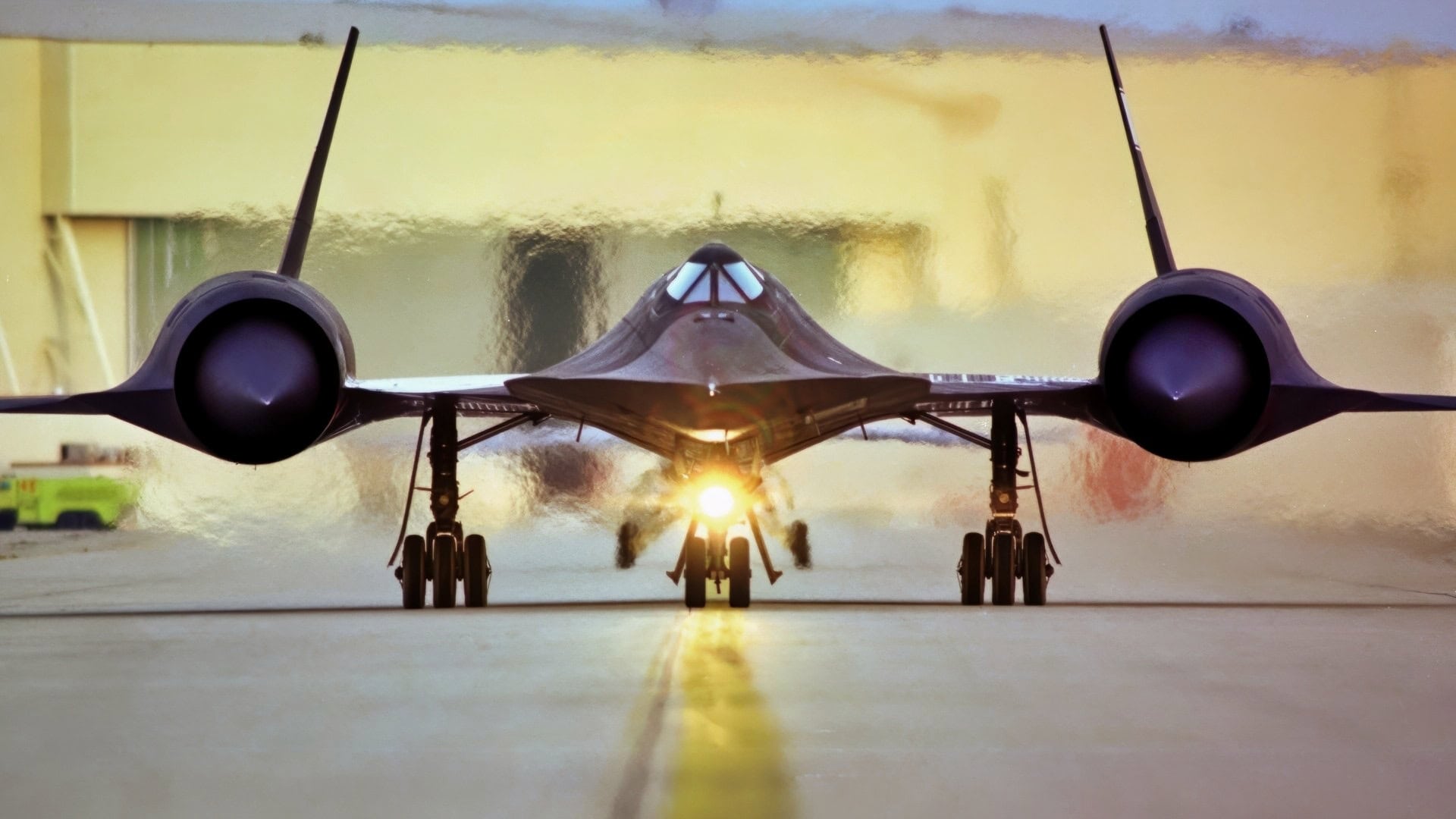
Summary and Key Points: The SR-71 Blackbird spent 11,675 hours of its service life above Mach 3. Across the whole program, it logged 53,490 flight hours over 17,300 sorties, could cruise above 80,000 feet at more than 2,000 miles an hour, and photograph roughly 100,000 square miles in a single hour. It was never retired because anything caught it. By the late 1980s, the surviving fleet of 12 aircraft cost about $260,000,000 a year to operate, roughly $20,000,000 per airframe, and Defense Secretary Dick Cheney put the figure at around $85,000 per flight hour. The specialized JP-7 fuel alone ran about $18,000 an hour, and every mission required KC-135Q tankers carrying that fuel and nothing else. The Air Force argued the money would sustain two tactical fighter wings instead, and on 26 January 1990 it retired the fleet.
The SR-71 Blackbird Program Wasn’t Cheap
The United States Air Force officially retired its SR-71 Blackbird fleet on January 26, 1990, but its legacy lives on.
After 24 years of dedicated service as a high-flying, almost UFO-looking, sleek, elongated delta-like plane — clad in all black — the Air Force discontinued the SR-71.
The official reason given was cost.
But the official numbers are vague. Given the highly classified nature of the program itself, that isn’t surprising.
The Blackbird Soared (In Cost)
But the SR-71 was retired as the Cold War it was designed to fight wound down.
The Soviets were opening themselves up to the United States and de-escalating the Cold War everywhere. Just a short year after the retirement of the SR-71, the Soviet Union itself would collapse, and we’d all be talking about the “peace dividend.”
Meanwhile, the defense budget was declining in 1990.
Rising maintenance costs for these high-flying, complex birds were becoming too much for the Air Force to bear under the declining defense budgets of the era.
Lockheed’s SR-71 could fly more than 2,000 miles per hour, cruise above 80,000 feet, and photograph around 100,000 square miles in a single hour — all while outrunning any surface-to-air missiles (SAMs) that might have been fired at it.
Indeed, it repeatedly demonstrated this ability to outrun Soviet air defenses throughout its 24 years of service to the Air Force and CIA.
By the late 1980s, flying the SR-71 cost around $260 million annually.
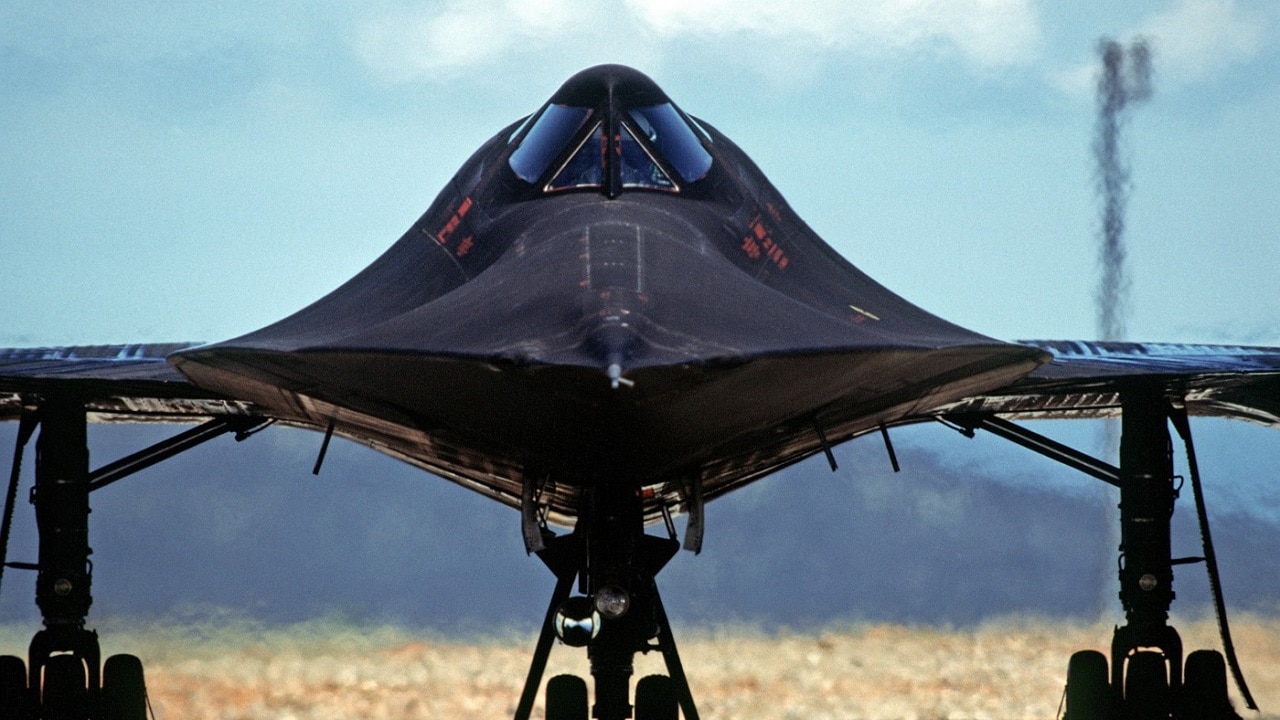
SR-71 Spy Plane. Image Credit: Creative Commons.
Maintaining the 12-aircraft fleet was onerous for an Air Force also tasked with defending the homeland and projecting power abroad.
If those numbers are correct, then the fleet of 12 SR-71s cost around $20 million per plane to fly.
This figure includes the maintenance and logistical support needed to sustain the SR-71’s safe, reliable operations.
One argument the Air Force made at the time of its retirement was that the money required to maintain the SR-71 could instead be spent maintaining two tactical fighter wings.
At one point, then-Secretary of Defense Dick Cheney asserted that the SR-71 cost taxpayers around $85,000 per flight hour.
At the same time, other estimates placed those figures much higher if you included the expansive support infrastructure for the planes.
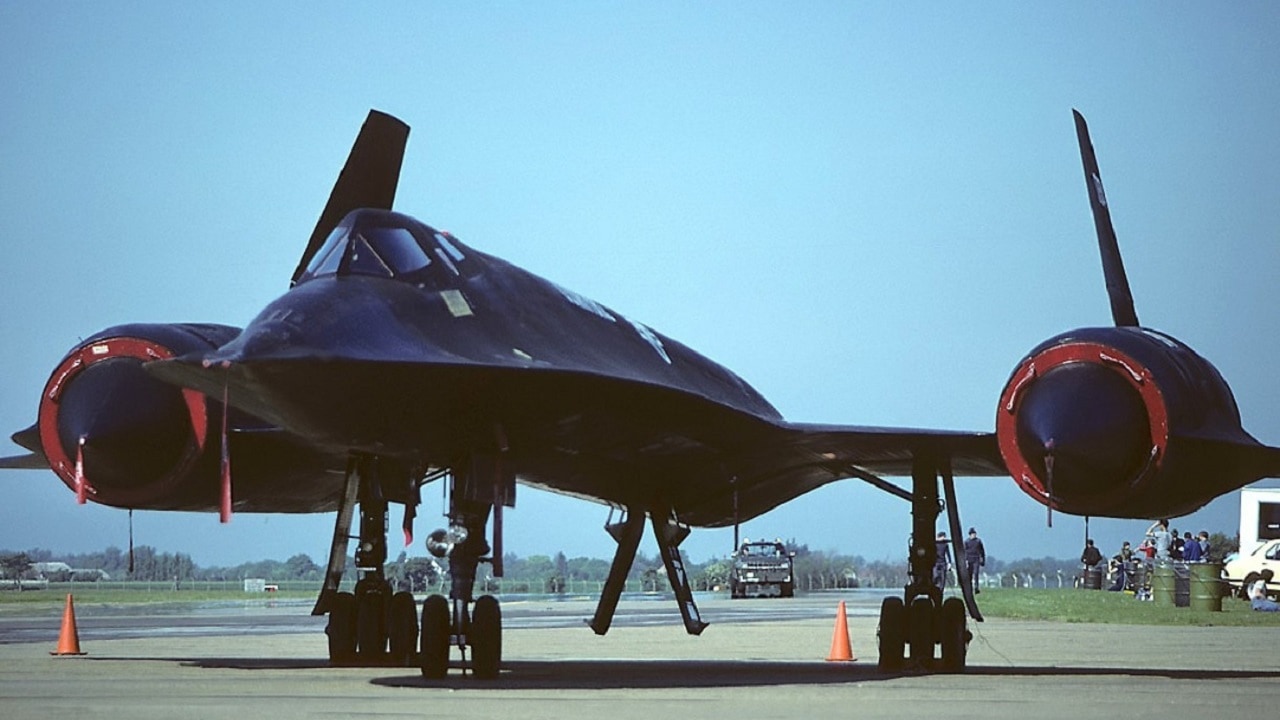
Image of SR-71 Spy Plane. Image Credit: Creative Commons.
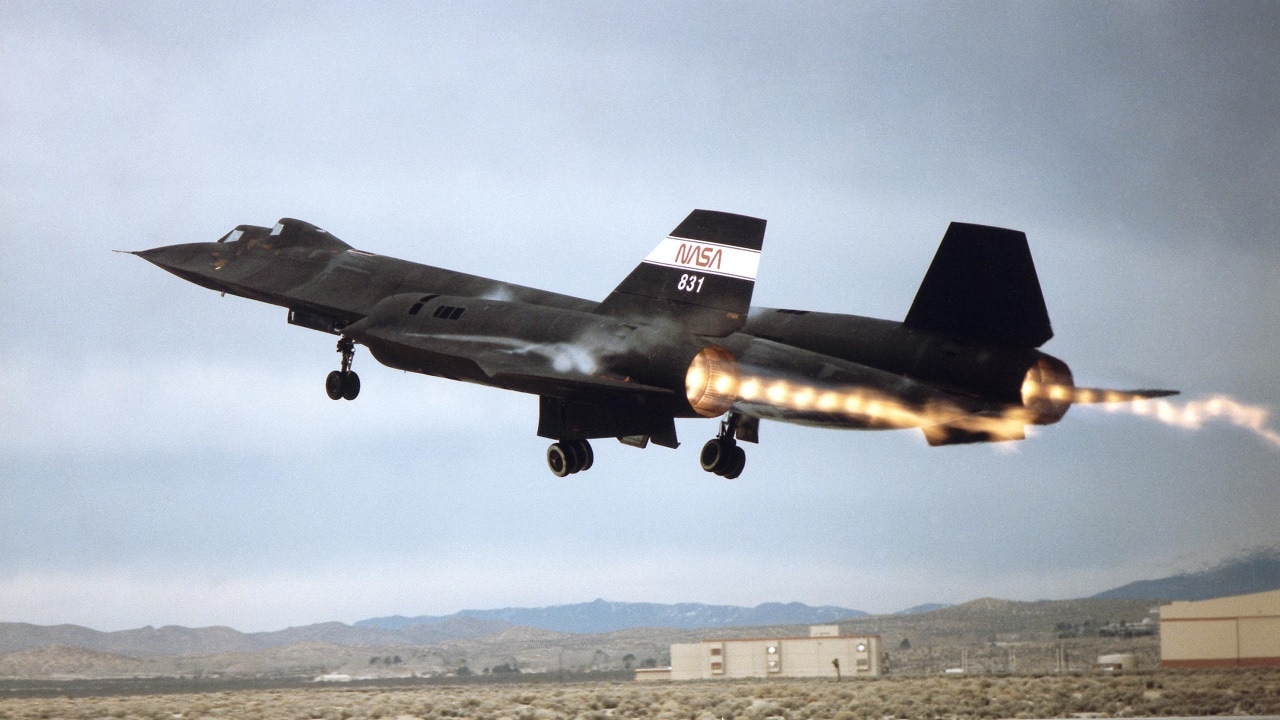
Image is of an SR-71 Spy Plane. Image Credit: Creative Commons.
For instance, the specialized JP-7 fuel needed to power the planes cost $18,000 per flight hour.
To that end, the SR-71s required specialized KC-135Q tankers, filled with the unique JP-7 high-flashpoint fuel, to be on call whenever the SR-71s flew missions. That is not cheap.
Two Pratt & Whitney J58 engines generated 58,000 pounds of thrust each (with afterburners). If fully loaded, the plane weighed 140,000 pounds and measured 107 feet, five inches. It had a wingspan of 55 feet, 7 inches.
An Incredible Track Record
Operationally, the SR-71 had a stellar record.
For instance, on July 28, 1976, a single SR-71 Blackbird created a record for absolute speed in its class. That plane clocked in at 2,193 miles per hour at an altitude of 85,068 feet!
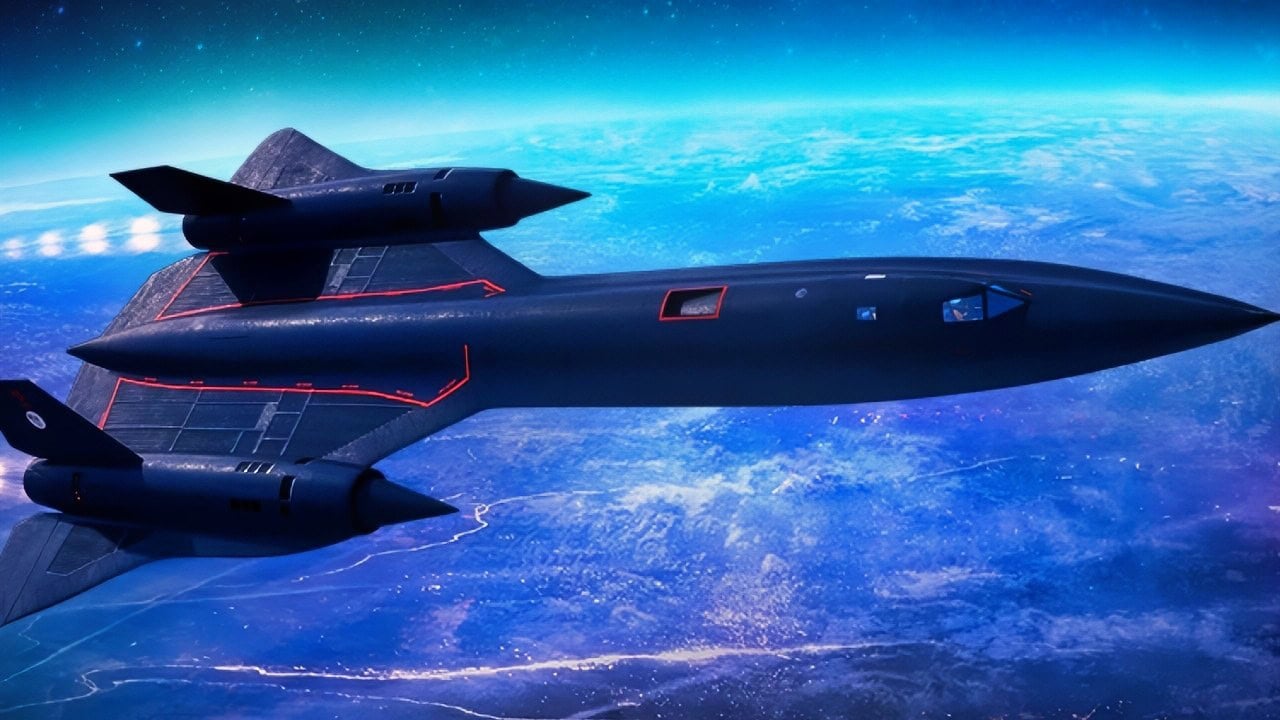
SR-71 Blackbird Lockheed Martin Image
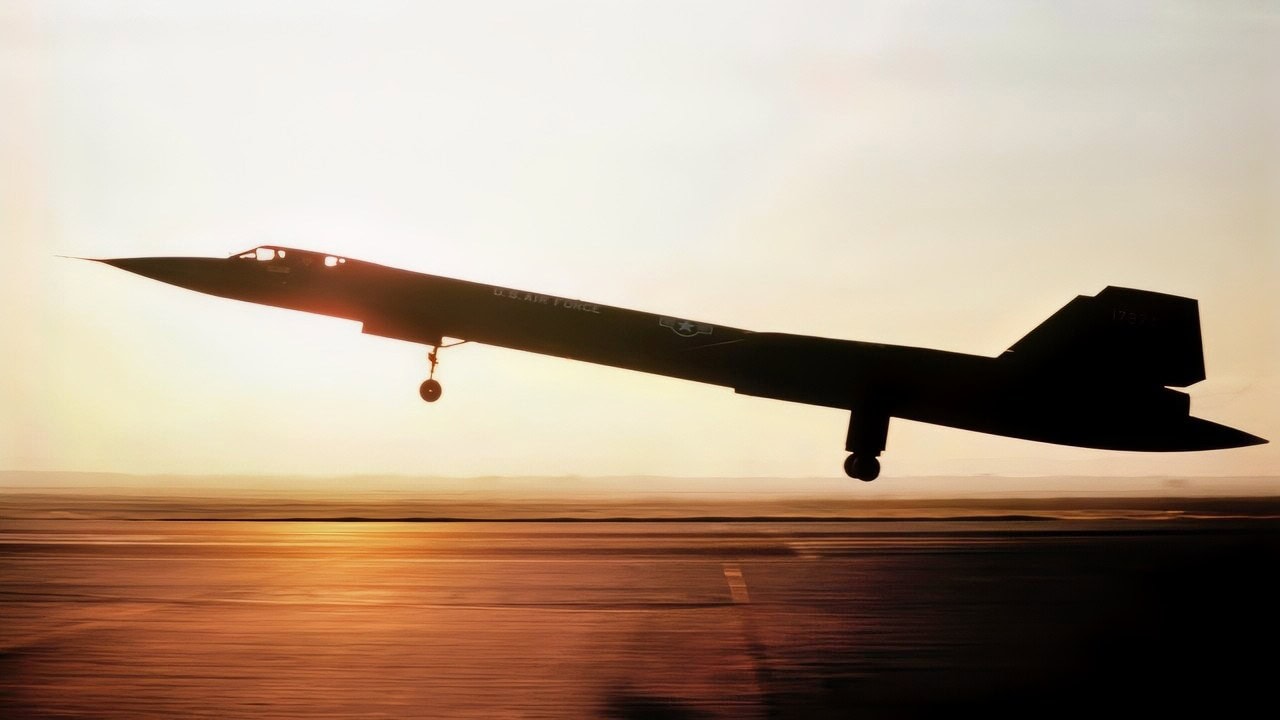
A left side view of an SR-71 aircraft from the 9th Strategic Reconnaissance Wing landing. The aircraft is silhouetted against the sunset.
What’s more, the maximum range of an SR-71 was more than 2,900 miles (and with that aforementioned midair refueling capability, its range was drastically extended).
The entire SR-71 program accumulated 53,490 flight hours; 11,008 of those were operational hours.
It flew 17,300 sorties over the span of its life (with 3,551 of those being operational sorties). And 11,675 hours were accumulated above Mach 3.
Blackbirds operated from Beale Air Force Base, Kadena AFB, Okinawa, and from the Royal Air Force (RAF) Mildenhall in England.
The SR-71’s first operational sortie took place on March 21, 1968.
In fact, one SR-71, with the serial number 61-7976, apparently accumulated a stunning 2,981 hours over the course of 942 total sorties, with 257 of those being operational sorties.
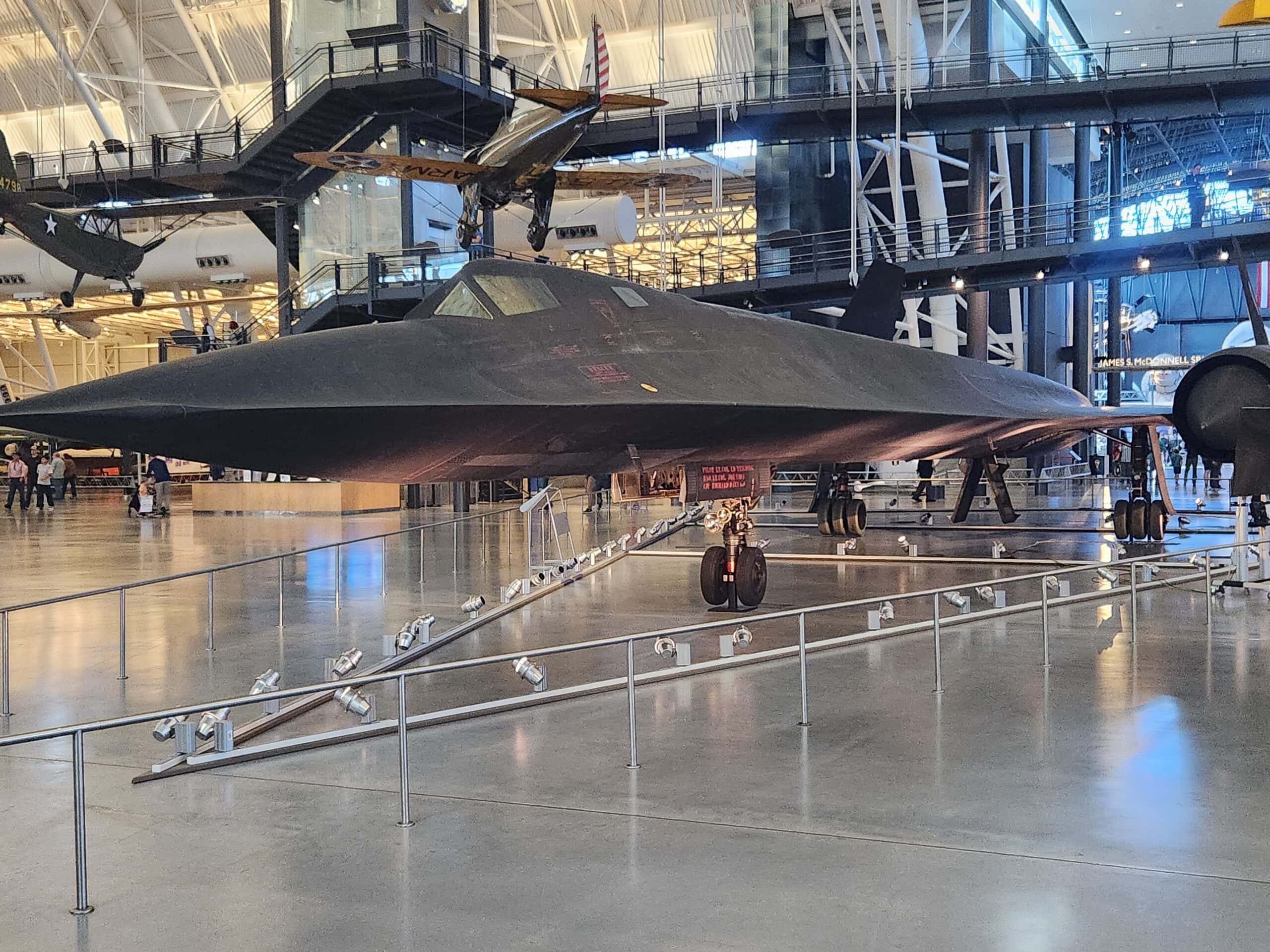
SR-71 from 19FortyFive.com original picture archive. Image taken at the Smithsonian.
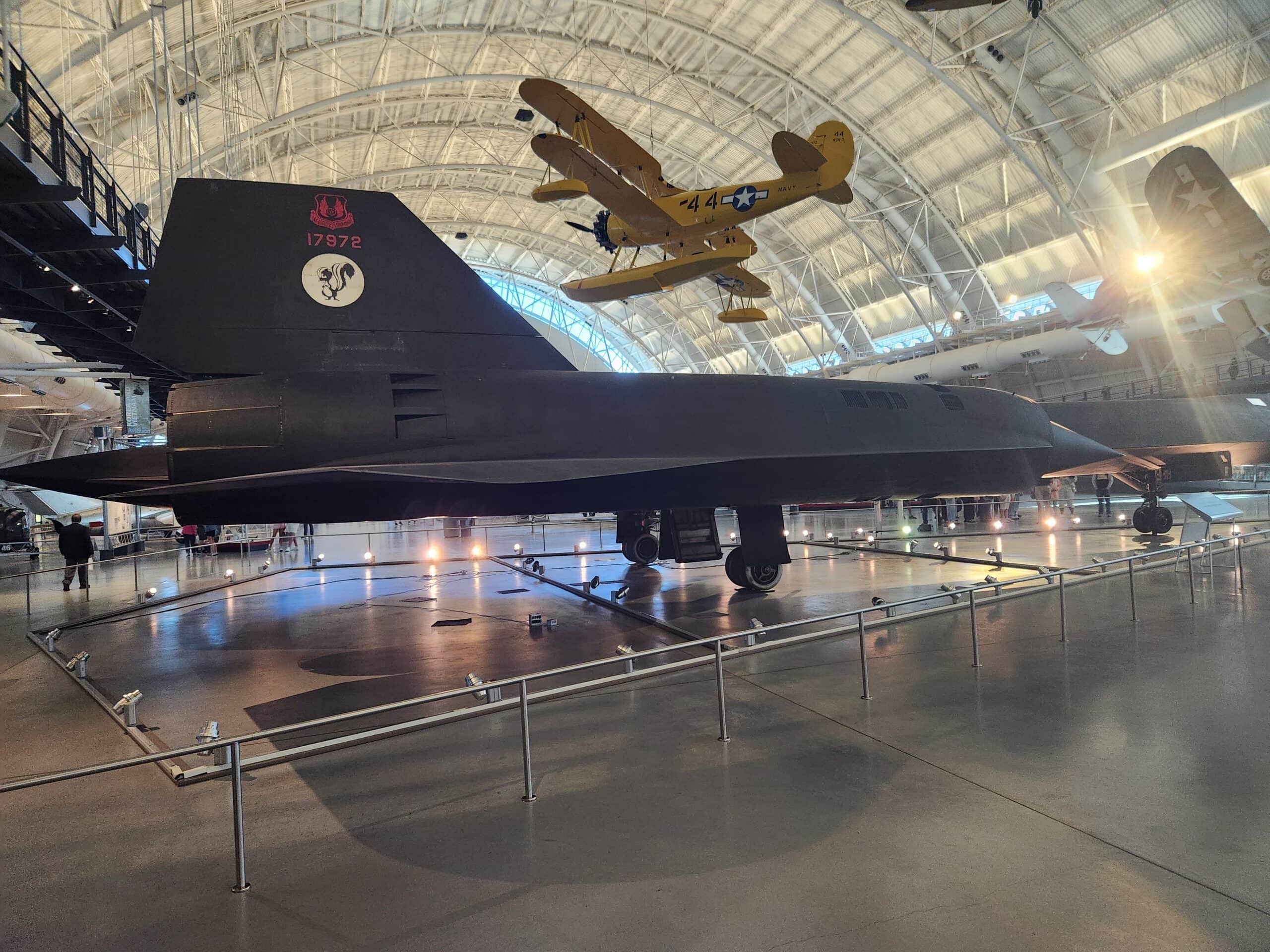
SR-71 from 19FortyFive.com original picture archive. Image taken at the Smithsonian.
By the 1970s, the Blackbird began operations at RAF Mildenhall.
The SR-71s also conducted intelligence collection well beyond the Atlantic.
During the 1973 Yom Kippur War, for instance, they were snapping images.
When Lebanon imploded during the civil war that defined the country’s existence in the 1980s, the SR-71s were there.
In the Reagan Administration’s war on Muammar Gaddafi’s Libya in 1986, the SR-71s were photographing from high in the skies, too.
A Brief Resuscitation
Congress briefly brought the SR-71 back in 1995-1996. They spent $100 million to restore two SR-71s to operational service.
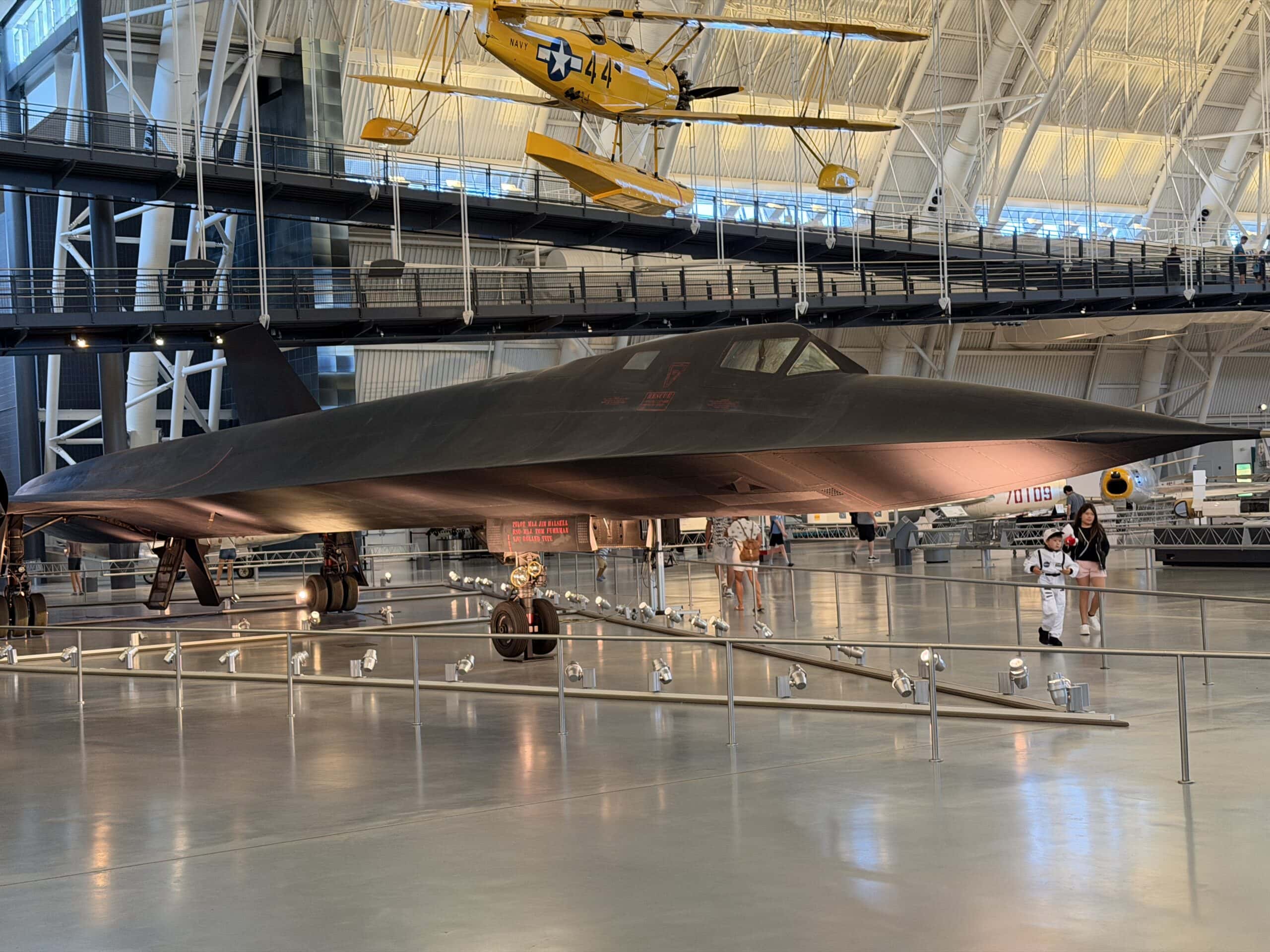
SR-71 Blackbird. Image taken at the Smithsonian on 6/30/2026 by 19FortyFive
In 1997, Congress threw another $30 million at the SR-71s. But by 1998, the program had been scrapped due to cost.
Washington did not retire the SR-71 because it had become too slow.
While satellites became an increasingly preferred method of intelligence collection, the military and politicians in DC understood the SR-71’s technological importance.
The problem was that maintaining the relatively small fleet of complex SR-71s became harder to justify in an era of constrained defense spending.
Spending roughly $260 million per year to maintain a fleet of 12 during an age of relative peace, when the main Soviet threat was gone, could not be justified by anyone — especially when newer satellites and the older, cheaper U-2 spy plane could perform the missions.
About the author: Brandon J. Weichert
Brandon J. Weichert is the Senior National Security Editor at 19FortyFive.com. He also manages The Weichert Brief on Substack. Weichert also hosts “National Security Talk” on Rumble. He is the author of four bestselling national security books, the most recent of which is A Disaster of Our Own Making: How the West Lost Ukraine (Encounter Books). Follow him via Twitter/X @WeTheBrandon.