
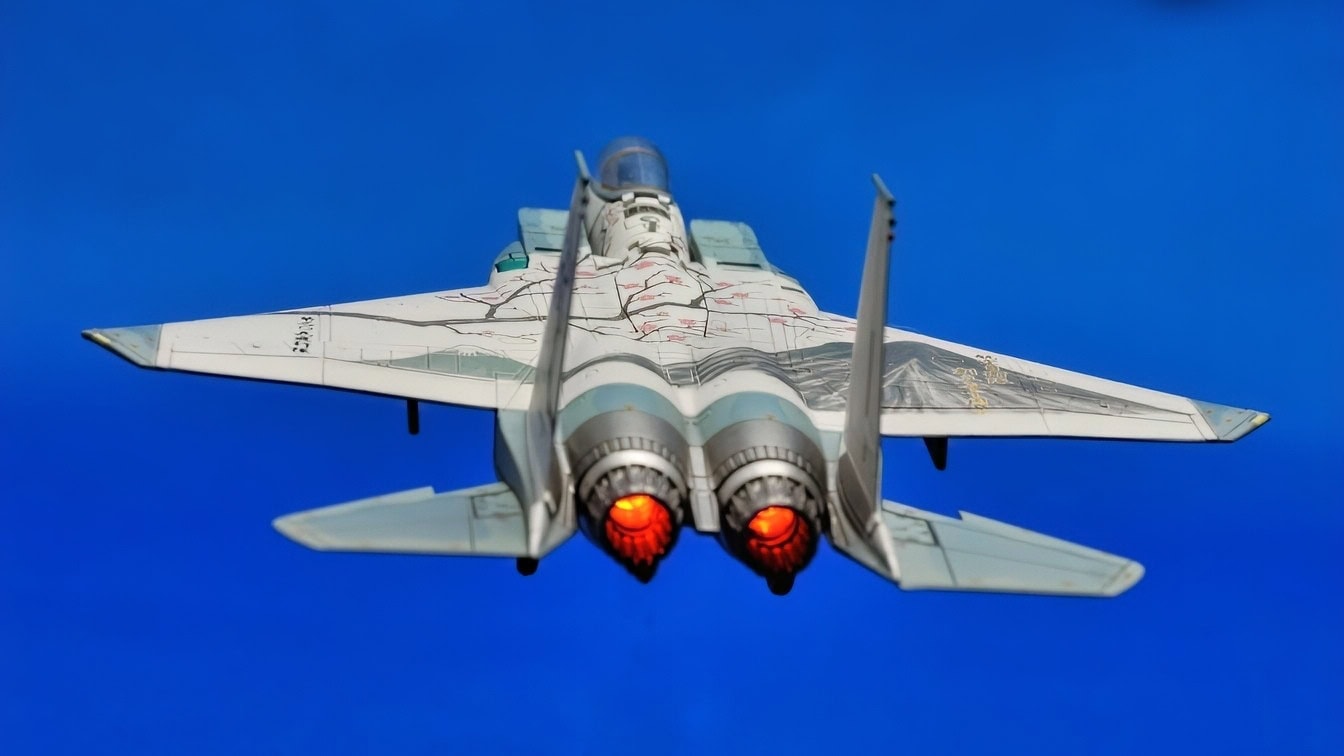
Summary and Key Points: On June 4, 1980, the first F-15J appeared in St. Louis, Missouri, bearing Japanese markings before it had ever been to Japan. Selling Tokyo a frontline American fighter had come with conditions. The Pentagon withheld some of the F-15C’s more sensitive electronics and refused to let Japanese Eagles carry any nuclear-delivery capability at all — so the wiring was removed. Japan built its own jammer, radar warning receiver, and tactical data link instead. Within a year, Mitsubishi Heavy Industries was producing the aircraft under license at Komaki near Nagoya, and by the end of the run Japan had fielded 213 F-15Js and F-15DJs, more than any F-15 operator on earth outside the United States Air Force.
The F-15J Fighter Can Hit Mach 2.5 for Japan
The Mitsubishi F-15J is an extremely capable, highly maneuverable 4th-generation air superiority fighter customized for the Japan Air Self-Defense Force (JASDF), based on the U.S. McDonnell Douglas F-15C. Built for high-speed interception and dogfighting, it features an exceptional thrust-to-weight ratio and nimble handling despite its large size.
On June 4, 1980, the first F-15J rolled off the line in St. Louis, Missouri, wearing Japanese markings before it had ever seen Japan.
Within a year, Mitsubishi Heavy Industries was building the rest itself, under license, at a plant in Komaki near Nagoya.
By the time production ended, Japan had fielded 213 F-15J and F-15DJ Eagles, more than any F-15 operator outside the United States Air Force itself.
Four decades later, the Mitsubishi F-15J remains the backbone of Japan’s air defense, and Tokyo is now paying Boeing roughly $5.6 billion to turn 68 of the oldest ones into something close to new airplanes.
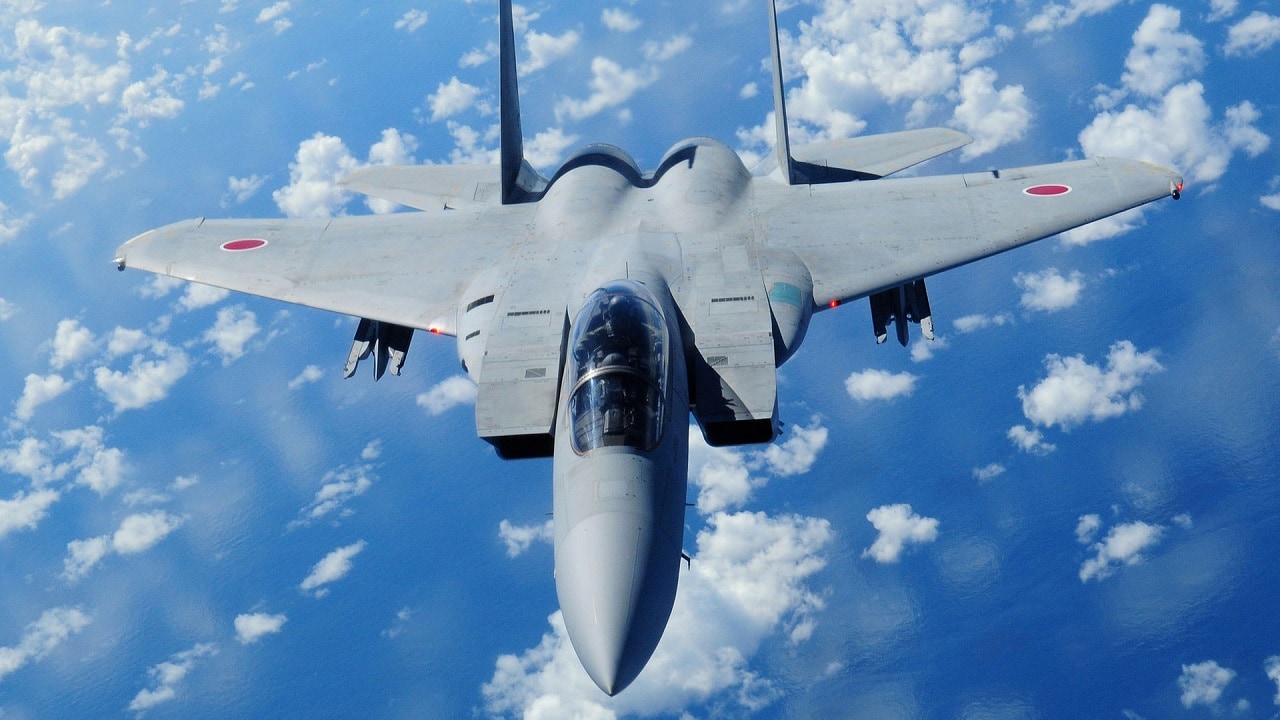
A Japan Air Self Defense Force F-15 (F-15DJ) in flight, as viewed from the boom operator position of a U.S. Air Force KC-135 from the 909th Air Refueling Squadron, Kadena Air Base, after being refueled during air refueling training July 30, 2009.
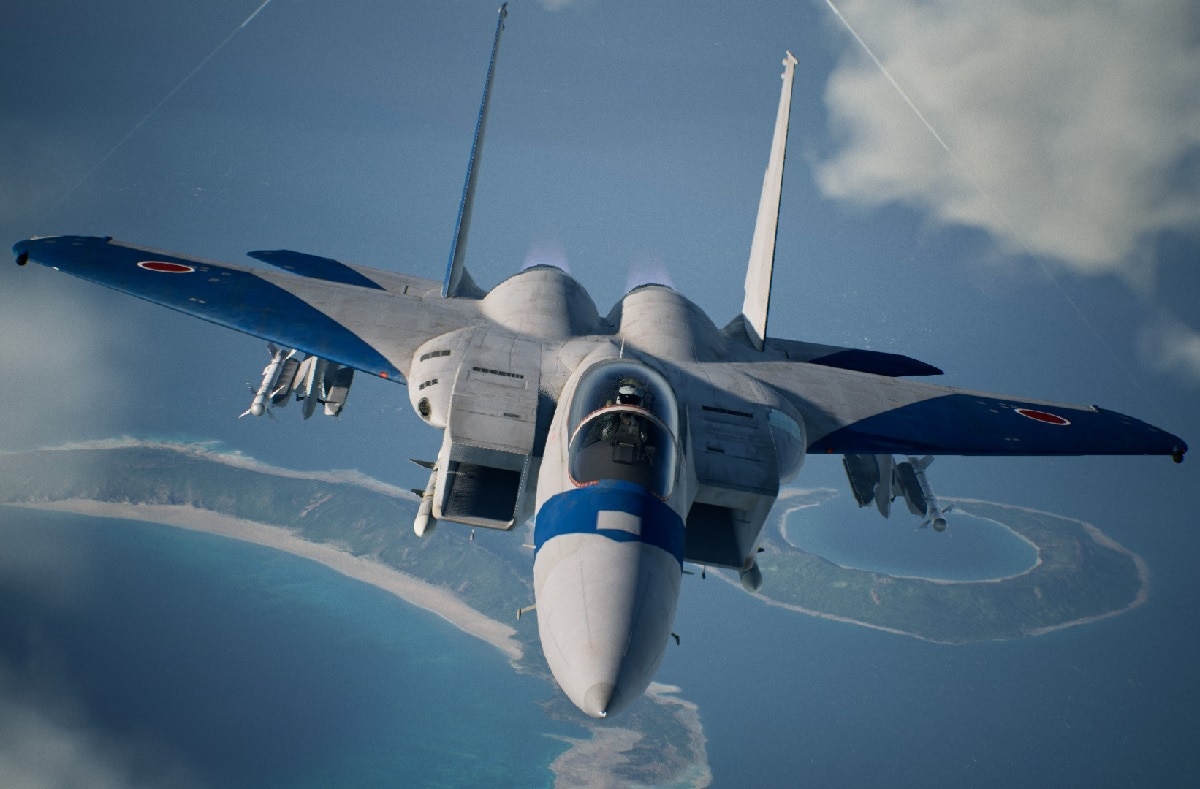
F-15J Image: Creative Commons.
Background On The F-15J Program
Japan chose the F-15 in December 1975 over twelve other candidates to replace the aging F-104J and F-4EJ, and then licensed-built 213 airframes with Mitsubishi as the prime contractor.
The United States refused to hand over certain American electronics and stripped the jet of its nuclear-delivery wiring entirely, forcing Japan to fit its own electronic countermeasures and radar-warning gear.
A 1985 modernization program upgraded 103 airframes with new mission computers and color cockpit displays, and Japan is now running a second, far more expensive upgrade called the F-15 Japan Super Interceptor.
The JSI program, priced at roughly ¥646.5 billion ($5.6 billion), fits 68 jets with an AESA radar, a new electronic warfare suite, and what Honeywell calls the fastest mission computer ever installed on a fighter.
Thirteen Contenders, One Winner, And A License Deal
Japan’s Air Self-Defense Force sought a replacement for the F-104J and F-4EJ in the mid-1970s and evaluated 13 fighters before settling on the F-15 Eagle in December 1975.
Mitsubishi Heavy Industries became the prime contractor by April 1978, but the earliest jets still came out of McDonnell Douglas’s own factory: two single-seat F-15Js and twelve twin-seat F-15DJ trainers were built in St. Louis before Mitsubishi took over full production at Komaki starting in 1981.
Everything else, all the way through the final delivery, was assembled in Japan under license, and the two countries’ engine makers split that work as well, with Pratt & Whitney’s F100 turbofans built domestically under license by IHI Corporation.
An Eagle With The Nuclear Wiring Cut Out
Selling the Japanese a frontline American fighter came with conditions.
The Pentagon withheld some of the F-15C’s more sensitive electronics and refused to let Japan’s jets carry any nuclear delivery capability,so the wiring was removed outright.
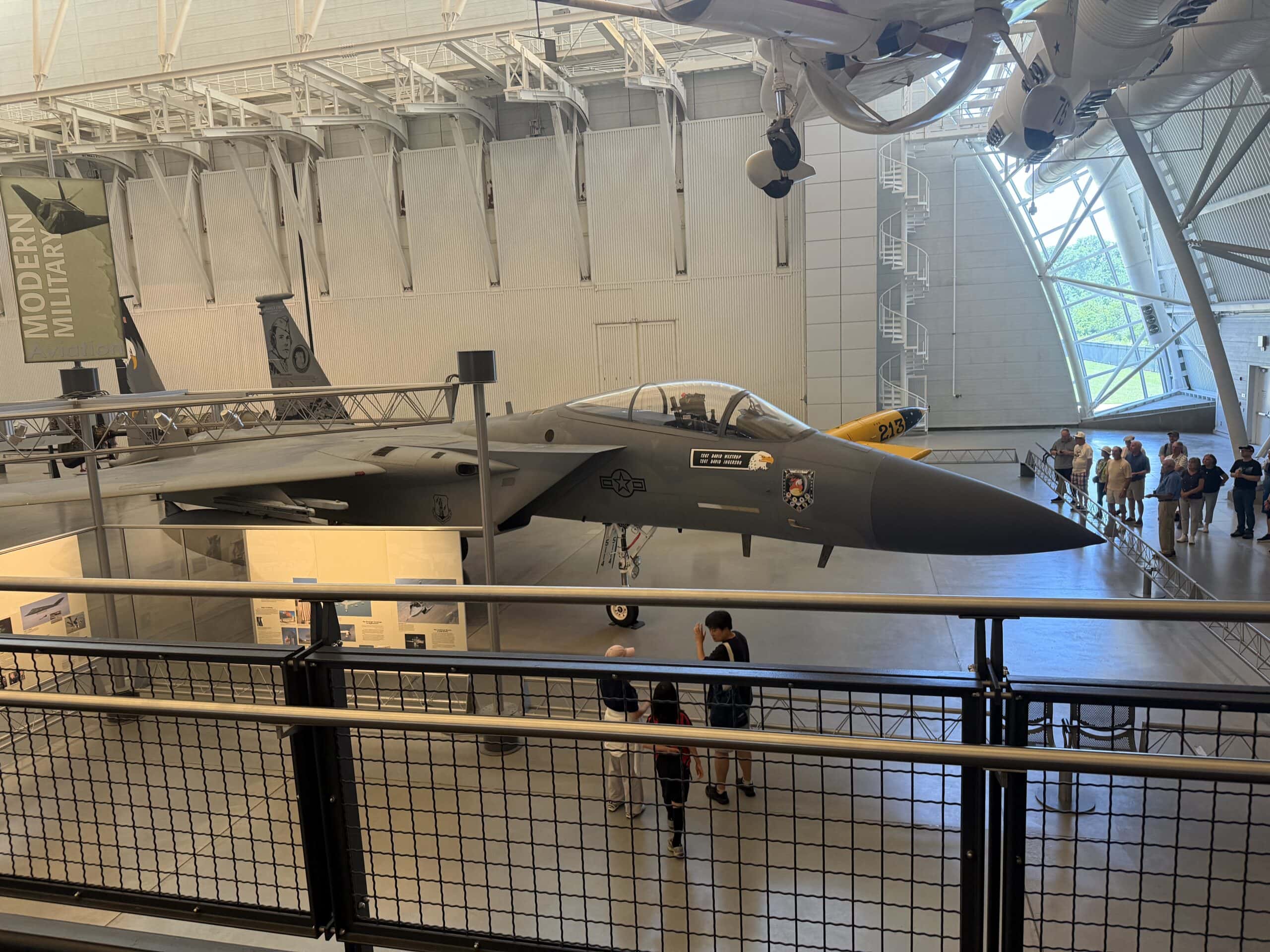
F-15C Smithsonian 19FortyFive Photo
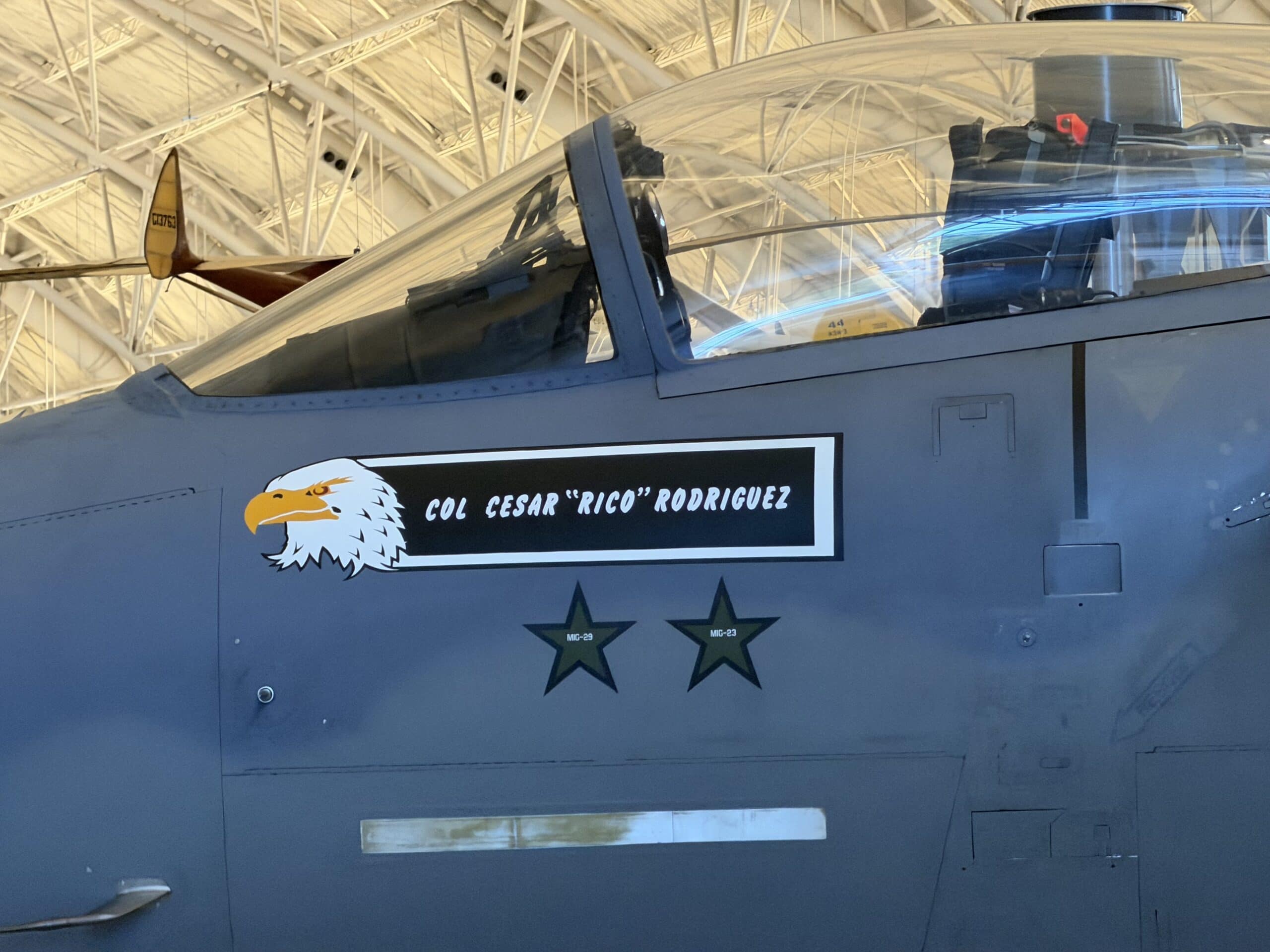
F-15C Smithsonian 19FortyFive Photo
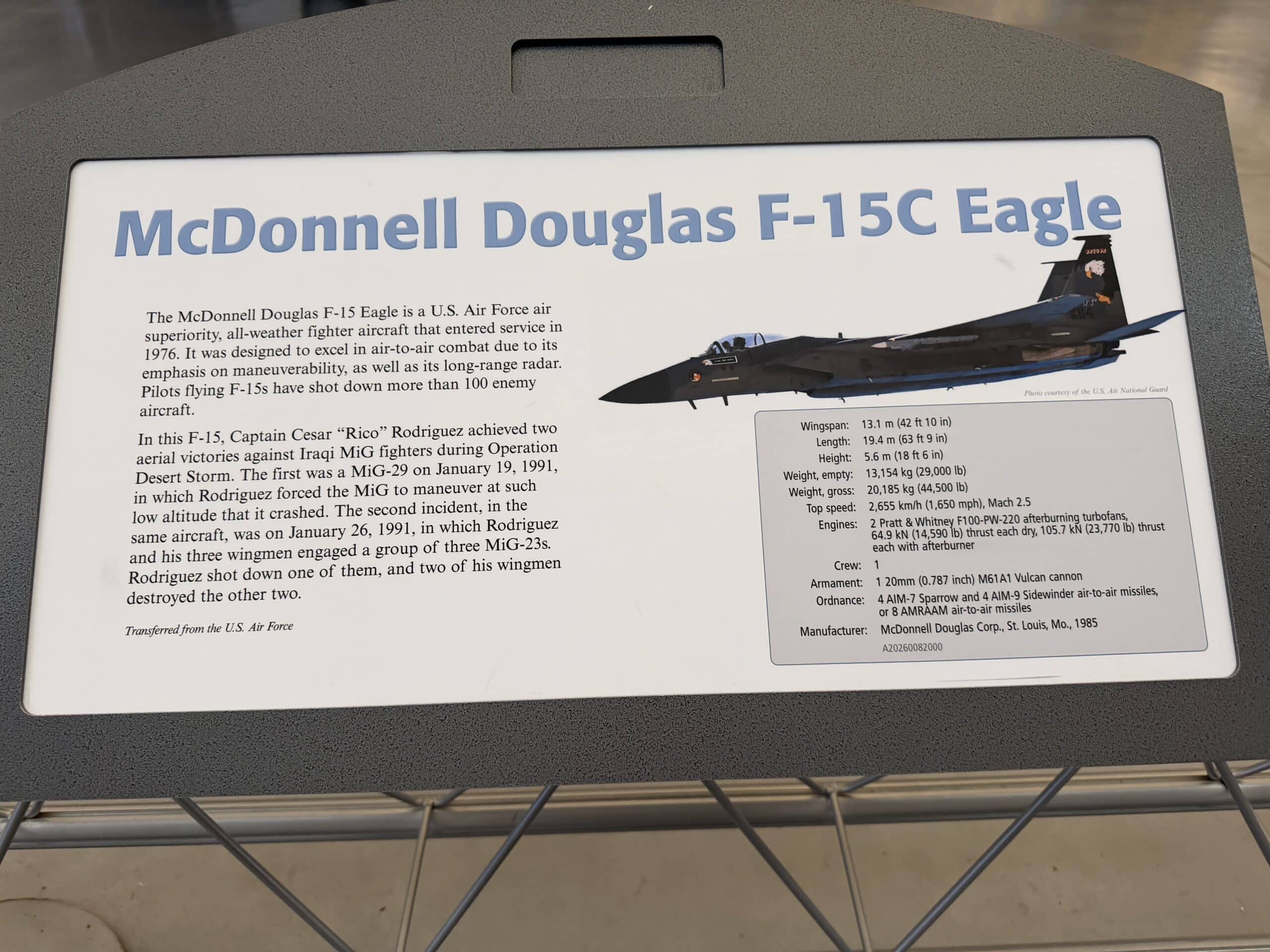
F-15C Smithsonian 19FortyFive Photo
Instead of the American AN/ALQ-135 jammer, the F-15J received Japan’s own J/ALQ-8 electronic countermeasures system, and the AN/ALR-56 radar warning receiver was replaced with the indigenous J/APR-4.
Japan even built its own tactical data link rather than adopt one compatible with NATO’s Link 16, which meant the F-15J could talk to other Japanese aircraft but not plug directly into an American formation’s data picture.
None of that blunted the airplane’s core job.
Twin Pratt & Whitney F100 engines gave it the same Mach 2.5-class performance as any American Eagle, and the AN/APG-63 radar it carried was, at the time, as good as anything in U.S. Air Force service.
From J-MSIP To The Super Interceptor
Japan modernized the fleet once already, running 103 airframes from production batches C-6 through C-17 through the Japan Multi-Stage Improvement Program starting in 1985.
They added a new central computer, a MIL-STD-1553B data bus, multi-purpose color cockpit displays in place of analog gauges, and fire control upgrades to handle Japan’s homegrown AAM-4 and AAM-5 air-to-air missiles.
The latest upgrade is much more significant.
Approved in February 2022, the F-15 Japan Super Interceptor program will rebuild 68 F-15Js at a cost of roughly ¥646.5 billion, or about $5.6 billion.
Boeing has already collected contracts worth roughly $579.7 million just for the radars, self-protection systems, and mission computers, covering a Raytheon AN/APG-82(V)1 AESA radar, BAE Systems’ AN/ALQ-250 EPAWSS electronic warfare suite with 50 percent more chaff and flare capacity, and Honeywell’s Advanced Display Core Processor II, which the company markets as the fastest mission computer ever installed on a fighter jet.
Fifty AGM-158B JASSM-ER cruise missiles are being bought alongside the upgrade, giving the reworked aircraft a long-range land-attack capability the original F-15J never had.
The work is split between Boeing’s St. Louis and Eglin Air Force Base facilities and Mitsubishi Heavy Industries in Japan, with a completion date targeted for February 2030.
Japan still operates roughly 155 F-15Js and 44 F-15DJs, more than enough to remain the largest F-15 operator on Earth outside the United States.
The aircraft the Pentagon once sent overseas with the nuclear wiring removed is about to be upgraded with a cockpit and sensor suite that would make the F-15C it descended from look like a veritable dinosaur.
About the Author: Steve Balestrieri
Steve Balestrieri is a National Security Columnist. He served as a US Army Special Forces NCO and Warrant Officer. In addition to writing on defense, he covers the NFL for PatsFans.com and is a member of the Pro Football Writers of America (PFWA). His work was regularly featured in many military publications.