
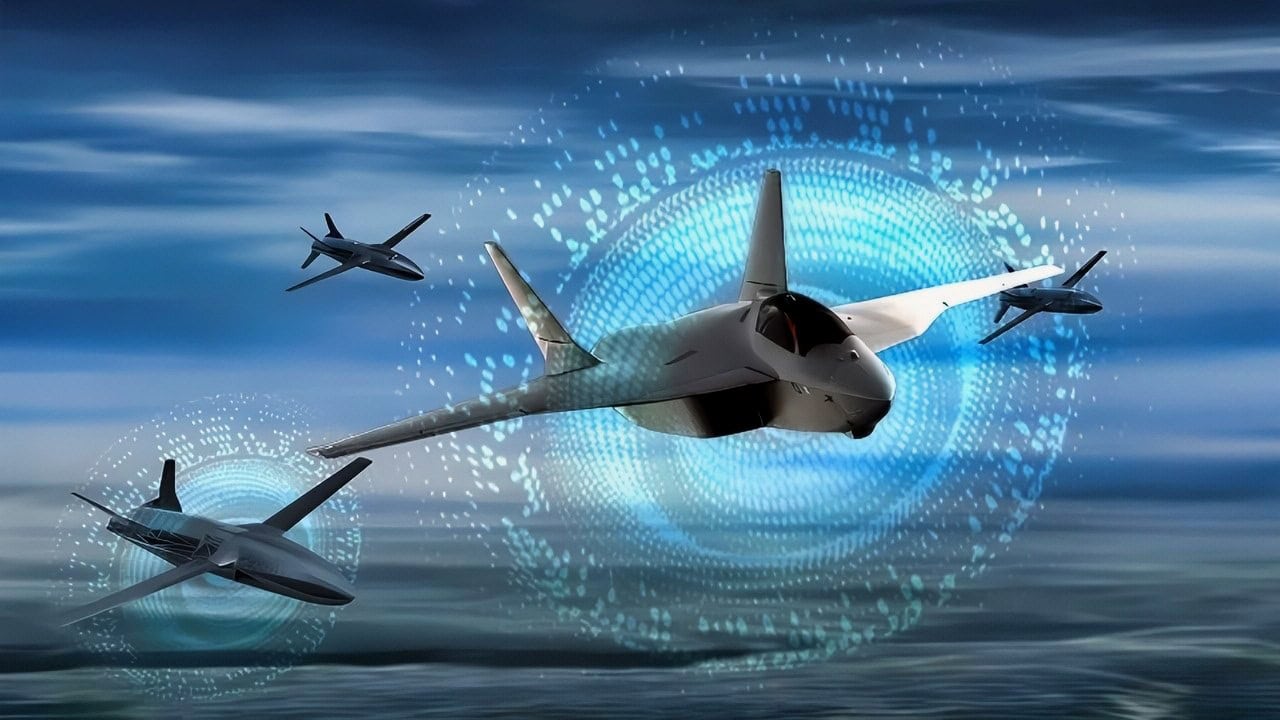
Summary and Key Points: Emmanuel Macron and Angela Merkel launched the Future Combat Air System in 2017, with Spain joining later. The estimate ran to something near €100,000,000,000. It was never just an aircraft — a New Generation Fighter at the center, “Remote Carriers” flying autonomously alongside it, and a Combat Cloud tying ships, jets and weapons into one network, replacing the Rafale and the Eurofighter from around 2040. Three months ago, the fighter at the heart of it was canceled. Dassault, as prime contractor, argued that delivering the aircraft required final authority over engineering decisions. But FCAS never had a chance.
Why FCAS Failed
Europe’s attempt to build a new sixth-generation fighter jet has effectively collapsed, and some three months after France and Germany abandoned the aircraft at the center of the Future Combat Air System (FCAS) project, the two countries are now heading down very different paths.
That became very clear this week when Airbus Defence and Space CEO Michael Schoellhorn confirmed that the German side is exploring participation in the rival British-Italian-Japanese Global Combat Air Programme, or GCAP.
Airbus would be interested in joining a program where it could secure a significant portion of the work and the leadership, Schoellhorn said.
But France is considering different options, moving toward its own future combat aircraft from Dassault Aviation. It is also continuing development of the Rafale F5.
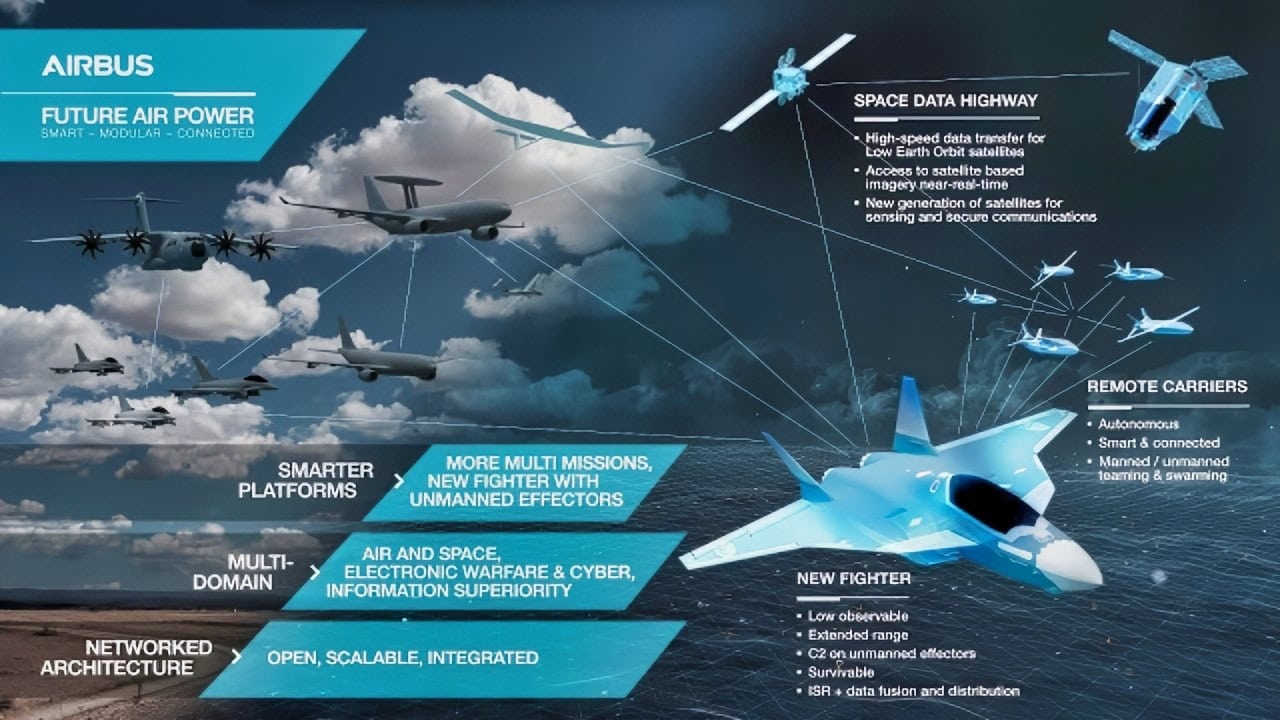
FCAS Graphic from Airbus.
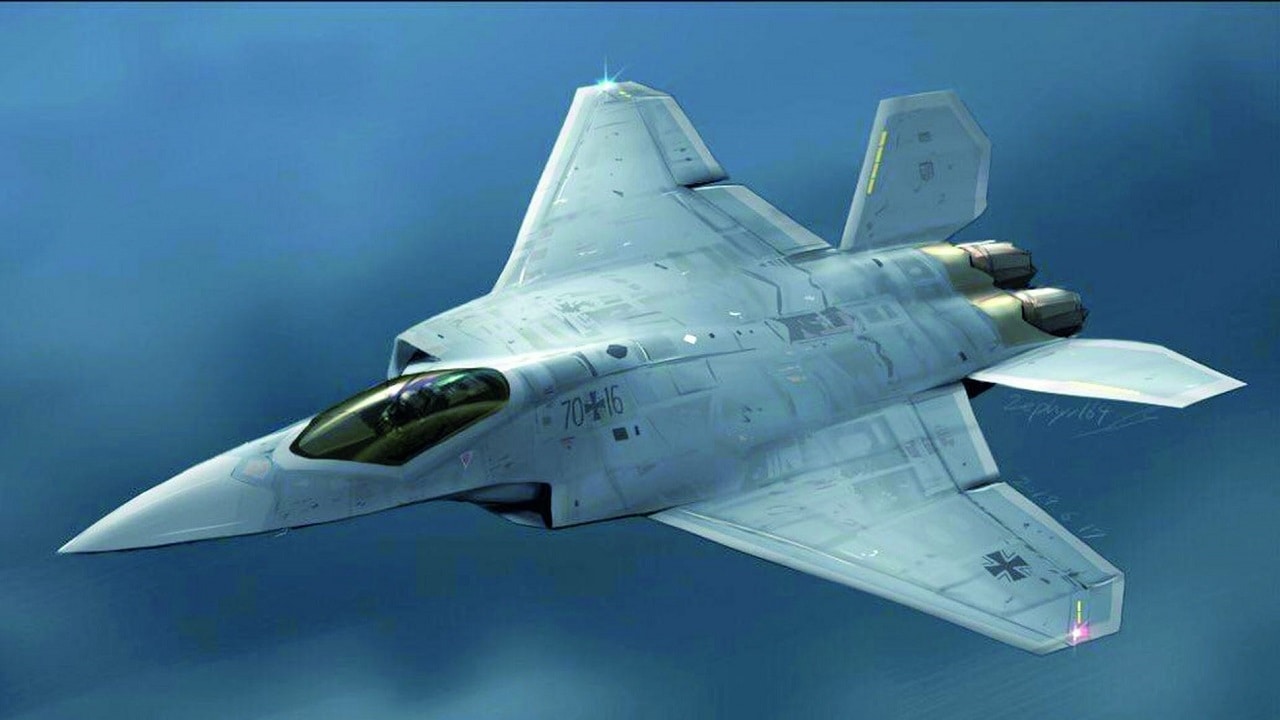
FCAS. Image Credit: Creative Commons.
What Exactly Was FCAS?
FCAS was an ambitious project, launched by French President Emmanuel Macron and then-German Chancellor Angela Merkel in 2017.
Spain later joined the program as well, which was estimated to cost around €100 billion.
It was intended to replace France’s Rafale and the Eurofighters operated by Germany and Spain beginning around 2040, giving Europe an indigenous sixth-generation system.
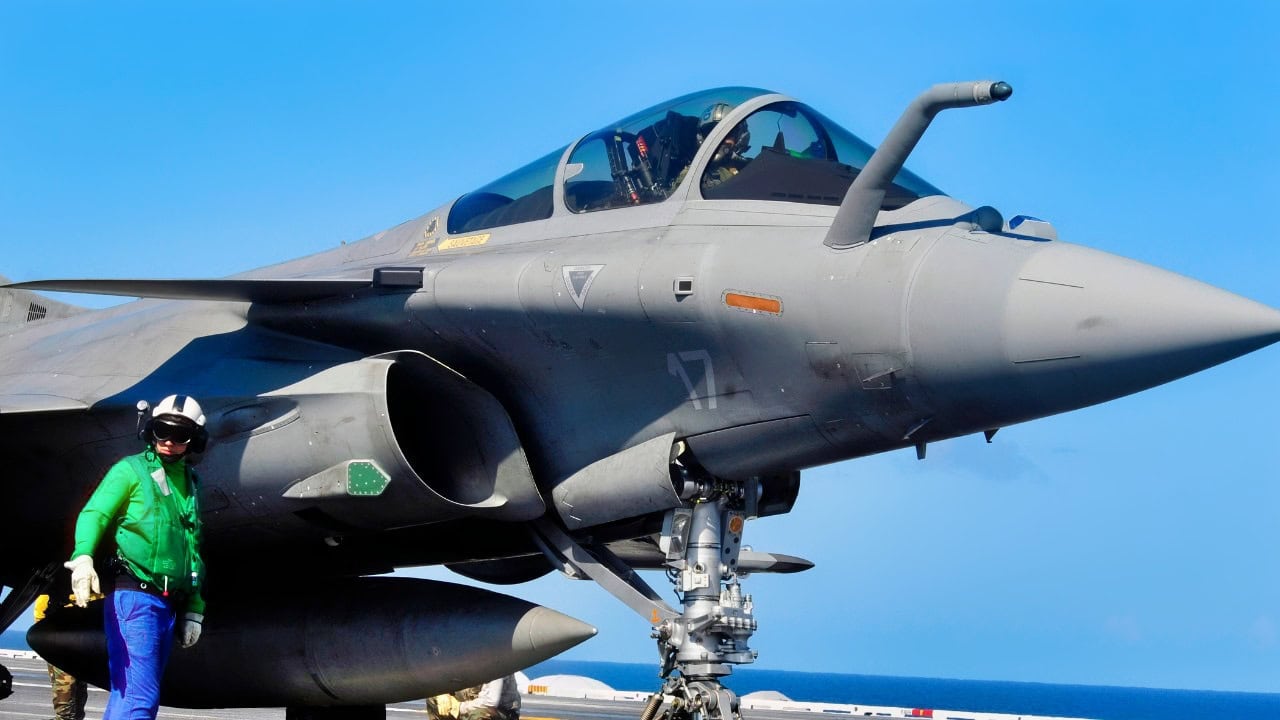
ATLANTIC OCEAN (July 19, 2008) A French F-2 Rafale fighter prepares to launch during combined French and American carrier qualifications aboard the aircraft carrier USS Theodore Roosevelt (CVN 71). This event marks the first integrated U.S. and French carrier qualifications aboard a U.S. aircraft carrier. The Theodore Roosevelt Carrier Strike Group is participating in Joint Task Force Exercise “Operation Brimstone” off the Atlantic coast until the end of July. (U.S. Navy photo by Mass Communication Specialist 3rd Class Christopher Hall/Released)
But crucially, FCAS was never just an aircraft.
It was a system of systems intended to connect all manner of military assets, from ships to fighter jets.
At the center of the program was the New Generation Fighter (NGF), a sixth-generation crewed combat aircraft Dassault was developing.
It would have operated alongside “Remote Carriers,” better known in the U.S. as collaborative combat aircraft (CCAs), designed to operate autonomously alongside the aircraft and feature new sensors and weapons. Those aircraft would be connected to the aircraft and other weapons systems via a Combat Cloud.
But the program never panned out as planned, amid infighting over responsibilities and workload shares, and was eventually scrapped – but not in its entirety. In fact, Macron and Merz scrapped only the joint fighter aircraft.
Following a meeting of German and French ministers in July, French President Emmanuel Macron confirmed that the only part of the program that has been halted is the joint combat aircraft, not the Combat Cloud program intended to connect European military assets.
Dassault and Airbus Couldn’t Agree
For anyone who has watched FCAS unfold over the years, the announcement was not surprising.
Dassault and Airbus fought for years over who would control the development of the NGF, with Dassault designated as the prime contractor for the fighter jet and arguing that it should have made all final engineering decisions.
Airbus, representing German and Spanish interests, pushed back repeatedly, saying the arrangement reduced it to a junior partner despite the Spanish and German governments directly financing the program.
That dispute escalated, with partners also bickering over intellectual property and technology transfers, workshare, subcontracting matters, and more.
And by March 2026, the situation had deteriorated dramatically, with Dassault CEO Eric Trappier announcing that “Airbus doesn’t want to work with Dassault, full stop. I take note.”
Airbus CEO Guillaume Faury, meanwhile, argued that failure of one FCAS pillar should not destroy the wider program and publicly proposed a structure involving two separate fighters.
Macron and Merz stepped in, making a final attempt to resolve the dispute, but ultimately concluded in early June, during talks in Montenegro, that the companies could not reach an agreement.
Germany then recommended that the program’s common fighter element be scrapped entirely — and it was.
France and Germany Need Different Jets
Ultimately, France and Germany needed different jets, and that was arguably the crux of the problem.
The industrial dispute might never have happened if Paris and Berlin had not been pursuing different goals.
France requires its future fighter to perform missions Germany does not.
The aircraft must eventually replace the Rafale in France’s nuclear deterrent and needs a naval version capable of operating from French aircraft carriers.
Germany has no aircraft carrier and doesn’t operate an independent nuclear deterrent.
In July, MTU Aero Engines CEO Johannes Bussmann noted that the French concept involved a significantly smaller aircraft that was designed to land on aircraft carriers — and that Germany did not have those requirements.
“The French version has a significantly smaller aircraft designed to land on aircraft carriers,” Bussmann said. “It’s slightly different with the Germans.”
What France and Germany Do Next
The project is over, but France and Germany still need fighter jets.
France is pursuing a Dassault-led project, while continuing work on the Rafale F5. Dassault is preparing technologies for a future French combat aircraft that could be developed either independently or with the support of new partners.
Germany, meanwhile, is assembling a domestic industrial base around Airbus and exploring a series of alternatives overseas, including the British-Italian-Japanese GCAP program whose partners have expressed interest in welcoming new participants — potentially giving the country a route to a fighter set to enter service in 2035.
About the Author: Jack Buckby
Jack Buckby is a British researcher and analyst specializing in defense and national security, based in New York. His work focuses on military capability, procurement, and strategic competition, and he produces and edits analysis for policy and defense audiences. He brings extensive editorial experience, with a career output spanning over 1,000 articles at 19FortyFive, and has previously authored books and papers on extremism and deradicalization.