
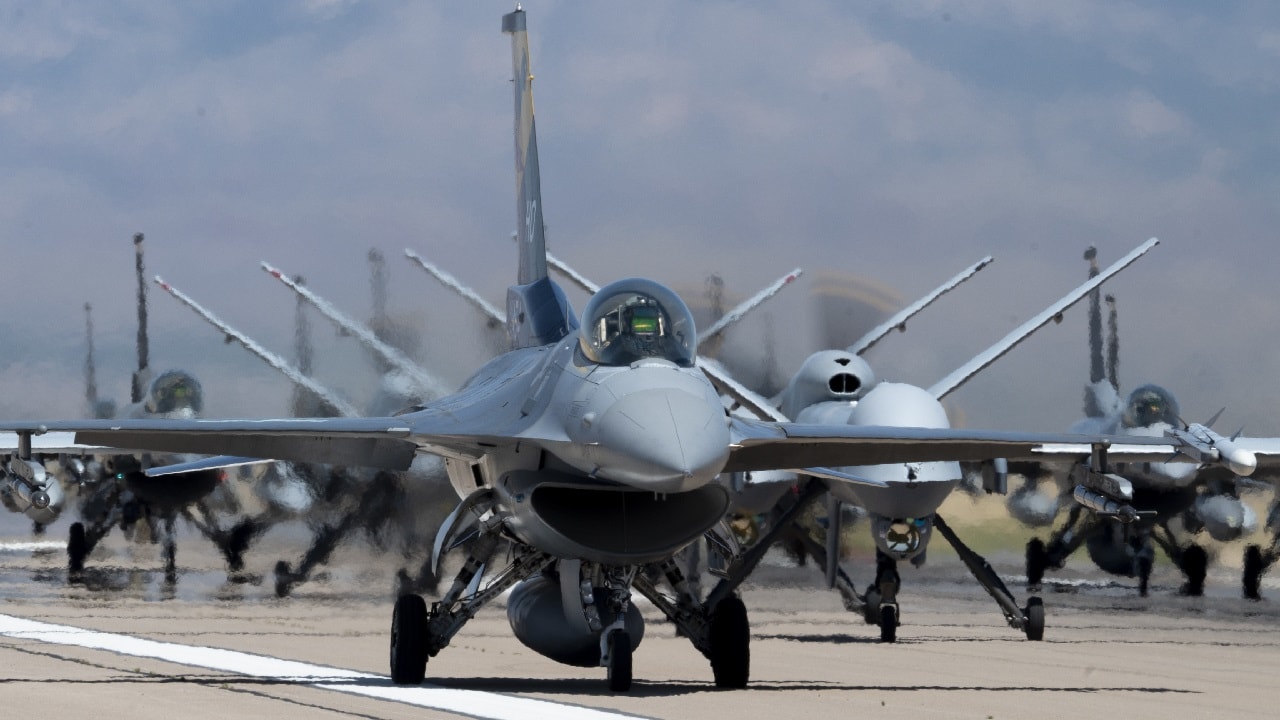
Summary and Key Points: Ukraine’s F-16s have destroyed more than 2,500 Russian Geran and Gerbera drones in two years of operations, according to a Royal United Services Institute assessment — and Volodymyr Zelenskyy confirmed on 14 September that they are now being flown against Russia’s newer jet-powered attack drones as well, firing American AIM-9 Sidewinders and AIM-120 AMRAAMs to bring them down.
F-16 Fighters vs. Russia in the Ukraine War
The F-16 fighter jets that Ukraine spent years waiting for have now been flying combat missions for more than two years.
The aircraft have also become one of the most important elements of the country’s air defenses.
But as the war evolves in Ukraine, the limitations of a relatively small fleet of Western fighters are becoming visible as Russia steps up its aerial assault campaign.
Ukrainian President Volodymyr Zelenskyy confirmed on September 14 that F-16s are now being used against Russia’s increasingly prominent jet-powered attack drones, with pilots firing American AIM-9 Sidewinder and AIM-120 AMRAAM air-to-air missiles to bring them down.
The missions show just how useful the F-16 has been for Ukraine.
But they also expose a major problem: Ukraine is using expensive and scarce missiles launched by fighter jets against relatively cheap Russian drone systems – and it is doing so because, in many cases, there is no alternative.
Reports this month indicate that Ukraine’s stocks of AIM-9 and AIM-120 missiles are running dangerously low, prompting Canada to pledge additional F-16 munitions as part of an upcoming military assistance package. Germany has also promised additional AIM-9s.
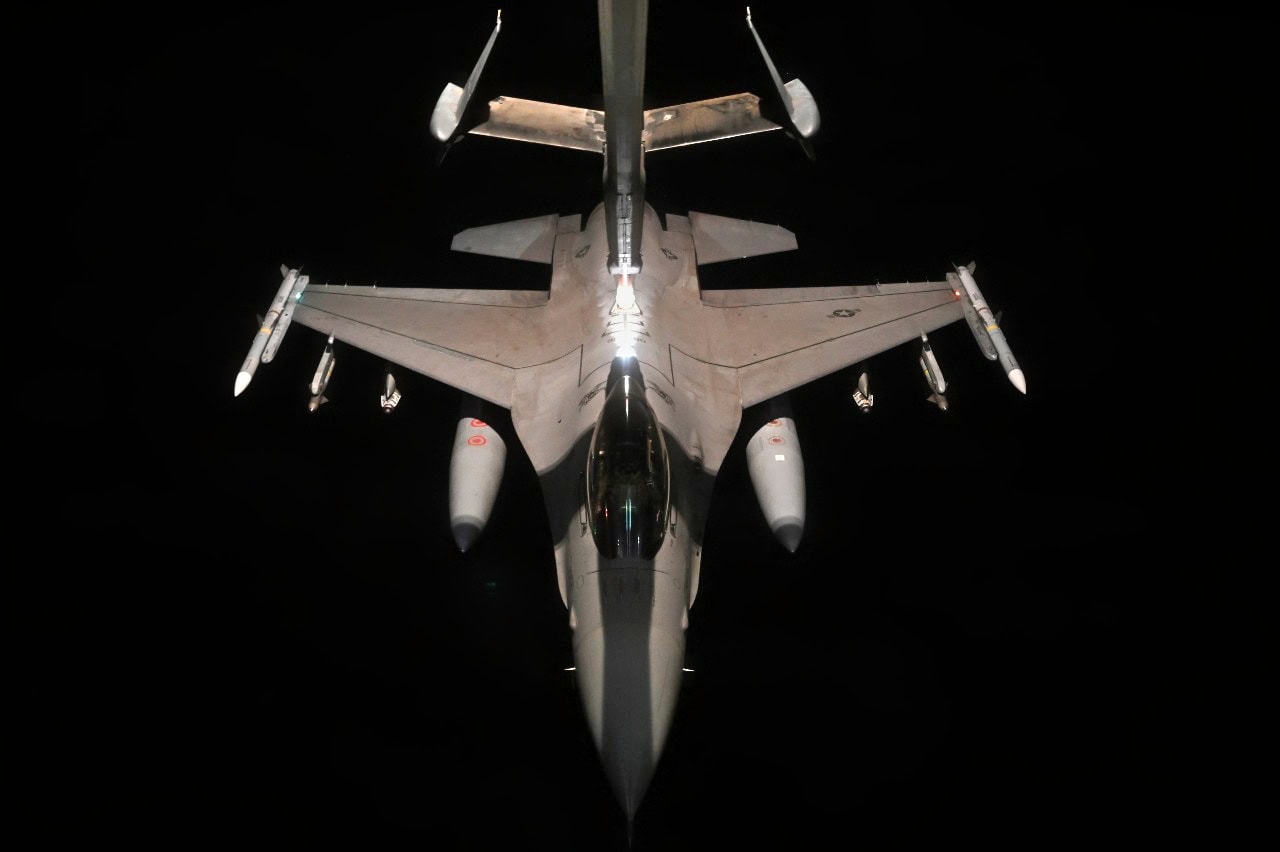
A U.S. Air Force F-16 Fighting Falcon assigned to the 77th Expeditionary Fighter Squadron, receives fuel from a KC-10 Extender assigned to the 908th Expeditionary Air Refueling Squadron, over an undisclosed location within the U.S. Central Command area of responsibility, Dec. 2, 2022. F-16 aircraft routinely conduct presence patrols within the CENTCOM AOR to reassure allies and ensure regional security. (U.S. Air Force photo by Staff Sgt. Gerald R. Willis)
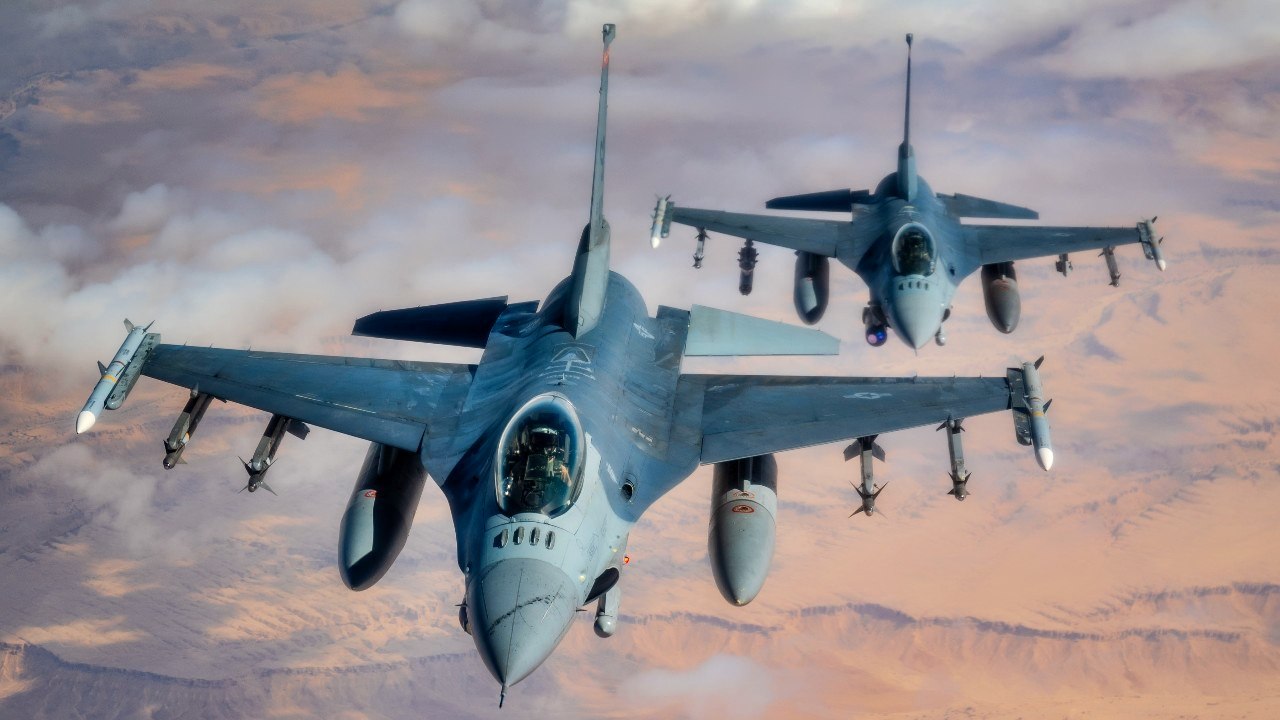
U.S. Air Force F-16 Fighting Falcons fly a routine presence patrol mission over the U.S. Central Command area of responsibility, Jan. 25, 2025. As a highly maneuverable and agile platform with a proven record in air-to-air combat and air-to-ground attack, the Fighting Falcon is well-equipped to engage with threats to regional security and deter further aggression in the AOR. (U.S. Air Force photo by Staff Sgt. Jackson Manske)
The F-16 As An Air Defense Workhorse
The F-16 was initially seen as a good option to modernize Ukraine’s aging, Soviet-designed tactical aviation fleet.
More modern and capable, it faced different challenges in the early days of the war. The first aircraft donated by European allies arrived in the summer of 2024, following months of training for Ukrainian pilots and ground crews.
Denmark, the Netherlands, Norway, and Belgium committed the aircraft to the program.
But the F-16s never entered a way in which they could roam freely over the battlefield — they were always vulnerable to Russian ground-based air defenses. Russian fighters can also employ long-range air-to-air weapons from relatively safe positions.
The F-16s, then, were kept away from the most dangerous areas of the battlefield, and air defense became one of their primary missions. And today, that role is enormous.
According to a recent assessment from the Royal United Services Institute, Ukrainian F-16s have destroyed more than 2,500 Russian Geran and Gerbera attack and decoy drones in the last two years.
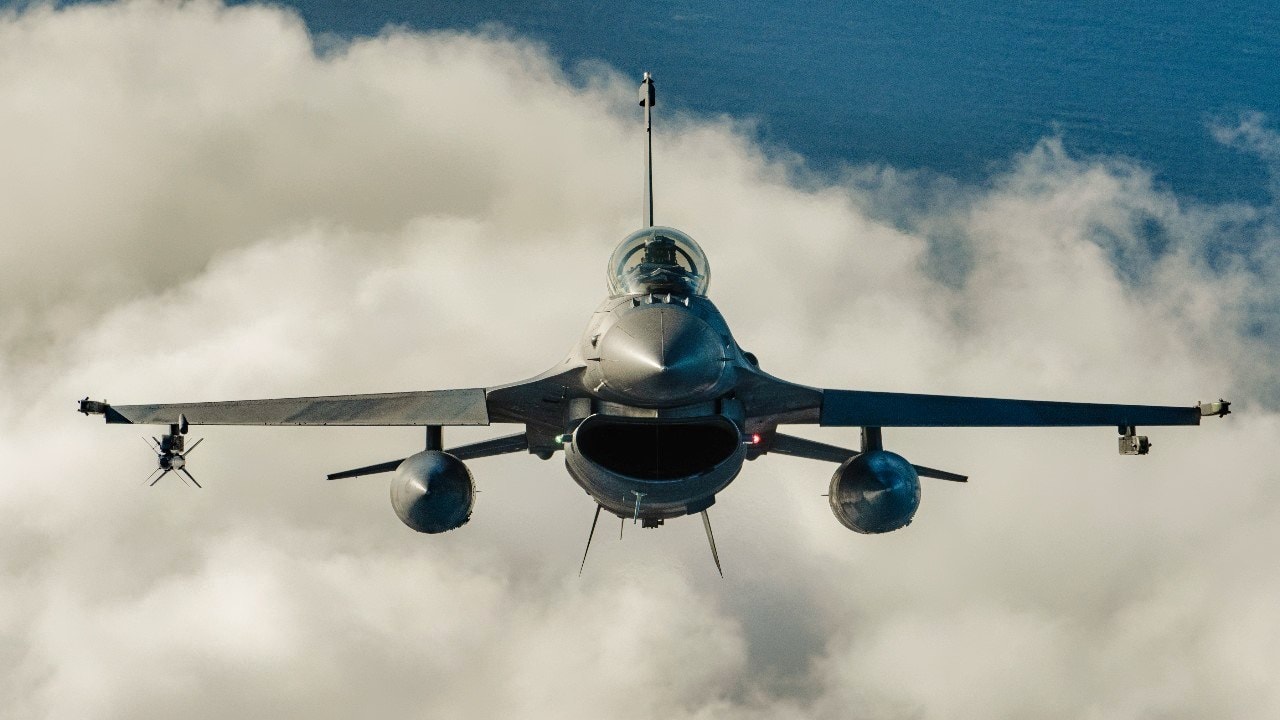
MEDITERRANEAN SEA (Feb. 3, 2022) – United States F/A-18 Super Hornets and Greek F-16 Fighting Falcons conduct air-to-air training over the Ionian Sea as a part of Neptune Strike 2022, Feb. 3. Neptune Strike 2022 highlights NATO’s ability to integrate the high-end maritime capabilities of a carrier strike group to ensure high operational readiness across the Alliance and the defence and protection of all Allies. It is the first time since the Cold War that a full US carrier group comes under NATO command.(Photo by French Master Sergeant Malaury Buis)
The fighter jets have also recorded significant successes defending against Russian cruise missiles.
So, the F-16 has not been used as part of a dramatic air-superiority campaign – one that was perhaps imagined by some supporters of supplying the aircraft to Ukraine in the first place.
Instead, it has become something arguably more valuable: a part of Ukraine’s layered air defense network and infrastructure protecting the country from Russia’s seemingly relentless long-range strikes.
Even if that layered defensive system is far from perfect, ballistic missiles still pose a particular threat.
Ukraine’s F-16s Do More Than Shoot Down Drones
Air defense is only part of the story for the F-16s, though.
Ukraine is also using the Western fighter jets to launch precision strikes against Russian positions and infrastructure from behind the front lines.
F-16s can employ Western weapons, including American JDAM glide bombs and GBU-39 Small Diameter Bombs, both of which allow Ukrainian pilots to attack from farther away, rather than flying directly over defended targets.
In July, the aircraft achieved one of the war’s most significant air-to-air successes.
Gen. Dan Caine, chairman of the U.S. Joint Chiefs of Staff, confirmed that a Ukrainian F-16 had recorded its first kill against a Russian fighter.
Ukraine reported a Su-35 destroyed on the eastern front, showing that the F-16 force is increasingly capable of successfully doing more than intercepting drones and cruise missiles.
Keeping Them Armed Is Tough
F-16s are still useful to Ukraine, even as drone warfare proliferates — but the problem is keeping them armed.
The ongoing Russian drone campaign is making the economics of using fighters for air defense more complicated, with Russia deploying faster jet-powered drones that are harder for Ukraine’s cheaper interceptor drones and mobile gun teams to intercept and destroy.
That leaves Ukrainian forces with F-16s carrying AIM-9s and AIM-120s as one of the best answers — but that’s an expensive solution.
The scale of the problem is already changing how pilots operate, forcing many to conserve ammunition.
Ukrainian F-16s have reportedly used their internal 20mm M61 Vulcan cannons against some aerial targets rather than expending their scarce AIM-9 Sidewinders or AIM-120 AMRAAMs.
The missiles are needed for more high-priority threats, including Russian aircraft and cruise missiles.
Western governments are trying to replenish their stocks but cannot do so quickly enough.
And in a way, that makes the F-16 a victim of its own success.
Ukraine has found a highly effective way to use the fighter, but it can’t keep using it because its missile stockpile is insufficient, and there’s no telling when the next pledges will arrive, or whether they will be enough.
About the Author: Jack Buckby
Jack Buckby is a British researcher and analyst specializing in defense and national security, based in New York. His work focuses on military capability, procurement, and strategic competition, producing and editing analysis for policy and defense audiences. He brings extensive editorial experience, with a career output spanning over 1,000 articles at 19FortyFive and National Security Journal, and has previously authored books and papers on extremism and deradicalization.