Putin Won’t Budge an Inch in the Ukraine War: It is hard to run a war properly when your generals tell you what they think you want to hear rather than what is actually happening on the battlefield.
That lack of candor on the part of Moscow’s senior-most commanding officers when they speak to their commander-in-chief is becoming more evident as Russia suffers the loss of territory in Ukraine that its forces had previously occupied.
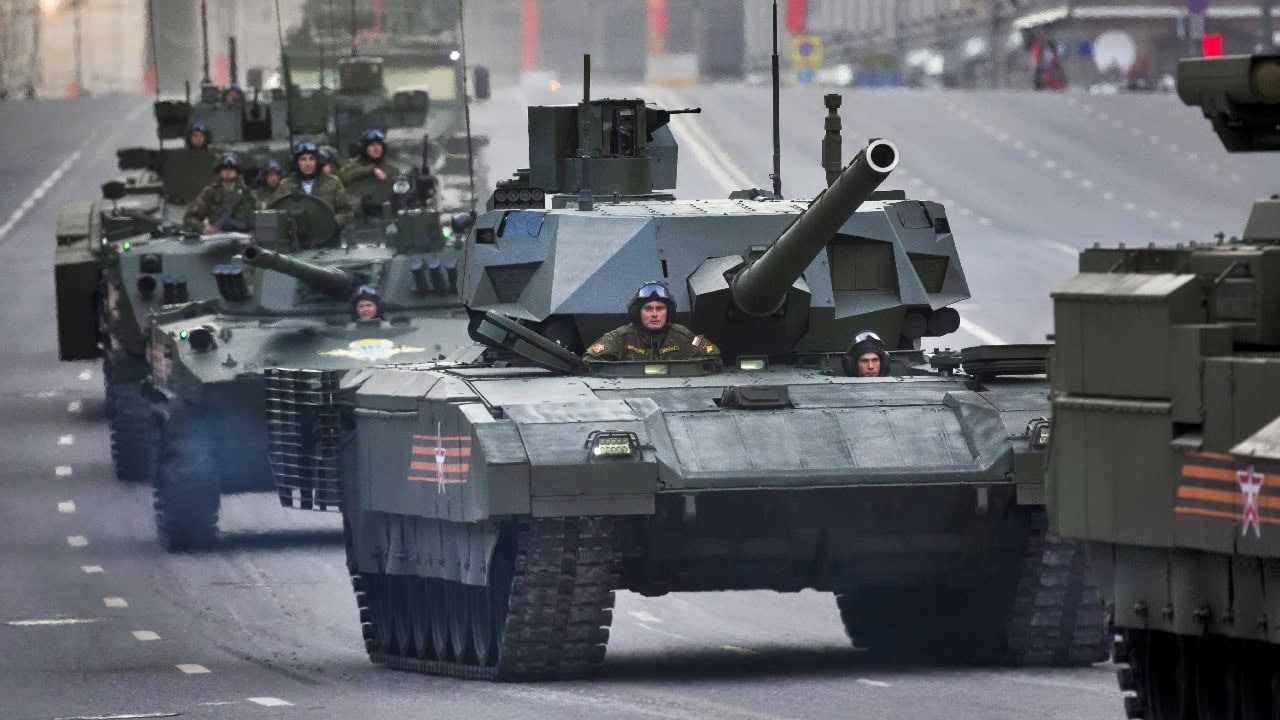
T-14 Armata Tank from Russia. Image Credit: Creative Commons.
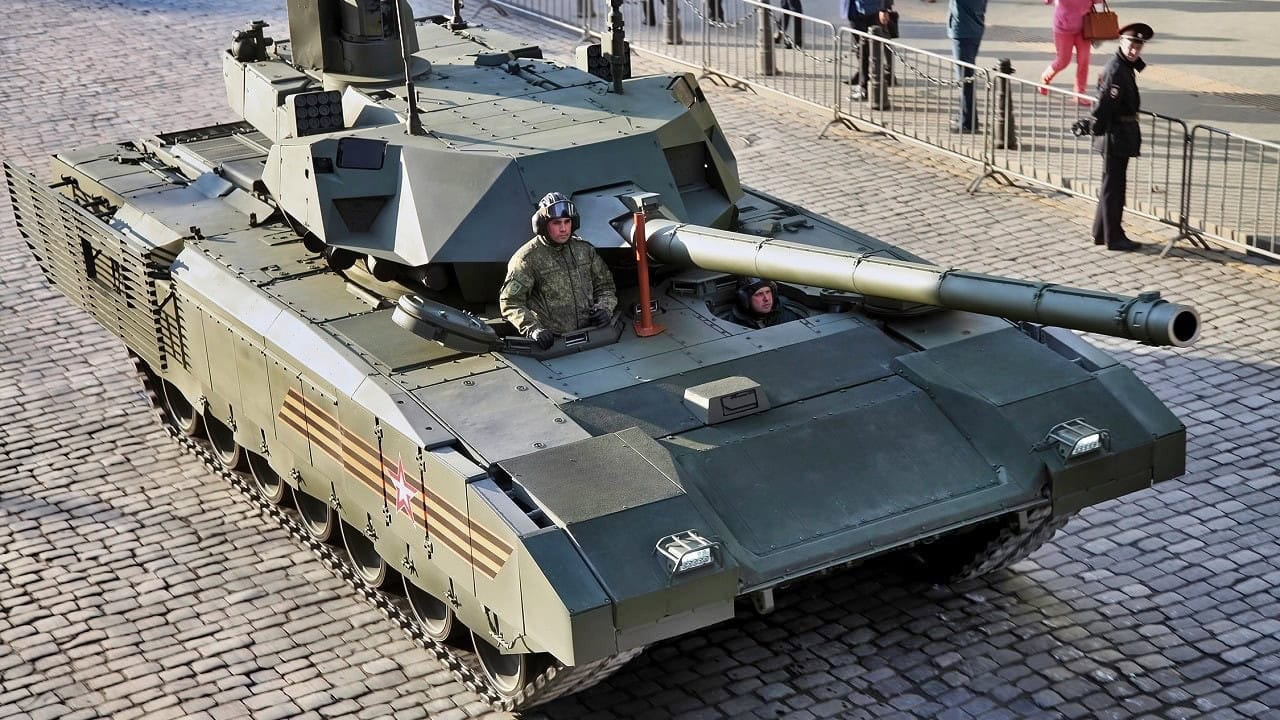
T-14 Armata Tank.
The illusion that his army is always moving forward and never being pushed back is one of the reasons Russian President Vladimir Putin refuses to even discuss a peace settlement of any kind.
He has become notorious for continuing to cling to the same maximalist demands that he had laid out from Day One of his war in Ukraine and will not discuss any settlement in the conflict until they are met.
And despite eight visits to Moscow by US President Donald Trump’s special envoy Steve Witkoff (sometimes accompanied by US President Donald Trump’s son-in-law Jared Kushner), former KGB Major Putin’s negotiating position has not budged an inch.
Meanwhile, drone and missile attacks on Kyiv’s civilian population continue on a daily basis.
The highest priority for Putin at this point is that he still obsessively insists on being handed over the entirety of the Donetsk oblast in the eastern Donbas region of Ukraine.
This is his latest precondition before he would allegedly be prepared to discuss ending the fighting.
“There is zero chance of reaching an agreement on the frontline until Putin completes the capture of the rest of the Donetsk region,” a source described as being close to the Kremlin told Reuters earlier this month.
Putin’s Obsession With Taking Donetsk in the Ukraine War
But Putin continuing to order his military to take all the Donbas by the end of 2026 appears to be borne out of his belief that this is an attainable goal.
This is not one of those objectives that have been constantly moved to the right, as announcements of the imminent deployment of the new Sarmat ICBM have been in recent years.
Western military analysts, however, state that Putin’s Donetsk objective is being achieved as “highly improbable given the protracted and grinding pace of Russian advances.” Ukraine President Volodymyr Zelenskiy has also repeatedly and categorically said he rejects any Russian terms calling for territorial concessions.
For both symbolic and tangible military reasons, he and many others in Ukraine regard the surrender of Donetsk as equivalent to capitulation to Moscow.
The areas of Donetsk that Ukraine still holds are the “fortress belt” cities, such as Sloviansk and Kramatorsk.
Were these cities to fall into Russian hands, it would destroy Ukraine’s main eastern defense belt and would make the rest of the country vulnerable – if not indefensible.
But during the ongoing war, Kyiv has disrupted Russian goals of capturing the Donetsk region.
This is based on analysis suggesting that Ukraine’s military has regained the initiative at the strategic and operational levels for the first time in two years.
Generals Delivering Dishonest Battlefield Reports
But Putin continues to pressure his commanders into launching increasingly fruitless counterattacks.
These offensive actions have been costing the Russians over 30,000 casualties per month.
The Russian dictator insists his armies can still win the fight because he reportedly receives exaggerated accounts from his generals about battlefield gains on a regular basis.
These dishonest reports only reinforce his belief that his forces are prevailing in the conflict.
According to the Washington, DC-based Institute for the Study of War (ISW), Ukraine has reduced Russia’s territorial gains to zero over the last six months and carried out successful counteroffensives.
Those initiatives have been in the Kupiansk, Oleksandrivka, and Lyman sectors, according to the ISW.
These Ukrainian successes on the battlefield have been of such significance that none other than some of the pro-Kremlin military bloggers in Russia have been forced to acknowledge them.
ISW assesses that Ukraine stopped Russia from pushing into the Dnipropetrovsk region, regained lost ground around Kupiansk, and destroyed a Russian salient that had threatened the northern flank of Slovyansk and the Donetsk Oblast Fortress Belt.
“These are not the signs of a military that is winning – or even has hope of regaining the initiative,” said a NATO-nation retired special forces veteran supporting foreign volunteers fighting in Ukraine. “You cannot lose this kind of territory this fast if you and the formations around you are capable of being combat effective for any length of time.”
Speaking to US media, the retired Australian Army Major General Mick Ryan described the Ukrainian gains as “a pleasant surprise in the midst of the ongoing Russian missile barrages against Ukrainian cities.”
About the Author: Reuben F. Johnson
Reuben F. Johnson has thirty-six years of experience analyzing and reporting on foreign weapons systems, defense technologies, and international arms export policy. Johnson is the Korea Fellow at the Casimir Pulaski Foundation. He is also a survivor of the Russian invasion of Ukraine in February 2022. He worked for years in the American defense industry as a foreign technology analyst and later as a consultant for the U.S. Department of Defense, the Departments of the Navy and Air Force, and the governments of the United Kingdom and Australia. In 2022-2023, he won two awards in a row for his defense reporting. He holds a bachelor’s degree from DePauw University and a master’s degree from Miami University in Ohio, specializing in Soviet and Russian studies. He lives in Warsaw.