
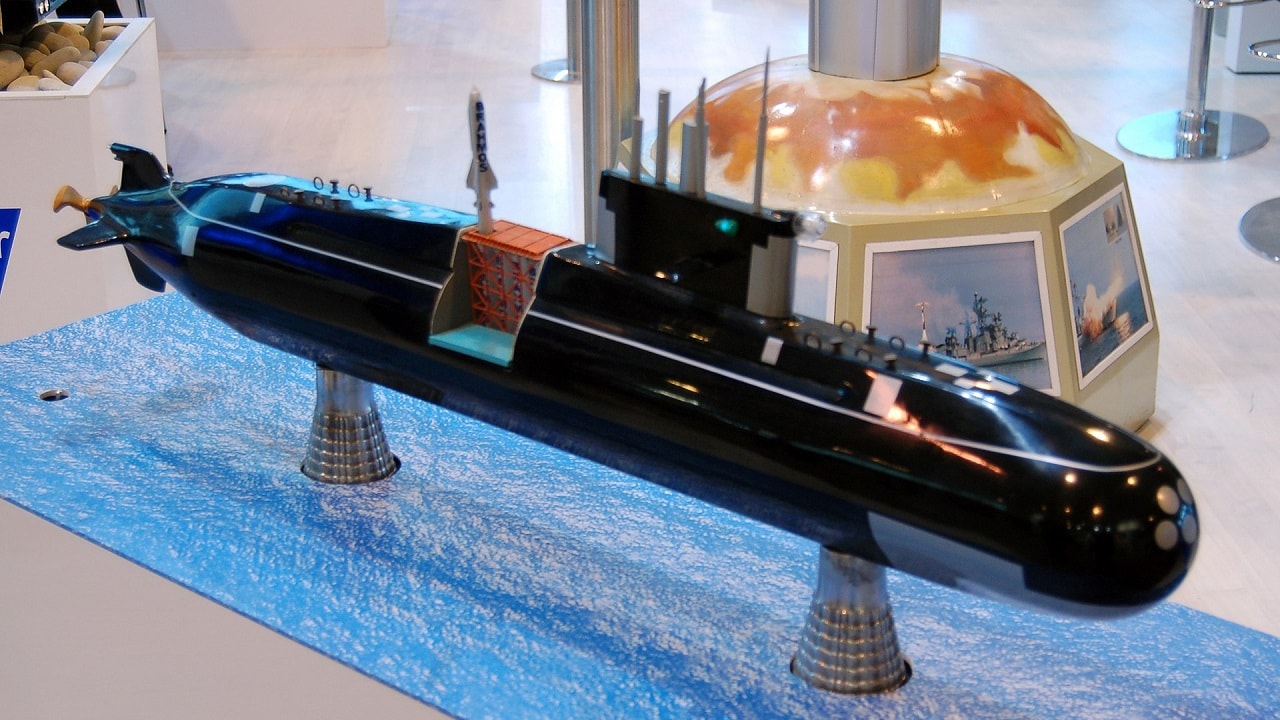
The Project 667 Lada (Lada-class) submarines were originally intended to replace the older Project 636 (Kilo-class) ships. The idea was to create a new class of submarines with a better stealth profile and more advanced combat systems than the older “black hole” subs. However, the program hit a major roadblock when the lead ship, Sankt Peterburg, revealed numerous design flaws, leading to her premature decommissioning. For nearly a decade, construction on the next ships paused as the class underwent a major redesign. Currently, two Lada-class ships have been accepted into service, with a third undergoing sea trials.
Could we sum up this submarine as the ‘New black hole sub’? She does come after the Kilo-class, which was named that decades ago.
A Rough Start for the Lada-class
Research and development on the Lada-class began in the 1980s, during the final years of the Soviet Union, and the Rubin Design Bureau developed it under chief designer Y.N. Kormilitsyn.
The new submarine was envisioned as a diesel-electric submarine, with a diesel plant providing power and electric motors driving its propulsion system.
Despite the collapse of the USSR and the tumultuous 90s, work on the project continued.
Construction of the lead ship used Western techniques, such as laser welding, and new composite materials that were unavailable on previous Soviet-era submarines.
Also, unlike their predecessors, the Lada-class uses a single-hull architecture, which reduces the ship’s overall weight.
The lead ship, Sankt Peterburg (B-585), was laid down in 1997 before being commissioned in 2011.
One cannot ignore the political and economic context surrounding the construction of the lead ship.
After the Cold War ended, the newly formed Russian Federation was in chaos.
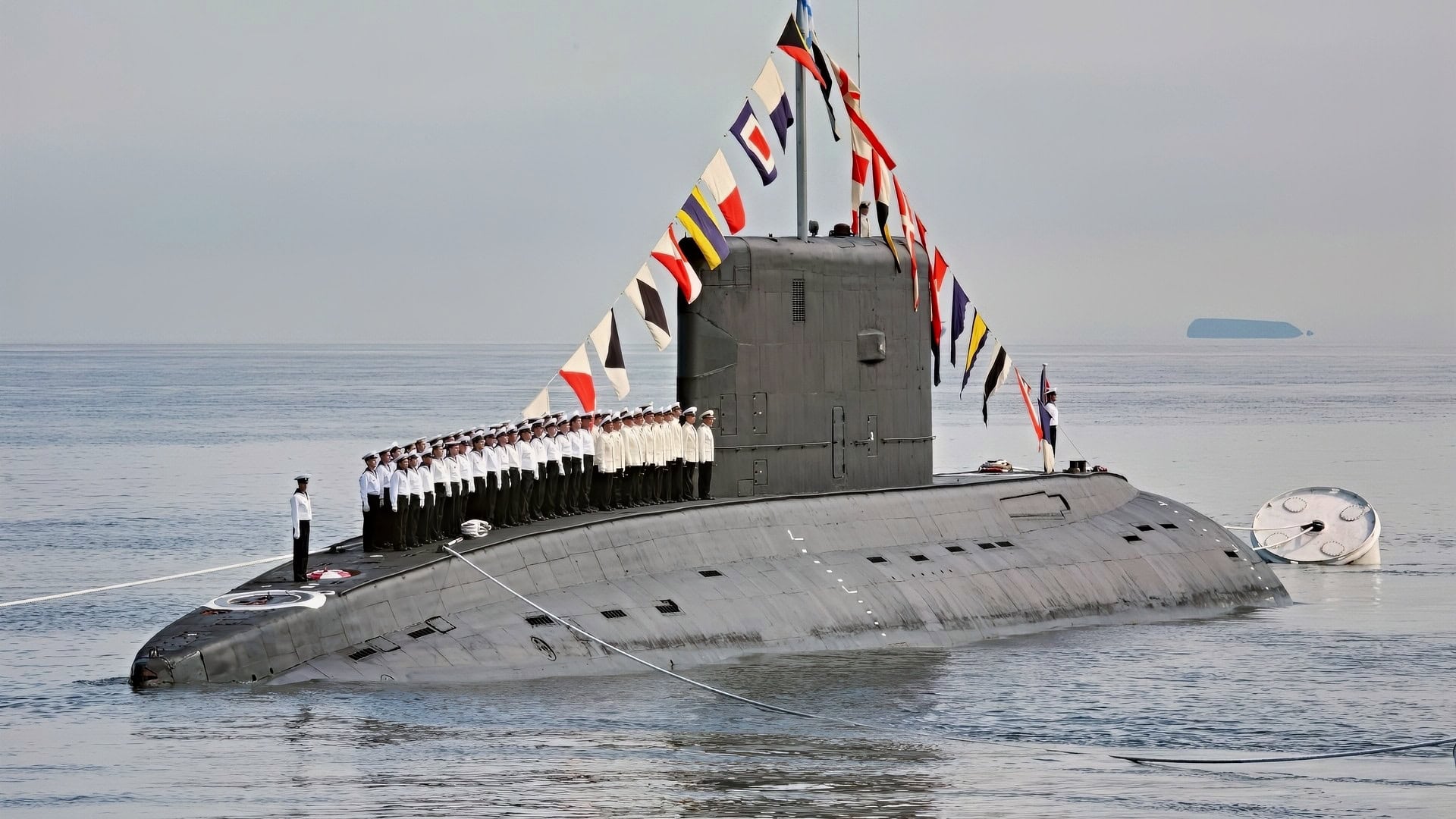
Kilo-Class Submarine on Display
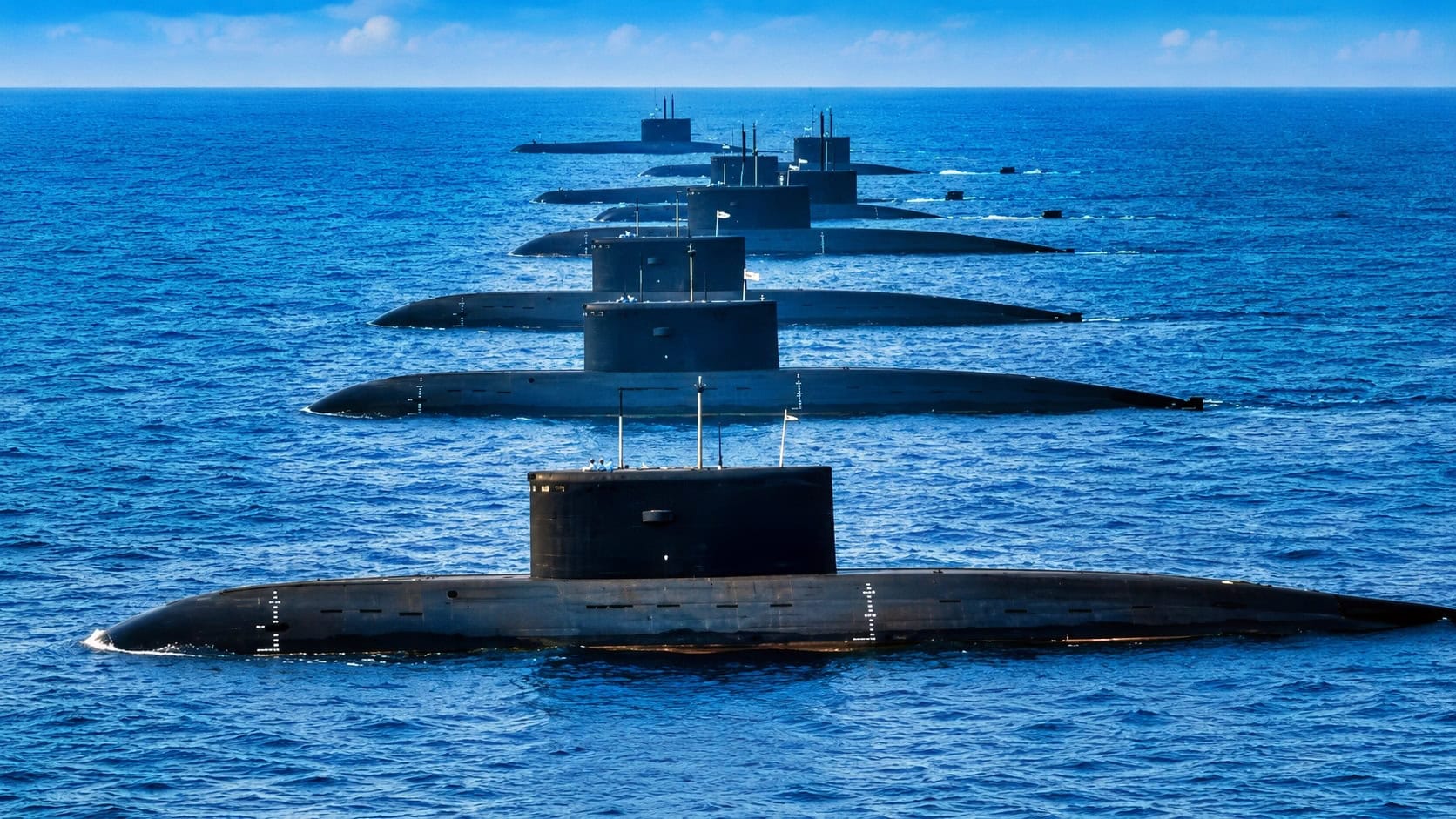
Kilo-Class Submarine. Image Credit: Creative Commons and Enhanced with Banana Nano.
The economy was in free fall, and the defense budget was drastically cut.
The Russian Navy was heavily affected by the collapse of the USSR.
Many projects were canceled, many ships under construction and in maintenance were scrapped, and newly privatized shipbuilding companies either went bankrupt or shifted to civilian projects.
In this context, it makes sense why Sankt Peterburg had so many issues upon delivery.
Just a year after delivery, the Russian Navy discovered that the ship fell considerably short of its requirements. “The boat is completely incapable of combat in a number of important ways,” a Navy spokesman said.
After the disappointment in Sankt Peterburg, the Russian Navy paused the program while adjusting the ship’s design.
Originally, the Lada-class program was thought to be canceled altogether, but after revising its design, the Russian Ministry of Defense announced it would acquire 9 Lada-class ships.
Sankt Peterburg remained as a test ship for new technologies before it was finally decommissioned and scrapped in 2024.
Technical Characteristics
With a displacement of 1,765 tons, the improved Lada-class is considerably lighter than its Kilo-class predecessors (2,350 tons).
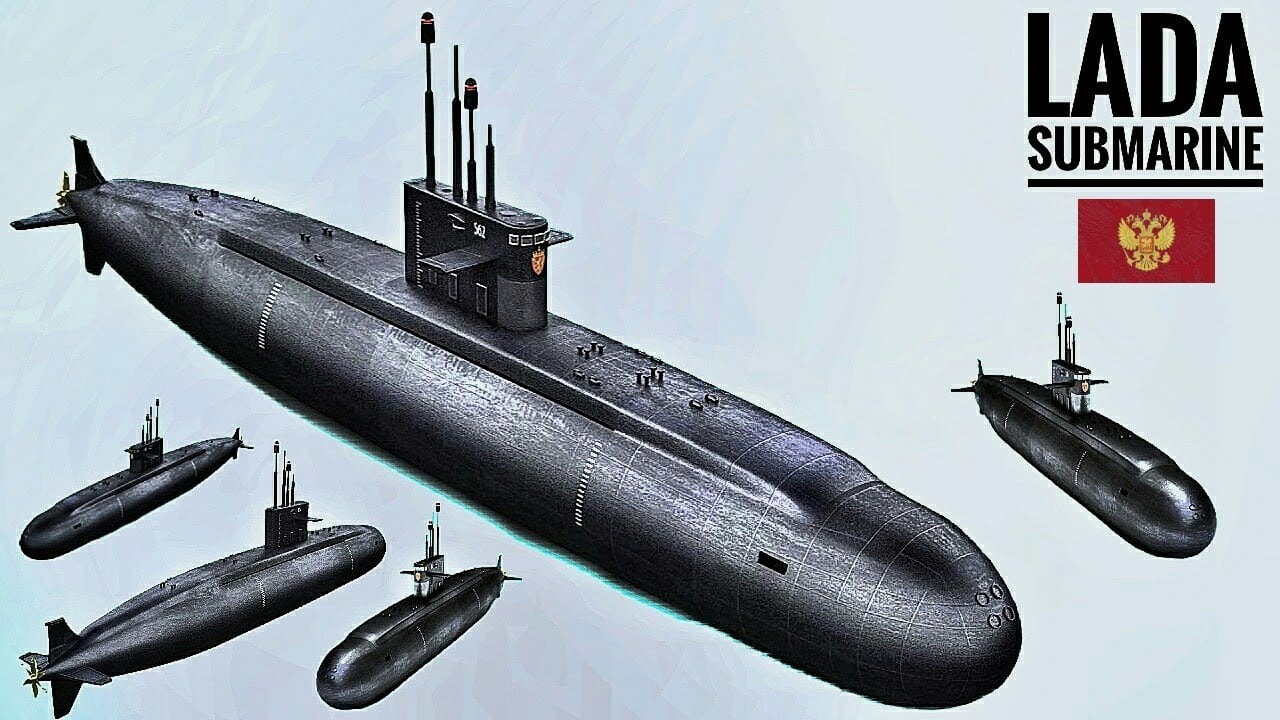
Lada-class Submarine. Image Credit: Creative Commons.
The ships are also considerably smaller, measuring 236 ft in length and carrying a total crew of 35 officers and enlisted personnel.
Despite their smaller size, the Lada-class is considerably more advanced than its predecessors.
The class has a top speed of 21 knots and a range of 7,400 nautical miles.
The ships carry six 533mm torpedo tubes, allowing them to launch Kalibr cruise missiles and P-800 Oniks anti-ship missiles.
The ships use the Litiy combat system, which is significantly more advanced than those on its predecessors and relies heavily on automation, allowing for smaller crew accommodations.
From the start, the Lada-class was designed to have a better stealth profile than the preceding Kilo-class submarines, often called “black-hole” submarines for their excellent stealth systems.
The Lada-class is equipped with new hydroacoustic coatings and anechoic tiles to absorb sound waves.
The ships’ hulls and propellers are designed to reduce cavitation and hydrodynamic noise, while all onboard equipment is installed on shock-absorbing foundations.
The Lada-class also includes systems that detect enemy stealth systems, such as active and passive sonar, along with a new hydroacoustic complex that supposedly allows the submarine to detect enemy ships at long range while maintaining stealth.
The AIP Question
In any discussion of the Lada-class, Air-Independent Propulsion (AIP) always comes up.
Typical diesel engines rely on atmospheric oxygen, which typically requires conventional submarines to surface frequently.
AIP lets conventional submarines stay underwater longer and produces less noise than typical diesel-electric power systems.
Currently, the Lada-class does not have AIP and instead uses a more traditional unified energy system.
Although the class was originally supposed to receive a new AIP system, the Russians opted for a traditional system due to technical delays.
Even among Russian sources, reports conflict over whether future ships in the class will receive AIP. The general consensus seems to be that AIP technology is not yet ready in Russia.
After the Lada-class design was improved, construction proceeded relatively smoothly.
The second ship of the class, Kronshtadt (B-586), was commissioned in 2024, with the third ship, Velikiye Luke (B-587), commissioned in 2025.
Three other ships are currently under construction at the Admiralty Shipyards in Saint Petersburg, and the fleet is expected to reach nine ships in the future.
Both Vologda and Yaroslavl were laid down in 2022, while Maloyaroslavets was laid down in August 2026.
Despite the rough start in the 2010s and the lack of AIP, the Russian Navy still views the Lada-class as a vital component of its submarine fleet.
About the Author: Isaac Seitz
Isaac Seitz, a Defense Columnist, graduated from Patrick Henry College’s Strategic Intelligence and National Security program. He has also studied Russian at Middlebury Language Schools and has worked as an intelligence Analyst in the private sector.