
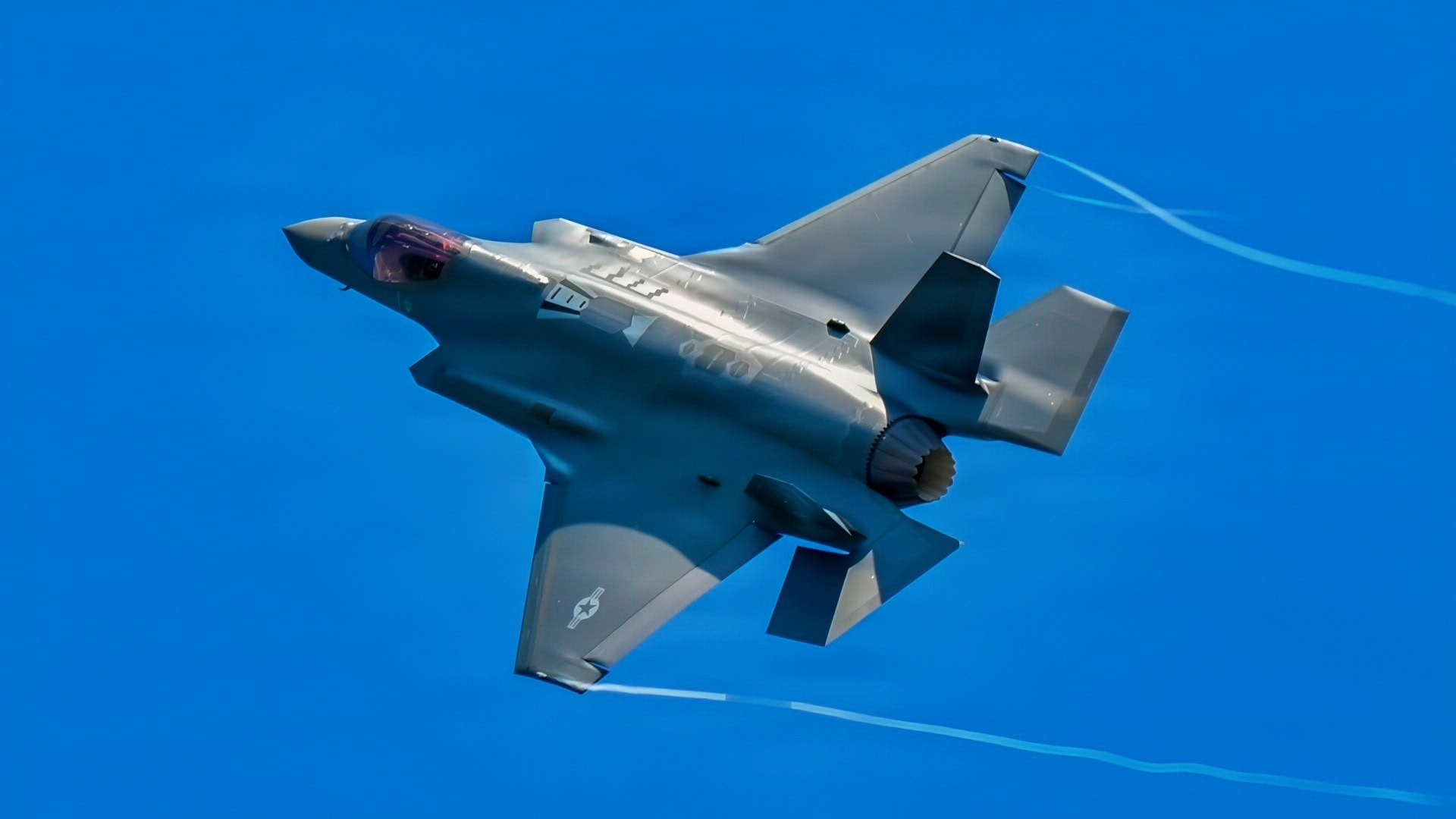
Summary and Key Points: Harrison Kass revisits Red Flag 2017, where the F-35 Lightning II reportedly scored a 20-to-1 kill ratio with AESA radar, DAS, sensor fusion, and first-shot BVR tactics, yet aggressor F-16s still scored kills. Using numerical superiority and multi-axis attacks, the F-16s forced the stealth fighter to expend its four internal AMRAAMs and into within-visual-range merges, where pilot skill matters more than stealth. Kass says the result argues for loyal wingman drones, not against the F-35 itself.
The F-35 Can Be Defeated
At Red Flag 2017, the F-35 Lightning II reportedly achieved a 20:1 kill ratio. On paper, the results are staggering—reinforcing the aircraft’s reputation as a fifth-generation force multiplier. But amid that success, aggressor F-16 pilots scored simulated kills.
The tactic: overwhelm the stealth warplanes with swarms. The results demonstrated that the F-35’s strength in networked BVR combat is real—but also highlighted a vulnerability when missile capacity and geometry are stressed to the breaking point.
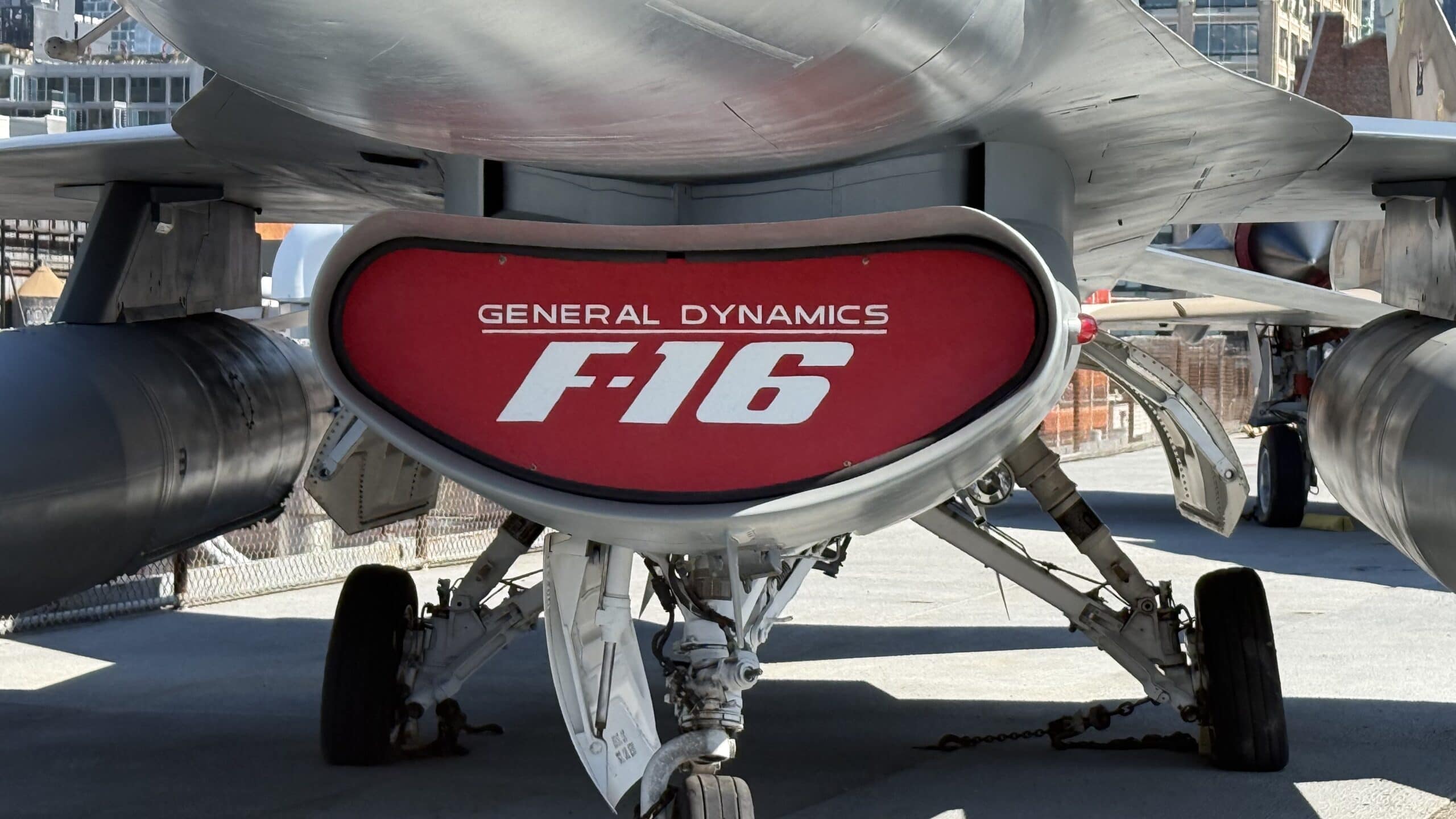
F-16 On Flight Deck of USS Intrepid. 19FortyFive.com Image.
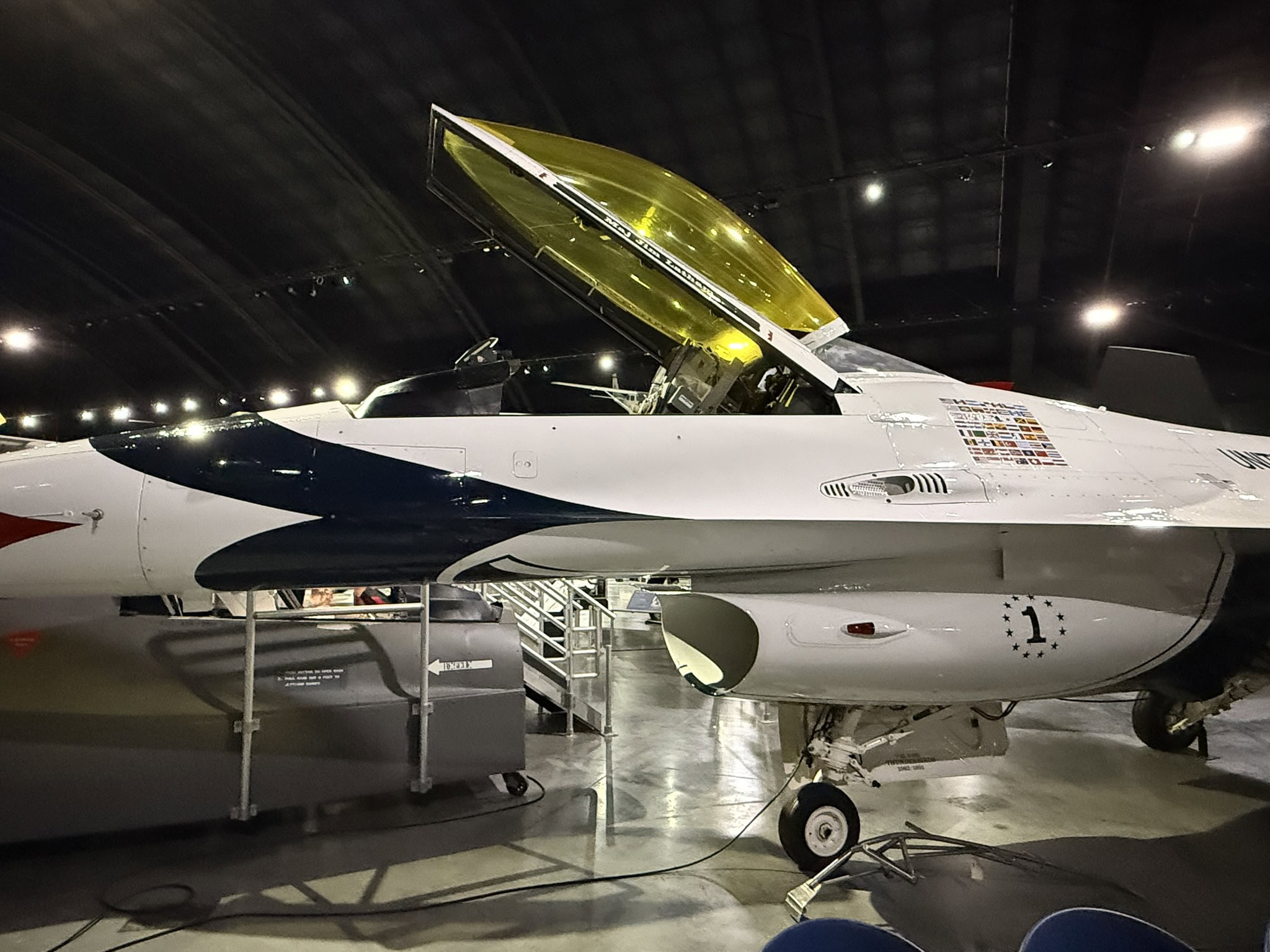
F-16 Fighter. 19FortyFive.com Image from the National Museum of the U.S. Air Force.
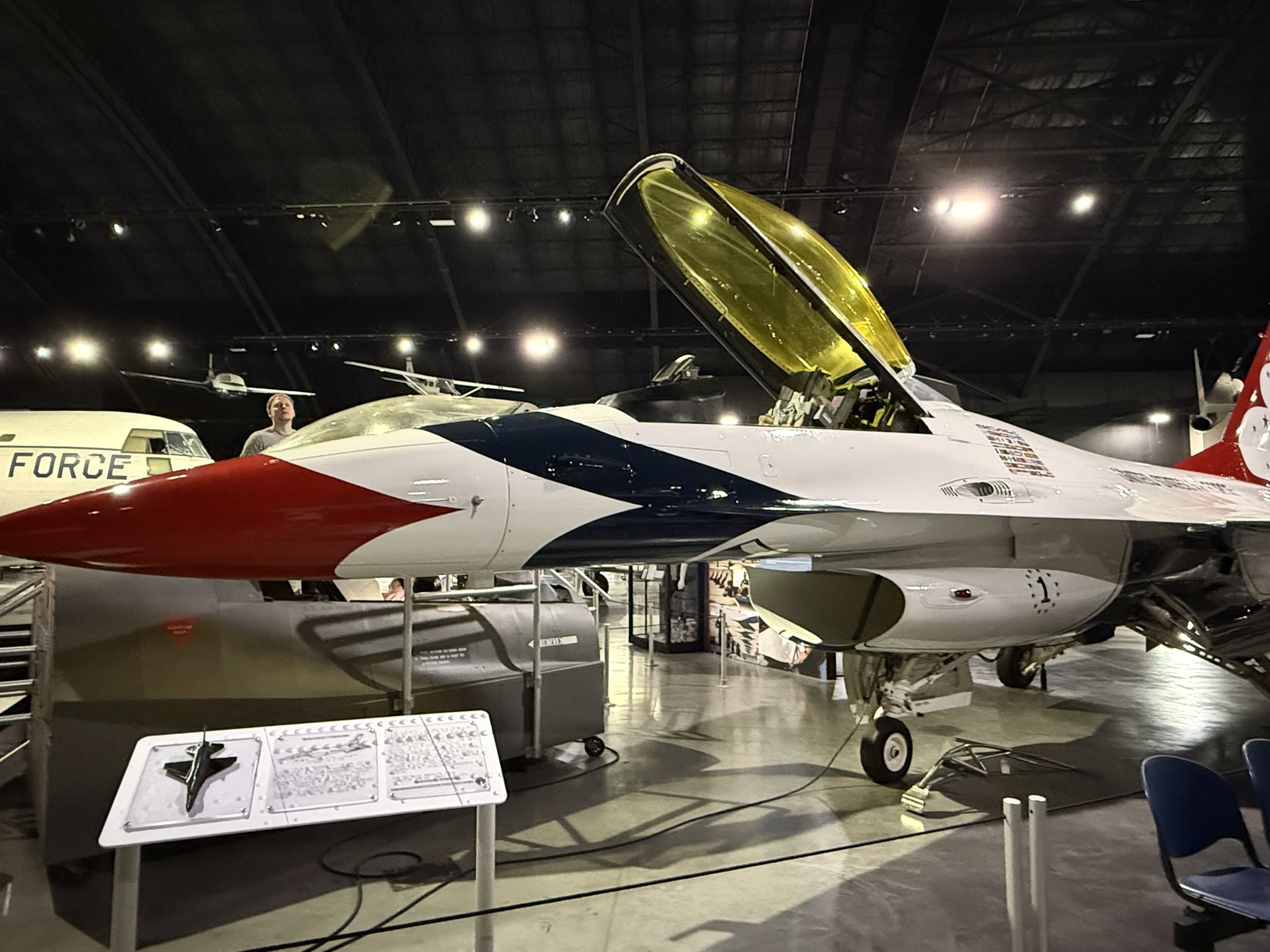
F-16 Fighter. 19FortyFive.com Image from the National Museum of the U.S. Air Force.
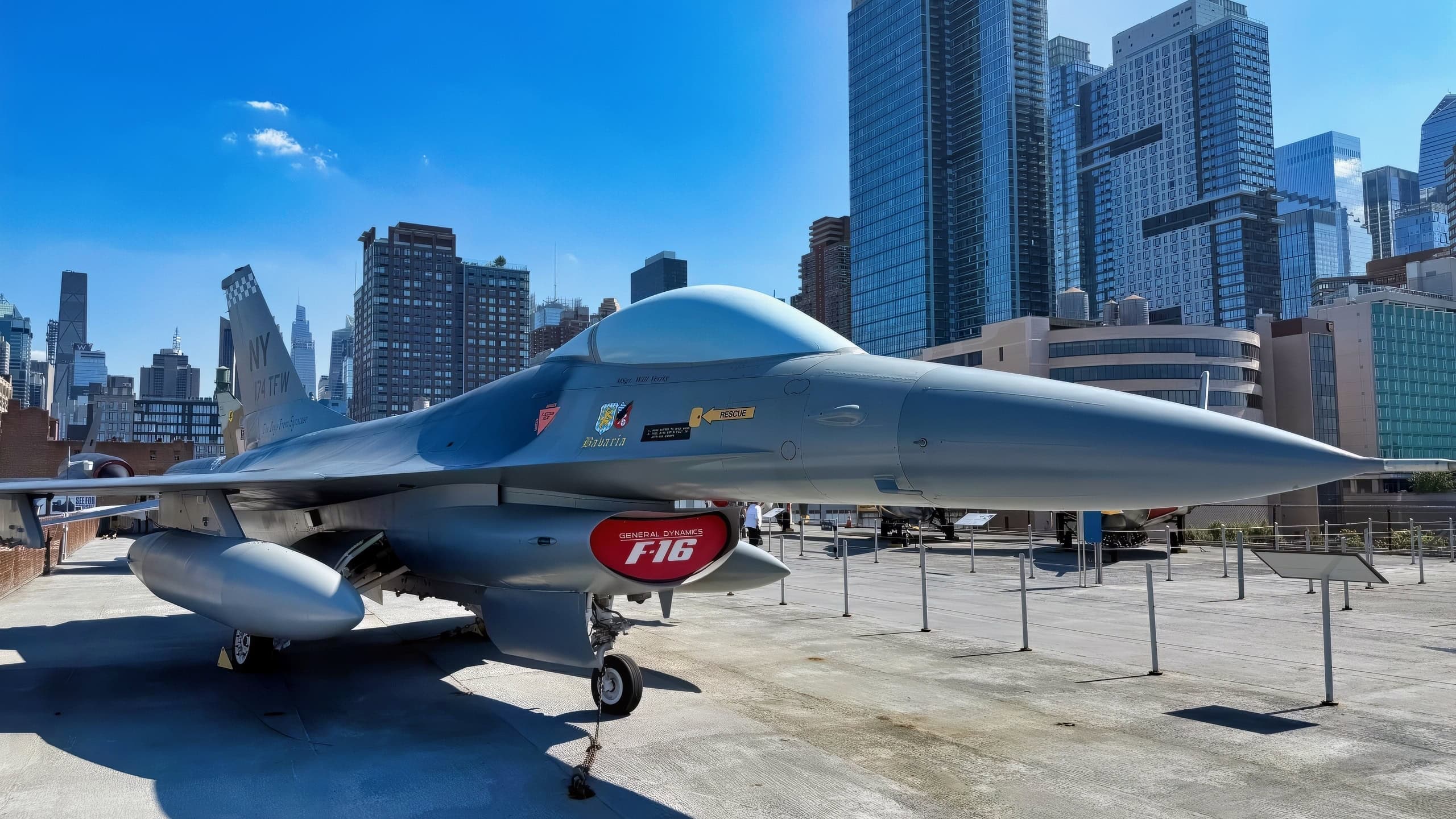
F-16 Fighter On USS Intrepid. 19FortyFive.com Image.
What is Red Flag?
Red Flag, hosted at Nellis AFB, is a high-end air combat exercise. To simulate peer conflict, aggressor squadrons replicate advanced adversaries. The exercises stress tactics, expose weaknesses, and train in contested environments.
Kill ratios in Red Flag are not marketing metrics but takeaway tools for learning new lessons.
The F-35 on Paper
The stealth fighter integrates AESA radar, a Distributed Aperture System (DAS), electro-optical targeting, and off-board data links to provide unmatched situational awareness, one of the airframe’s greatest advantages. Another cutting-edge advantage: stealth.
The stealth fighter has a low radar cross-section (RCS), reducing the detection window and enabling first-look/first-shot advantages.
The F-35 is also networked, acting as a sensor node that can share targeting data and extend awareness across the entire force structure.
The result: the F-35 often fires first, engages beyond visual range, and avoids merges.
20:1 Kill Ratio
The F-35’s Red Flag 2017 20:1 kill ratio reflects dominance in BVR engagement, information superiority, and integrated air battle.
Aggressors were frequently killed before they even knew they were targets—that’s the F-35’s stealth, sensors, and tactics working as designed, exactly the missions the F-35 was built for.
Swarm Tactics
Yet the F-35 seemed vulnerable. Aggressor F-16s reportedly used numerical superiority, multi-axis attacks, and saturation geometry. Basically, the F-16s swarmed the F-35.
This forced the F-35 to expend missiles, close the engagement distance, and create merges—creating an overwhelming defensive scenario.
This exposed the F-35’s key limitation: limited internal weapons payload. In stealth configuration, the F-35 typically carries only four AMRAAMs. Once these four missiles are expended, the F-35 must disengage—or merge for a WVR engagement.
Stealth offers advantages, of course, but it also requires internal carriage, which reduces payload.
Finite BVR shots per sortie are a problem against large formations. The F-16s identified and exploited this limitation.
WVR Realities
In close-range engagements, stealth advantage diminishes, and infrared missiles dominate. The stealth fighter was not built to dominate; it’s not even that maneuverable. Instead, the F-35 was designed to avoid merges.
But the F-16 pilots, understanding this asymmetry and relying on their advanced dogfighting skill set, forced the merge—at which point pilot proficiency and geometry mattered more than stealth, networking, or sensor fusion.
Historical Precedent
Air combat history has repeatedly shown that quality can dominate, but quantity still matters. In World War II, Korea, and Vietnam, swarm tactics and mass formations succeeded.
The modern parallel is clear; in Ukraine, Russian drone/missile swarms are being used to overwhelm Ukrainian air defense systems; in the Middle East, Houthi rebels are using drone swarms to complicate US aircraft carrier operations.
The Red Flag 2017 incident applies these tactics to air combat, forcing the fifth-generation fighter to adapt to a mass threat environment.
Strategic Implications
The stealth fighter excels in sensor-driven warfare and coalition integration. But saturation tactics stress any system. The F-35 rarely fights alone operationally; AWACS, tankers, EW, and other fighters support it. In real combat, support systems would augment the F-35’s magazine depth.
Yes, the single platform’s limited magazine depth is a concern.
That’s partially why the loyal wingman drone concept is being pursued so aggressively.
Still, the 2017 incident doesn’t invalidate the F-35’s doctrine, and it certainly doesn’t prove the F-16 is superior. The incident exposes a weakness in an aircraft that is generally well-suited for modern warfare.
And the 20:1 kill ratio still shows F-35 dominance; however, the swarm tactics prove that no platform is immune to saturation.
About the Author: Harrison Kass
Harrison Kass is an attorney and journalist covering national security, technology, and politics. Previously, he was a political staffer and candidate and a selectee for the US Air Force pilot program. He holds a JD from the University of Oregon and a master’s in global journalism and international relations from NYU.