
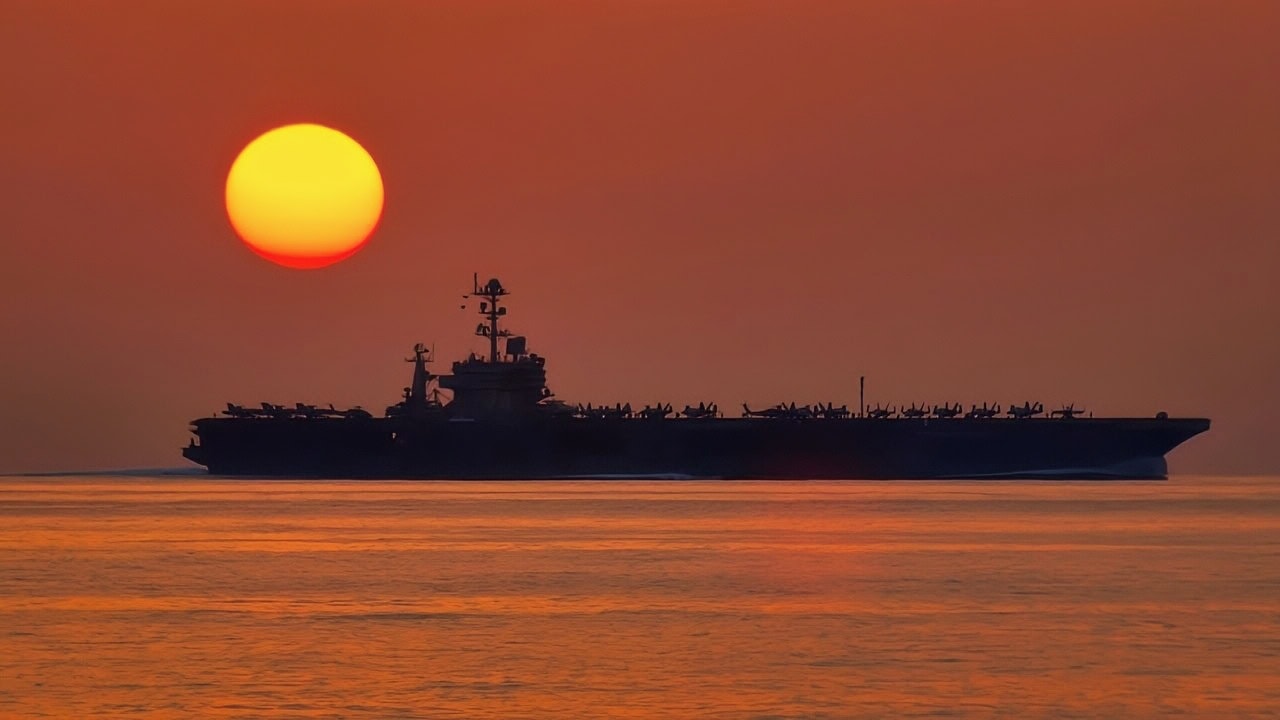
Summary and Key Points: In NATO’s 1981 Ocean Venture, a Canadian Oberon-class diesel submarine, bought in the 1960s for training, ran on battery power, slipped past the destroyers, submarines, and aircraft screening the carrier USS Eisenhower (CVN-69), and simulated a torpedo attack. A US Navy umpire declared the $5.5 billion Nimitz-class carrier ‘sunk’ by an $80 million boat. Isaac Seitz counts roughly eight ‘sinkings’ from 1972 to 2005 and argues submarines, not hypersonic missiles, remain the real carrier threat.
Canada Did the Unthinkable in a Drill to a US Navy Aircraft Carrier: A Nimitz-Class Is ‘Sunk’
The Canadian Armed Forces maintain a modest navy compared to the United States. However, even with a significantly smaller budget and a smaller overall size, any navy with decent submarine capabilities can pose a credible threat.
However, there have been multiple occasions in which Canadian or other NATO submarines have successfully managed to sneak past entire carrier strike groups and simulate a successful attack against an American supercarrier.
The Canadian Navy vs. the USS Eisenhower
The Canadian Navy, though modest in size and budget compared to its American counterpart, had long maintained a reputation for professionalism and tactical skill. Its Oberon-class submarines (HMCS Ojibwa, Onondaga, and Okanagan) were originally acquired in the 1960s primarily for training purposes.
However, by the 1980s, these submarines had undergone significant upgrades that enhanced their combat capabilities. Their hulls were fitted with anechoic tiles to reduce sonar detection, and their systems were modernized to improve underwater endurance and stealth. Though not nuclear-powered, these submarines had a distinct advantage: they could operate almost silently on battery power, making them exceptionally difficult to detect.
In 1981, NATO and other Western allies held Ocean Venture, a joint naval exercise in the Atlantic Ocean. During the exercise, one of these Canadian submarines (details are so scarce that we don’t even know which one) was assigned the role of an enemy vessel attempting to infiltrate the carrier group’s defenses.
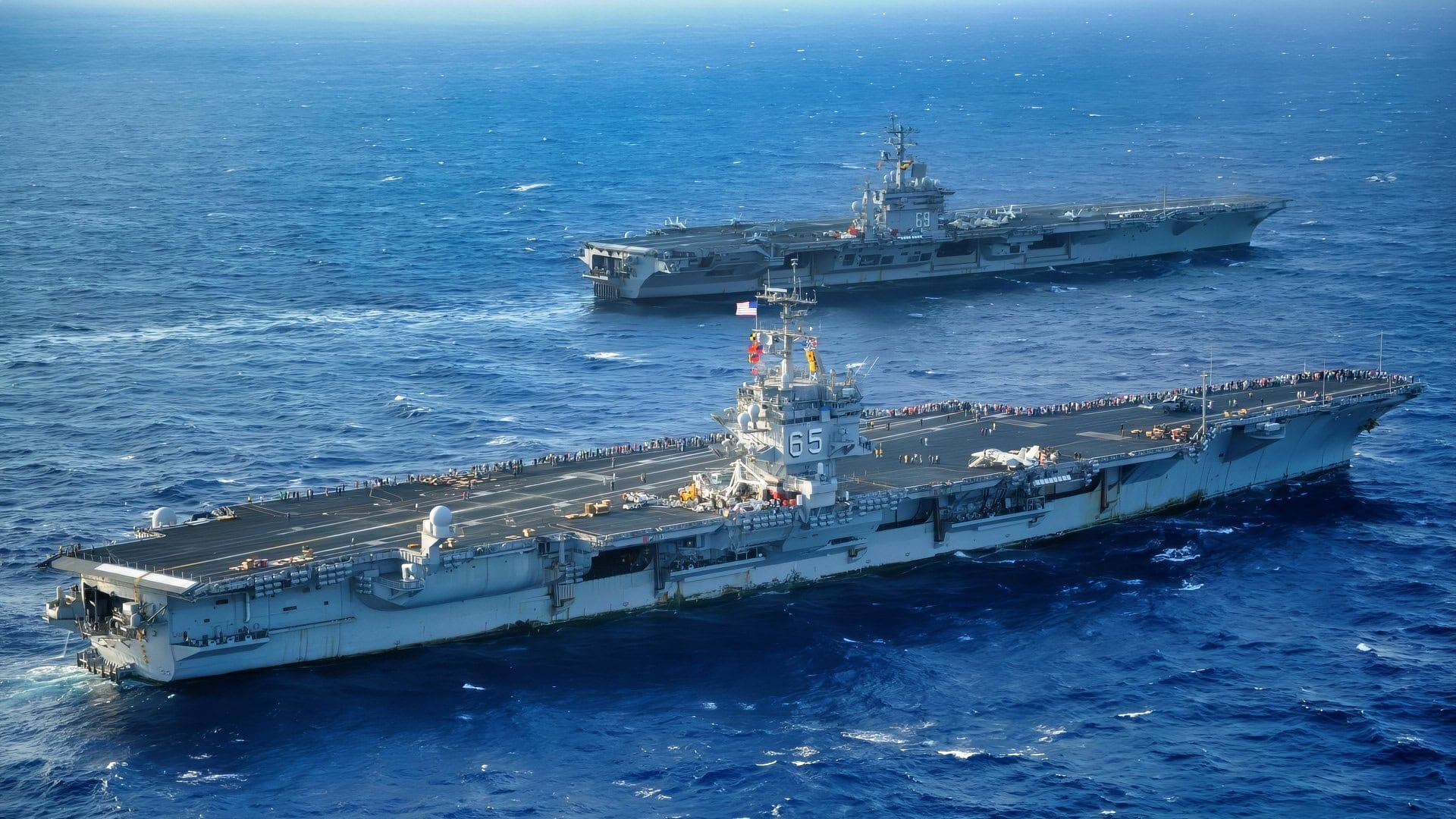
ATLANTIC OCEAN (July 14, 2011) The aircraft carriers USS Enterprise (CVN 65) and USS Dwight D. Eisenhower (CVN 69) pass as Enterprise returns to homeport after completing a six-month deployment to the U.S. 5th and 6th Fleet areas of responsibility. Dwight D. Eisenhower is underway conducting carrier qualifications. (U.S. Navy photo by Mass Communication Specialist 3rd Class Shonna L. Cunningham/Released)
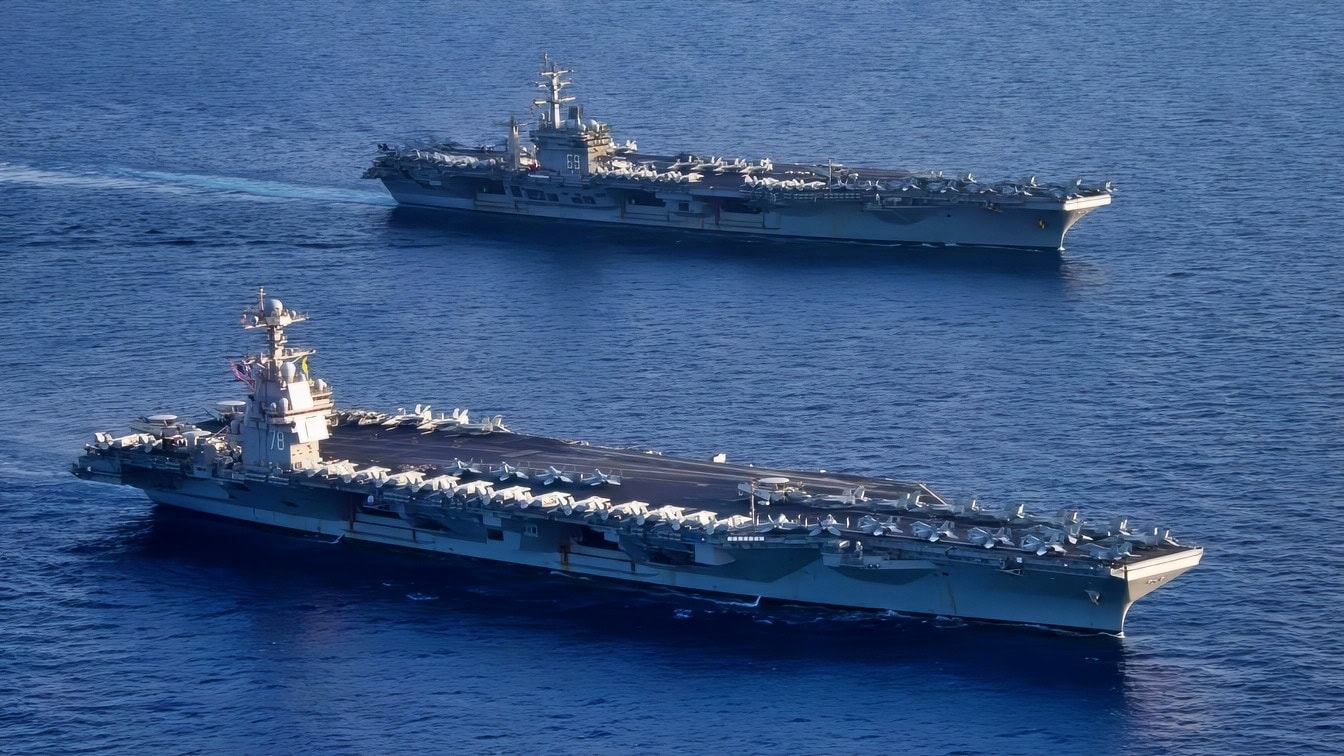
Aircraft Carriers USS Gerald R. Ford and USS Dwight D. Eisenhower (CVN-69). Creative Commons Image.
The carrier group itself was a formidable formation, centered around a U.S. Navy supercarrier, the USS Eisenhower (CVN-69), and protected by a screen of destroyers, cruisers, and submarines, along with air support from carrier-based aircraft. The group’s mission was to detect and neutralize any underwater threats before they could reach the carrier.
When an Antiquated Canadian Diesel Submarine Took Out an American Super Aircraft Carrier
The Canadian submarine’s mission was simple in concept but extraordinarily difficult in execution: approach the carrier undetected and simulate a torpedo attack.
What followed was a masterclass in stealth and tactical maneuvering. Using the ocean’s natural acoustic conditions and its quiet propulsion system, the submarine slipped past the carrier group’s outer defenses. It evaded sonar-equipped destroyers and surveillance aircraft by exploiting coverage gaps and limitations imposed by the exercise’s rules of engagement.
At the critical moment, the submarine simulated a torpedo launch. The exercise umpire, a U.S. Navy officer tasked with adjudicating the scenario, evaluated the situation and declared the carrier “sunk.”
In today’s dollars, the Nimitz-Class aircraft carrier would cost around $5.5 billion, while Canada’s sub comes in at a cheap $80 million.
The Canadian submarine achieved its objective without being detected, showing that even the world’s most powerful warships are vulnerable to stealthy underwater threats.
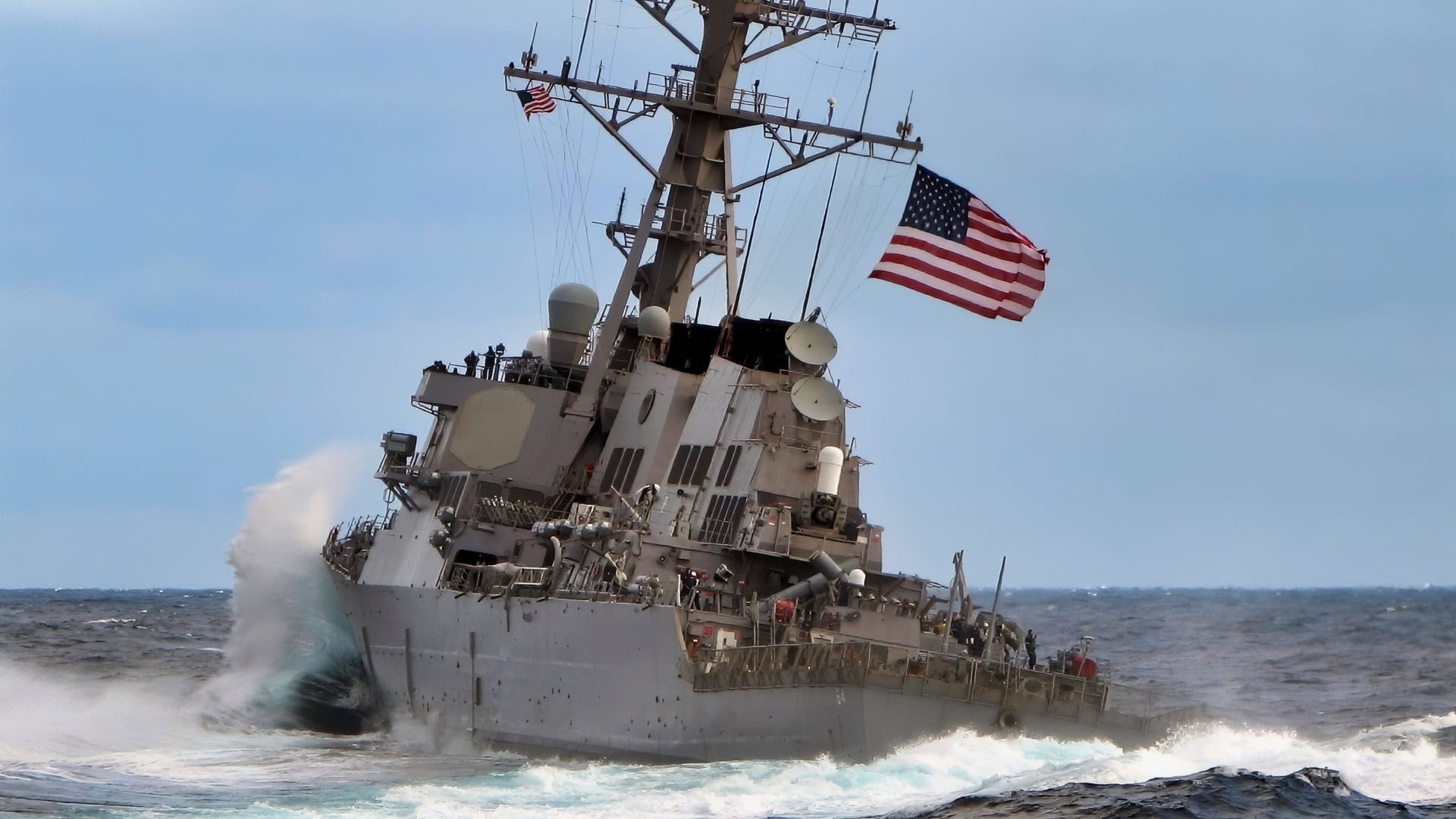
(Jan. 16, 2010) Waves crash over the bow of the guided-missile destroyer USS Carney (DDG 64). Carney is part of the Eisenhower Carrier Strike Group and is deployed as part of an on-going rotation of forward-deployed forces to support maritime security operations in the U.S. 5th and 6th Fleet areas of responsibility. (U.S. Navy photo by Master at Arms Chief Chief Anthony J. Sganga/Released)
The incident raised several uncomfortable questions.
How could a relatively underfunded navy with decades-old technology defeat a modern carrier group?
Was the U.S. Navy’s anti-submarine warfare doctrine flawed?
Were diesel-electric submarines being underestimated in contemporary naval strategy? These questions prompted a reevaluation of ASW tactics and capabilities across NATO.
Never Underestimate Submarines
Several key factors contributed to the Canadian submarine’s success.
First and foremost was the professionalism and training of the Canadian submariners. Their ability to exploit weaknesses in the carrier group’s defenses testified to their skill and discipline. Second was the Oberon-class submarine’s inherent stealth.
Operating on battery power, it was nearly undetectable to passive sonar systems, especially under the exercise’s constraints, which limited the use of active sonar to simulate real-world conditions. Third, the exercise itself imposed rules that may have skewed outcomes.

A Lockheed S-3A Viking aircraft of anti-submarine squadron VS-31 in flight with an ASQ-81 Magnetic Anomaly Detection (MAD) boom extending from the tail section. The aircraft was assigned to Carrier Air Wing Seven (CVW-7) aboard the USS Dwight D. Eisenhower (CVN-69) in 1983.
Ships did not operate at full speed, and sonar use was restricted, giving submarines opportunities to succeed in ways that might be harder in actual combat.
Perhaps most importantly, the incident highlighted a broader strategic oversight: the underestimation of diesel-electric submarines.
At the time, the U.S. Navy was heavily invested in nuclear-powered submarines and may have viewed conventional boats as outdated. The exercise demonstrated that diesel-electric submarines, particularly when operated by skilled crews, remained a potent threat in modern naval warfare.
This Has Happened Before
The Canadian success in Ocean Venture was not an isolated incident. Similar outcomes occurred in other exercises involving allied diesel submarines. There have been around eight instances of submarines, mostly diesel-powered, successfully “sinking” American carriers in exercises from 1972 to 2005.
Dutch and Australian submarines also achieved simulated kills against U.S. carriers in subsequent war games. These events underscored the vulnerability of even the most advanced naval formations to stealthy underwater threats, prompting a renewed focus on ASW training and technology.
Since the Ocean Venture, submarine technology has improved significantly. Non-nuclear submarines equipped with air-independent propulsion (AIP) can travel quietly, greatly enhancing their stealth.
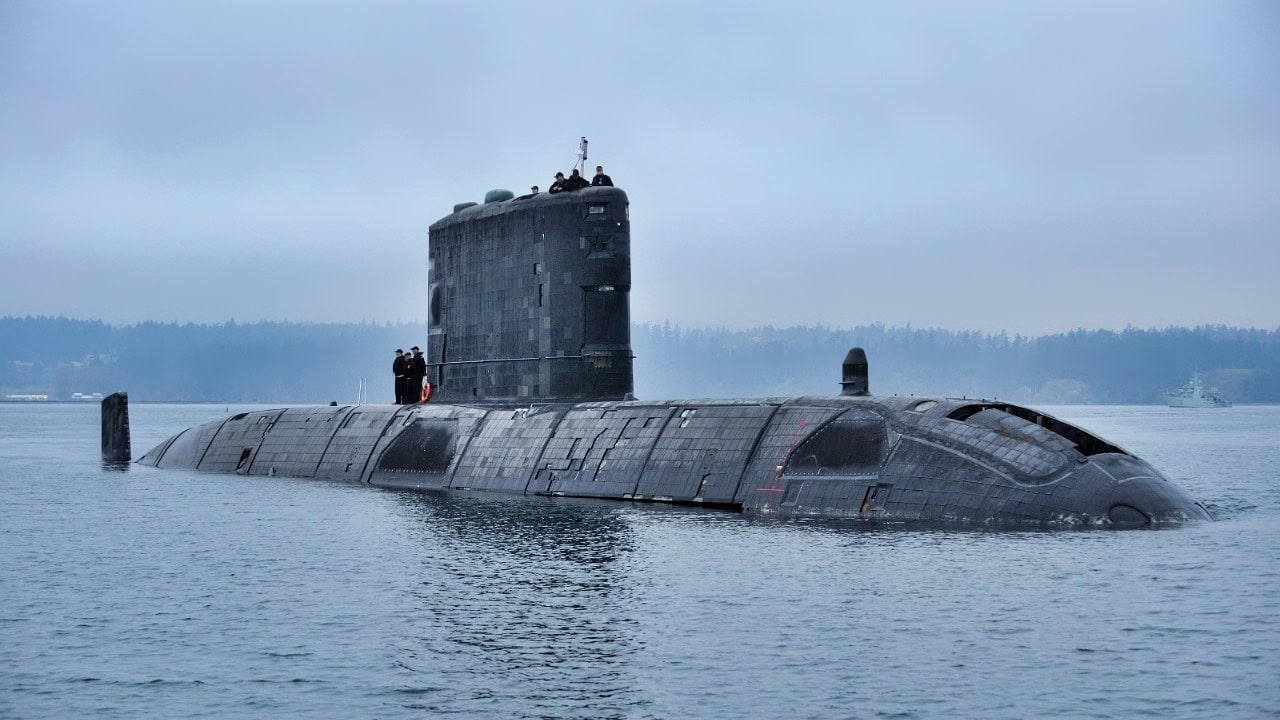
Victoria-Class Submarine from Canada.
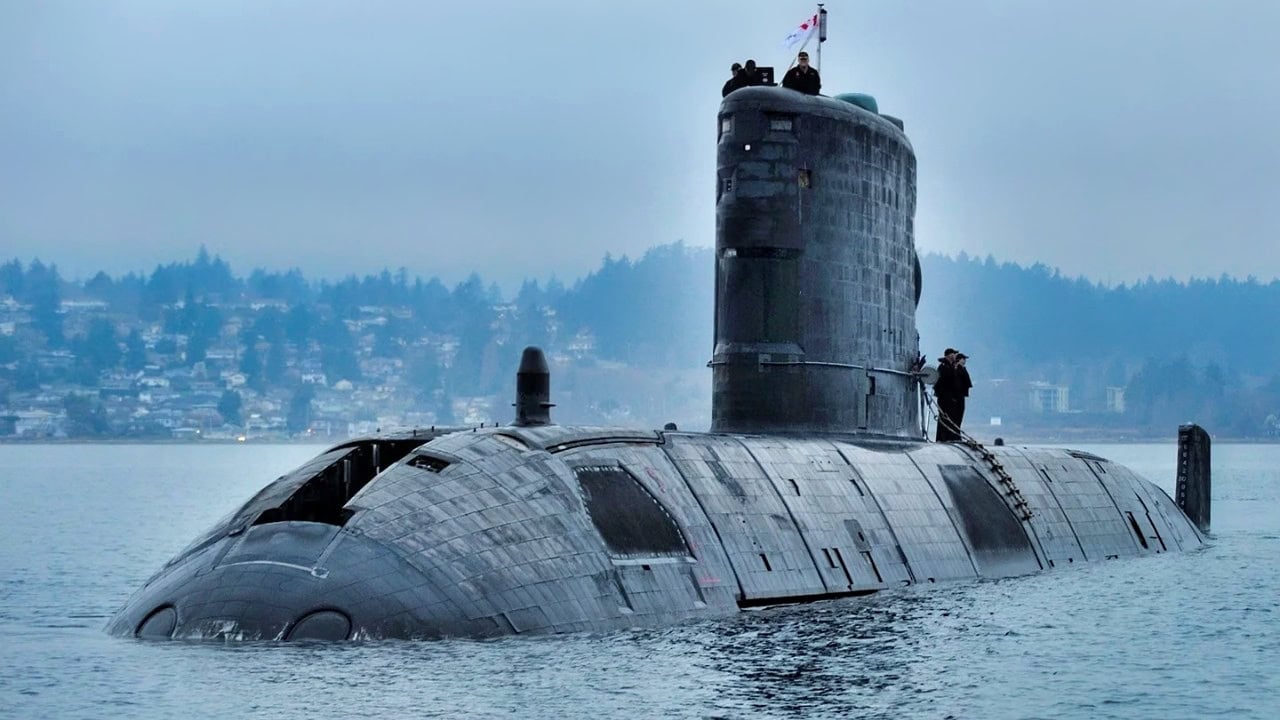
Victoria-Class Submarine Canadian Navy. Image Credit: Government Photo.
This is to say nothing of nuclear attack submarines, which have sunk multiple carriers during exercises.
Anti-submarine warfare has also advanced with the development of better radars, sonars, and more sophisticated means of protection; however, none of these are foolproof.
While a lot of noise is made about hypersonic missiles, the real threat to carriers has been, and likely always will be, submarines.
About the Author: Isaac Seitz
Isaac Seitz, a Defense Columnist, graduated from Patrick Henry College’s Strategic Intelligence and National Security program. He has also studied Russian at Middlebury Language Schools and has worked as an intelligence Analyst in the private sector.