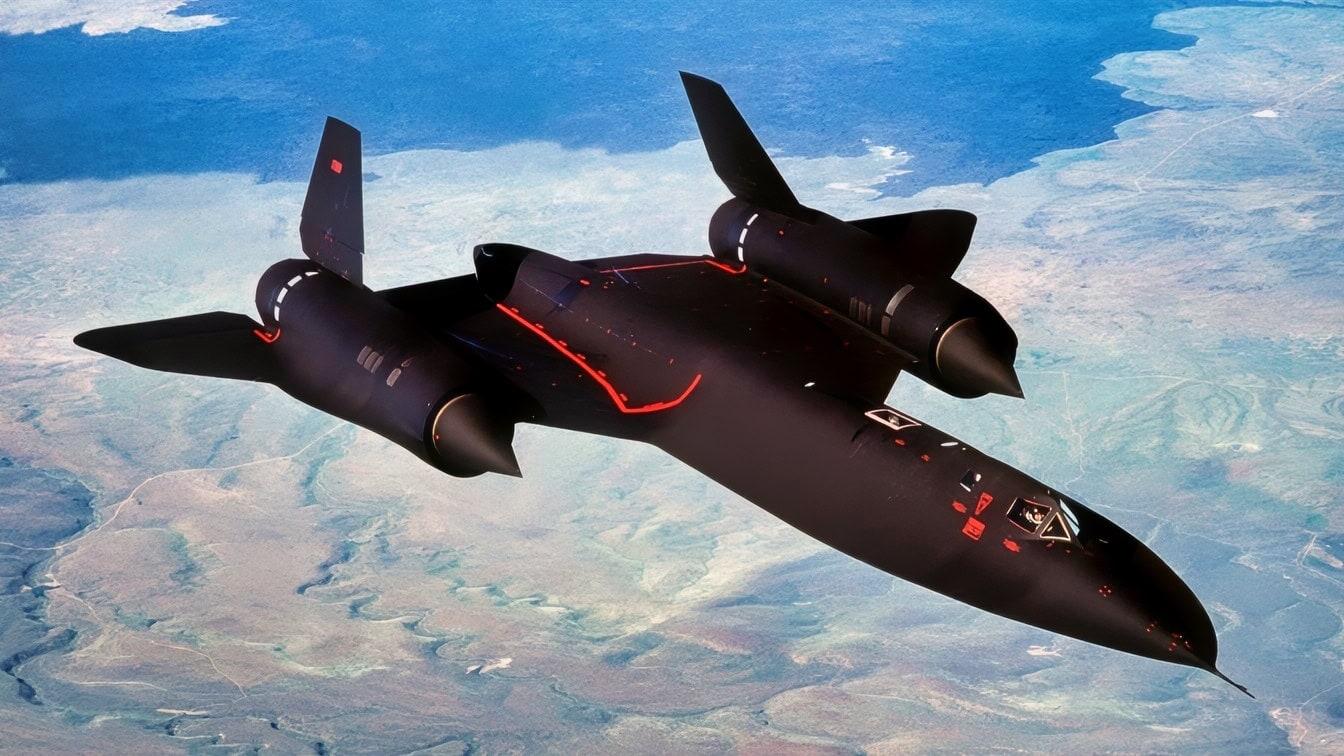
Summary and Key Points: Expert Brandon J. Weichert explains why the Lockheed SR-71 Blackbird leaked by design: at Mach 3 above 80,000 feet, aerodynamic heating stretched its more-than-80-percent-titanium airframe by inches, and period sealants couldn’t seal the integral fuel tanks formed by the skin, so low-volatility JP-7 seeped out on the ground until flight heat closed the seams. JP-7 also doubled as coolant, and the two Pratt & Whitney J58 engines were lit with green-flashing triethylborane that pilots carefully rationed.
The Lockheed SR-71 Blackbird Is Aviation History
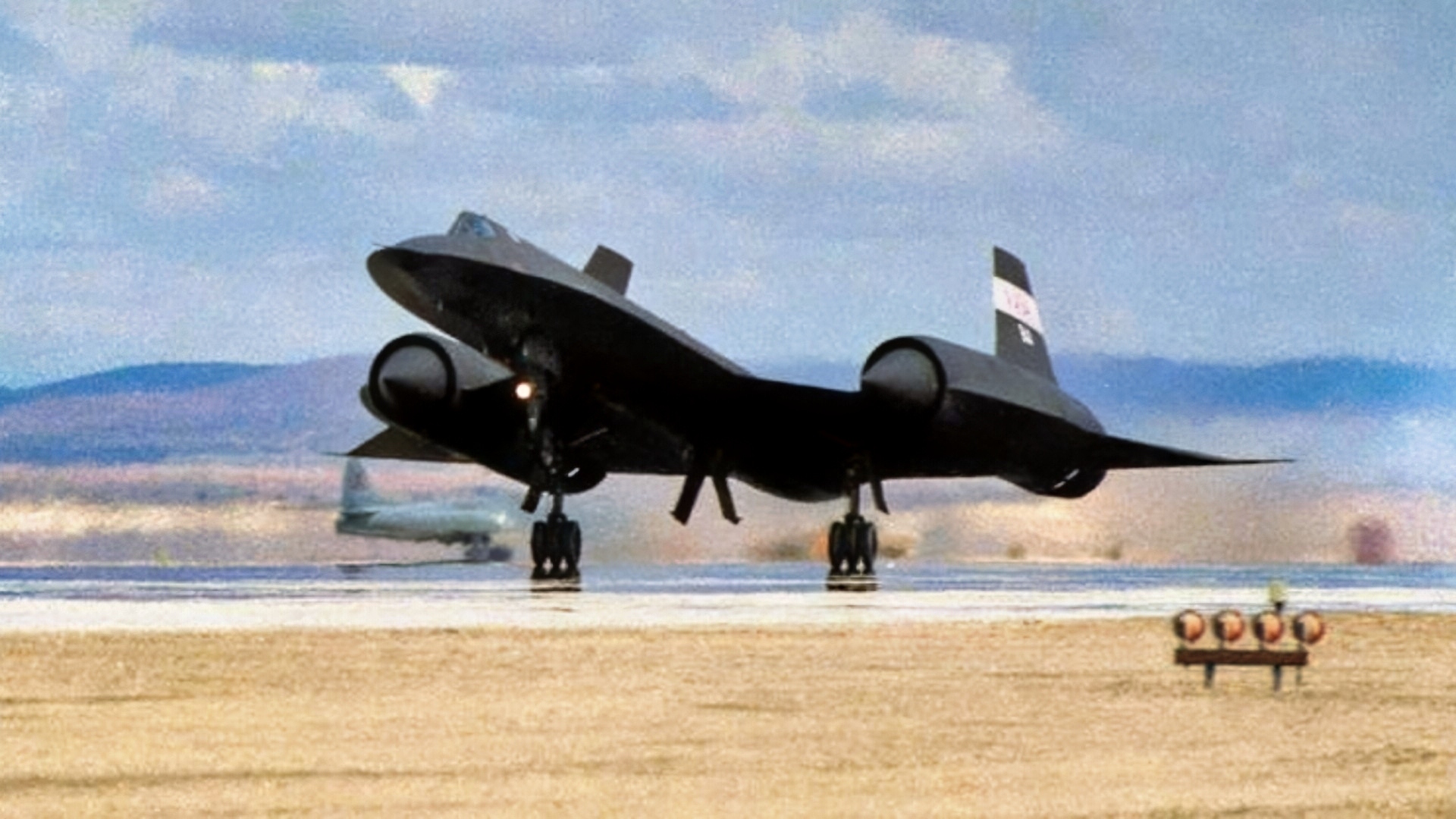
SR-71 Blackbird NASA Photo
The SR-71 Blackbird looked less like an American warplane and more like something that Luke Skywalker would use to destroy the Death Star.
The Lockheed SR-71 Blackbird flew at speeds exceeding Mach 3 and operated above 80,000 feet.
The American reconnaissance aircraft could outrun any missile or warplane sent to stop it.
What’s more, it was one of the most interesting engineering feats imaginable.
Its airframe expanded while in flight.
And, among other things, it routinely leaked jet fuel while sitting on the ground.
In fact, the SR-71 was built to leak fuel while on the ground.
Making It All Work on SR-71 Blackbird
The Blackbird was such a dynamic and rare plane that its engineers essentially had to work around what others might view as flaws in the overall design.
In fact, the plane’s specialized nature forced major design compromises.
One compromise was the leaking JP-7 fuel.
At speeds exceeding 2,000 miles per hour, the Blackbird’s airframe heated up, raising temperatures on the outside of the plane by several hundred degrees Fahrenheit.
In fact, some areas of the plane got hotter. Ordinary aluminum aircraft design couldn’t survive those speeds and heat.
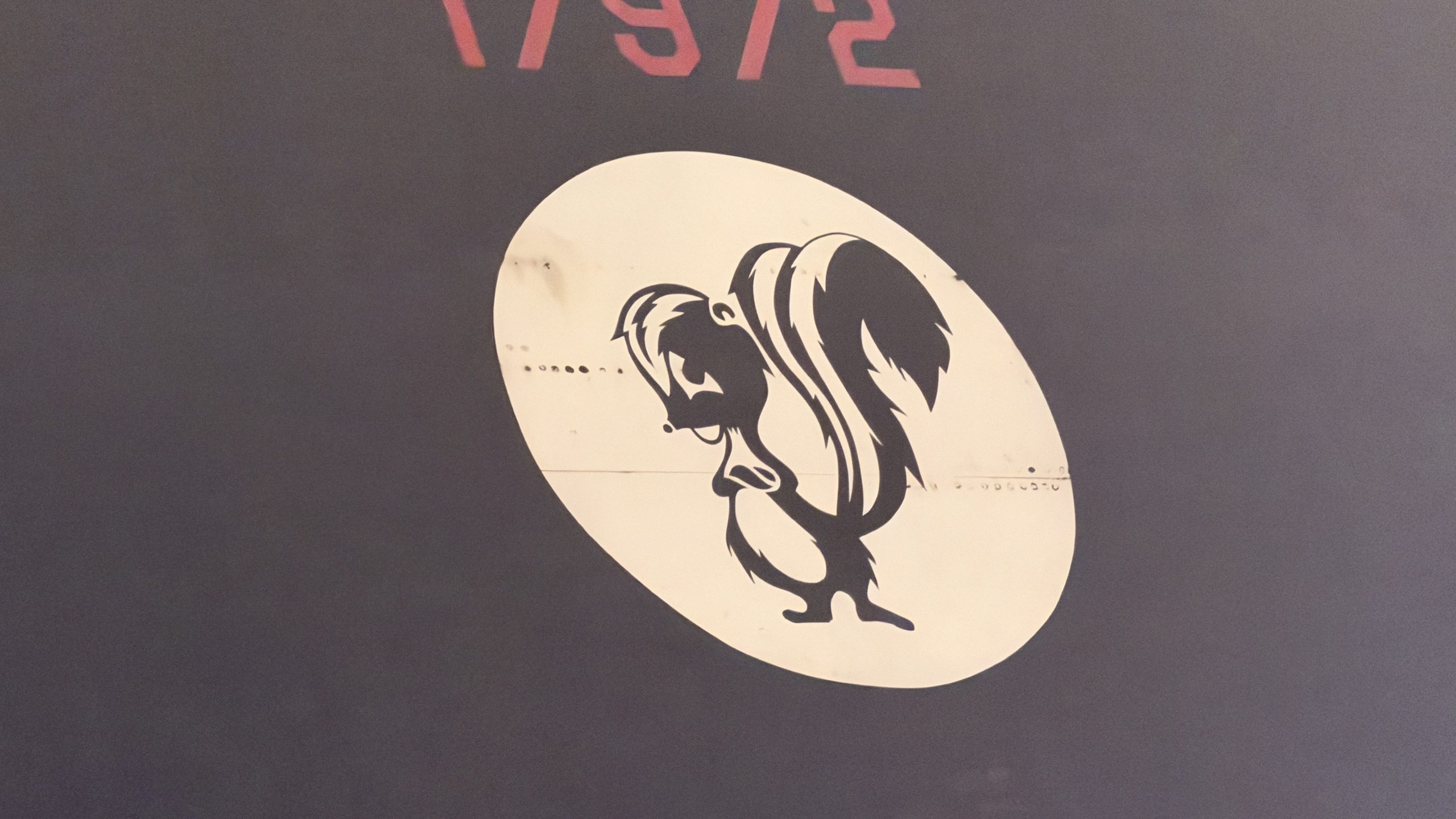
SR-71 Blackbird. Smithsonian Display Photo Taken by 19FortyFive on 9/30/2026.
So, Lockheed built more than 80 percent of the Blackbird’s structure from titanium alloy.
The SR-71’s structure would stretch by inches during high-speed flight.
So, engineers had to allow significant thermal expansion without letting the aircraft’s skin and internal structures buckle or fracture.
The Blackbird therefore needed specialized fuel tanks to withstand the airframe’s expansion.
The Blackbird used integral tanks built into its structure.
Portions of the aircraft’s exterior skin formed the fuel tank walls.
These specialized tanks required sealants that could withstand the temperatures the Blackbird flew at.
At the time of the SR-71’s design, sealant technology wasn’t strong enough for this kind of plane.
SR-71 Blackbird. 19FortyFive.com Image.
They weren’t bad. But they could not eliminate leakage. So JP-7 fuel occasionally leaked through some seams and joints while the aircraft sat on the ground.
An Expanding Airframe
But as the SR-71 accelerated to its incredible cruising speed, aerodynamic heating around the titanium structure caused the airframe to expand, strengthening it and helping prevent leaks of JP-7 aviation fuel.
Jet Propellant-7 was an unusual, low-volatility hydrocarbon fuel specifically made for the Lockheed A-12 Oxcart and SR-71 Blackbird programs.
JP-7 resisted ignition under normal atmospheric conditions, meaning it was relatively safe to have some leakage on the ground.
What’s more, it meant that the aircraft was unlikely to explode once it achieved its top cruising speed.
One of the SR-71’s more interesting design features was using fuel as a coolant.
Before the JP-7 entered the Blackbird’s engines, the fuel absorbed heat from the aircraft’s various systems, including critical gear related to the plane’s environmental control system.
That inherent cooling capability kept other components from overheating.
The Blackbird’s two Pratt & Whitney J58 engines used triethylborane (TEB).
That chemical ignites spontaneously when it contacts oxygen.
Once it hit the engine, TEB would ignite JP-7 fuel during engine startup and afterburner ignition. A green flash was thus produced.
Each Blackbird could carry only a finite amount of TEB on any given mission.
Pilots on prolonged missions had to ration their TEB.
A Brilliant Design
Lockheed’s SR-71 was an aerospace engineering miracle.
Even things that might seem like mistakes were intentional designs meant to work around complications that arose from the plane’s unique capabilities.
A fuel leak on the ground was not an accident or a mistake.
It was intentional.
The engineers worked hard to make the most of what they had.
These engineers also turned problems into success.
They knew the plane’s physics changed when traveling at Mach 3.
To overcome the lack of onboard cooling for hot-running systems, the engineers used the fuel’s heat absorption as it traveled to the plane’s engines.
America’s SR-71 Blackbird really was the most innovative plane the US had ever designed.
About the Author: Brandon J. Weichert
Brandon J. Weichert is the Senior National Security Editor at 19FortyFive.com. He also manages The Weichert Brief on Substack. Weichert is the co-host for The Mario Nawfal Show on Twitter/X. He is the author of four bestselling national security books, most recently A Disaster of Our Own Making: How the West Lost Ukraine (Encounter Books). His next book, Fortress Americas: A New Monroe Doctrine (Tucker Carlson Books), is due out December 8. Follow him via Twitter/X @WeTheBrandon.