
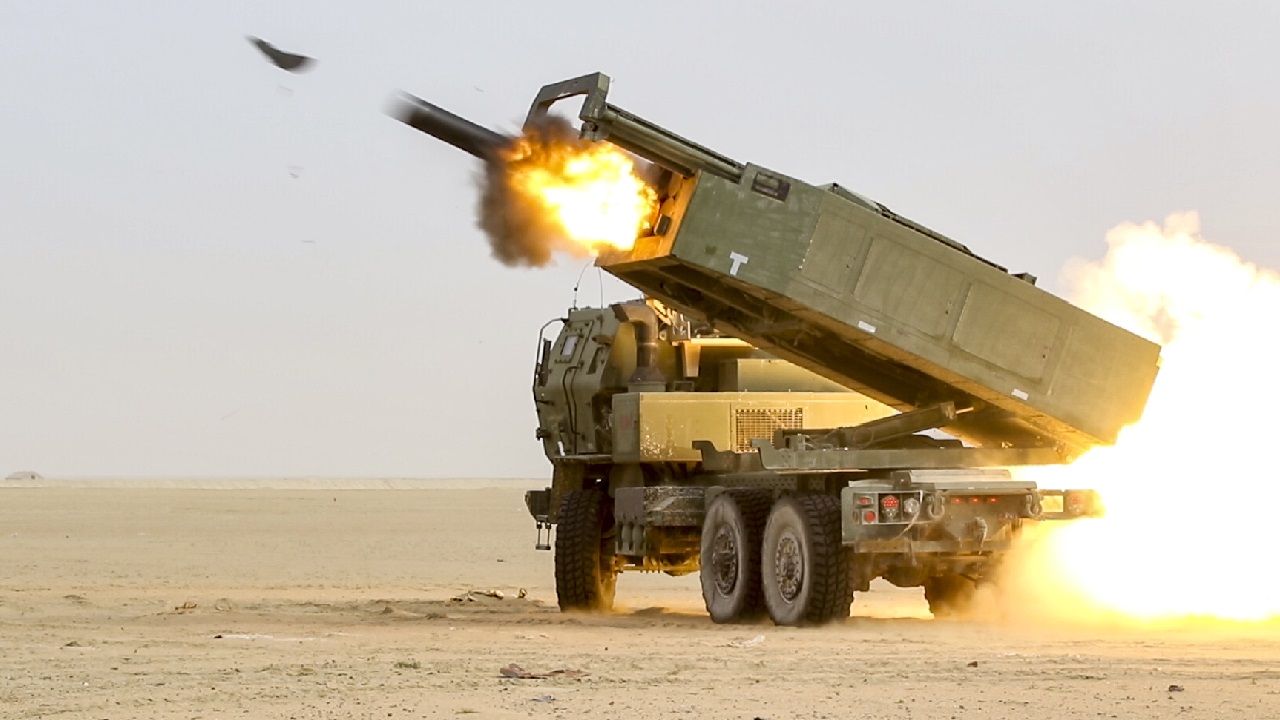
Trump Ukraine War Strategy More Inspiration Than Frustration: Even before the election that made him 47, US President Donald J. Trump decided on two crucial future policies. He committed to a free and independent Ukraine that could defend itself, and he wanted to end the war. Here we are almost three years later—and the president’s core commitment to both objectives remains as unmovable as ever.
In fact, once Trump became president, Ukraine achieved its strongest position on the battlefield in this four-year-old war. Moscow can’t beat Kyiv. Putin has lost.
That said, ending the war still seems as elusive as ever. Even Trump’s latest promise of an “energy ceasefire” seems deceased. Some might suspect the president is frustrated, and of course he is, continuing to harangue both Putin and Zelensky over what Trump has called a “ridiculous war.” That said, the president’s policies, like many difficult and troublesome issues he has confronted in the White House, reflect more innovation and adaptation than annoyance and anger. Trump thrives on tough challenges—which is good because this war will keep testing his mettle.
Confronting Conventional Wisdom
Traditional thinking holds that the only way to deal with Russians is from a position of strength, that any gesture of goodwill or compromise to the likes of Putin will be seen as either revealing weakness or masking perfidy. Yet here we are on the 40th anniversary of the Reagan-Gorbachev Summit, reminded that after President Ronald Reagan reestablished American strength and influence, he offered the Russians a deal—one that eventually led to a deal.
Of course, Putin is no Gorbachev (actually, Gorbachev is the last person Putin would want to be compared to), and the Soviet Union’s circumstances in the late 1980s were acute and unique. Still, Reagan showed that sometimes breaking with convention, innovating, and adapting delivers better results than doggedly following dogma.
There is a case to be made that as a national security leader Trump most resembles Ronald Reagan, not in temperament or rhetoric,c of course, but in a shared commitment to a realist approach to foreign policy; a laser focus on national interests; an unshakeable belief in “peace through strength ; and a willingness to be bold and “out of the box,” even when friends, allies, and partners shake their heads in doubt and disbelief.
It’s not surprising that Trump would emulate Reagan as a strategic leader, with Reagan in the 1980s serving as the perfect maverick role model for the rising New York realtor with a larger-than-life persona and unlimited ambition.
As a result, it’s no surprise that when faced with an intractable problem, Trump’s instinct is to try something else when the current course of action gets you nowhere.
Trump famously declared before being elected that he could end the Ukraine War in 24 hours. He always, however, failed to mention a key caveat— which is if only Putin would agree to end his war against Ukraine. Putin did not.
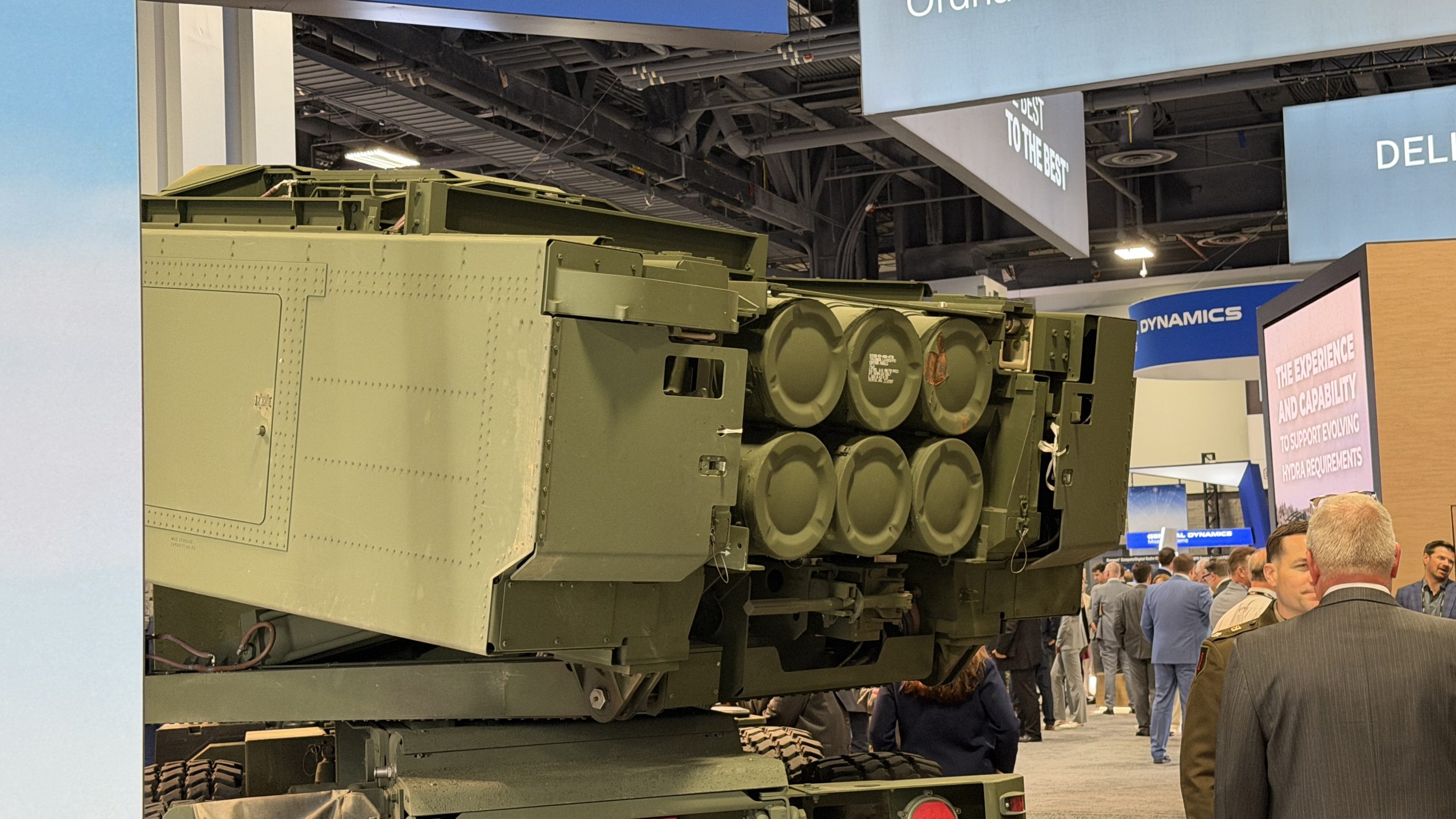
HIMARS like in Ukraine. Lockheed Martin Booth at AUSA 2026. 19FortyFive Photo.
Trump found himself dealing with a different Vladimir Putin than the one he knew in his first term in the Oval Office—a Putin well past reasonableness or respect for American power and influence.
Rather than throwing up his hands, Trump kept exploring the art of the deal and invested enormous political capital in pressuring NATO allies to invest in their own defense—letting Moscow know, once and for all, Europe is no easy pickings. This effort paid off: every NATO nation is committed to higher defense spending, and the recent Theory of Victory plan unveiled in Warsaw shows the alliance is no longer a pushover. Meanwhile, the U.S. has maintained the flow of arms to Ukraine through the NATO-managed Prioritized Ukraine Requirements List.
These efforts show more clearly than any statement or move any Western leader might make why Putin can never win. Concomitantly, Trump has taken the opportunity to whittle away at Russian power and influence in every theater from Syria and Iran in the Middle East to Venezuela in Latin America, as well as Africa and the Arctic. Meanwhile, the president has directed tremendous investments in upgrading America’s strategic and conventional forces. In practice, over two and a half years, Trump has established a baseline of peace through strength that Putin could not have missed.
At the same time, Trump has tried every combination of special envoys, initiatives, cajoling, and bullying he could think of to push the two sides to a deal. Indeed, the Ukrainian president has stated that if there is no peace deal yet, it is not Trump’s fault.
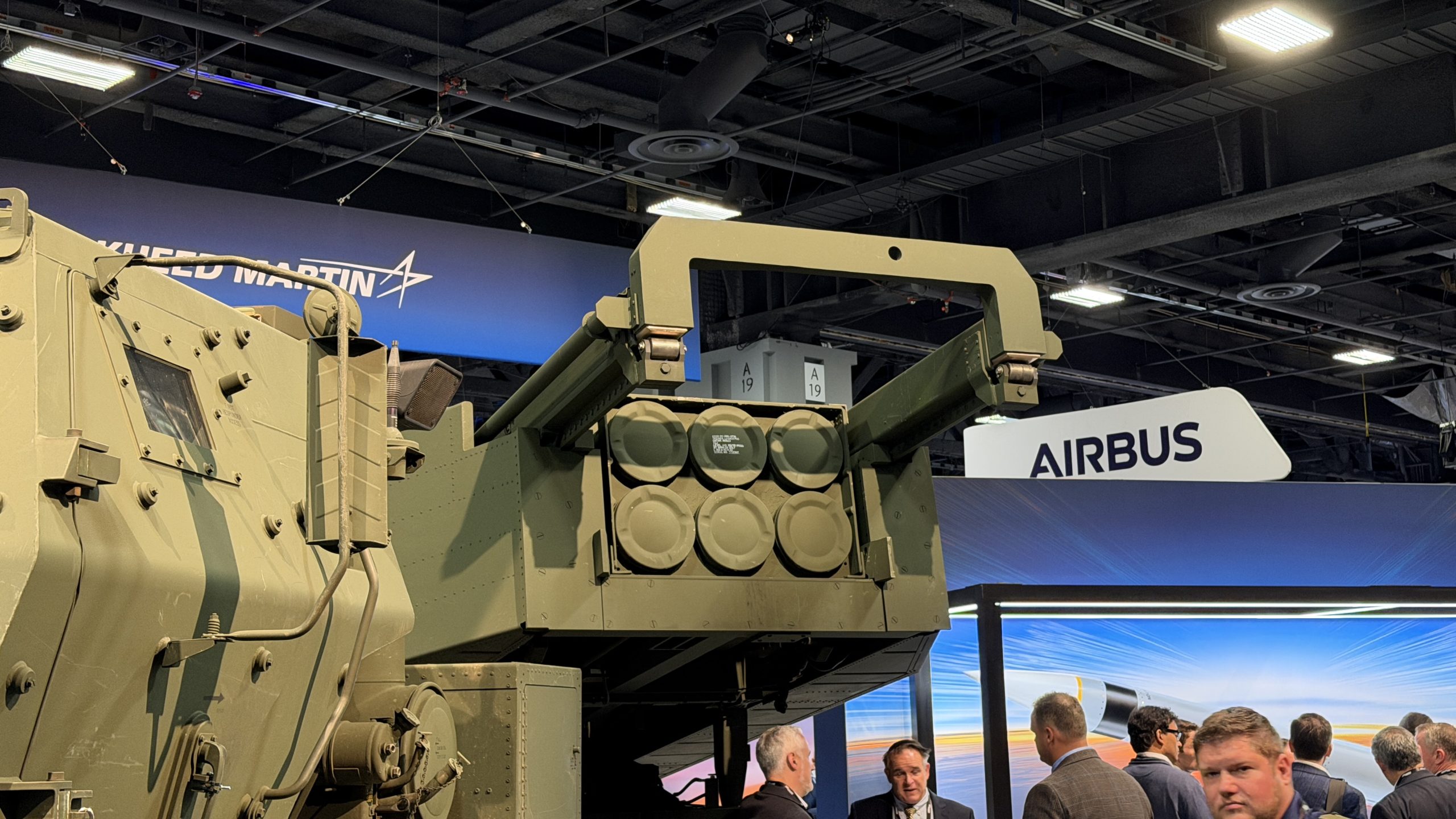
HIMARS like in Ukraine. Lockheed Martin Booth at AUSA 2026. 19FortyFive Photo.
From Anguish to Action
Trump being Trump, the lack of a deal hasn’t deterred his efforts to keep looking for a way to reach one. The president has rightly noted that there is no path to victory on the battlefield. So, when folks ask “what’s the meaning” of the last Trump post, or statement, or action, what sign is he sending? The answer is really simple. Trump isn’t signaling a change in strategy.
He is trying new ways to reach the same end—stopping the killing and wanton destruction—and, hopefully, laying the groundwork for a durable, sustainable future.
We see evidence of the president’s willingness to come at the challenge in new ways all the time. Only Trump would sign a law hammering Russia with the biggest sanction package yet (The Lindsay O. Graham Russia and Iran Sanctions Act of 2026) and then turn around and float the idea of a diesel deal. View these actions as what they are—different tactics, not a different strategy.
Are they likely to work? No. Still, rather than criticize the president, he ought to be lauded for putting more effort and energy into ending this war than any other leader in the world.
Whither War
Putin has an unachievable goal: to fight until Russia makes substantial battlefield gains. At present, his only real advantage is a ballistic missile threat that can relentlessly and mercilessly hammer Ukrainian civilians and infrastructure, a capability that one way or another the Ukrainians will eventually find a way to counter. Meanwhile, Kyiv is not only taking back its land, but trading debilitating long-range strikes with Moscow measure for measure.
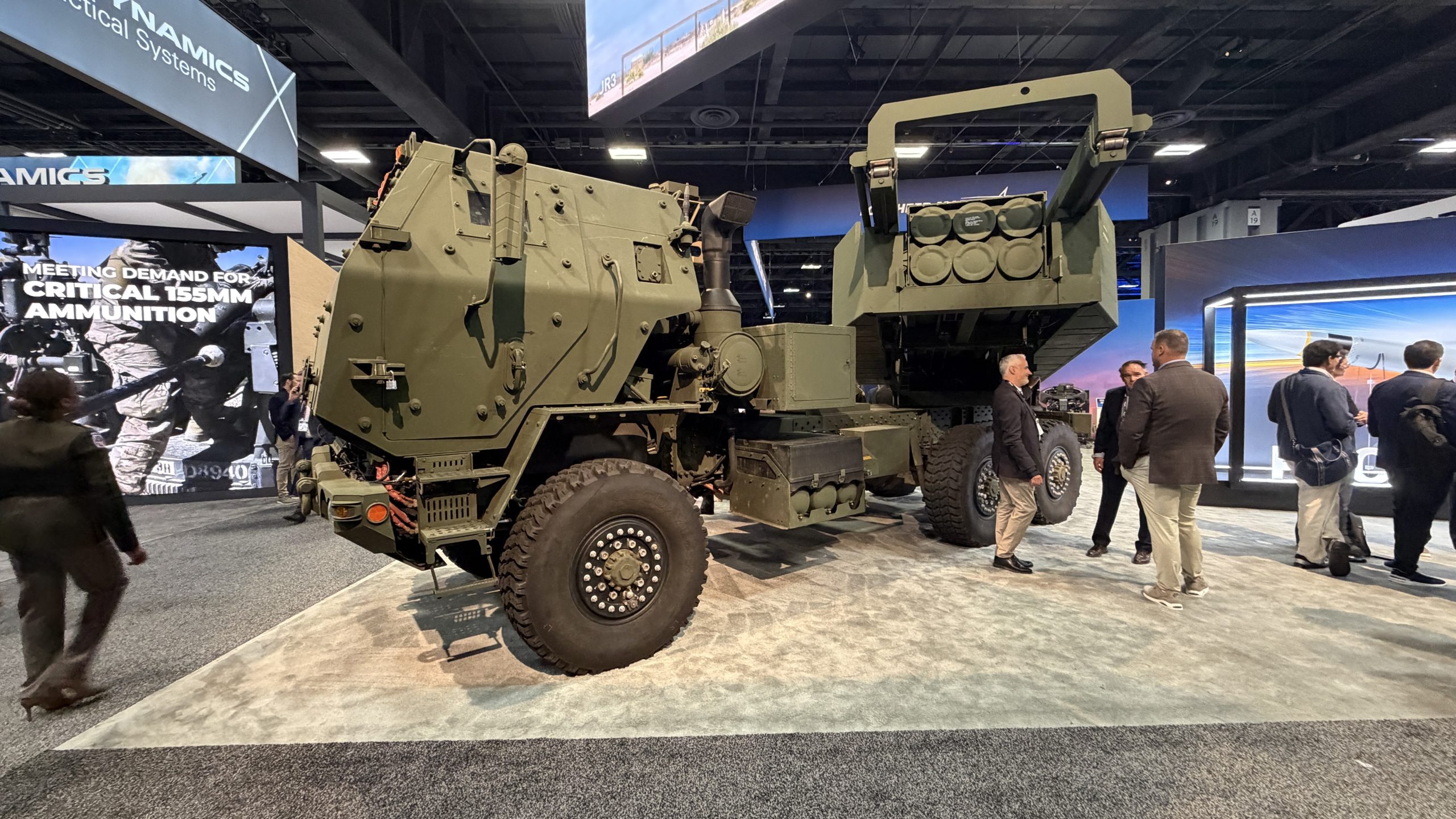
HIMARS like in Ukraine. Lockheed Martin Booth at AUSA 2026. 19FortyFive Photo.
The Russians seem determined to find out if the Ukrainians can get through another winter. They will. Then what?
At present, the most realistic outcome is a ceasefire in energy and food exports, followed by reduced fighting that drifts into frozen conflict. Likely, as no,t Russian hybrid and political warfare against Ukraine and NATO will continue.
That’s what Russians do.
This may not be the best peace—but it would be a start. Meanwhile, Trump’s envoy keeps working behind the scenes to cook up yet another deal—which may or may not work.
Who knows? What we do know for sure is that the U.S. president must have the patience of Job and the juice of the Energizer Bunny to keep toiling away, pitting the world’s most resilient leader against the world’s most intractable war.
About the Author: Dr. James Jay Carafano
James Jay Carafano is a national security expert and a 25-year Army veteran. His most recent books are Cold Combat: Mountain Warfare in Italy and the Battle of San Pietro, 1943, and Digital Dominance: Winning in a Socially Networked World. He is a 19FortyFive Contributing Editor. Carafano is also a Senior Counselor to the President and E.W. Richardson Fellow at The Heritage Foundation.