
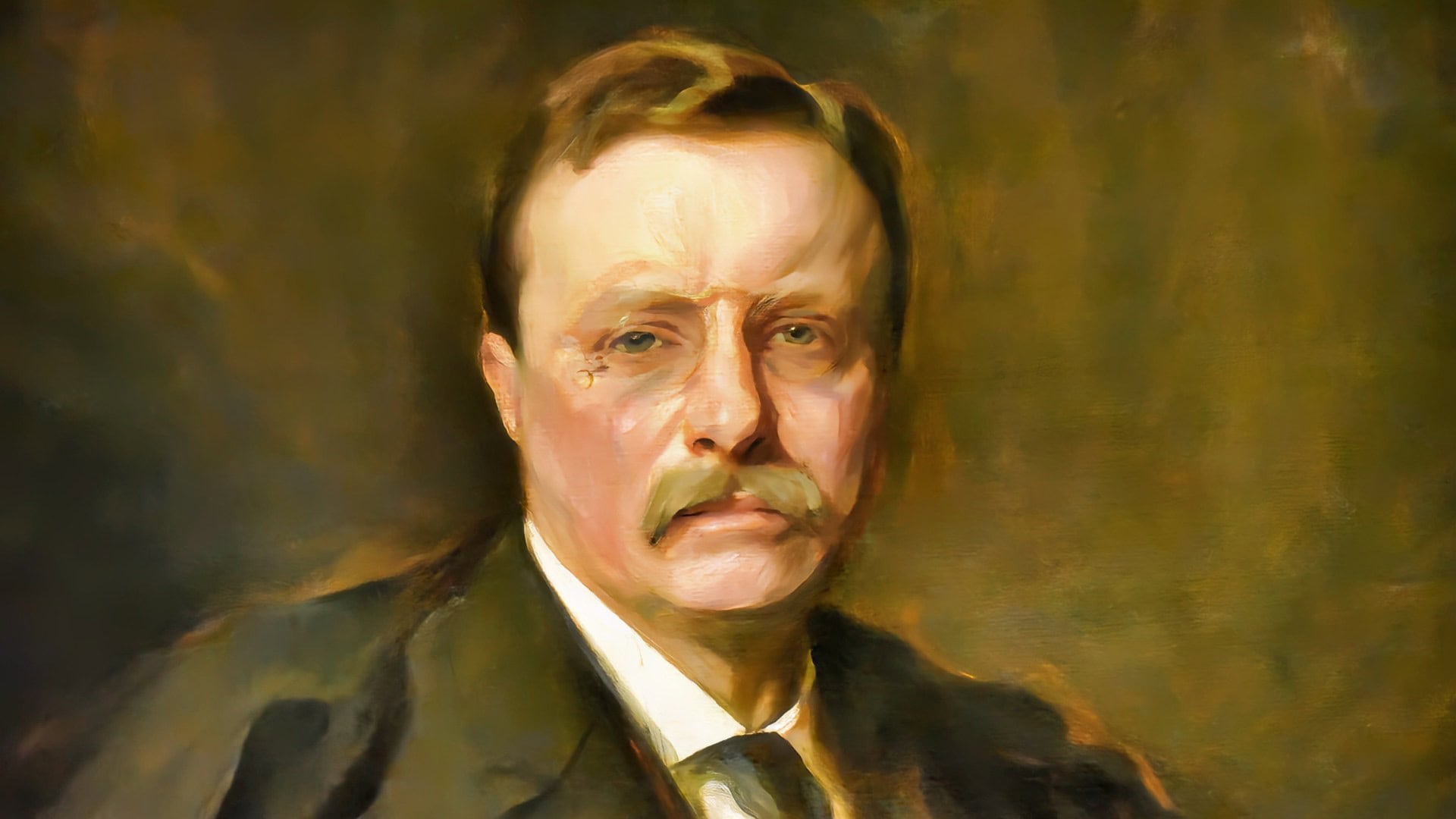
Summary and Key Points – “A good navy is not a provocation to war. It is the surest guarantee of peace.” Theodore Roosevelt’s line sums up a presidency, 1901 to 1909, that turned Alfred Thayer Mahan’s 1890 sea-power thesis into policy. Harrison Kass traces the arc: Roosevelt’s own Naval War of 1812, published in 1882, his 1897-1898 turn as Assistant Secretary of the Navy before Dewey’s victory at Manila Bay, the push for a concentrated battleship fleet with overseas stations, and the 16 white-painted battleships he sent around the world in December 1907 on a 43,000-nautical-mile cruise to show Japan the US Navy could reach the Pacific.
Teddy Roosevelt Made Military History and Naval History
Theodore Roosevelt famously declared, “A good navy is not a provocation to war. It is the surest guarantee of peace.” The statement encapsulates Roosevelt’s belief that military preparedness could deter conflict rather than invite it.
Indeed, Roosevelt saw naval power as indispensable for national security, commercial prosperity, and international influence.
Not surprisingly, his presidency from 1901 to 1909 coincided with America’s emergence as a major world power.
By then, the United States had become an industrial powerhouse, but its global military reach was still somewhat limited.
As American interests expanded, Roosevelt believed a modern battle fleet was necessary to protect the US’s growing interests.
His naval policies helped lay the foundation for America’s global navy, which remains a dominant force today.
The Intellectual Foundations
Roosevelt’s thinking was strongly influenced by naval historian and strategist Alfred Thayer Mahan, whose 1890 book, The Influence of Sea Power upon History, 1660-1783, became enormously influential among policymakers.
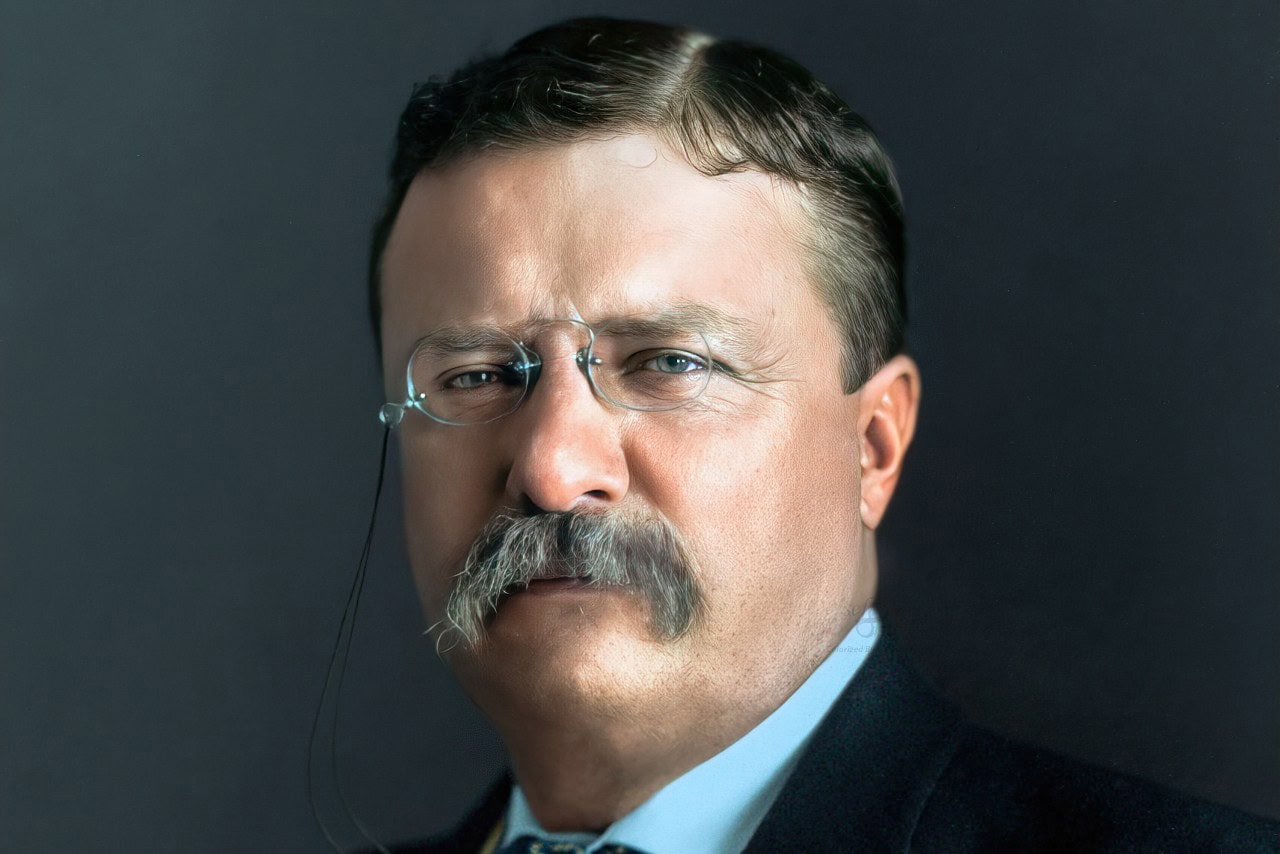
Theodore Roosevelt Quote of the Day. Image Credit: Creative Commons.
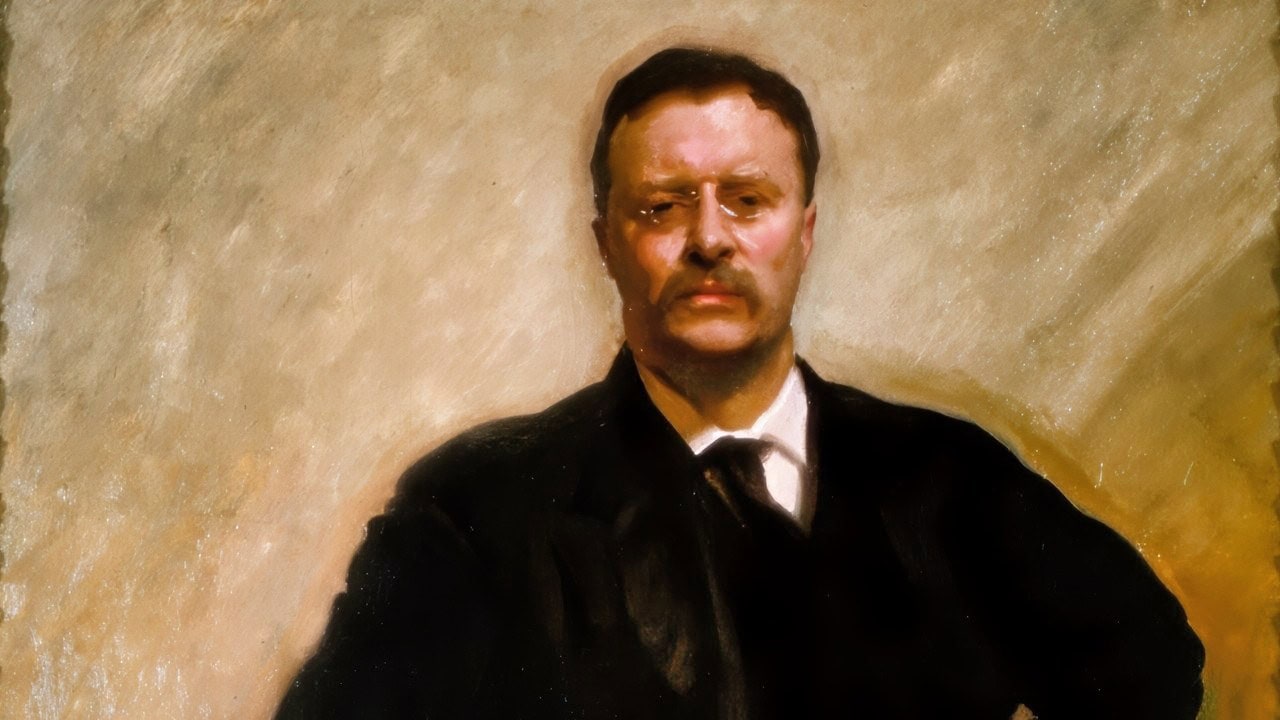
‘Speak softly and carry a big stick; you will go far.’ A Quote by Theodore Roosevelt.
In the book, Mahan argued that great powers depended on strong naval forces, control of important sea lanes, commercial shipping, overseas bases and coaling stations, and access to strategic maritime chokepoints.
It should be no surprise that Roosevelt paid particular attention to Mahan’s book, as he had written his own naval history, The Naval War of 1812, published in 1882.
So Roosevelt understood the relationship between naval readiness, international commerce, and national power, and he had already developed opinions such as favoring a concentrated modern battle fleet, rather than a collection of ships suited only to coastal defense.
Roosevelt’s approach reflected an ongoing shift from American continental expansion to broader global aims.
Spanish-American Influence
Roosevelt served as Assistant Secretary of the Navy from 1897 to 1898, advocating naval modernization and preparedness before the Spanish-American War.
During the war, American naval victories demonstrated the effectiveness of modern sea power.
For example, Commodore George Dewey destroyed the Spanish squadron at Manila Bay, and later American forces destroyed the Spanish fleet at Santiago de Cuba.
These victories helped establish American control of key maritime theaters and led to the US acquisition of Puerto Rico, Guam, and the Philippines.
Protecting these overseas territories required supply lines and naval access, and Roosevelt concluded that America’s expanding international role demanded a correspondingly powerful navy.
Building the Fleet
As President, Roosevelt strongly supported expanding and modernizing the US Navy.
He emphasized battleships as an essential instrument of naval power, arguing that modern warships, along with improved training and readiness for long-distance operations, were vital.
As the Navy increasingly focused on oceanic operations rather than coastal defenses, Congress accelerated battleship construction and authorized additional capital ships, including modern dreadnoughts.
Roosevelt also supported the infrastructure needed to sustain operations—overseas naval stations, repair and maintenance facilities, fuel and logistical support, improved gunnery, and fleet exercises.
So Roosevelt’s emphasis was not just on possessing warships, but on maintaining them and building a navy capable of deploying and fighting across the world’s oceans.
The Great White Fleet
The most famous expression of Roosevelt’s naval philosophy, of course, was the Great White Fleet.
In December 1907, Roosevelt dispatched 16 American battleships on a global voyage that lasted until February 1909.
The ships traveled approximately 43,000 nautical miles and visited numerous foreign ports.
The battleships were painted white, giving the fleet its famous nickname.
The voyage served several purposes: demonstrating America’s naval strength, testing the fleet’s ability to operate over long distances, strengthening diplomatic relationships, reassuring allies, impressing potential rivals, and identifying logistical and operational weaknesses.
Roosevelt especially wanted to show that the US could deploy a powerful battle fleet to the Pacific, where Japan had emerged as a major naval power after defeating Russia in 1905.
The Big Stick
Roosevelt’s naval buildup supported his broader philosophy of “speak softly and carry a big stick.” Roosevelt believed diplomacy works best when backed by credible military force, and a strong navy provided that leverage without demanding war.
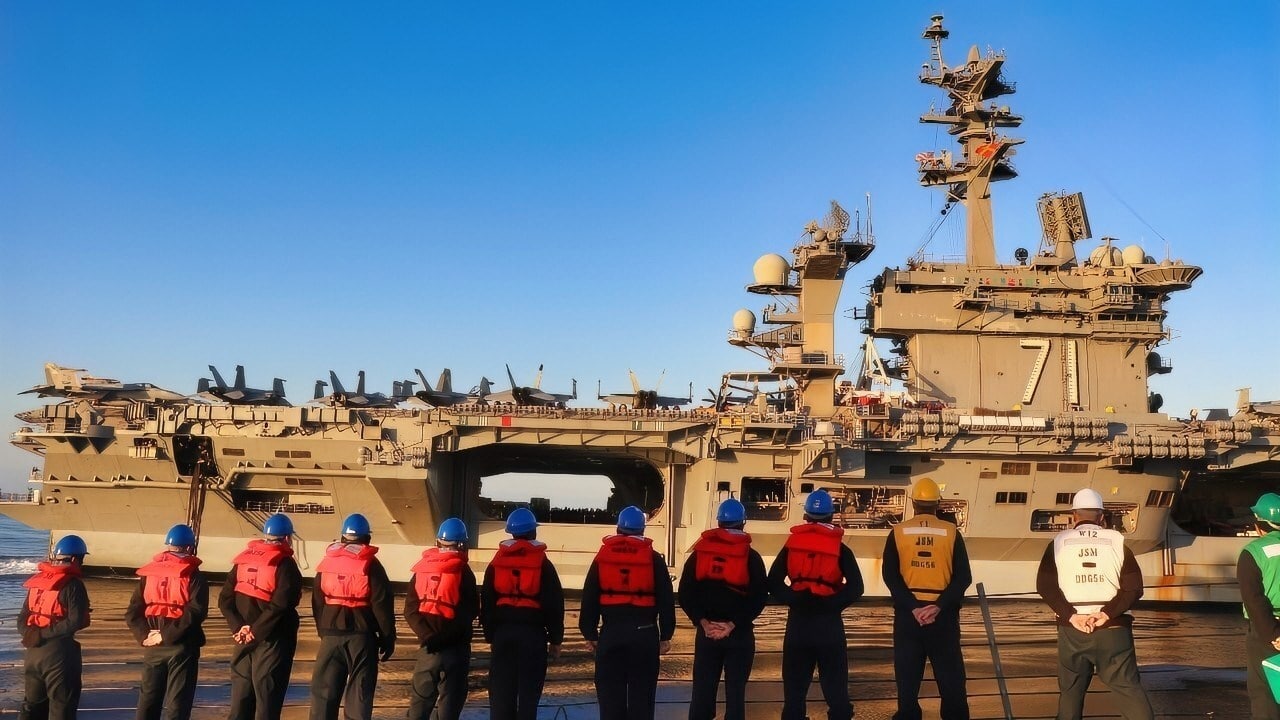
PACIFIC OCEAN (Nov. 28, 2023) Line handling crew assigned to the Arleigh Burke-class guided-missile destroyer USS John S. McCain (DDG 56) prepares to come alongside USS Theodore Roosevelt (CVN 71) for a replenishment at sea. John S. McCain is currently conducting routine training and certifications in the U.S. 3rd Fleet area of operations. (U.S. Navy photo by Ensign Garrett Fox).
Indeed, Roosevelt helped establish the United States as a serious competitor and a leading naval power.
About the Author: Harrison Kass
Harrison Kass is a writer and attorney focused on national security, technology, and political culture. His work has appeared in Tablet, City Journal, The Hill, The Spectator, and The Cipher Brief. He holds a JD from the University of Oregon and a master’s in Global & Joint Program Studies from NYU—more at harrisonkass.com.