

Summary and Key Points: A Google Earth image of a B-21 Raider at Edwards Air Force Base let The War Zone measure the bomber: a wingspan of 152 feet and a length of 61. That is 12 percent smaller than the B-2’s 172 and 69 feet, and far larger than circulated estimates under 130 feet. The B-21 has two engines to the B-2’s four; the Air Force plans at least 100 against the 21 B-2s built.
The B-21 Raider Is No Mini-Bomber
The forthcoming Northrop Grumman B-21 Raider has been the subject of rampant speculation since being unveiled publicly.
One persistent question concerns the aircraft’s actual size, especially its wingspan; observers want to know how the new stealth bomber would compare to the outgoing B-2 Spirit.
Newly available satellite imagery now provides a much clearer answer. According to The War Zone, the B-21 has an estimated wingspan of 152 feet and a length of about 61 feet.
The measurements are based on Google Earth imagery captured at Edwards Air Force Base in California.
The findings challenge widely circulated estimates suggesting the bomber’s wingspan was less than 130 feet.
Determining the Size
In an October 19 article, TWZ reported that a newly uploaded Google Earth image offered an unusually clear overhead view of the B-21.
The satellite photograph, taken on June 20, 2026, at Edwards Air Force Base, shows a B-21 taxiing between the base’s parallel runways.
TWZ then used Google Earth measurement tools to estimate the aircraft’s dimensions. The findings indicated a wingspan of approximately 152 feet and a length of approximately 61 feet.
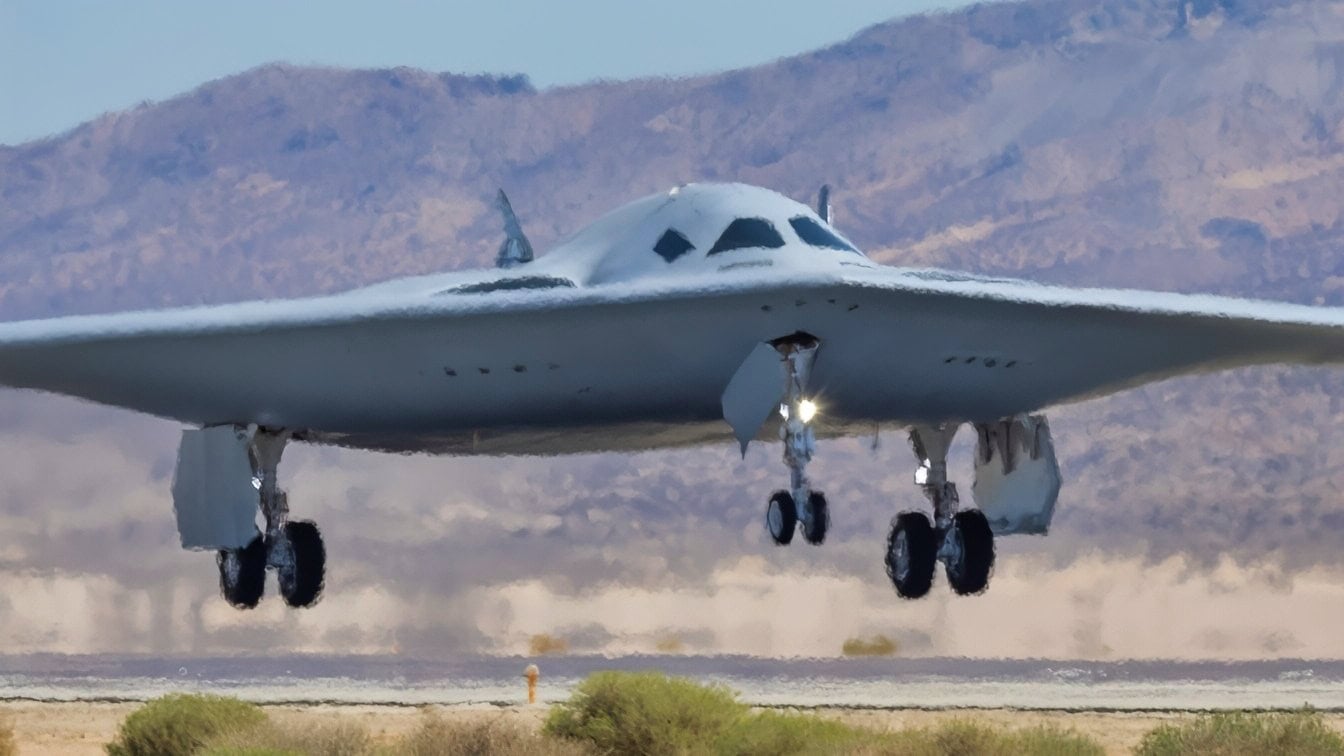
A B-21 Raider test aircraft lands at Edwards Air Force Base, Calif., during ongoing developmental flight testing, Sept. 11, 2025. The B-21 will be the backbone of the bomber fleet; it will incrementally replace the B-1 Lancer and B-2 Spirit bombers. (U.S Air Force photo by Todd Schannuth)
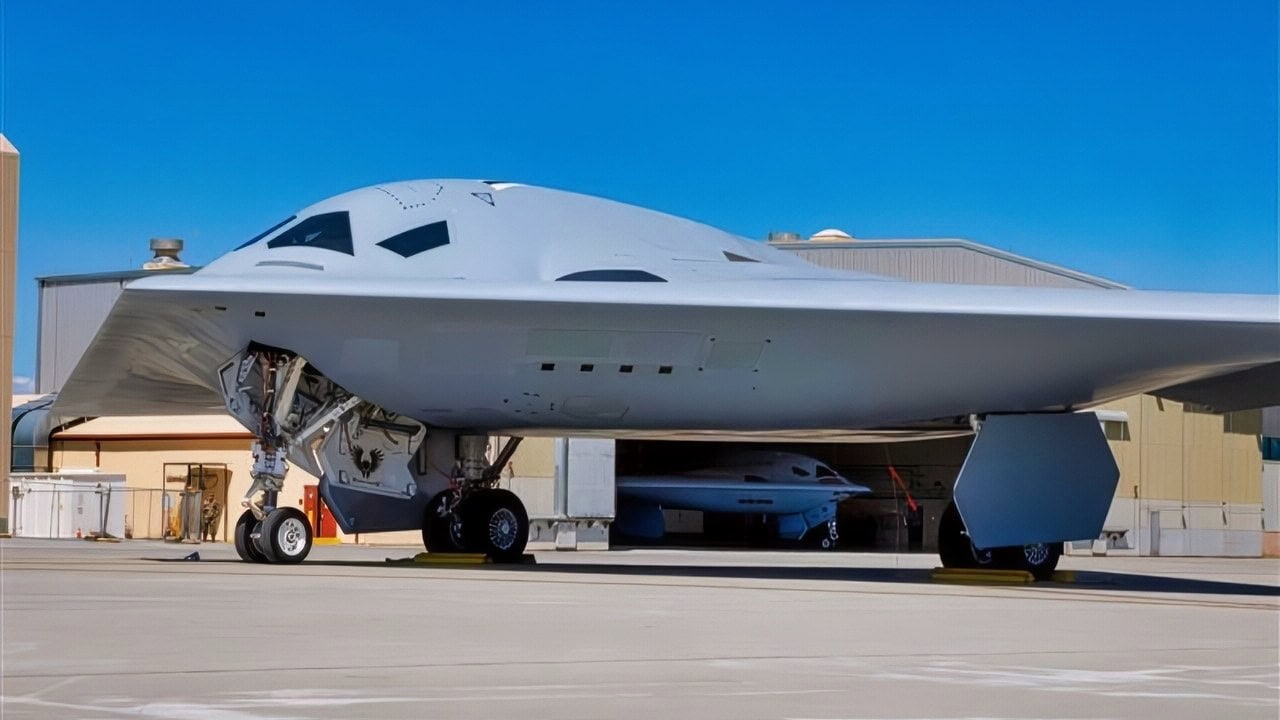
A second B-21 Raider, the world’s sixth-generation stealth bomber, test aircraft arrives at Edwards Air Force Base, Calif., Sept. 11, 2025. The addition of the second test aircraft expands mission systems and weapons integration testing, advancing the program toward operational readiness. (Courtesy photo)
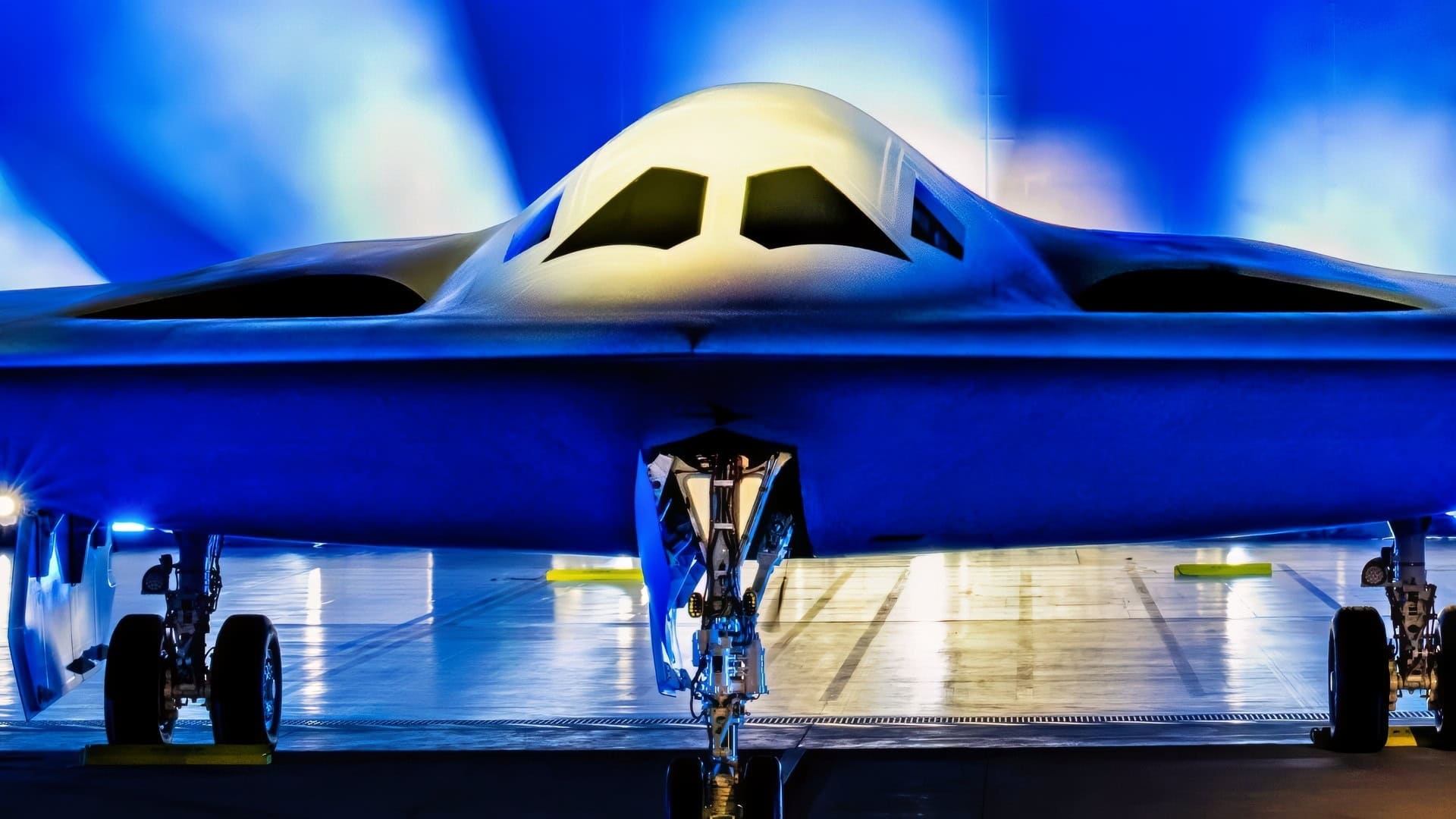
A B-21 Raider is unveiled at Northrop Grumman’s manufacturing facility on Air Force Plant 42 in Palmdale, California, Dec. 2, 2022. The B-21 will be a long-range, highly survivable, penetrating strike stealth bomber capable of delivering both conventional and nuclear munitions. (U.S. Air Force photo by Airman 1st Class Joshua M. Carroll)
TWZ acknowledged the possibility of measurement variation of several feet.
Notably, TWZ previously estimated the bomber’s wingspan at up to 155 feet, which the new satellite measurements largely confirm.
The findings also contradict unofficial fact sheets that depicted the B-21 as substantially smaller than the new images suggest.
Of course, the TWZ measurements are independently derived—and not official dimensions released by the Air Force or Northrop Grumman.
Compared to the B-2
The obvious reference point for the B-21 is the B-2; the B-21 is the B-2’s successor, functionally its replacement. Here’s how the two stack up.
The B-21 is smaller than its predecessor, but not drastically so.
The B-2 has a wingspan of about 172 feet and a length of about 69 feet.
TWZ’s measurements indicate that the B-21 is roughly 12 percent smaller in both wingspan and length.
The difference is significant but far less than estimates that put the wingspan below 130 feet. Despite its relatively short fuselage, the B-21 retains the broad flying-wing configuration associated with stealth bombers.
TWZ noted that its 61-foot length is comparable to that of an F-15 Eagle fighter.

A U.S. Air Force F-15EX Eagle II and F-15E Strike Eagles assigned to 85th Test and Evaluation Squadron, Eglin Air Force Base, Florida, land at Kadena Air Base, Japan, June 29, 2026. The test aircraft arrival supported the Department of War’s effort to modernize U.S. airpower in the Indo-Pacific and prepared Kadena personnel and the local community for the F-15EX’s arrival. (U.S. Air Force photo by Airman 1st Class Gracelyn Hess)
The measurements show how the flying-wing aircraft can look surprisingly compact from the side—but from above, the broad wings have a much larger footprint.
Insights from the Measurements
According to TWZ, the B-21’s size reflects a different set of design priorities than those that shaped the B-2, a Cold War-era large, long-range stealth bomber capable of carrying substantial weapons loads.
Instead, the B-21 emphasizes a balance of very low observability, long range, efficiency, and affordability. TWZ believes that the B-21’s configuration suggests exceptional intercontinental range.
The B-21 uses two engines—half that of the B-2’s four.
The B-21’s aerodynamic design is intended to support high-altitude cruising.
A smaller airframe may also reduce manufacturing and sustainment burdens. However, this is still all speculation; the aircraft’s exact fuel capacity, combat radius, and weapons payload remain undisclosed.
Beyond the Measurements
The satellite image offers another look at the B-21’s stealth features.
TWZ observed deeply recessed engine exhausts.
The aircraft also incorporates broad, flattened exhaust exit ramps and a chevron-shaped trailing edge above the exhaust openings.
These features suggest an airframe designed to manage its radar and infrared signatures.
The B-21 is expected to become a central facet in America’s long-range strike force, with the Air Force planning to procure at least 100 aircraft, perhaps more.
This is far more than the 21 B-2s originally built.
The B-21 is designed to penetrate sophisticated enemy air defenses and conduct conventional or nuclear strike missions.
Its importance is particularly apparent in a potential conflict with China, where China’s anti-access and area-denial capabilities threaten American aircraft.
So the hope is that long-range stealth bombers could strike heavily defended targets without relying exclusively on vulnerable forward airfields.
About the Author: Harrison Kass
Harrison Kass is a writer and attorney focused on national security, technology, and political culture. His work has appeared in Tablet, City Journal, The Hill, The Spectator, and The Cipher Brief. He holds a JD from the University of Oregon and a master’s in Global & Joint Program Studies from NYU. More at harrisonkass.com.